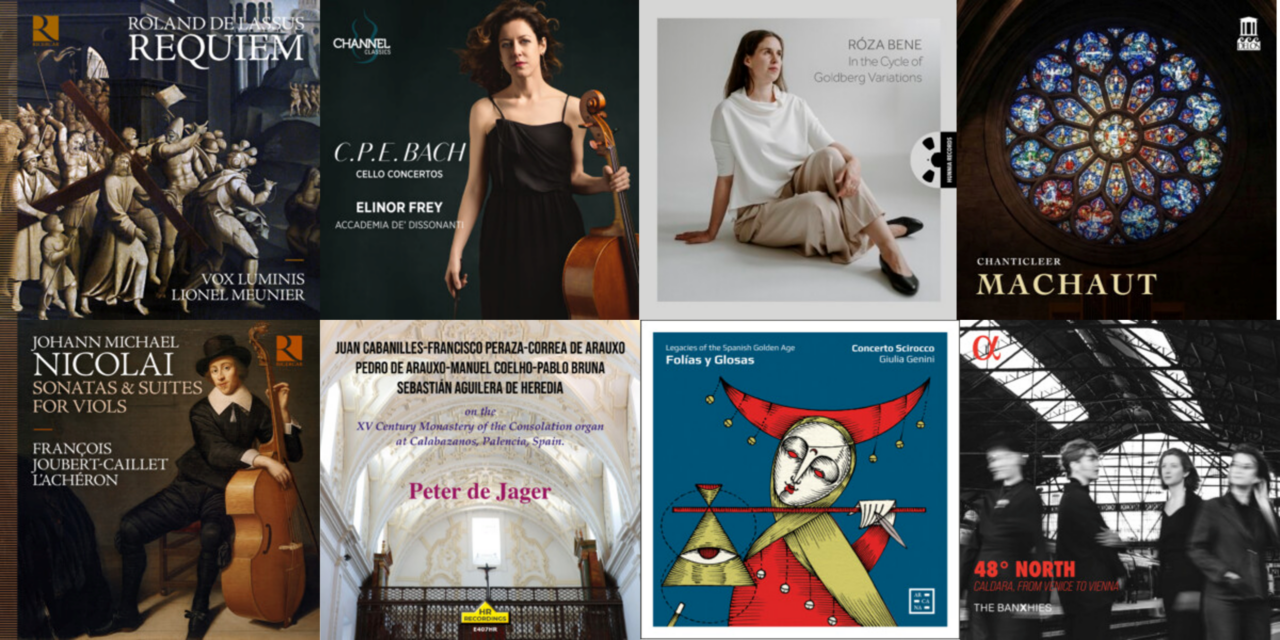

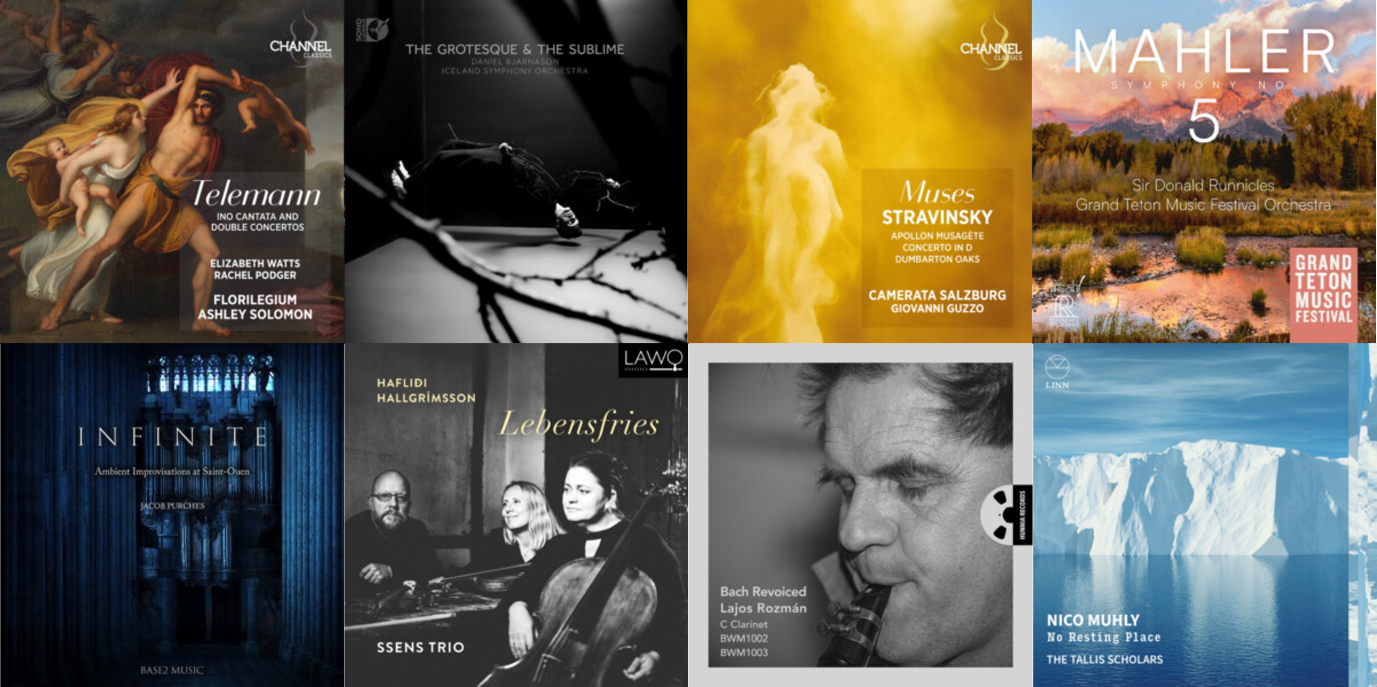
A trove of truly wonderful recordings has appeared in the NativeDSD catalog over recent weeks. Here are eight that caught my immediate attention, with multiple turns in my listening queue. Each is a worthy addition to your music library and will reward over multiple listening sessions.
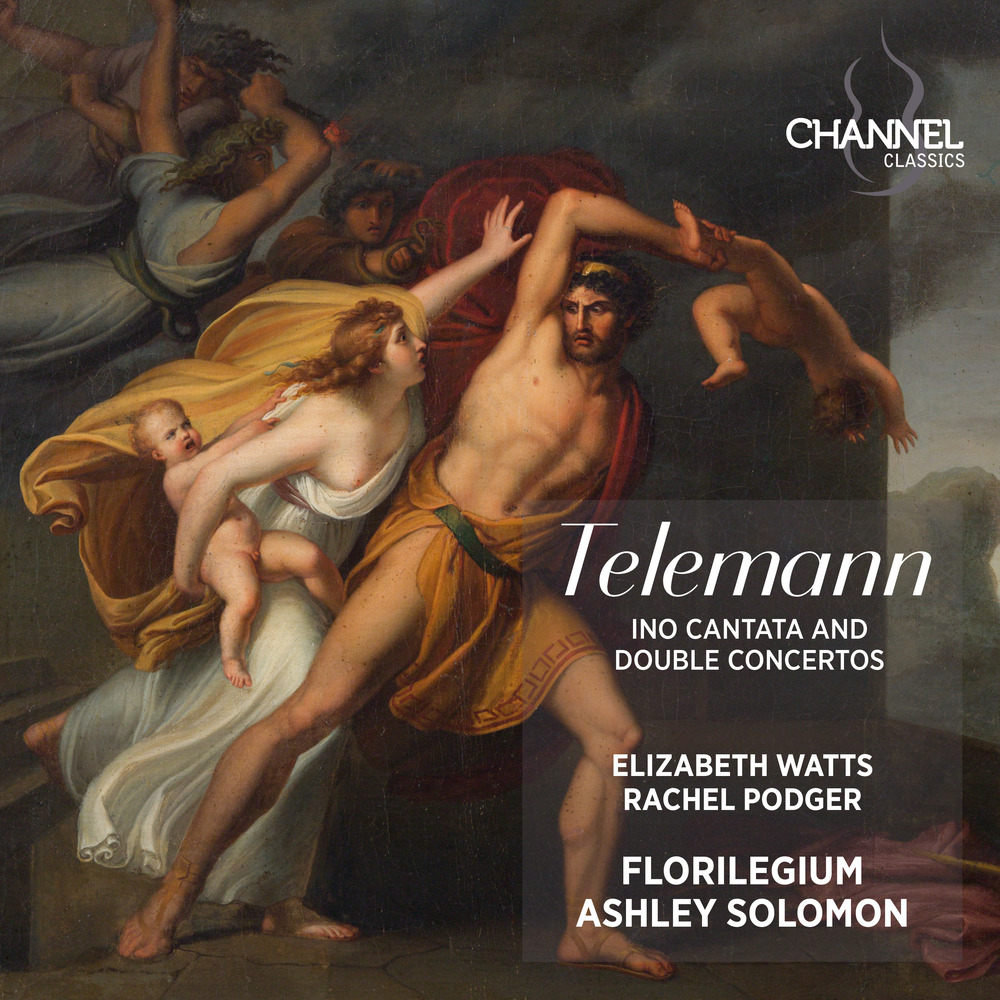
Telemann Ino Cantata and Double Concertos, Ashley Solomon, Rachel Podger, Elizabeth Watts, Florilegium. Channel Classics 2026 (DSD256, DXD 32-bit*, Stereo, MCh) Edit Master Sourced HERE
Let me start with a confession: I am utterly biased when it comes to the music of Georg Philipp Telemann (1681-1767). Of the many Baroque composers whose music I love, his is likely to be that to which I most frequently gravitate. (Don't shoot me Haydn.) I find Telemann endlessly creative, charmingly enjoyable, intensely satisfying. He was considered by his contemporaries to be one of the leading German composers of the time. Almost completely self-taught in music, he became a composer against his family's wishes. And we are so fortunate he did so.
This project by Ashley Solomon and his Florilegium colleagues sees them reunited with the queen of the baroque violin (so named by The Times), Rachel Podger. Rachel co-founded the group in her student days and this is such a welcome return engagement. Joining the project for the Ino Cantata is the superb soprano Elizabeth Watts, she of the "radiant voice" whose versatile repertoire ranges from Baroque to contemporary music.
Together, we have a marvelous collection of talent generating high expectations for my initial listening session, expectations that were quickly met and exceeded.
As so often said, great recordings start with excellent music, then the selection of excellent musicians, then the choice of recording venue, microphones, microphone placement, and finally recording format and technical processing. With the first several criteria met, the final several requirements are quickly met with a long-time favorite recording venue in St Johns' Church, London (United Kingdom) and producer/recording engineer Jared Sacks (complemented by Ashley Solomon). The combination of all these ingredients results in a simply exceptional listening experience. I am enchanted.
The album opens with the all instrumental Concerto in E Minor for Violin, Flute and Strings, TWV 52:E3, with Ashley Solomon and Rachel Podger performing together. Utter delight!
Presented next is Telemann's dramatic cantata, Ino. Based on a story from Ovid's Metamorphoses, the cantata depicts the mythical figure Ino, who, fleeing her mad husband Athamas after he has murdered one of their children, throws herself and their remaining son Melicertes off a cliff into the sea. The nymphs of the sea then transform them into the gods Leukothea and Palaemon. The cantata is theatrical and emotionally intense, with Elizabeth Watts as the single soprano voice carrying the entire narrative across recitatives, arias, and dramatic orchestral interjections. She absolutely captivated me with her energy and emotional communication. Composed in 1765, just a few years before Telemann's death, this work demonstrates how innovative his creative powers continued even so late into his life. At age 84 he writes an emotional and technically challenging musical score that bridges the late baroque and early classical styles.
The charming, and deceptively simple sounding, Sonata in G Major for Flute and Violin TWV 40:111 finds Rachel Podger out front once again with Ashley Solomon. No additional strings, just the two of them playing for and with each other. I can't adequately describe how enchanting this piece sounds—completely delicious. Each time I've played it, I hear some new delicacy of their interaction.
The album concludes with the Concerto in E Minor for Recorder Flute and Strings TWV 52:E1 highlighting the contrasting colors of the older recorder and the brighter transverse flute as Ashley Solomon (flute) is joined by the quite remarkable recorder player Hannah Parry.
This recording has been a highlight of my listening over the past couple of weeks. There is so much to enjoy here, and the entire program is very satisfyingly diverse in content. That it is entirely the music of Telemann is no surprise; the man was a creative genius. That it has such outstanding sound quality it no surprise, either. Some of the best performers of Baroque music coming together in a truly excellent recording location with amazing acoustics, and all of it captured by the inimitable recording engineer and producer Jared Sacks.
Oh my, this album is just great listening. I recommend it to you most enthusiastically.
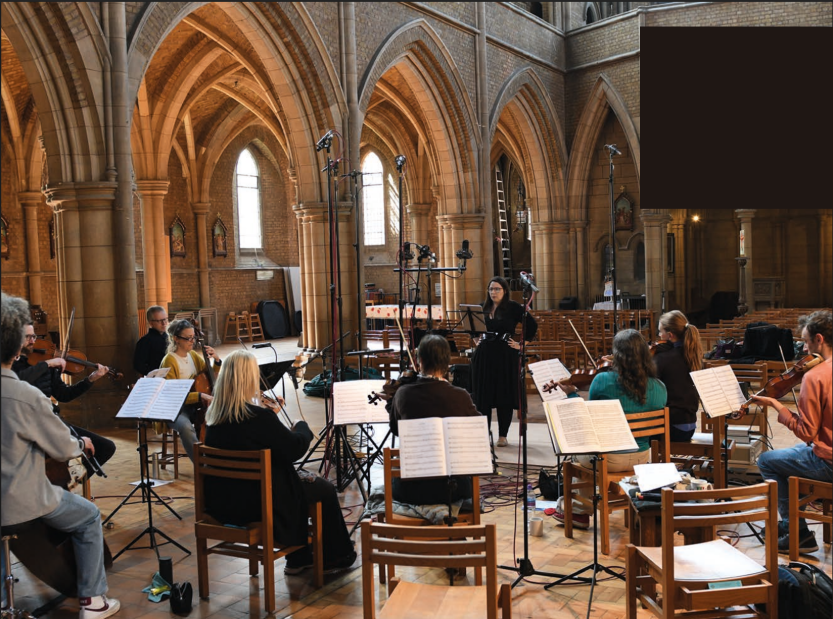
Recording session for the Ino Cantata, April 9-11, 2025, St Johns' Church, London (United Kingdom)
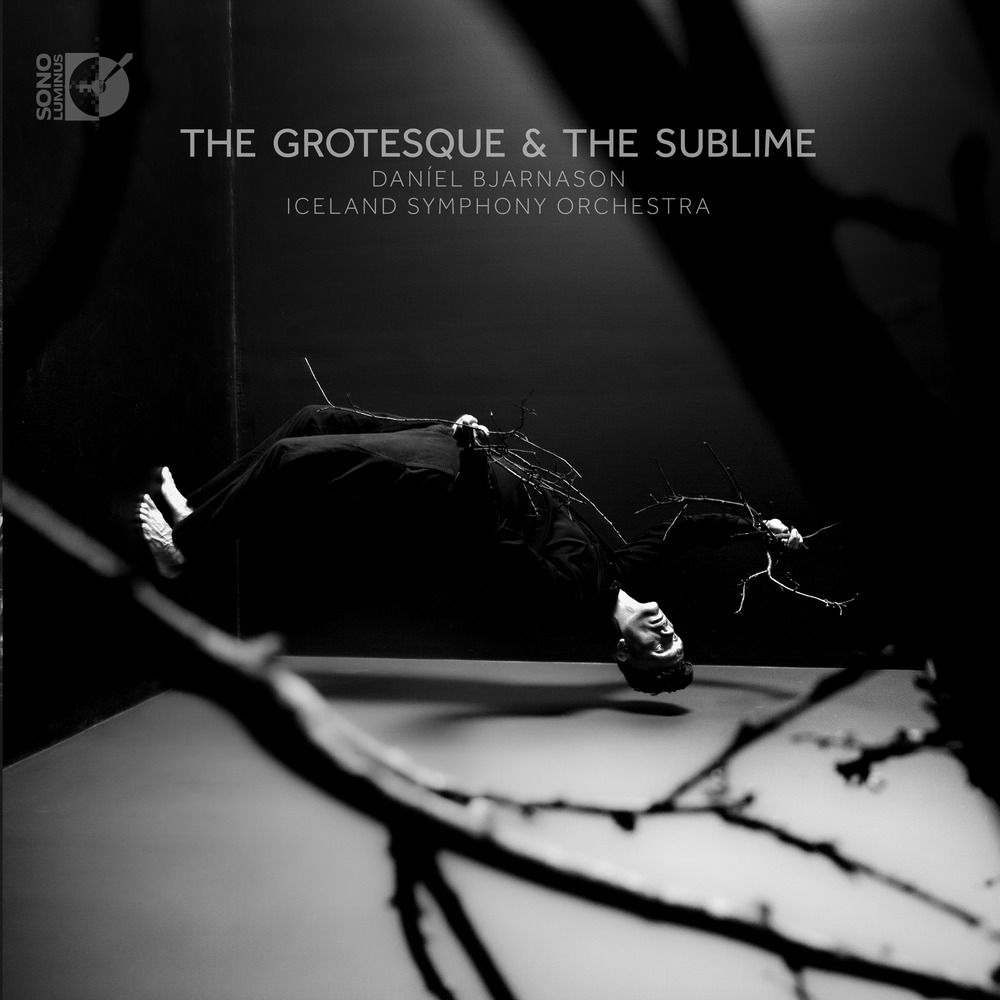
The Grotesque & The Sublime, Daníel Bjarnason, Frank Dupree, Iceland Symphony Orchestra, Vivi Vassileva. Sono Luminus 2026 (DSD256, DXD*, Stereo) HERE
I've written before about the rich musical language that has been evolving among contemporary composers in Iceland, and the intriguing nature of much of the music coming from this part of the world (HERE). Much of the orchestral music has been championed by the Iceland Symphony Orchestra under the direction of composer/conductor Daníel Bjarnason. This group has an outstanding track record of some excellent recordings with the U.S. label Sono Luminus and its recording engineer Daniel Shores.
This album gathers three substantial orchestral works by Daníel Bjarnason (b. 1979): FEAST, Fragile Hope, and Inferno. Bjarnason belongs to the generation of Icelandic composers that includes figures such as Jóhann Jóhannsson and Anna Thorvaldsdóttir, but his style is somewhat different.
Performed by the Iceland Symphony Orchestra under the composer's own direction, these works illustrate a Bjarnason's distinctive voice. Rather than the slowly evolving "sound-cloud" textures often associated with his contemporaries, Bjarnason's compositions are vividly colored and often narrative in conception. His music frequently begins with a clear musical idea or motif that is stretched, distorted, or transformed across large spans of time.
Of the three works presented on the album, I was most drawn to the final piece, Inferno (2022, 2024), a concerto for percussion and orchestra in three movements. Using fewer instruments that one might find in a full complement of an orchestra's percussion section, Bjarnason intentional chose to keep the percussionist grounded, maintaining "a focus on particular sound worlds, rather than a mad dash between many instruments." The particular instruments chosen were those that exist in the collection of Martin Grubinger, the Austrian percussionist who pursued Bjarnason to write the piece. They encompass the comparatively dark-hued lineup of drum kit, wood blocks, txalaparta, marimba, Japanese taiko drums, kick drum and timpani. All manner of lyrical threads, dances, harmonic waves, and walking bass lines pass from soloist to orchestra and back. The soloist is complemented by the orchestral percussionists who join the dialog using additional instruments.
Consistently present across all three works is the full spectrum of instrumental sounds of which a large orchestra is capable, with rich orchestral color and evolving textures, deep resonant chords, and huge dynamic crescendos. The result is a striking portrait of a composer who stands slightly apart from the atmospheric minimalism often associated with contemporary Icelandic music, offering instead music that is both vividly dramatic and deeply atmospheric.
As always, Sono Luminus' recording engineer Daniel Shores creates a recording of excellence. The sound is immediate and clear, with immense inner detail, full frequency extension, and tremendous dynamic range. The soundstage is nigh on perfection.
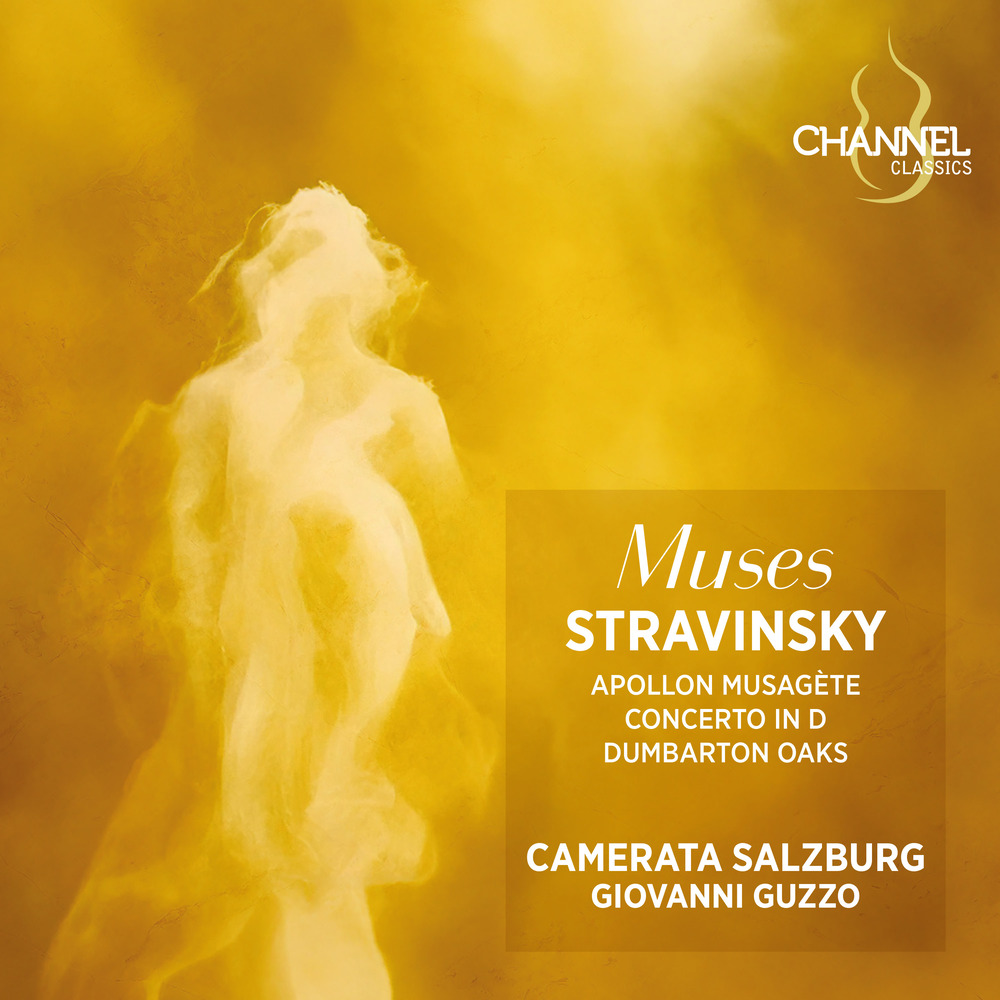
Stravinsky: Muses, Camerata Salzburg, Giovanni Guzzo. Channel Classics 2026 (DSD256, DXD 32-bit*, Stereo, MCh) Edit Master Sourced HERE
This album marks what I hope will be just the beginning of a new collaboration between Camerata Salzburg and Channel Classics. It is a formidable release devoted to three of Stravinsky's neoclassical works for chamber orchestra: Concerto in D for string orchestra "Basle" (1946), Concerto in E-flat "Dumbarton Oaks" (1938), and Apollon musagète (1928), this last being a complete ballet for strings.
Together, these works represent Stravinsky's neoclassical phase as he filters the older Baroque and Classical forms through his modern, and very distinctive, rhythmic and harmonic language.
The Dumbarton Oaks has long been a favorite piece of music here. Very accessible, inspired by Bach's Brandenburg Concertos, it is compact, intricate, and rhythmically alert. It's transparent textures are tautly delivered in this performance—just as I prefer to hear it. And the performers certainly appear to have fun with it's quirky syncopations and staccato wind work. The middle "Allegretto" movement is just plain fun, with Stravinsky tweaking us all the way through and the performers pulling it for all its worth.
It is Apollon Musagète, though, that is the truly great and timeless piece of music. This Camerata performance is distinctive for its modern purity and refinement, but also the most emotionally restrained of several alternative performances. Of the alternatives, also consider Marriner/ASMF for classical elegance and gorgeous string tone; Ansermet for structural gravity and historical weight; and the Orpheus Chamber Orchestra for their rhythmic vitality and energy—possibly the most "alive" musically.
Led by violinist Giovanni Guzzo, the Camerata's playing is refined, polished, and precisely articulated—with an emphasis on precision over overt drama. Overall, these are a performances that prioritize clarity, balance, and purity of line over theatrical intensity. The recording by Jared Sacks fully complements this approach with his usual attention to transparency, instrumental color, and spatial realism.
If you tend to favor Stravinsky performances that are cool, transparent, and structurally lucid (think of the chamber-orchestra tradition rather than big symphonic approaches), Stravinsky: Muses will likely appeal strongly. It very much appeals to me. I'm enjoying it immensely and recommend it most highly.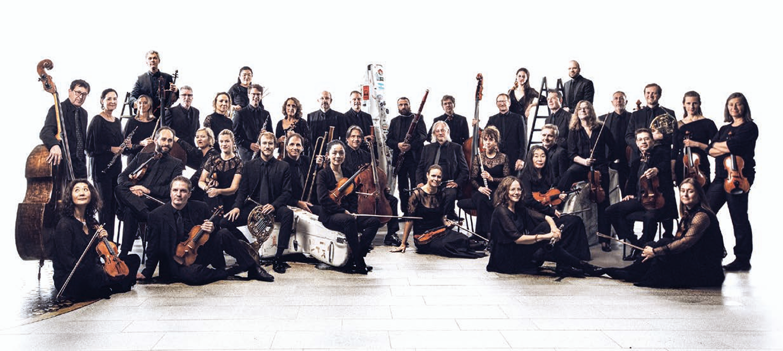
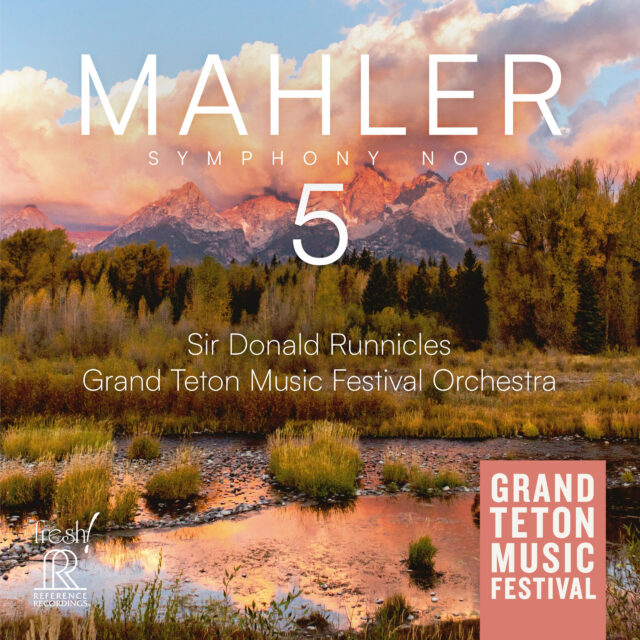
Mahler Symphony No. 5, Grand Teton Music Festival Orchestra, Sir Donald Runnicles. Reference Recordings 2026 (192k, Stereo, MCh) Edit Master Sourced HERE
Donald Runnicles and the Grand Teton Music Festival Orchestra on Reference Recordings enters a very crowded, and very competitive, catalog with this release. And successfully, I think. Rather that trying to outdo the great legacy recordings, it simply offers a modern, well-balanced, reading captured in superb contemporary sound by the Reference Recordings engineers. And, if you seek a multi-channel recording, look no further. My guess is that this should satisfy well—the performance certainly does, and the stereo sound quality to which I listen is excellent.
It is thoughtful, controlled, and carefully shaped performance. The opening Trauermarsch is weighty and deliberate, with strong dramatic profile. But without fabricated urgency. It flows. The balance of the symphony progresses similarly. There's plenty of expressive content, but it is thankfully not exaggerated. Of course, Mahler with exaggerated expressive extremes may be what you are looking for. If so, there are plenty alternate recordings to choose from. But this performance is more to my tastes: musically persuasive, not fabricating some emotionally overwhelming aesthetic that rings false. Very much of the Bernard Haitink tradition, nearly opposite the Bernstein/Vienna emotionally extreme approach.
The orchestra is a festival ensemble of top-tier players drawn from major orchestras, and sounds like it. What you hear is excellent musicianship with a slightly more “live” feel: less corporate perfection, more collective energy.
Of course, the recording engineering is part of the listening experience as with other Reference Recordings releases. It sounds natural, expansive, immensely resolving, without sounding spot lit. This may be the recording for you if you prioritize realistic orchestral perspective, spatial depth, high-resolution playback. To my ear, it's among the best-sounding Mahler Fifths currently available.
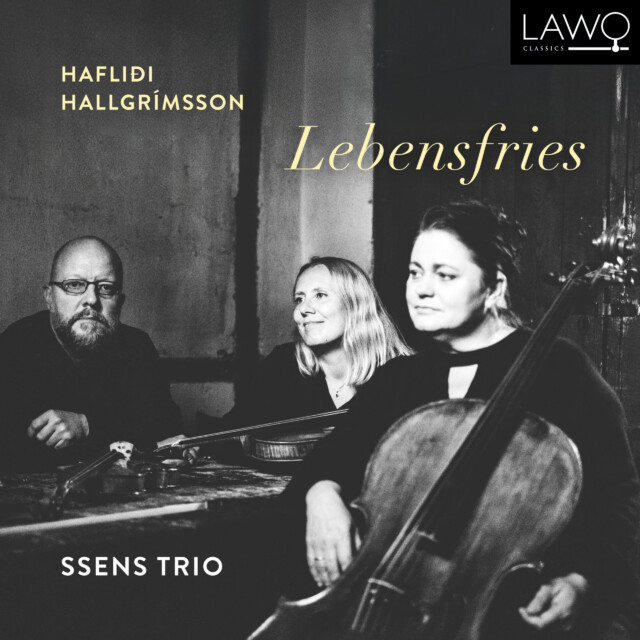
Hafliði Hallgrímsson: Lebensfries, Ssens Trio. Lawo Classics 2026 (DXD 32-bit*, Stereo) HERE
It is such a pleasure to find new contemporary modern music of such high caliber as this work by Hafliði Hallgrímsson (b. 1941) for string trio: Lebensfries (2022). And when performed with such charismatic intensity by the superb Ssens Trio, the listening experience is a true pleasure.
This music is fascinating, evocative, exploratory. Nothing here to shy away from, all is to be enjoyed. The music is basically tonal, but very modern in its sharp shifts of mood and articulation, and layers of subtle harmonic and textural complexity. His writing seems to take joy in the physicality of instruments as he explore color and resonance color and resonance across the ensemble. Applying finely graded dynamics, the occasional pizzicato, and deeply resonant chord from the cellist, Hallgrímsson takes us into a sound world that is restrained, almost austere, yet constantly shifting beneath the surface.
The music is comprised of twelve short pieces, strongly interconnected. There are no big rhetorical gestures. Instead, the music accretes meaning over time, with cool, clear textures and moments of stillness suspending time before launching into sudden intensifications that feel like they simply need to happen. The entirety is a three-way conversation: lines pass fluidly between instruments; textures shift between unison, dialogue, and layered counterpoint; themes repeat and reoccur throughout the work, but subtly and always organically—never forced.
This is not music that grabs you by the collar. It's music that draws you in quietly, asks you to adjust your expectations, and then begins to reveal its inner logic—its shifting panels, its understated drama, its finely balanced tensions. Think of it as less about gesture, more about presence, less about arrival, more about becoming.
The work was commissioned by the Ssens Trio, finding its initial form in a much shorter String Trio Op. 54 setting which had its first performance in the small auditorium at the Norwegian Opera House in February 2020. I've not heard that work, so I can't offer any comparison. But Hallgrímsson writes that, "As I listened to the performance, I came to the conclusion that this cycle of short pieces was little more than sketches that needed to be developed further. A few months later, I began developing these pieces and started to add new ones. They accumulated gradually to form a cycle consisting of twelve pieces."
And this longer treatment is very satisfying to my mind.
Hallgrímsson is cellist himself. Born in the small town of Akureyri on the north coast of Iceland, he began to play the cello at the age of eleven. He studied the cello full time at the Music School in Reykjavík from 1958–1962, graduated with an honorary degree and became a member of the Iceland Symphony Orchestra from 1963 –1964.He continued his studies in London at the Royal Academy of Music from 1964–1977, and made his debut as a soloist with the Iceland Symphony Orchestra performing the Haydn Cello Concerto in C major in 1968. In the following years continued as an active freelance cellist in London, both as a soloist and as a member of various chamber groups and chamber orchestras, notably the English Chamber orchestra. And from 1977–1983 he was a principal cellist with the Scottish Chamber Orchestra. He has composed close to 100 works, ranging from simple pieces for young performers, chamber music, concertos, and choral works, and he has twice been a resident composer with the Iceland Symphony Orchestra.
The Ssens Trio (pronounced "Essence") was established in 2014 by it's three musicians: Sølve Sigerland (violin), Henninge Landaas (viola), Ellen Margrete Flesjø (cello). There earlier three recordings for Lawo Classics are excellent and I highly recommend them to you, along this this most current release. I wrote about their 2022 release, Ricercare, HERE.
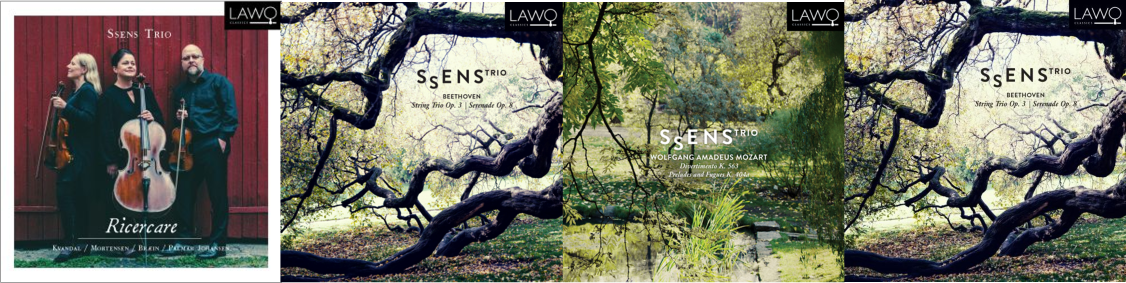
Other Ssens Trio albums well worth hearing. Available HERE.
Nico Muhly, No Resting Place, The Tallis Scholars, Peter Phillips director. Linn Records 2026 (192k, Stereo) Edit Master Sourced HERE
Nico Muhly (b. 1981) is a gifted master of music for voice. This choral recording, a collection of world premiere recordings of works that he wrote for The Tallis Scholars over the last 10 years, is as engaging a set of compositions as any I've heard in recent years.
And, as always, The Tallis Scholars are just superb under the direction of Peter Phillips. The music is outside the mainstream of their recordings over the years, but it is a compelling example of how Peter Phillips' Renaissance vocal ideal can illuminate brand-new music without sounding like a crossover project. Comfortably familiar, yet intensely modern.
Muhly does not imitate Tallis, Byrd, or White in any superficial neo-Renaissance way.
Instead, he writes in a language that feels like Renaissance polyphony filtered through modern harmony. Chant-like riffs/runs stretch into long, suspended harmonic fields of vocal superlative, evidencing the immense breath control among the members of the ensemble. Articulation is immaculate.
Muhly has pared verses to a textural austerity—rather than thickening the sound, he lets The Tallis Scholars sing with almost exposed fragility, so that a single harmonic shift can feel devastating as sudden moments of emotional plainness hit harder than would overt drama. Just listen to the opening track, "A Glorious Creature," to get a sense of this. Just be aware that this track will challenge your system—if it doesn't sound clean and natural, it's something off in your system, not the recording.
Of this album, and composer Nico Muhly, director Peter Phillips writes:
"For many years The Tallis Scholars only sang Renaissance polyphony. We had founded our sound on what Palestrina, in particular, seemed to require and then made whole programmes flow from that starting point. The idea of extending this method to include living composers only occurred when I met John Tavener. Then I discovered that contemporary music, if written in a style which benefitted from the Palestrina method of ensemble singing, could augment, rather than disrupt, the experience of an-all Renaissance concert.
"The epitome of this possibility was the music of Arvo Pärt, some of which we recorded in 2015. Unfortunately I first met him in old age, which meant he never wrote anything specifically for us. As it turned out the composer who immediately understood our particular sound was Nico Muhly. As a choirboy he had absorbed the many sonorities of sacred choral music, and was quick to work out how best to write for us. A succession of masterpieces followed, each as powerful as the last. Recording sessions can be arduous. These were pure creativity."
Recorded at Merton College Chapel Oxford, UK, on 3-5 January 2024 for Linn Records by recording producer & engineer Philip Hobbs. I was particularly drawn to listen to this album sooner, rather than later, by a friend's comment that Philip Hobbs is perhaps the finest recording engineer of choral works in a generation. The sound quality, and particularly the captured natural acoustic environment of Merton College Chapel, certainly supports that contention: it is superb. An utter listening pleasure.
Of this album, and composer Nico Muhly, director Peter Phillips writes:
"For many years The Tallis Scholars only sang Renaissance polyphony. We had founded our sound on what Palestrina, in particular, seemed to require and then made whole programmes flow from that starting point. The idea of extending this method to include living composers only occurred when I met John Tavener. Then I discovered that contemporary music, if written in a style which benefitted from the Palestrina method of ensemble singing, could augment, rather than disrupt, the experience of an-all Renaissance concert.
"The epitome of this possibility was the music of Arvo Pärt, some of which we recorded in 2015. Unfortunately I first met him in old age, which meant he never wrote anything specifically for us. As it turned out the composer who immediately understood our particular sound was Nico Muhly. As a choirboy he had absorbed the many sonorities of sacred choral music, and was quick to work out how best to write for us. A succession of masterpieces followed, each as powerful as the last. Recording sessions can be arduous. These were pure creativity."
The album was recorded at Merton College Chapel, Oxford, UK, 3–5 January 2024, for Linn Records by producer and engineer Philip Hobbs.
I was particularly drawn to hear this album sooner rather than later because of a friend's comment that Philip Hobbs may be the finest recording engineer of choral works of his generation. The sound quality—and especially the beautifully captured natural acoustic of Merton College Chapel—certainly supports that claim. It is superb.
An utter listening pleasure.
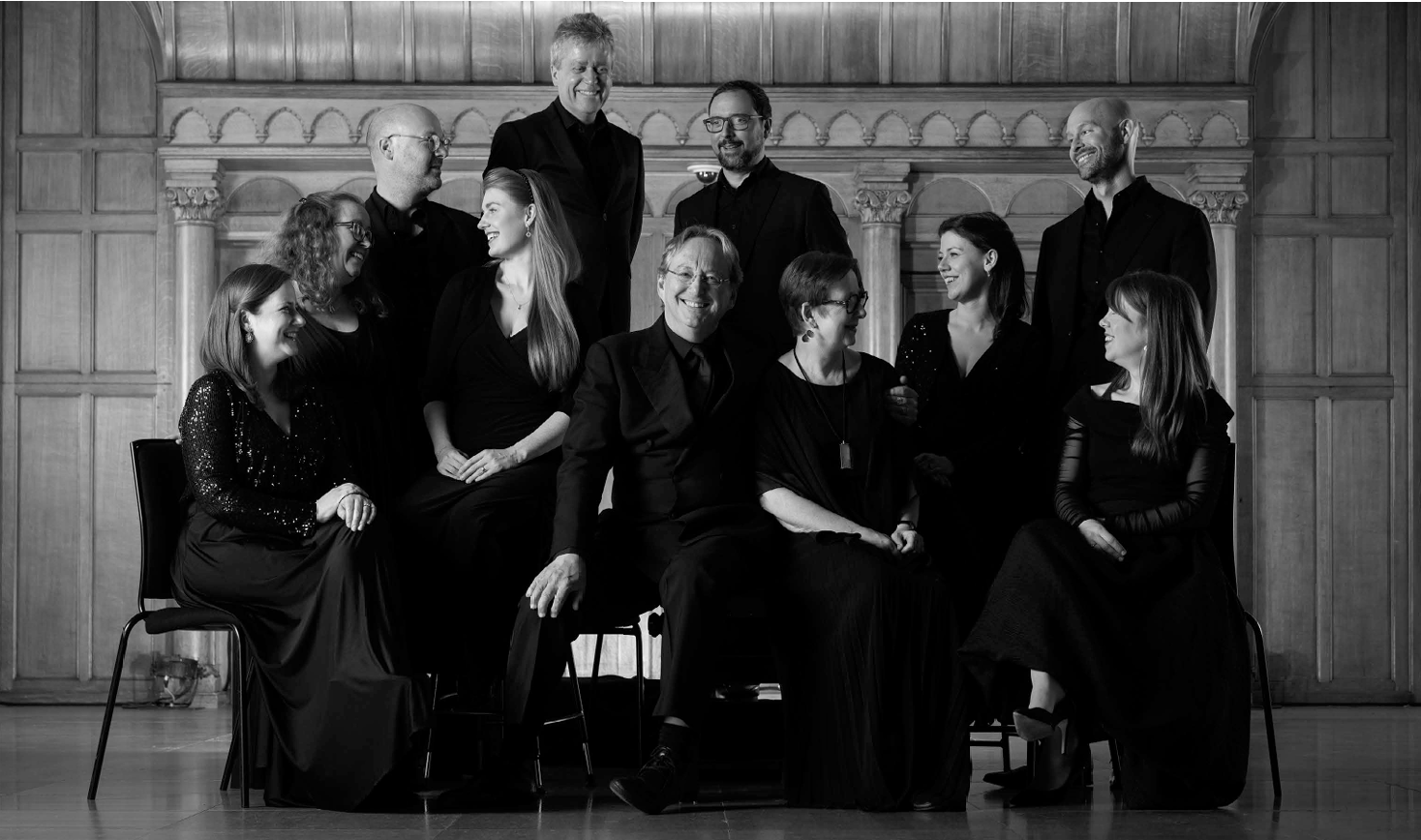
The Tallis Scholars, with director Peter Phillips
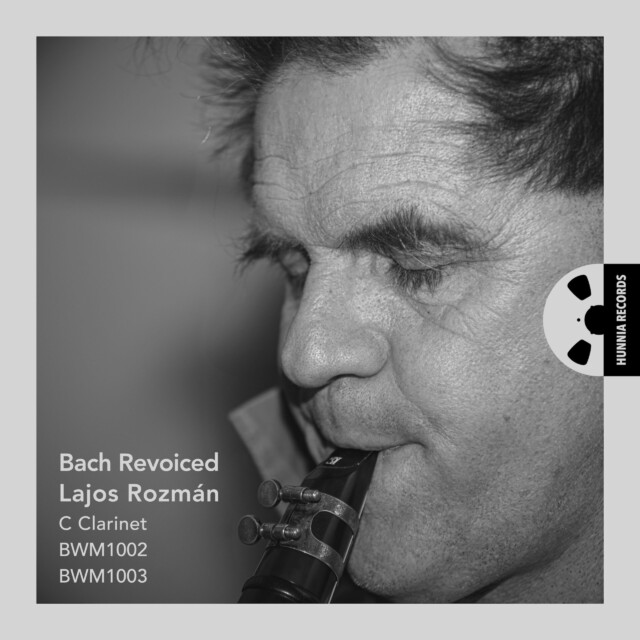
Bach Revoiced, Lajos Rozmán (solo clarinet). Hunnia Records 2026 (Pure DSD256-Analog Mixed, Stereo) Edit Master Sourced HERE
Bach Revoiced presents a distinctive reinterpretation of Johann Sebastian Bach's solo violin repertoire performed on clarinet in C by Hungarian clarinetist Lajos Rozmán in Pure DSD 256. The album features Bach's Partita No. 1 in B minor, BWV 1002 and Sonata No. 2 in A minor, BWV 1003, works originally composed for solo violin but reimagined here through the expressive capabilities of the clarinet. Recorded in Budapest in December 2025, Bach Revoiced forms the first stage of a broader project in which Rozmán intends to record the complete set of Bach's solo violin works on clarinet.
Does it work? Yes. Bach was quite comfortable with transcriptions for alternate instruments. And there have been many. Rozmán approaches these performances not as strict transcriptions, and this is for the better, in my opinion. Instead he seeks to explore through phrasing, articulation, and dynamic nuance the inherent polyphonic possibilities of Bach's music. All sound very nice: clean, articulate, finely flexible. Fans of the clarinet will be well pleased.
The included booklet tells us that contemporary accounts testify that Bach often played these violin pieces spontaneously on the organ or other keyboard instruments, freely adding harmonies. The pieces were therefore certainly characterized by flexibility and considerable freedom in the use of the material.
Of his choice of instrument, Rozmán writes, "Within the clarinet family, the clarinet in C is clearly the most suitable vehicle for Bach's music. Firstly, its use resolves the dilemmas of transposing instruments, and secondly, it provides the attitude and tone colour of a true soprano instrument. At the same time, it allows for versatile and universal melody formation, elevating the distinctive characteristics of the clarinet to broader relevance."
Recorded in 15-17 December 2025 at Nap Street Baptist Church, Budapest, by Hunnia balance and recording engineer Sándor Árok, the recording session gets out of the studio and into a larger acoustic setting with nice natural reverberation and decay. The recording benefits accordingly. The Pure DSD256 sound quality is filled with color, detail, and the natural timbre of the instrument—a huge hurrah!
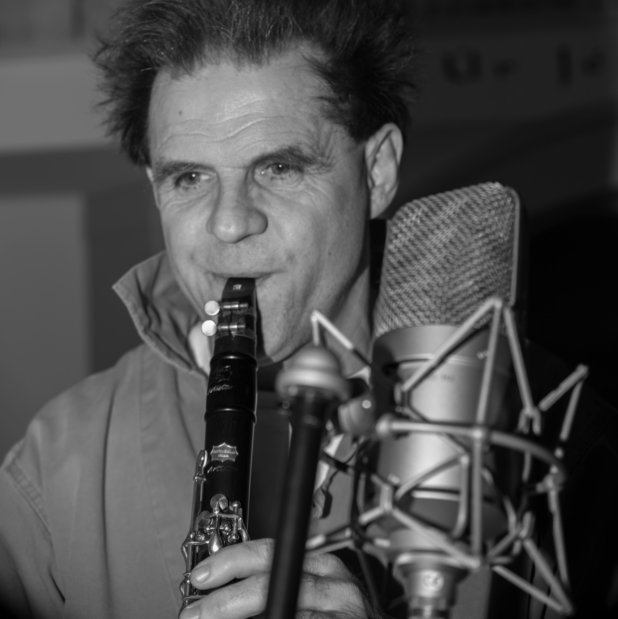
Lajos Rozmán in recording session.
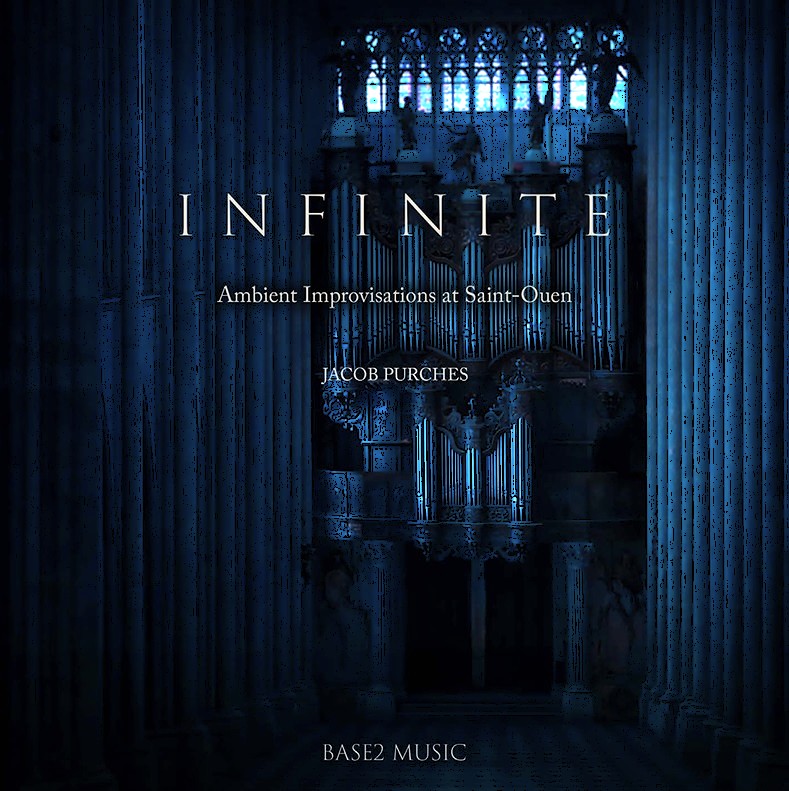
Infinite: Ambient Improvisations at Saint-Ouen (on the great Cavaillé-Coll organ), Jacob Purches organist and composer. Base2 Music 2026 (DXD 32-bit*, Stereo, MCh) Edit Master Sourced HERE
Inventive, immersive, and utterly engrossing sonic splendor from one of the great organs of the world—the legendary Cavaillé-Coll of the Abbey of Saint-Ouen. Pure delight.
Composer, organist, and recording engineer Jacob Purches offers a real gift for organ fans: a sequence of ambient organ improvisations shaped by space, resonance, and tonal depth, fully exploiting the vast resources of this marvelous instrument in the grand acoustic of Saint-Ouen.
In Part I, Jake favors restraint and introspection, with recurring motifs that help unify the movements. Listeners whose systems can reproduce truly deep bass are in for an absolute treat. The Highland Piper (track 4) is especially rewarding, making full use of a repeating bass-pedal motif that anchors the music with remarkable weight and presence.
Infinite I (Music for Two Organs) opens Part I of the album with nature sounds overlaid on the small Merklin choir organ alone. Its opening chords and first melodic statement establish the soundscape quietly, without urgency or display. Darkness, stillness, and deliberation prevail as the melody repeats. Then the grand organ—the splendid Cavaillé-Coll—enters in the low bass, answering the choir organ. In stereo, one already gets hints of the church's vast space; in 5.1 channel, this spaciousness must be truly impressive. As Jake describes it, the work resists any conventional resolution, instead suspending itself in a poised equilibrium.
Out of this stillness rise the next improvisations, including The Highland Piper, shaped by the influence of Scottish bagpipes and their distinctive, unwavering drones. Here the mood turns outward and more hopeful. A quiet coda follows, gentle and unforced, allowing the music to recede naturally into silence.
The 27-minute Infinite—comprised of ambient improvisations and one written composition (identified as Part I on the track listing)—is a moving tribute to Jake's friend and organ teacher, Jean-Paul Imbert (1942–2025). Give yourself some uninterrupted time and let it wash over you; attentive listening will be richly rewarded.
Part II opens with Prelude, Passacaglia, and Lament, Op. 6, written by Jake Purches and performed by Jean-Baptiste Monnot, Titular Organist of Saint-Ouen. This work was previously released on the album Voyage (Base2 Music) HERE. It makes a fitting bridge on this album, transitioning gracefully from Infinite to Sonorous I.
Sonorous I and Sonorous II are two improvisations recorded in 2023 on the Cavaillé-Coll organ of Saint-Ouen. They explore the sound of this beautiful instrument reverberating within the extraordinary acoustics of the Gothic abbey. Jake notes that the improvisation “was quite unplanned and spontaneous, which of course is the nature of improvising. Like jazz, it's free form. One, of course, has to be 'in the mood.'"
A repeating bass-pedal motif, first introduced in the upper register, anchors the music with sinister gravity, establishing tension from the outset. This persistent ground acts less as a defined key than as a pitch center—a fixed point around which the harmony revolves. Above it, slow-moving chords unfold, from which melodic lines gradually surface and subside. The work culminates in a grand pleno, crowned by the organ's celebrated 32-foot Contra Bombarde. Its vast resonance affirms the space with commanding depth, transforming accumulated tension into a resolution that feels not merely triumphant, but hard-won and complete.
In Sonorous II, an expansive climax reveals the full depth and physical scale of the organ, its resonance anchoring the space with elemental force. Yet at the moment of greatest breadth, the music does not linger. It withdraws swiftly into a brief coda, allowing the climax to feel like something traversed rather than sustained.
No electronic instruments or AI were used in the making of this album. All sound effects were recorded by Jake Purches himself.
As noted, this is immersive music—the impact delivered by the massive sonorities of this tremendous organ simply cannot be overstated. But this is not an album intended merely as a sonic extravaganza, at least not overtly. That it becomes one is the natural result of a legendary instrument, a huge natural acoustic, excellent choices of registration, and the recording skill required to capture it all so beautifully.
Those with surround sound systems will be particularly rewarded, as will listeners with full-range systems capable of reproducing the tremendous low-bass energy captured here.
Highly recommended.
All images courtesy of the respective recording labels.
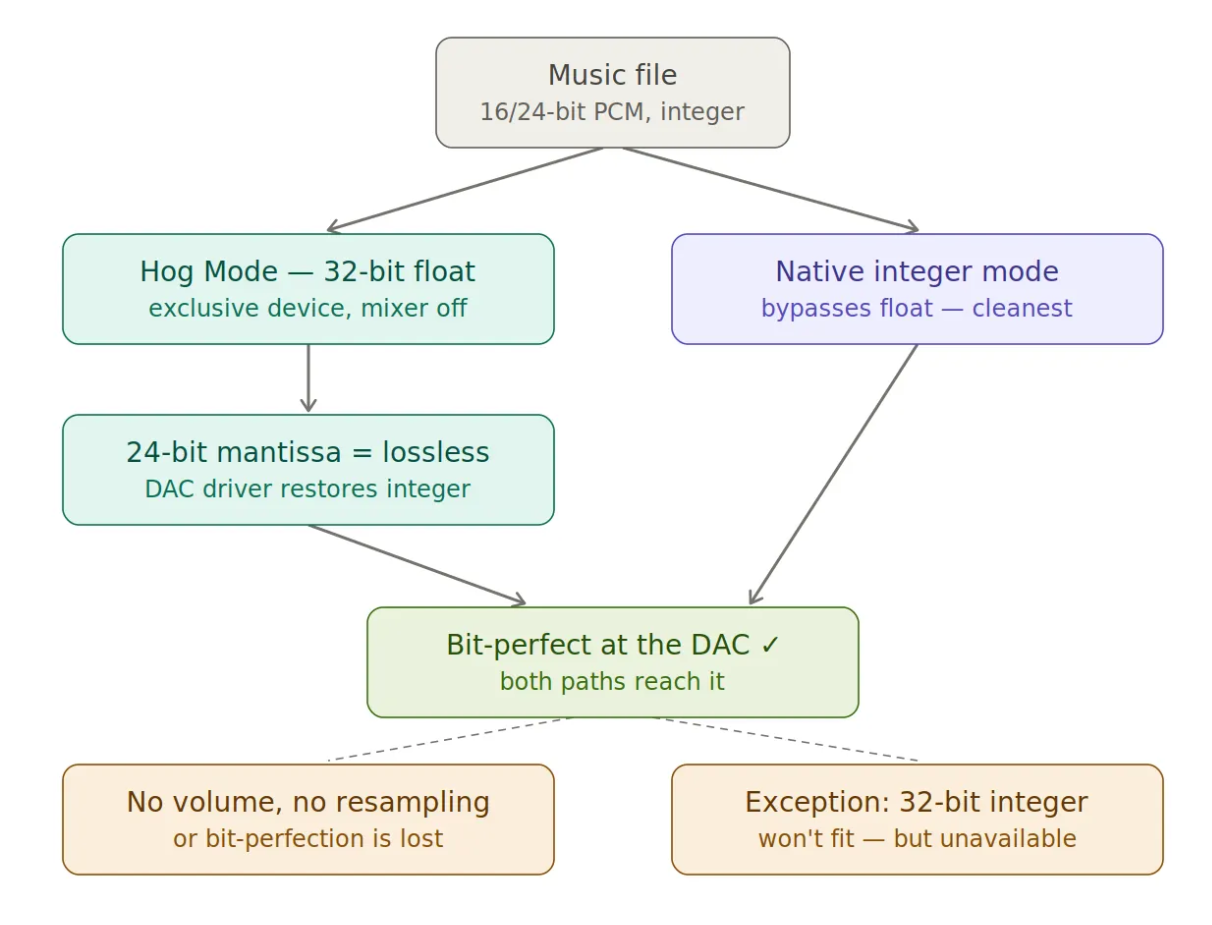
* Once again, I am listening to the DXD edit master of these releases designated with an asterisk. In these, the DXD is the edit master and I find consistently that the edit master of whatever resolution gives me the best sound quality in my primary audio system. You should compare alternate resolutions/formats in your own playback system. As I've mentioned before, on Ann's office system, the DSD256 will typically sound best with the Teac UD-501 DAC in that system. (The HDTT web page is very clear about what processing has been applied for each release.) As to why the DXD 32-bit versus 24-bit, see What We Hear With DXD 32-bit Files (Free Sample Downloads). YMMV.