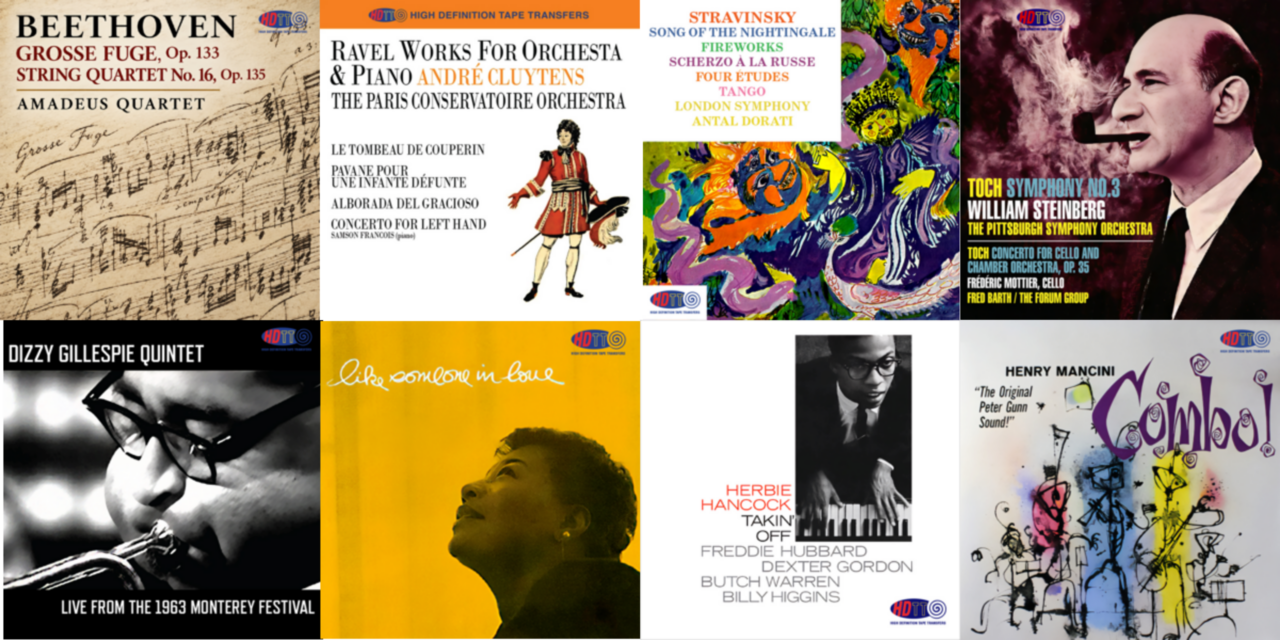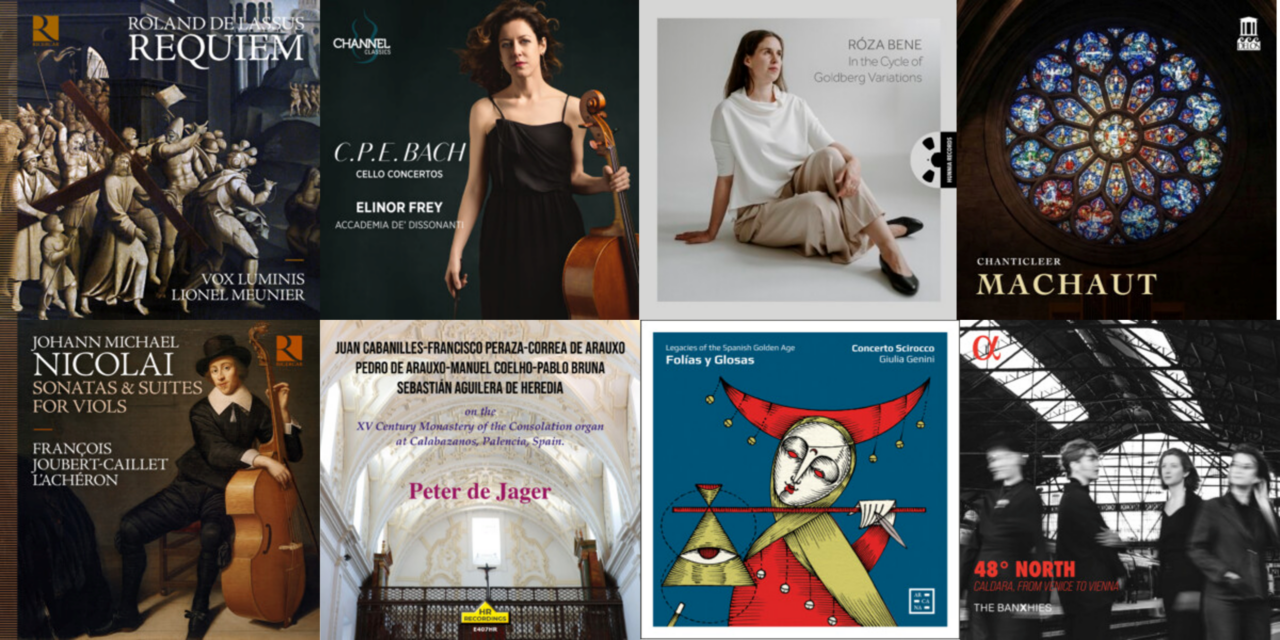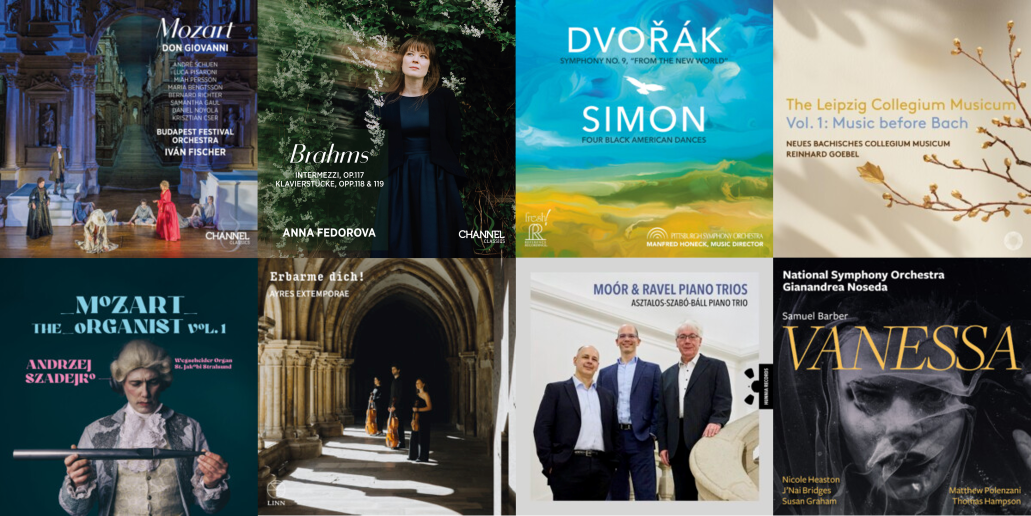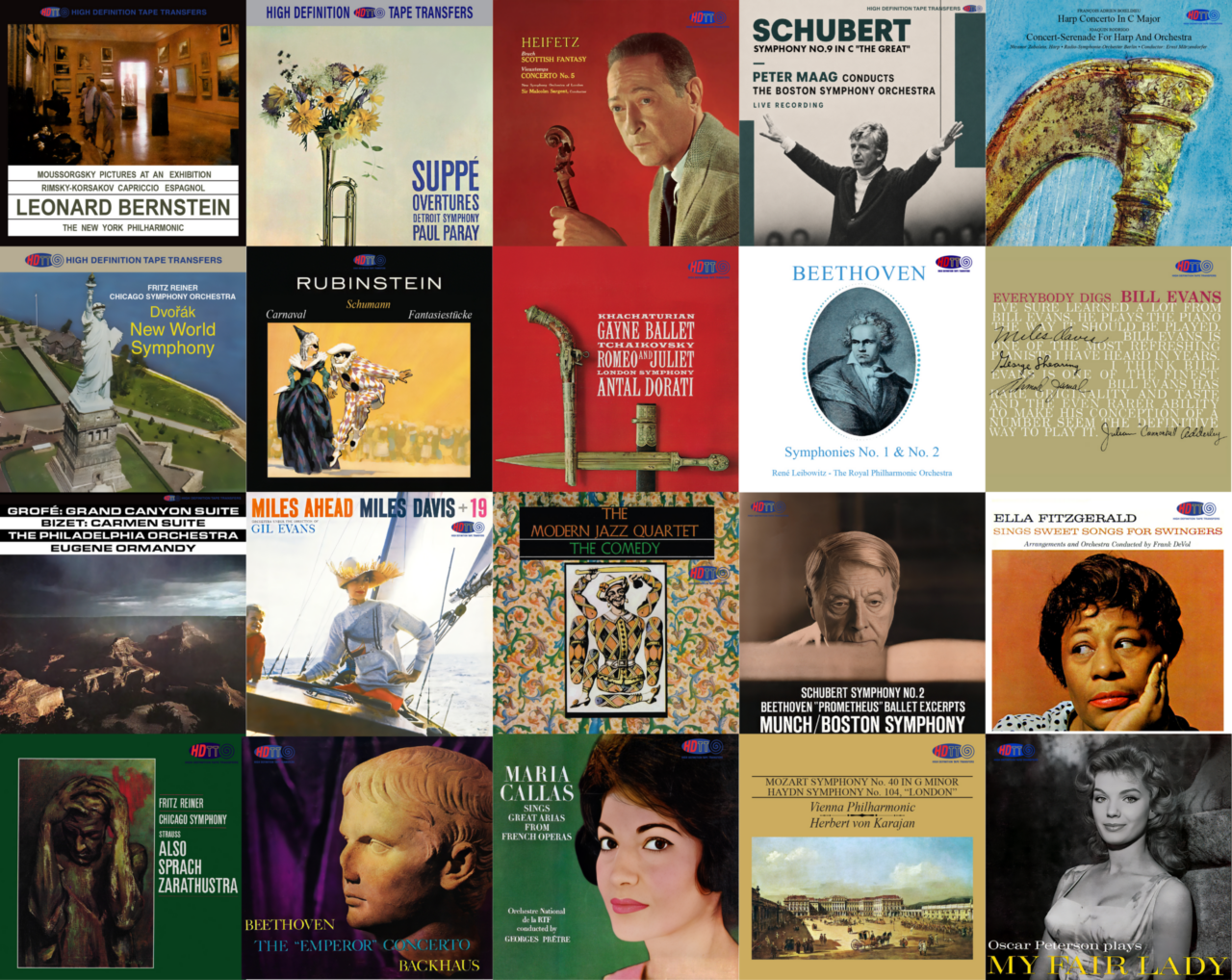

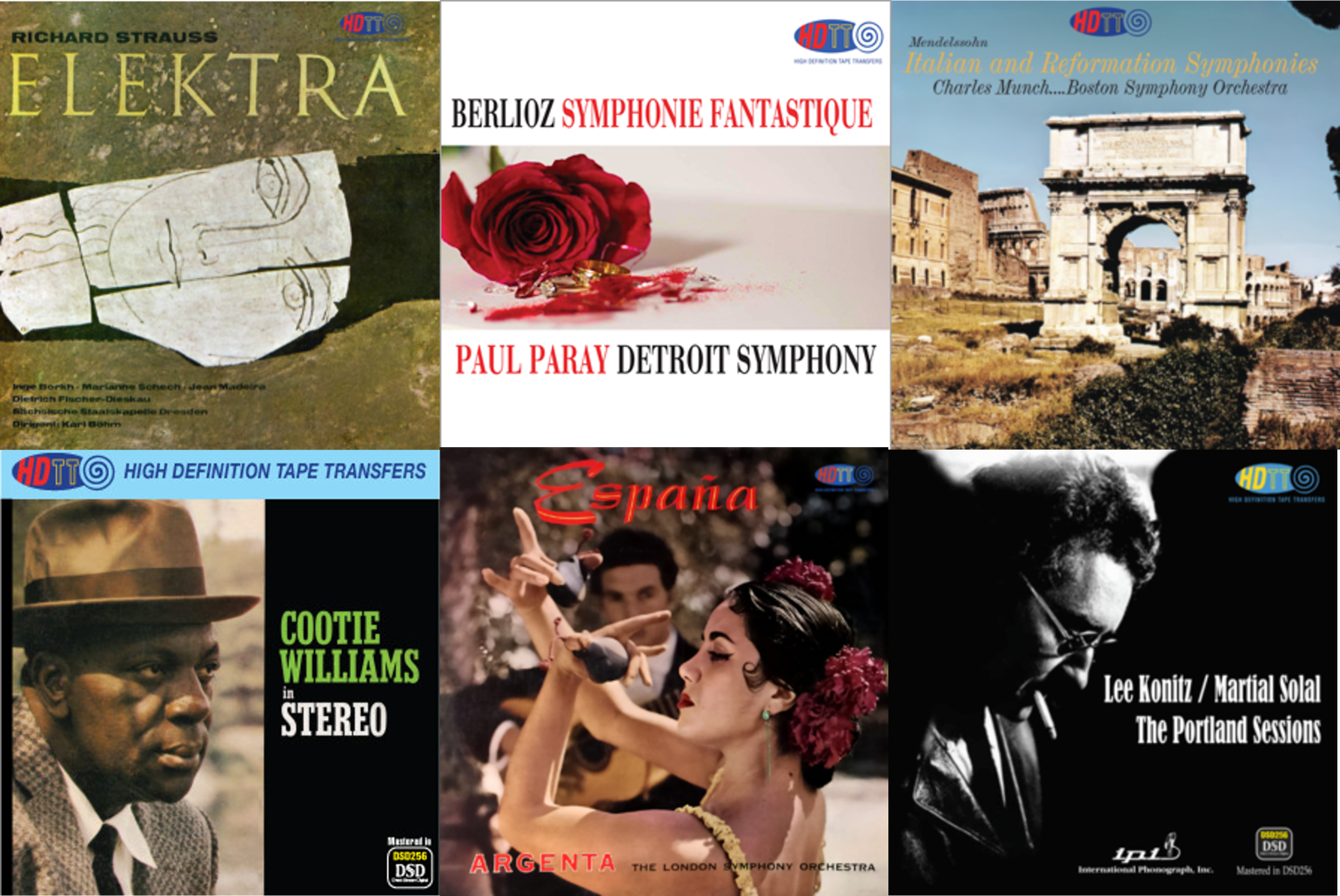
Today brings reviews of some HDTT releases I've been enjoying: three outstanding RCA Living Stereo and Mercury Living Presence albums; one of the great early Decca recordings; and two jazz releases in Pure DSD256 that have been on my Top of the Pile list since last year but just now reviewed.
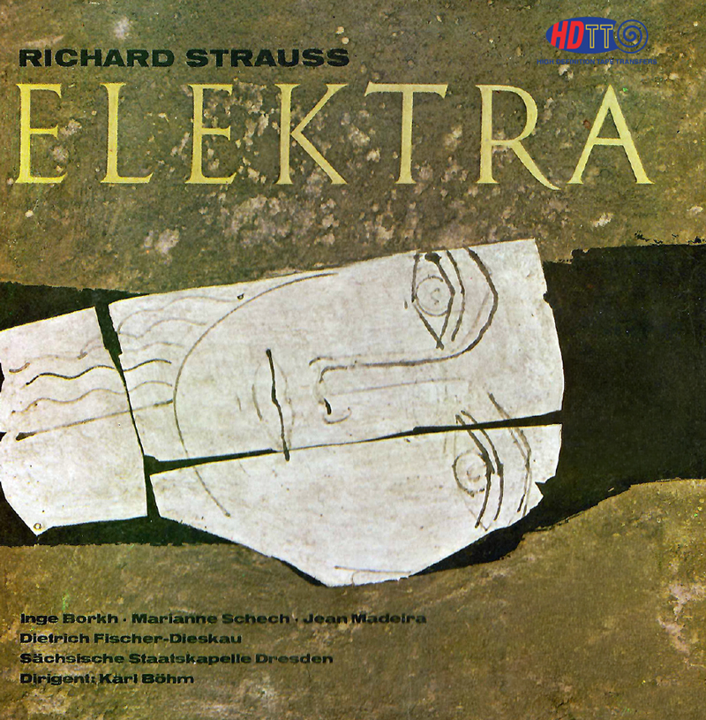
Richard Strauss, Elektra, Karl Böhm, Inge Borkh, Dietrich Fischer-Dieskau, Staatskapelle Dresden. HDTT 1960 2026 (DXD, DSD256) HERE
Karl Böhm’s 1960 Dresden Elektra (1909) remains one of the most electrifying Strauss recordings ever made: fierce, unsparing, and charged with a visceral theatrical momentum that feels almost dangerous.
Böhm’s pacing is taut, urgent, with every scene propelled toward the final cataclysmic dance* with an almost unbearable inevitability. Inge Borkh’s Elektra is monumental, sung with blazing intensity, razor-edged top notes, and a terrifying sense of emotional possession; yet beneath the fury she reveals a wounded humanity that makes the recognition scene** all the more devastating. Opposite her, Dietrich Fischer-Dieskau brings grave nobility and inward poise to Orest, his finely shaded baritone making the encounter with Elektra the still center of the tragedy.
Around them, the Dresden players unleash Strauss’s violence and sensuality in equal measure—snarling brass, shadowed strings, and vividly etched woodwinds all bound together by Böhm’s innate feel for the composer’s theatrical pulse. The result is a reading of immense dramatic truth: unsparing, febrile, and still capable of leaving the listener shaken.
Recorded in the Lukaskirche in Dresden in October 1960 by Deutsche Grammophon, it was the first complete stereo recording of the opera. The engineering captures the performance with an excellent balance between soloists and orchestra while delivering a superb soundstage, strong dynamic impact, and impressive orchestral detail. It remains one of the finest recordings of Strauss’s Elektra available.
This new transfer from the original 4-track tape is markedly more dynamic than the LP that once played in my listening room—allowing, of course, for the usual foibles of audio memory. Even so, the sheer impact and energy make this a phenomenal listening experience.
* And yes—there really is a dance at the end of Elektra. It is one of the most famous closing moments in all opera: after Orest kills Klytämnestra and Aegisth, Elektra enters a state of ecstatic triumph and performs a wild, frenzied victory dance before collapsing dead. Strauss and his librettist Hugo von Hofmannsthal make this explicit in both the score and libretto—the final section is literally marked “Schweig, und tanze” (“Be silent, and dance”). For those who may not know the plot line, Elektra is a one-act, intense expressionist opera focused on the Greek myth of vengeance. Elektra, living in misery in Mycenae, plots to kill her mother, Klytämnestra, and her lover, Aegisth, for murdering her father, King Agamemnon, aided by her returning brother, Orest. After the murders, Elektra dies in a frenzied dance.
** The recognition scene is the great emotional pivot of Elektra—the moment when Elektra realizes that the “stranger” before her is in fact her brother Orest, returned in secret. Up to that point, Elektra has been told that Orest is dead, so she is driven almost to despair and is prepared to carry out vengeance alone. Then the disguised messenger reveals himself. The shattering instant comes when Elektra suddenly understands who he is and cries out “Orest!” Strauss marks the moment with one of the most overwhelming orchestral eruptions in all opera.
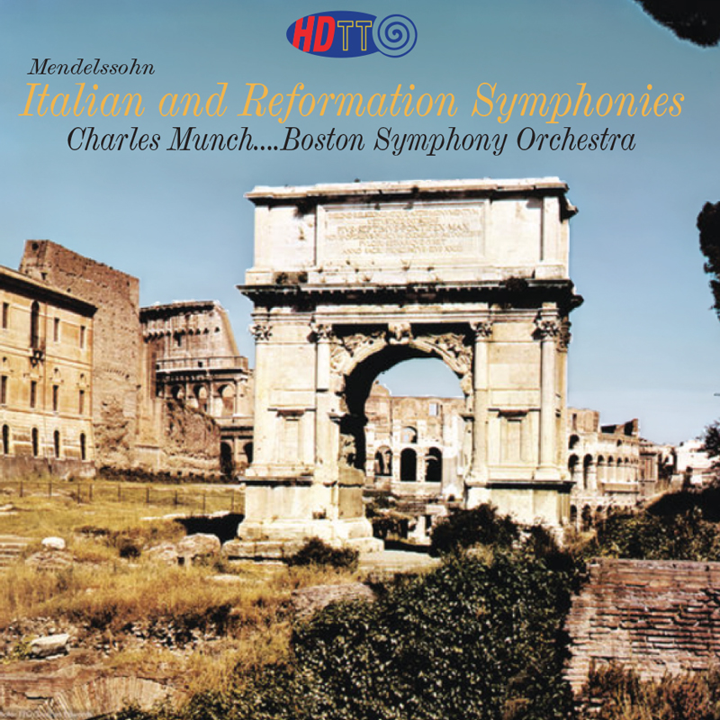
Mendelssohn, Italian and Reformation Symphonies, Charles Munch Boston Symphony Orchestra. HDTT 1957/1958 2026 (DXD, DSD256) HERE
This 1958 RCA Living Stereo release of Mendelssohn’s Italian and Reformation Symphonies with Charles Munch and the Boston Symphony Orchestra is one of the most elegant and naturally musical orchestral discs from the Munch/BSO partnership—less overtly "spectacular" than some of their Berlioz or Saint-Saëns, but every bit as distinguished.
The two works were recorded separately in Boston’s Symphony Hall: the Reformation on October 28, 1957, and the Italian on February 18, 1958, both engineered by the great Lewis Layton for RCA’s Living Stereo series.
Munch brings to Mendelssohn exactly what one hopes for: classical poise energized by Romantic warmth.
The Italian Symphony is the more famous half of the release, and for good reason. Munch catches the score’s Mediterranean sunlight without turning it lightweight. The opening "Allegro vivace" has buoyancy, quicksilver articulation, and a sense of effortless forward motion that feels entirely spontaneous. The Boston strings are luminous, and the woodwinds phrase with remarkable grace.
The Reformation Symphony is often the greater surprise. Many conductors make it sound dutiful or overly academic, but Munch reveals its dramatic power and architectural strength. The opening movement has real weight and tension, and the Boston brass give the great chorale moments a thrilling, organ-like grandeur. Many listeners still single out this Munch version as one of the finest Reformation recordings ever made.
This is classic Symphony Hall sound at its most natural. Lewis Layton captures a beautifully proportioned string body, wonderfully present Boston woodwinds, brass with glow rather than glare, spacious yet coherent hall ambience, and superb front-to-back layering. If you ever need a recording that demonstrates gorgeous hall sound with a full symphony orchestra, pull this one out and play it.
HDTT's transfer comes from a 15ips 2-track tape, and it delivers everything that makes great analog reel-to-reel sonics so special: openness, air, tremendous dynamics, superb resolution. This is a sound lover's nirvana.
I compared the HDTT DXD version to the 2005 RCA SACD, and once again there is no contest. The SACD has been compressed. HDTT release is more open, more transparent, more three-dimensional, and more true to life. It is a thoroughly worthy upgrade in sound quality.
Berlioz, Symphonie Fantastique, Paul Paray Detroit Symphony Orchestra. HDTT 1959 2016 (DXD) HERE
This 1959 Mercury Records release of Berlioz’s Symphonie fantastique with Paul Parayand the Detroit Symphony Orchestra is widely regarded as one of the crown jewels of the Mercury Living Presence catalog. It captures everything that made both Paray and Mercury legendary: idiomatic French style, blazing orchestral virtuosity, and startlingly vivid recorded sound.
Paray's reading has a notable French authenticity and dramatic directness. Rather than the heavier, more monumental approach heard from conductors like Munch or later Davis, Paray keeps the score moving with rhythmic tautness, brilliant transparency, and fierce momentum.
Unlike some recordings of this work, Paray also achieves a sense of unity that's anything but easy. Many conductors and orchestras just grasp the surface; Paray finds the difficult equilibrium that makes this gigantic orchestral work truly compelling rather than half an hour of "training" for a bombastic finale.
"Rêveries–Passions" unfolds with nervous energy and exceptional clarity. "Un bal" has elegance and lift, with the Detroit strings dancing rather than luxuriating. "Scène aux champs" is unusually atmospheric, spacious without becoming sentimental. And the last two movements—"Marche au supplice" and "Songe d’une nuit du sabbat"—are famous for their white-hot intensity, razor-sharp brass, and almost terrifying momentum.
This is a leaner, grittier, more visceral Fantastique than many modern versions, and that quality perfectly suits Berlioz's hallucination narrative.
The recording was made on November 28, 1959, at Cass Technical High School in Detroit, one of Mercury’s favored venues for its natural acoustic and excellent orchestral bloom. Bob Fine’s famous minimalist microphone setup yields extraordinary front-to-back depth, explosive dynamic range, natural brass and percussion impact, unusually realistic placement of harps and offstage effects, and a strong orchestral "bite" in the climaxes.
It remains a reference even today for both interpretation and sonic excellence, especially if you value clarity, drama, and explosive orchestral realism over lush romanticism.
I just compared this 2016 DXD version with Mercury’s 2005 SACD—there is no contest. The HDTT transfer has a wider soundstage, with greater transparency, depth, and power. Given the improvements Bob Witrak has made to his transfer equipment, a Redux reissue might make this release sound even better.
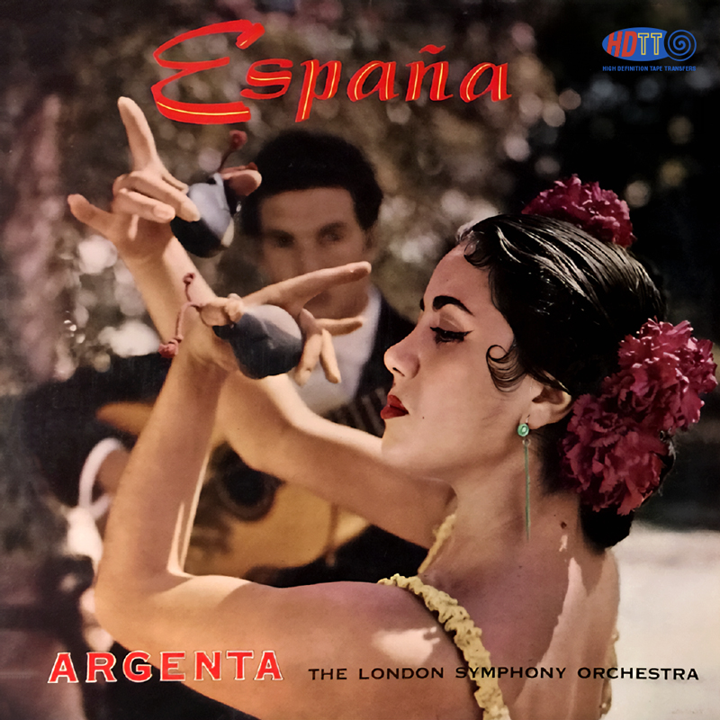
España, Ataúlfo Argenta, The London Symphony Orchestra. HDTT 1957 2026 (DXD, DSD256) HERE
One of the truly legendary “hi-fi spectaculars” of the early stereo era, this album is a treasure and stands among the greatest of Decca’s early releases. Recorded on December 31, 1956, and January 1, 1957, in Kingsway Hall, it possesses the kind of demonstration-quality sound that made those early Decca recordings famous.
It quickly became one of Decca/London’s great stereo showpieces. The program is a brilliantly assembled set of Spanish-flavored orchestral bonbons, most famously:
Chabrier: España
Rimsky-Korsakov: Capriccio espagnol
Granados: Andaluza
Moszkowski: Spanish Dances
Ironically, as collectors often delight in noting, most of the music is by non-Spanish composers, yet under Argenta it all sounds utterly idiomatic. He was perhaps uniquely suited to this repertoire. A native of Spain with an innate feel for Iberian rhythm and color, he brings electric vitality, elegance, and irresistible rhythmic snap to every page.
The London Symphony Orchestra plays its heart out for him, with razor-clean articulation, dazzling woodwind character, blazing brass, sharply etched percussion, and strings that dance with extraordinary lift.
Chabrier's España is the centerpiece: exuberant, brilliantly paced, and almost impossible to hear without smiling. Argenta gives it both swagger and discipline, avoiding vulgarity while maximizing its festive spirit.
Rimsky-Korsakov’s Capriccio espagnol opens the album with a vivid orchestral display, especially the explosive "Alborada" and the vividly characterized "Scena e canto gitano." I stand with the many admirers who regard this as one of the most exciting performances ever recorded.
Engineered by Gordon Parry for Decca, this LP became one of the classic stereo demonstration records for decades thereafter. It is especially celebrated for the Kingsway Hall ambience in full bloom and its exceptionally realistic orchestral placement. For me, it remains the definitive España recording.
This HDTT release is sourced from an original Decca Wide Band pressing. It stands as a true testament to HDTT's ongoing Vinyl Record Restoration (VRR) series—I remain in awe of what Bob Witrak is accomplishing.
Cootie Williams in Stereo. HDTT 1958 2016 (Pure DSD256) HERE
I included this album in last year's Pure DSD256 From Analog Tape: My Top of the Pile list but I've not written a review. So, let's talk about it and while it is such a great album.
Cootie Williams was already a legend at the time of this recording—best known for his years with Duke Ellington, where his plunger-muted trumpet became one of the defining voices of the Ellington orchestra. This album captures him in a more modern, studio-polished RCA setting, recorded in Webster Hall, New York, in March–April 1958.
It is a showcase recording that sits at the intersection of great jazz playing and early stereo demonstration sound, balancing lush big-band arrangements with intimate solo spotlighting. The ensemble includes top New York studio musicians—players like Hank Jones on piano, Barry Galbraith and Tony Mottola on guitar, and a deep brass-and-reed section arranged by Bill Stegmeyer.
The RCA engineers use the wide left-right stage typical of early stereo LPs, and here it serves the music beautifully: Cootie is often placed firmly center-front, with saxes and trombones spread behind him in impressive depth. Musical timbre and textures are rendered with a nearly tactile effect—the blat of trumpets, the shine of massed strings, the moan of saxophones—I feel like I can reach out and touch their sonic shapes, with real emotional effect.
As just two examples, I’d especially highlight "Caravan" and "New Concerto for Cootie" as the tracks that most vividly show why this album remains so collectible.
Positive Feedback's Editor-in-Chief, David Robinson, said of the HDTT Pure DSD256 transfer some years ago: "This one has my very highest recommendation. It's a true reference-standard recording for jazz lovers and audiophiles everywhere… and real reference standards are a lot rarer than you might think."
If you love jazz, if you appreciate big band, this is HDTT Pure DSD256 release is an album you should have in your music library.
Lee Konitz & Martial Solal, The Portland Sessions. International Phonograph, Inc (IPI) 1979 2017 (Pure DSD256) HERE
This album was also included in last year's Pure DSD256 From Analog Tape: My Top of the Pile list but I'd not previously written a review, so now I'm correcting that...
Lee Konitz and Martial Solal's The Portland Sessions is one of the most intimate and revealing duo jazz recordings from their long partnership—a live February 1979 Portland performance captured directly to tape by Jonathan Horwich and released on his International Phonograph, Inc. (IPI) label. This HDTT Pure DSD256 release is a direct transfer from the 30ips analog master tape.
What makes the album so compelling is its radical spareness: just Konitz's alto saxophone and Solal's piano, with no rhythm section to mediate the conversation. Every phrase is therefore fully exposed. Konitz's hallmark cool tone—dry, linear, and endlessly inventive—floats over Solal's famously mercurial piano style, where classical precision, bebop wit, and sudden harmonic detours coexist in real time.
The musical character is less about "playing tunes" in any conventional sense and more about spontaneous architectural improvisation. By 1979, the two had been refining their duo language for more than a decade and could anticipate one another at a near-telepathic level. Solal often seems to recompose the harmonic floor beneath Konitz as he plays, while Konitz responds not with stock bebop gestures, but with long, probing melodic lines that feel as though they are being discovered note by note.
My first hearing of this recording was like a master class in improvisational jazz performance. I was blown away, and I continue to be each time I return to it.
Sonically, the recording possesses all the qualities I prize in Horwich's best work: extreme immediacy, lifelike piano timbre, natural hall bloom, a close "you are there" alto sax presence, and no studio artifice—just analog tape realism front and center. For listeners who value micro dynamic nuance, spontaneous interplay, and the sheer art of duo improvisation, this is one of the gems of the IPI/HDTT catalog.