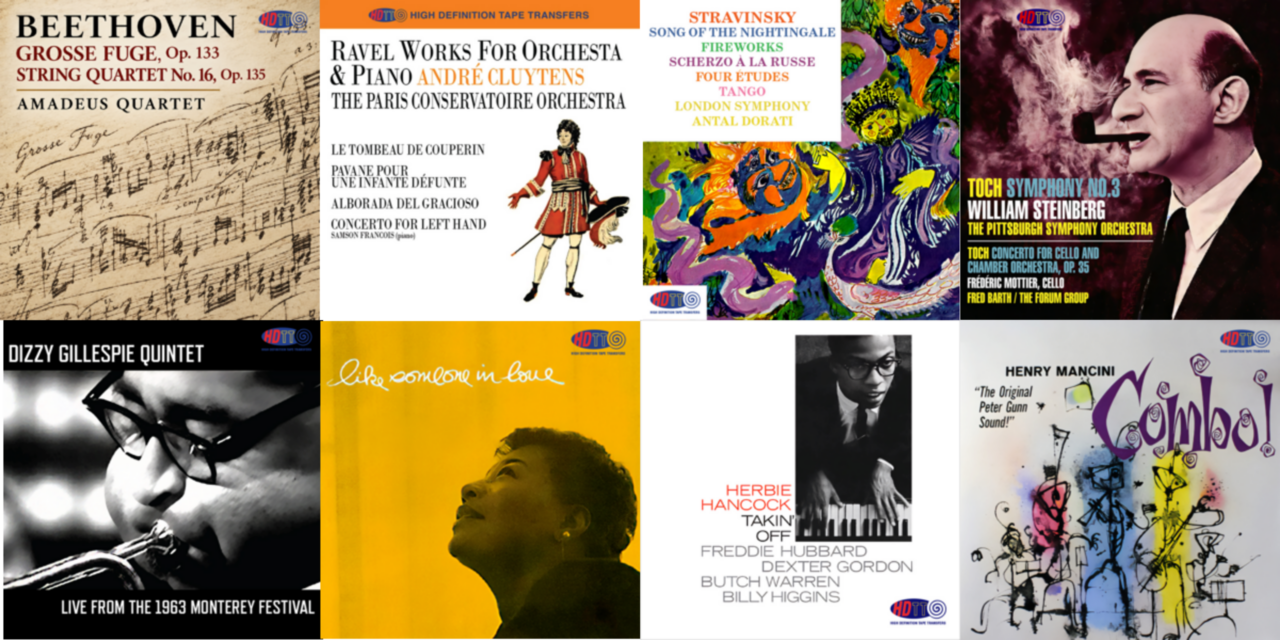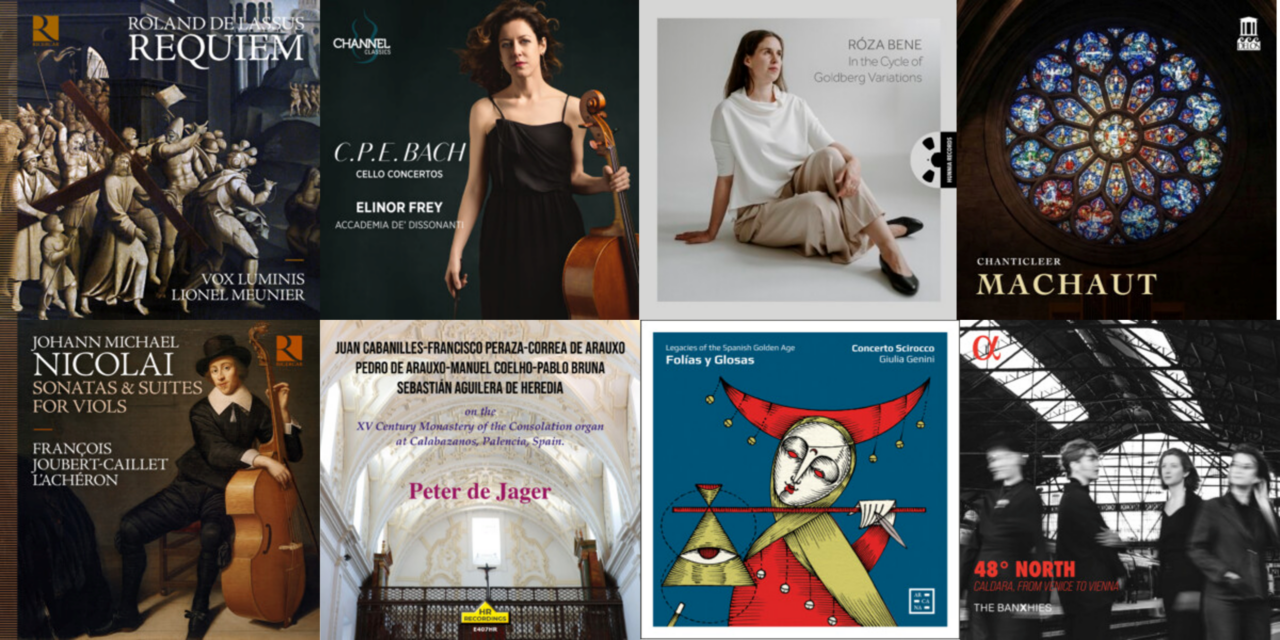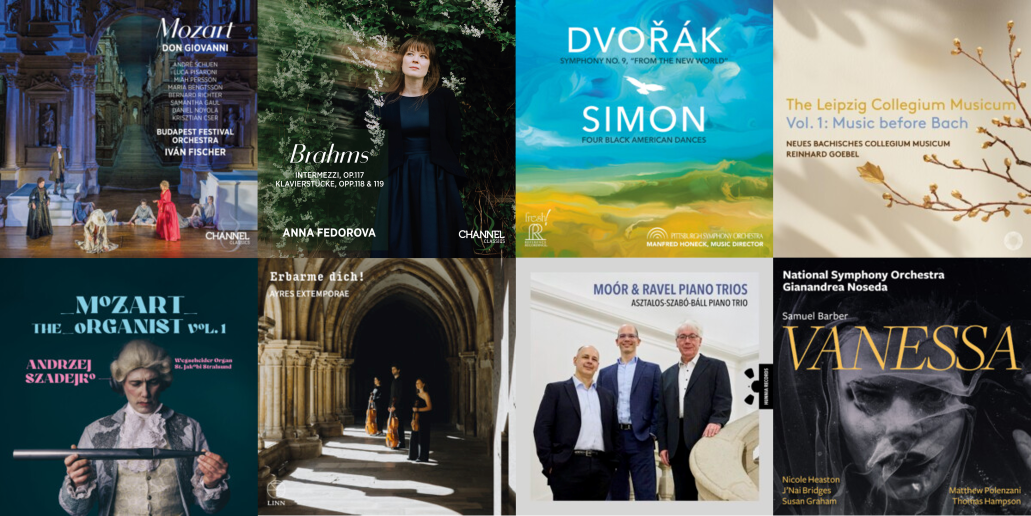

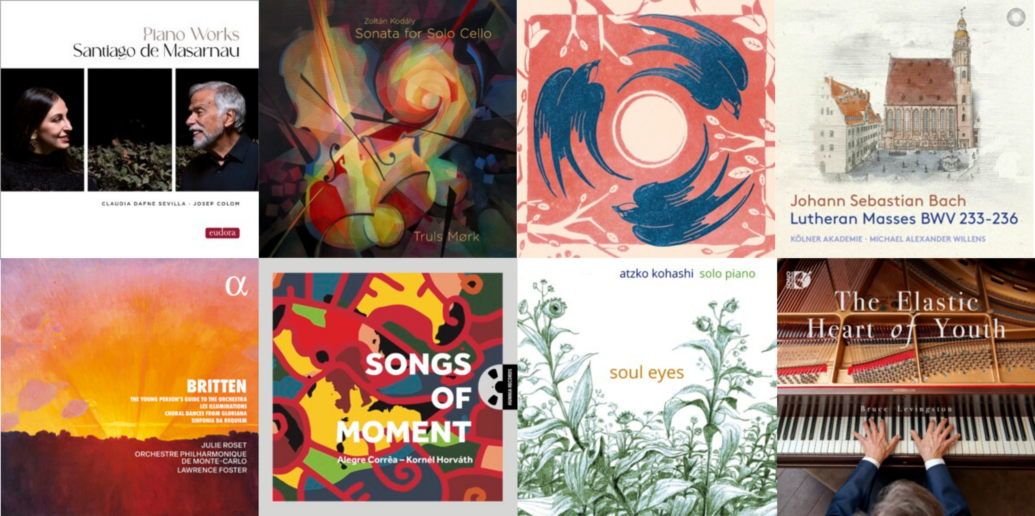
I am frequently overwhelmed, in the most positive way imaginable, by the cornucopia of marvelous releases that appear. Such is the case today as I offer to you my thoughts on eight recent releases available at NativeDSD. They have made my heart sing these past few weeks.
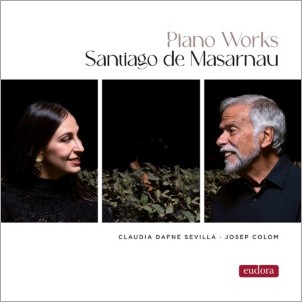
Santiago de Masarnau: Piano Works (Vol. 1-3), Claudia Dafne Sevilla, Josep Colom. Eudora Records 2026, World Premiere Recording (Pure DSD256, Stereo MCh) Edit Master Sourced HERE
This 3-volume set is a genuine gift for anyone who values solo piano music of elegance, intimacy, and refined craftsmanship. Dedicated to the works of Santiago de Masarnau (1805–1882), a little-known yet significant figure in nineteenth-century Spanish music, the set brings to life the music of a composer who helped transmit European Romanticism to Spain. That these are world-premiere recordings is astonishing; it is hard to believe music of this quality has gone unrecorded until now.
The music feels fresh and alive, shimmering with wit and vitality. Certainly one hears echoes of other composers, but they are so seamlessly absorbed that they register less as imitation than as acknowledgement—part of Masarnau's emergence into a distinctive voice. I offer this not as a musicologist or formal critic, but simply as an engaged listener who values both musical substance and recorded sound—qualities this Eudora release delivers in abundance.
One of my favorite pianists, Josep Colom, is joined here by fellow Spanish artist Claudia Dafne Sevilla, herself both a superb pianist and an insightful musicologist.
In the enclosed booklet, Sevilla writes: "There is no doubt as to the importance of Santiago de Masarnau in the transmission of European Romanticism to Spain, a role borne out both by his music and by his twenty-five articles of music criticism published in the weekly journal El Artista, through which he left a lasting imprint on Spanish cultural life. His critical thought was founded on two core principles: the importance of performance, and a firm insistence on study and knowledge of art as prerequisites for its true appreciation."
Masarnau arrived in Paris in 1825 at the age of 20. Through Spanish contacts, he quickly entered the city's musical and cultural circles, attending concerts of all kinds and encountering the works of Weber, Hummel, Beethoven, and Mozart, as well as those of his contemporaries such as Meyerbeer and Rossini. He even became a regular presence at concerts given by Liszt.
And yet, as Sevilla notes, Masarnau pursued a path of relative simplicity in his own compositions, showing a natural affinity for the inward Romantic pianism associated with Field, Cramer, and Hummel—despite, or perhaps because of, his friendship with Chopin and Alkan.
However his aesthetic evolved, his preference for restaint—for a less overtly theatrical style than was often fashionable at the time—is clearly evident in these works. This simplicity, however, should not be mistaken for a lack of sophistication or intellectual depth. On the contrary, the music is intricately constructed, expressive, and deeply rewarding.
That music is brought vividly to life—made consistently inviting—by the exquisite artistry of Colom and Sevilla. I listened through most of the first two volumes in a single stretch, fully absorbed before finally pausing for a break. One delightful piece seemed to flow seamlessly into the next, each maintaining the same high level of imagination and execution.
Perhaps this is music best savored in smaller portions. But when the performances are this compelling, and the musical language so naturally fluent, restraint becomes difficult. Add to that the exceptional sound quality—so rich in timbral nuance and resolution—and it becomes even harder to step away.
Gonzalo Noqué, recording engineer and founder of Eudora Records, has once again produced a sonic benchmark. Captured in the Auditorio de Zaragoza—Princesa Leonor (Sala Mozart), the 1957 Steinway Model D is rendered with striking naturalness and resolution, offering wide frequency extension, a convincing sense of air, and a beautifully developed bloom of harmonic overtones. In this Pure DSD256 release, the sound is exceptionally transparent and unforced—free of compression and artifacts, and faithful to the instrument's character.
What distinguishes Noqué's work, however, goes beyond format or mastering. It reflects a holistic approach: the careful selection of venue, microphones, and placement, all judged in service of the music rather than the recording itself. The result is sound that communicates directly, without intrusion. His command of piano recording remains, quite simply, in a class of its own.
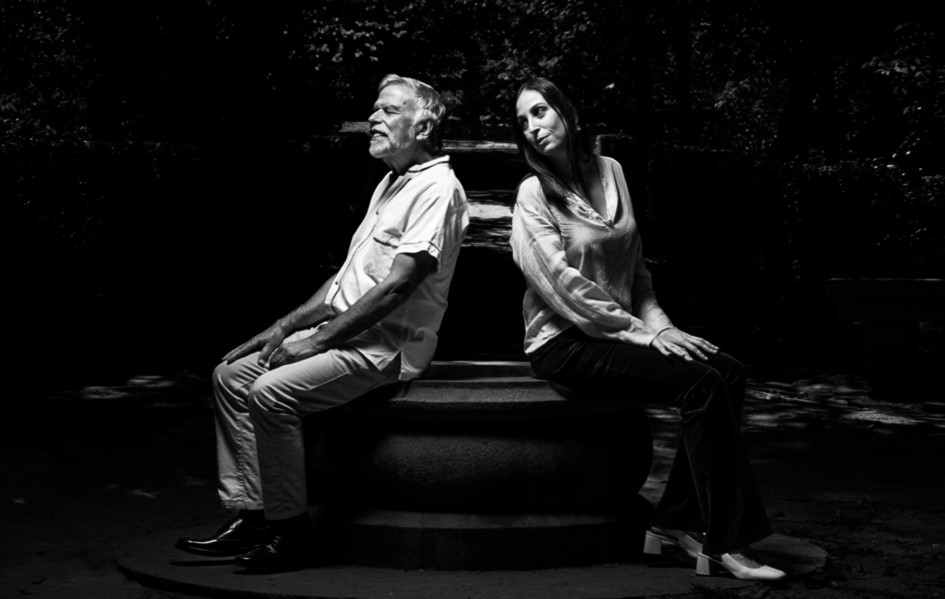
Josep Colom and Claudia Dafne Sevilla
Kodály, Sonata in B Minor for Solo Cello, Op. 8, Truls Mørk. 2L (DXD 32-bit, Stereo, MCh) Edit Master Sourced HERE
Truls Mørk's 2L recording of Kodály's Sonata in B Minor for Solo Cello, Op. 8 brings together one of the 20th century's great solo cello works with a performer fully equal to its musical and technical demands.
Kodály's sonata is itself monumental—arguably the most important work for unaccompanied cello after Bach. Written in 1915, it transforms the cello into what can feel like an entire orchestra through its scordatura tuning, fierce double-stops, folk-inflected rhythms, ghostly harmonics, left-hand pizzicato, and immense rhetorical spans. In Mørk's hands, the work unfolds less as a display piece than as a dramatic narrative carved in sound.
What stands out in his playing is the combination of strength and lyricism. In the opening Allegro maestoso ma appassionato, he gives the music its full declamatory weight, drawing from the cello a dark, almost orchestral sonority, yet every line still sings. The folk-derived inflections never feel exaggerated, but instead seem to arise naturally from the phrasing.
The central Adagio con grand' espressione forms the emotional heart of the work. Here the lowered strings deepen the resonance so profoundly that the cello seems to bloom from within, while Mørk's spacious pacing allows Kodály's rhapsodic architecture to unfold with a sense of inevitability.
The finale, Allegro molto vivace, brings bracing energy and rhythmic drive. Mørk's articulation remains clean even in the most demanding string crossings and rapid shifts, while the dance rhythms snap with near-percussive force, vividly evoking the work's Hungarian roots.
Sonically, 2L recording engineer Morten Lindberg captures the instrument with his usual three-dimensional realism and natural acoustic bloom. You hear not just pitch and timbre, but the tactile details of bow hair on string, the wood resonance of the body, the decays into the hall, and the breathing space around the instrument. It is a remarkably tactile listening experience.
Recorded in Jar Church in 2016, this is just now released as a stand alone album. I hear in it one of the most compelling modern accounts of Kodály's Op. 8.
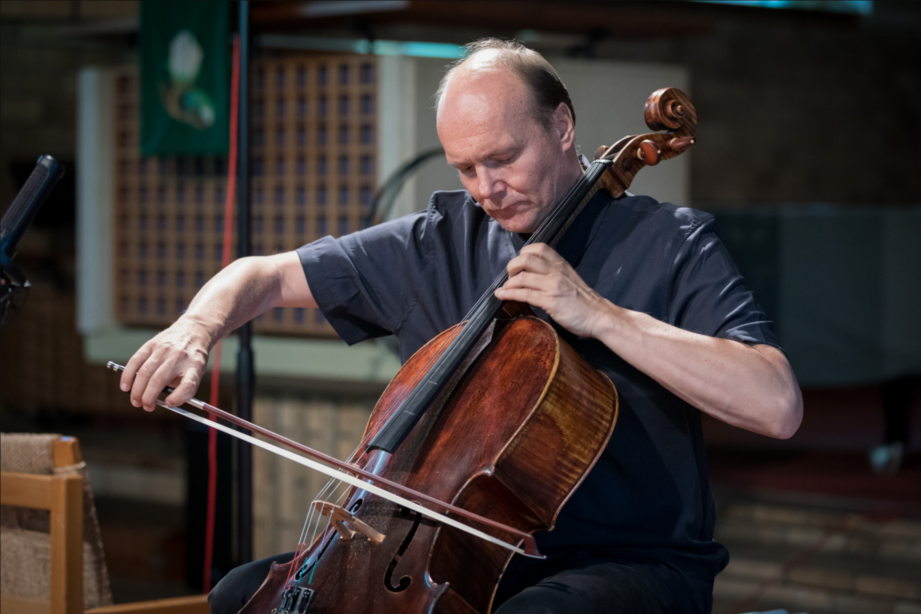
Truls Mørk, recording session in Jar Church, 2016
Scenes Of A Folk Life, Agathe Ensemble. Cobra Records 2026 (DXD 32-bit, Stereo, MCh) Edit Master Sourced HERE
This is Agathe Ensemble's second recording on Cobra Records, now with a broader representation of its member musicians. The musical focus shifts as well. Rather than European classicism, this album is exactly what its name suggests: music rooted in folk tunes and reimagined through string duos, trios, quartets, and septets.
The works come from mainstream classical composers—Julius Röntgen (1855–1932), Amanda Maier (1853–1894), and Edvard Grieg (1843–1907)—writing in the late Romantic period, a time when questions of national identity were front and center. Yet efforts to incorporate folk idioms into classical forms often blurred or softened those original sources, reshaping them into a more polished musical language.
This is where Agathe Ensemble steps in. Beginning with these late 19th- and early 20th-century compositions, they've created new arrangements for string ensemble that peel back some of the Romantic accretions, aiming to recover the rhythmic drive, physicality, and dance impulse of the underlying folk material. In doing so, they allow the songs and dances within these works to "speak clearly once again."
The result is immensely refreshing.
You can get a sense of the project in this short pre-release album funding video, which includes brief musical excerpts:
An aspect of his album that I'm enjoying very much is the variety—the variety of music but also the variety of instrumentation and resulting variety of timbral texture. Yes, it is all strings. But in different combinations from duo for violin and cello, to string trio adding a viola, to string trio with two violins and viola, to quartet, quintet, and sextet. Nice!
Free Sample Track Download at full DXD 24-bit resolution
I've enjoyed this album so much that I contacted Tom Peeters, recording engineer and founder of Cobra Records, to see if he and the Agathe Ensemble would allow us to post a free download track for readers of Positive Feedback. With their gracious consent, I encourage you to download and listen to this full DXD resolution sample track:
Download Free Sample Track from Scenes of a Folk Life
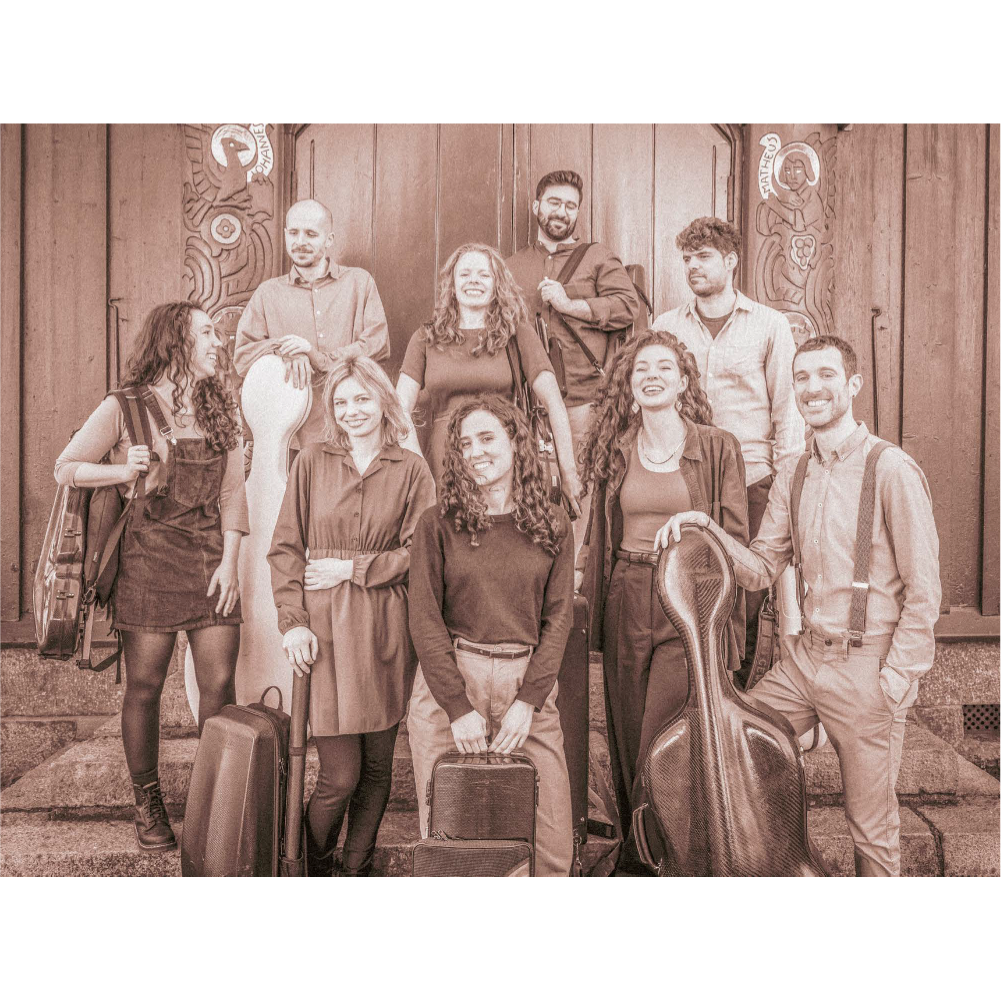
Agathe Ensemble
J.S. Bach: Lutheran Masses BWV 233-236, Kölner Akademie. Pentatone 2026 (96k, Stereo) HERE
Do you have to be a person of faith to enjoy music made for religious services? Decidedly not. If that were the case, we'd all be missing a huge amount of glorious music created over the past multiple hundreds of years. Much of the music to which I listen is sacred in some form or another—chants (Gregorian and otherwise), Requiems, Masses, oratorios, much of the vast organ repertoire. My musical life would be far poorer without it.
And so I come to this very delightful album of Masses by Johann Sebastian Bach. But Masses in a Protestant church, you ask? Oh, surely yes. A Mass is a liturgical celebration not limited to the Catholic Church. It is also used by Lutheran churches, Western Rite Orthodoxy, some Anglican churches, and Old Catholicism. The term refers to the entire worship service, originating from the Latin dismissal Ite, missa est. While Protestant denominations often prefer the term "service" or "worship service," these Masses by Bach are clearly within that tradition.
Bach's Lutheran Masses, BWV 233–236 are often called the Missae breves, though "Lutheran Masses" is the more historically revealing term. Each sets only the Kyrie and Gloria, which aligns perfectly with Lutheran liturgical practice in Leipzig, where those Latin portions of the Ordinary were retained on feast days and special Sundays. (See, I bet you didn't think I had a clue about service, did you? It's what happens after reading record jackets for 50 years.)
Much of the music in these works sounds familiar because Bach re-imagined a great deal of it from earlier cantatas. This is part of Bach's genius: he doesn't merely recycle; he recomposes and reimagines through transformation.
Each Mass is six movements—Kyrie followed by a five-part Gloria. Choruses frame more intimate arias and duets, and he often changes instrumental color and vocal distribution from the source cantata. Because there is no Credo or Sanctus, the emotional world feels compressed and focused. Considered them distilled—perhaps more concentrated in the result, the way a good sauce reduction works in cooking.
And these are all very clearly of a very different profile from the vast reach of the Mass in B Minor. They are more immediate, devotional, and direct.
Kölner Akademie provides clear instrumental articulation, bright winds, and sharply etched contrapuntal lines, all well suited to this concentrated profile where instrumental color becomes so important to the communication. The soloists—Hanna Herfurtner, Elvira Bill, Gwilym Bowen, and Thomas Bonni—provide a light, text-centered, and agile quartet that suits the intimate Gloria arias beautifully.
These are performances grounded in historically informed practice which delights me given my love of historical instruments and performance practice. YMMV.
In sum, these are intimate performances—not "grand Bach" but Bach the supreme reviser and dramatist of sacred text, providing music that can readily serve as an integral part of a church service with a reasonable number of performers.
The sound engineering is immaculate, matching the need for clarity and articulation very well. My only continuing complaint is with the original recording resolution of 96kHz PCM. I keep imagining how much more satisfying these might yet be if the recording engineers had chosen a higher-resolution format capable of capturing greater aural density. And yes, I am already upsampling for playback—but you simply can't add what wasn't there in the original capture.
The Elastic Heart of Youth, Bruce Levingston. Sono Luminus 2026 (DXD Stereo) HERE
Pianist Bruce Levingston offers a lovingly curated collection of short piano works—less a conventional recital than a meditative, cross-era reflection on vitality and transformation. It unfolds as a journey through mood, color, and introspection rather than as a display vehicle, inviting attentive listening. The emphasis is on continuity: how different musical languages illuminate varied facets of life.
The program opens with the quiet poise and organic stillness of Sibelius's Le Sapin. From there, Levingston turns sharply to Janáček's Sonata 1.X.1905, it's volatility conveying a sense of tension, alienation, and grief.
Augusta Gross's Solace, centered on stillness and the "courage to be calm," provides a moment of recovery and reflection, followed by the luminous contrast of Debussy's La fille aux cheveux de lin and Clair de lune, shimmering with color and light.
Works by Mozart and Scarlatti offer a clearing of classical clarity—music that feels at once structured and improvisatory, playful even within the richer sonority of the modern piano.
The program closes with American composer Missy Mazzoli's The Elastic Heart of Youth (c. 2024), which gathers the album's emotional threads into a rhythmically charged affirmation of resilience and adaptability. This new composition by Missy Mazzoli (b. 1980)—composed in honor of author Ron Chernow's 75th birthday and presumably commissioned by Bruce Levingston—was a very welcome discovery on this album. I consistently find Mazzoli's music to be fresh, innovative, and challenging. If you don't know some of her other works, I encourage you to seek them out. Sono Luminus has frequently recorded her music performed by various artists.
Levingston plays throughout with sensitivity and control, bringing particular delicacy to the quieter passages. Recorded at Sono Luminus Studios in Boyce, Virginia, engineer Daniel Shorescaptures the Steinway Model D with striking clarity, resonance, and nuance. Harmonic overtones bloom naturally within the spacious acoustic of this converted church, its vaulted wood ceiling and original heart pine floor contributing to a vivid sense of air and presence.
A beautifully realized album—both musically and sonically.
Songs of Moment, Alegre Corrêa, Horváth Kornél (20th Anniversary DSD 256 Remaster Series). Hunnia Records 2009 2026 (Pure DSD256-Analog Mixed, Stereo) Edit Master Sourced HERE
"It's wild and different, a bit crazy, and I do like it. Very much!"
That was my reply when first asked what I thought of this album. And the more I listen, the more intrigued I've become.
These two seasoned musicians come from utterly different musical cultures—one from Brazil, the other from Europe. They've grown from very different roots, and that contrast is exactly what makes this collaboration so engaging, so distinctive. The music draws on Brazilian and European folk idioms, blends in elements of American jazz, and unfolds through rhythmic and dynamic patterns that feel entirely their own.
Originally released in CD, this anniversary edition has been remastered by Hunnia from the original DSD256 tracks, mixed through their Studer 962 analog console in the manner they've refined over recent years. The result is an open, detailed, and highly dynamic sound, with impressive frequency extension. More importantly, it preserves the immediacy and energy of a live performance with striking realism.
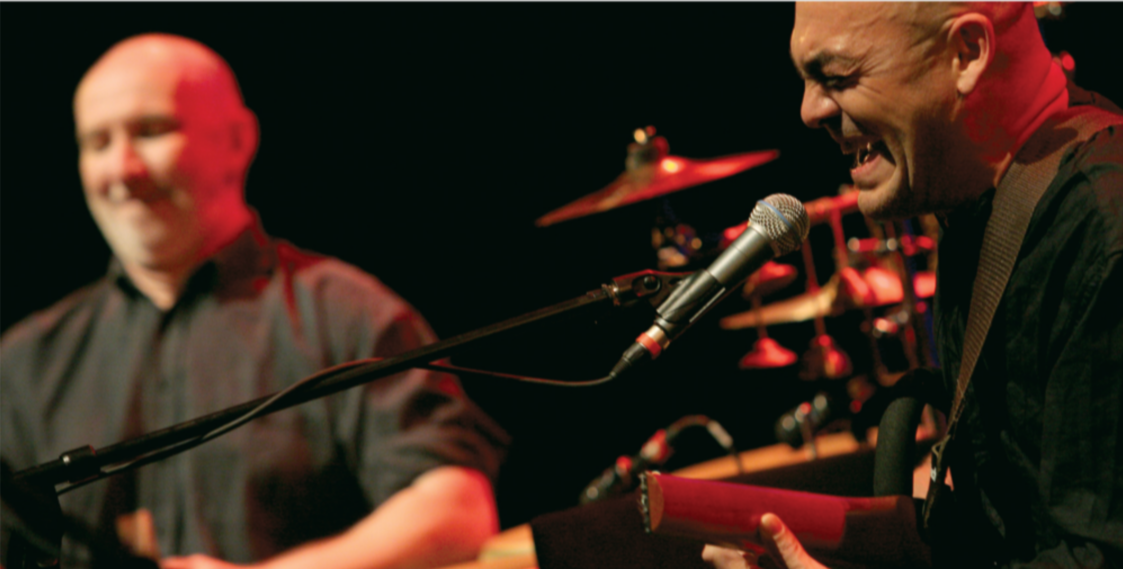
"Song 5" on Songs of the Moment album, Alegre Correa and Kornel Horvath
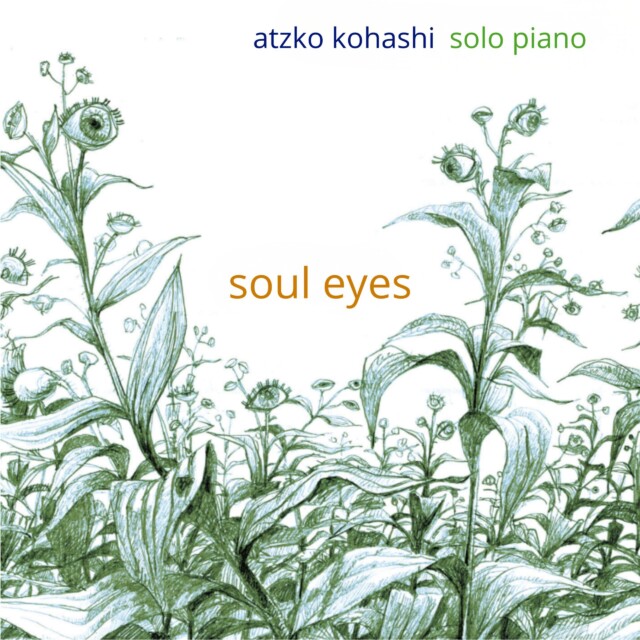
Soul Eyes, Atzko Kohashi. Sound Liaison 2026 (DXD 32-bit, 768k, DSD256, Stereo) Edit Master Sourced HERE
I admit it—I'm a fan. When I see Atzko Kohashi's name, I'm eager to listen. And once again, no disappointment. This is an earlier recording, made in 2014 and only now mastered and released—and it captures Kohashi in prime form.
Frans de Rond wrote about this session in a blog post*, noting: "This was our first solo piano recording for Sound Liaison. Just a pianist, a magnificent instrument, and the room itself. We wanted to do something special."
To that end, they used a classic Decca Tree microphone setup above the piano—an approach more often associated with orchestral recording, valued for its spacious, natural stereo image with depth and air. Rather than placing microphones near the open lid, they removed the lid entirely, giving direct access to the full acoustic space above the instrument. The Decca Tree was then positioned overhead to capture the piano as if it were an orchestra: open, natural, and fully integrated with the room.
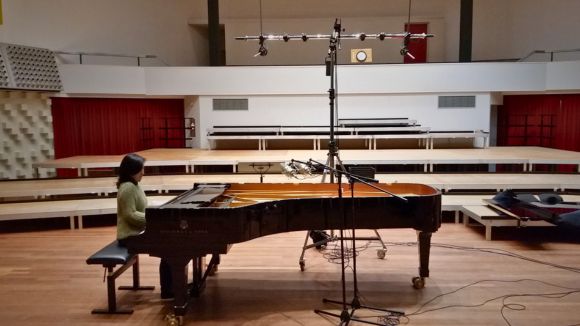
For added intimacy and definition, an ORTF pair was placed closer to the strings.
The result works beautifully, especially in light of Frans' philosophy of stepping back and allowing the musician space to perform.
As he writes: "So we let her play. Long stretches, without interruption. No stopping to adjust levels, no endless takes, no technical anxieties bleeding into the music. The idea was for her to find her own flow and stay in it.
"Listening from the control room, Peter and I heard it happen. There were moments where the music seemed to breathe on its own—where Atzko's touch on the Steinway felt entirely uncontrived, present, searching, honest."
That sense carries through the entire album. The playing feels unforced, relaxed, and deeply authentic—improvisation as both poetry and discovery. This is jazz at its most direct.
Frans also reflects on why the release took so long: "That's a question I still can't fully answer. The recordings were there. The performances were beautiful. Life, other projects, timing—perhaps all of these played a role. But sometimes recordings have their own patience. They wait until the moment is right."
And here, the moment does feel right. This is a pure delight—highly recommended.
* You can read Fran's original blog post here.
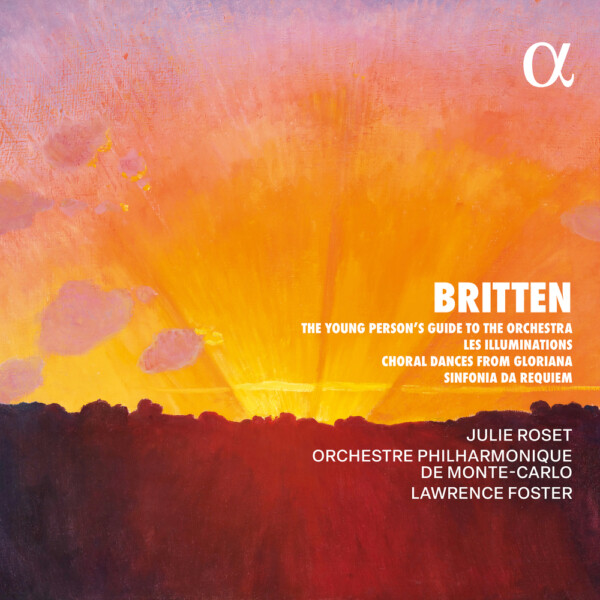
Britten: Young Person's Guide to the Orchestra, Les Illuminations, Choral Dances from Gloriana, Lawrence Foster, Orchestre Philharmonique de Monte-Carlo. Alpha Classics 2026 (96k, Stereo) Edit Master Sourced HERE
So, do we really need another Young Person's Guide or Dances from Gloriana? Yes. Emphatically, yes, when they are this good—and this distinctly different.
The Young Person's Guide to the Orchestra is, at its core, a demonstration piece: a theme (from Henry Purcell) followed by a chain of variations designed to spotlight orchestral color, ending in a fugue that recombines everything. That design leaves a lot of room for conductors to shape how it feels.
Even historically, tempos vary widely. Britten himself took the opening faster and less pompous than many who followed him. Lawrence Foster goes further—lighter and quicker. The piece feels more playful, less ceremonial. The fugue gains greater clarity, shedding some of the usual bombast.
That alone changes the entire character.
The Orchestre Philharmonique de Monte-Carlo does not sound like the classic British orchestras long associated with this repertoire. You hear lighter, more transparent strings, less weight in the brass, and more color in the woodwinds. All of this shifts the music away from "Edwardian grandeur" toward something more refined—at times almost chamber-like—with a thread of wry humor running through it.
Then there is Alpha's recording aesthetic: very clean separation of instrumental lines, high-resolution detail (even at native 96kHz), and less of the blended "orchestral wash." In a work built to isolate instruments, this brings a more analytical, more immediate sonic perspective—at moments almost "recomposed" in feel.
You hear everything—and that changes how the structure registers.
This same sound world carries through the rest of the program: Les Illuminations, Symphonic Suite from Gloriana (Dances), and Sinfonia da Requiem.
If you—or someone in your household—are not quite convinced by Britten, this album might shift that view. I've long been a fan. Ann, less so. But after listening (somewhat under duress), she surfaced with a smile: "Well, that was different—perhaps…" Around here, that counts as a breakthrough.
The recording was engineered and mastered by Erdo Groot of Polyhymnia International, and the sound quality reflects the consistently high standard for which Groot and his team have been known for decades.
Highly recommended.