


I so often bring to you music in ultra-high resolution, but there are so many wonderful recordings not originally recorded in DXD or DSD256. I listen to many of these, but don't regularly write about them because my brief is to focus on the higher resolution recordings so readers can know that they are available. In today's Recent Finds, I have but one Pure DSD256 album (and it is musically superb). The remaining albums are in more modest resolution PCM, but also musically superb even though missing that soupçon of greater aural density excellence that the higher resolutions deliver.
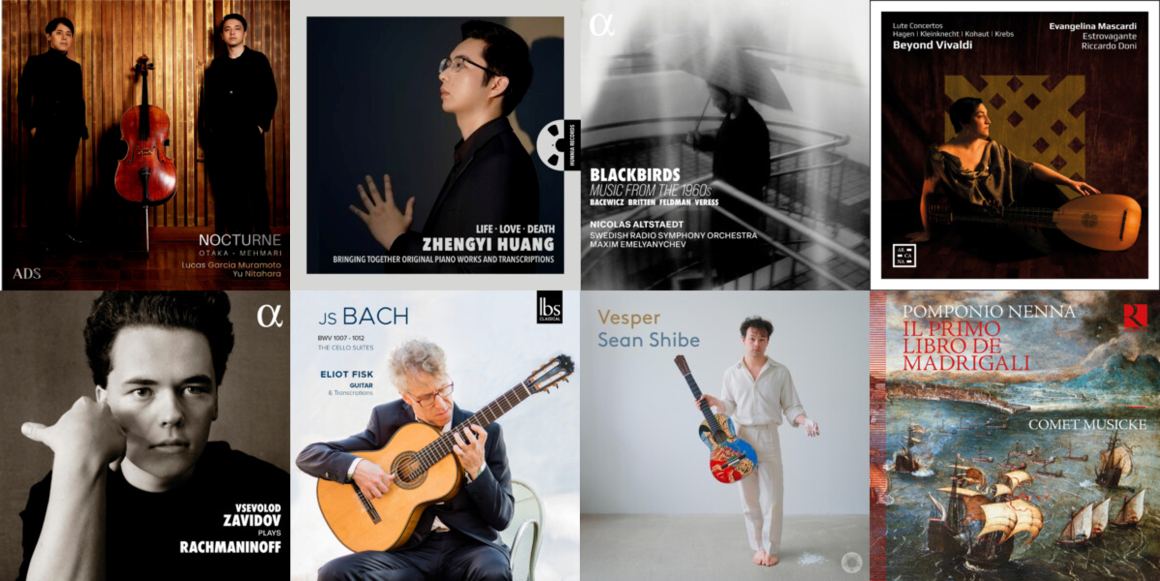
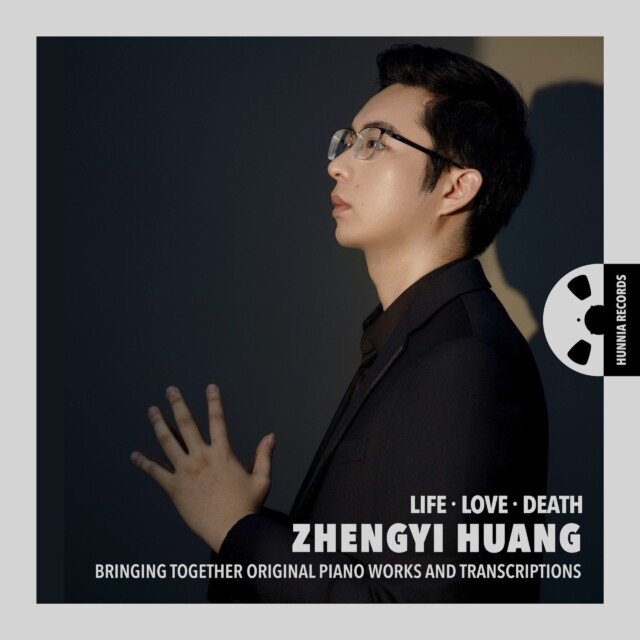
Life, Love, Death, Zhengyi Huang (piano). Hunnia Records 2026 (Pure DSD256, Stereo) Edit Master Sourced HERE
Selecting works for solo piano by Stravinsky, Liszt, Brahms, Schumann, Kreisler, and Wagner, multiple award winning Chinese pianist Zhengyi Huang crafts a cycle following the themes of life, love, and death.
The album opens with Stravinsky's composition for piano of Three Movements from Petrushka, where a puppet is suddenly granted a human soul. For Zhengyi Huang, "this is the first metamorphosis: the passage from lifelessness into consciousness, desire, and vulnerability."
The central section of the album is a "Love Cycle" of six works which he describes as showing the emotional heart of human existence. It doesn't trace a simple narrative so much as an emotional arc—one that rises to transcendence, fractures into memory, and then resolves into something inward and private. You may read this differently, but this is how I hear this cycle:
It begins with Liebestraum No. 3 by Franz Liszt, presenting love in its most idealized, lyrical form—tender, aspirational, almost suspended outside of time. This is love as dream.
From there, the leap to Isolde's Liebestod by Richard Wagner (in Liszt's arrangement) is crucial: the dream is fulfilled, but only through annihilation. This is the apex of the cycle—love as transcendence, where fulfillment and death are indistinguishable. Zhengyi Huang plays this lovingly, with closing delicacy.
The program then turns inward and backward. Liebesleid and Liebesfreud by Fritz Kreisler (via Sergei Rachmaninoff) function almost as memory fragments—stylized, nostalgic reflections. Interestingly, the order matters: Liebesleid (sorrow) preceding Liebesfreud (joy) suggests not a chronological past but a mind revisiting love in pieces, where pain and pleasure are inseparable and interchangeable.
The move to Intermezzo in A major Op. 118 No. 2 by Johannes Brahms marks a profound shift. Here love is no longer theatrical or even explicitly programmatic—it has become interiorized. This is a quiet, autumnal acceptance, where warmth persists but without illusion.
Finally, Widmung Op. 25 No. 1 by Robert Schumann (again through Liszt) feels like a return—but transformed. The original song is an ecstatic declaration of devotion, yet placed at the end of this arc, it reads less as youthful rapture and more as a conscious affirmation after experience. Love is no longer a dream or an abyss; it is a chosen dedication.
The album closes with Liszt's immensely powerful Totentanz—with death as not simply an ending, but as "a final reckoning from which transcendence and renewal emerge."
Up through Widmung, the arc Zhengyi Huang traces arrives at a kind of mature, affirmative understanding of love—tempered, inward, and consciously chosen. One could easily stop there and hear the cycle as complete. But Totentanz refuses that closure.
Liszt's Totentanz is built on the medieval Dies irae, the great musical embodiment of death and judgment. The intensely personal journey—from dream to transcendence to memory to inward devotion—is suddenly placed against an impersonal, inescapable force: death. Whatever forms love takes, it exists under that shadow.
The serenity of Brahms and the affirmation of Schumann are not denied, but they are no longer final. The closing with Totentanz suggests that even themost refined, interiorized understanding of love remains subject to disruption—perhaps even dissolution. We already encountered a kind of "death-transfiguration" in Isolde's Liebestod. But Wagner's vision is ecstatic, dissolving the self into love, whereas Liszt's Totentanz is stark, confrontational, even grotesque at times. By ending here, the album seems to say that earlier transcendence may have been real, is also partial—one vision among others. The entire "love cycle" is simply one episode within a larger, recurring human condition in which love, memory, and death continually intertwine.
This is not simply a "dark" or "dramatic" ending. It denies the listener a purely consoling resolution and instead places love within a broader existential frame—one in which transcendence, nostalgia, and devotion all exist, but none has the final word.
So, apologies, my friends. I try to narrate my interpretation of an album's flow. But here it feels like a useful exercise because this album perfectly illustrates why I prefer to listen to entire albums, in the order the artist has conceived. There is far more meaning to be gleaned this way than subjecting oneself to "bleeding chunks" of music stripped of context—as so often happens on classical radio. If you don't usually listen this way, it's worth trying. You may be pleasantly surprised by what you hear.
Zhengyi Huang's performance displays abundant technical prowess, but more importantly, it conveys real intelligence and emotional depth. His playing is never mechanical, never merely a technically perfect display of digital precision. Hearing him is a complete and deeply rewarding musical experience of the first order.
Highly recommended.
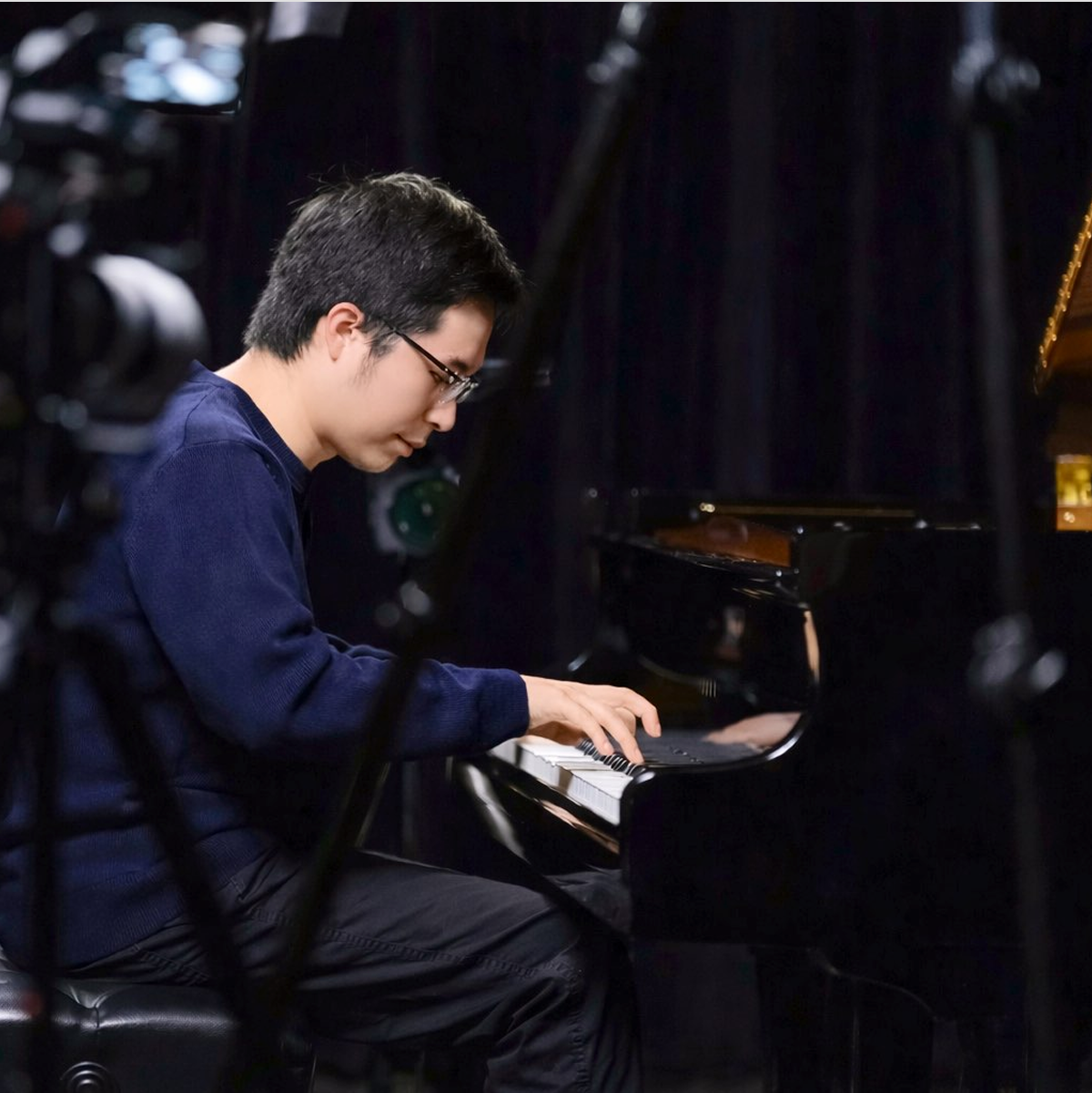
Zhengyi Huang
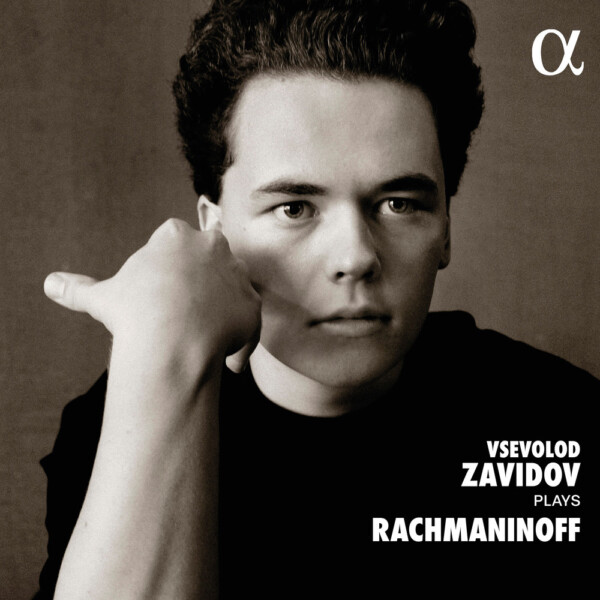
Vsevolod Zavidov Plays Rachmaninoff. Alpha Classics 2026 (192k, Stereo) Edit Master Sourced HERE
Vsevolod Zavidov is widely considered one of the most promising young pianists to emerge from the great Russian tradition. He first drew international attention by winning the inaugural Radu Lupu Prize in 2024 and the UBS Young Soloists Prize in 2025. The performances on this debut album of Rachmaninoff piano works feel remarkably self-possessed—and notably different from the heavier, more saturated approach many listeners may expect.
Zavidov doesn't lean into the thick, enveloping sonority often associated with Sergei Rachmaninoff. Instead, there's a noticeable lightness of touch and quicksilver responsiveness.
In the Corelli Variations, even delicate passages (like Variation II) carry a sense of ease and mobility. The music feels in constant motion—flexible rather than monumental, fluid rather than weighty. The result is a Rachmaninoff that comes across as shifting, almost improvisatory.
Technically, he is formidable. But what stands out is how clean and finely articulated everything is. Instead of overwhelming you with sound, he clarifies the texture, letting inner voices and rhythmic detail come through.
If you're used to the big, saturated Rachmaninoff tradition (think Horowitz, Ashkenazy, Richter), this will likely strike you as leaner in texture, quicker in reflex, less overtly “romantic” in the lush sense, more analytical yet still expressive. When the music darkens, Zavidov resists overindulge. He shapes rather than saturates. In more dramatic études, he can summon "storm-clouds" of sound, but the emotional line remains focused, never sprawling. That restraint proves effective, keeping music from tipping into excess.
In short, Zavidov approaches Rachmaninoff with clarity, movement, and structural agility.
A refreshing—and welcome—alternative.
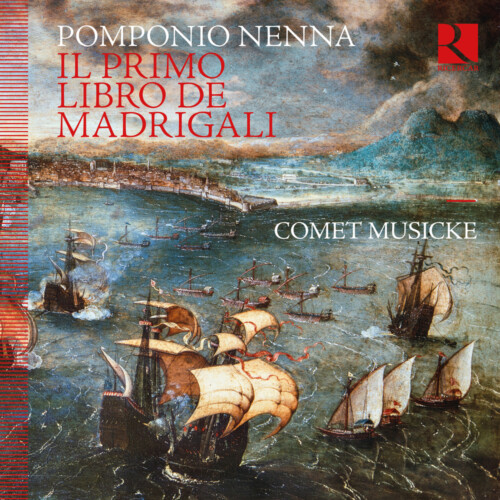
Pomponio Nenna: Il primo libro de madrigali (The First Book of Madrigal), Comet Musicke. Ricercar 2026 (88.2k, Stereo) Edit Master Sourced HERE
This new release from Comet Musicke brings welcome attention to the madrigals of Pomponio Nenna (1556–1608), a composer often mentioned alongside Carlo Gesualdo but far less often encountered on record.
The program centers on Nenna's First Book of Madrigals (1613), presented not as a continuous set but interwoven with instrumental works by contemporaries Giovanni de Macque (1552-1614) and Giovanni Maria Trabaci (1575-1647). These instrumental pieces—keyboard works arranged here for viols—serve as effective interludes. They break up the density of the vocal writing and give the ear a chance to reset before the next madrigal.
The madrigals themselves are expressive, with frequent shifts in color and tension, especially in passages where the lines move in unexpected ways against one another. This is music filled with light and energy, composed when Nenna was still a young man and first published in Venice in 1582.
Not himself a professional musician, Nenna belonged to that class of gentleman composers that flourished around the turn of the 17th century. Reflecting a very personal approach to composition, he marks the birth of his son not only in the dedication of this book but also in the music itself. The collection opens with a six-voice madrigal, "Poiché legato il piè mi tien sì forte." Its text, a canzone by an anonymous poet, is entirely devoted to relating the happy birth of the child and incidentally singing its father's praises.
Throughout these madrigals, the interweaving of voices often forms accessible harmonic layers, giving the music a gentle, flowing sense of euphony. The melodic lines frequently follow lively, sometimes playful rhythms that reinforce the overall character.
As noted in the accompanying booklet, the texts set by Nenna come from a variety of sources, including Francesco Petrarca (Petrarch), Remigio Nannini, Lodovico Paterno, and Chiara Matraini, alongside a number of anonymous texts. The mood varies from piece to piece, but overall the collection leans toward a sense of vitality and enjoyment rather than introspection or tragedy. Later works by Nenna would move in a different direction; but here, the prevailing tone is one of affirmation.
Comet Musicke takes a measured approach to performance. The ensemble avoids pushing the music too hard, allowing expression to emerge through the natural shaping of the lines rather than overt dramatization. This results in an easy, coherent flow across the album. The singing is clear and well balanced, with careful attention to blend and intonation.
I found the entire album consistently appealing and very well performed.
The Ricercar engineering is, as expected, clear, clean, and direct, with a good sense of the natural acoustic of the recording venue, the Chapelle Saint-Louis de l'hôpital de la Pitié-Salpêtrière. As usual, however, I am left wondering how much more engaging the result might have been had the recording been made at a higher native resolution than 88.2 kHz. Even when upsampled for playback, I miss some of the density and ease I associate with recordings made in native DXD or DSD256.
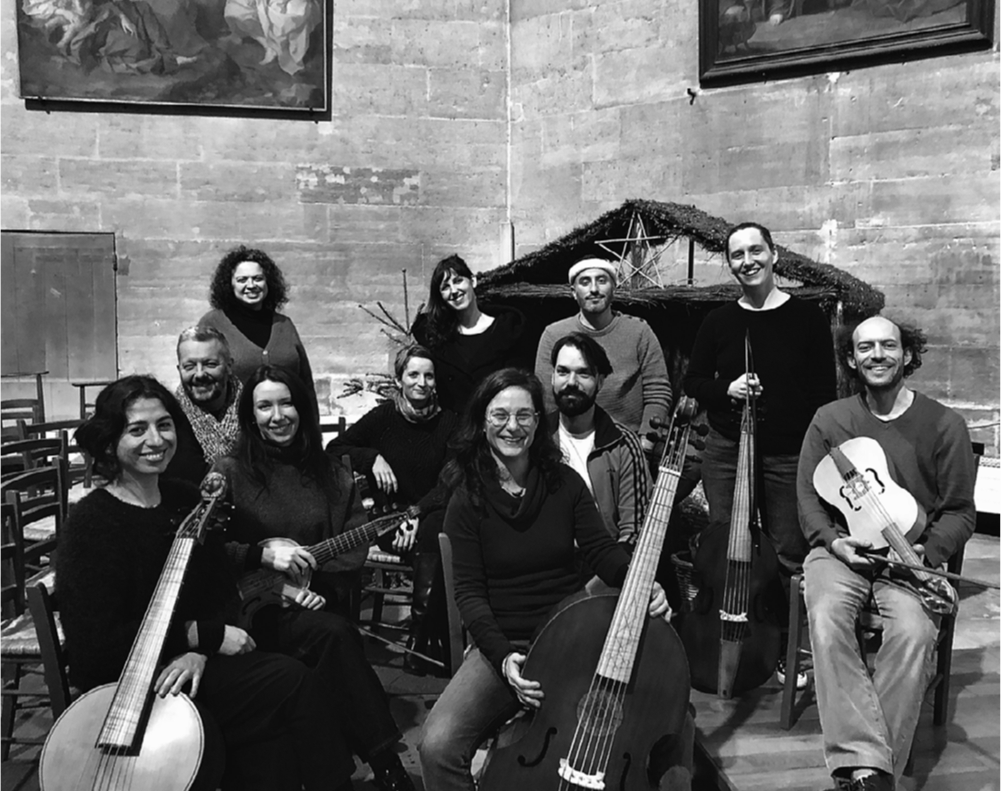
Comet Musicke
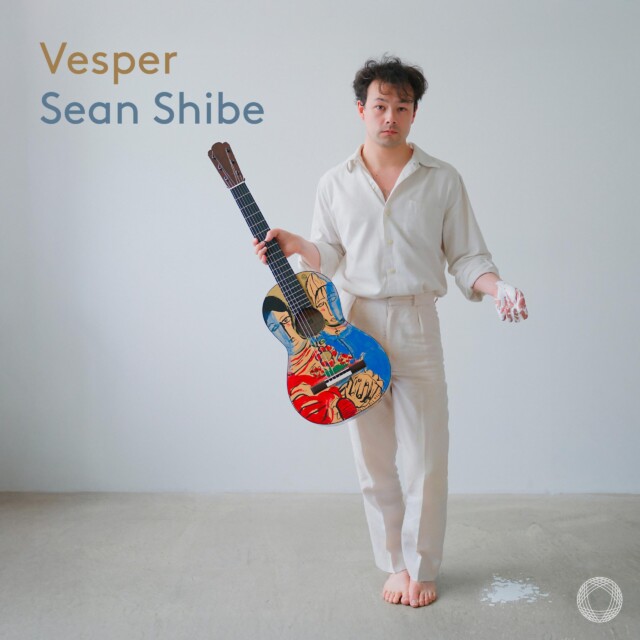
Vesper, Sean Shibe. Pentatone 2026 (192k, Stereo) Edit Master Sourced HERE
Scottish guitarist Sean Shibe (b. 1992) has consistently struck me as an eminently excellent performer, with a knack for bringing innovative and unusual repertoire to his albums. This is his fifth full release for Pentatone (plus additional EPs), and I highly recommend exploring his work.
On Vesper, Shibe explores contemporary guitar compositions by the late Harrison Birtwistle, James Dillon, and Thomas Adès, all written in the 21st century—one as recently as 2023. Fascinatingly, none of these composers are guitarists themselves, yet every piece is compelling and probes the instrument's capabilities in distinctive ways. Shibe meets all of these challenges with aplomb.
Shibe provides perhaps the best description of the program, so I will quote him directly:
"Each composer presents a link to Spain in one way or another—often through specific references (for instance to Picasso, Lorca or Buñuel) – but each achieves a startlingly wide range of unique and, often, totally new sonorities.
"Dillon describes his ghostly Caprices as ‘Shivers'. Various hands—white, or severed—appear. So do birds, Oockooing or, in Adès's case, exploding. His Forgotten Dances contain almost unbelievable textures, not just explosive but tender, clamorous and heartbreaking. Birtwistle's Construction, a titanic and taut work, is counterweighted by several mesmerising miniatures. Three of these are original, written for his son Silas, and another three are arranged for the guitar by a friend of Silas's, Forbes Henderson. It was Forbes who introduced me to the luthier Simon Ambridge—by Julian Bream's estimation, the best Hauser-style guitar maker, whose instruments I play on this album..."
Several of these works are recorded here for the first time, and all explore the guitar's expressive range in profoundly different ways. Shibe's interpretations are consistently engaging, drawing out extraordinary color from the instrument as each piece unfolds with both expressive power and delicate nuance.
Highly recommended for lovers of classical guitar.
Blackbirds, Nicolas Altstaedt (cello), Swedish Radio Symphony Orchestra, Maxim Emelyanychev (conducting and piano). Alpha Classics 2026 (96k, Stereo) Edit Master Sourced HERE
Cellist Nicolas Altstaedt brings to us an album of 2oth Century music for cello—specifically, music written in the 1960s.
He begins with the compelling and highly charged Second Concerto for Cello and Orchestra (1963) by Polish composer Grażyna Bacewicz (1909–1969): "On reading through the work for the first time, I immediately thought: why is this never played? Astonishing, how with just a few notes she can make a whole world appear." Rather than casting the cello in a purely lyrical, singing role, Bacewicz presents it as a dramatic protagonist, engaged in a kind of dialogue—sometimes cooperative, sometimes oppositional—with the orchestra. Her writing is demanding, exploiting the instrument's full range of articulation and color without resorting to empty virtuosity.
Altstaedt then shifts to works for cello and piano with Benjamin Britten's Sonata for Cello and Piano (1961) and Morton Feldman's Durations II (1960), two near-contemporary works that embody almost opposite responses to what music could be in the early 1960s. Britten's sonata, written for Mstislav Rostropovich, is one of his most concentrated chamber works. Cast in five movements, the cello and piano are equal partners, often in pointed, even uneasy dialogue. The writing is economical but highly expressive, with an undercurrent of ambiguity—lyricism is frequently shadowed by irony or restraint. It's a work that feels deeply human, even theatrical, but never overtly sentimental.
By contrast, Feldman's Durations II occupies a very different sound world. His music from this period explores time, texture, and perception rather than narrative or development. The piece unfolds as a series of quiet, isolated events, often separated by silence, with little sense of forward momentum in the traditional sense. Instruments enter and withdraw in a way that feels almost non-hierarchical, creating a kind of floating, suspended temporality. The focus is on color, spacing, and the decay of sound instead of argument or drama. This is Feldman at his most idiomatic, offering an experience where the attentive listener is invited to become aware of subtle shifts and the passage of time itself.
Sándor Veress' Sonata for Solo Cello (1967) follows—a work of striking austerity and concentration that speaks with a disciplined, almost ascetic intensity. Highly respected among cellists and specialists in 20th-century repertoire, it is a rigorously constructed, introspective solo work that channels Veress' connection to Béla Bartók, his teacher, through a late-modernist lens.
The album concludes with live recording of John Lennon and Paul McCartney's famous Blackbird, recorded with Thomas Dunford on lute and vocals, in a church in Portugal as the bells strike midnight.
Up to this point, the album has been a world of concentrated, often difficult musical languages. Ending with Blackbird re-humanizes and de-formalizes our listening experience. And, stripped to lute and voice, Blackbird becomes almost archaic in effect: closer to folk song or Renaissance lute song than to its 1968 pop origin. After Feldman's abstraction and Britten's rigor, this feels like a return to organic directness: the human voice in its simplest form, carrying a melody and a line of meaning directly from one person to another, with a singing cello accompanying. Bravo.
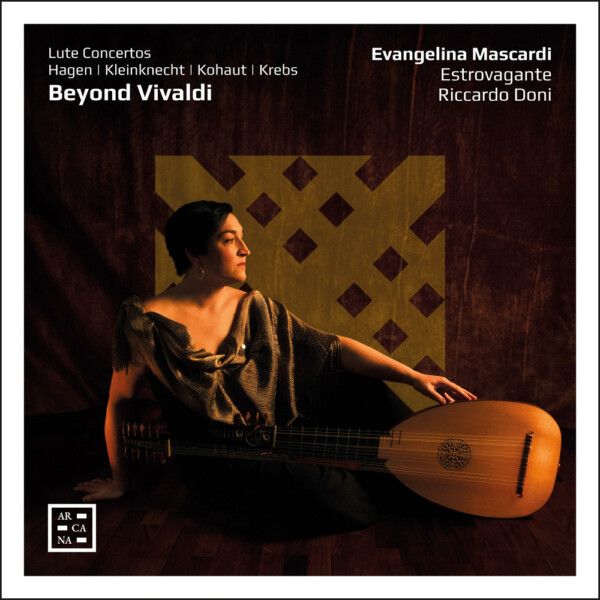
Beyond Vivaldi: Lute Concertos, Evangelina Mascardi (lute), Estrovagante, Riccardo Doni. Arcana 2026 (96k, Stereo) Edit Master Sourced HERE
If you enjoy music for lute and the late-Baroque in general, this may be an album to delight you as much as it has me. Lute was most frequently heard in solo performance or with voice. But there was a short-lived lute concerto tradition that flourished in the late-Baroque German-speaking world before the lute itself was eclipsed. Antonio Vivaldi—in his well-known lute concerto RV 93—provides a familiar anchor. But the real focus of the album lies in the rarely recorded concertos of Johann Ludwig Krebs, Jakob Friedrich Kleinknecht, Joachim Bernhard Hagen, and Karl Ignaz Augustin Kohaut.
This is not a "greatest hits" Baroque program. It is resurrection of a music that has nearly been lost—concertos for an instrument that is softly spoken but here allowed interplay between solo lute and light orchestral texture.
Mascardi's playing is key—she brings a clear, vocal quality to the lute, emphasizing articulation and rhetorical phrasing rather than decorative virtuosity. In her hands, the lute is living voice within a chamber orchestra that interacts alertly and flexibly providing a stylistic lightness that never overshadows this delicate solo instrument.
Vivaldi gives us an anchor, but it is the broader network of composers represented who allow us to re-enter the musical life and time of an instrument that, within a generation or two, would effectively disappear from mainstream concert life. Overall, an elegant reconstruction of the late lute concerto tradition where Baroque rhetoric, gallant grace, and early Classical structure briefly coexist before the lute's historical eclipse.
Nicely done!
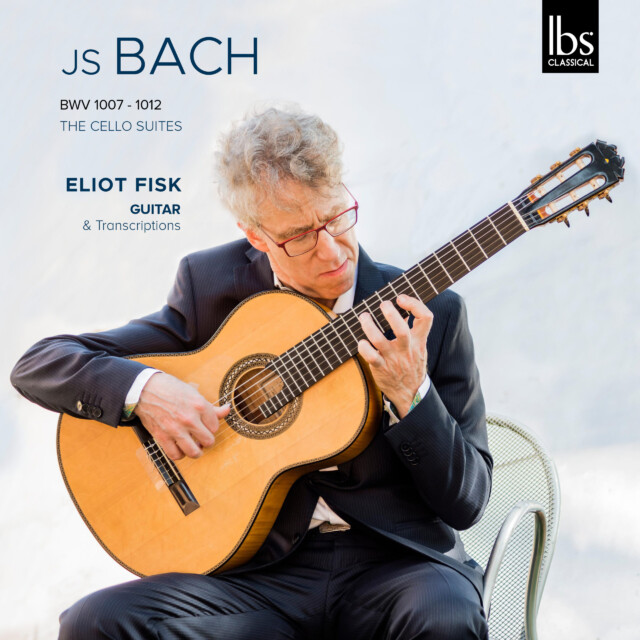
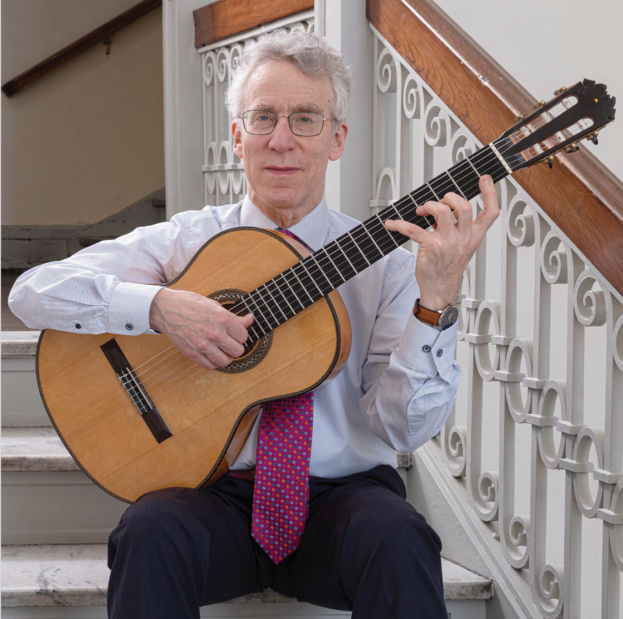
Bach: The Cello Suites · Guitar Transcriptions, Eliot Fisk. IBS Classical 2026 (96k, Stereo) HERE
Do we need another transcription of guitar of the Bach Suites for Solo Cello? Perhaps not. But do we want another recording by the eminent guitarist Eliot Fisk? Absolutely and emphatically, yes.
Recorded in 2022 in Gordon Hall, Watertown, Massachusetts, just as the COVID epidemic was finally beginning to subside, this is a very welcome release that finds Fisk in excellent form. The recording is transparent, intimate, and superbly well-detailed. The microphones sound close, but the notes are still allowed to bloom in the natural acoustic the hall.
The transcriptions are Fisk's own and preserve the integrity and expressive depth of Bach's original works while embracing and exploiting the distinctive tonal palette of the guitar. It is a deeply personal and thoughtful interpretation Bach's masterpieces.
Beautifully performed and recorded, this is a very welcome addition to my music library.
Eliot Fisk
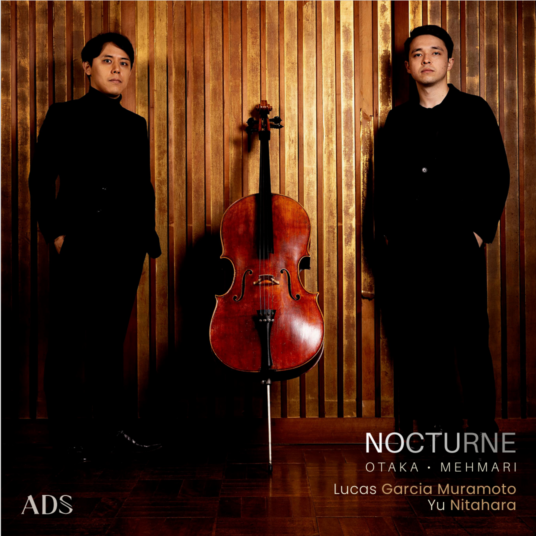
Nocturne (music for cello and piano by Hisatada Otaka and Andre Mehmari), Lucas Garcia Muramoto (cello) and Yu Nitahara (piano). ADS 2026 (176.4k, Stereo, MCh) To be released in May at NativeDSD
When ADS founder and recording engineer Gustavo Cândido contacted me to ask if I'd be interested in listening to an advance copy of his new project, Nocturne, I immediately replied yes. I've been very impressed with his earlier recordings and would not pass by an opportunity to listen to this new recording, particularly since it contained contemporary music for cello and piano. And I have not been disappointed. This are engaging works by Japanese composer Hisatada Otaka and Brazilian composer Andre Mehmari (whose earlier albums for ADS I've very much enjoyed).
In this instance, the cross-cultural fertilization was further enhanced by the musical traditions shared by the performers. Cellist Lucas Garcia Muramoto was born in the countryside of São Paulo, Brazil, and grew up near Tokyo, Japan, where he began his first cello lessons. Yu Nitahara, born and raised in Fukuoka, Japan, has been recognized for the refinement of his musical voice and the depth of his artistic sensitivity. Both artists have extensive study and performance experience in Europe where they both study or lecture in the Mozarteum University
Salzburg. Theirs is a collaboration that began years ago in Salzburg, where they first met as music students.
The opening work on the album is Nocturne for cello and piano (1942) by Hisatada Otaka (1911–1951), among the first Japanese composer/musicians to seek advanced training in Europe. He studied composition and conducting in Vienna during the 1930s and appeared there as a conductor with the Vienna Symphony Orchestra as well as the Berlin Philharmonic—a remarkable achievement for a Japanese musician at the time. He composed the Nocturne in 1942, shortly after returning to Japan. The sense of narrative steeped the culture and tradition is fascinating. Cellist and pianist work in a perfect dialogue to bring the music to life.
The second work on the album is Suíte Brasileira "For Antonio Meneses" by André Mehmari (b. 1977). The liveliness of Brazilian dances, combined with a subtle irony, make the six movements of this work irresistible and contagious.
As cellist Lucas Garcia Muramoto writes from Salzburg, Austria in March 2026, "Brazil is home to the largest community of Japanese descendants in the world, numbering more than two million. The music of Hisatada Otaka and André Mehmari offer just such a meeting point: both composers engage with the European classical tradition while allowing their own cultural identities to remain unmistakably present. This program, performed by a Japanese pianist and a Brazilian cellist, reflects the quiet ways in which music can connect distant places."
The recording is delightfully open and transparent, as have been all of Gustavo Cândido's earlier releases. For those who appreciate multi-channel and immersive recordings, this album will be released in many of the various multi-channel formats. You should be able to find it in the NativeDSD catalog in May 2026.
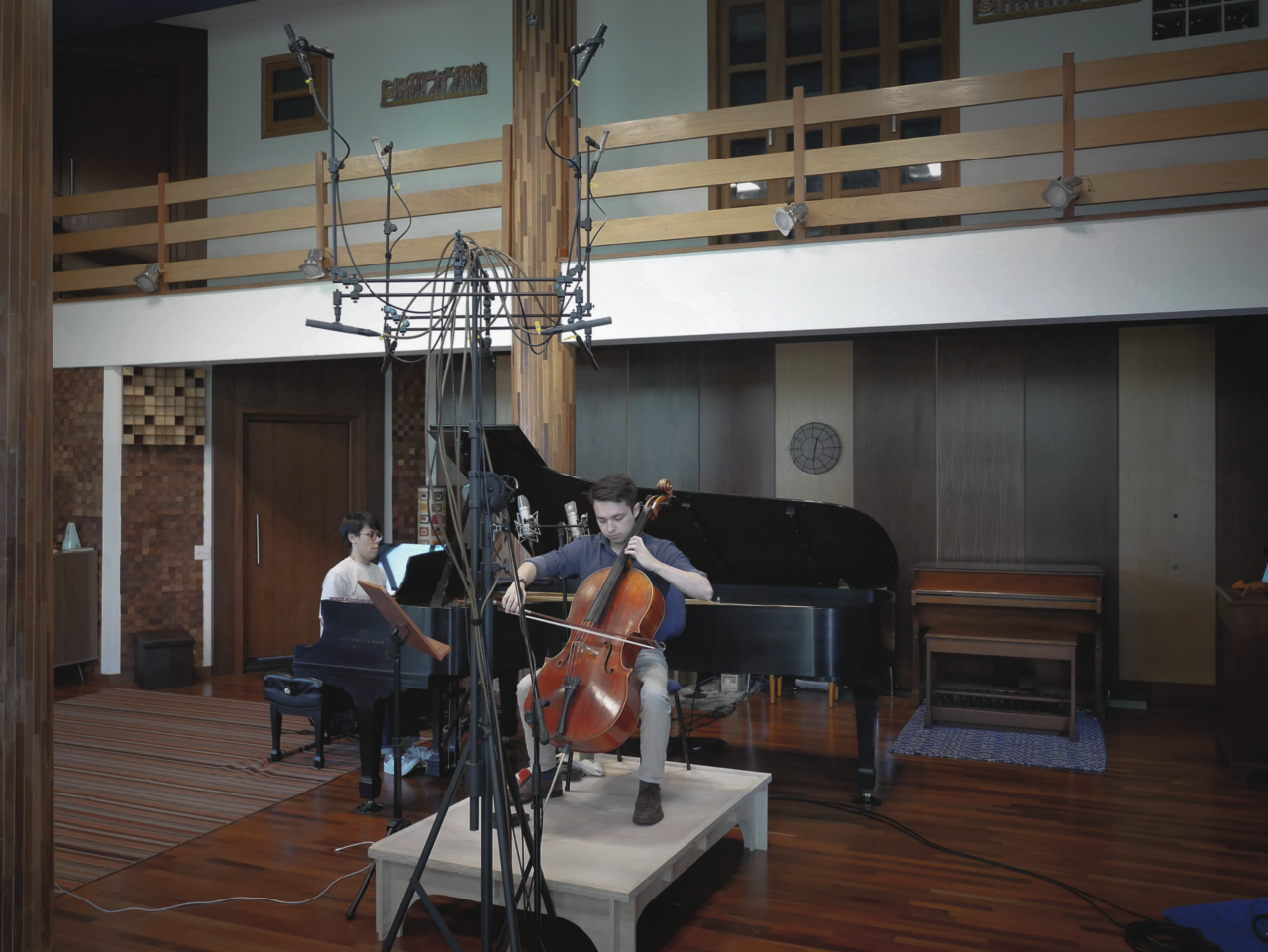
Recording session Lucas Garcia Muramoto (cello) and Yu Nitahara (piano) at the Estúdio Monteverdi, São Paulo, Brazil 05-08 August 2025