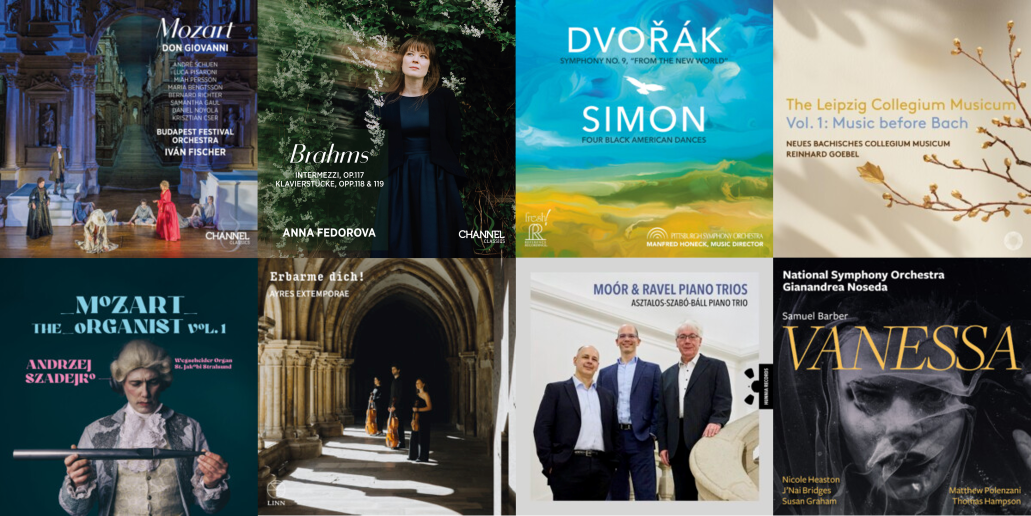


Music of the Baroque and earlier rule this Recent Finds edition. From Bach (J.S. and C.P.E.), to Fux, Lassus, Hildegard von Bingen, and Machaut we have music of an earlier period on tap. And a very special treat: the marvelous Elinor Frey in her inaugural album on Channel Classics—long may that relationship flourish.
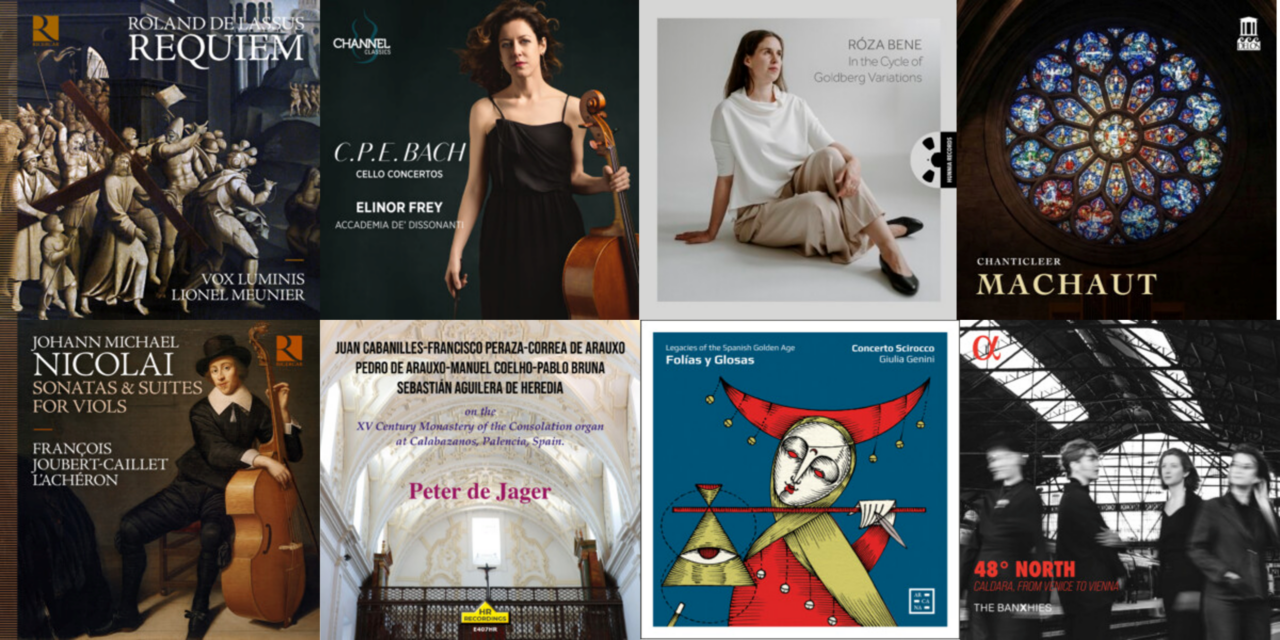
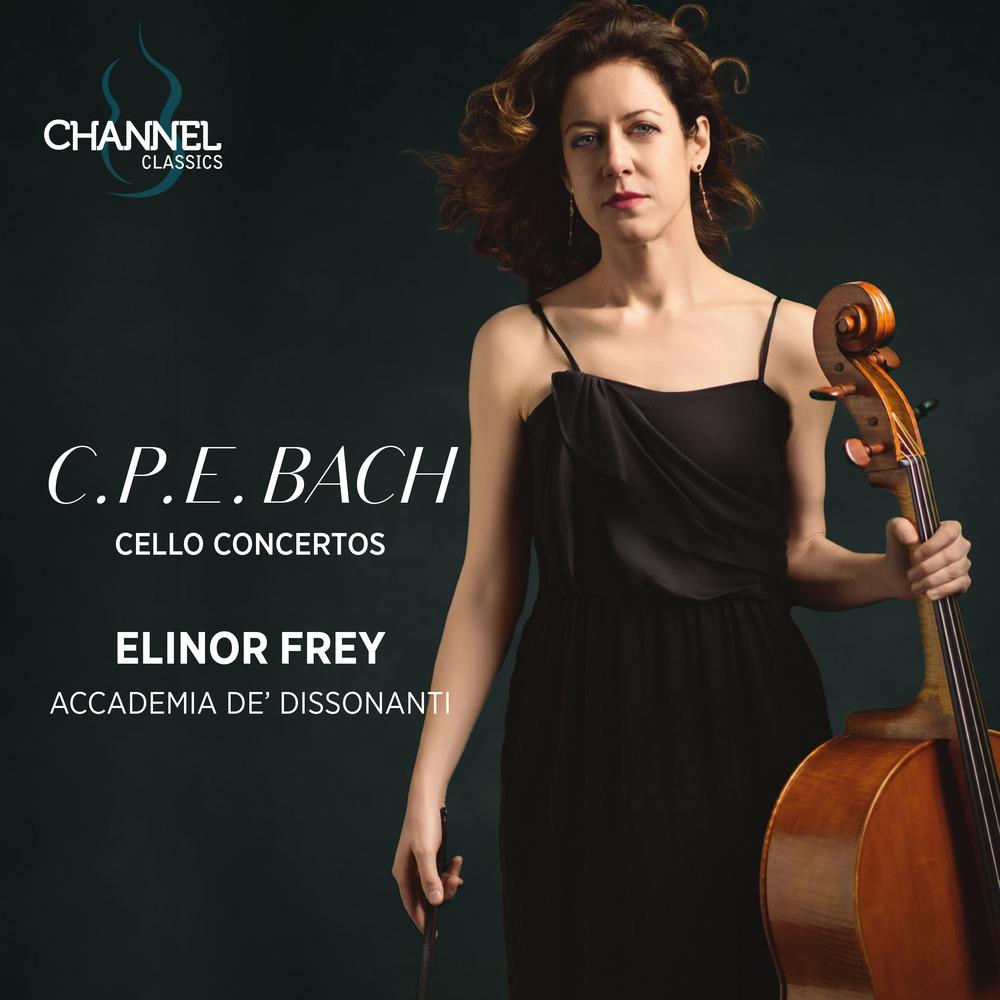
C.P.E. Bach Cello Concertos, Accademia de' Dissonanti, Elinor Frey. Channel Classics* 2026 (192k, Stereo) Edit Master Sourced HERE
Dear Elinor, I am listening this morning to your recent release of CPE Bach's concertos and I will say, simply: the performances are delightful. I love your cadenzas. Such a pleasure to hear these works so superbly played.
Wishing you all success,
Rush
Can I say more about this wonderful release than I did in my note to Elinor shortly after listening? Not really. But I will write a bit more nonetheless...
Canadian-American cellist and musicologist Elinor Frey, with her Accademia de' Dissonanti ensemble, takes us on a rollicking, joyous, fluid, and grand journey through the cello concertos of Carl Philipp Emanuel Bach (1714-1788). These are bravura performances of some of the most excellent galante music of the late Baroque—three cello concertos (Wq 170–172) that are frequently considered cornerstones of the cello repertoire.
Elinor leads the group from her soloist role with her baroque cello, the sound of which provides a delightfully intimate piquancy to the music. Its sound is distinctive: lighter, more "speech-like," with a more intimate resonance as compared to a modern cello.
While clearly influenced by his illustrious father, Johann Sebastian Bach, Carl Philipp Emanuel brings a more irreverent style, combining elegant melodies with dramatic changes in dynamics, many abrupt, some subtle, all in support of creating wonderfully expressive fantasy. The exuberance and drama of Bach's music are immediately evident in the opening movement of the first concerto, where Bach plays with extremes as he engages soloist and orchestra in a daring dialog. As Elinor describes it: "Sometimes their interactions verge on swordplay, other times gentle coaxing or simple affirmation."
And Accademia de' Dissonanti enthusiastically embraces the near chaos that runs riot through much of this music while remaining firmly disciplined in their ensemble and crisp execution.
As would have been the practice in the eighteenth century, Elinor provides her own cadenzas. Placed near the end of the movement, her cadenzas add immensely as she summarize, comments, redirects in her own voice from what has gone before. I don't have a score, and would not be able to read it were it available—I can only intuit where Bach ends and Elinor launches. And launch she does, with utter brilliance. For me, what I perceive to be her cadenzas are the highlights of each work, as she unleashes in blinding eloquence a dissertation that nonetheless seems thoroughly consistent—a now integral part of how these works should be played.
These dramatic works illustrate, in a single album, why I have always held C. P. E. Bach's imaginative music in highest esteem, eagerly adding performances to my music library. And to now have this recording is a pure joy.
As you may have gathered, I've been enchanted by Elinor's music-making for quite some time. I first heard her in Yarlung Records' 2008 release of Dialoghi with pianist David Fung, which I commend to you most highly (see link below). I have attempted to follow her career ever since. And what a rewarding trajectory that career has followed, with recordings on Passacaille Records, Analekta, and now Channel Classics.
Her passion has been music of the Baroque. In addition to her performances and recordings, she teaches baroque cello and performance practice at McGill University and the Université de Montréal, was a Visiting Fellow in Music (2020–2023) at Lady Margaret Hall, Oxford University, and has published critical editions of Giuseppe Clemente Dall’Abaco’s cello music.
And very clearly I am not alone in my admiration. I commend to you Tom Gibb's excellent article, Elinor Frey, Fiorè Complete Cello Sonatas & 17th Century Italian Arias.
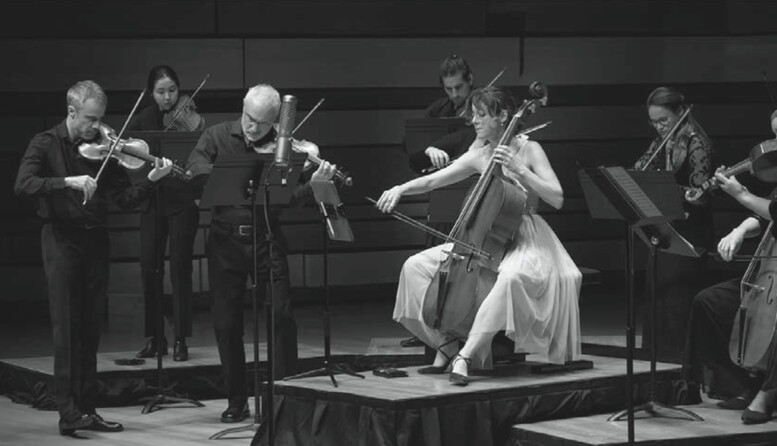
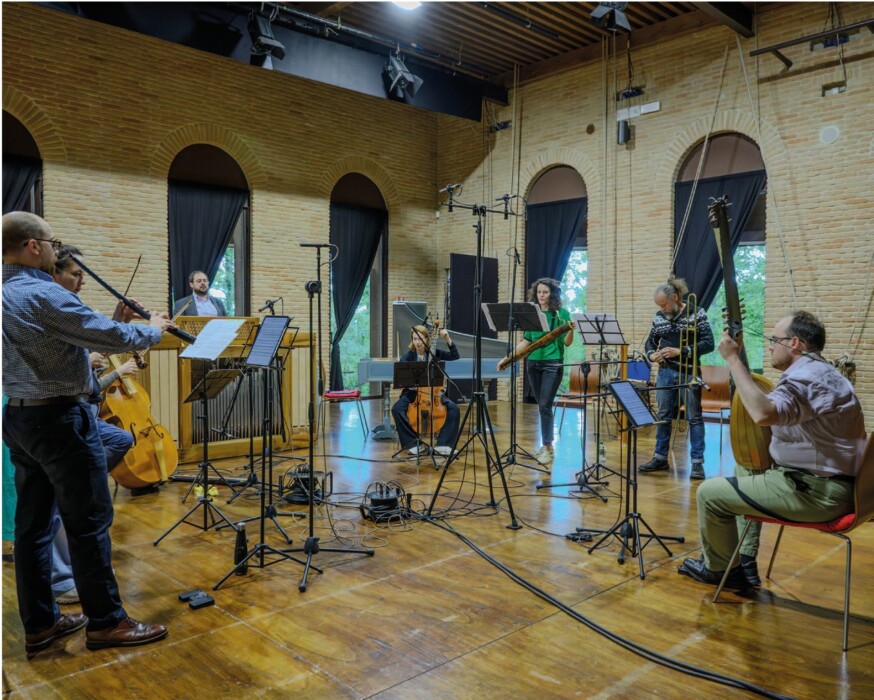
Recording session in Isabel Bader Theatre, Kingston, Ontario, Canada, in October 2025. Photo by Tam Lan Truong.
* The album is released on Channel Classics, but since the recording was made in Canada, the producer, recording engineer, and mastering engineer is Canadian engineer Jean-Daniel Noir, who has done an excellent job. The sound is open, highly resolved, and with excellent capture of the sound stage. I hope to hear more of his work in the future.
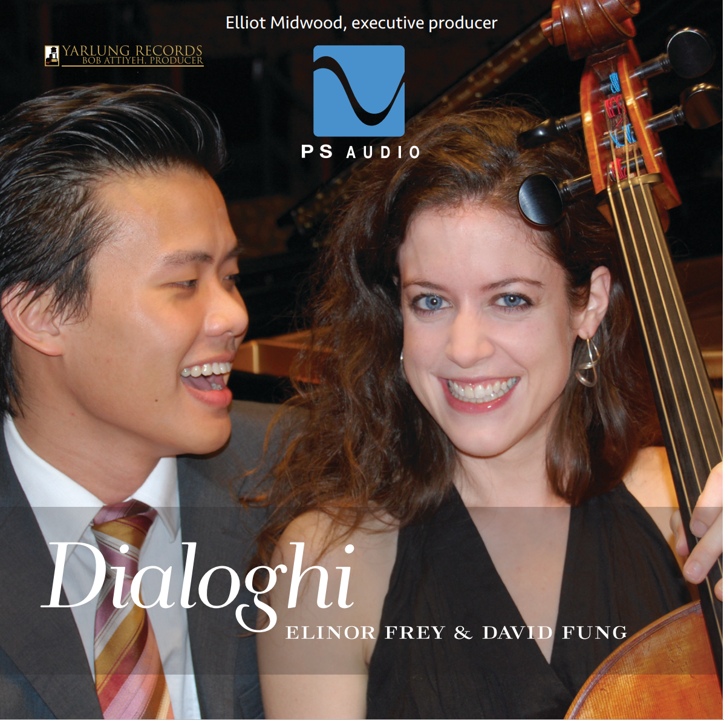
Dialoghi, David Fung, Elinor Frey. Yarlung Records 2015, 2008 (Pure DSD256 from the 15ips analog tape master). HERE
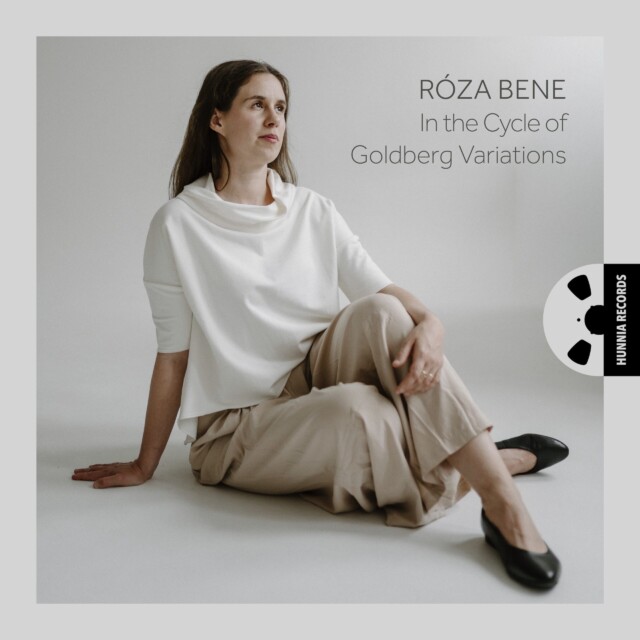
In the Cycle of Goldberg Variations, Róza Bene. Hunnia Records 2026 (Pure DSD256, Stereo, One Microphone Recording) Edit Master Sourced HERE
Bach's Goldberg Variations have always struck me as some of the most sublime keyboard music ever written. I rarely tire of them, and I relish finding new recordings of the work. Each performer who invests the effort to bring this work to life brings something of themselves to how they approach it—rarely does an artist record it without having some deep personal attachment. And so, as a listener, I get the double benefit of both Bach and a bit of the artist's own spirit opened to share.
This new recording by Róza Bene is one of those deeply felt explorations of the work. One can simply hear this in the way she presents the music—this is a very nuanced interpretation. Clearly, for her this is no routine traversal. Bene plays with conviction, assurance, and great technical proficiency. This is not a mincing, prissy performance. It is strong, direct, powerful—played in the manner I find most agreeable.
And that her instrument of choice is a gorgeously resonant, beautifully toned harpsichord is a particularly nice treat.
Yes, this music played on piano is wonderful. But when performed on harpsichord, there is an added level of harmonic sympathy—a subtle variation of emphasis, texture, and complexity that the harpsichord reveals in a way the piano simply cannot. The piano brings its own beauty to the music, but the harpsichord allows us to hear something different in Bach's writing.
Hunnia balance and recording engineer Sándor Árok has captured the sound of this instrument very simply and directly, using just a pair of DPA4011 microphones in Hunnia's Pro Vibe Studio in June, 2026. Recorded in Pure DSD256, the sound quality is transparent. While fairly close-up, the presence of enough of the natural ambience of the room allows the notes to fully develop, capturing the complex harmonics of the strings. Well done!
If you know you don't enjoy harpsichord (I can't imagine this, of course), and you'd like your Goldberg Variations performed on a modern piano, I suggest you consider this excellent recording by Hannes Minnaar:
Johann Sebastian Bach: Goldberg Variations, Hannes Minnaar. Challenge Classics | Northstar Recordings. 2022 (DXD) Reviewed Here
Or if you'd like to hear your Goldberg reimagined on strings, consider these:
Bach Goldberg Variations Reimagined, Rachel Podger and Brecon Baroque. Channel Classics 2023 (32bit, DXD256) Reviewed Here
Bach Goldberg Variations for String Trio, CamerataRCO. BarcaNova | Northstar Recording 2017 (DXD) Reviewed Here
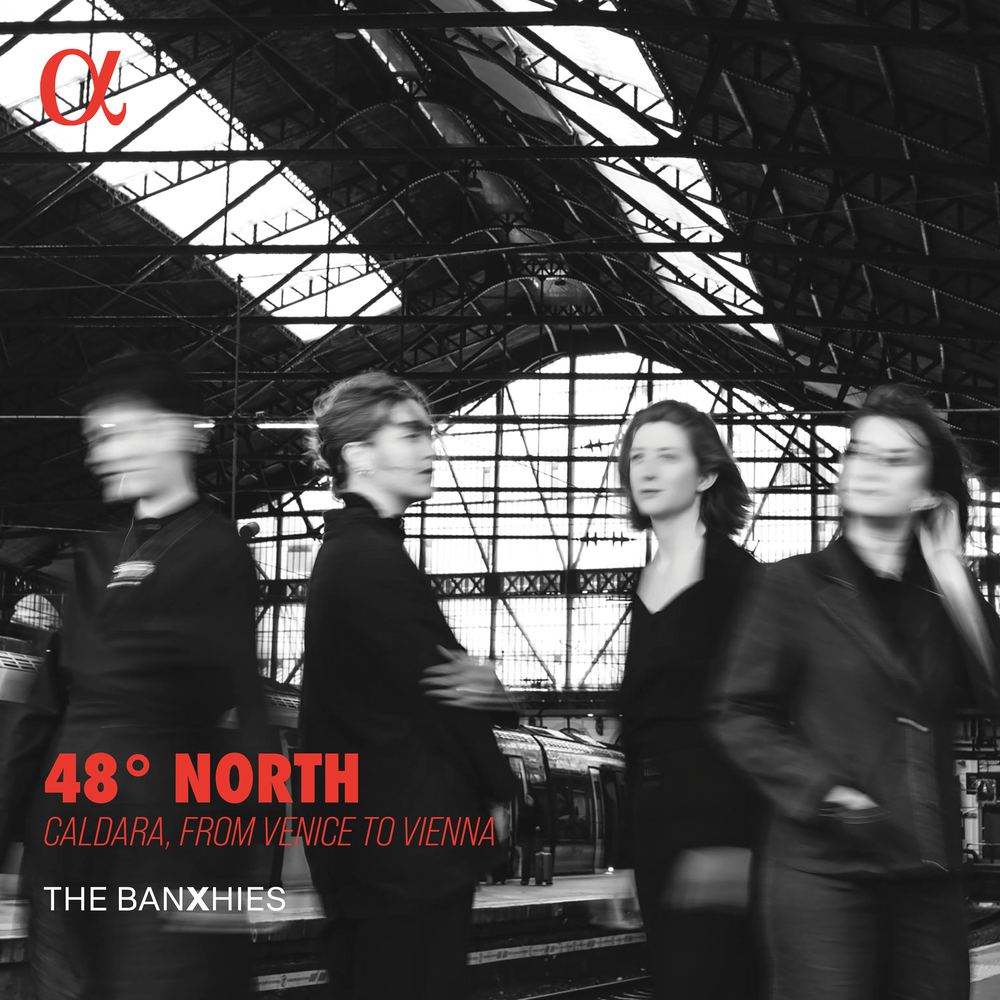
48° North, The BanXhies. Alpha Classics 2026 (192k, Stereo) HERE
Yes, this really is music of the Baroque with familiar composers such as Vivaldi, Biber, Bach, Muffat, and Froberger. But the central figure in this album is Antonio Caldara (1670-1736), a composer born in Venice who spent his final twenty years in Vienna as Charles VI’s favorite composer and vice-Kapellmeister at the imperial court alongside Johann Joseph Fux.
The title of the album comes from the latitude at which Vienna is located, playfully suggestive of Caldara's journeys over his lifetime among many capitals from Venice to Rome, Barcelona, Milan, and finally Vienna.
Caldara was a gifted musician, born into a family of musicians. His travels were a function of patronage, the source of income and financial security for musicians and composers in his day. And these travels brought him into contact with other composers of great influence such as Muffat, Vivaldi, and Bach. His path was one of a crossroads of traditions, principally Italian and German. His skill, and ultimately his influence, lay in blending Italian clarity with Germanic depth. And he would have a lasting influence on composers such as Mozart, Beethoven and Haydn.
The BanXhies take their name from the banshees of Celtic mythology, messengers between worlds. They describe themselves as seeking to use music as a conduit from the outer world to the inner world, from the physical to the mystical—and in so doing to tell stories in their performances.
They play with a vitality that I find most refreshing. The opening work is the "Grave" movement of Caldara's Trio Sonata in E Minor, No. 5, which flows naturally according to its marking. But get to the "Vivace" second movement, and the group take off with enthusiastic and assured vigor. I love the flexibility they demonstrate in alternately applying harpsichord and organ to their continuo. The variety engages my interest as the texture of the sound shifts in accordance to the tempo and choice of continuo instrument. I wish more groups would make similar use of both.
So this album falls right among those that tend to me my favorites—albums that have a story to share, something to educate me, not just give me a series of unrelated bits of music. The BanXhies weave the music of Caldara with music of both his contemporaries and fellow traveling composers whose music influenced his own: Muffat, Vivaldi, Biber, Froberger, Fux, Porpora, and Bach.
Combining violins, cello, harpsichord, and organ, the musicians of The BanXhies create a delightful musical potpourri of this late Baroque and early Classical eras.
I've enjoyed this debut recording from them immensely. I look forward to more.
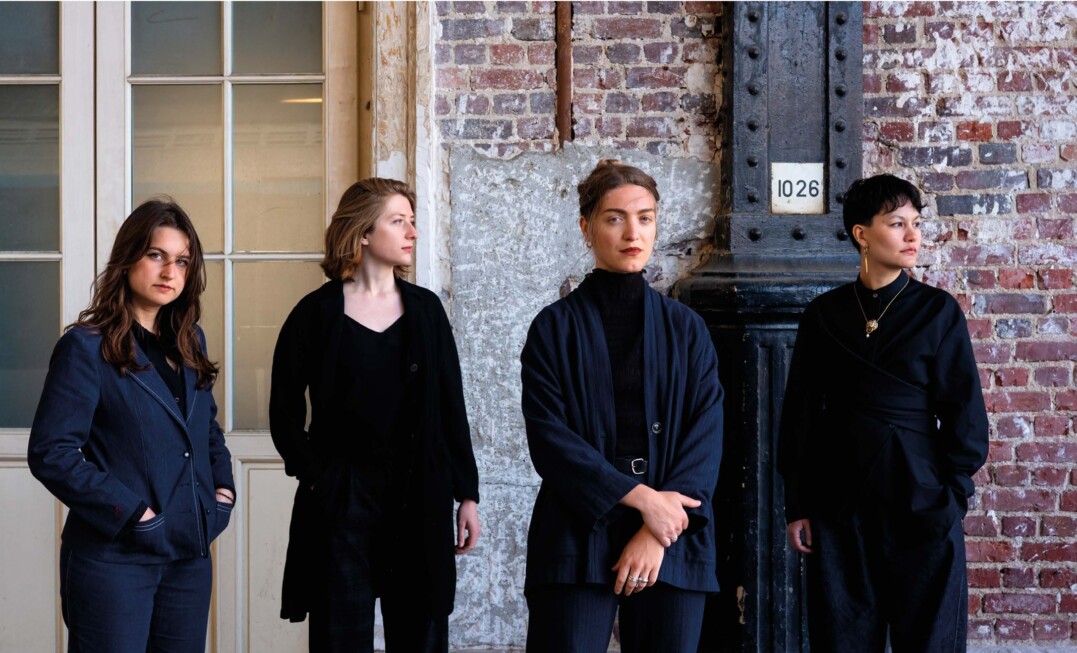
The BanXhies: Roxana Rastegar (violin), Suzanne Wolff (cello), Louise Acabo (harpsichord, organ), Yaoré Talibart (violin).
Machaut, Chanticleer. Delos 2026 (96k, Stereo) Edit Master Sourced HERE
While the membership of choral group Chanticleer has changed over the years since their founding in San Francisco in 1978, the translucent and utterly precise singing has not. This is an ensemble of immense talent with a long history of making exceptional recordings. Originally focused on music of the Renaissance, the ensemble's repertoire covers a great range of genre, from classical, to gospel, jazz and popular music, and from medieval chant to modern commissioned works.
In Machaut, Chanticleer turns to the fourteenth century's towering figure, Guillaume de Machaut (c. 1300-1377). And, happily, they offer a recital comprised of both his religious works and his secular love songs. The central work is his remarkable Messe de Nostre Dame, a polyphonic mass setting that is simply astonishing for its day, and still remarkable in its breadth and complexity nearly seven centuries later.
This is followed by a selection of Machaut’s secular music, so dramatically different in subject matter as to cause one to wonder how this devout cleric of Reims Cathedral could contain in one splendid mind the font of such diverse music. His secular music is that of the the courtly poet, written for noble patrons, filled by intricate, pun-laden love songs—most typically unrequited. Chanticleer presents these with improvisatory flexibility and their consistent adherence to well-researched historical evidence of ornamentation and color.
I was delighted to hear the addition of percussion in the first love song, Douce dame jolie—the rest are sung a cappella, with various members as soloists in combinations of duos, trios, and quartets. The blending of vocal textures and ranges is just superb, together with immense clarity and precise timing, as expected of this choral ensemble.
I have long enjoyed the music of Guillaume de Machaut. His works strike me a complex, innovative, utterly original, and, often, so far ahead of his time. Chanticleer brings them delightfully to life.
Recorded at St. Ignatius Church, San Francisco, CA, on August 26–August 30, 2024
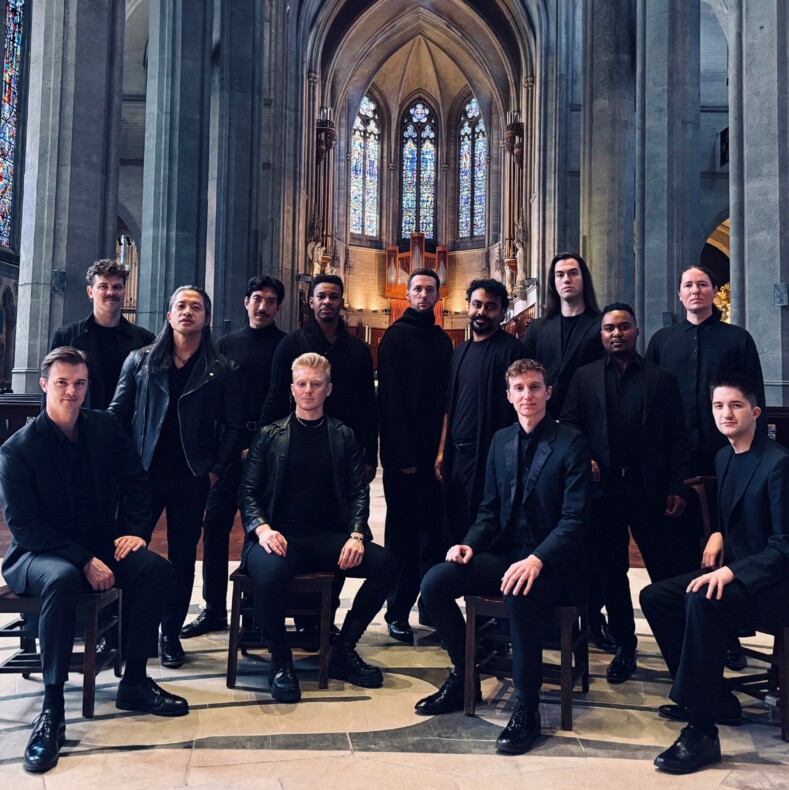
Chanticleer
Folías y Glosas: Legacies of the Spanish Golden Age, Concerto Scirocco, Giulia Genini. Arcana 2026 (96k, Stereo) Edit Master Sourced HERE
Concerto Scirocco, the wind-and-strings ensemble led by recorder and bassoon player Giulia Genini, reaches back into the history of the folia, a harmonic scheme with roots in Spanish vocal polyphony to that became nearly ubiquitous in Renaissance and early Baroque instrumental music on the album. If you've ever heard the tune "La Spana," you've listened to one of the classic folias. And, indeed, Concerto Scirocco provides us four different settings of this famous tune.
This is the sound world of the Ministriles, the wind instruments playing at religious ceremonies, processions, court festivities and military parades—loud wind bands of cornetts, sackbuts, shawms and dulcians, alongside viols, harpsichord, guitar and vihuela.
In Giulia Genini's conception, the music sounds a bit tamed, civilized. A celebration and exploration of music from the golden age of Spain in the 16th and 17th centuries to be sure, but more beautified than I had expected. Perhaps this reflects her study of this music as it evolved in Italy—Naples most specifically—a great meeting ground of Spanish and Italian musical traditions. Unlike the wild performances of Música Antigua de Madrid under the Gregorio Paniagua several decades earlier, these performances sound refined, perhaps more attuned to the tastes of the nobility than the common folk.
They are, nonetheless, attractively performed with a nice range of instruments common during the early Renaissance. The music is spritely and stately in turns, and all with consummate technical skills. Altogether, the album is a welcome education and most enjoyable to hear.
I was particularly struck by the Fantasia basso solo by Bartolomé de Selma y Salaverde (c. 1595–after 1638) performed on dulcian, theorbo, and organ, which is followed by his Canzon Settima, performed on cornett, violin, dulcian, violone, organ, theorbo—all in such a nice contrast and performed quite stylishly by the ensemble.
To clarify the title, Folías y Glosas, folias are the tunes themselves—specific, popular dance tunes and harmonic progressions—and glosas refers to musical ornamentation or variations written over an existing melody.
This makes the sixth album recorded for Arcana by Concerto Scirocco and Giulia Genini, and I wish I could point you to them on NativeDSD, but, alas, NativeDSD has only one of those other albums in its catalog. I hope they will lean upon Arcana to include more of Concerto Scirocco's recordings. For now, I will point you to the following album which is similarly well performed and recorded:
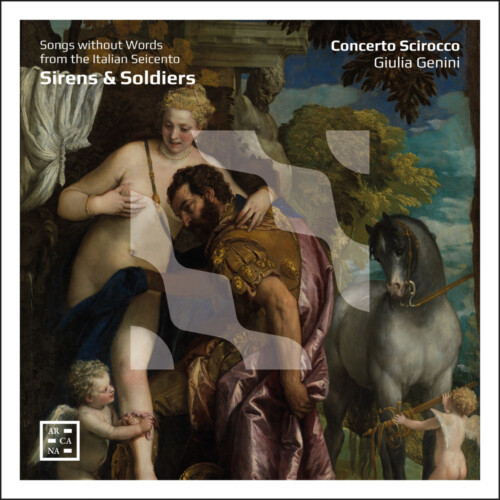
Sirens & Soldiers, songs without words from the Italian Seicento, Concerto Scirocco and Giulia Genini. Arcana 2025 (96k, Stereo) HERE
Scirocco, the stormy hot southern wind, gives its name to the ensemble reflecting the enveloping, warm sound of cornets, sackbuts, recorders and dulcians at the core of the group. Led by Swiss-Italian recorder and historical bassoon player Giulia Genini, Concerto Scirocco performs regularly at major venues throughout Europe. Giulia Genini began her career as a multi-instrumentalist and founded Concerto Scirocco after her studies in Basel. Her repertoire ranges from the Renaissance to Romanticism, and this versatility allows her to collaborate with I Barocchisti of Diego Fasolis, Il Giardino Armonico of Giovanni Antonini, the Accademia Bizantina of Ottavio Dantone, Cappella Mediterranea of Leonardo García Alarcn and many others. She is professor of historical bassoons at the HEM of Geneva and artistic director of the CaronAntica early music festival, and also a member of the trio Il Ricercar Continuo.
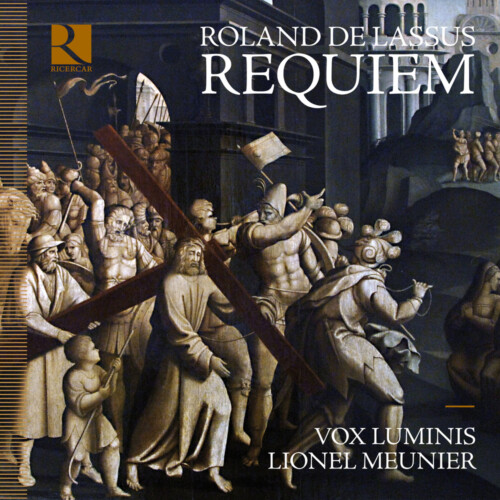
Roland de Lassus, Requiem, Vox Luminis, Lionel Meunier (artistic director). Ricercar 2026 (192k, Stereo) HERE
Yes, you are not deceiving yourself. Roland de Lassus and Orlando di Lasso are the same composer—the great Franco-Flemish composer of the late Renaissance, born in Mons around 1532 and dying in Munich in 1594.
His name appears in quite a bewildering variety of forms:
Roland de Lassus — French
Orlande de Lassus — another French form
Orlando di Lasso — Italian, and probably the name most familiar to English-speaking listeners
Orlandus Lassus — Latin
Roland de Lattre / Roland Delattre — other forms associated with him
These weren't simply modern translations imposed by later historians. He himself used different forms of his name in his publications, reflecting the language and circumstances in which his music appeared. For the remainder of this review, I will refer to him by the name most familiar to English-speaking listeners, Orlando di Lasso.
Vox Luminis provides us with lovely recordings of two of Orlando di Lasso's requiems: the four-part Missa pro defunctis quinque vocum and Officium pro omnibus fidelibus defunctis, which also includes the entire Dies irae sequence. These works appear in collections dating from 1571 and 1577 respectively, and may have been composed a decade earlier. As the liner notes tell us, the sheer volume of his output is truly considerable, with some six hundred motets, nearly eighty masses, and around a hundred Magnificats. His body of work has survived not only in the many editions published during his lifetime and after his death but also in countless manuscript sources.
In the Missa pro defunctis, Vox Luminis utilizes twelve singers, including at least two female voices. But the manuscript from which they work for Officium pro omnibus is transposed down a fifth, written for a male voice ensemble of tenor, baritone, bass and deep bass. Offering both requiems on this album provides a nice contrast of timbre and overall color. I found the Dies irae sequence in Officium pro omnibus particularly compelling—just beautifully rendered in the sonority of these lower voices.
There is much to explore in the vast catalog of recordings of Orlando di Lasso's works. This new contribution from Vox Luminis is a very welcome addition—it is a superb rendering of the works they have selected to perform.
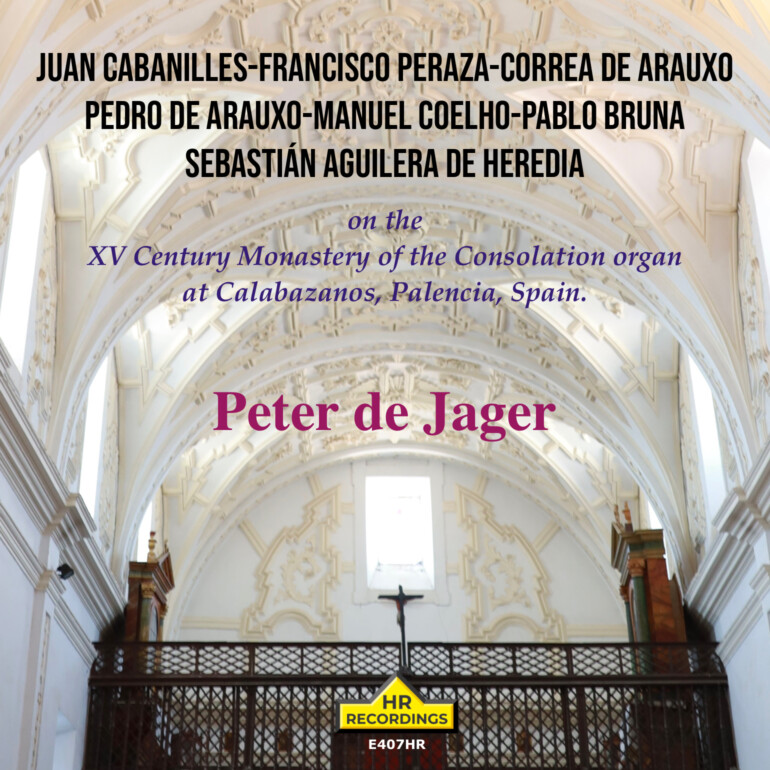
Iberian Organ Music, Peter de Jager. HR Recordings 2026 (DXD, Stereo, One Microphone Recording) Edit Master Sourced HERE
Identify me as an iconoclast, perhaps, but I am very fond of the style of organ played in this recordings: a small-ish organ with purely mechanical key action (also known as tracker action) in which the keys directly activate the pipes—no electro-pneumatic connections here. When the organist presses a key, it physically pulls a series of thin wooden slats and rods (the trackers). This mechanical link directly opens the wind valve beneath the corresponding pipes.
Why do I like this style of organ so much? Ah, it's all about the unique sound achieved: timbrally distinct, ultimately subtle and responsive. Such an does not do well with grand romantic organ music of the orchestral style, but give it the keyboard music of Bach, Buxtehude, and earlier composers and one receives a unique listening experience. Precisely because it lacks modern pneumatic or electric assists, the organist has an incredibly intimate, physical connection to how the wind enters the pipes, which allows for a nuance in performance that pneumatic and electric assists make difficult to achieve.
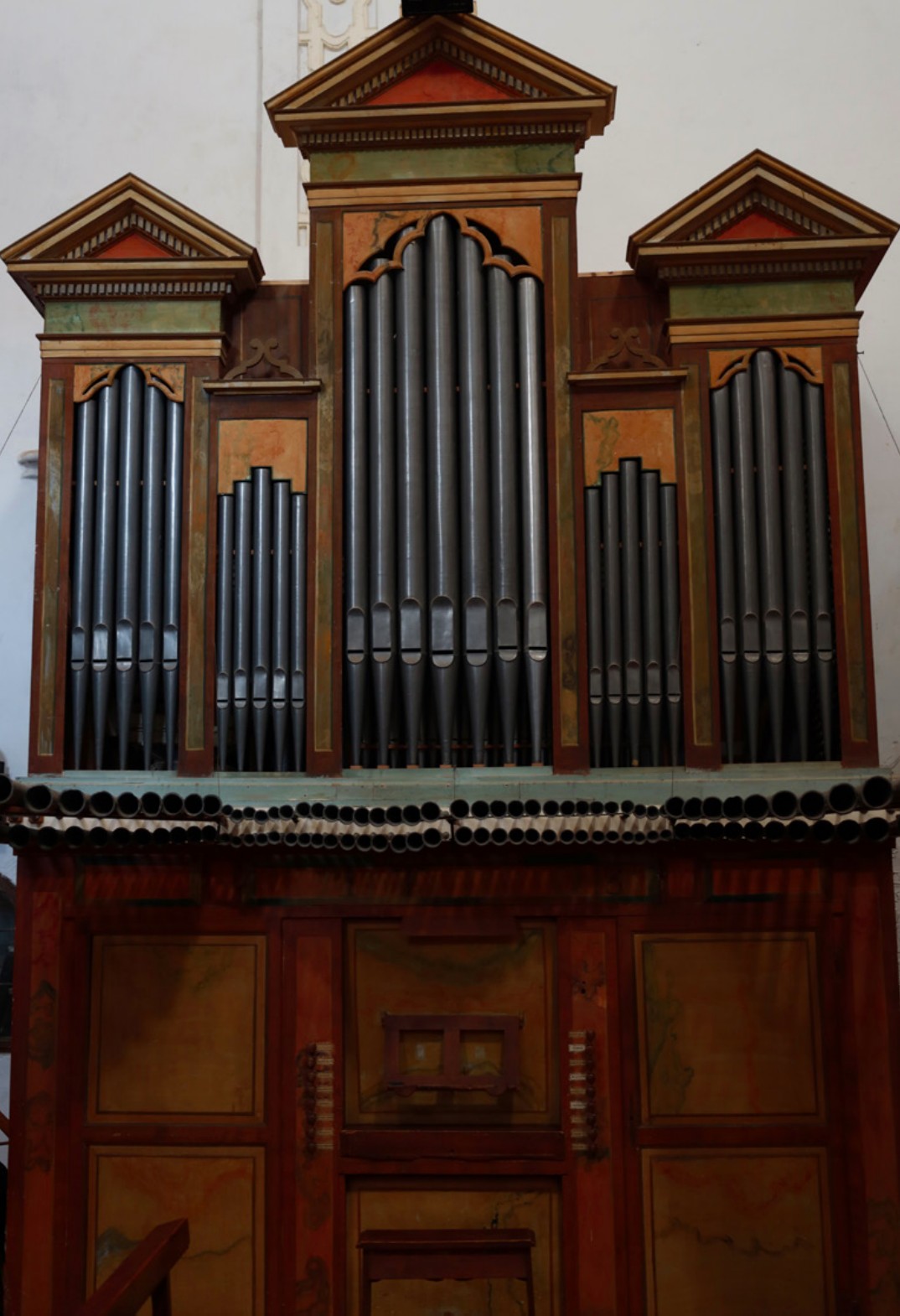
And in this album Peter de Jager delivers 2-hours and 21-minutes of music perfectly suited to this instrument. Almost always contemplative, sometimes repetitive, occasionally verging on the boring, think of much of this as the filler music an organist must provide before and after the church services. Most works are short: one to three minutes, and occasionally under a minute. But then there a longer compositions of great sophistication.
I say "almost" always contemplative because the album closes with Pedro de Arauxo’s Batalha displaying all the trumpets, military maneuvers, and victory dances that one might desire.
And between this rousing closing and the very contemplative opening of Juan Cabanilles' Tiento de falsas 1° tono, there are works of the utmost creativity and dynamism. I offer for your consideration Pablo Bruna's Tiento de 5º Tono de mano izquierda and following works with their rotating, revolving, and intertwining complexities, supplemented by exquisite use of the organ's reed stop pipes, particularly the 8' Trompeta Real—a full-length vertical trumpet reed stop inside the organ case which produces a rich, authoritative voice.
The album notes do not provide a credit for the vocalist whose solo parts supplement a few of the cuts, and add a nice additional authenticity to the recording. I was surprised by the first cut in which the voice appeared, but very pleasantly so because it added unexpected color and depth to the performances. Since not otherwise credited, I'm assuming this is Peter de Jager himself sharing another aspect of his musical talents.
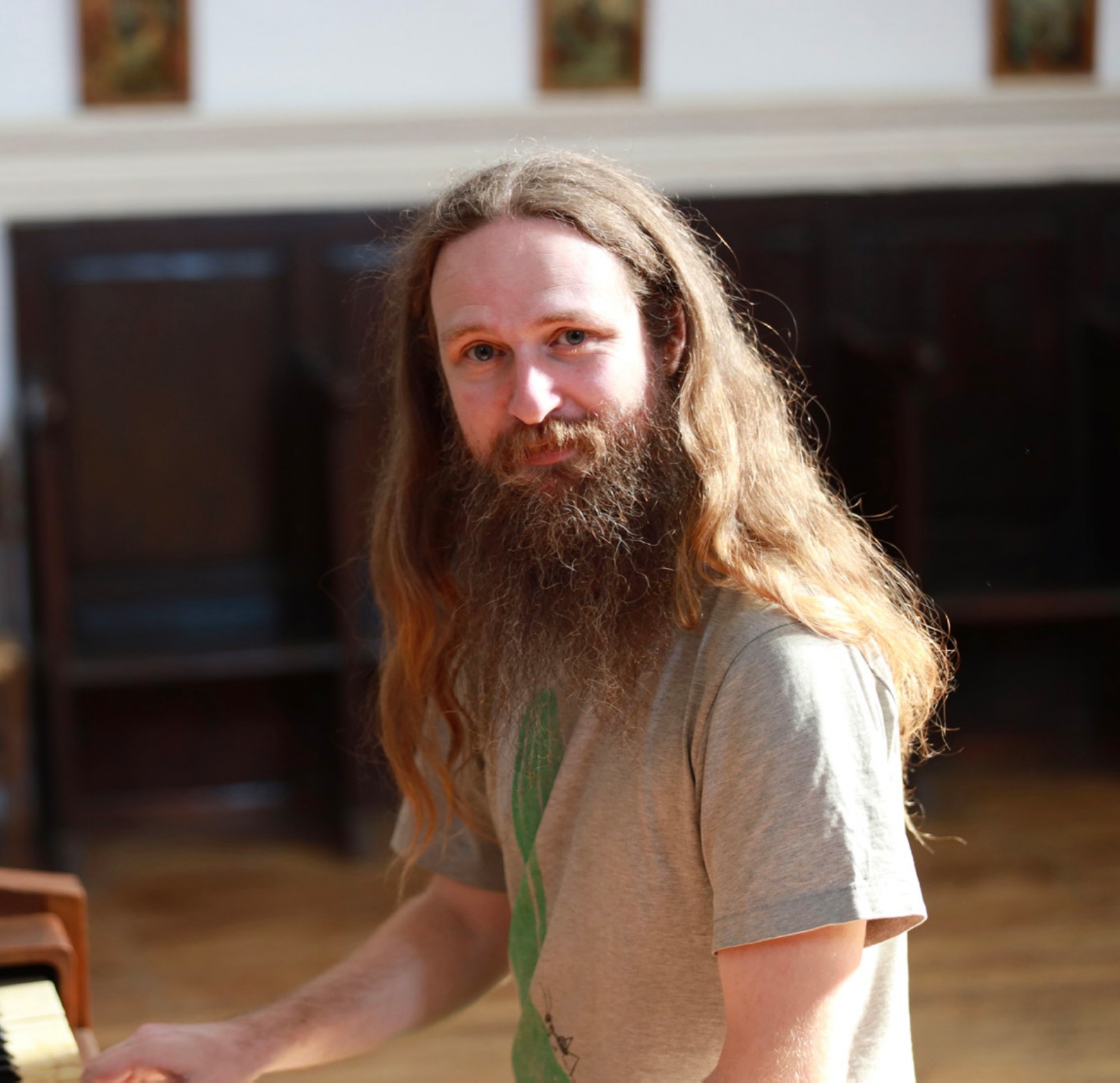
Peter de Jager
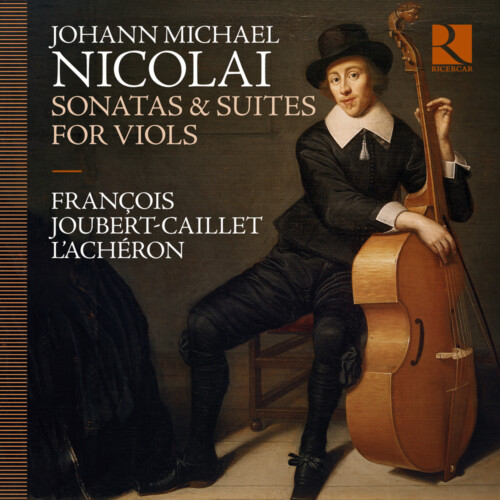
Nicolai: Sonatas & Suites for Viols, L'Achéron, François Joubert-Caillet (music director). Ricercar 2026 (192k, Stereo) Edit Master Sourced HERE
Viols! Give me viols and I shall be a happy listener. With their resinous texture, expressive sonorities, and lovely intimate voices, I am ridiculously happy whenever I have a new opportunity to listen to a collection of these most noble instruments at play. And with this album of Johann Michael Nicolai's sonatas and suites for viols, I am a very satisfied listener—head bobbing, feet tapping, a nice smile on my face.
And, no, I did not know the music of Johann Michael Nicolai (c. 1629–1685) until I spun up this album today. I'm sure I've heard his music on various albums where some work or another was included. But this is my first listening to an album dedicated to his music. (Marais, yes, of course. But not Nicolai for some reason.)
Nicolai's compositions are profoundly individual. In his music I hear sounds and forms that seem to anticipate things that were to emerge much later. This individuality of voice creates a dialog of great boldness among these instruments. There is no staid hierarchy here; the instruments engage in an egalitarian exchange of ideas, comment, and refrain. It strikes me as music with a remarkably forward-looking character, music that seems somehow ahead of its time. Intriguing, beguiling, rather bewitching—altogether a wonderful introduction to a composer I've known far too little about.
L'Achéron perform this music with technical assurance but, importantly, with great élan. They grab Nicolai's music by the throat with intensity and purpose. This is no delicate dance, this is full-on go-for-the-gusto playing—yet filled with nuance and delicacy. They don't just blunder through the music. They caress it, shape it, and plumb it for meaning. And the contribution on harpsichord and organ from Yoann Moulin creates an exciting further complexity and added color on several of the works—just delightful.
The result of their combined efforts and musical sensitivity is an hour of great fun, enjoyment, and utter satisfaction.
In reading the excellent liner notes, I see that, while Nicolai created a relatively extensive body of work, we know practically nothing about him. The notes say that he was probably born in Ulrichshalben, a small village near Weimar, in 1629, and died in Stuttgart in 1685, the same year that saw the birth of Johann Sebastian Bach.
We know little about his musical training, but it was undoubtedly extensive, given that he was held in high regard as an instrumentalist, composer, and teacher. It is said that he played the violone, but we may assume that he had also mastered the violin and viola da gamba. For whom did Johann Michael Nicolai compose these works? We don't know. He may well have written them to entertain his patrons at the various courts where he worked. We apparently also know that, during the latter part of his career in Stuttgart, the court musicians would sometimes gather at his home for musical gatherings.
I suggest: just enjoy these works. I find them astonishingly wonderful and well deserving of my time to listen, and to listen again for the pure joy of them.
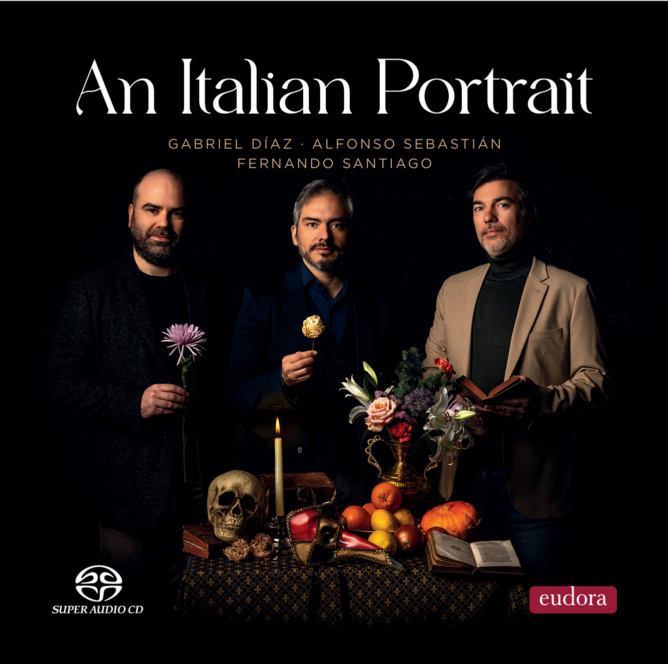
An Italian Portrait, Gabriel Díaz (countertenor), Alfonso Sebastián (harpsichord), Fernando Santiago (baroque cello). Eudora Records 2026 (Pure DSD256, Stereo, MCh) Edit Master Sourced See earlier review Here
While we're on the subject of excellent recordings from the Baroque, let me not end this article without a reminder of this wonderful album from Eudora Records that I reviewed last month. If you like the music of Handel, here's a release I'd encourage you to check out. The link to this earlier review is above.