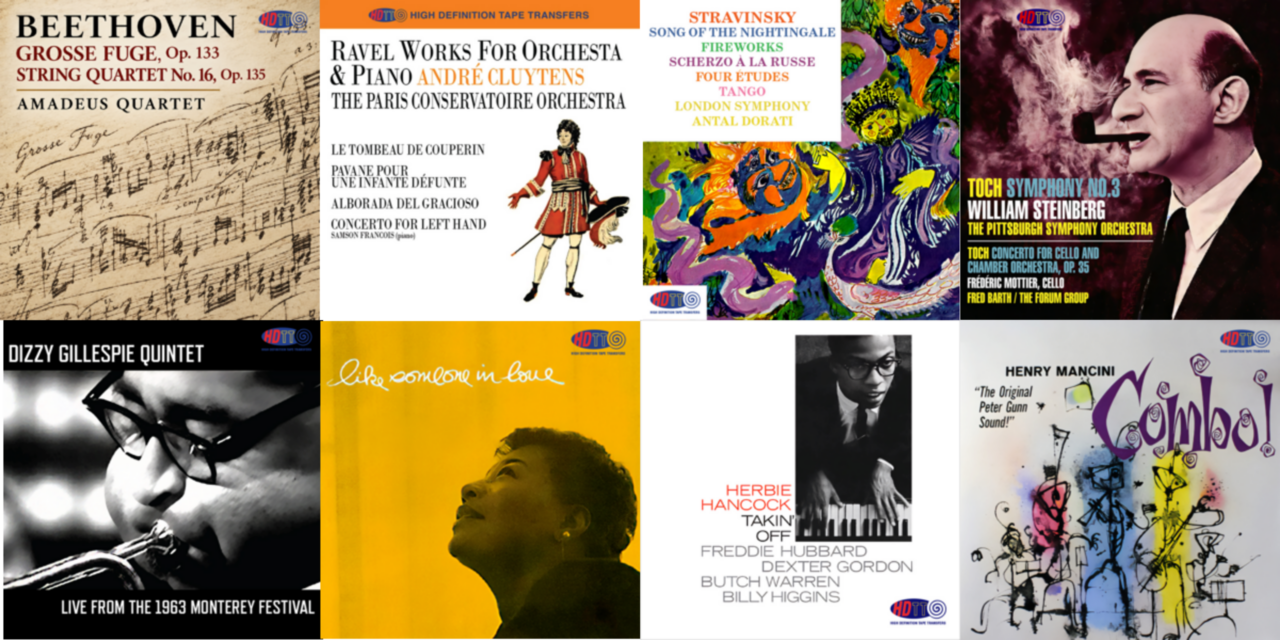
Bob Witrak continues to mine the archives for classic recordings to reissue – often in sound that is better than I ever imagined these recordings could deliver. Here are some recent releases that bring back warm memories but, more importantly, are wonderful additions to my digital music library today. Enjoy.
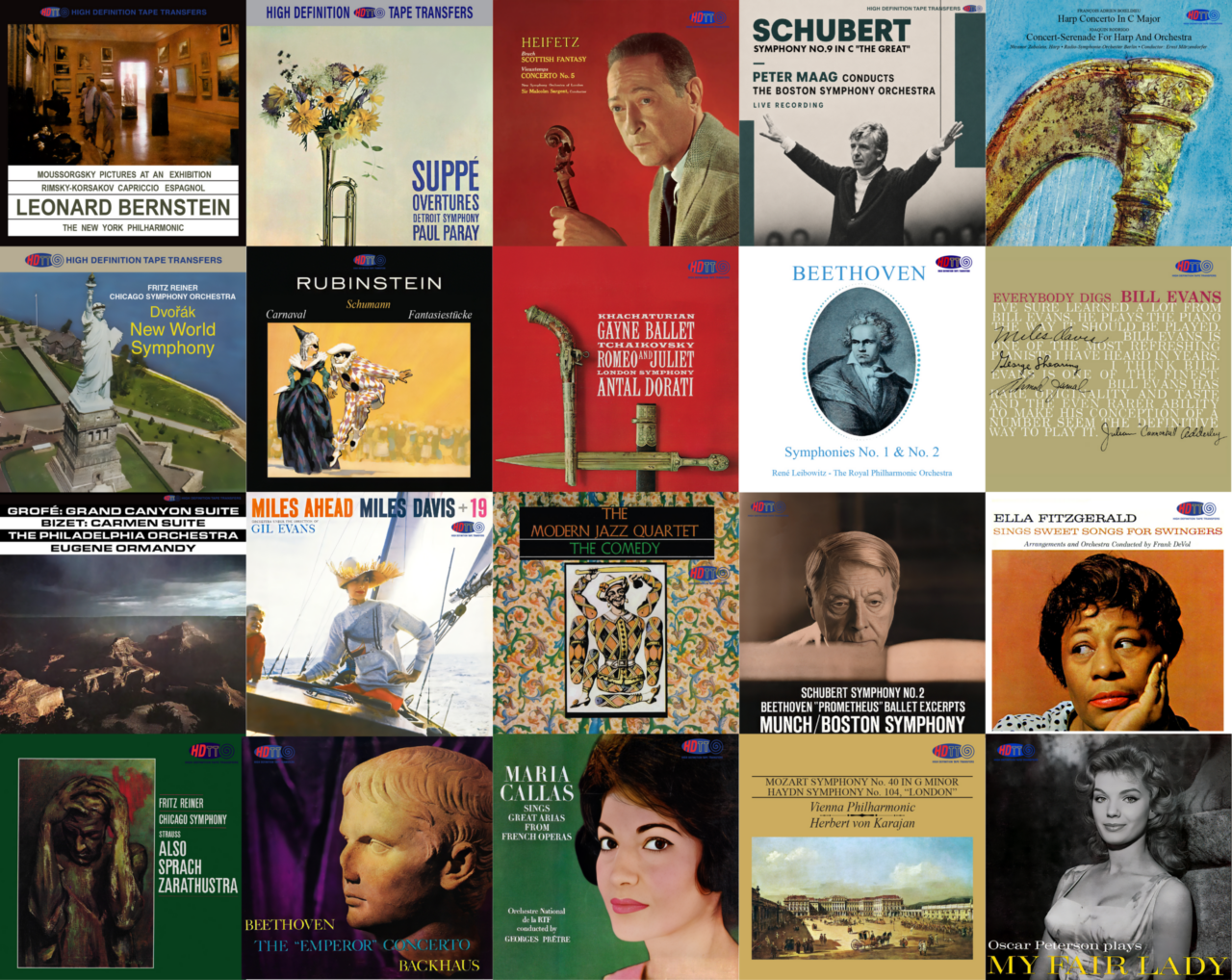
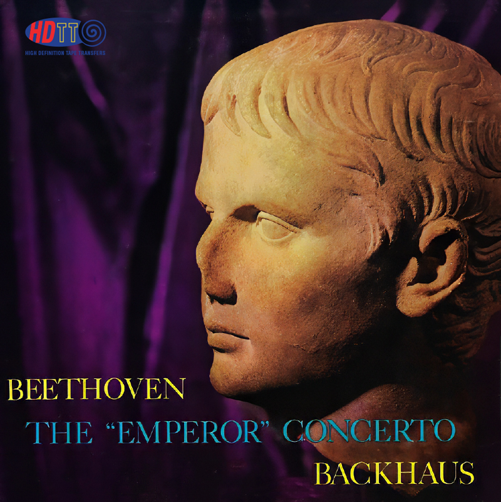
Beethoven Piano Concerto No.5 "Emperor," Wilhelm Backhaus, Hans Schmidt-Isserstedt, Vienna Philharmonic Orchestra. HDTT 1959, 2026 (DXD, DSD256) HERE
This was a formative performance for me. Recorded by Decca in 1959 with the great pianist Wilhelm Backhaus and the Vienna Philharmonic Orchestra under Hans Schmidt-Isserstedt, it has been a touchstone for classic Beethoven performance ever since I first heard it. This is one of those iconic recordings in which interpretive authority and orchestral virtuosity seem perfectly aligned. And it holds its own today. If I could have only one performance of Beethoven's Emperor Concerto in my library, this would be the one.
The source for this release is an original London LP. Don't believe the hype that Decca pressings sound better than London pressings. They don't. There is nothing inherently inferior to the London LPs pressed in England and imported to the U.S. And this transfer by Bob Witrak is illustrative of just how good they can sound.
Yes, Bob has done some post-processing to clean up a bit of noise. But in this case, I think it is entirely to the good. The result retains the character of the original LP while giving us a remarkably clean and dynamic presentation of this classic recording. If you love vinyl, I suspect you will love any of the Vinyl Record Restoration series HDTT has been releasing over the past several years.
Outstanding performance, recording, and sound quality.
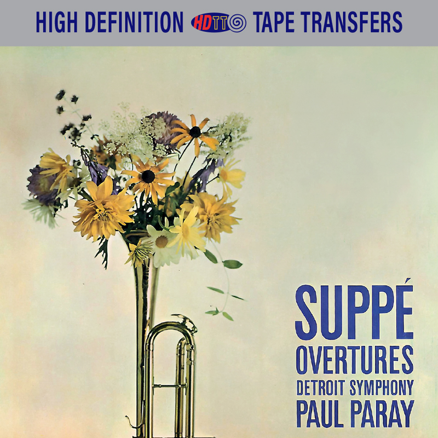
Suppé Overtures, Paul Paray, Detroit Symphony Orchestra. HDTT 1959, 2026 (DXD, DSD256) HERE
Under conductor Paul Paray, the Detroit Symphony Orchestra may have been the best French-sounding orchestra performing in the United States. The recordings made by the Mercury Records team of independent recording engineer C. R. (Bob) Fine and producer Wilma Cozart (Fine) are legendary, and their recordings of Paray and the Detroit Symphony Orchestra at Cass Technical High School in Detroit are among the best they produced. (Okay, shoot me – I'll own this as my personal opinion.)
This 1959 recording is a definitive example of the golden era of Mercury Living Presence. Utilizing their iconic three-microphone technique to capture a three-track master, Bob Fine and Wilma Cozart achieved a level of depth, presence, and staggering dynamic range that remains a benchmark today.
What I particularly value about these recordings is their complete absence of artificial spotlighting. Instead, we hear the orchestra in the acoustic space of the hall. The sound is transparent, wide, extraordinarily dynamic, and detailed. Some listeners may find the microphones too close to the orchestra – that the sound is too vivid, too "technicolor." That is a fair criticism. It is also the trade-off for the detail and immediacy of the Mercury sound. One can argue the point endlessly. I choose to accept the aesthetic choices Fine and Cozart made and just immerse myself in their sound space.
The overtures here are popular Viennese-style showpieces. Suppé was best known for his light operettas, and there is nothing particularly weighty about this music. It is fun and frolicsome – musical bonbons. Don't come look for profound themes or serious musical argument. Come for a light, happy, outing.
Paray plays this with vigor. Known for lean textures, brisk tempos, and extraordinary rhythmic bite, he brings these little pieces to life with remarkable orchestral precision and wit. His Detroit players support him to the hilt.
Whenever I play this recording, I know I can just have some fun.
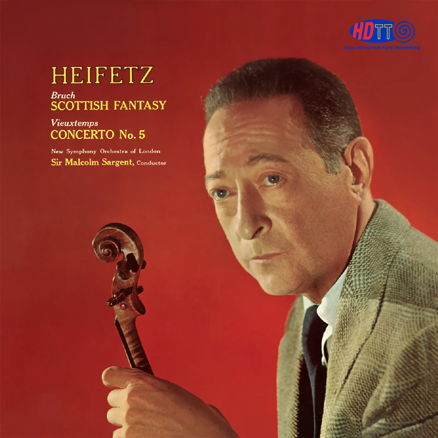
Heifetz Bruch Scottish Fantasy, Vieuxtemps Concerto No. 5. HDTT 1961, 2026 (DXD, DSD256) HERE
Heifetz in 1961 was at the height of his powers and reputation. These performances remain legendary for good reason. The articulation, precision, and technical command are astonishing, yet I find little of the coldness so often attributed to Heifetz by his detractors. To me, these are simply beautiful performances that reward repeated listening.
His reading of the Vieuxtemps Concerto No. 5 showcases a seamless singing tone and expressive warmth that completely belie the myth of a merely technical virtuoso. In the Bruch Scottish Fantasy, he delivers what many listeners consider a definitive performance, balancing technical perfection with deep affection for the work's folk-inspired character. I've lived with this recording for decades and still return to it as a reference.
Recorded by Kenneth Wilkinson in Walthamstow Town Hall, the sound quality is excellent. Sourced from a 15IPS 2-track tape, this HDTT transfer offers the dynamics, transient attack, and frequency extension that make great analog tape immediately recognizable. Bob Witrak's transfer is superb.
Khachaturian Gayne Ballet Music, Tchaikovsky Romeo and Juliet, Antal Dorati, London Symphony Orchestra. HDTT 1961, 2026 (DXD, DSD256) HERE
This release returns us to the golden age of Mercury Living Presence. Recorded by Bob Fine and Wilma Cozart (Fine) in Watford Town Hall, it captures the London Symphony Orchestra with extraordinary impact, focus, and scale. If you want to hear a truly expansive soundstage, this recording is compelling demonstration.
I have the 1992 CD reissue containing the Gayne Ballet Music, and the comparison was not particularly close. This HDTT transfer from an original Mercury Living Presence LP delivers a more spacious presentation, greater depth, more natural instrumental timbres, and a far more convincing sense of the recording venue. Whatever the technical pedigree of the earlier CD, this transfer provides a substantially more engaging listening experience in my system.
And as an added bonus, you also get a splendid performance of Tchaikovsky's Romeo and Juliet.
Schumann Carnaval and Fantasiestücke, Artur Rubinstein. HDTT 1963, 2026 (DXD, DSD256) HERE
I have this ambivalent relationship with Artur Rubinstein. Sometimes I find his trademark romanticism a bit too much; other times I am completely captivated.
This recording falls squarely in the latter category. In performances recorded between 1962 and 1963, Rubinstein is at the top of his game, bringing elegance, tonal beauty, and poetic insight to Schumann's contrasting musical worlds. Carnaval sparkles with character, while Fantasiestücke receives a deeply lyrical and affectionate reading.
I compared this HDTT release, sourced from a 4-track tape, with an RCA issue from The Rubinstein Collection (1987). The comparison was brief. This transfer offers a level of musical and sonic engagement that made further evaluation unnecessary. An easy recommendation.
Beethoven Symphonies No. 1 and No. 2, René Leibowitz, Royal Philharmonic Orchestra. HDTT 1961, 2026 (DXD, DSD256) HERE
The recordings Kenneth Wilkinson and Charles Gerhardt produced for Readers Digest in the 1960s have long been favorites of mine, both for their sound quality and for the performances they preserve. HDTT has managed to locate excellent sources for a number of these recordings, and this latest release is particularly welcome.
Leibowitz takes a lean, intense approach to Beethoven's first two symphonies. He presents them not as museum pieces or as simple precursors to the later symphonies, but as revolutionary works, full of youthful energy and impatience with convention. There is nothing reverential about these performances. Instead, we hear a young Beethoven challenging the musical assumptions of his day.
The sound quality is exemplary. This is exactly the sort of recording that reminds me why I spend so much time refining my audio system. When everything comes together, recordings like this make the effort worthwhile.
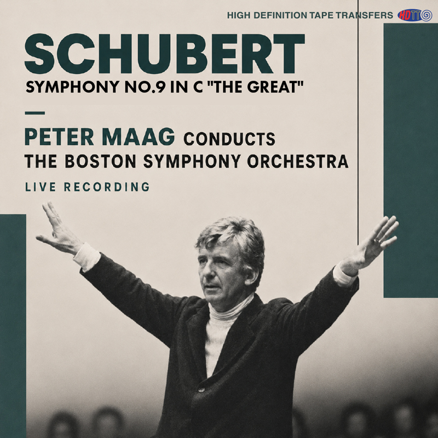
Schubert Symphony No.9 In C "The Great," Peter Maag, Boston Symphony Orchestra (Live Recording). HDTT 1975, 2026 (DXD, DSD256) HERE
Swiss conductor Peter Maag (1919-2001) brought uncommon transparency, lyricism, and humanity to his performances. This live performance with the Boston Symphony Orchestra perfectly illustrates his approach: warmly expressive without ever becoming sentimental. Recorded in Boston’s Symphony Hall, it captures both the grandeur and intimacy of Schubert’s Great Symphony, with spacious phrasing, flowing momentum, and a deeply humane spirit.
Maag's recordings of Mozart, Mendelssohn, and Schubert are cornerstones of my library. I value this live recording not for audiophile sound, but as a rare document of Maag's artistry in live performance. It preserves an interpretation of Schubert that deserves to be heard – and remembered.
Boieldieu Harp Concerto In C Major, Rodrigo Concert-Serenade For Harp And Orchestra, Nicanor Zabaleta (harp), Radio Symphonie Orchester Berlin. HDTT 1960, 2026 (DXD, DSD256) HERE
These works by Boieldieu and Rodrigo are mainstays of the orchestral harp repertoire. Here they are performed by the great Spanish harpist Nicanor Zabaleta, for whom Rodrigo composed his Concert-Serenade. Originally released by Deutsche Gramophon in 1960, this recording has been reissued many times – and for good reason. If I could keep only one recording for harp and orchestra in my music library, this would be it.
HDTT's transfer from a DGG original pressing sounds wonderful – much as I rememberthe LP, but cleaner and with less noise. The harp miked rather closely and occupies a somewhat separate acoustic space, although I don't find that objectionable. The Rodrigo perhaps succeeds a bit better in presenting the overall soundstage.
Most importantly, this release sounds better than any of the several CD reissues I have accumulated over the years. A familiar recording, beautifully restored.
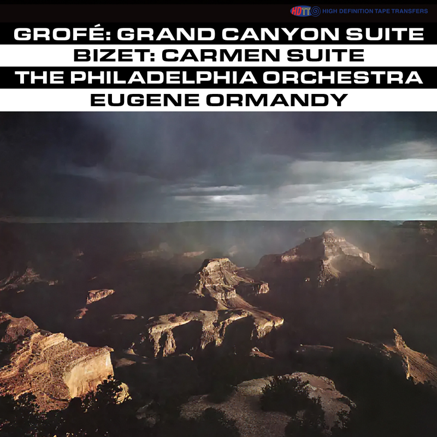
Grofé Grand Canyon Suite, Bizet Carmen Suite, Eugene Ormandy, Philadelphia Orchestra. HDTT 1958, 2026 (DXD, DSD256) HERE
Recorded by Columbia Records in 1957 and 1958, these pioneering commercial stereo recordings belong to the first generation of orchestral recordings made for the new stereo era. Like RCA, Mercury, Decca, and EMI, Columbia was exploring how stereo should capture an orchestra, and these recordings demonstrate just how successful those early experiments could be. Depth, width, and even a sense of height are preserved in the recording itself.
I have always enjoyed these early Columbia recordings. Unfortunately, Columbia's later move toward more microphone and increasingly aggressive instrumental spotlighting largely lost me. Here, however, they got it right.
Sourced from a four-track tape, this HDTT release sounds substantially better than any of the LPs I've heard of this recording. I've found this to be a recurring problem with Columbia's classical releases: much of what the engineers captured on tape seems to have been lost in the LP mastering. HDTT's early Columbia transfers therefore offer a double benefit – excellent performances and access to the original recorded sound.
Oh, and the performances? Yes, yes – they're very good. Possibly definitive. A great Ormandy/Philadelphia collaboration.
(Ann tells me I'm supposed to be sharing some thoughts about the music with you, not just the sound. Oh, me.)
Dvořák New World Symphony, Fritz Reiner, Chicago Symphony Orchestra. HDTT 1957, 2026 (DXD, DSD256) HERE
Fritz Reiner and his Chicagoans were a force of nature – bold, powerful, and assured. Few readings of Dvořák's New World Symphony match Reiner's commanding interpretation or the Chicago Symphony Orchestra's breathtaking precision and ensemble.
The original LP clearly revealed this as an early stereo recording. In 1957, engineer Lewis Layton was still working to determine the optimal microphone placement in Orchestral Hall. Bob Witrak alludes to this in his notes for the release, and the gentle post-processing he describes has, to my ears, successfully ameliorated some of the limitations of the original LP. This HDTT transfer sounds considerably more spacious and open than I remember.
But all thoughts of sound quality aside, this is a compelling musical interpretation – a tour de force of orchestral power, technique, and ensemble. That remains the real reason to hear it.
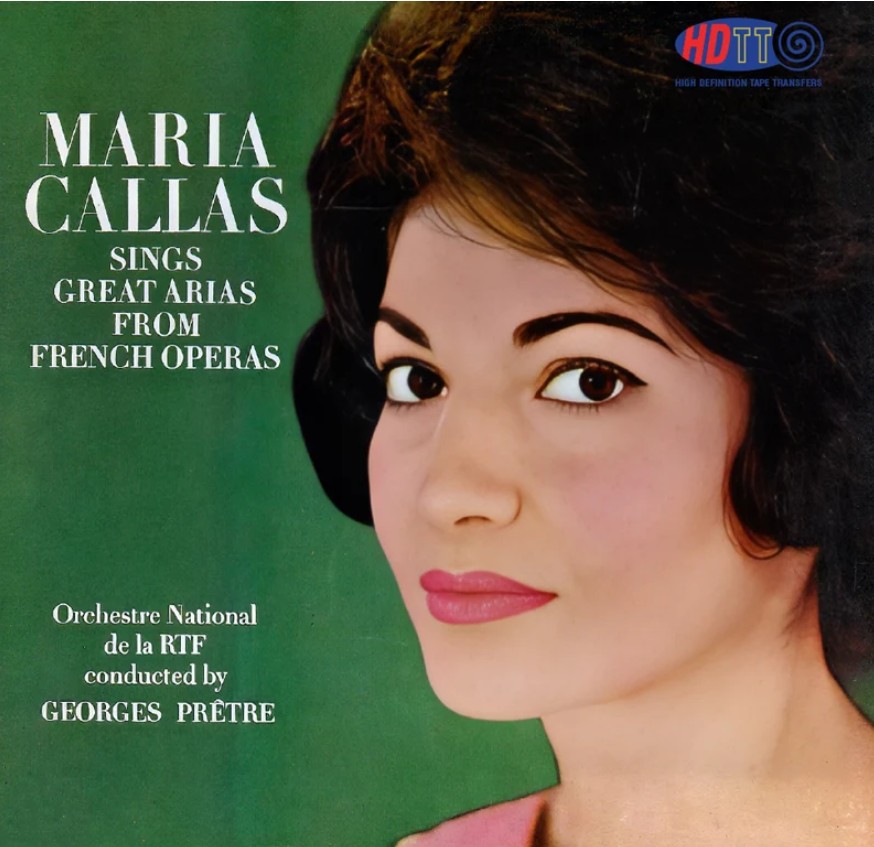
Maria Callas sings Great Arias from French Operas, Maria Callas, Georges Prêtre, Orchestre National De La Radiodiffusion Française. HDTT 1961, 2026 (DXD, DSD256) HERE
This 1961 recording, captured by EMI at the Salle Wagram under Georges Prêtre, is a remarkable demonstration of Maria Callas' interpretative versatility. The program ranges from 18th-century classicism through the romantic and dramatic intensity of the 19th and 20th centuries.
The stories we hear about Callas are rarely about the prettiness of her voice. They are about an artist who completely inhabited her roles, creating emotional reality through deeply psychological interpretations of the characters. Few singers have matched her dramatic range, intensity, and ability to make us believe the person behind the voice.
If you want to further explore the deeply expressive artistry of this great soprano, HDTT has also released her live Copenhagen Concert from 1963 in a superb restoration by John Haley.
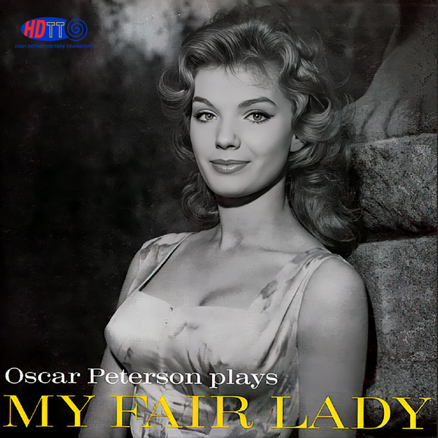
Oscar Peterson plays My Fair Lady, The Oscar Peterson Trio. HDTT 1958, 2026 (DXD, DSD256) HERE
The Oscar Peterson Trio’s 1958 recording of My Fair Lady completely dismantles and rebuilds the shows tunes without losing an ounce of their theatrical charm. That three musicians – Peterson on piano, Ray Brown on bass, and Gene Gammage on drums – could accomplish this is, to me, astonishing.
And it isn't simply a demonstration of the Trio's immense technical skills. It is Peterson's musical sensibility and gift as an interpreter and storyteller that makes this work. He understands the wit and romance inherent in Lerner and Loewe's compositions, while never allowing the underlying melodies to disappear. He has effectively taken an orchestral and vocal score and transformed it into a jazz program for three musicians.
I stand in awe. This is Peterson at his most inventive and, simply, his most entertaining.
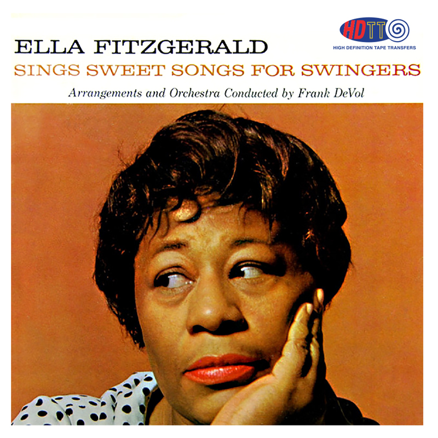
Ella Fitzgerald Sings Sweet Songs For Swingers, Ella Fitzgerald, with Harry "Sweets" Edison on trumpet, and Frank De Vol's Orchestra. HDTT 1959, 2026 (DXD, DSD256) HERE
Yes, I admit to being an Ella Fitzgerald fan. I don't think I've heard an album of hers that I haven't liked. For me, she is the quintessential singer and performer. I simply love the way she turns a phrase and shapes a song. You know the expression: "I could listen to her sing the telephone book." That's me.
But here there is no telephone book. Instead, we have a collection of great standards in excellent arrangements by Frank De Vol, with Harry "Sweets" Edison adding his trumpet to the mix. I'm in sweet clover.
Sourced from a 15IPS tape, the sound is as delicious as the music – open, airy, relaxed, and wonderfully natural.
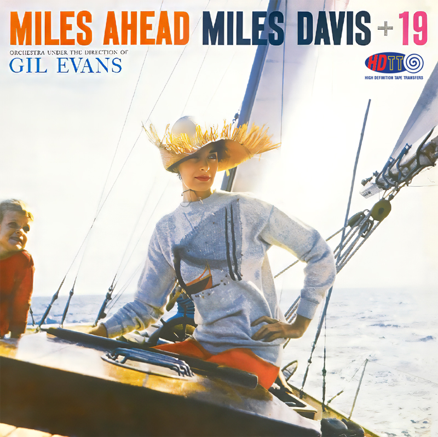
Miles Ahead, Miles Davis + 19. HDTT 1957, 2026 (Pure DSD256) HERE
Following the groundbreaking Birth of the Cool, Miles Davis and Gil Evans created something extraordinary: a sophisticated, large-scale work for flugelhorn and nineteen-piece jazz orchestra. With players including Paul Chambers, Tom Mitchell, and Art Taylor, Miles Ahead is rightly regarded as a cornerstone of the jazz canon.
I came to this recording with high expectations, and it did not disappoint. The combination of Davis's lyrical playing, Evans's remarkable orchestration, and the precision of the ensemble remains captivating.
Sourced from an excellent 15IPS two-track tape, Bob was able to make this transfer in Pure DSD256, with no PCM processing. The sound has everything I hope for from a great open-reel tape: huge dynamics, lighting fast transients, and exceptional detail, all presented with remarkable transparency.
Another sonic gem that rewards all the effort I have put into building a system capable of revealing what these recordings can do.
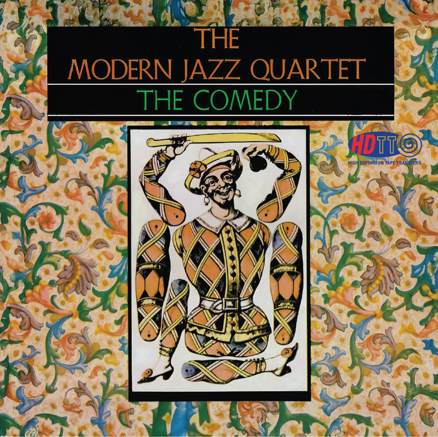
The Comedy, The Modern Jazz Quartet. HDTT 1962, 2026 (DXD, DSD256) HERE
By the time The Comedy was recorded in 1962, the Modern Jazz Quartet had already established itself as one of the most distinctive – and distinguished – groups in jazz. Would I recommend this as the place to begin if you were just discovering the MJQ? Probably not. I'd start with Pyramid or The Sheriff (HERE and HERE), both excellent introductions to the group's unique sound. But once you've gotten to know those albums, The Comedy is an outstanding next step because it reveals just how much improvisational freedom the quartet could find within its carefully constructed compositional framework.
And they are indeed wonderful. Oh, my, yes.
John Lewis on piano, Percy Heath on bass, Milt Jackson on vibraphone, and Connie Kay on drums were four musicians with the technical ability to take the music wherever they wanted to go. What they consistently produced, however, was much more than a display of technical chops. Their collaborations were innovative, immensely musical, and intensely creative.
When I think of the MJQ, I tend to think first of Milt Jackson. His vibraphone sound is so distinctive, and his instrument so prominent in the quartet's sonic character, that it is easy to overlook just how good the other three musicians are. Heath is a dream on bass, Lewis is consistently subtle and inventive, and Kay provides the rhythmic foundation that allows the entire enterprise to work. Take any one of them away and the magic disappears.
What makes The Comedy particularly interesting to me is the way these four musicians negotiate the tension between composition and improvisation. The music has structure – sometimes quite a lot of it – but within that structure they seem to find an almost limitless range of possibilities. It is a wonderful demonstration of just how much can happen when four musicians who know one another this well are given room to play.
And HDTT has given us an excellent way to hear it.
The sound quality is excellent, as it is with the other MJQ releases I've heard from HDTT. I don't know exactly what Bob's source is for the 15 IPS tapes used in these transfers, but they are exceptionally clean and transparent. The DXD and DSD256 transfer preserves that clarity without making the recording sound overly processed or modernized.
This is the MJQ doing what the MJQ did so well: taking a carefully constructed musical framework and finding freedom within it. If you've already come to know and love this remarkable quartet, The Comedy is well worth adding to the collection.
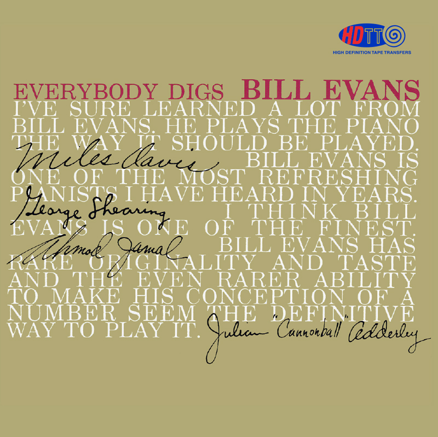
Everybody Digs Bill Evans, Bill Evans Trio. HDTT 1958, 2026 (DXD, DSD256) HERE
There are so many wonderful Bill Evans albums that choosing a favorite seems almost unfair. But this 1958 recording, Everybody Digs Bill Evans, is possibly mine. (Just don't get me thinking about Waltz for Debby. I'll start arguing with myself.)
What never ceases to amaze me is that this album came so early in Evans's career. It is already so sophisticated – nuanced, inventive, complex, and intimate, yet capable of becoming hard-driving whenever his sense of the music calls for it. Those sometimes contrasting qualities define Bill Evans's legacy for me. I never get tired of hearing him.
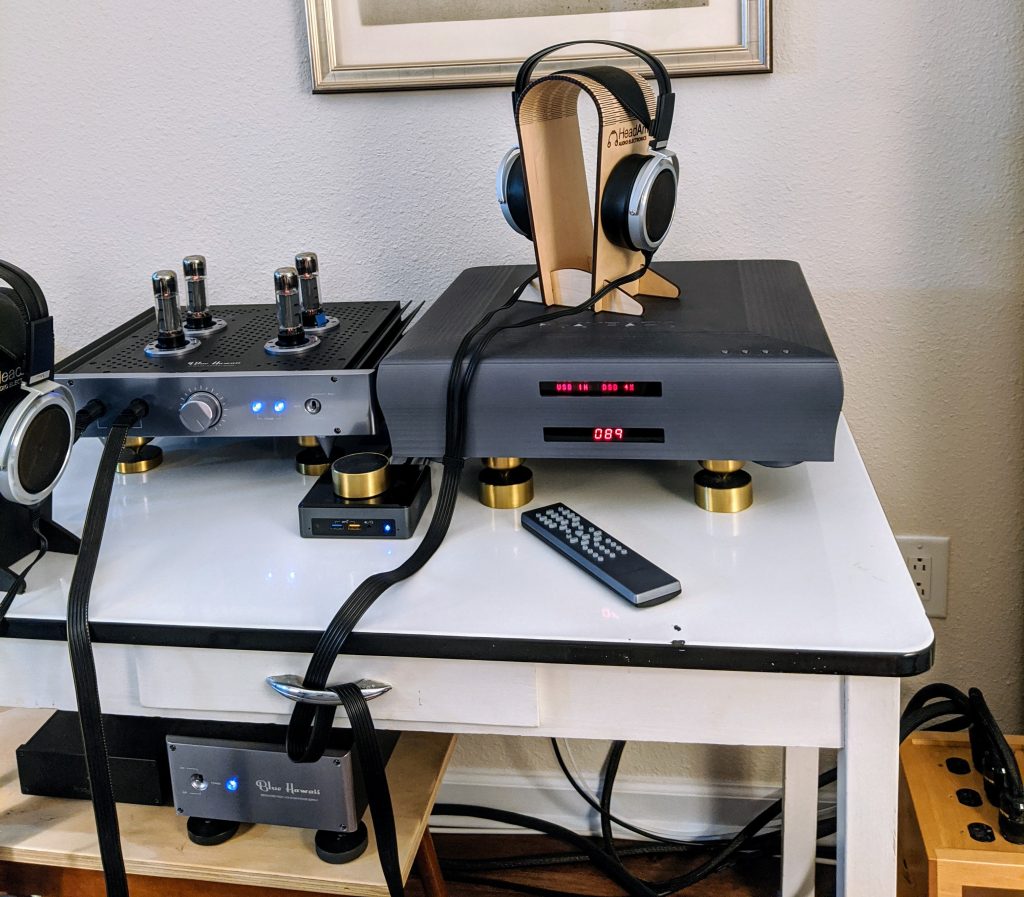
Neither does Ann. Whenever I suggest a Bill Evans album for one of our periodic shared listening sessions, her response is invariably, "Oh, good!" She's a huge fan. Yes, we have matching headphones that both connect to the same HeadAmp Blue Hawaii amplifier, so we really can listen together. We just have to negotiate the volume.
Everybody Digs Bill Evans reveals so many different sides of this remarkable musician that if I could have only one Bill Evans album, this might be the one. From the hard-driving opening track, "Minority," to the graceful lyricism of "Young and Foolish," none of these performances sounds derivative or dated. Evans takes familiar material and, through phrasing that is as distinctive as a human voice, subtly transforms it into something fresh and completely his own.
That is the thing about Bill Evans. He didn't need to reinvent a tune to make it new. He simply heard it differently.
And I encourage you to take a moment to actually read the quotations on the cover of this album – from Miles Davis, George Shearing, Ahmad Jamal, and Cannonball Adderley. These aren't just endorsements from famous musicians. They are musicians recognizing something in another musician that is difficult to put into words.
This is Bill Evans.
Those comments say more about why I love listening to his performances than any amount of my own commentary ever could.
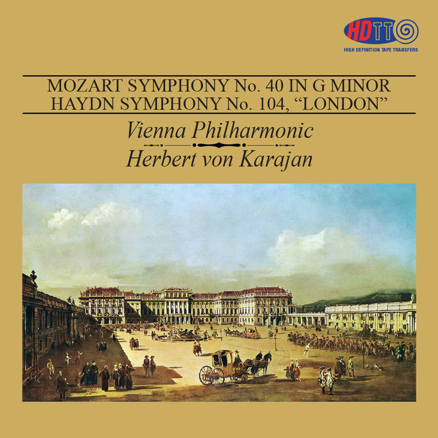
Mozart Symphony No. 40, Haydn Symphony No. 104 "London," Herbert von Karajan, Vienna Philharmonic Orchestra. HDTT 1959, 2026 (DXD, DSD256) HERE
I will confess at the outset that I have never been much of a fan of Herbert von Karajan. My formative listening years coincided with his great recording era at Deutsche Grammophon, when, to my ears, his conducting had become increasingly self-indulgent. I was simply put off by it. For years, Karajan's name on a recording was enough to make me look elsewhere.
I've had to rethink that position.
In later years I've discovered some of the earlier recordings Karajan made, and this 1959 recording for Decca, released in the U.S. by RCA, is a particularly good example of why. Here we have a vigorous, powerful younger Karajan leading the Vienna Philharmonic in the Sofiensaal, and the result is quite different from the Karajan I thought I knew.
The Mozart is glorious.
The Vienna Philharmonic's string sound is sumptuous without becoming ponderous, the woodwinds are exquisite, and the orchestra plays with the kind of effortless virtuosity one expects from this ensemble. Karajan brings considerable energy and power to the music, but here it feels directed toward the music rather than toward himself. The result is a Mozart Symphony No. 40 that is dramatic and urgent without losing its elegance.
For a full modern-orchestra performance of Mozart, this belongs very near the top of my list.
And then there is Haydn's Symphony No. 104, the "London." If the Mozart demonstrates Karajan's ability to bring energy and weight to classical-period music, the Haydn reveals another side of the partnership. The orchestra's precision and tonal beauty are again on full display. The opening is grand, powerful, and a bit pompous – perhaps exactly as one expects for a symphony called "London." But after the opening, there is a lightness and rhythmic vitality here that keeps the performance from becoming merely grand.
It is worth remembering that this recording is nearly seventy years old. Yet the performances have lost none of their vitality, and the Vienna Philharmonic sounds magnificent. This is a wonderful example of why I continue to find treasures in these older recordings: the technology may belong to another era, but the musicianship certainly does not.
And, apparently, neither does the younger Herbert von Karajan.
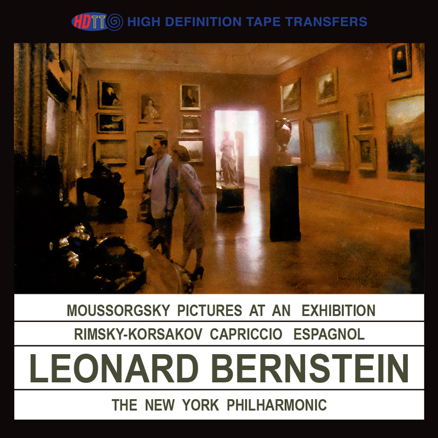
Mussorgsky Pictures At An Exhibition, Rimsky-Korsakov Capriccio Espagnole, Leonard Bernstein, New York Philharmonic. HDTT 1958, 2026 (DXD, DSD256) HERE
My listening experiences with Leonard Bernstein over the years have been much like those I've described above regarding Herbert von Karajan: I like his younger self considerably more than his more mature self. Yes, I know many will disagree. But I'm the one getting to write this article.
Here we have performances of two familiar and significant works that are powerfully delivered, but not self-indulgently so. Instead, what I hear is a young Bernstein with an extraordinary sense of musical structure, coupled with the excitement and intensity to communicate what he hears as directly and persuasively as possible.
There is no self-indulgent stretching of lines to make his own statement, no reshaping of the music simply to announce the conductor's personality. It is the composer's voice that Bernstein shares with us, not Bernstein's voice.
And that makes these two performances work for me – and work very pleasurably indeed.
These are works that can so easily sound familiar to the point of becoming hackneyed. Yet Bernstein makes them fresh and alive. He seems to be saying, "Listen with new ears. Hear these works for what their composers had to say."
I'm loving every delicious minute of it.
HDTT's transfer from a 15 IPS tape has all the clarity, warmth, transient acuity, and dynamic range one could hope for from a source of this vintage. The sound is remarkably open and alive, and in my listening, it easily surpasses the LP and CD versions I've previously heard.
But it is Bernstein's musicianship that makes this release special. He isn't asking us to listen to Bernstein conducting Mussorgsky and Rimsky-Korsakov.
He's asking us to listen to Mussorgsky and Rimsky-Korsakov.
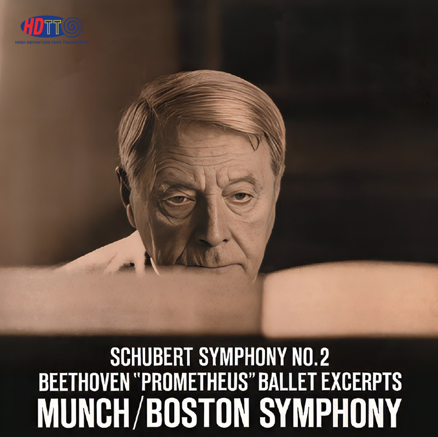
Schubert Symphony No. 2, Beethoven Prometheus Ballet Excerpts, Charles Munch, Boston Symphony. HDTT 1960, 2026 (DXD, DSD256) HERE
This release is outstanding in several ways. First, we have Charles Munch and the Boston Symphony Orchestra at the absolute pinnacle of their mid-century stereophonic power. And then we have a 15IPS source tape that reveals the extraordinary recording behind the performances: a remarkably wide soundstage, superb instrumental clarity, and the luscious natural acoustics of Boston's Symphony Hall.
But it is the performances that make this recording special.
When Munch and his Bostonians are playing at the top of their game, as they are here, we get muscular, rhythmically crisp performances that never sacrifice musicality. This reading of Schubert's youthful Symphony No. 2, composed in 1814–15, simply bursts with exuberant energy and lyrical charm. The final movement, "Presto vivace," dances, prances, and charms immensely.
This has long been one of my favorite recordings of this symphony. Now, with HDTT's transfer, the sound quality finally matches the excellence of the performance. It is one of those recordings where, when the final note disappears, I just want to stand up and applaud.
The Schubert is complemented by excerpts from Beethoven's only full-length ballet, The Creatures of Prometheus (1801). This is youthful Beethoven, too, filled with urgency, energy, and lyricism. We so often hear only the overture that it is easy to forget that there is a substantial work behind it. Munch gives us considerably more: portions of Act 2 as well as the Finale.
And what a pleasure that is.
The music is unmistakably Beethoven, but we hear a composer still finding his way toward the voice that would soon become unmistakable. Munch brings the same vitality and rhythmic precision to these excerpts that he brings to the Schubert, making this much more than a bonus appended to the main work. It is a fascinating and thoroughly enjoyable glimpse into Beethoven's early theatrical music.
Taken together, these performances are a wonderful reminder of just how magnificent Munch and the Boston Symphony could sound in their great stereophonic years. HDTT has given us a transfer that lets the performances breathe in Symphony Hall's natural acoustic – and, after all these years, finally lets this old favorite sound as good as it plays.
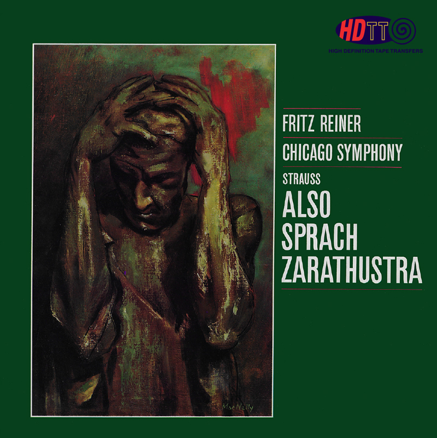
Strauss Also Sprach Zarathustra, Fritz Reiner, Chicago Symphony Orchestra (1962 Recording). HDTT 1962, 2026 (DXD, DSD256) HERE
We can debate endlessly which is the better recording: this 1962 version or the earlier 1954 recording. The two represent a fascinating trade-off between raw interpretive fire and increasingly sophisticated recording technology.
The 1954 recording was very early stereo, made with an experimental two-track tape setup. It captures Reiner at his most commanding, with an urgent, visceral performance in which conductor and musicians seem to be forging a relationship and announcing to the world that they are a force to be reckoned with. The recording itself takes a minimalist approach to capturing an orchestra in stereo. It may miss some detail in individual sections, but its gloriously intense stereo image is utterly convincing.
The 1962 recording is a much more mature recording, made with three-track tape and a more sophisticated understanding of microphone placement. The performance is broader, more polished, and more contemplative. Here we hear the lyricism and tonal beauty of a master conductor who had accumulated years of understanding with his orchestra. The soundstage is expansive, with tremendous side-to-side imaging and extraordinary detail across the orchestra.
So which do I prefer?
I can't choose.
Both recordings are among the very best of the dozen or so performances of Also Sprach Zarathustra in my library. The 1954 has an immediacy and visceral power that I find irresistible. The 1962 has a sonic sophistication and musical maturity that are equally compelling.
Which one I prefer on a given day depends entirely on my mood.
So I have to have both.
A closing note about why I keep writing about releases from High Definition Tape Transfers
When we downsized and I eliminated my vinyl collection in preparation for our move, I was fortunate to discover Bob's catalog online. Perusing it was like wandering through my old record shelves again, only now the records had been transformed into digital transfers.
I've often described the HDTT catalog to readers as a proverbial treasure room. I wander through its offerings and find treasured old friends – recordings I remember from years ago and am delighted to encounter again. And just as often, I discover recordings that become new friends.
The more I explore what Bob offers, the more I see three very tangible reasons why the catalog is so compelling. First, there are performances that deserve to be heard and, in many cases, rank among the finest ever captured for audio playback. Second, the artists are so often musicians of the highest stature in their respective genres. And third, in my experience, the HDTT transfers very often sound better than any other digital release of these works I've encountered.
Put those three things together and it is easy to understand why I keep coming back to the catalog.
So I will continue to explore new releases from HDTT and share what moves me about the best of the ones I hear. I hope that, in doing so, I can help you discover some music that becomes an old friend – or perhaps a new one.