
In this Recent Finds I'm pleased to share with you two marvelous new recordings by Jared Sacks, one a Pure DSD256 recording of Brahms solo piano music with my favorite pianist, Anna Fedorova. Also included are two excellent opera recordings: Mozart's Don Giovanni and Barber's Vanessa, each in outstanding sonics. Plus more...
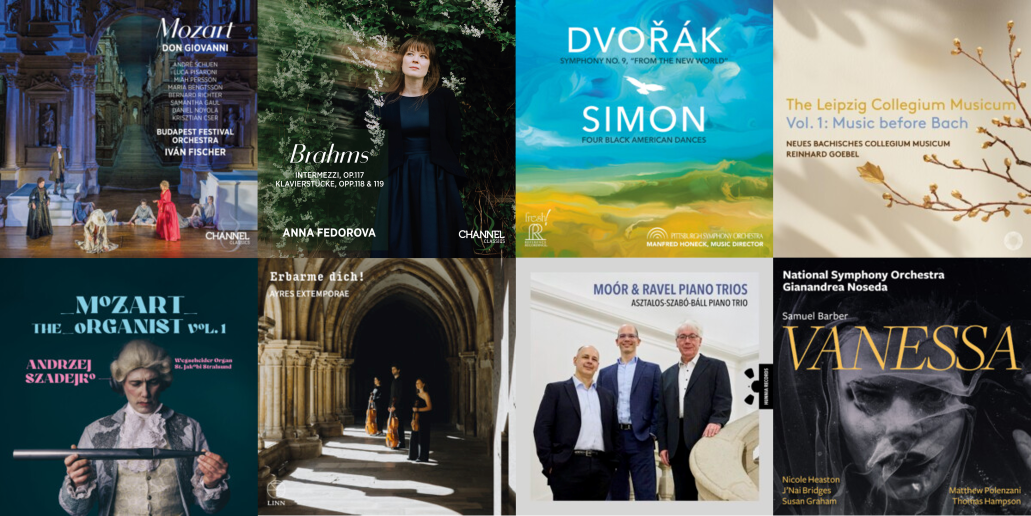
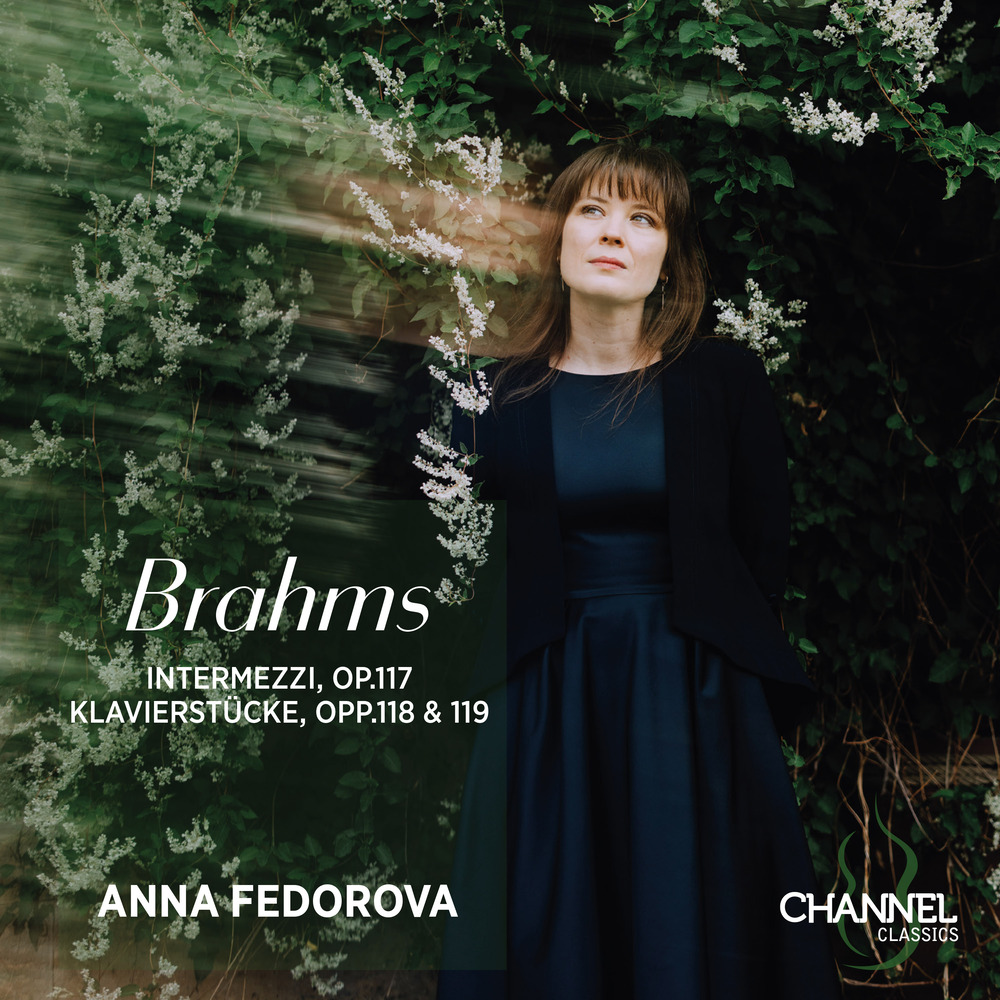
Brahms, Intermezzi and Klavierstücke, Anna Fedorova. Channel Classics 2026 (Pure DSD256, Stereo, MCh) Edit Master Sourced HERE (To be released September 10, 2026)
Anna Fedorova writes:
"The late works of Brahms—Opp. 117, 118 and 119—feel as if he is speaking to us in a more private voice than ever before. The music is deeply personal, full of tenderness, nostalgia, love and quiet reflection. At this stage of his life, he turned inward and wrote music of extraordinary intimacy and honesty."
This recording is clearly very personal to Anna, and her words speak more truth about this music than I could ever hope to convey.
But as I listen to her play, I find myself responding in much the same way. This is Brahms speaking to us directly and privately. And, at the same time, it is Anna speaking to us directly and personally through Brahms.
I have long loved hearing her play. My only opportunity to do so has been through her recordings—she is in Europe, and our paths have never crossed—but through her music over the years I have come to feel a strong and abiding connection with her artistry. She shares so fully and openly in her performances that I regularly experience a sense of intimacy and camaraderie that is rare.
It is as though she opens a window onto her own soul as she plays—and the view is wonderful, heartwarming, and generous.
What a gift.
I've commented before that I consider Anna one of the most gifted pianists performing today. If you have not heard her recordings, I encourage you to do so. They are, to my ears, uniformly marvelous.
These late works of Brahms are indeed special, just as Anna describes. But don't come to them expecting nothing but languorous and dreamy music. When the third of the Six Klavierstücke, Op. 118, suddenly strikes out, you understand immediately why Brahms marked it Ballade. Allegro energico. It will sit you up in your chair.
And Anna meets it with power and intensity.
Brahms is ever thus. He will compose the most melodic and lyrical lines—music that can carry one's thoughts away to heavenly pastures. And then, just when he has drawn you in, he strikes. Suddenly there is energy, power, and drama.
Anna is his perfect champion, his ideal communicator.
Did I say I love her playing?
Oh, yes indeed.
And because Anna and Jared Sacks have developed such a close recording partnership at Channel Classics, the sound quality of her recordings is consistently exceptional. As with her last solo recording, Intrigues Of The Darkness, this album also is released in Pure DSD256—Direct Mixed.
What I hear is as pure and authentic a representation of a concert grand piano in an excellent acoustic space—the MCO Studios in Hilversum, Netherlands—as I have encountered in a recording.
Jared has always had a special touch when recording piano. His microphone placement allows the instrument to breathe and gives each note time to fully expand into its harmonic overtones while preserving the natural acoustic environment of the hall.
And the MCO Studios play an important role as well. The space is sufficiently large, and its reverberation time sufficiently generous—yet wonderfully controlled—that the piano sounds gloriously alive.
Particularly in the hands of a musician this skilled and this sensitive.
I highly recommend this recording and these marvelous performances. I hope you will try them. But please, do so with a high-resolution download—not with a streaming version that reduces the sound quality and nuance available from this stunning Pure DSD256 recording.
It is here that the magic truly happens in today's audio.
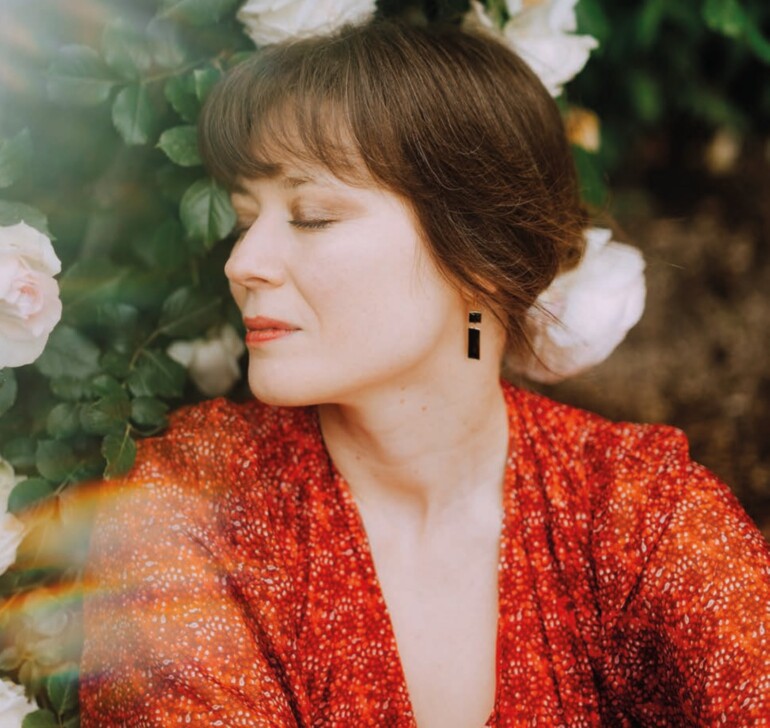
Anna Fedorova
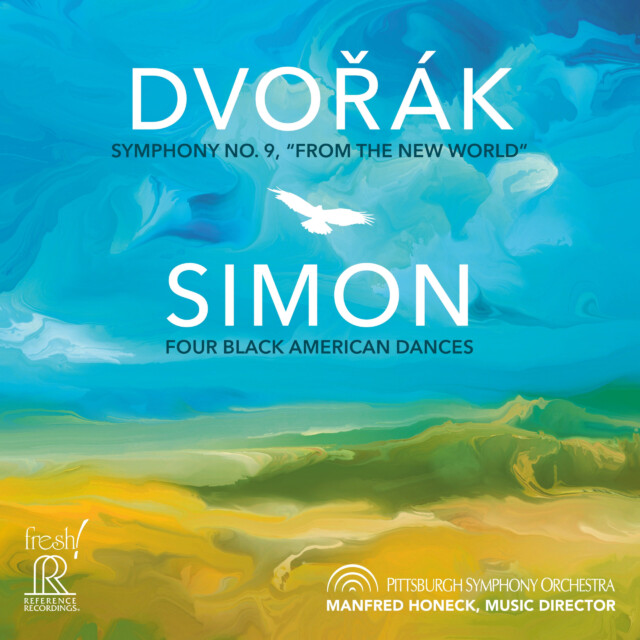
Dvořák Symphony No. 9 "From The New World", Carlos Simon Four Black American Dances, Manfred Honeck, Pittsburgh Symphony Orchestra. Reference Recordings 2026 (DXD 32-bit, DSD256, Stereo, MCh) HERE
Dvořák's Symphony No. 9, From the New World is one of my favorite works of orchestral music. Always has been, and I don't see that changing. It is also one of those works for which I have accumulated an embarrassing number of recordings. At last count, I had 23. This makes 24.
And it goes straight to the top echelon.
Why? For one thing, Manfred Honeck's interpretation captures almost exactly how I hear this symphony in my mind: singing lines, beautifully judged phrasing, powerful dynamic contrasts, and those delicate interludes of lyricism that make the great climaxes all the more effective. He simply gets the music.
But Honeck isn't doing this alone. He and the Pittsburgh Symphony Orchestra seem completely welded together in this performance. The orchestra plays with extraordinary precision and commitment, but there is nothing clinical about it. They play their hearts out for Honeck, and he gives them the freedom and direction to make the music live.
And then there is Mark Donahue's recording. Capturing a large orchestra with this degree of transparency, dynamic range, spatial definition, and natural instrumental texture is no small achievement. This is one of those recordings where the engineering becomes almost invisible because it simply lets the orchestra sound like an orchestra. It is masterful work.
Will I continue to return to other recordings of the New World? Absolutely. As I've said many times, one of the great pleasures of classical music is hearing what different conductors and orchestras find in a familiar work. I will continue to listen to István Kertész, Jascha Horenstein, Semyon Bychkov, Iván Fischer, Rafael Kubelík, and others. Each has something valuable to say.
But Honeck now belongs in that company. That's both a tribute to those other performances and an acknowledgment of just how good this new recording is.
And then there is Carlos Simon's Four Black American Dances (2023), which makes this release something more than another New World Symphony recording.
I'm always intrigued by Simon's music. His compositions range from concert works for large and small ensembles to film scores, drawing on influences that include jazz, gospel, and neo-Romanticism. As composer-in-residence with the National Symphony Orchestra in Washington, D.C., I've had the good fortune to hear some of his music in live performance, including his Four Symphonic Works (live recording available HERE). Those performances have been special occasions for me.
Four Black American Dances is another fascinating example of his musical imagination. Simon draws on an extraordinary range of influences and throws them into a work filled with swirling motifs, exuberant rhythms, sudden shifts of energy, and enormous dynamic contrasts. The demands on the orchestra are substantial, and Honeck and the Pittsburgh musicians meet them with remarkable panache.
I would love to hear this work live. I suspect its visceral impact would be even greater in the concert hall, where those huge dynamic contrasts and swirling rhythmic gestures could envelop the listener. But this recording gives us a very persuasive taste of what Simon has created.
And that is what makes this release particularly satisfying: we get a performance of a familiar masterpiece that immediately joins my short list of favorites, paired with a contemporary work that sends me off in an entirely new musical direction.
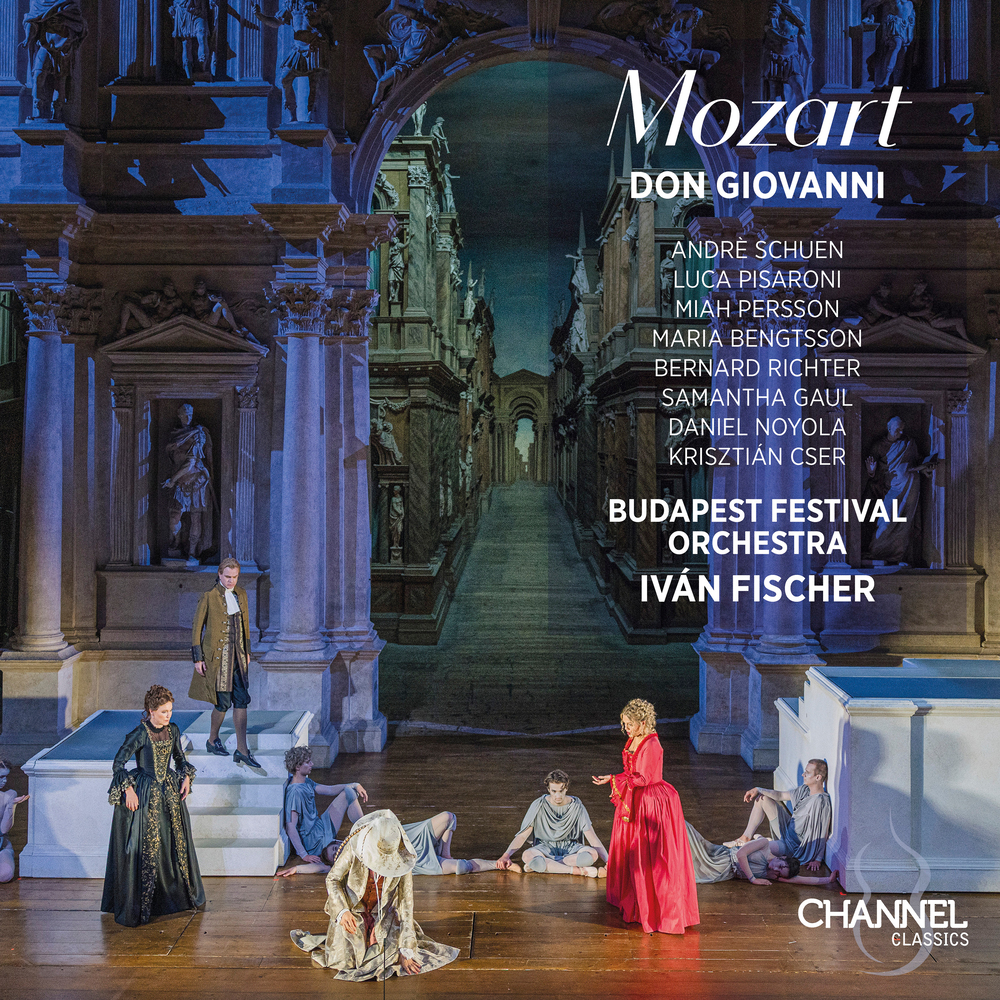
Mozart, Don Giovanni (complete), Iván Fischer, Budapest Festival Orchestra and Soloists. Channel Classics 2026 (DXD 32-bit, DSD256, Stereo) HERE
Recorded live in October 2025 at the Teatro Olimpico in Vicenza, this is the first opera in what will become a Mozart trilogy from Iván Fischer and the Budapest Festival Orchestra, with The Magic Flute and The Marriage of Figaro to follow in the coming years.
And what a way to begin.
The principal singers—André Schuen as Don Giovanni, Luca Pisaroni as Leporello, and Maria Bengtsson as Donna Anna—are simply stunning. But it is Iván Fischer's direction that holds this extraordinary production together. His Don Giovanni is filled with life, energy, menace, humor, and sheer theatrical vitality.
The opening Overture tells us almost everything we need to know about what is coming. It is not merely an introduction to the opera; it establishes the fundamental conflict that Fischer sees at its heart: order versus rebellion. As Fischer describes it, the basses' repeated low notes represent the forces of order, while the defiant, syncopated violins represent Don Giovanni himself—the man who recognizes no limits and no rules.
That idea permeates the entire performance. Fischer keeps the opera moving with an almost astonishing sense of momentum. The drama never feels static, and the music never becomes simply accompaniment to the singers. Everything is alive.
The Budapest Festival Orchestra is superb. The players are alert, subtle, extraordinarily responsive to the action, and completely supportive of the singers. Fischer asks for changes in volume, inflection, and pacing, and the orchestra responds almost instantaneously. The transitions are so swift, seamless, and simultaneous that I'm tempted to think the musicians somehow cohabit Fischer's brain.
And then there is the recording by Jared Sacks.
It is marvelous.
The sound is transparent, with extraordinary resolution and detail, but what impresses me most is the balance between the soloists and orchestra. Singers and instrumentalists occupy a single, coherent acoustic space. There is no artificial spotlighting, no sense of the singers being pasted onto an orchestral background, and no discontinuity between stage and orchestra.
This is a masterful recording—both technically and aesthetically.
I have never considered myself a particular fan of opera. In fact, I've often approached opera more as something I ought to appreciate than something I genuinely wanted to sit down and listen to.
That has changed.
This Don Giovanni completely entranced me. It is not simply an excellent recording of a great opera; it is one of those performances that makes me want to hear the work again as soon as it ends.
I can't wait to hear what Iván Fischer does with The Magic Flute and The Marriage of Figaro. And I very much hope Jared Sacks will be there to record them.
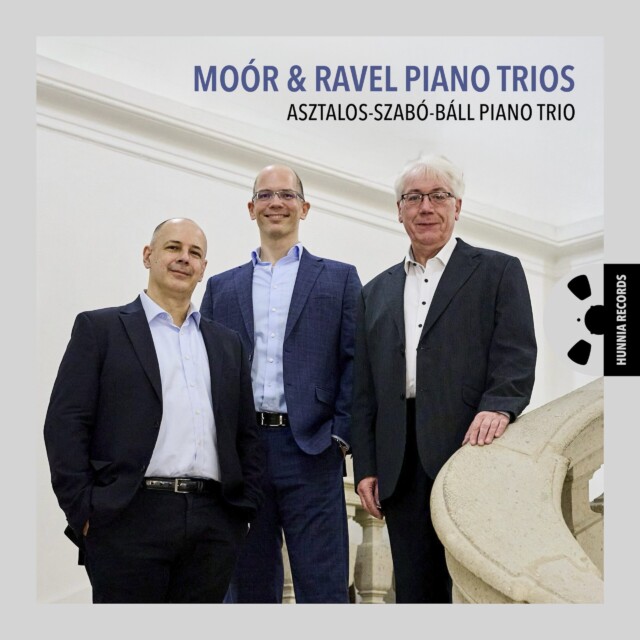
Moór & Ravel Piano Trios, Asztalos-Szabo-Ball Piano Trio. Hunnia Records 2026 (Pure DSD256, Stereo) HERE
It is a pleasure to hear Dávid Báll (piano), and Péter Szabó (cello) performing together with Bence Asztalos (violin). I know Báll and Szabó from other recordings, but this is the first time I've heard them perform together, and I'm very pleased to hear Asztalos for the first time as well.
This recording was made to celebrate the 250th anniversary of the Eszterházy Károly Catholic University (EKCU) in Eger, Hungary, where all three musicians are professors at the university's Music Institute. Since Báll and Szabó have made several prior recordings for Hunnia Records, and Szabó is the principal cellist of the Budapest Festival Orchestra, coming to Hunnia's ProVibe Recording Studio on the outskirts of Budapest for this project made perfect sense. Add twenty or so fortunate listeners, and you have the makings of a very nice live musical event to capture.
Emánuel Moór (1863–1931) is a composer whose music I've never encountered before. His Piano Trio in C major, his second piano trio, was probably written around 1908 and is very much attuned to the late-Romantic language of Brahms. It is an engaging work, and one that made me curious to hear more of Moór's music.
The other work on this album brings us to very familiar ground: Ravel’s Piano Trio in A minor. One of the best-known chamber music works of the 20th century, it was written in 1914, at the outbreak of World War I, and completed it in just five weeks as Ravel prepared for military service. It received it's premier in Paris on January 28, 1915, and has remained a central work of the chamber repertoire ever since.
What makes this recording particularly interesting is the way the Asztalos-Szabo-Ball Piano Trio approaches both works. Their performances are direct, emphatic, and completely assured. That isn't to say they lack lyricism and emotion—quite the contrary. They simply don't mess about. They get right down to the business of conveying the music with authority and conviction.
On first listening, I was a bit set back in my seat. This wasn't quite what I expected. But the more I listened, the more I appreciated what the trio was doing. They strip away the excess and present the musical argument without fuss: no nonsense, no fluff, and no excess prettiness.
With the Ravel, they speak with a different voice from what I hear in many of the numerous recordings of this familiar work—and I find that refreshing. There is plenty of color and lyricism, but the music never becomes self-consciously beautiful. The performance has an immediacy that keeps me engaged.
The Moór is treated in much the same way. I have no alternate recordings with which to compare it, but I don't feel that I need one to appreciate what these musicians have found in the work. Their directness allows the music itself to come forward, and the result has left me wanting to hear more of this composer who was previously unknown to me.
The live performance is captured beautifully by recording engineer Sándor Árok. Once again, he allows the instruments to breath, and their harmonics to fully develop within the relatively intimate acoustic the ProVibe Studio. No, there isn't the air and openness of his location recordings in larger halls, but that is hardly a criticism. What he has captured here is intimate, immediate, and remarkably natural, with the dynamics, timbre, and detail of the three instruments realistically conveyed.
A composer new to me, a fresh perspective on a familiar masterpiece, and three superb musicians working together. And all in a lovely Pure DSD256 recording. That's a very satisfying combination.
The Leipzig Collegium Musicum Vol. 1: Music Before Bach, Neues Bachisches Collegium Musicum, Reinhard Goebel. Pentatone 2026 (96k, Stereo) HERE
Telemann, Bach, and Haydn are favorite composers around my house. But who was composing before Bach and Telemann whom we should know? If you love music of this earlier era, the happy answer is: many, varied, and excellent. Composers that is. People such as Johann David Heinichen (1683-1729), Johann Beer (1655-1700), Christoph Graupner* (1683-1760), Georg Melchior Hoffmann (1679-1715), and Johann Friedrich Fasch (1688-1758).
And all are represented on this delicious recording, plus Georg Philipp Telemann (1681-1767) himself.
This is a delightful treasure of stimulating music, consummately performed—an excellent introduction to this earlier time period for any who've not previously explored this time period, and a very welcome recital for anyone already familiar. The performances are light, tight, and lively—and all within historically informed performance practice even if played on modern instruments.
The recording is detailed and highly resolved, but it lacks a sense of a natural acoustic soundstage even though it was recorded in the Paul-Gerhardt-Kirche in Leipzig, from which one might expect a more open and naturally reverberant sound field. I suspect this is due to the close multi-miking, which gives each instrument excellent resolution but loses the hall ambience. The imaging, such as there is, sounds as if it is accomplished through balancing the multiple microphone feeds in the studio.
And that's a shame, because the music and performances deserve better. I thoroughly enjoy listening to this release despite my reservations about the recording. I simply find myself wishing that Pentatone had given these musicians the same opportunity to inhabit their acoustic space that some of today's finest recording engineers routinely provide.
* The included booklet writes with some dismay about the lack of information about Christoph Graupner in the historical record. And that is certainly true. Yet I find Graupner to be one of the more interesting composers of this period. So I'll take the opportunity to point readers toward this very fine recording of his music, which is superbly performed and recorded. You can find my earlier review HERE.
Chalumeaux Concerti by Christoph Graupner- Ars Antiqua Austria. Challenge Classics | Northstar Recording 2012 (DXD) Review HERE
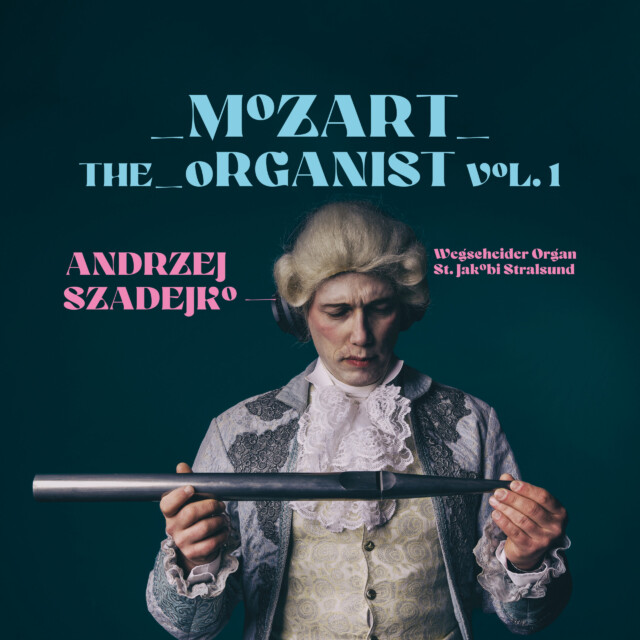
Mozart The Organist, Vol. 1, Andrzej Szadejko. Ars Sonora 2026 (96k, Stereo, MCh) Edit Master Sourced HERE
was intrigued when I first saw the title of this album: Mozart the Organist, Vol. 1—what the dickens? The sheer cheekiness of it. To my knowledge, Mozart wrote very little music specifically for organ.** I had read that Mozart's original music involving the organ consists primarily of seventeen one-movement "Epistle Sonatas"—although even that description requires qualification. Fourteen of these sonatas are written for two violins and basso continuo, while the remaining three call for additional instruments. The organists of Mozart's day, of course, largely improvised when playing for Mass.
So I had to check out this album.
I spun it up for a listen and—wow! What fun.
Perhaps it was the rather dull and pedestrian album I had just abandoned, but this immediately sounded like great stuff: dynamic, exuberant, with bass chords that seem to sink into the earth and rattle my teeth. And sly? Oh, yes. Slyly fun—like a friend poking you in the ribs while sharing a joke.
At that point I had to stop and find the liner notes so I could discover exactly what this album was about.
And sure enough, the organist and arranger, Andrzej Szadejko, acknowledges that he knows of no music Mozart ever wrote specifically for solo organ, either.
So what is this?
It is FUN.
More specifically, it is the culmination of a fantasy Szadejko has had about what if Mozart had written music for the organ? What might it have sounded like?
We know with certainty that Mozart played the organ. He famously described it as "the king of instruments." During his travels he found opportunities to sit at an organ and play—in concert, semi-publicly, for select groups, or perhaps simply for himself. Szadejko writes that we know of approximately thirty such occasions and instruments played by Mozart, most before 1779. Mozart was even offered, and declined, positions as organist at both the cathedral and the archbishop's court in Salzburg.
But we don't know what he played, or exactly how he may have played it.
That is where Szadejko's imagination enters the picture. He has transcribed piano works by Mozart in a style in which he imagines Mozart might have composed—or improvised—them for organ.
His explanation is wonderfully direct:
"Why? Because I can, because I want to, because there's never enough fun, because there's never enough beauty..."
He hopes listeners will find the album "direct, spontaneous, funny, without any unjustified pomposity, but honest, a bit cheeky, full of nonchalance, but also full of joy and surprises..."
Which it most certainly is.
I've had a blast listening to this.
The recording was made on the organ in the Church of St. James in Stralsund. Built in 2020 by the workshop of Dresden organ builder Kristian Wegscheider, it is not an original eighteenth-century instrument but was constructed in the style of organ building found in northern Europe during the second half of the eighteenth century.
The sound of the organ is beautifully captured by recording engineers Jędrzej Luciński and Jakub Garbacz. Unlike some recordings in which close detail comes at the expense of the instrument's acoustic environment, this recording gives us both the power and character of the organ and a convincing sense of the space in which it resides. My compliments to them for their excellent work.
** For more Mozart played on the organ, I also recommend exploring Anders Eidsten Dahl's recording on Lawo Classics, which I reviewed a few years ago HERE. But this is chamber music for organ, violin, and bassoon—not solo organ as in the imagined transcriptions by Andrzej Szadejko above.
Mozart and the Organ, Anders Eidsten Dahl. Lawo Classics 2023 (32bit DXD) HERE
Erbarme dich! (Have Mercy!), Ayres Extemporae. Linn Records 2026 (192k, Stereo) Edit Master Sourced HERE
In this recording we move to themes decidedly more somber, yet mysteriously beautiful and emotionally fulfilling. Erbarme dich! represents a spiritual journey from torment to redemption. The program is built around instrumental transcriptions of works by J. S. Bach, including his expressive Sonata for viola da gamba and harpsichord in G major, BWV1027, transcribed for five-string cello, violin and cello.
But much of the richness of the program comes from the addition of highly expressive, works by Matthew Locke (c. 1621–1677), Heinrich Ignaz Biber (1644–1704), and Andreas Oswald (1634–1665).
Locke is given the opening word. The Pavanne from his Suite No. 5 in E Minor immediately establishes the emotional atmosphere of the album. From there, Biber's Violin Sonata No. 5 in E Minor takes us deeper into a world of darkness and introspection. Biber pushes the boundaries of form, dissonance, and instrumental technique, with complex double stops, extreme upper-register passages, and striking expressive effects. The result gives voice to a sense of helplessness and internal struggle.
The opening Andante from Bachʼs Sonata for viola da gamba and harpsichord in D major, BWV1028, introduces a moment of reflection before we reach the emotional heart of the program: the aria "Erbarme dich" from the cantata Ich armer Mensch, ich Sündenknecht, BWV55, from which the album takes its name. It is a plea for mercy of touching vulnerability and marks the beginning of the journey towards absolution.
Biberʼs Sonata in C minor, C. 143, carries that journey forward, moving from a sense of inevitability and guilt toward a search for redemption.
The final portion of the program places us once again in Bach's hands. The selected works communicate forgiveness, trust in God's mercy, and ultimately a sense of inner peace and self-compassion. Personal absolution is reached with Bachʼs Sonata for viola da gamba and harpsichord in G major, BWV1027, transcribed here for five-string cello, violin and cello. The vivid and spirited "Ciaccona" from Oswaldʼs Sonata in D major then brings us toward to peace at last. And, as a final reflection, we are returned once again to Bach with the "Andante un poco" from his Sonata for violin and harpsichord in A major, BWV1015, which gently brings the journey to a close.
The performances by Ayres Extemporae are subtle, yet compelling. But what particularly impressed me is the care with which they have crafted this program. This is not simply a disconnected collection of fine music. It is a program with a story to tell.
And when artists construct a story from the music they have chosen to share, I find the listening experience all the more engaging and rewarding. Through the works of Locke, Biber, Bach and Oswald, Ayres Extemporae has certainly done that for me.
I hope to hear more from them.
Ayres Extemporae is an early music ensemble based in Belgium and the Netherlands. It is formed by Moldovan violinist Xenia Gogu, Spanish cellist Víctor García García, who plays a five-string cello, and Portuguese cellist Teresa Madeira. Winners of the York Early Music International Young Artists Competition in 2024, they were also awarded the First Prize and the Audience Prize at the Semana de Música Antigua de Estella-Lizarra in 2022.
Samuel Barber, Vanessa - Gianandrea Noseda, National Symphony Orchestra, with J’Nai Bridges, Matthew Polenzani, Nicole Heaston, Susan Graham, Thomas Hampson, University of Maryland Concert Choir. National Symphony Orchestra 2026 (DXD 32-bit, DSD256, Stereo, MCh, Immersive) Edit Master Sourced HERE
The twentieth century produced a number of operas of extraordinary psychological depth and complexity, works exploring moral challenges and the often tangled nature of human relationships. Among them stands Samuel Barber's great opera Vanessa. Composed in 1957, with a libretto by Gian Carlo Menotti, it is a work filled with passion, moral complexity, hidden secrets, partial truths, loneliness, self-deception, and loss.
Barber's music is intense and psychologically charged, building tension and exploiting harmonic and tonal complexity while calling dramatically upon the resources of the orchestra to tell the emotional story. While many operas depend primarily upon the soloists to communicate the shifting emotional currents of the drama, Barber uses the orchestra as an equally important voice.
Certainly, the soloists tell the story through their singing, expressing the anguish, outrage, despair, and love that pervade the opera. And the emotionally expressive range of the voices carries great weight with me—possibly even more than the libretto itself. In this respect, I found J’Nai Bridges as Erika, Nicole Heaston as Vanessa, Matthew Polenzani as Anatol, Susan Graham as the Old Baroness, and Thomas Hampson as the Old Doctor wonderfully convincing.
But, as I've mentioned before, I tend to listen to the instrumental music at least as closely as I listen to the words. And here Barber's genius as a composer rises to the fore in a performance by conductor and orchestra that is masterful.
Gianandrea Noseda maintains a tightly strung arc of tension throughout the performance. His National Symphony Orchestra musicians follow his every shift in pacing, volume, and expressive energy with extraordinary precision. Their ensemble is breathtaking, as is their ability to respond instantaneously to Noseda's demands. These are characteristics I have heard repeatedly in Noseda-led performances. He cultivates this precision, demands it, and his musicians respond accordingly.
This performance of Vanessa was recorded live in the Concert Hall of the John F. Kennedy Center for the Performing Arts in Washington, D.C., on January 30 and February 1, 2025, by recording engineer Mark Donahue of Soundmirror. As always, Mark has worked his particular magic in capturing the orchestra, chorus, and soloists in this magnificent hall. The sound is balanced, detailed, and impactful. Very occasionally, a soloist is somewhat hidden in the mix, but this is rare. Most often, the soloists are heard clearly and articulately—separated from the orchestra, but never sounding as though they occupy a different acoustic space.
When an emotionally complex story is compellingly structured, as it is here, with musicians capable of fully exploiting the possibilities of the score and a recording engineer possessing the skill to make it all come alive, the listening opportunity is golden. It is a gift to be savored—and returned to.
Well done.