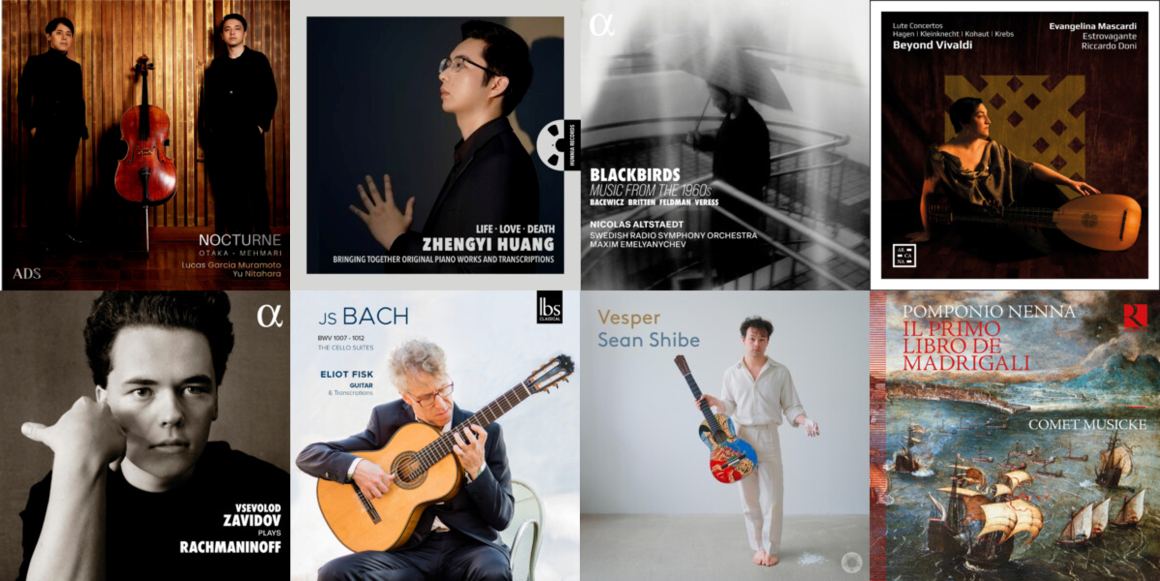

My meanderings in music over the past few weeks have surfaced some nice releases at NativeDSD, with quite varied selections to share. We have three new Pure DSD releases from Hunnia Records, APSoon Records, and Octave Records (good to see them back in the Pure DSD game). And we have music ranging from the Suites for Solo Cello by Benjamin Britten (marvelously performed by Amalie Stalheim) to interesting collusions by the ever-exploring Hazelrigg Brothers, to a wonderful performance of Shostakovich's Concerto for Piano, Trumpet and Strings performed by Saskia Giorgini and TrondheimSolistene. Oh, and clarinet fans should not miss the Brahms Clarinet Sonatas released on Fuga Libera—I think you'll love it. So, I hope you'll browse what I've laid out for you below and find something that gets you excited.
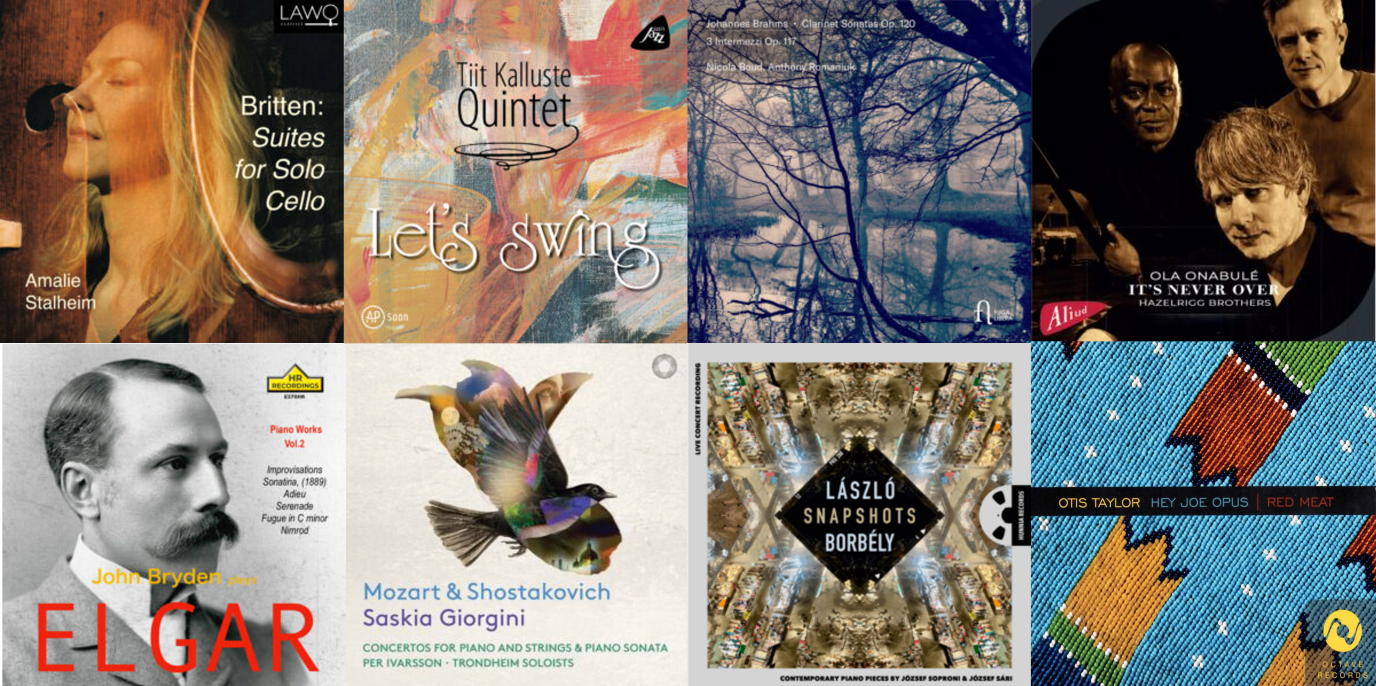
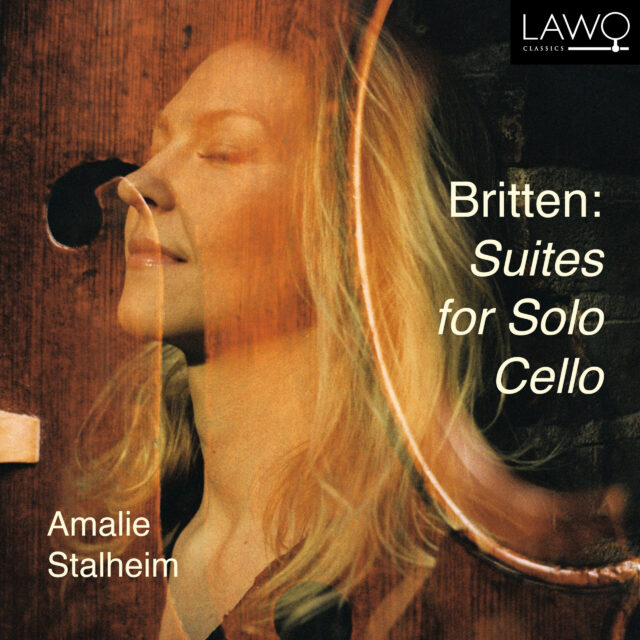
Britten, Suites For Solo Cello, Amalie Stalheim. Lawo Classics 2025 (DXD 32-bit, Stereo, MCh) Edit Master Sourced HERE
Our household is divided on the matter of music by Benjamin Britten. I very much enjoy almost all of his music, whether opera, or orchestral, or choral, or chamber. Ann not so much. Perhaps hardly at all. But, we both really like his Suites for Solo Cello. And we particularly like this recording of them by Norwegian cellist Amalie Stalheim (b. 1993), She just hits the right balance for us.
Britten composed all three of these suites for Mstislav Rostropovich, whom Britten first met in 1960 at the London performance of Dmitri Shostakovich's Cello Concerto No. 1, with Rostropovich as soloist and Sir Charles Groves conducting. Shostakovich had traveled to London for the performance and made the introduction. Britten had been thrilled by the Shostakovich's new concerto (he was "bobbing up and down like a schoolboy," remembered Shostakovich). When Rostropovich begged Britten to compose a piece for him, Britten readily obliged. The result was the Sonata for cello and piano, Opus 65, which Rostropovich premiered in 1961 at the Aldeburgh Festival in Suffolk.
Britten followed this with a 10-year streak of compositions for cello beginning with his Cello Concerto and followed by compositions for cello and piano and for solo cello. His Suites for Solo Cello are all dedicated to Rostropovich and Rostropovich gave the first public performance of each of them at the Aldeburgh Festivals: Cello Suite No. 1, Op. 72 on 27 June 1965; Cello Suite No. 2, Op. 80 at on 17 June 1968; and Cello Suite No. 3, Op. 87 on 21 December 1974.
In each of these suites, Britten uses multiple short movements, as many as nine, typically without a break—simply flowing from one into the next, the longest at 7:44 in the final movement of Opus 87 and the shortest at 1:12 also in Opus 87. Heard consecutively, as in this album, the total playing time is over an hour and six minutes.
Britten wrote of Rostropovich: "[he] freed one of my inhibitions. He's such a gloriously uninhibited musician himself, with the enormous feeling of generosity you get from the best Russian players, coming to meet you all the way. I'd heard about him and rather unwittingly listened to the wireless. I immediately realized that this was a new way to play the cello, in fact almost a new, vital way to play music. I made arrangements to come to London and heard him again, and found him in the flesh even more than I'd expected."
In making this acquaintance with Rostropovich, which turned into a long friendship, Britten launched onto one of the most excellent series of compositions for cello in the musical catalog.
Amalie Stalheim's performance do full justice to these suites. Britten composed them without any regard for the extreme technical challenges they present because he enjoyed the complete freedom of knowing that Rostropovich's skills would brook no obstacles of performance. Not all cellists are nearly so blessed. But Stalheim delivers performances here that scale those challenges with aplomb.
Thomas Wolden's recording for Lawo Classics similarly brooks no obstacles. It is resonant, detailed, immaculate. The sound of the cello is captured beautifully in the natural acoustic of the recording venue, Sofienberg Church, Oslo.
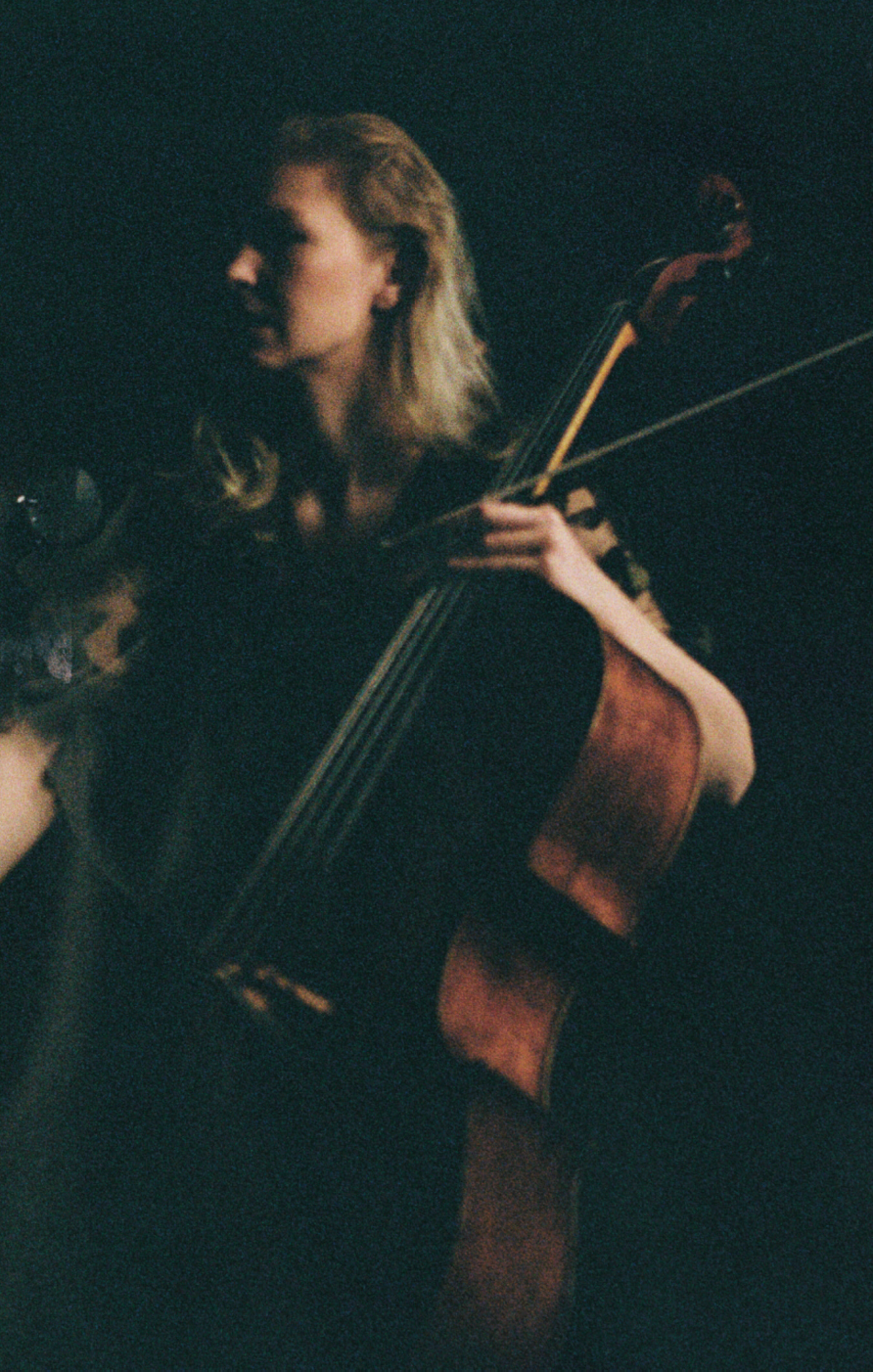
Amalie Stalheim
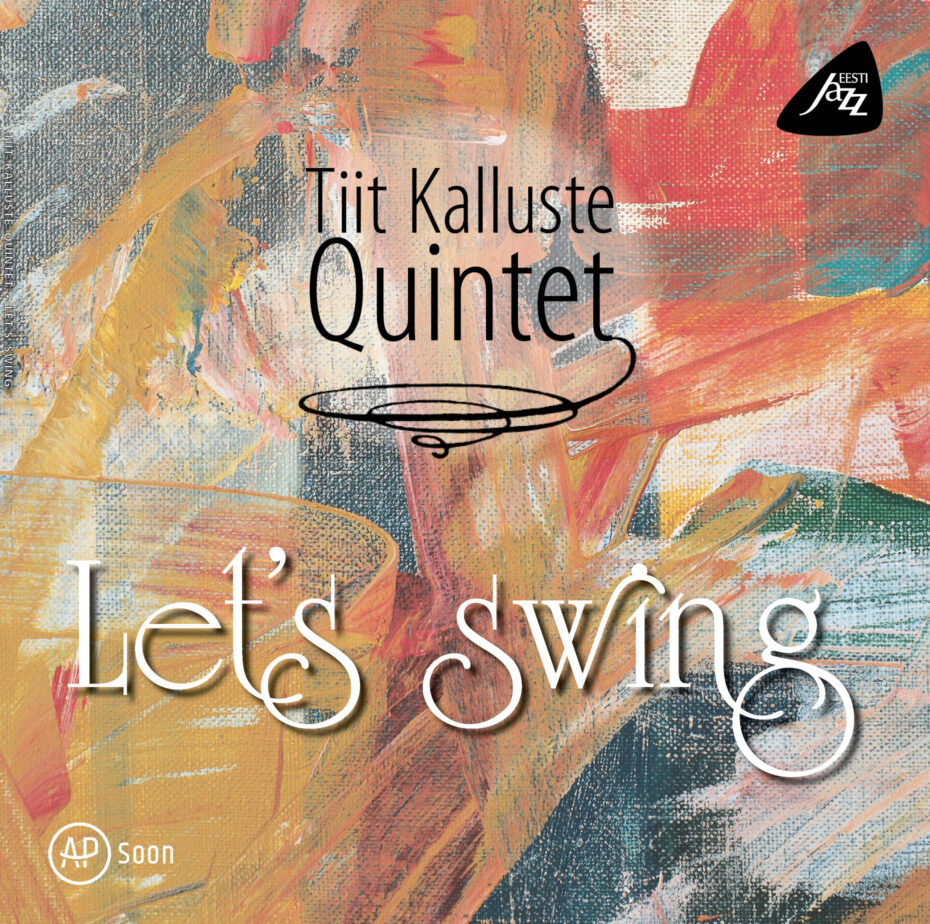
Let's Swing, Tiit Kalluste Quintet. APSoon Recordings 2025 (Pure DSD256-Analog Mixed, Stereo) HERE
Live, unedited, analog mixed via Rens Heijnis 8 MS and Grace Design Mk II microphone preamplifiers to a Merging Technologies Horis A/D converter in DSD256 and using Sonodore and Josephson microphones, this is as transparent and alive recording of a jazz ensemble as one ever gets to hear. No PCM in the chain, no compression, no post processing—for those who love hearing live unedited performances just as captured by the microphones, this is great stuff. Yes, it is multi-mic'd, but tastefully accomplished via an analog mixing console.
And what a challenge for these artists! No mistakes because there will be no over-dubbing, no editing. What they deliver live on stage is what we hear in this recording. As vocalist Susanna Aleksandra says, "It's very exciting to be part of a project where you don't do any dubbing or cutting. It's a challenge, but a fun one."
Tiit Kalluste - accordion
Susanna Aleksandra - vocals
Taavo Remmel - double bass
Ain Varts - guitar
Kaspar Kalluste - drums
Recorded in the Tubin Hall at the Eller School of Music in Tartu, Estonia, the musicians are all Estonian artists showing us once again how international jazz has become over the decades. Here they perform a combination of standards and new compositions from Count Basie's "Jive at Five" to Toots Thieleman's "Bluesette" to Fats Waller's "Ain't Misbehavin'" to Cole Porter's "I Get A Kick Out Of You." All the renditions have a nice swing to them, a joyful vibe, and the band is clearly having fun. It's live in the sense that the recordings are all single takes, but I don't believe there was an audience during the recording sessions.
This is a fun, upbeat, well-performed album that swings gently. As a brief introduction and teaser, watch the YouTube video they created during rehearsals:
Brahms, Clarinet Sonatas, Op. 120 & 3 Intermezzi, Op. 117, Anthony Romaniuk (piano), Nicola Boud (clarinet). Fuga Libera 2025 (192k*, Stereo) Edit Master Sourced HERE
Are you fond of chamber music? Do you enjoy the complex sounds of the clarinet? If the answer to these questions is "yes," then you certainly already know the Brahms Clarinet Sonatas, Op. 120. They are a mainstay of the clarinet repertoire. And they have been recorded many times. So, it is brave to venture into such well trod territory—musicians doing so must have something new to say that warrants the risk.
And here I think our musicians do have something more to say, and something well worth hearing.
These four works by Brahms, the two sonatas and the three intermezzi, are works filled with tenderness and a quiet intensity. They are Brahms at his best. Brahms once called the Op. 117 Intermezzi "three lullabies of my grief." They are restrained, elegiac, reflective. They create a gentle quiet respite. The Sonatas, with clarity and balance, bring forth a dialog that is both meditative and tender—sometimes sorrowful.
Together, these warm, reflective and deeply emotional works offer a glimpse into Brahms' final years. They are often described as illustrating a creative reawakening towards the end of his life.
Anthony Roumaniuk and Nicola Boud do honor to them with performances of great nuance, emotional expressiveness, and delicacy—and tremendous technical proficiency that makes it all sound effortless.
Their choice of instruments takes this recording to a further level of creative excellence. They searched for just the right instruments to balance the realities of modern performance expectations with finding the right timbre to do full justice to Brahms' intentions and how he may have performed these works.
For Boud, the choice of clarinet is a replica of Mühlfeld's 19th-century boxwood clarinet, fitting as the two Sonatas were written for the clarinetist Richard Mühlfeld whose playing captivated Brahms upon hearing him perform with the Meiningen Court Orchestra in 1891. She writes, this copy of Mühlfeld's own Ottensteiner clarinet is "a German clarinet made from boxwood with a warm, grainy resonance. It has fewer keys than a modern clarinet and a narrower bore, giving it a softer, more vocal sound. Despite being able to use keys for many of the notes, the old fingering system from earlier clarinets still works beautifully on these instruments, what we call cross-fingerings. Although these notes can sound weak or shaded to modern ears, they lend many colour options, especially in these works. Its limitations are also its strengths: each note requires careful negotiation, creating a shaping of line and color that feels intensely human."
For Roumaniuk, the choice of piano is an American Steinway piano built in 1875. He writes, "Although there is little to no mystery surrounding the various pianos that Brahms played and liked during his lifetime, the particular choice for this particular repertoire is somewhat complex. I found it wise in this case to balance historical awareness with present-day realities, understanding the spirit of the past without unquestioningly following its lead...I had the good fortune to try out several late 19th-century pianos from both Viennese and German builders such as Streicher, Ehrbar, Bechstein and Bösendorfer, although the final choice proved to be an American instrument: the 1875 Steinway on which I had already given many concerts over the years. The instrument has it all, from whispered pianissimos to thunderous fortes, all of which have an unusual clarity due to the fact of the bass strings being somewhat less overstrung (i.e. straighter) than your typical Steinway."
Boud concludes: "The piano too, from Brahms' own sound world as Anthony says, changes the nature of the dialogue with clearer textures and a more natural balance. Rather than the clarinet floating over a sea of sound from a much later, or modern piano, both instruments feel as if they are speaking as equals. It's so thrilling to be able to whisper the quietest dynamic markings, and there is air between the notes and a natural decay to each phrase that both instruments naturally agree upon."
These choices bring a soft, transparent quality to the sound, one that creates a more intimate listening experience than modern instruments might deliver. It is a deliciously different listening experience. And it is in these considerations that Boud and Roumaniuk have indeed brought us something new and different to hear in these works that in the many alternate recordings that exist in today's catalog.
I heartily recommend you listen to these performances!
As to the sound quality of the recording, it is close-up and intimate. It is perhaps a bit more closely miked than would be my preference as there is not much sense of the room. But the recording fully captures the timbre of the two instruments in an very natural way otherwise.
* For those who may care, I'm listening to the DXD resolution of this release. The original recording is 192k. But I'm unsure in what resolution the edit master was created since NativeDSD does not offer a 192k WAV file, usually an indicator that the WAV file is the edit master. In such cases, I'll default to the DXD as the likely candidate.
It's Never Over, Hazelrigg Brothers, Ola Onabulé. Aliud Records 2025 (DXD**, Stereo, MCh, Immersive) Edit Master Sourced HERE
It is always a pleasure to listen to a Hazelrigg Brothers project, here in collaboration with singer/composer Ola Onabulé, and recording engineer/producer Jos Boerland, founder of Aliud Records. The artistic sensibilities of all four led to the creation of a purist audiophile recording capturing the sound of their collective artistry transparently and authentically.
Ola Onabulé – Vocals & Song Writing
George Hazelrigg – Piano
Geoff Hazelrigg – Bass
Thomas Käfel – Drums
The musicians came together in the intimate acoustic setting of the historic Sendesaal in Bremen, renowned for its warm, enveloping sound. The enclosed booklet tells us: "None of the musicians were amplified; there were no headphones or electronic monitoring. Instead, the ensemble played acoustically together in the same space, responding naturally to the room and each other's sound. This allowed for genuine interplay and balance—no overdubs, no edits, just complete takes captured as they happened. All microphones were top-tier Neumann, Schoeps and DPA models chosen for their accuracy and neutrality."
We have here an example of contemporary popular music recorded in the purist manner that we've so far heard only rarely outside of classical music recordings. It joins a small but growing number of jazz and popular releases finding their roots once again. And I welcome this new ultra-high resolution release of non-classical music with immense gratitude—a release created from the participants' expressed interest in creating something acoustically genuine, transparent, and real.
The shared artistic values are readily apparent as I listen through the cuts on this album. Their temperaments are in sync, their musical values align, and their commitment to authenticity in music-making is a joy to hear.
Co-producer Andrew Read writes in the enclosed booklet: "The vision was straightforward: revisit a selection of Ola's songs from previous albums alongside a single Prince cover and let the music unfold in real time, without rehearsals or over-planning... We wanted spontaneity; we wanted to document honest interaction and true ensemble playing. The concept was less about executing a preconceived product and more about documenting the moment when creative process, trust, and environment converge. That, for me, is where this album's story truly begins."
And the vision Andrew Reads describes is fully accomplished to my ears. Congratulations to all involved! This album is a pure pleasure.
Mozart and Shostakovich, Concertos for Piano and Strings, Saskia Giorgini, TrondheimSolistene. Pentatone 2025 (192k*, Stereo) HERE
These are alert, vibrant performances by pianist Saskia Giorgini (b. 1985) and TrondheimSolistene. The album opens with a delightful performance of Mozart's Piano Concerto No. 12 in A Major K 414, followed by a scintillating performance of Shostakovich's Concerto for Piano, Trumpet and String Orchestra Op. 35. Giorgini plays this Shostakovich concerto with passion, wit, bravado, and insight, together with immense technical skill. Trumpeter Per Ivarsson delivers a masterful performance, virtually a technical tour de force. The interplay of the two is as good as it gets, in my opinion. And the TrondheimSolistene are right on top of their very reliably excellent performance standards.
Giorgini captures the sense of this programming well in her comment, "From the most serene, light, and smiling Mozart, through the grotesque circus acrobatics and the haunting, beautiful broken waltz of Shostakovich's concerto—this has been an unforgettable journey."
The album concludes with a fine performance by Giorgini of Shostakovich's Piano Sonata No 2 in B minor Op. 61. Written in 1943, this is a rather strange and complex work that presents a heartbreaking and merciless view of the loneliness of grief and human existence, imbued with the experience of the collective tragedy of the gruesome Siege of Leningrad.
The sound quality is excellent, with very nice balance of soloists and string ensemble.
Saskia Giorgini made her debut at the Vienna Musikverein in February 2017 playing an all Mozart recital. Her recording of Liszt's Harmonies Poétiques et Religieuses was released on the PENTATONE label in 2021 to great acclaim, winning a Diapason d'Or.
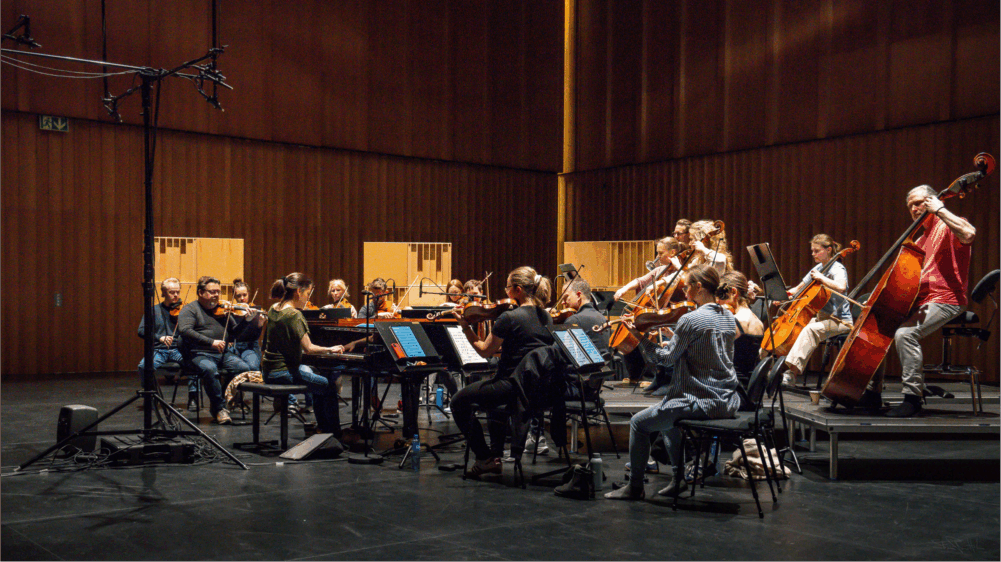
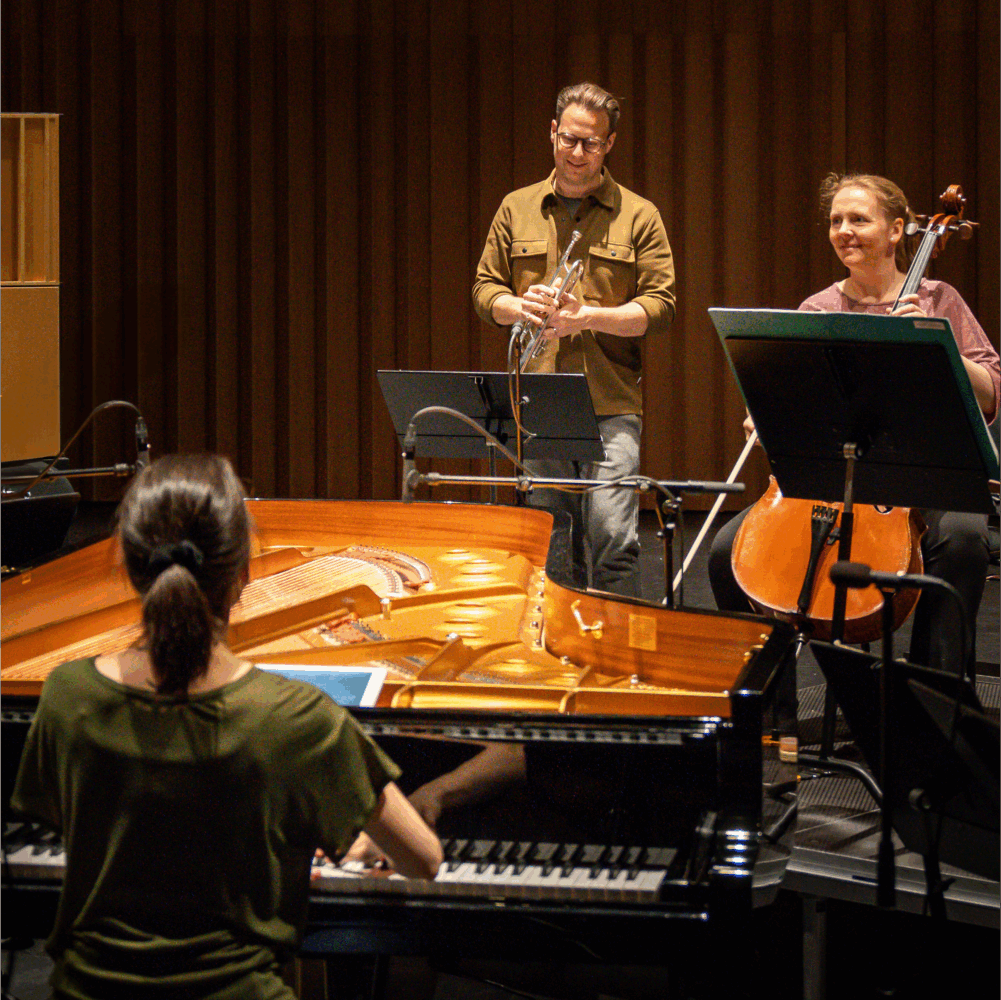
This album was recorded live at Stormen Konserthus in Bodø, Norway, between 28-31 May 2025

Otis Taylor, Hey Joe Opus/Red Meat. Octave Records 2025 (Pure DSD64-Analog Mixed, Stereo) Edit Master Sourced HERE
It's a pleasure to hear some great blues captured in Pure DSD with analog mixing. This recording was made with the Sony Sonoma DSD Multitrack recording system and was originally released as a CD and 45-rpm vinyl on Otis Taylor's Trance Blues Festival label. This Pure DSD release is a remastering from the original DSD tracks via an analog mixing console by Gus Skinas for Octave Records.
Joined by former Allman Brothers guitarist Warren Haynes, jazz trumpeter Ron Miles on cornet, singer Langhorne Slim with backup vocals, and violinist Anne Harris, among others, blues singer, guitarist and songwriter Otis Taylor has crafted a suite of 10 continuous songs threaded with urging motifs, dynamic textures, and hypnotic passages interplaying with Otis' signature lyrics and vocal style. From simple acoustic guitar and voice, to full blown electronic, the album is a welcome journey with the blues.
Otis Taylor was born in Chicago in 1948 and was raised in Denver's historic Five Points neighborhood. His father worked as a Pullman porter. Both parents were jazz fans. As a teenager, Taylor drew musical inspiration from the Denver Folklore Center, where he first heard blues artists like Muddy Waters and John Lee Hooker. There he learned to play banjo, guitar, and harmonica and then formed a band called the Butterscotch Fire Department and later the Otis Taylor Blues Band.

László Borbély, Snapshots. Hunnia Records 2025 (Pure DSD256-Analog Mixed, Stereo) Edit Master Sourced HERE
I am a huge fan of Hungarian pianist László Borbély and I look forward to each recording he makes with Hunnia Records. His playing is concise, well-considered, extravagantly capable. He makes sense out of the works he chooses to play, often modern, almost always exceptionally challenging. And, for the vast majority of the albums he's released with Hunnia, he is playing live before an audience. To my ears, there is almost always a special degree of added spontaneity and responsiveness to performances with an audience present when presented by highly capable artists confident in their skills. There is a self-reinforcing feedback loop between the audience's appreciation and the artist's efforts to achieve just a bit more, a frisson that enhances the experience.
Snapshots is both an homage and an in memoriam to two contemporary Hungarian composers of the same generation: József Sári, who would have celebrated his 90th birthday this year, and József Soproni, who would have been 95 this year. These two composers share a common heritage with the music of Béla Bartók, but each emerged with a distinctive individual voice.
Borbély has chosen collections of miniatures for piano by each of these composers. I applaud his decision. Piano miniatures are to music as haiku is to poetry—immensely challenging to work in such concise language to tell a story, paint a picture, or share an emotion. When done well, they can be marvelous jewels of great treasure. And great treasure is what I find here in these 1, 2 and 3 minute works. Soproni's "Memory Pages No. 2, Like a Stream" is but 39 seconds but fully communicates a visual image through sound. Sári's "Snapshots No. 9, It is Hailing on The Tin Roof" in 2:02 minutes is fully evocative of it's title, but manages to be intriguing and surprising as the music syncopates, twists, and turns.
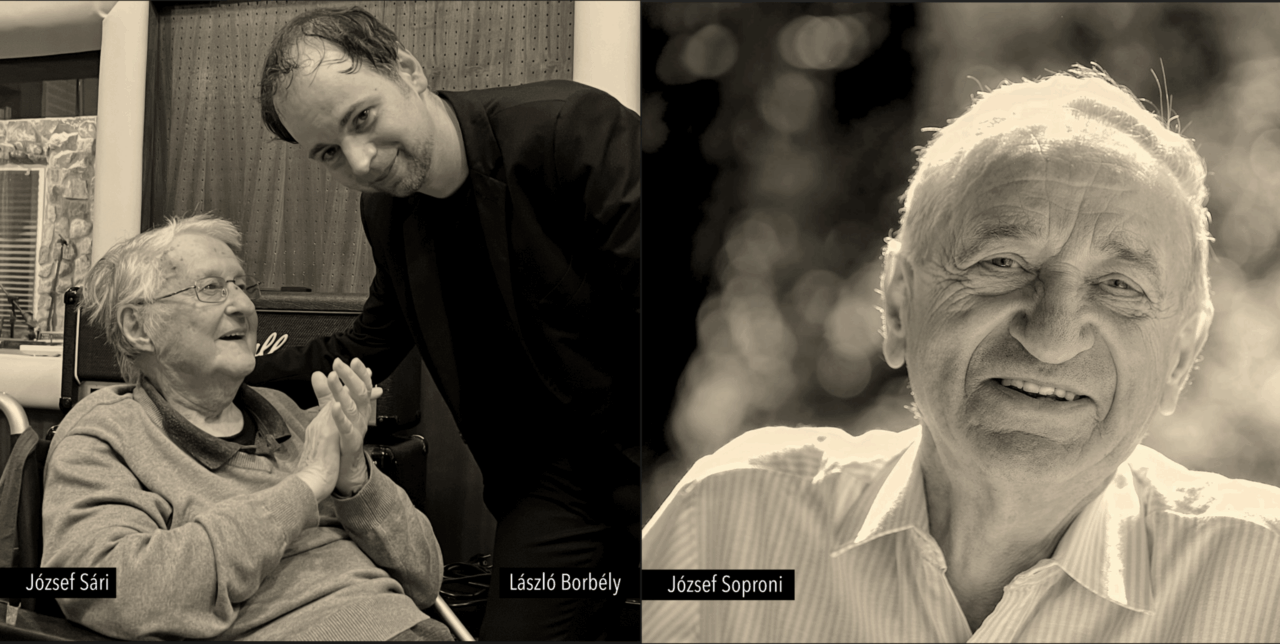
The programing gives the audience a introductory and closing prelude and fugue by Soproni, with alternating sets of miniatures in between, first a set by Sári, then a set my Soproni, then another set by Sari. The choice keeps the recital shifting between styles, between differing voices, as the composer changes. In all, Borbély keeps the momentum, maintains one's attention, commands one's concentration. As any excellent recital should.
The recorded sound quality is excellent once again from recording and mastering engineer Sándor Árok. As is now typical of Hunnia productions, the recording was tracked in DSD256, then analog mixed using a Studer 962 console, then converted once again to DSD256 from the console. The analog mixing gives the sound a gracious, rounded voluptuousness that, while perhaps not utterly true to the microphones, is certainly engaging and gratifyingly natural sounding to the ear. I could listen to this all day. And have already enjoyed multiple replays. Seeing the sixteen lucky members of the audience makes me envious to have hear this performance live! I am grateful to have this excellent recording to enjoy the concert virtually.
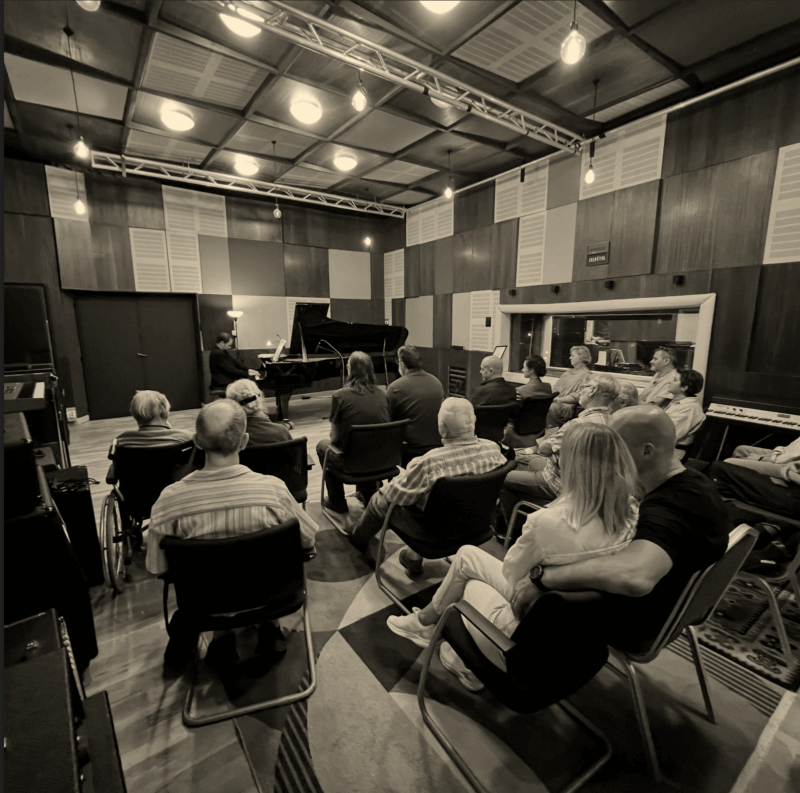
Recording session at Hunnia's ProVibe Park Studios, Budapest, September 6, 2025
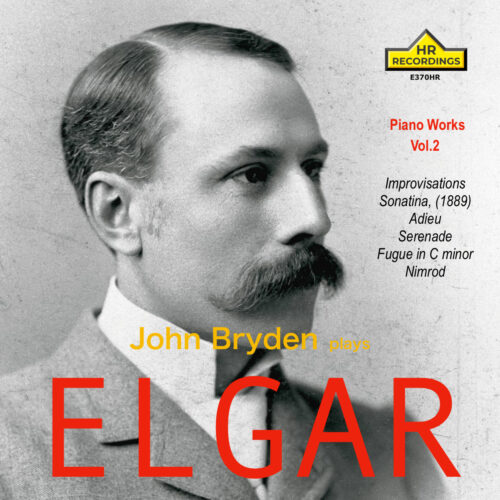
Elgar, Solo Piano Works Vol. 2, John Bryden. HR Recordings 2025 (DXD 32-bit, Stereo) Edit Master Sourced HERE
There are times when I wonder if I might not just prefer Elgar's piano music over his orchestral compositions. There is something more intimate, more tangible about these piano pieces that I don't hear in his works for large ensembles. It is as if, here, he is composing for himself and not for that larger public audience.
This is John Bryden's second volume of Elgar's piano works, and it is just as enjoyable as his Volume 1 released earlier this year, HERE. What I say about this Volume 2 stands as well for Volume 1.
Bryden plays a very interesting sounding C. Bechstein Klavier, Berlin, 1899, so the sound is that with which Elgar would have been familiar. He says of the recording, "I have just listened for the first time to the finished recording and I recommend to you all to sit and allow the sounds of a remarkable Bechstein of 1900, right in the centre of the composer's life span, to take you on an irresistible journey through his inner musical life."
His playing style is subtle, direct, and highly communicative.
The piano is very nicely captured by Sean Murray using Soundfield microphones. The Soundfield microphone is interesting in that it is an early iteration of closely spaced capsules in a single microphone. Arranged in a tetrahedron, the microphone was invented by Michael Gerzon and Peter Craven. Their theoretical design was developed into a practical microphone system by Calrec Audio Limited, who launched the first Soundfield microphone in 1978. It can function as a mono, stereo or surround sound microphone, optionally including height information.
This is the ninth recording John Bryden has released with HR Recordings, all performed on this Bechstein piano and all engineered by Sean Murray using the Soundfield microphones. For other albums, from Bach to Brahms to Haydn to Scarlatti to Schubert to Schumann, see HERE.
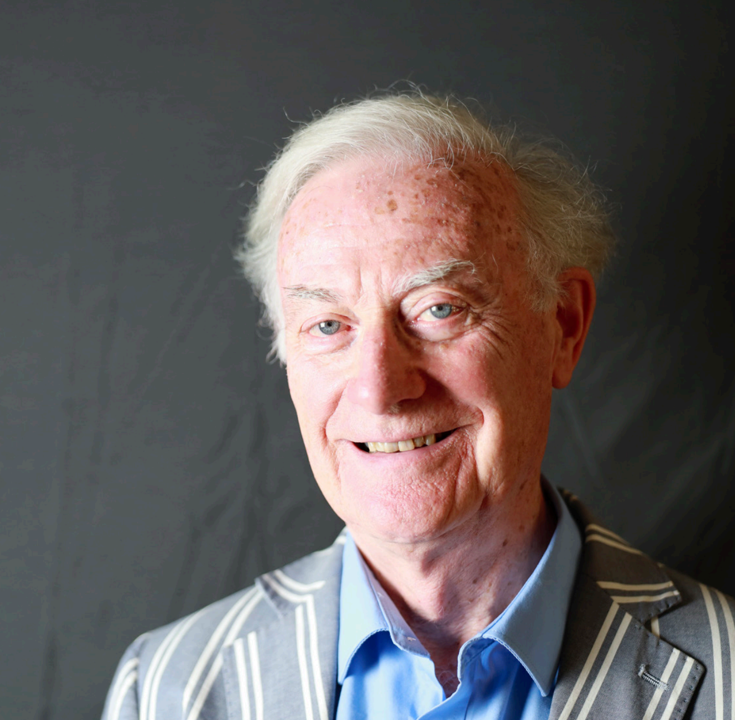
John Bryden
* For those who may care, I'm listening to the DXD resolution of this release. The original recording is 192k. But I'm unsure in what resolution the edit master was created since NativeDSD does not offer a 192k WAV file, usually an indicator that the WAV file is the edit master. In such cases, I'll default to the DXD as the likely candidate.
** Once again, I am listening to the DXD stereo edit master, which gives me the best sound quality in my primary audio system. You should compare alternate resolutions for your own playback system.
All images courtesy of the respective labels.