Most audiophiles I know try different cables on a regular basis. Components are, however, an entirely different matter. Once a serious audiophile has bought an end-game piece of gear that s(he) treasures, it will likely stay in his or her 2-channel stereo system for years. More than any other component, audio-nutters tend to hold onto ultra high-end phono stages for decades. Why…?
Stated succinctly, getting a phono stage precisely dialed-in takes a lot of effort. Finding the quote/unquote "best" loading and gain for an exotic cartridge can take months of daily trial-and-error effort. Germane to this, once a vinyl enthusiast has gotten a serious vinyl rig to sound the way that s(he) wants, no music lover wants to have to go through that painful process again.
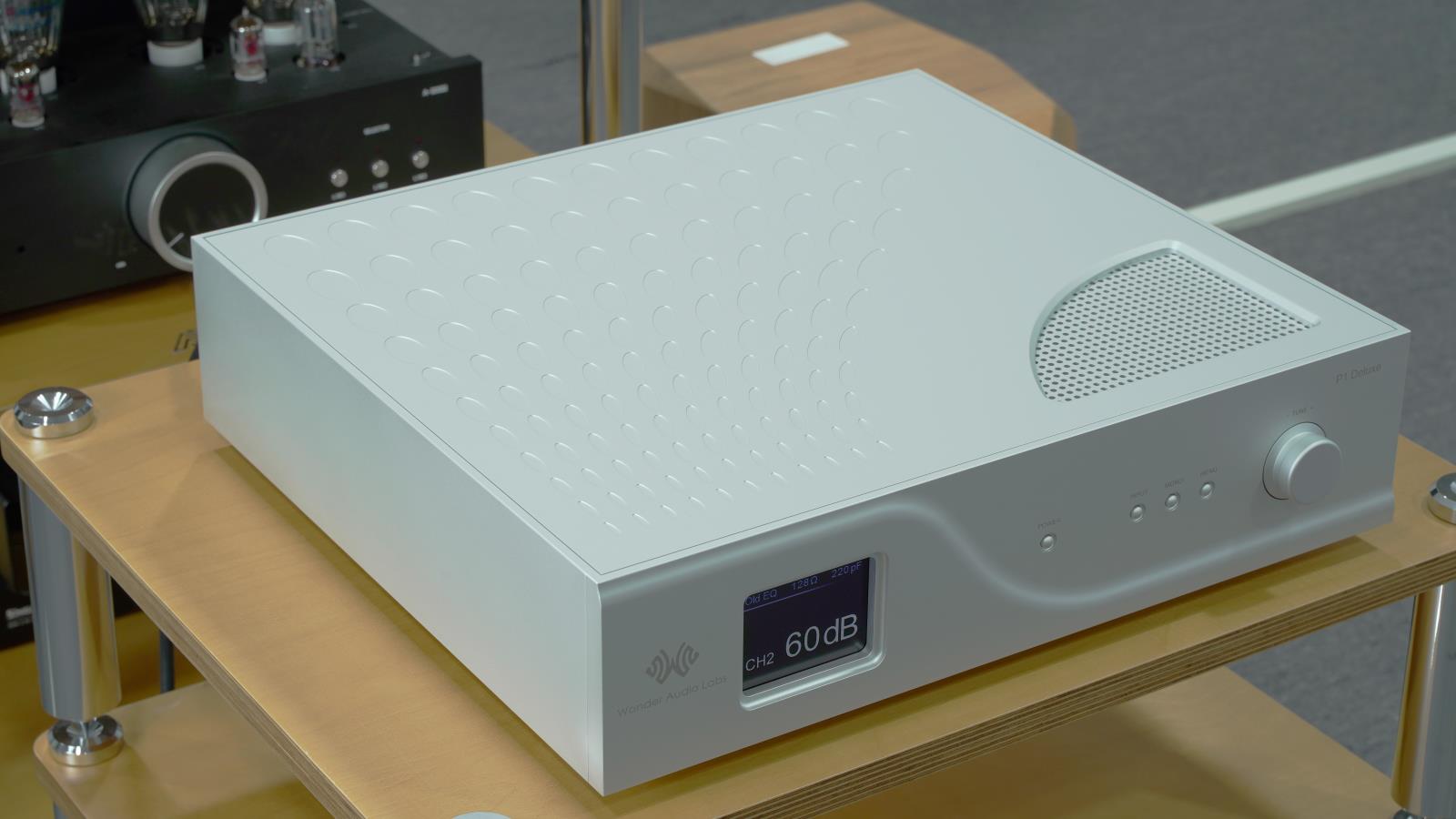
Wonder Audio Labs P1 Deluxe tube phono stage
Initially I was hesitant to undertake a review of Wonder Audio Labs' P1 Deluxe vacuum tube phono stage (MSRP $7990 CAD / $5800 USD). The sheer number of variables involved in dialing-in a phono stage for any specific cartridge—let alone five or six different cartridges—is staggering. Curiosity once again got the better of me.
Vinyl Basics and Technical Details
Wonder Audio Labs was founded in 2020 in Hong Kong. The original P1 vacuum tube phono stage was released in 2023. WAL's P1 Deluxe is their new upgraded version.
Today in early 2026, most audiophile phono stages can support a variety of different moving magnet (MM) and moving coil (MC) cartridges. In ultra high-end stereo systems, small changes in loading with cartridges—say an increase from 150Ω to 180Ω—can make a huge improvement in the texture, tone, and timbral accuracy that a specific cartridge creates.
Equalization curves (plural) also need to be considered. Established by the Recording Industry Association of America (RIAA), the purposes of introducing a standard RIAA equalization curve were to make records longer, to improve the sound quality of recordings, and to reduce physical damage to the vinyl records' grooves.
The RIAA equalization curve was established as a global standard in 1954. Prior to the mid-1950s, individual record companies used more than 100 different combinations of 'turnover' and frequency roll-off for EQ.
Most modern phono stages support the standard RIAA equalization curve. The problem for serious vinyl lovers is that far too many phono stages cannot handle other popular EQ curves like the Capitol, Columbia, Decca, and FFRR equalization curves.
Why don't manufacturers build phono stages that can be customized to an end-user's sonic needs? The primary reason is the cost. To keep the manufacturing expense down and build a phono stage that's affordable, design engineers are forced to limit the number of adjustable settings that their units offer.
Product Description
I own a heavily-modified 25-year-old Sonic Frontiers tube phono stage. This SFI Phono-1 SE uses tiny DIP switches that are mounted on the rear panel. Far too many phono stages use DIP switches that are hidden behind or within the unit.
Worse still, gain settings for many phono stages can only be changed by soldering in resistors that are on the circuit boards inside of the unit. With most phono stages, adjusting the capacitance, resistance, and EQ curves is often more painful than getting a 4-hour root canal surgery done.
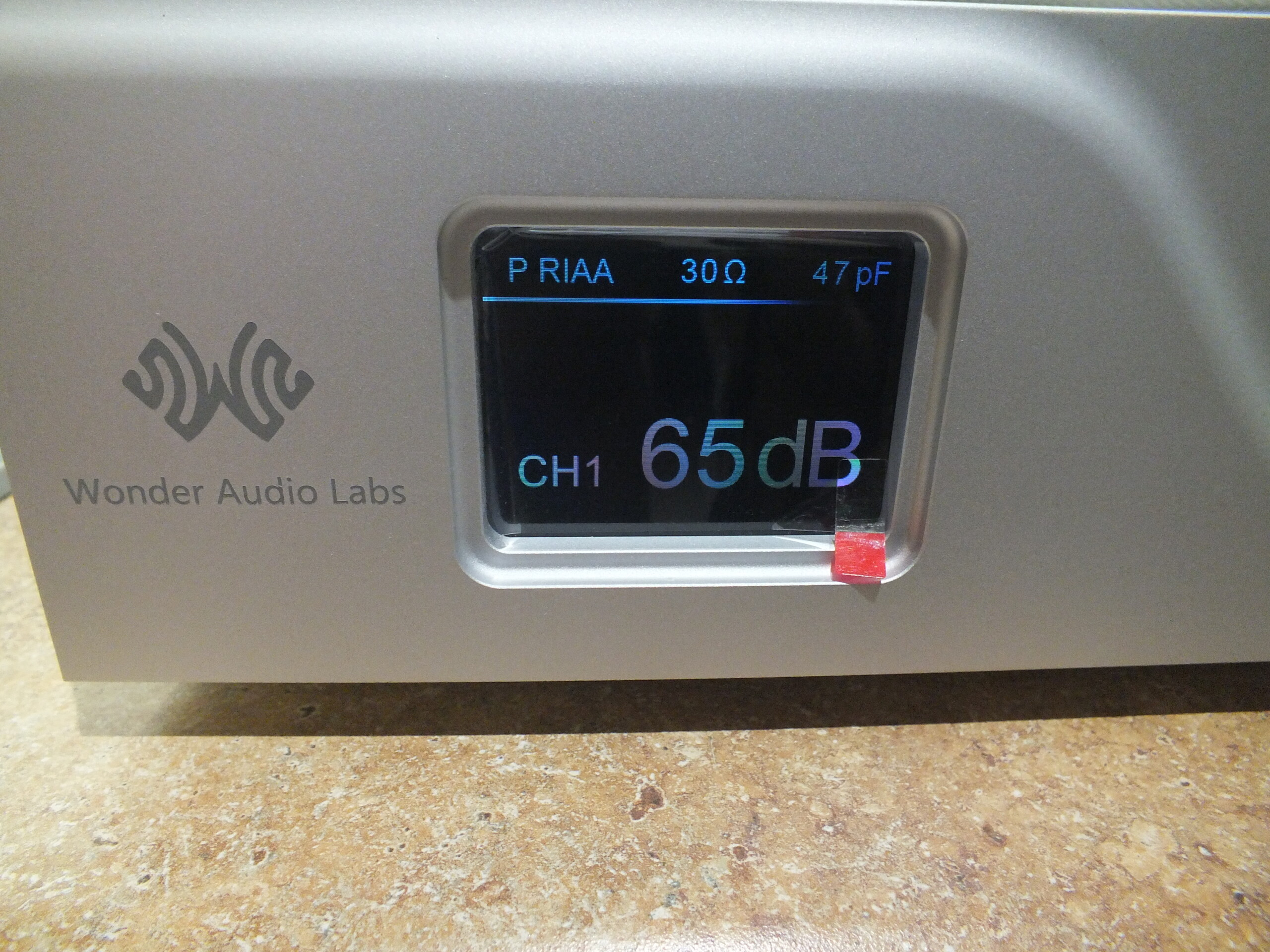
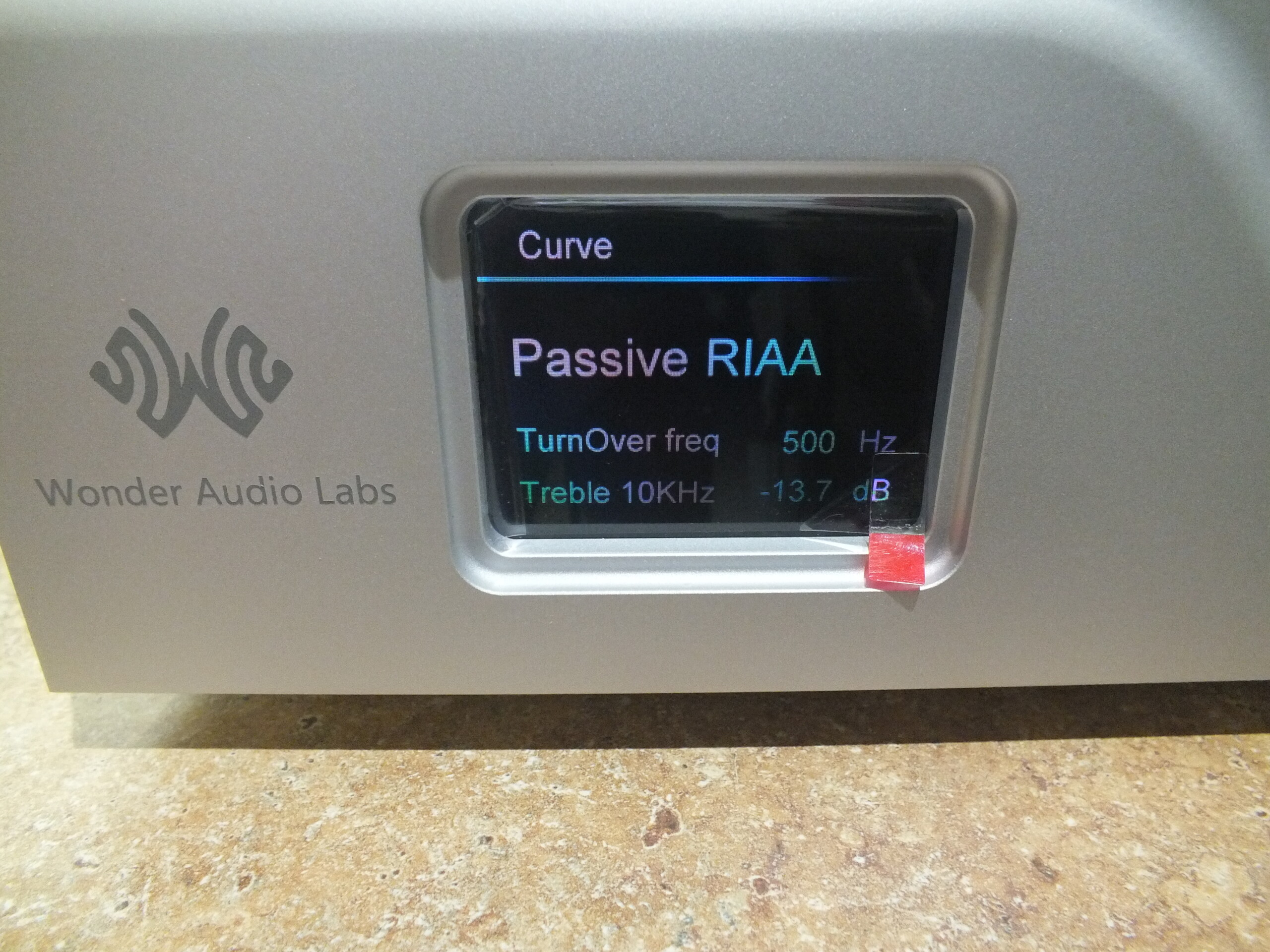
P1 Deluxe's 3.2" LCD screen
The P1 Deluxe tube phono stage is different. There are six variables which can all be adjusted via the front panel. Depress the Menu button and three icons appear on the unit's 3.2" LCD screen. A user can scroll through these six icons by rotating the Tune knob clockwise or counter-clockwise.
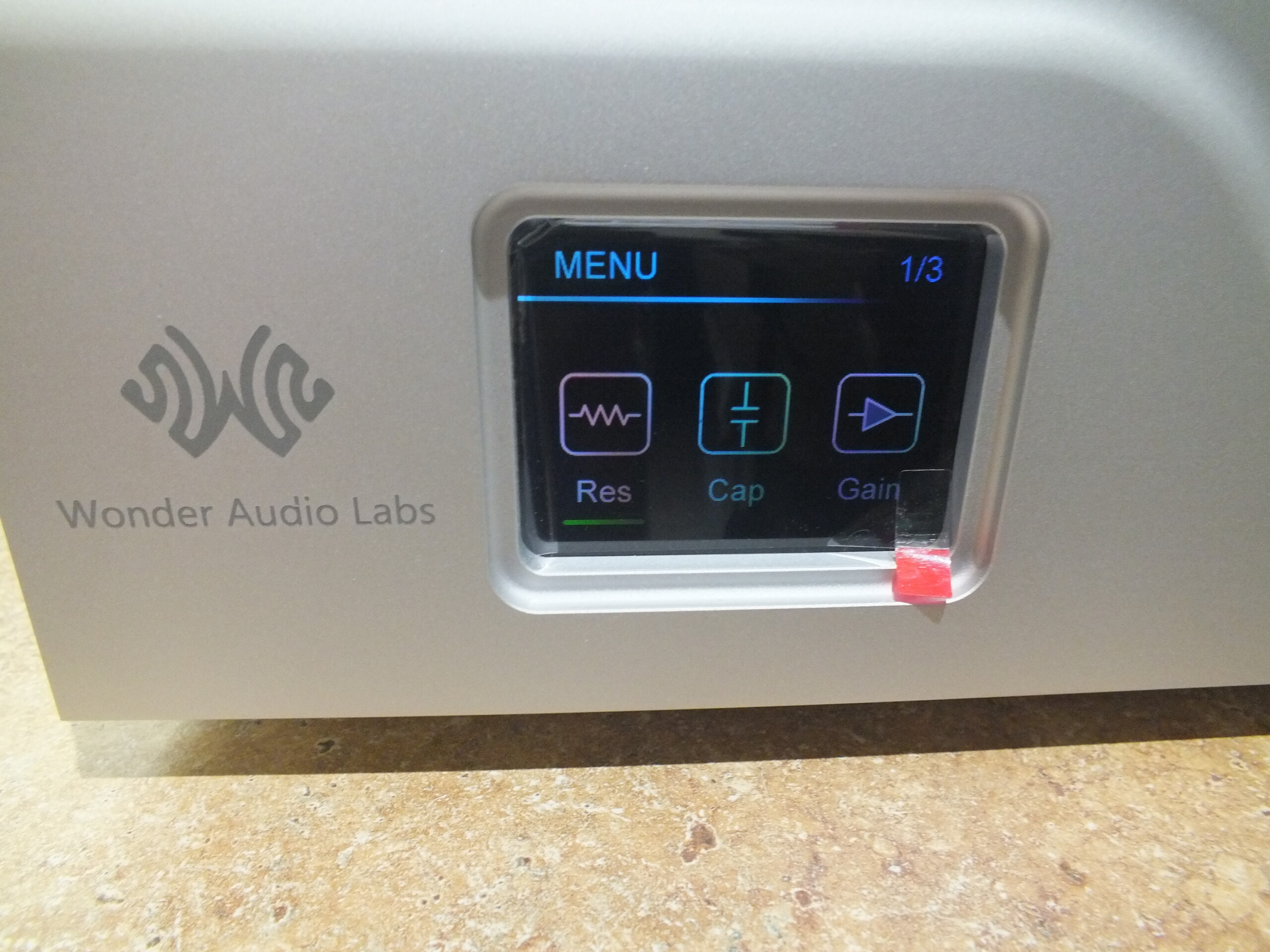
Sub Menus
On the first screen, three icons appear. These icons include: 1), Res for resistance; 2), Cap for capacitance; and 3), Gain for the decibel (dB) gain. If a user scrolls deeper onto a second screen, three more icons appear. These include: 4), Phase for standard or inverted phase; 5), Sub for subsonic; and 6), Curve to adjust the equalization.
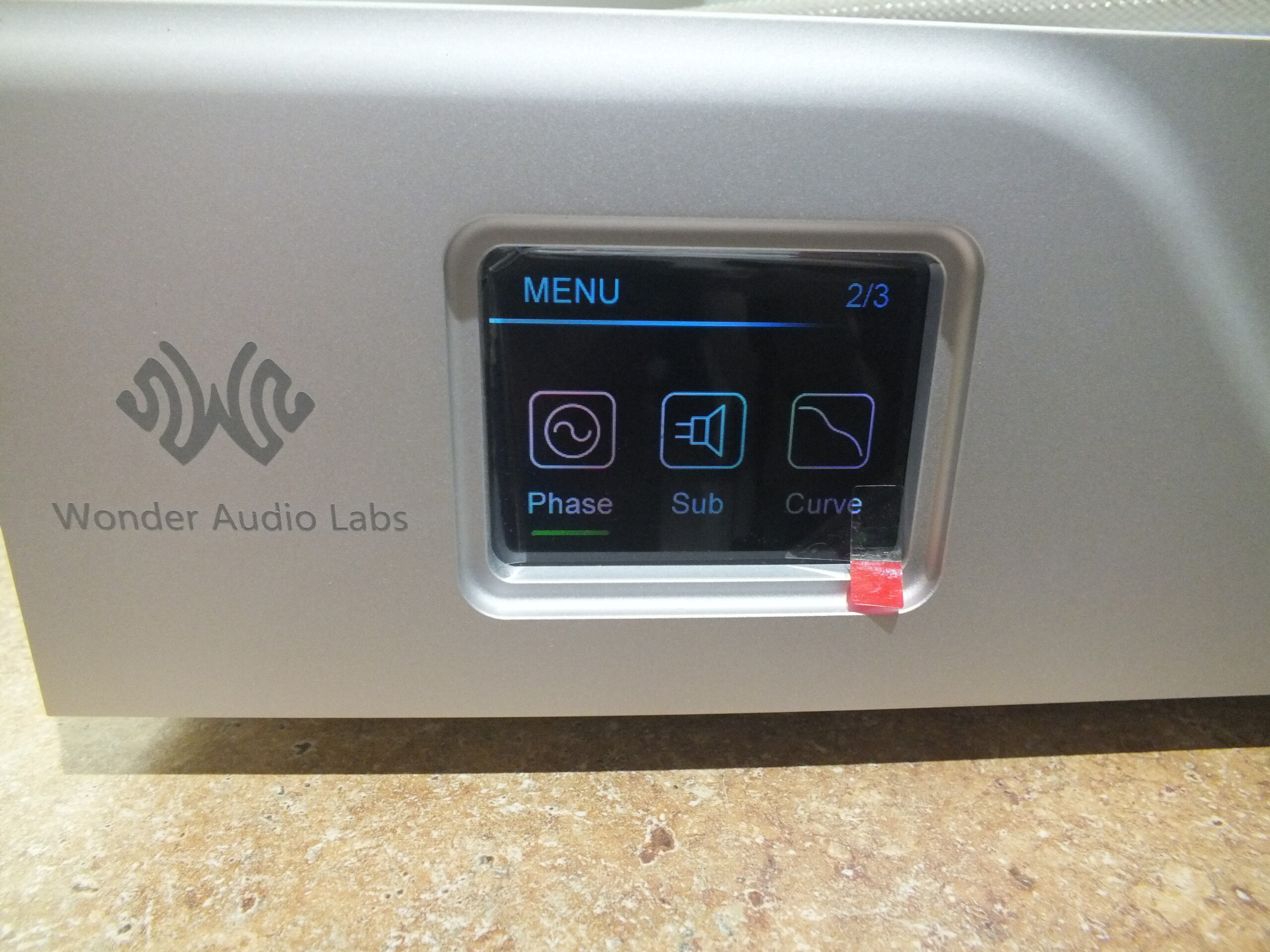
Sub Menus
Wonder Audio Labs' P1 Deluxe Phono Stage
Depressing the Tune knob inwards like an old-school car cigarette lighter enters into one of the six icons' sub-menus. Once inside any sub-menu, micro-adjustments can be made quickly and precisely. To my eyes, the LCD touch screen is almost as exciting as Sydney Sweeney in a skimpy Wonder Woman outfit.
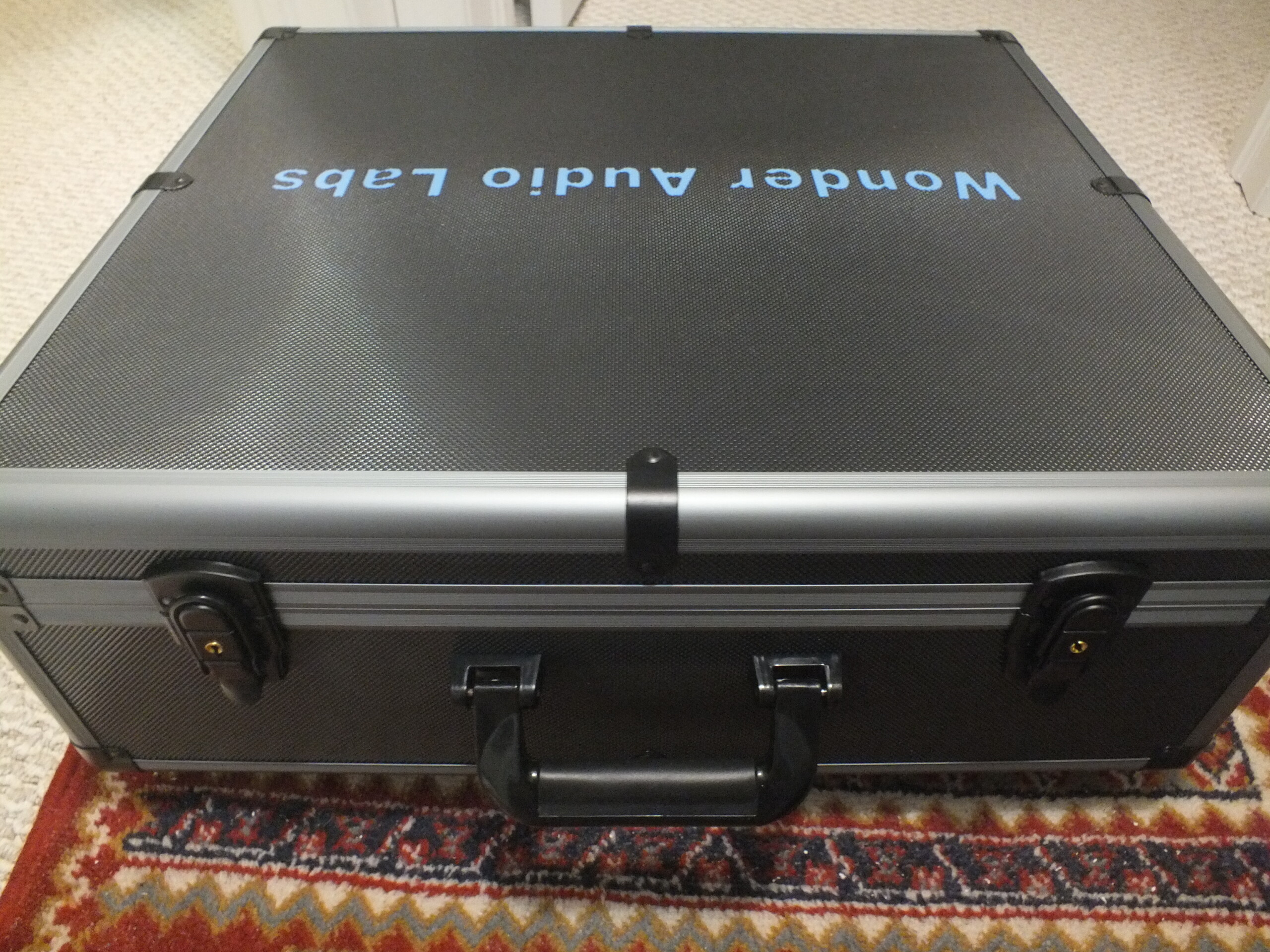
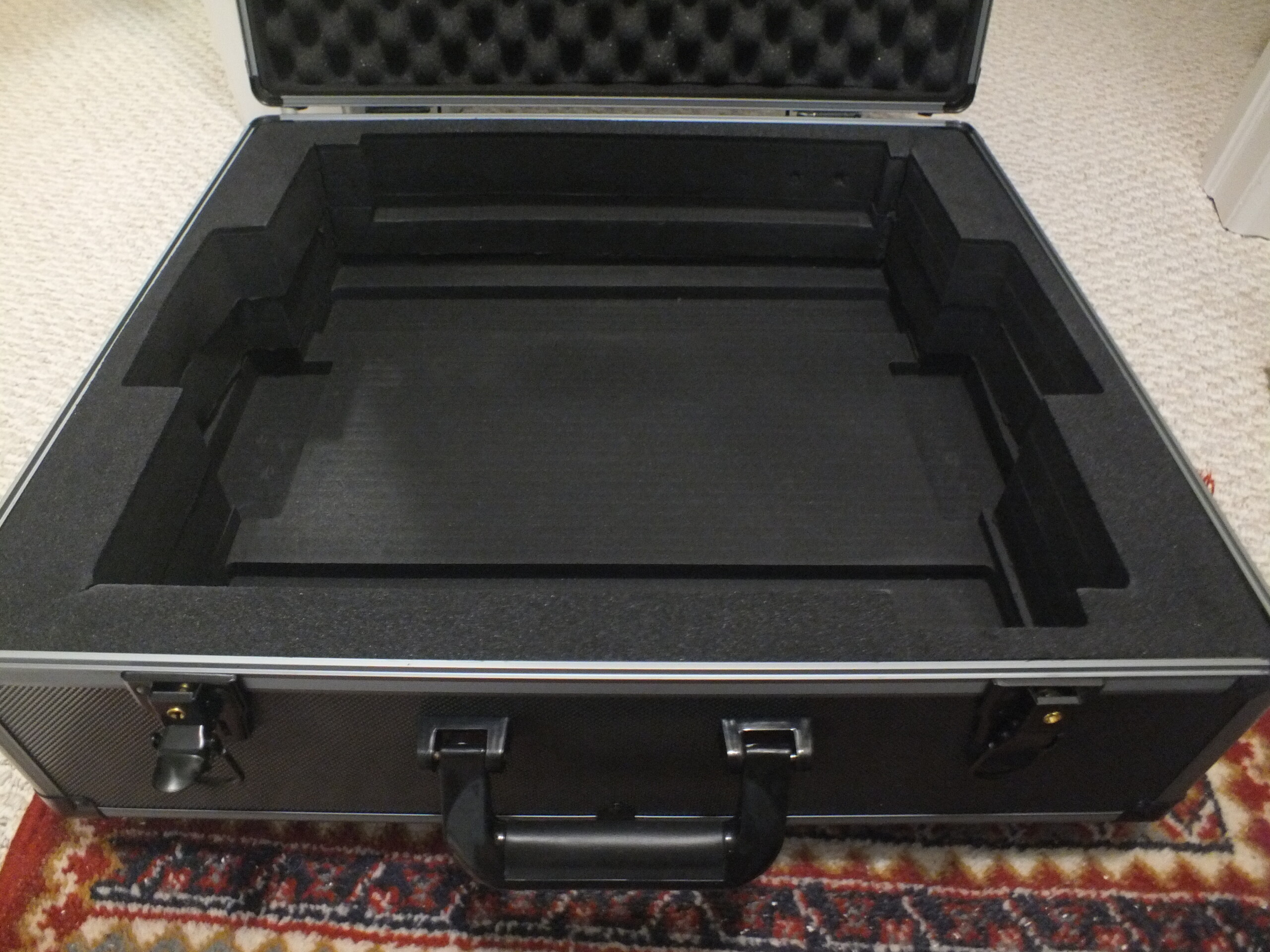
My review unit's chassis measured 43.5cm (17.15") wide, 10cm (3.95") high, and 40cm (15.75") deep. The main unit weighed in at 12.5 Kg (27.6 Lbs). The P1 Deluxe is only available in one color: silver. Although this is (obviously) not a portable unit, it comes with an armored flight case.
The P1 Deluxe uses a patented amplifier that was originally designed to amplify tiny signals created by microphones. WAL calls this circuit a "Single Pole Balanced Amplifier" or SPBA. WAL claim that their design increases bandwidth and more accurately preserves even-order harmonics during the amplification process. They also claim their SPB amp produces less distortion, superior dynamics, and a lower noise floor.
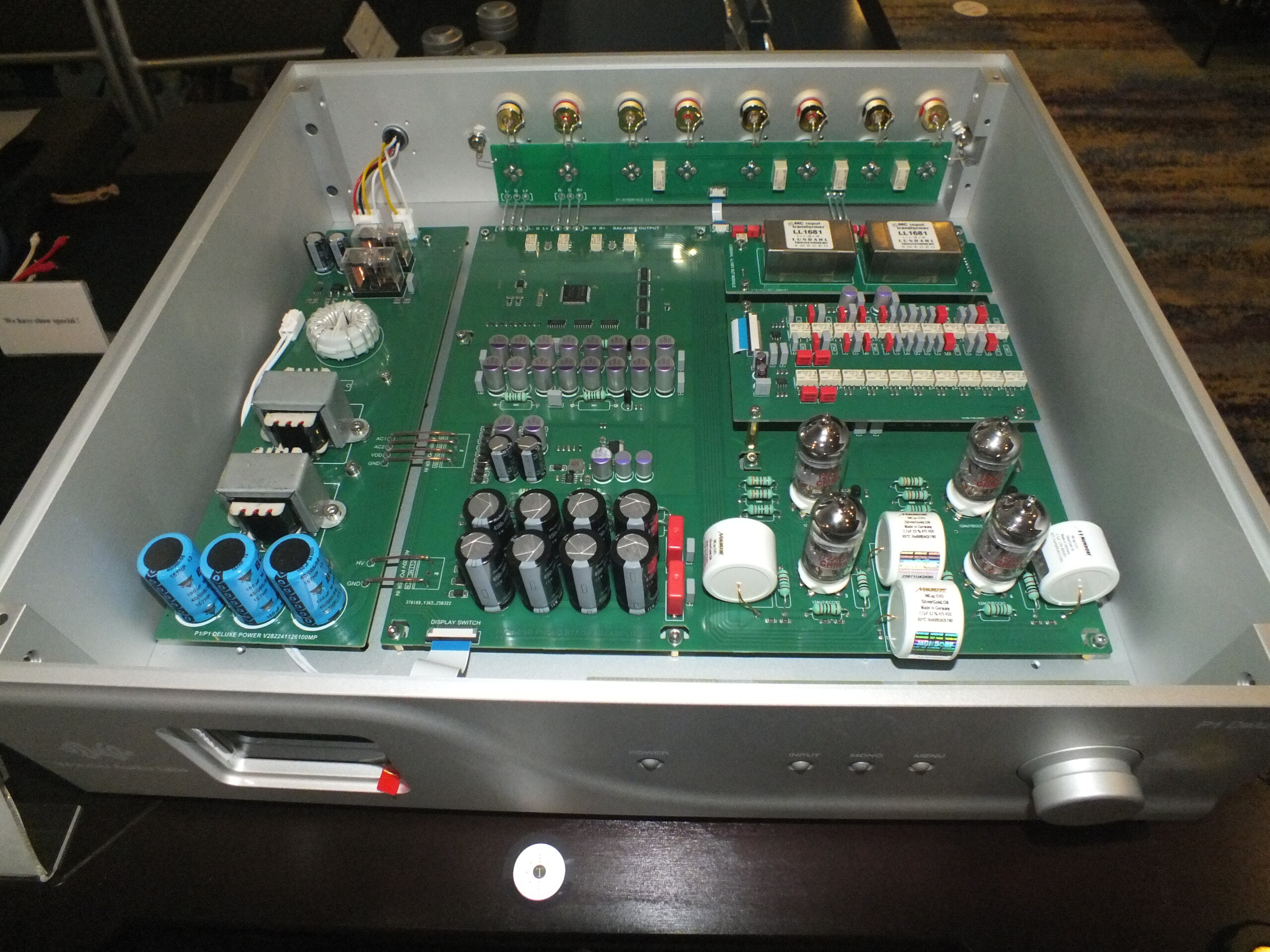
Circuit Board Parts
WAL's baby comes with four Shuguang™ triple-mica 12AU7/ECC82 vacuum tubes (two per each channel). Although it was beyond the scope of this article, an end-user might also wish to try Matched Pairs (MPs) of vintage NOS (New Old Stock) Gold Lion™ B749 or Telefunken™ ECC802-S vacuum tubes. To get the best sound, instead of using a tube tester, WAL measures and matches the 4 x 12AU7/ECC82 valves for each phono stage while the tubes are powered-up in each specific unit.
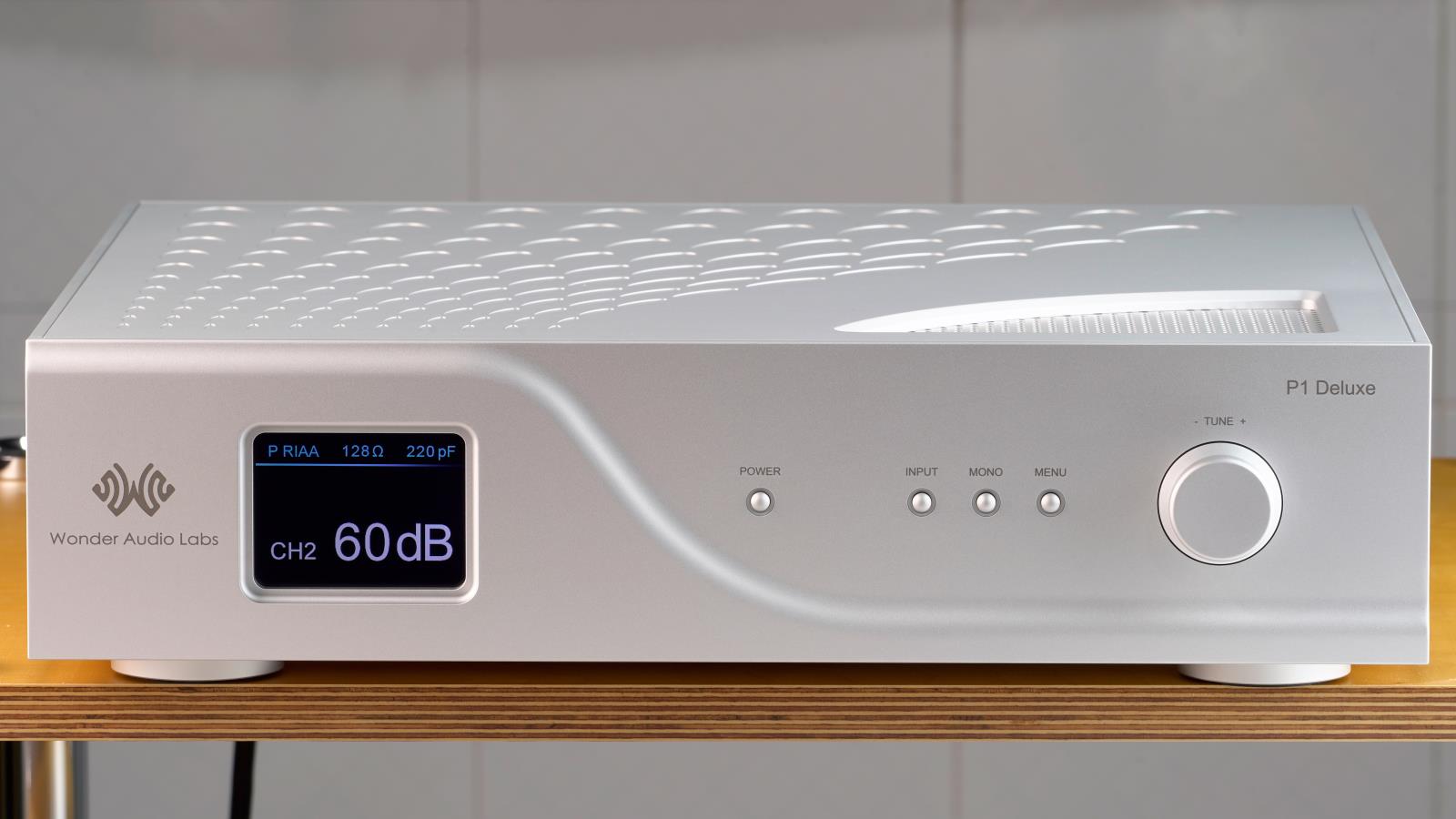
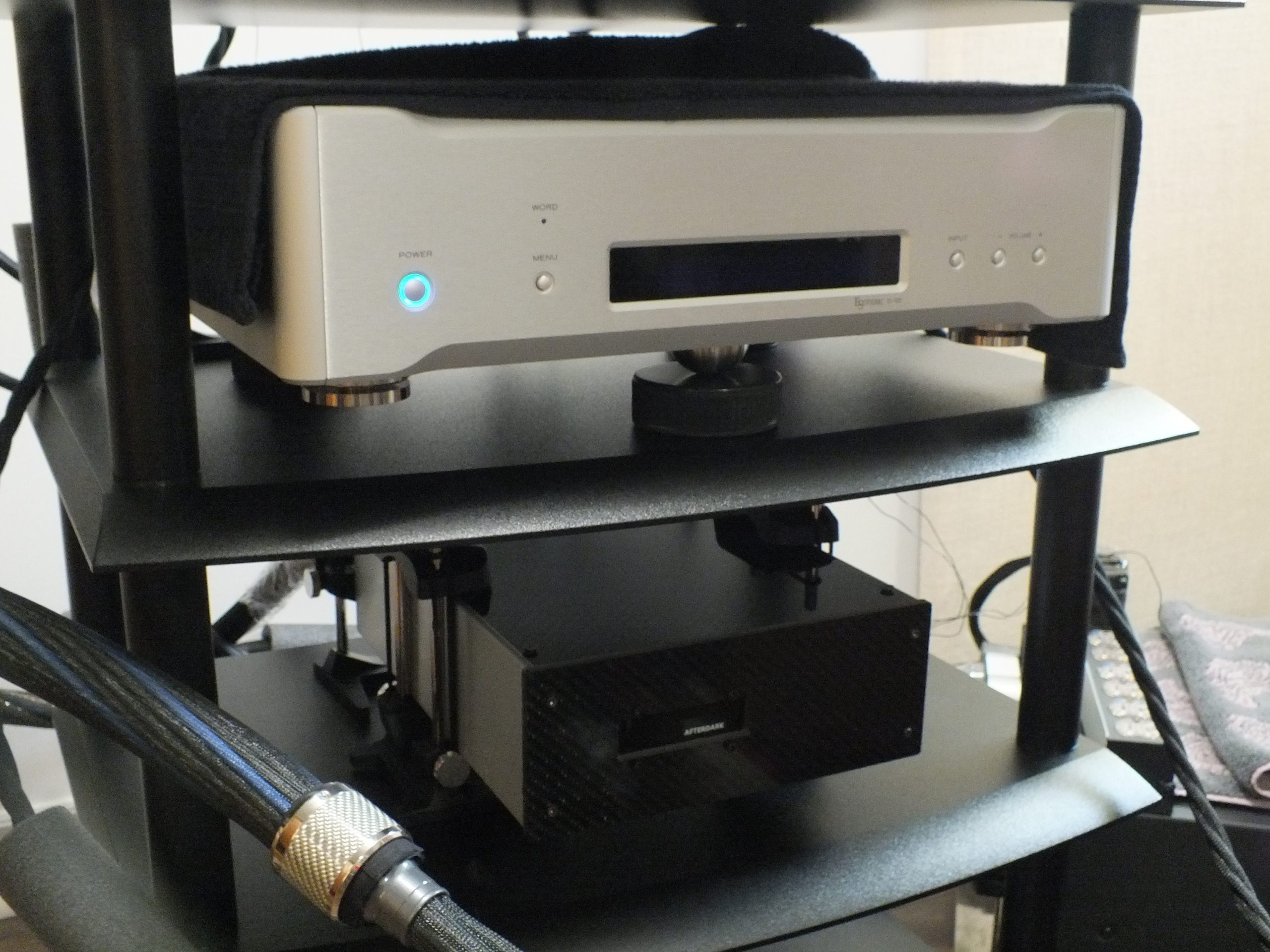
The unit's front panel features a rotary Tune knob and an on/off power switch. It also has several smallish buttons for the input selection, stereo/mono selection, and internal set-up menus.
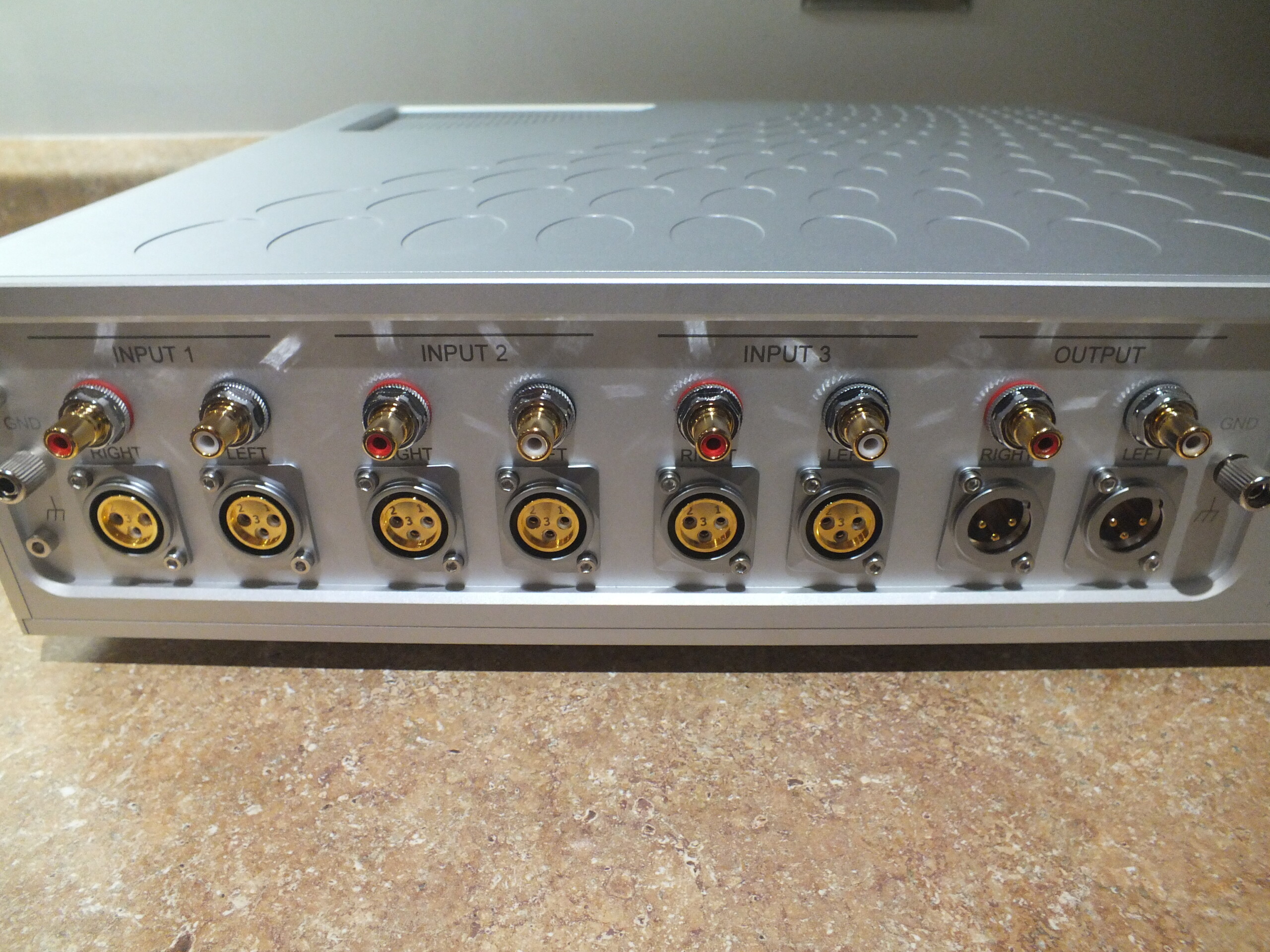
The rear panel has three pairs of RCA inputs, three pairs of XLR inputs, one pair of RCA outputs, and one pair of XLR outputs. The same group of RCA or XLR plugs cannot be used at the same time. Two grounding posts are also included. The three inputs can concurrently be hooked up to three different turntables or three different tonearms. Each of which can be adjusted individually to maximize the performance of any chosen cartridge.
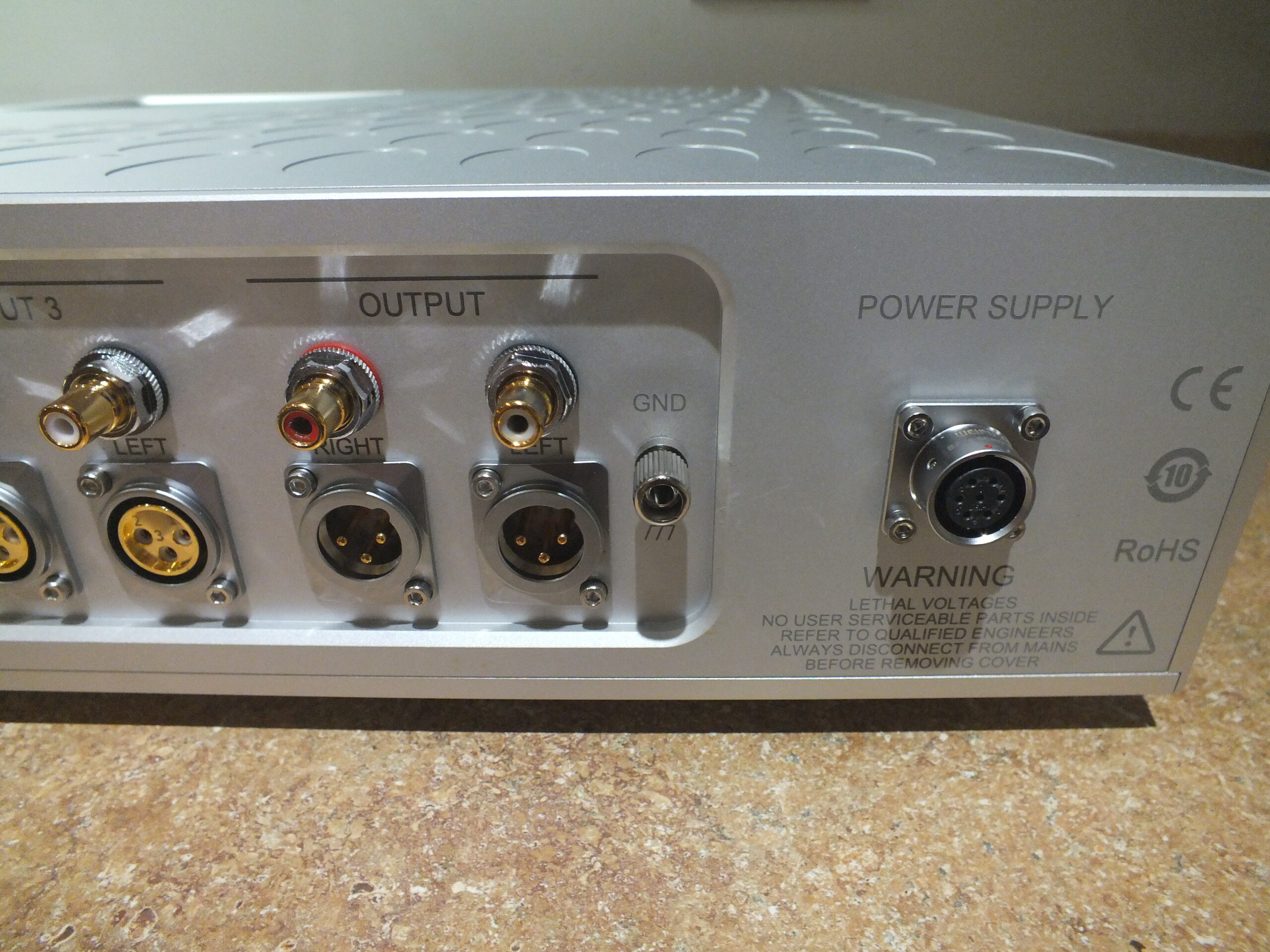
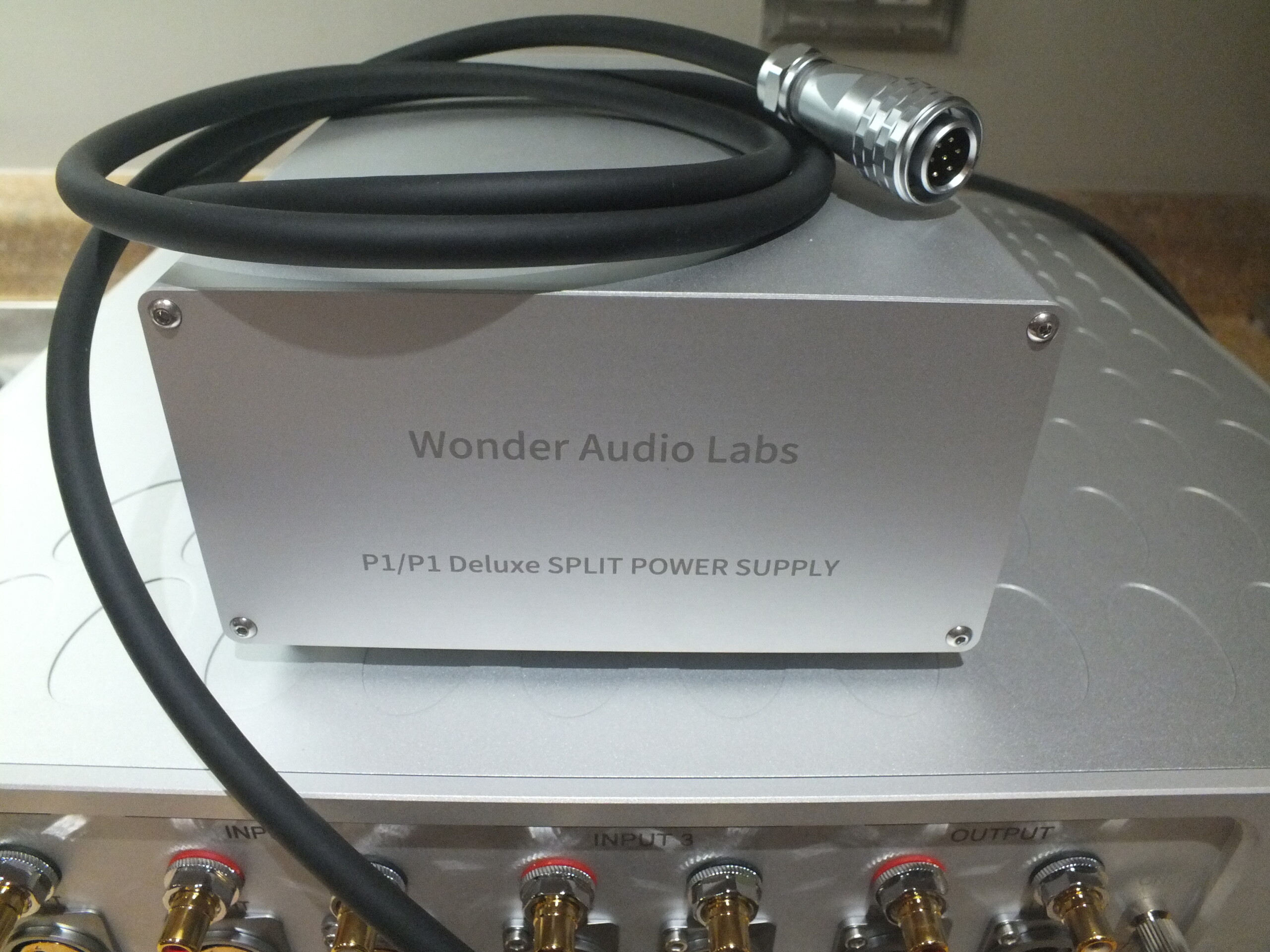
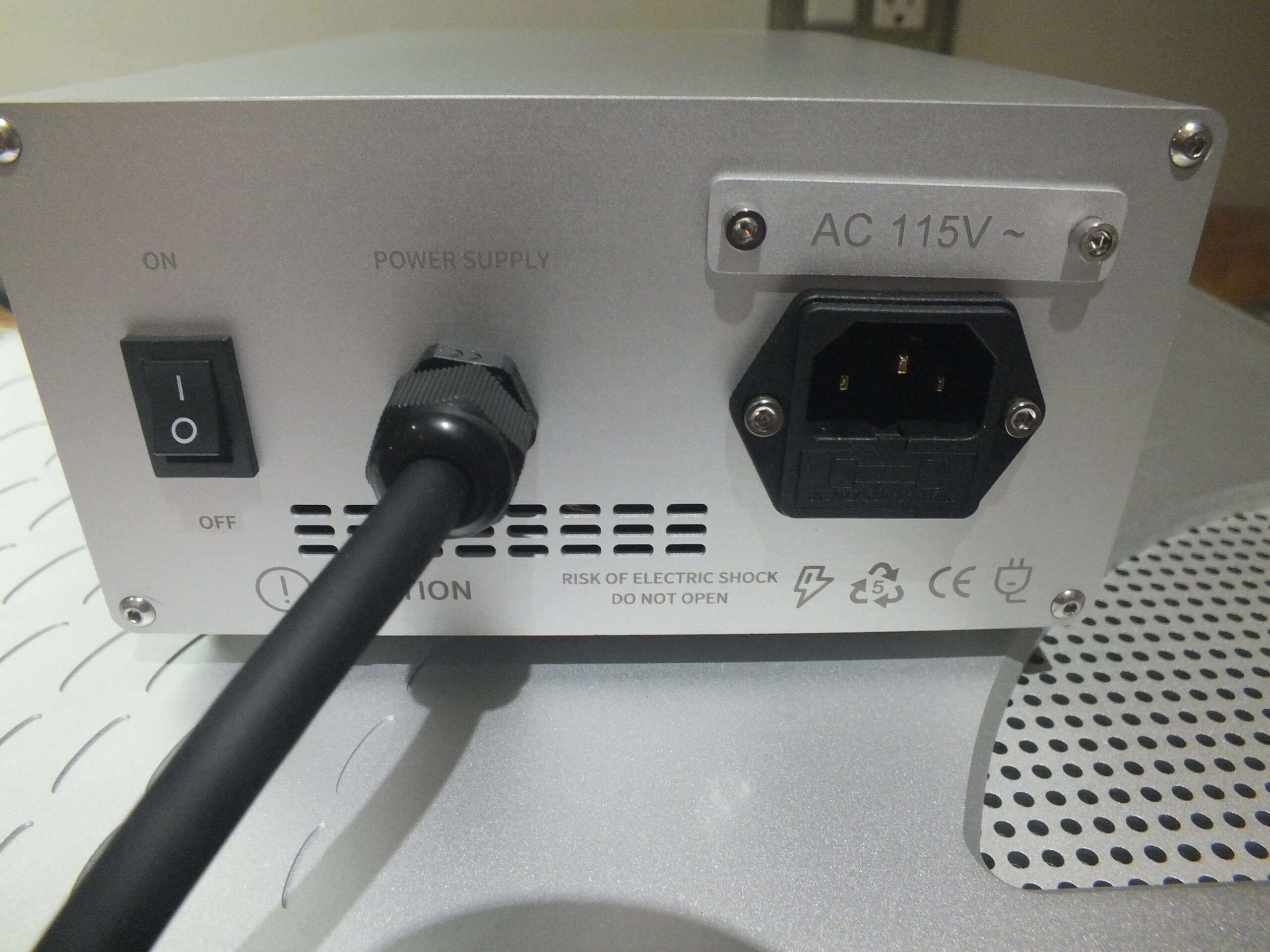
Improving upon the original P1, the newer upgraded P1 Deluxe phono stage uses an outboard power supply (PS). The PS connects to the main unit via a custom 2.0m length multi-pin cable. The outboard PS measures 22.25cm (8.75") deep, by 8.25cm (3.25") high, and 15.875cm (6.25") wide. It has one 15-Amp male IEC plug.
The P1 Deluxe offers eight gain settings: 40dB, 42dB, 45dB, and 50dB for MM cartridges; and 55dB, 60dB, 65dB, and 70dB for MC cartridges. This phono stage also has a Mono mode which can be used with mono records.
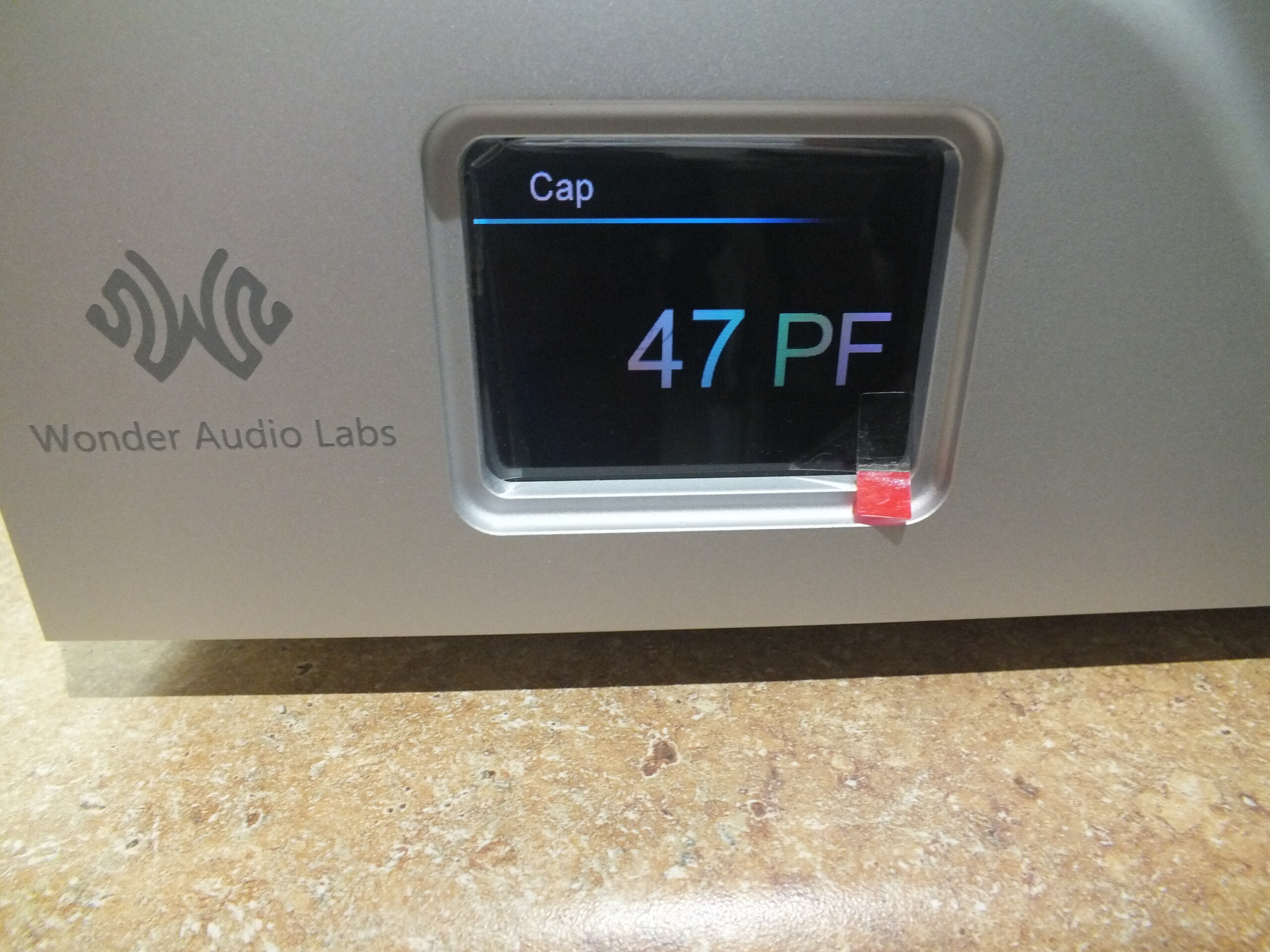
The unit offers more than 1000 different load impedance values (10Ω - 1,020Ω) and 32 different capacitance values (0μF – 1,800μF). For records that are a bit warped, WAL's phono pre even has an ultra-low frequency Sub (or subsonic) filter. All of these variables can be checked on the unit's LCD screen and quickly adjusted.
The P1 Deluxe also offers 100+ customizable EQ curves, two RIAA curves (passive and active), and a phase inversion output option. To my ears, the active EQ curve sounded more dynamic than the passive setting. WAL claims their passive design—which doesn't use negative feedback—offers lower harmonic distortion across the frequency spectrum.
Any customized EQ curve is based around two variables. The first is the "turnover" frequency that the record maker chose. The standard RIAA's turnover is 500Hz. Most early (pre-1960s) FFRR turnover frequencies are 250Hz and 30Hz. Decca's FFRR turnover is 450Hz.
The second variable is the "roll-off." This refers to the decrease in decibels (dB) that should, in theory, be applied during vinyl playback. The roll-off for the standard 1950's RIAA EQ is -13.7dB. The 1953 Decca EQ roll-off is -11dB. Up until October 1954, Mercury Records' EQ roll-off was -12dB.
RIAA equalization is a form of pre-emphasis during the recording process and de-emphasis during playback. Recordings are made with the lower register frequencies reduced and higher frequencies boosted. During playback of a record, the opposite process occurs. In theory, the end result should be a flatter overall frequency response, but with a reduction in the hiss and 'clicks' that can arise during the recording process.
Decreasing the lower frequencies also minimizes the excursions that a lathe needs to physically cut into a record's surface. By decreasing the width of grooves, more grooves can be physically fit into a given surface area. Smaller groove width thus results in longer playing times for records and reduced physical stress on a cartridge's stylus.
If this sounds complicated, that's because… well… it is. Not surprisingly, there's math involved here. Wikipedia states:
"RIAA playback equalization is not a simple low-pass filter. It defines transition points in three places: 75 μs, 318 μs(,) and 3,180 μs, which correspond to 2,122Hz, 500.5Hz and 50.05Hz. Mathematically, the pre-emphasis transfer function is expressed as follows, where T1=3,180 μs, T2=318 μs, (and) T3=75 μs:"
(sT1 + 1) (sT3 +1)
f(s) = --------------------------
(sT2 + 1)
The convenience and speed of being able to make so many micro-adjustments via the P1 Deluxe's front panel buttons is a game-changer. The LCD screen makes checking variables a cinch. The wee screen also dramatically increases what I like to call the "cool" factor. This convenience and its ultra cool looks would mean nothing, however, if this phono stage sounded like constipated duck flatulence. So, how does it sound?
Initial Set-up and Testing
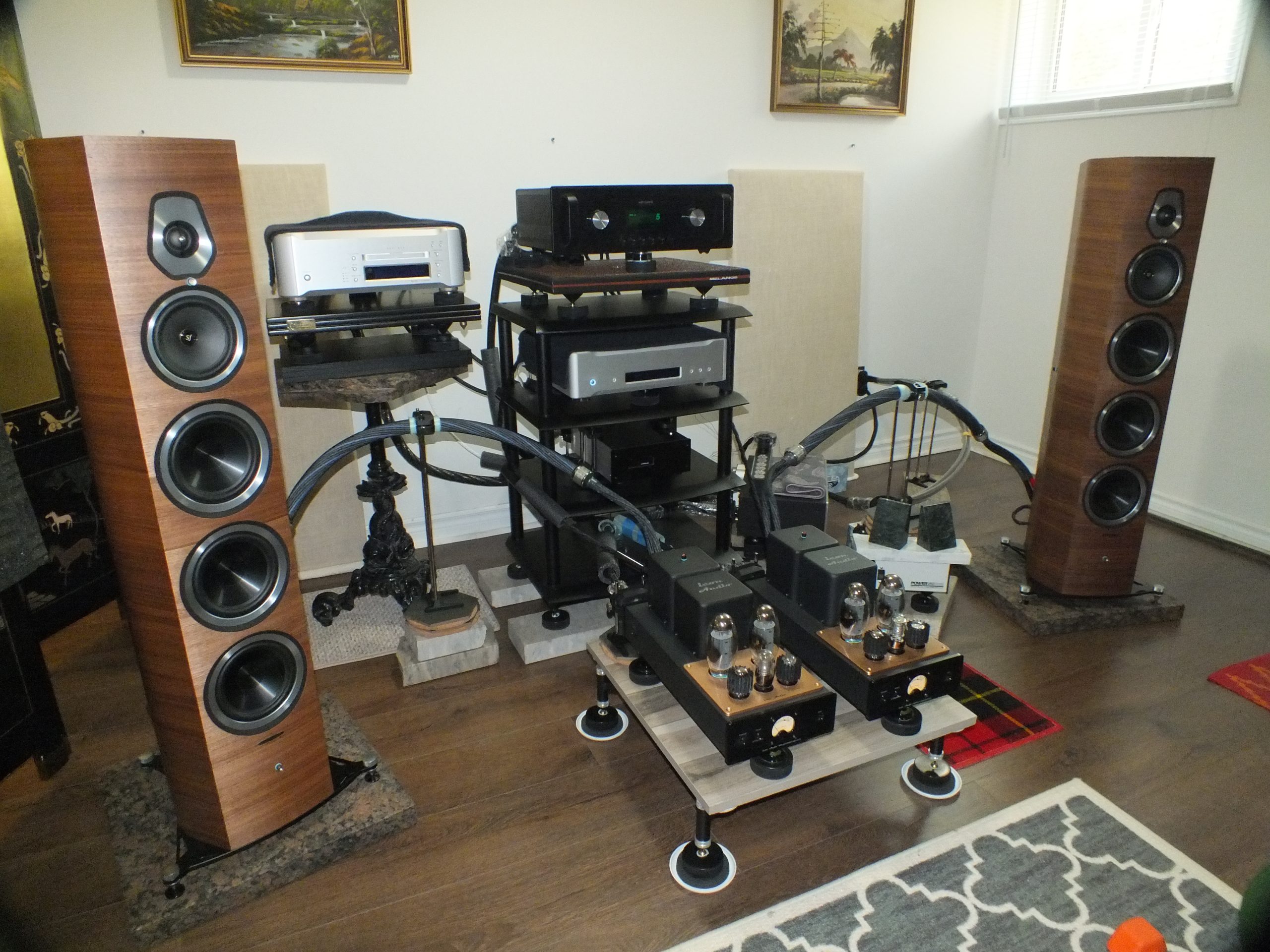
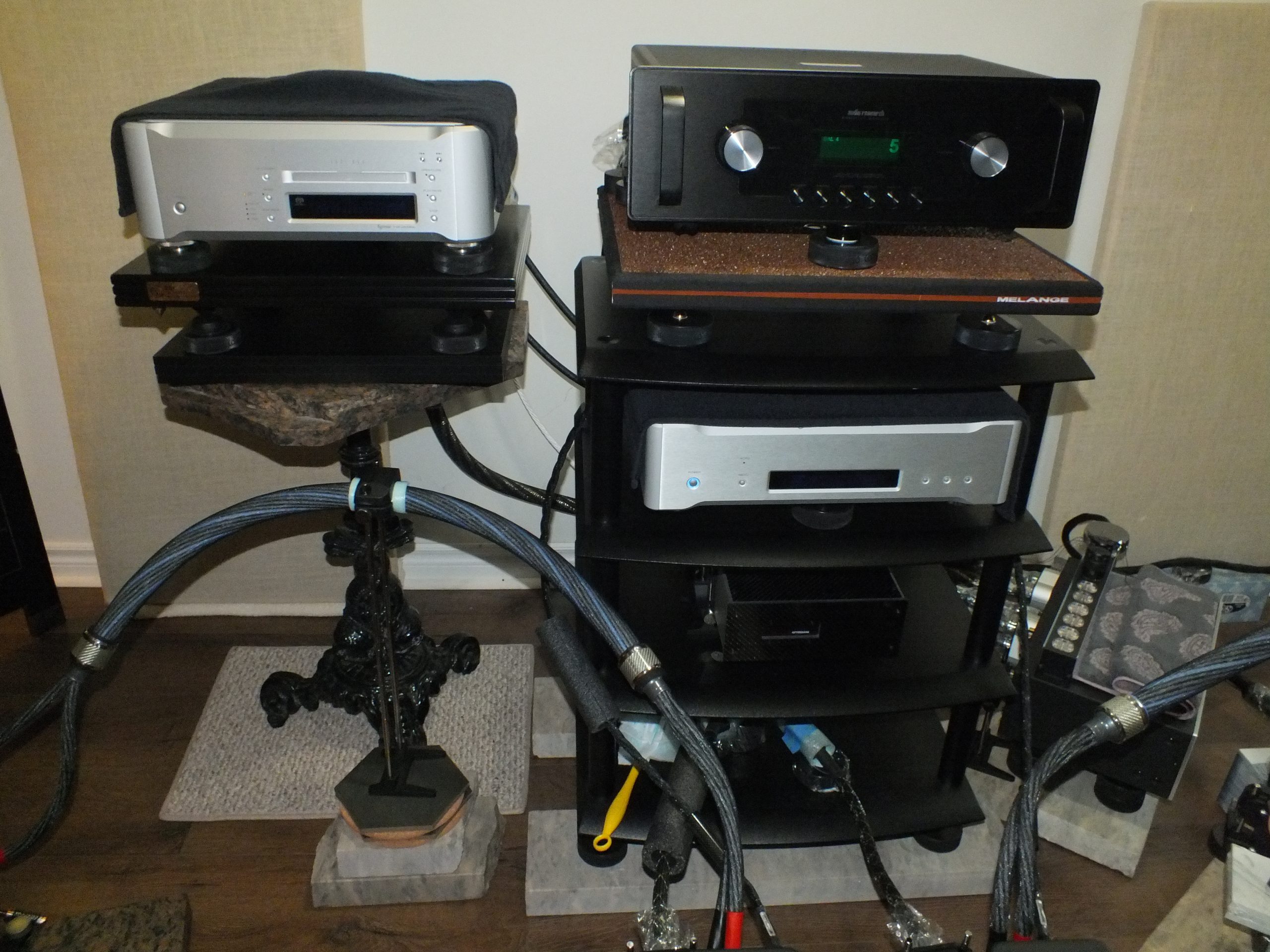
I used two different vinyl rigs for my listening tests. The first system featured an 1877-Phono ZV-5 turntable, an 1877-Phono Aeshna tonearm, an upgraded SBooster™ 24V power supply, and a 2.0m MIT Oracle MA-X DiN-to-RCA phono interconnect.
An audiophile friend (hello Phillip) wanted to hear the P1 Deluxe in his posh vinyl rig. Phil's system showcases a Kronos™ Kronos-Pro Limited Edition turntable, a Kronos Black Beauty tonearm, a Kronos SCPS-1 power supply, and a Siltech Royal Single Crown phono cable. He's currently favors a Koetsu Coralstone Platinum Diamond cartridge and a $17,000 USD Audio Research Reference-3 SE tube phono stage.
Listening to music is an extraordinarily personal experience. So is cartridge selection. What brings shivers and immense musical pleasure to one listener may leave another feeling cold and disinterested.
I tried a number of different M/M and M/C cartridges ranging in price from $500 USD to $20,000 USD. These including a Sumiko Amethyst M/M cart, a Benz-Micro L0.4 cart, a Lyra Delos, a Sumiko Pearwood Celebration Mk#2, a Van den Hul Colibri XGP Gold Reference Mk#2, and a Koetsu Rosewood Signature.
Regardless of the cartridge, once dialed-in, WAL's phono stage consistently created a warm, organic, and 3-dimensional sound. The P1 Deluxe's blitzkrieg dynamics and warp-speed transients were faster than Iron Man after Tony Stark had shot-gunned a 6-pack of Redbull™.
With higher-end M/C carts, the P1 Deluxe created deeper resolution, superior timbral accuracy, and exceptional soundstage width and depth. The tonal character of the stock Shuguang 12AU7 tubes was vivid, textured, warm, and liquid. Phil summed it up best when he commented: "This beast (the P1 Deluxe) sounds like a $15,000 USD valve phono stage, but without the tube hiss I'd normally associate with 12AU7 tubes."
Comparison Tests
I compared the $7,990 CAD P1 Deluxe to the following phono pre-amps: 1), an Icon Audio PS-3 Mk#2 tube phono stage (MSRP $7,000 CAD); 2), a VTL TP-2.5i ($6,600 CAD); 3), my heavily-modified Sonic Frontiers Phono-1 SE tube phono stage (no longer in production); 4), an Audio Note L5 Phono tube stage (as constructed $5,500 CAD); and 5), Phil's ARC Reference 3 SE tube phono amp ($17,000 USD).
Phil and I both agreed that The P1 Deluxe was the 2nd-best sounding phono stage in this group. Phil's ARC Reference 3 SE phono stage produced a marginally bigger soundstage, better musical cohesiveness, and, overall, a purer sound quality. Keep in mind that the ARC costs 3 times as much as the P1 Deluxe. WAL's phono stage created a haunting mid-range transparency, immersive 3-dimensional soundstaging, and textured timbral accuracy. In comparison, the sound of the other phono stages was dirtier and more polluted than Chernobyl ground water.
I'm happy to report that the P1 Deluxe's sound quality firmly sits in the $10,000 USD to $12,000 USD range. Germane to its MSRP of $7990 CAD / $5800 USD, this means that WAL's phono stage is—sonically speaking—punching way above its weight class.
Shortcomings
The P1 Deluxe is a bit sensitive to static. If the unit senses any threat from static, it places itself into protection mode and shuts down. This is done, of course, to protect its integrated circuit (IC) chips from being damaged by a surge of ions (i.e. static). Once in protection mode, a user must re-start the unit to get it playing music again.
Listening Tests
Daniel Lanois' 1989 Acadie (Opal Records 92-59691) showcases his take on French-Canadian folk songs. Lanois' superb studio engineering gives this record a euphoric sound that envelops a listener in his gentle voice and curious sonic accents.
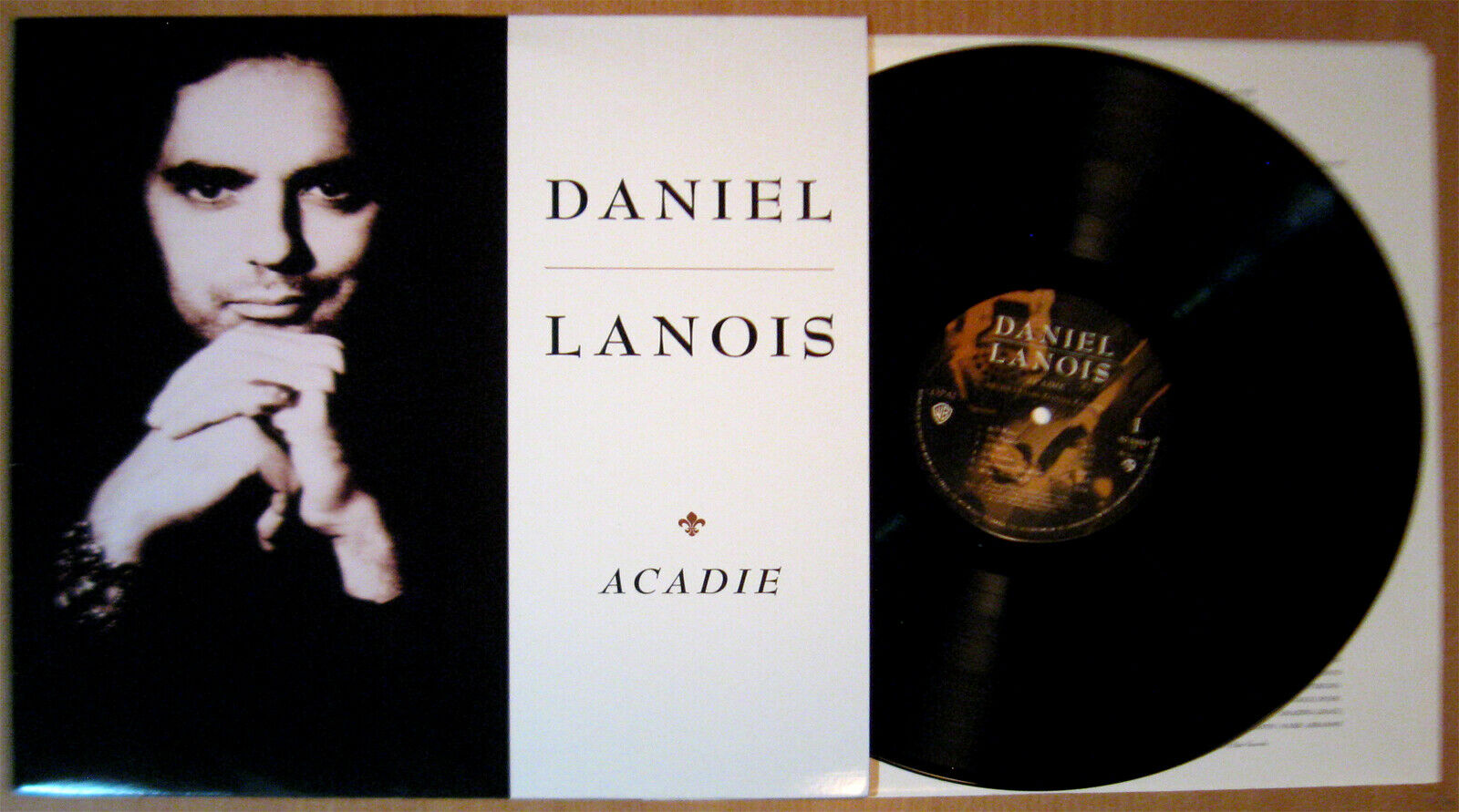
The P1-Deluxe's textured notes, striking transients, and musical cohesiveness all brought these songs to life in a spiritually moving way. In particular, the songs "Stillwater" and "White Mustang II" left me feeling emotionally shaken and stirred.

Next I tried a 2017 re-mastered pressing of Jacqueline Du Pre's The Heart of the Cello. Offering a wide and deep soundstage, the painful and somewhat tortured way in which Du Pre miked the instrument struck me… deeply. I could clearly hear the textured reverb of her cello echoing around the spacious symphony hall's walls.
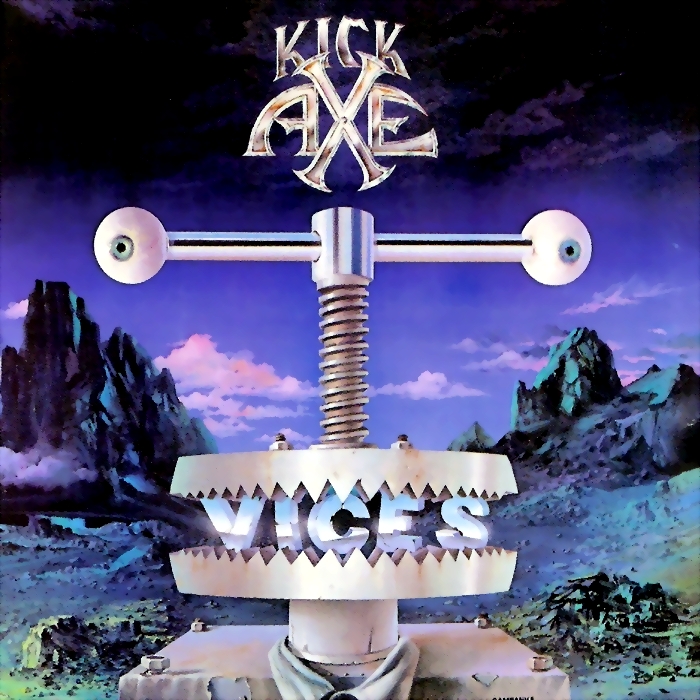
Studio-Czar Spencer Proffer did a hero's job of capturing this Canadian heavy blues-rock band's thundering guitar lines and impressive vocal harmonies. All five members of Kick Axe sang. Combined with this record's stellar sonics, the group's collective vocal gymnastics give the songs on Vices (Pasha FZ 39297) a jaw-dropping energy and spiritual warmth.
Using lower quality phono stages, Kick Axe's songs sounded congested, confused, and noisy. The P1 Deluxe separated the acoustic and electric guitars, the vocals, the bass, and the percussive accents with precision. At the same time, the cohesive synergy of the band came through with a clearer sense of their collective musical vision.
With the ethereal clarity and blitzkrieg dynamics created by the P1 Deluxe, Kick Axe's songs sounded breathtaking. In particular, WAL's phono stage reproduced the song "Dreamin' About You" with a concussive emotional impact that left me shivering.
Conclusion
The motto of the United States' Recon Marines is "Celer, Silens, Mortalis." This translates from Latin into English as "Swift, Silent, Deadly." And that's how I'd describe Wonder Audio Labs' P1 Deluxe vacuum tube phono stage
It's swift because it can be set-up and dialed-in faster and more precisely than any phono stage I've ever encountered. It's silent because its noise floor is vanishingly low. Tube noise…? Not with WAL's phono stage. The backgrounds were blacker than Trudeau's face during the Halloween season. And finally, the P1 Deluxe is deadly because—for a $7990 CAD / $5800 USD tube phono stage—its sound quality murders every other phono stage that's priced below the low to mid five-figure range.
My 2-channel vinyl rig has never sounded better. When I removed the P1 Deluxe from the system and then tried several other phono stages, the rush to re-install WAL's tube phono stage was overwhelming. Germane to the P1 Deluxe's amazing sound quality, ease of use, and full compliment of features, I couldn't return it. So… I bought the review sample.
Before you even think about auditioning a $20,000 USD level vacuum phono stage, think again and give the $5800 USD Wonder Audio Labs tube phono stage a listen. Compared to the P1 Deluxe, everything else beneath the $12,000 USD mark is a boat anchor.
P1 Deluxe Phono Stage
Retail: $7990 CAD / $5800 USD
Wonder Audio Labs