My house was built in 1970, and the AC power was pretty ratty. Flickering lights I can handle; visible arcing, not so much. As a plucky new homeowner, I first tried to tackle it myself by replacing some obviously questionable Cutler Hammer breakers and sanding away corrosion – after taping a copy of my will to the refrigerator door, just in case. It ended up being a waste of time, but the good news is that any residual trembling eventually subsided after only a couple of weeks. Some tasks are best left to the pros.
Not wanting to spook the local electricians, I avoided using the word audiophile when getting estimates and instead said I wanted clean power for “home theater,” perhaps even a dedicated service. I figured the vision of dollar signs courtesy of a willing rube might overcome any eccentric-sounding project goals. Nope. The best guy still eyeballed me as if I’d asked him to perform neurosurgery on a goldfish. “Power is power,” he said. “And given what you’ve got now, let’s focus on stopping your house from burning to the ground – with you in it.” Sage advice, Dale.
In search of silence
Years later, I’m still making the best of what I have. Which is why phono preamps – and noise – have always been vexing. Some phono stages have been quiet, but not all the way. Others became acceptable with line conditioners, upgraded power supplies and aftermarket cords. None were close to dead silent – until I bought an older, used Dynavector P75 Mk2 on a lark.
According to Dynavector, it “takes the low grade single voltage DC supply from the AC adapter and converts it to the dual high voltages required for true professional quality audio reproduction,” using high‑frequency switching and wideband regulators. Whatever the engineering magic, it worked. The Mk2 was startlingly resolving, musical, and – miracle of miracles – dead quiet even at high gain.
It wasn’t perfect. That basic box was so light that stiff interconnects could drag it around. It had no power switch, forcing me to reach behind furniture to plug and unplug it. The wall wart itself wasn’t a common type, should replacement have become necessary. Changing settings required opening the case and fiddling a bit since the instructions weren’t immediately graspable. And it needed a few hours of warmup to sound its best. Still, for the secondhand price, it was a revelation.
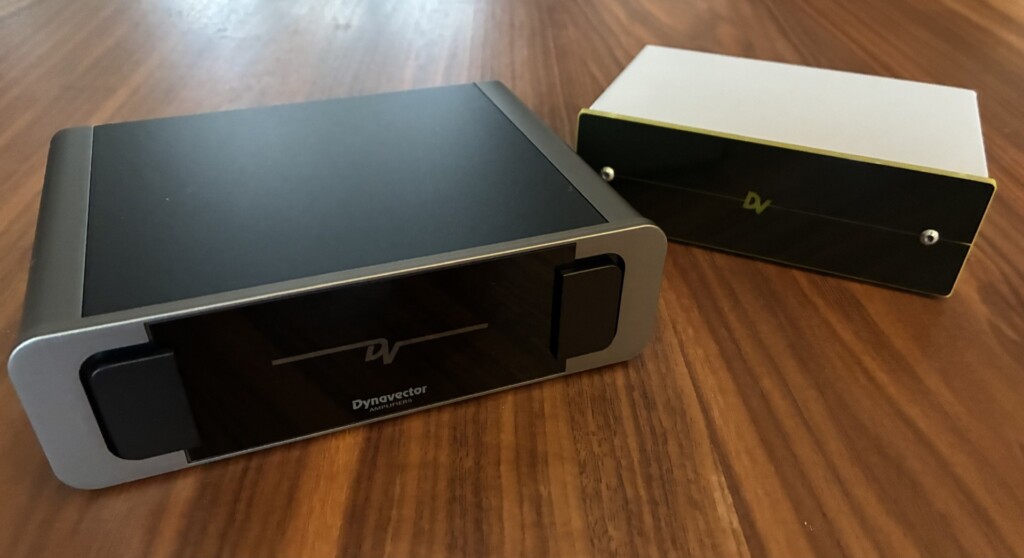
The much-improved (and better looking) Mk4.1 in the foreground versus the older basic box.
Same philosophy, smarter take
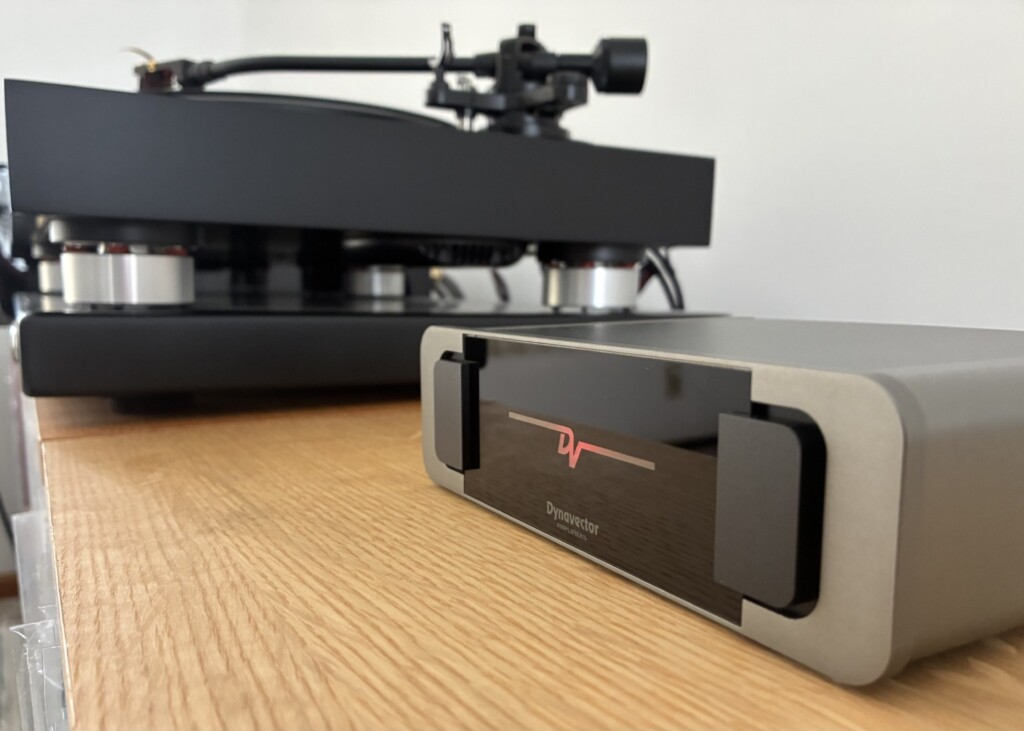
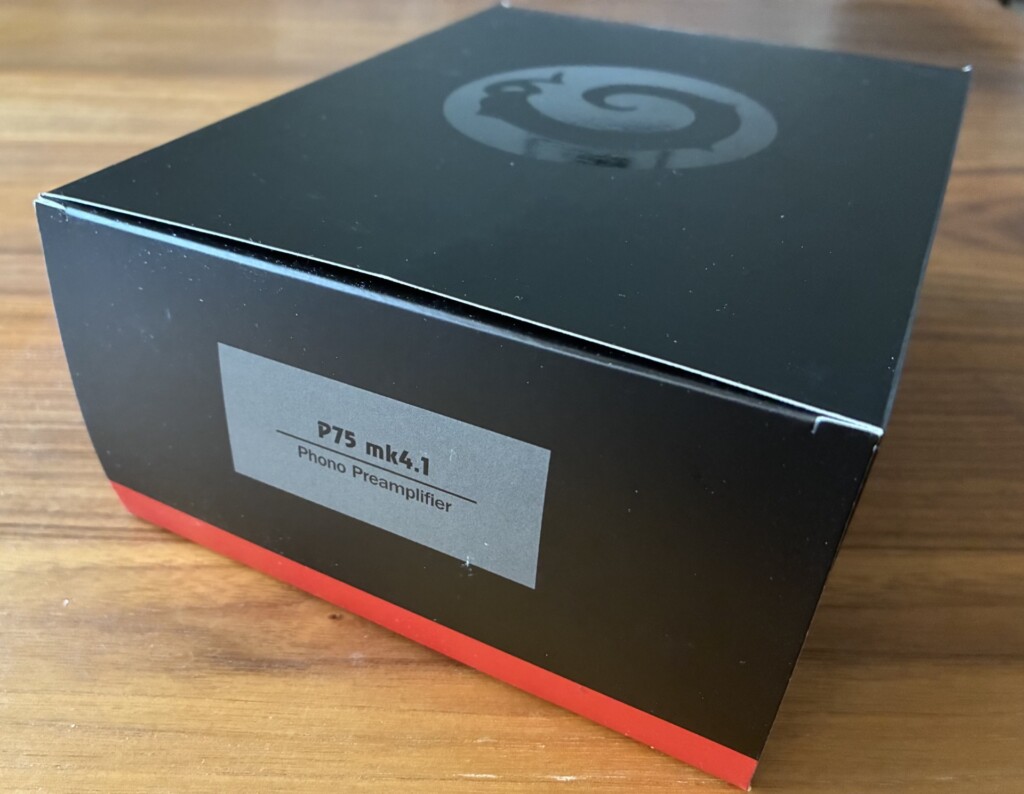
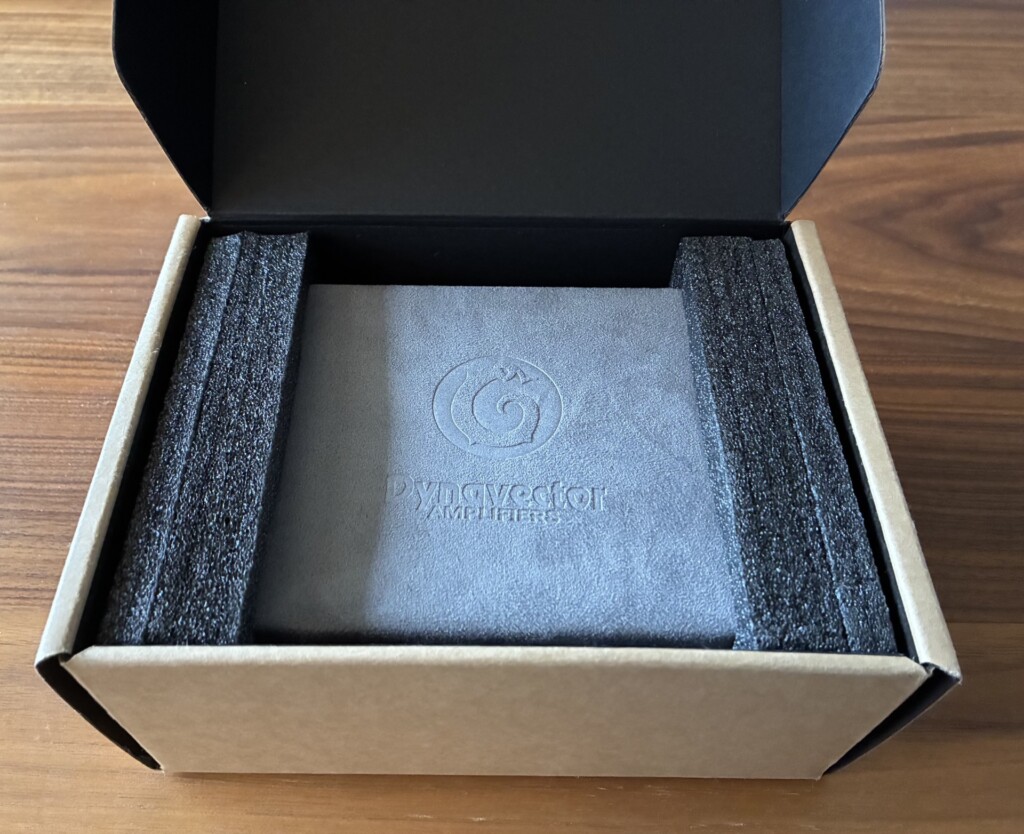
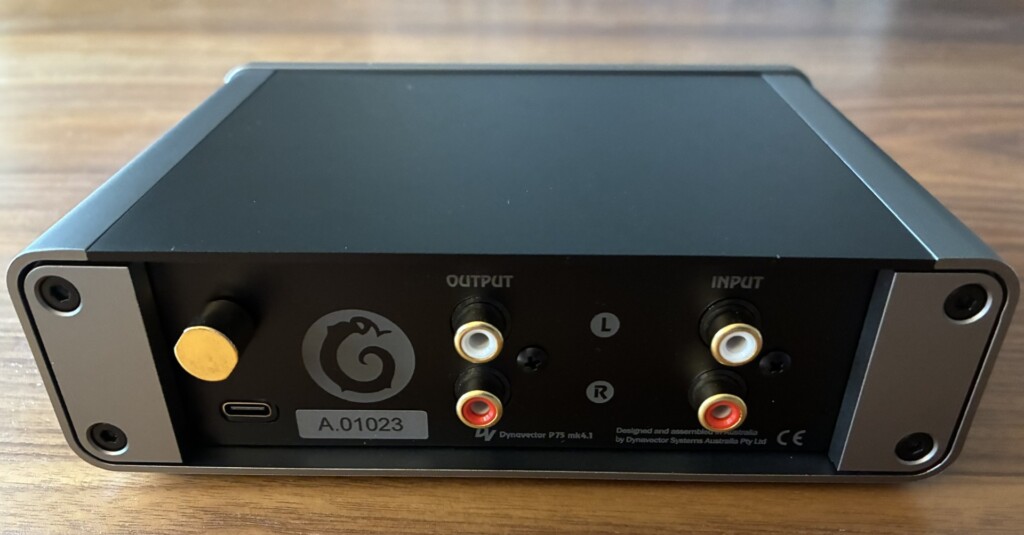
Dynavector’s new P75 Mk4.1 keeps the Mk2’s “all the money goes to performance” philosophy but fixes almost every practical gripe. It’s heavier, so stouter cables can’t bully it as easily. It also looks far more polished – closer to Roku than Radio Shack. Glass replaces plastic on the front panel and the aluminum chassis is suitably sophisticated looking. Packaging is a cut-above professional without drifting into the sort of “luxury unboxing experience” territory you know adds unnecessarily to the price.
Time marches on, and now the power architecture is built around a modern USB‑PD rather than a wall wart. More precisely, this merely a power adapter for AC to DC conversion. Isolated from that is the actual power supply, built onto the circuit board, with an operating frequency many times higher than the highest audio frequencies. Oddly, while its immediate predecessor, the Mk4, finally had a power switch, the Mk4.1 does not, which I dislike, but considering these sound better when warmed up, perhaps it’s intentional that it always be left on. Dynavector giveth, Dynavector taketh away. Still, the overall impression is of a product thoughtfully refined rather than merely updated.
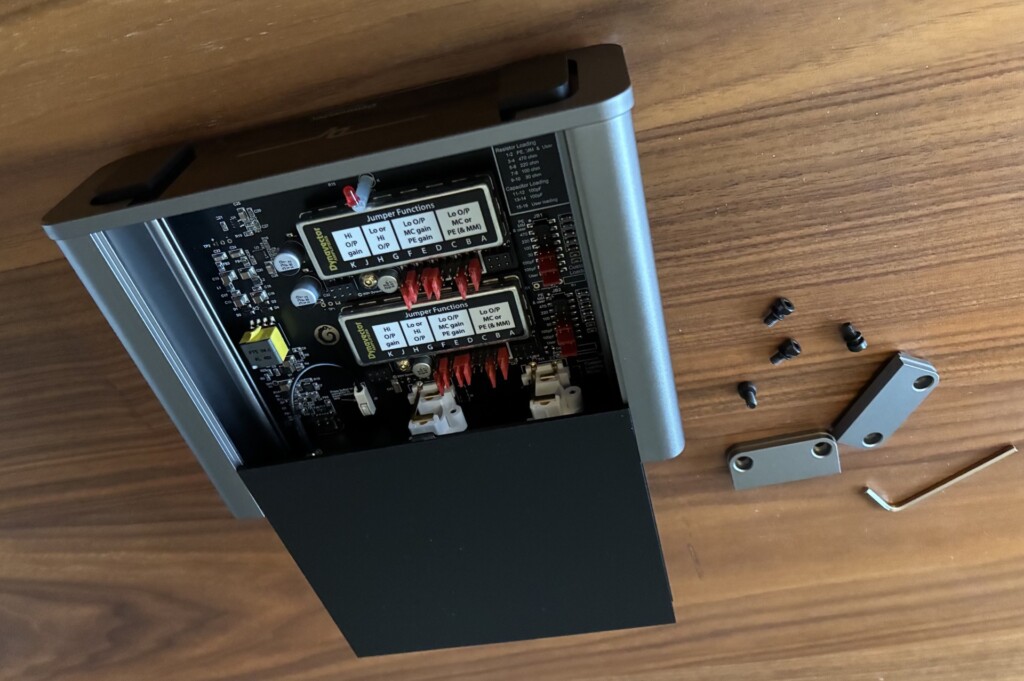
Adjusting gain and loading still requires opening the case and moving jumpers on the circuit board. It’s not difficult – at worst, mildly annoying, especially when some competitors offer more convenient external DIP switches. But the owner’s manual now spells it out very clearly. And, to be honest, I enjoy the process; getting into the case offers repeated opportunities to appreciate its design and feel a little more vested in the setup. The upside is a much cleaner exterior, and from an everyday standpoint that makes sense: most users will set these options once per cartridge change and then leave them alone for months or years. I see the same logic here as in keeping a refrigerator’s temperature controls inside the cabinet rather than on the door; why expose something you almost never need to touch? You can, of course, leave the Dynavector’s screws out for easy access to the innards while you experiment and then fasten it back together once you have it right.
More maturity where it matters
After more than twenty years of reviewing affordable to mid‑priced hi‑fi for PFO, the most promising sign when I start listening to something new is hearing…nothing. With good budget gear, I’m often struck by how impressively it does a certain something or how far it punches above its price in specific ways – usually standout strengths set against an otherwise unobtrusive, fault‑free presentation – rather than across‑the‑board excellence.
The P75 Mk4.1 operates on a different plane. Instead of the usual “sins of omission,” it does so much, so well, that I wasn’t looking for opportunities to praise it, but rather, for any missteps at all. It reminded me of the best gear I’ve owned but in a smaller, simpler, more affordable package. Isn’t that what we should want? Still, I can’t help but feel that it will be dismissed by a close-minded and perhaps undeserving few simply because it doesn’t take up enough rack space.
But getting back to actual performance, rather than bore you with a litany of examples, I’ll pick just one: complex, high-tempo percussion. The P75 Mk4.1 doesn’t speed it up by shearing off some of the leading or trailing edges, or drag it down by adding thickness or body. There’s just nonchalant flow with natural decay and no artifacts that indicate an overt sense of strain. That kind of effortlessness makes music much easier to sink into since there’s nothing distracting or stressing that makes you listen to what the equipment is doing as opposed to the performers.
A new talent
When early versions of the P75 first appeared, they were probably unlikely to be paired with a moving magnet cartridge. My older P75 was kind of thin and brittle sounding and commensurately underwhelming in this regard. This only makes sense considering that Dynavector doesn’t sell any moving magnet cartridges, focusing solely on moving coils of both low and high outputs. Also, (a) most affordable phono stages do the opposite, favoring moving magnets over more sophisticated moving coils, and (b) the older P75’s moving coil performance was so out-of-proportion good for the price that anything less on the other side of the gain spectrum would naturally be a disappointment by comparison.
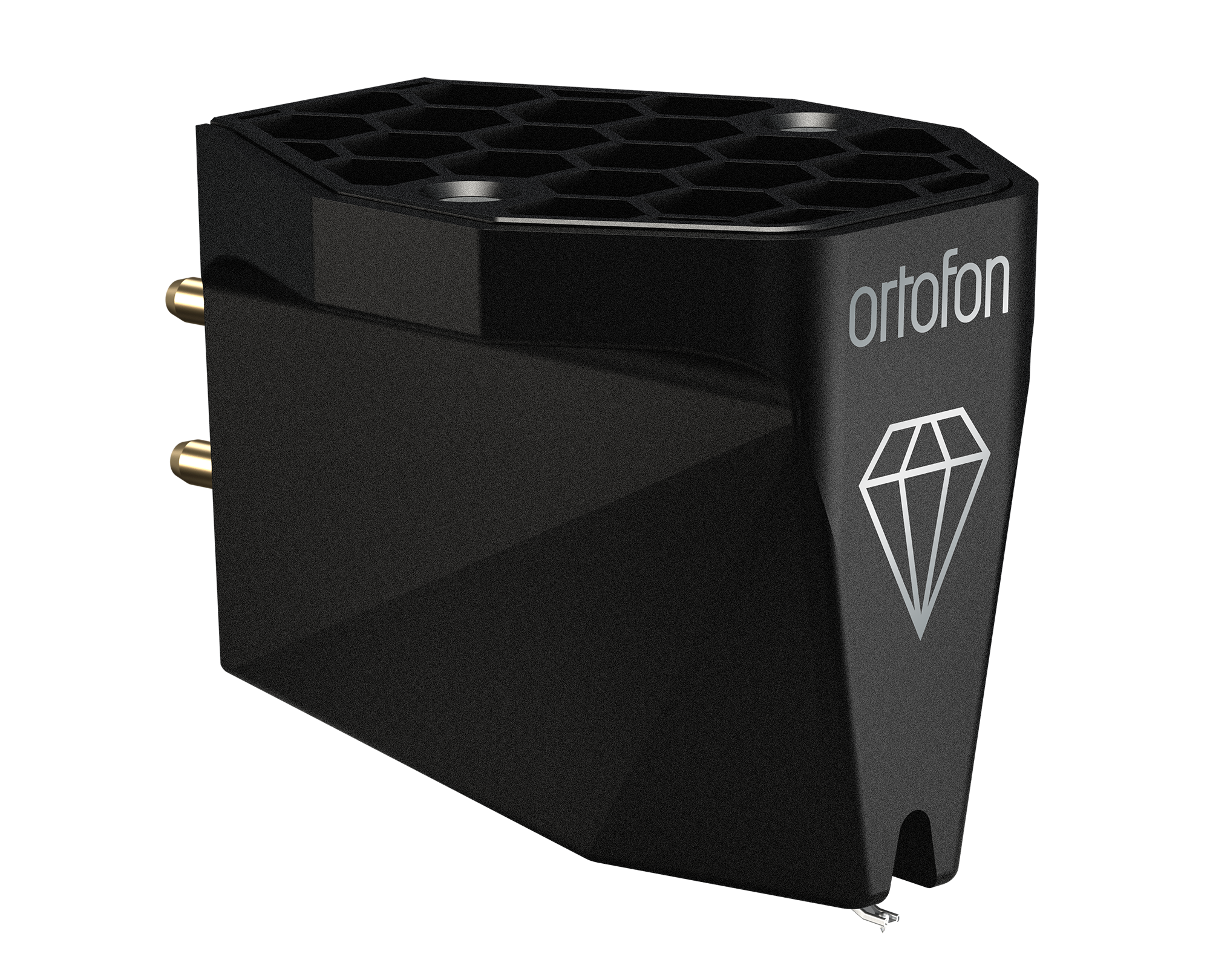
In technical terms, the old P75’s lower gain settings were also optimized more for high-output moving coils like Dynavector’s own 10x5 MkII at around 2mV than something like, say, the 5.5mV Ortofon 2M Blue. Finally, moving magnet capacitance was fixed at…well, we don’t know because Dynavector didn’t say, and was non-adjustable. The Mk4.1 changes that. With adjustable capacitance and more appropriate gain options, it suddenly becomes a strong MM contender.
I started with the modest but very good Audio‑Technica VM540ML ($279), and the Dynavector made it sound like a cartridge twice its price – wide, deep soundstage, shimmering treble, firm bass, and a midrange with real presence. Unlike some affordable preamps that seem to delight in showing off how much they can pull the music apart and expose little details, the Dynavector aces the harder part: taking all those strands of information and weaving them back into a cohesive whole.
Most buyers won’t choose the P75 specifically for MM use, but it’s serious now – no longer an afterthought. This is important because I’ve always advocated for devoting more of a limited budget to a phono preamp than cartridge: you’ll wring every last cent’s worth of performance from even inexpensive cartridges while simultaneously expanding your options when funds allow for an upgrade.
But moving coils are still the main event
For the first time in a long time, I didn’t have a Dynavector cartridge on hand despite owning a slew of them, from the old 10x3 all the way up to the newer 10x5 with its improved threaded mounting block. No matter. Just as a Rega turntable sounds great with many non-Rega cartridges – Dynavectors in particular – the P75 excelled with a range of models, and tellingly, Dynavector’s US importer was completely unconcerned about my selection. In fact, the company didn’t even ask, suggesting total confidence in the P75’s abilities across all brands and price levels.
So I tried the Mk4.1 with several cartridges I know well: Audio‑Technica OC9, Ortofon Rondo Red, Ortofon MC X20, and Denon DL‑301 II. On Peter Gabriel’s So, one of the most sibilant recordings I own, the Mk4.1 noticeably reduced it – no small feat given that the only variable was a change in phono stage. Across the board, the Mk4.1 delivered even blacker backgrounds, better separation and a smoother, more confident presentation than the Mk2. Transients, decay and transparency all took an incremental but meaningful step forward. The overall impression was of a talented component that had fully grown up: less overachiever, more seasoned pro.
A lesser-known way to do MCs
Phono Enhancer (PE) mode is Dynavector’s patented party trick. The basic concept – transimpedance – isn’t new, but Dynavector is one of the few companies that has stuck with it across multiple generations of the same product. Their implementation may involve some engineering wizardry I can’t fully explain, but the explanation is straightforward: the P75 becomes a current‑mode amplifier for low‑output MC cartridges, bypassing traditional loading entirely. Instead of worrying about whether your cartridge wants to see 50Ω or 470Ω, you just pick one of three PE settings based on coil impedance.
My older P75 never fully showed off PE mode for me, likely because it was tuned more specifically for Dynavector’s own low‑output MCs which I don’t have. The Mk4.1 is far more flexible, and the difference shows. With the Mk4.1, PE mode finally clicked for me. It produced a fuller, more vibrant sound, richer tonal color, quieter backgrounds and a touch more “life.” It’s not perfectly neutral, and it’s cartridge‑dependent, but absolutely worth trying. Like adding a dash of Tabasco to chili, the added heat is subtle but undeniable.
That’s not to say that some trial and error isn’t still worthwhile. PE mode tends to work best with lower‑impedance cartridges, and not every design will be an ideal match. With the 33Ω Denon DL-301 II, set to PE high as the manual recommends based on its specs, I detected a higher noise floor and what felt like too much gain with an in-your-face sound. Dynavector suggested backing it off to the medium setting (which entails moving just one jumper per channel, a ten-second operation) and the noise floor not only dropped but music had a much greater sense of ease and refinement at the expense of some dynamic impact. But some higher frequencies now seemed oddly set back spatially, with cymbals seemingly ten feet behind the drum kit. So I reverted to standard mode: in this case, 470Ω with 60dB gain. The sound wasn’t quite as ripe but it was more balanced and accurate. Bingo.
The bottom line is, guidelines are guidelines, and the Phono Enhancer setting that sounds best to you is the right one, even if that means not using it. Still, it feels like getting a second phono stage for free. It even makes me wonder if there might be a market for a simpler, MC-only P75 that runs strictly in PE mode; users would only need to connect the cables and ground wires, then perhaps use a toggle switch on the front panel to select high, medium or low. Sounds dreamy to me – especially considering Sutherland’s TZ Vibe, the most affordable name-brand transimpedance preamp I can think of, sells for $1,600. I can’t speak to how the two compare sonically, but in purely practical terms, you could buy the P75 Mk4.1 for $980, treat it as a dedicated transimpedance unit, and still keep $620 in your pocket.
A new mid-priced reference
I can say with confidence that, having owned more than a dozen phono preamps at widely varying price points from the likes of Audio Research, Avid, Cambridge Audio, Pro-Ject (I’ll spare you the rest of the alphabet), it’s as good or better than any – even those costing much more. It may have a very, very tiny bit more grain and slightly less naturalness than the two-and-a-half-times more expensive Avid Pulsus, and its moving magnet performance may not decisively blow away a budget-priced overachiever like the four times less expensive iFi Zen Phono 3. But the way it bridges the price gap between entry level and higher end is something special.
In some cases, it’s even more flexible than costlier products in terms of settings and its ability to accommodate cartridges of all types. It’s also the quietest phono preamp I’ve ever used. That may matter less to those with better homes (and electrical systems) than me. Still, if my experience is typical, anyone who’s bugged by noise should check it out, unless you buy your phono preamps by the pound.
And it’s sound per pound where the little P75 excels: this thing is a standout. It’s clear, but not clinical. Detailed, but nowhere near excruciatingly so. So quick, agile and able to move the music along with superb alacrity that it’s nearly addictive. Any slight glare or vague artificiality that occasionally pegged the old P75 as a reasonably affordable design is gone, baby, gone. Everything here is high resolution and cohesive, musical, taut, tonally colorful, texturally rich and largely neutral. This is darn good hifi.
After spending over a decade running through progressively larger, more complex and expensive phono preamps in search of superb musicality coupled with utter silence, one of the littlest and most modestly priced finally delivers, for me, a near-ideal mix. Small in stature, but big where it counts, Dynavector’s DV75 Mk4.1 really comes through – at an equally unassuming price. Under $1,000 for all this? Yep, and at least according to my ears, well worth auditioning even if you’re considering spending twice as much. Highly recommended, and my new mid-priced reference. The only question left is, who among my friends should I pass my old P75 on to?
Specifications
Gain settings: 40dB, 44dB, 56dB, 60dB or 63dB
Load settings: 30Ω, 60Ω, 100Ω, 220Ω, 470Ω or 47kΩ
Capacitance settings: 100pF, 200pF, 300pF, 660pF, 760pF or 860pF
Additional features: Phono Enhancer mode, high current line driver for long cables or difficult loads, steep rolloff subsonic (rumble) filter
Dimensions (WDH): 6.3 x 4.72 x 2 inches
Weight: 1.76 pounds
Power Supply: USB-PD (Universal Voltage)
Power Consumption: < 350mA
Designed and manufactured in Australia by Dynavector Amplifiers Australia
Price: $980
Dynavector USA
8116 Gravois Rd
St. Louis, MO 63123
Email: [email protected]
Phone: 314 454 9966