AXPONA! The trade show where all the sounds and other spectaculars of the high-end audio community come together to listen, listen, and then listen some more with 12,546 attendees and 235 individual listening rooms this year. I'm pretty sure this is a record. So many products, distributors, and manufactures here that it really wouldn't be possible to see and hear them all, try as we might. So the best we can do, really the best anyone can do, is to give our own personal highlights, musings, and thoughts about this 3(ish)-day spectacle treat-show for our ears and eyes. Here's mine.

AXPONA, here I come! Mt. St. Helens in the foreground and Mt. Rainier behind.
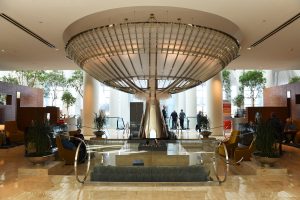
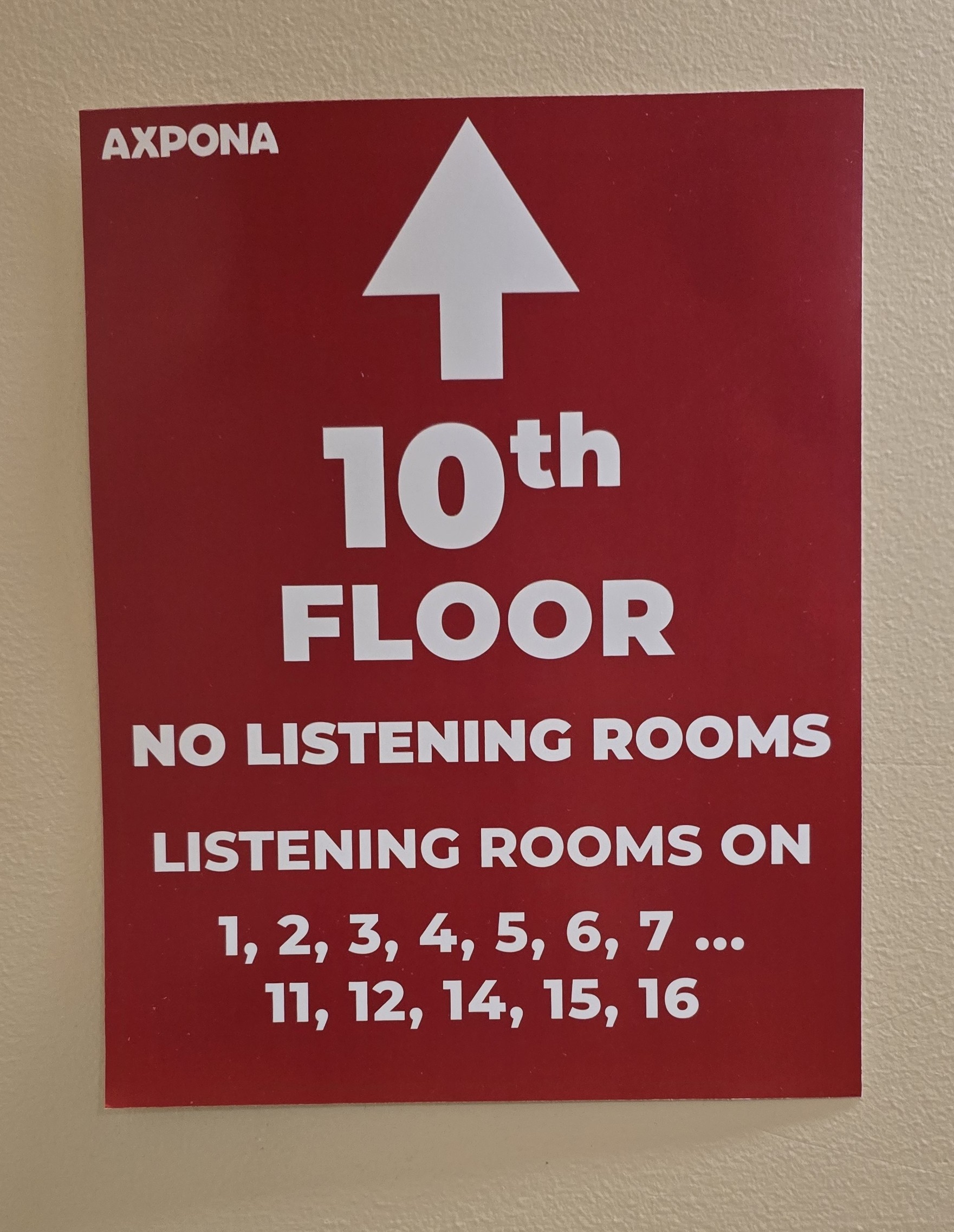
First off, about the show itself. AXPONA is held here in the 'burbs of Chicago, in Schaumburg, Illinois, about 20 miles (and an hour + drive) north-west of downtown. The Renaissance Hotel and Convention Center play host to this not-so-moderate gathering. This show is a bit of a unicorn (in more ways than one, I suppose) in that it doesn't function in the way that most conventions would work. The regular flow of patrons doesn't fit the mold in the same way that a more 'traditional' convention would work, where occupants would rise the morning, head down for breakfast, then head next door to the convention hall before retiring back to their rooms near days end. Here, the 16-story hotel is divided into three floors for guest rooms (floors 8 thru 10), and other floors (1 thru 7, and 8 thru 16) for listening rooms. In addition to the large rooms and expo halls next door at the convention center proper, attendees spend much of the time moving from floor to floor in the hotel building to experience the various gatherings of equipment available. So far so good. But here's the catch: Elevators! Or lack thereof. The hotel building has (only) five guest elevators, which is likely sufficient for 'normal' hotel combination. For our show, the venue has to shut off unfettered elevator access to make the show work. Specifically the call buttons on each floor get disabled so patrons can't call (and thus delay) the elevators for uses other than moving people from the lobby up to the listening floors. So the ideal pattern would be to take an elevator from the lobby to the top floor and then work your way back down to the lobby via the stairways. You can wait in an elevator lobby on any of the upper floors, but you might be there awhile since you can't 'call' the elevators from that location. If you attend, be ready to walk stairs—a lot of them!
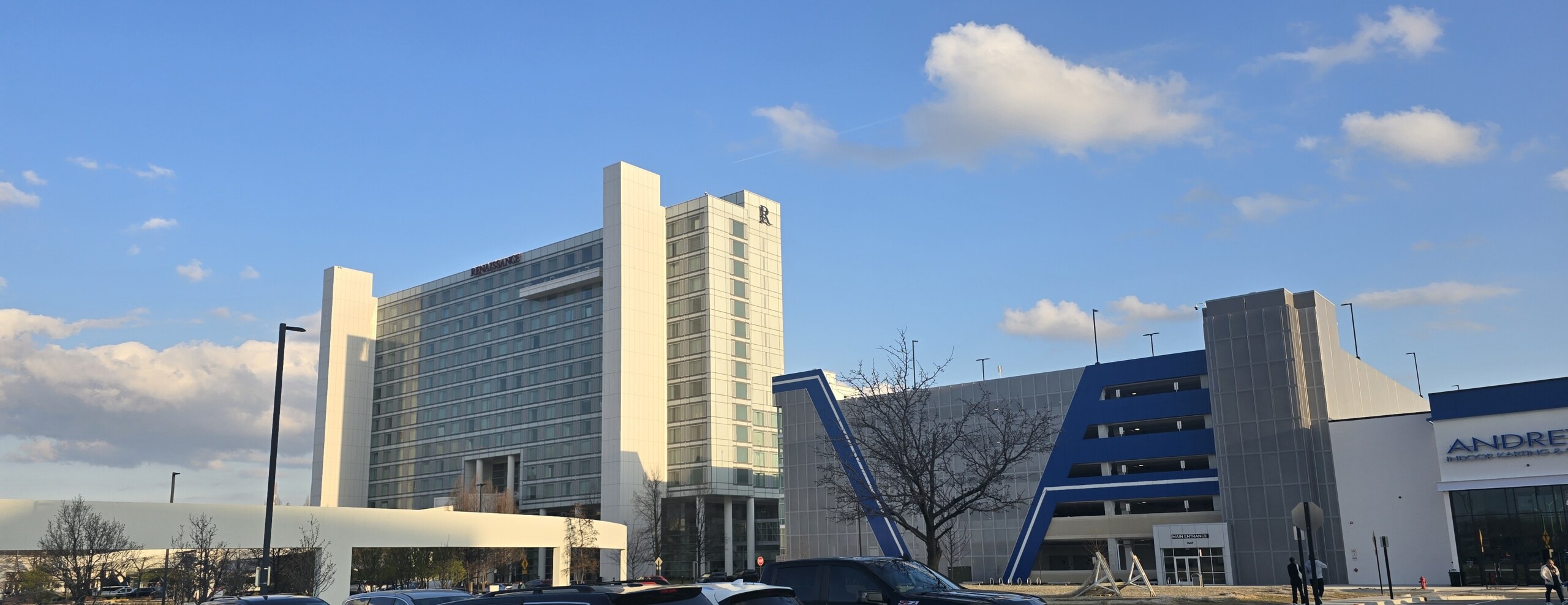
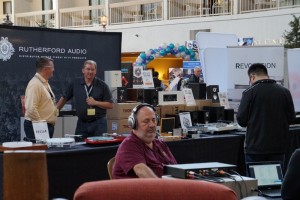
Listening room central. Maybe next year I'll try out the indoor racing cart venue next door.
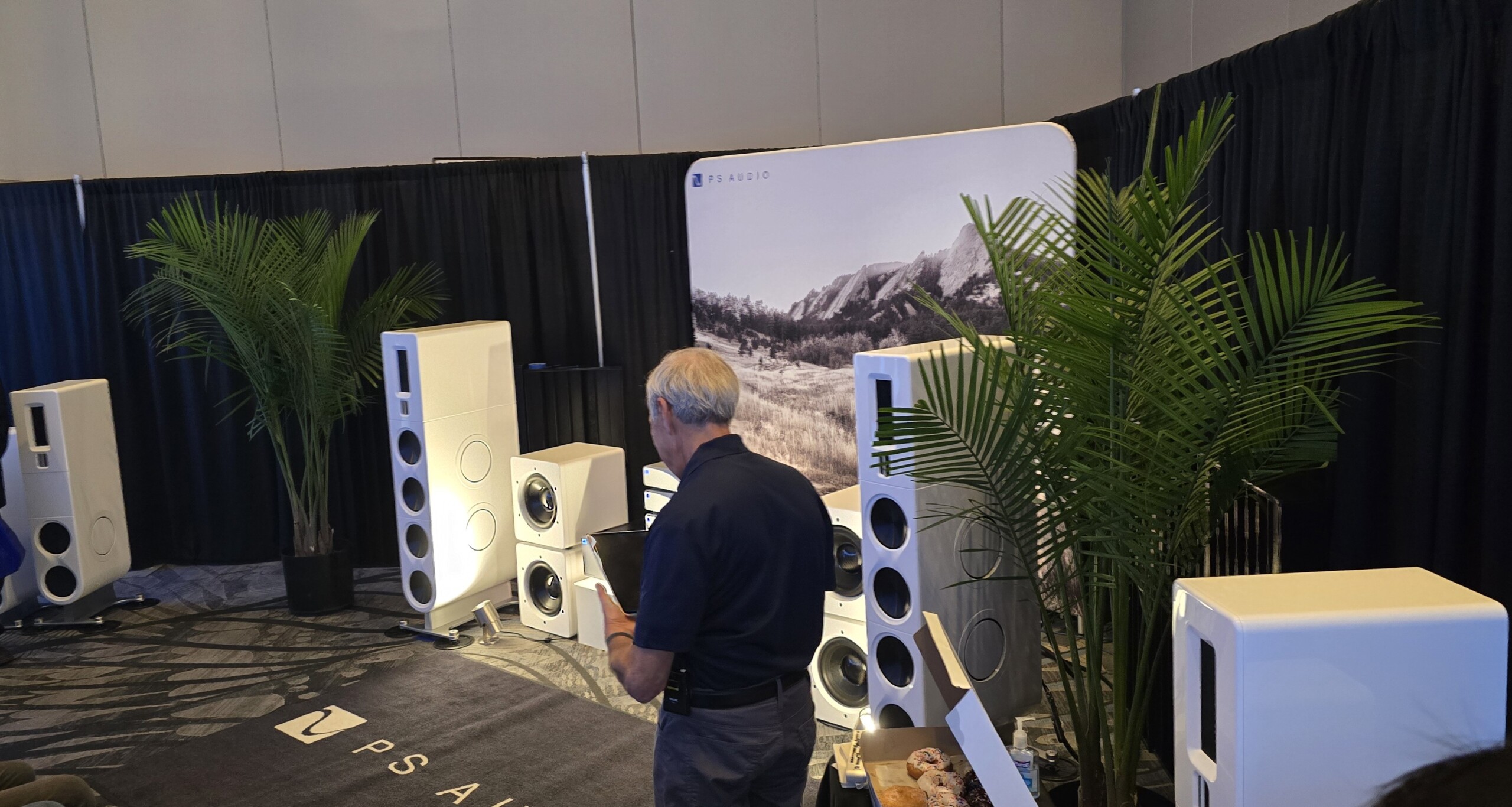
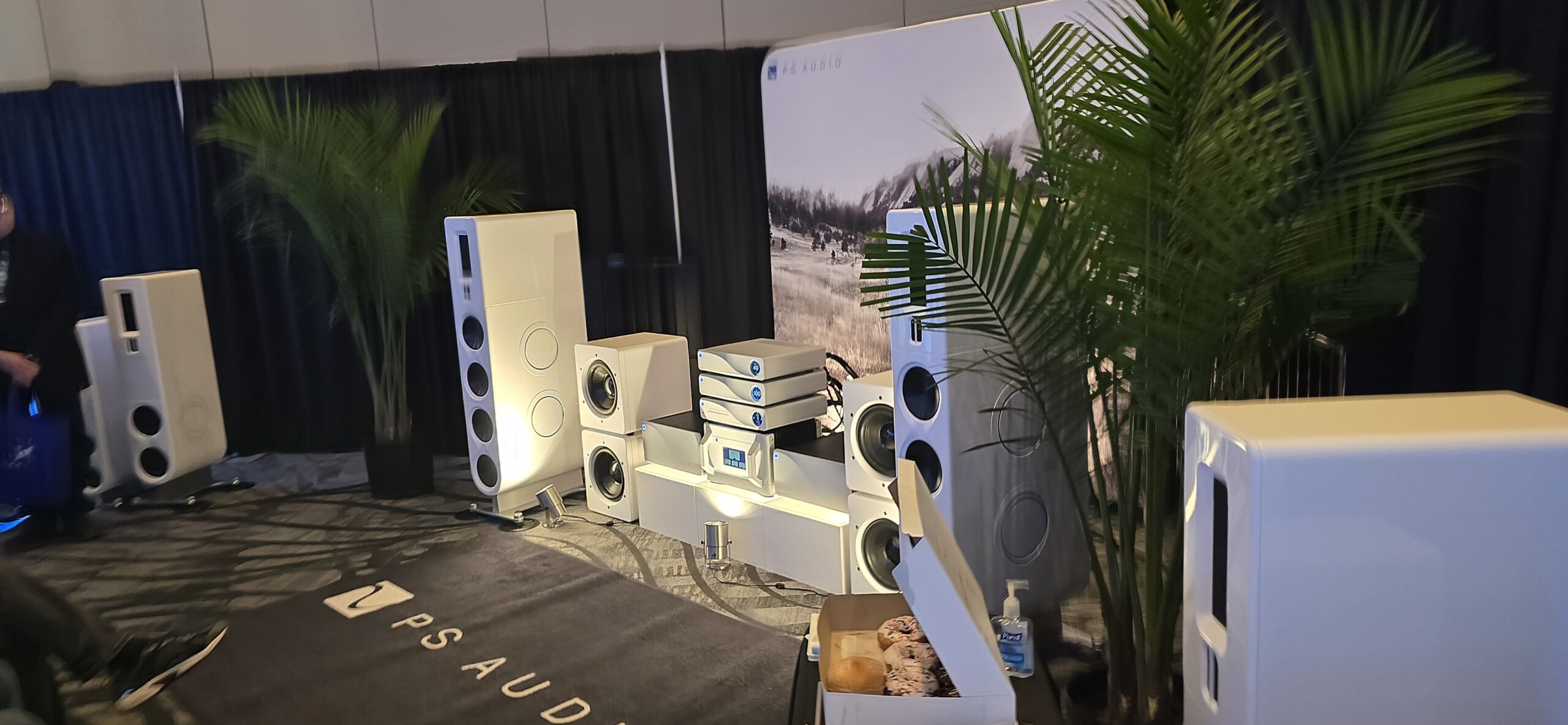
After picking up my convention registration, I headed over to PS Audio's room which was located just behind the registration area. They had a well-defined schedule posted outside showing which products (speakers mainly) they would be demonstrating at different specific times throughout the day. Paul McGowen (PS Audio president) is very well known by many in the industry via his YouTube channel as well as books and countless articles that have been written over the years. As expected, the room was packed. New this year are their new Signature series of components (DAC, Transport, Preamplifier, and Phone Stage/Preamp). PS Audio is one of only a handful of vendors that offers a complete stack of components for the entire listening room. From power regenerators, streamers, DACs, Phono stages, preamps, stereo amps, mono-block amps, and speakers, PS Audio pretty much has it all. www.psaudio.com. (800) PSAUDIO.
Paul McGowen. Perhaps not his best side
Charles Kirmuss from Kirmuss Audio was just inside the main expo center entrance showing his highly regarded KA-RC-1 ultrasonic record cleaning system. This product has won numerous Reader's Choice awards from Positive Feedback from 2021 through 2025. He also does keynote style seminars regarding record pressings, record cleaning, pressing oils, release agents, and the importance of proper frequency cavitation in the record cleaning process. I've seen his presentations at the last two Pacific Audio Fest shows and he's always a delight. Very interesting and fun to talk to. He is introducing a new Compact Cassette Tape Cleaning Machine this year. [email protected]. (303) 263-6353.
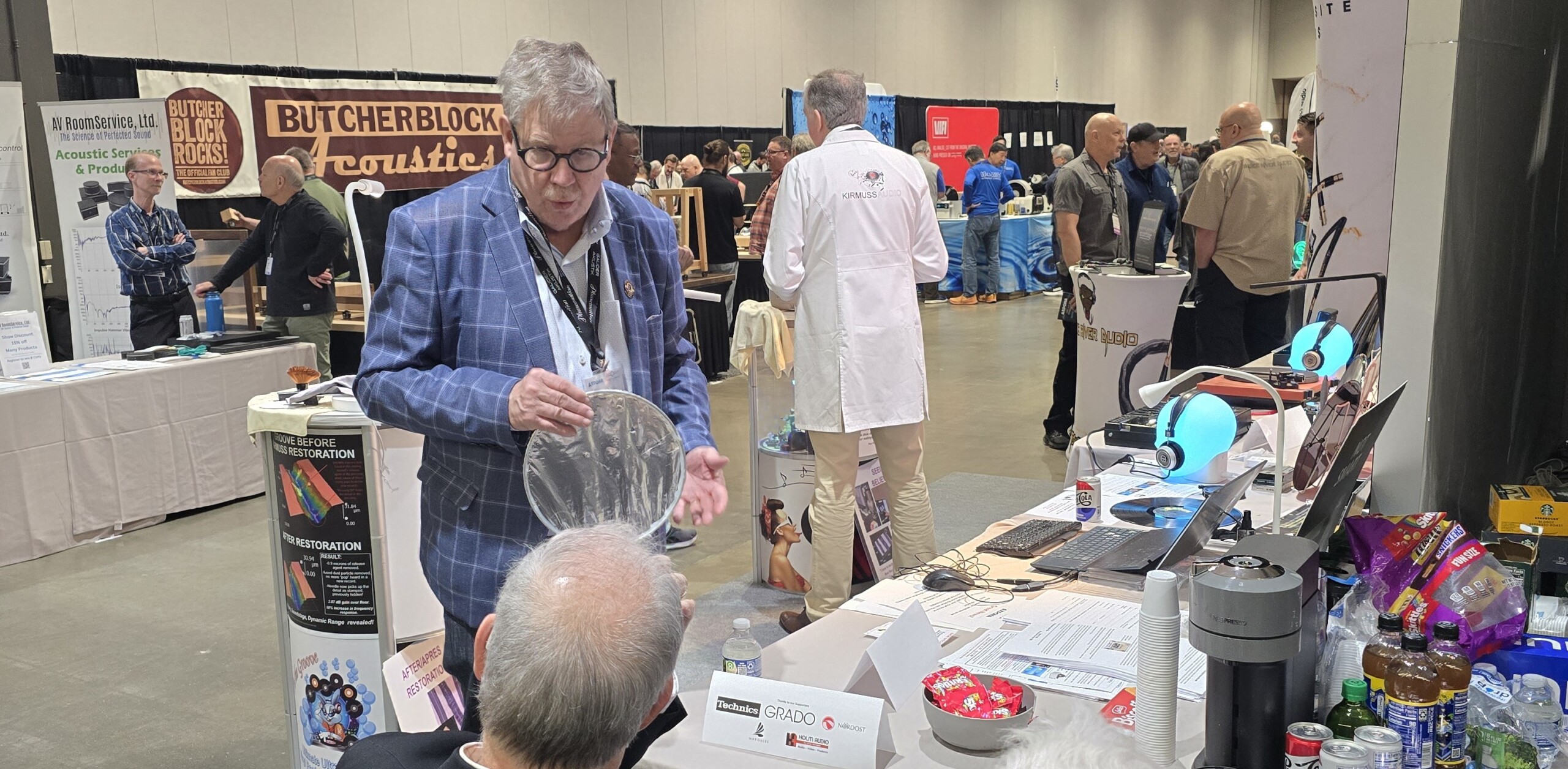
Charles Kirmuss in the snazzy coat
Also in the main expo hall is OnFilter (www.onfilter.com) who offers a wide variety of "CleanSweep" EMI filtering PDU's. The most interesting product of the lineup is their AB2020FG filters for load panels. These are encased filters that can mount adjacent to a typical power-panel (in a home or garage for example) and can be used to filter entire branch circuits directly at the breaker. Interesting story with this provider; they came to the audiophile community rather later in the game. They didn't start out with audio in mind. They designed and provided products for heavy industry, medical, even nuclear power plants. Places that need filtered power using devices that are designed to last for decades. It was much later when someone (or many a someone) reached out to see if this EMI filtering technology could of benefit with high-end audio. Short answer, yes! More info and online demo videos at https://www.onfilter.com/onfilter-videos. Contact Vladimir Draz at [email protected]. (831) 824-4052.
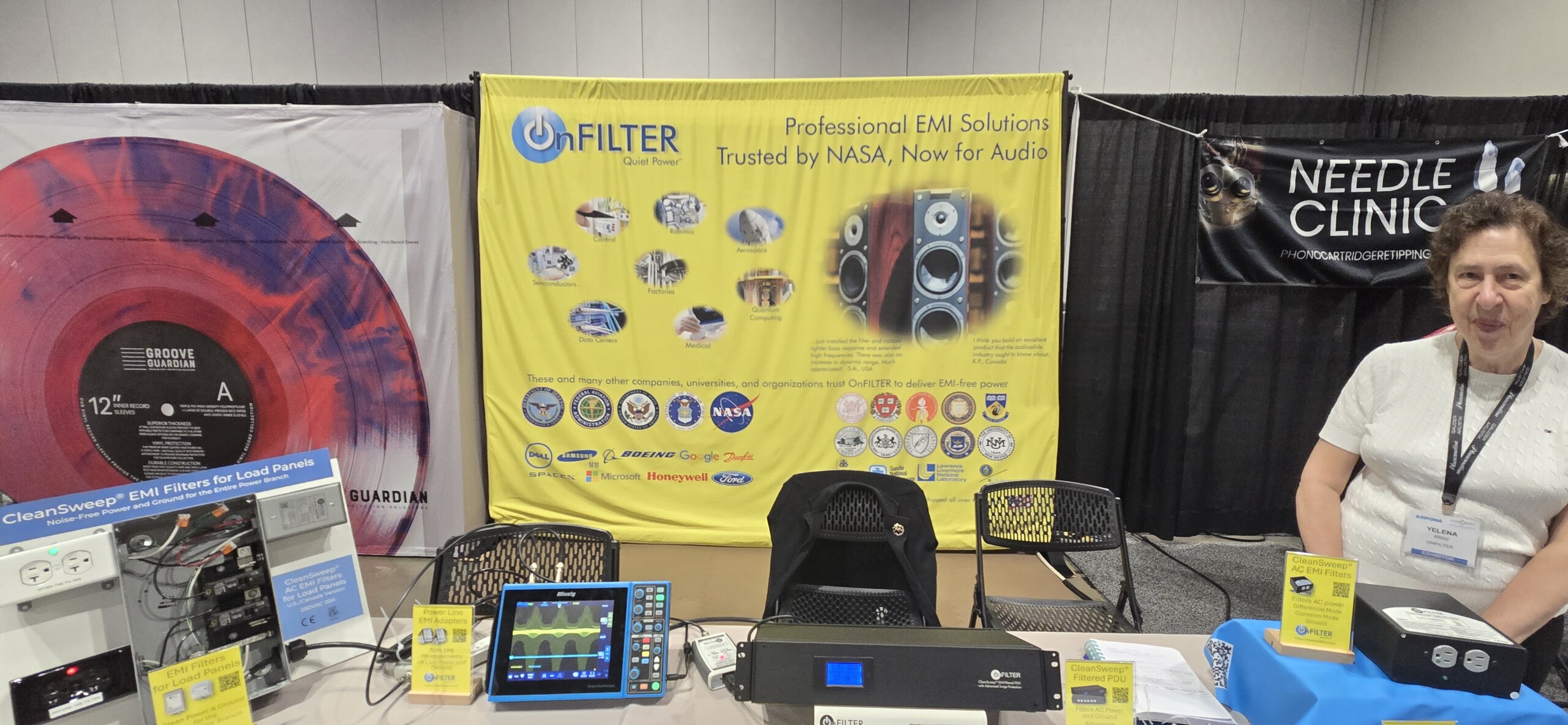
OnFilter booth in the main hall.
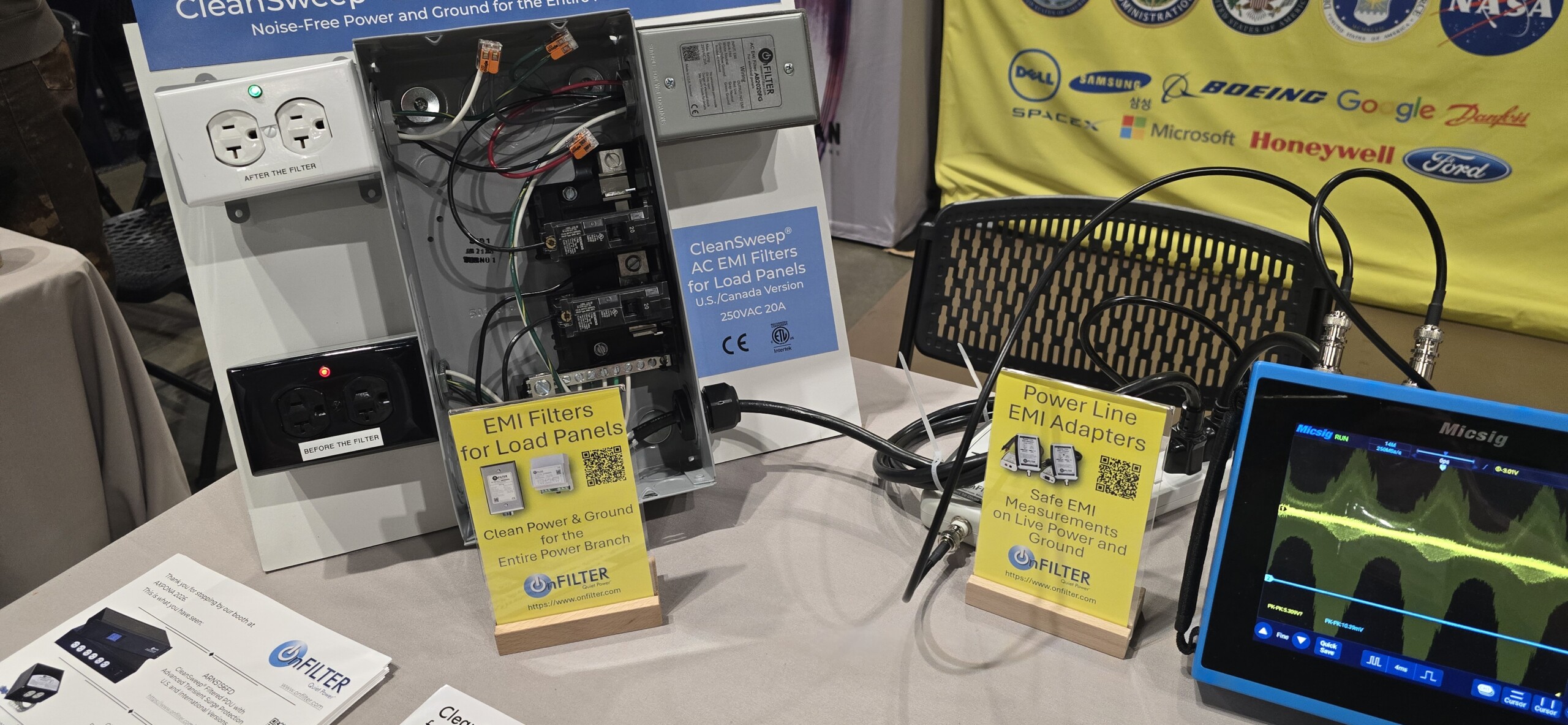
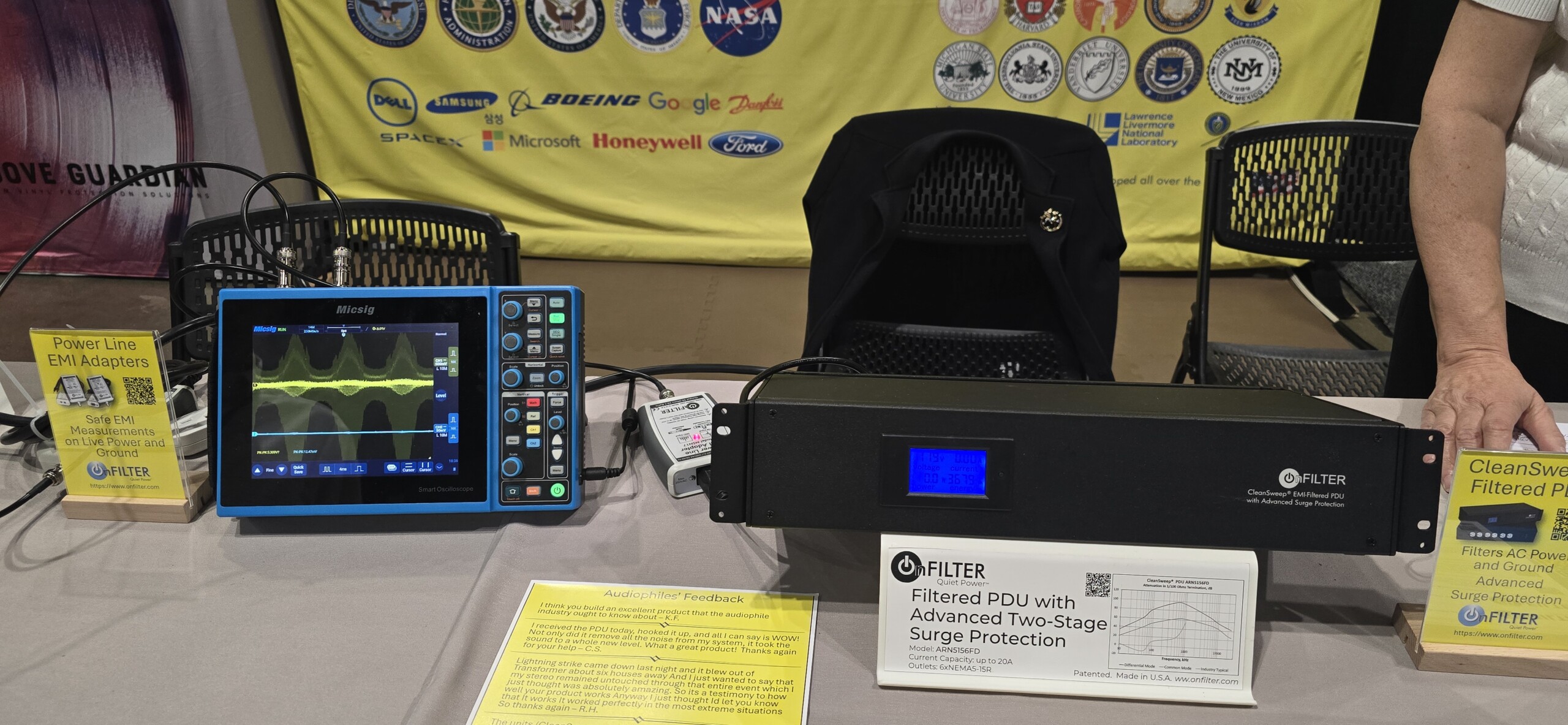
AB2020FG filters for load panels
Audio Group Denmark is here showing their array of products under three of their sub-brands: Aavik streamers, Ansuz power delivery, and Børresen C3 5-driver speakers. I've been a huge fan of the planar tweeter setup that AGD uses throughout their product line. The highlight is their new 102-pound (46kg) Børresen BM3 sub 'array.' It's really more of a cabinet than array. I use the term array because it contains four custom Børresen DCC8 Neo drivers that fire 90-degrees off-axis to the listening position into This is an interesting (and effective) concept. The bass envelops the environment rather than being pointed directly at the listener. Similar in concept to full-range speakers with side-firing subs. But reversed. The drivers fire into a matching set of opposed drivers into a center cavity. Since the drivers are firing towards each other the effect is magnified. Hence you don't need massive drivers to move enough air for the low-end. Thus, driver quality becomes far more important than driver size. The resultant sounds are then presented to the room via the front facing open cavity and also through the open back of the cabinet. There is a clarity in the low end that is simply hard to produce with the traditional massive bass drivers. The smaller drivers in this cabinet can be (and are) far more precise with much less over/undershoot and less driver cone deflection and distortion. The demo was an a/b comparison: Floor standing full-range C3 speakers by themselves, and then again with the new cabinets on. The extra realization in the low-end was captivating. Everyone in the room felt it. Brought us from the audience to the center of the stage. www.audiogroupdenmark.com.
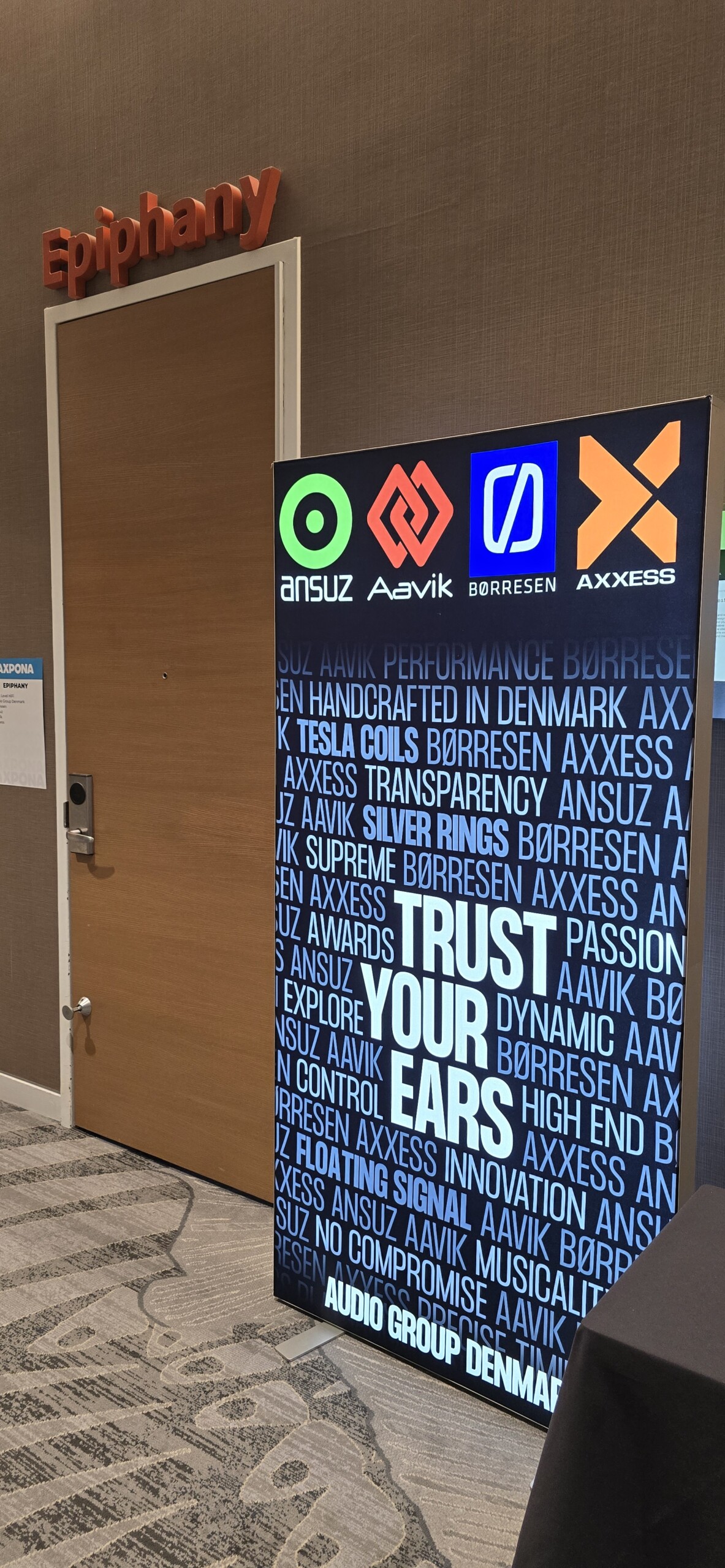
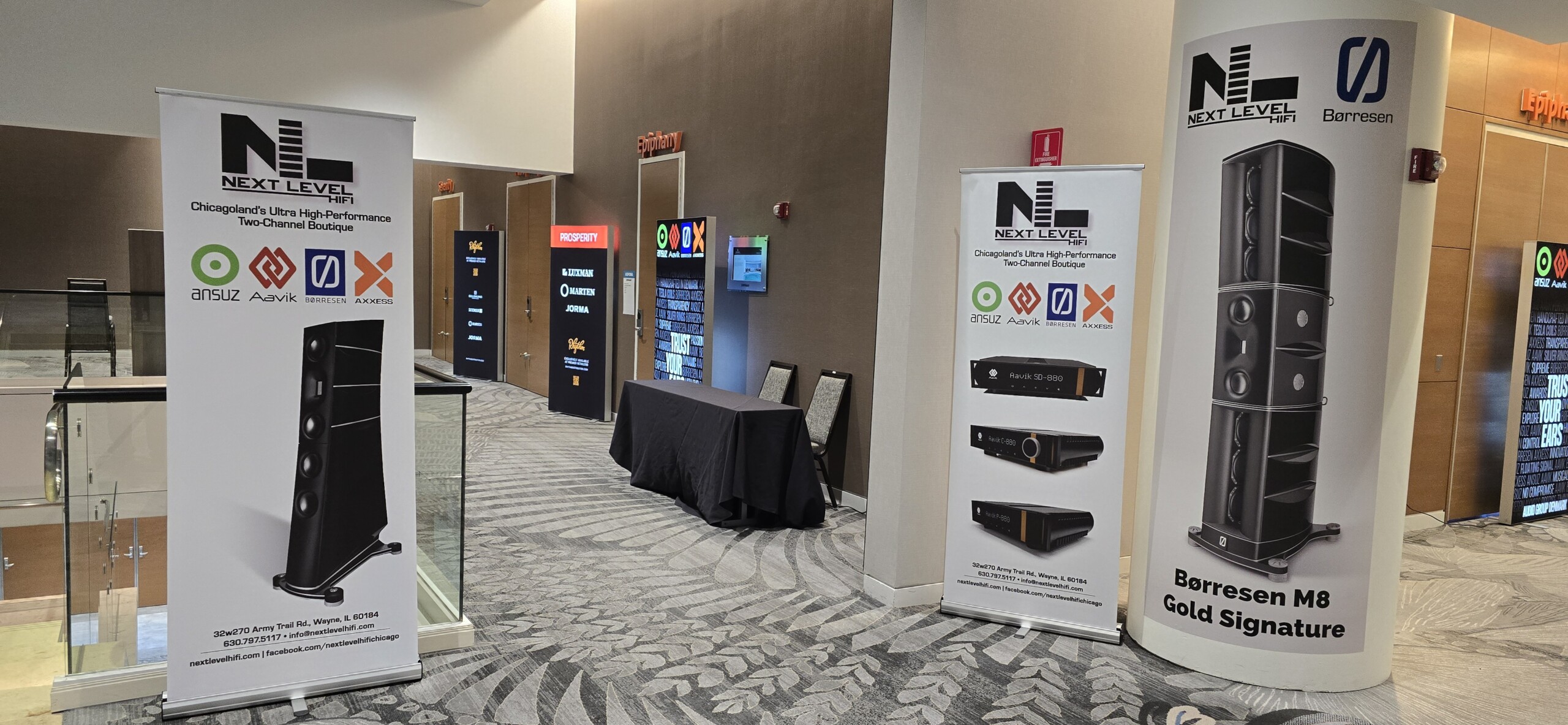
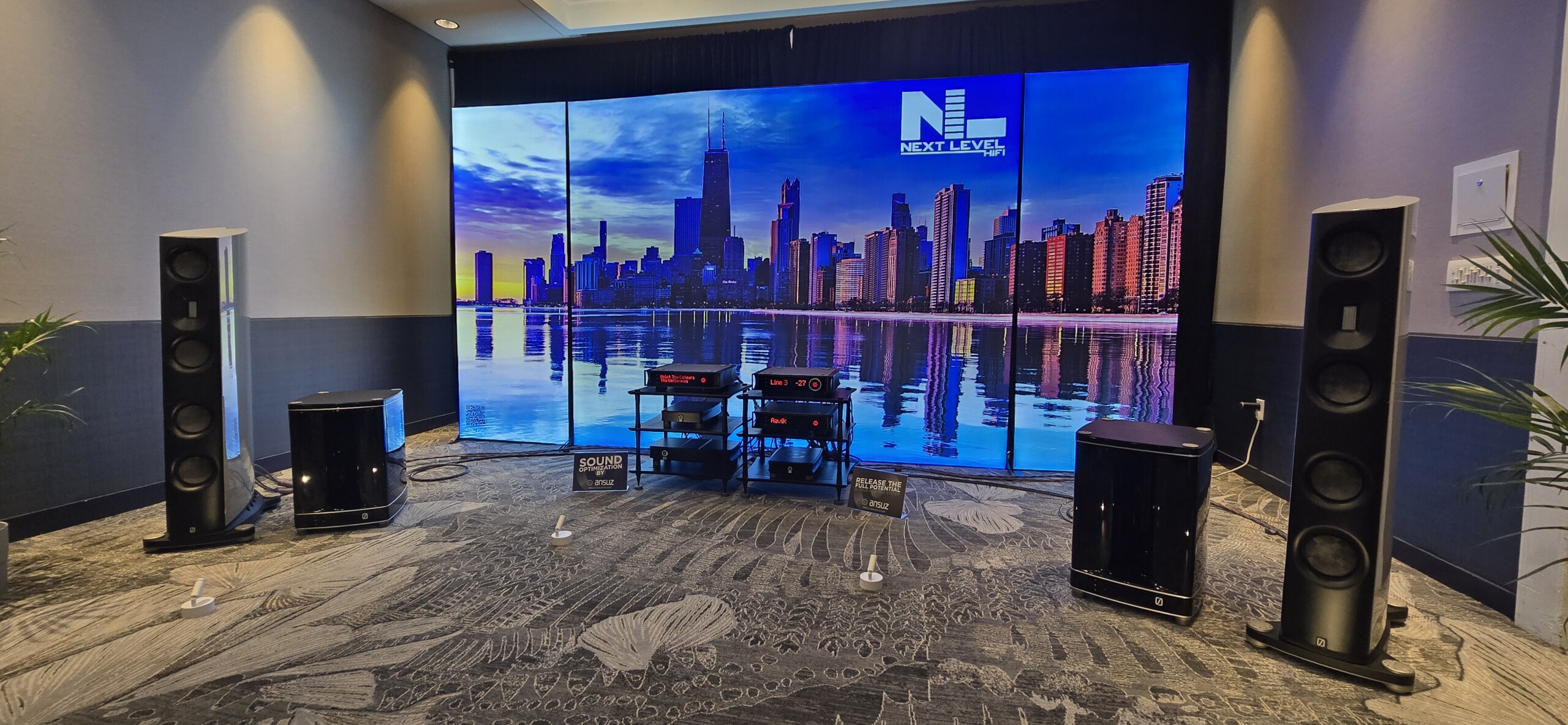
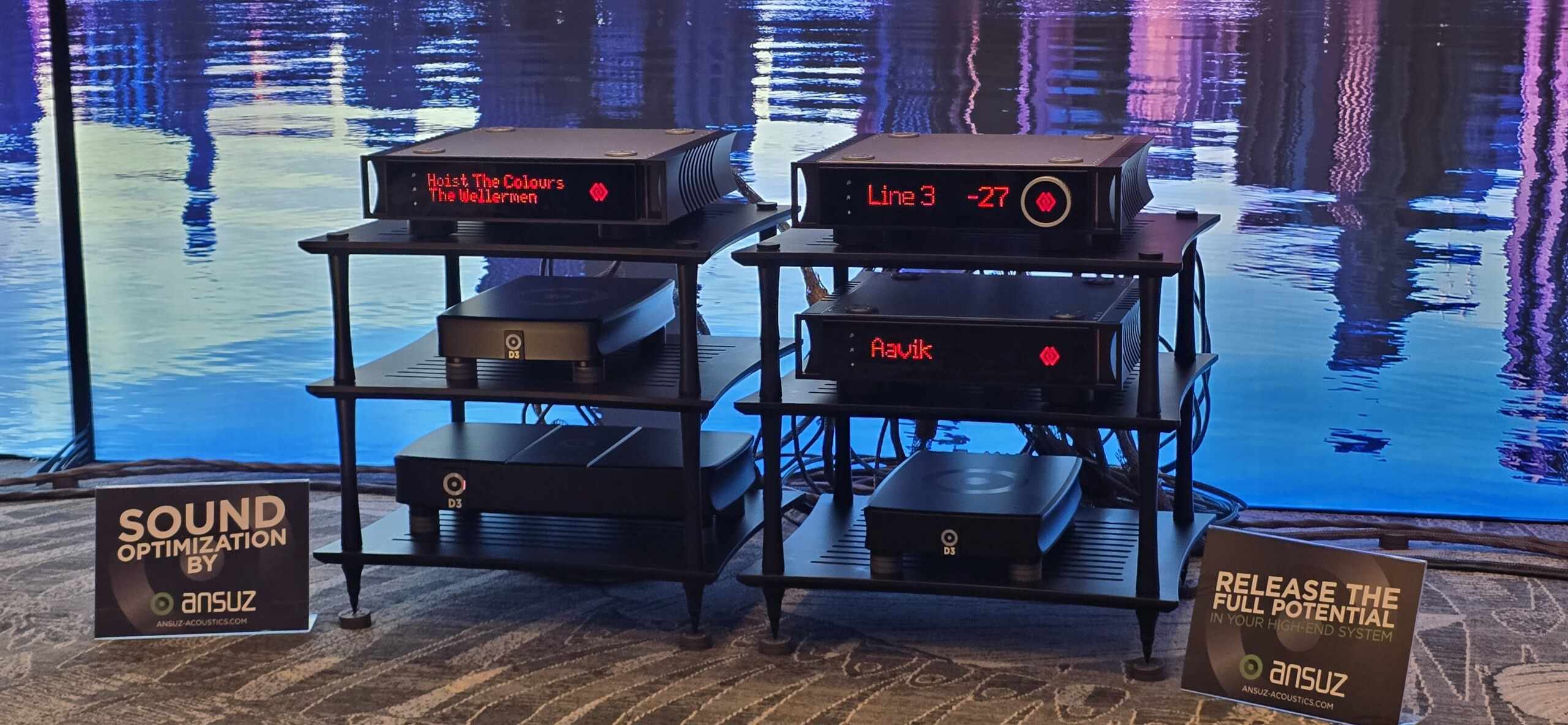
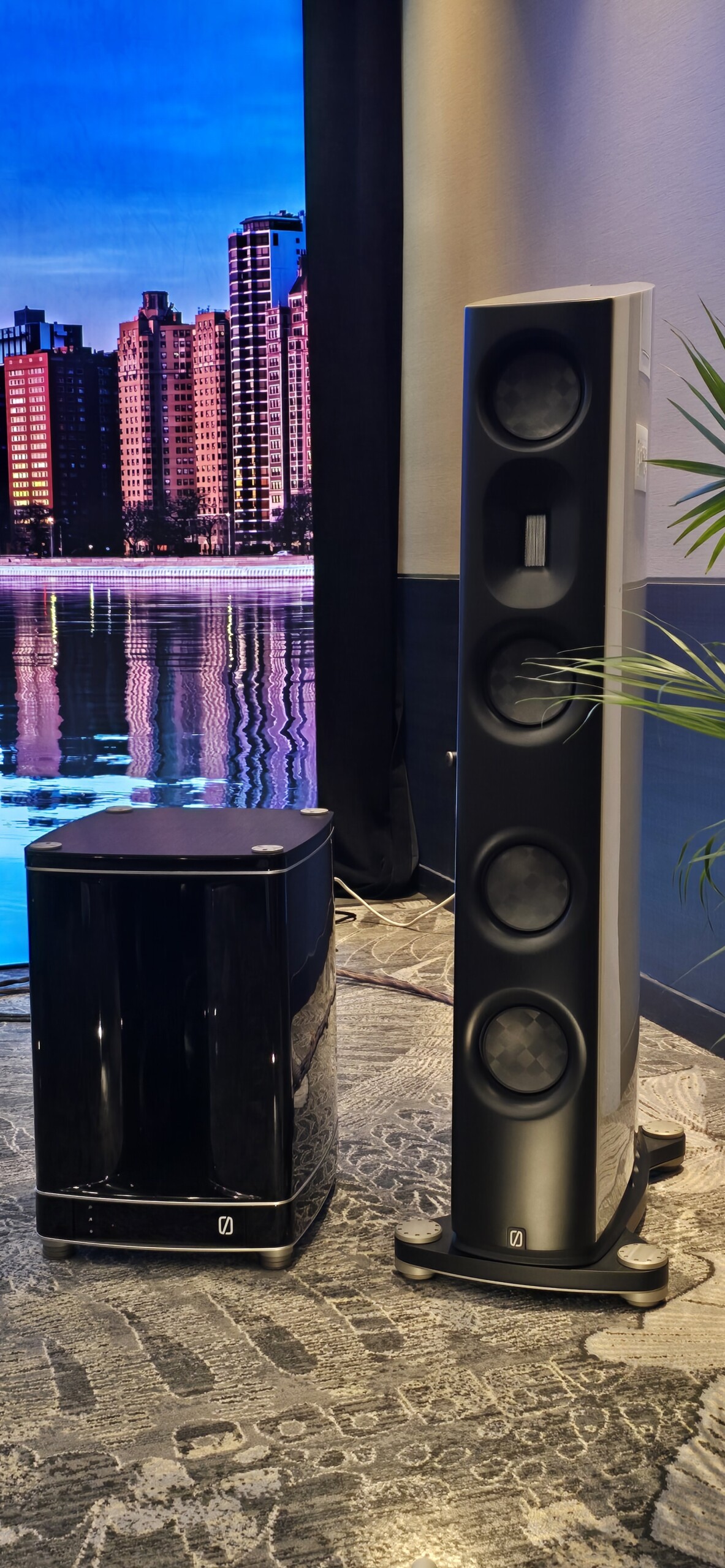
Børresen BM3 and C3
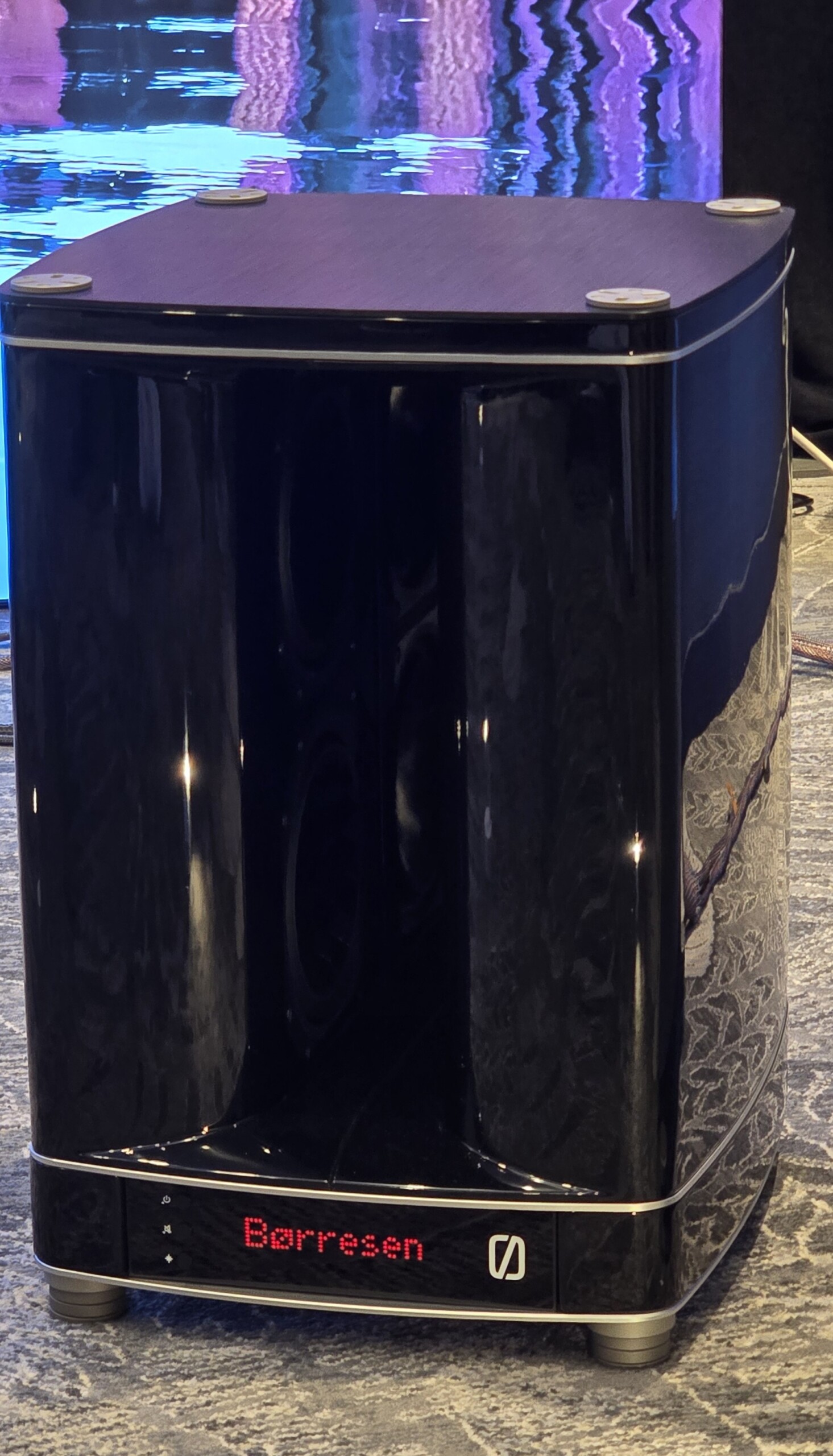
Børresen BM3 (front)
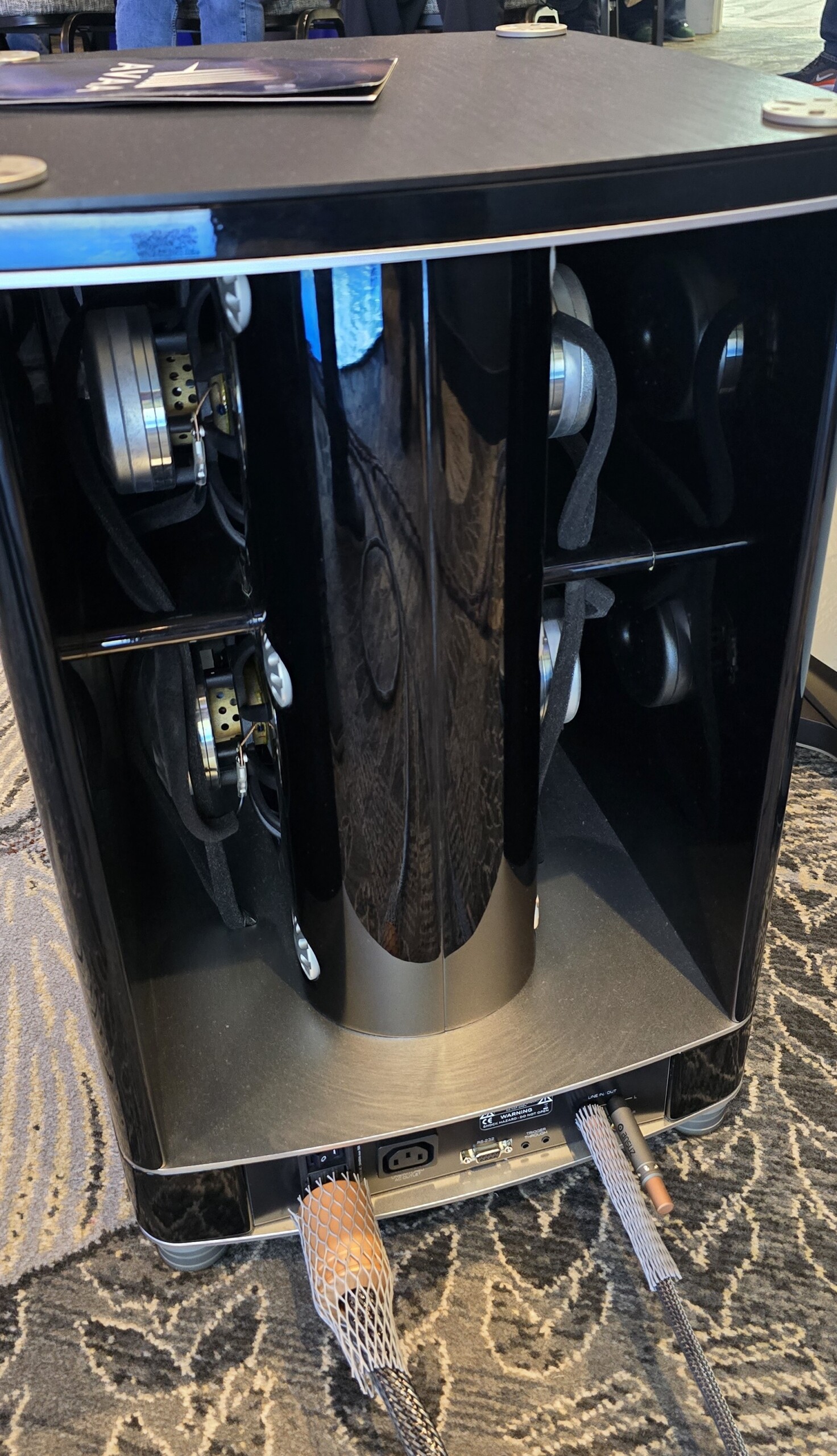
Børresen BM3 (rear)
Qln Loudspeakers was showing off their new "2.5" way Prestige Five floor-standing speakers. The overall tone and presence reminds me of their Signature 2-way stand mounted speakers which I simply adored. The new ones split the mid and bass into separate drivers: 1 custom 184mm Kevlar and a 184mm hard-cone. Similar to other speakers from Qln, the drivers are time-aligned to avoid phase differences as the sounds move from driver to driver. This adds another dimension to the overall sound-stage and gives a supple and sublime three-dimensional sound stage. I'm a big fan of the Qln Signatures, and the new Prestige models take it up a level.
Qln Loudspeakers
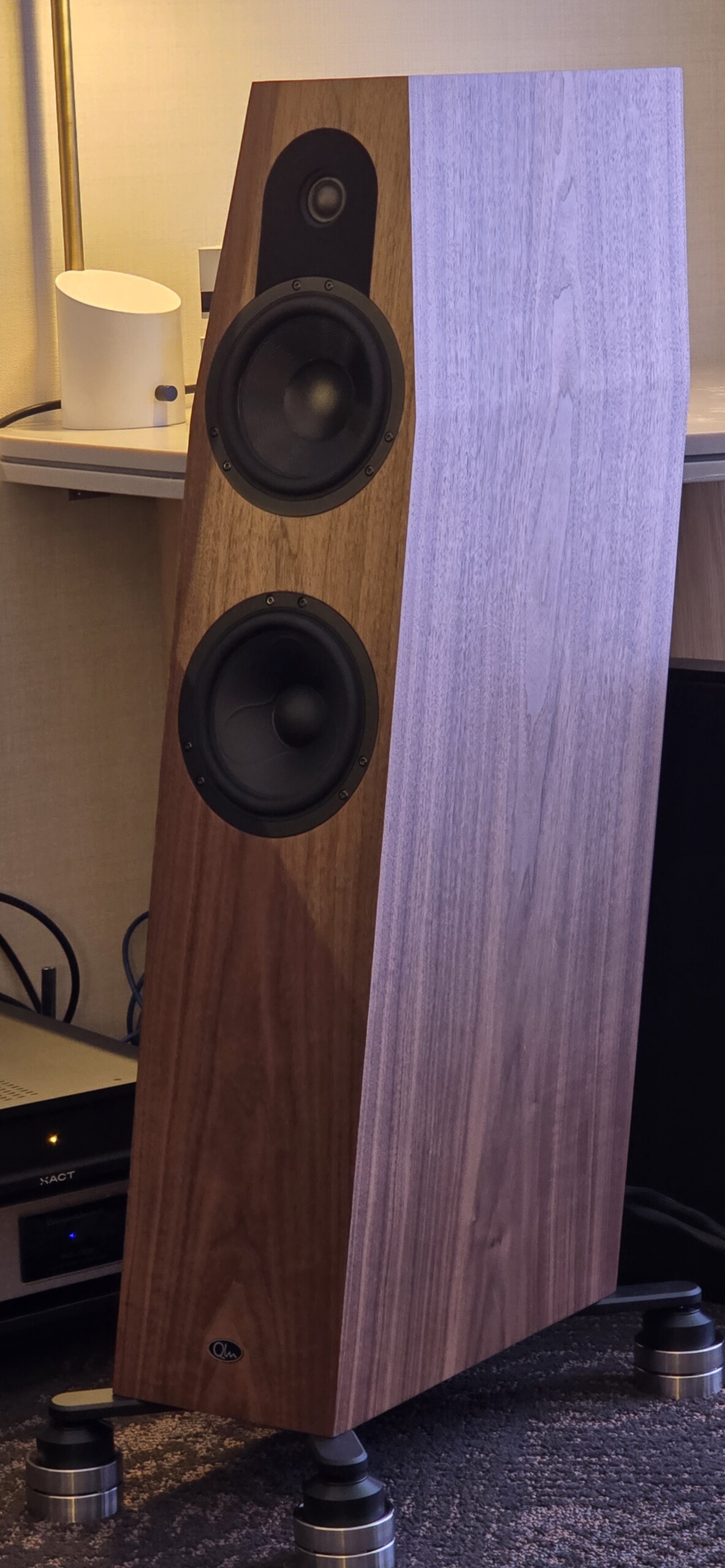
Qln Prestige Five
PSI Audio's listening room featured their AVAA C214 active bass traps. Interesting for sure. Bass traps aren't new. Often tall towers covered with a fabric-like material and placed strategically in the listening space, often in the corners, to absorb low frequencies and prevent build-up. Again, usually in the corners where sounds tend to be most reflected. The active bass traps shown here change this. Think of it as noise-cancelling headphones, but for your room. To use the term cancelling is somewhat misleading as the traps don't cancel anything. Rather they absorb, rather than reflect. Each trap has a microphone and will direct the internal drivers to mimic the low frequencies that are detected at 180-degrees out of phase. What makes active traps so compelling is they can absorb different frequencies at different rates depending on what is being presented in real-time to the microphones in the traps. Passive absorbers won't selectively absorb different sounds at different rates of absorption. The demo given in the listening room was persuasive. There were multiple traps set up in the space and they could be selectively turned on and off from a tablet. This made the comparison instantly recognizable. Obviously tracks were selected to best show off the differences with the traps enabled and disabled. Individual traps were switched on/off, then in groups of two, then all four. Any boominess that persisted with the traps off was instantly removed once the traps were switched on. The effect was more pronounced as more traps were added to the mix. Cool product. I was impressed.
PSI Audio
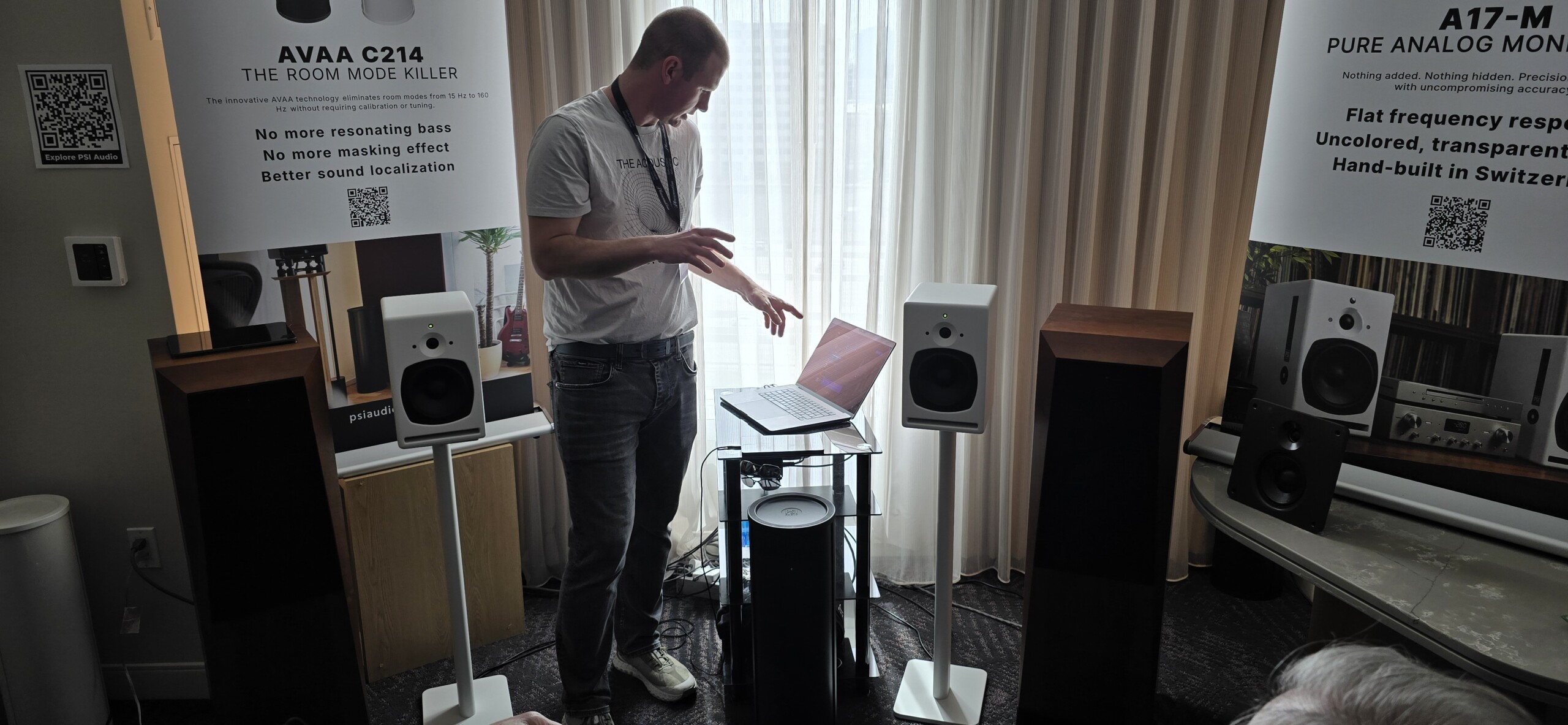
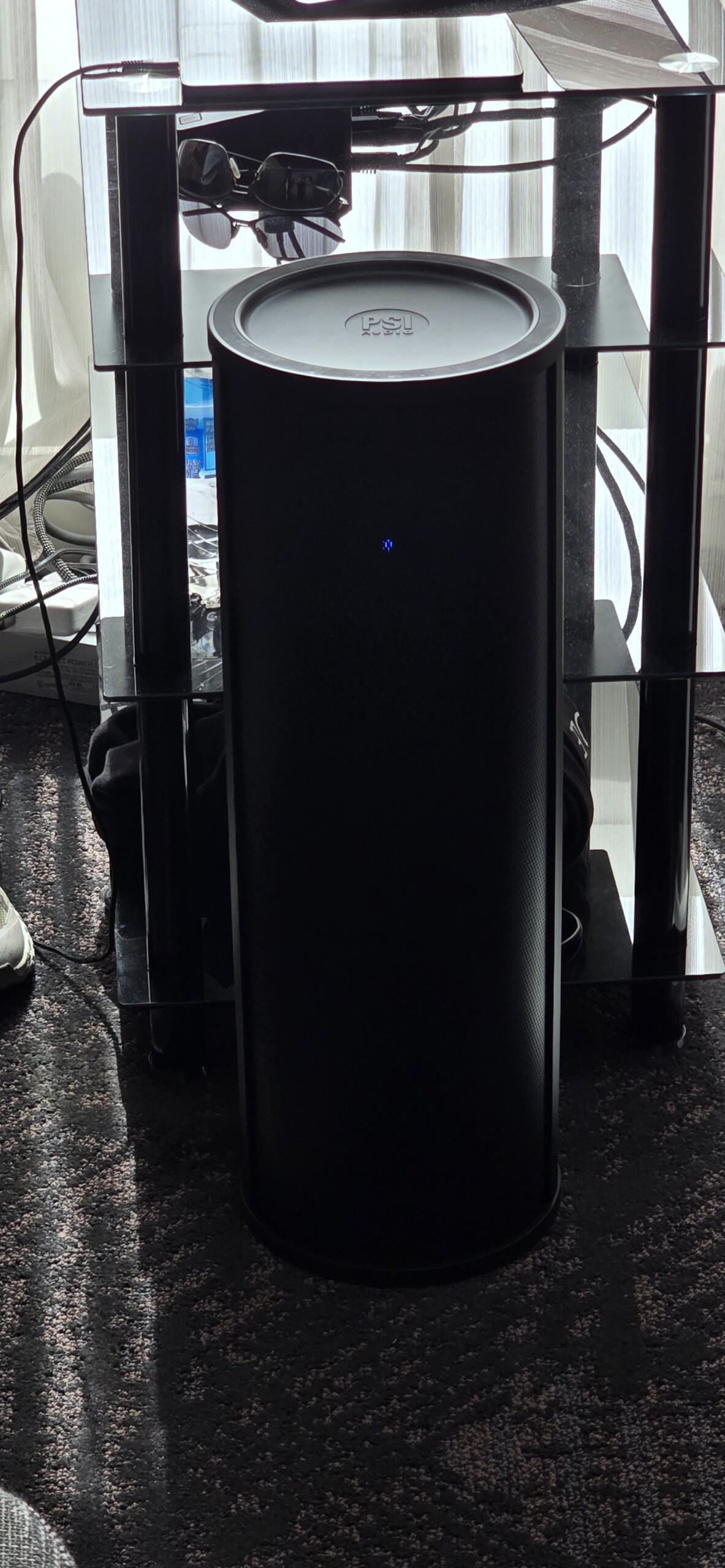
PSI Audio's AVAA C214 Active Bass Trap
I was impressed by this room. This company is worth checking out.
www.psiaudio.swiss. (707)933-7695
ToadHallOnline
There were several record/CD/SACD/etc resellers in the main exhibit hall. Lots of great stuff to look through and spend money on. As far as I could tell, there was only one independent album reseller present. Toad Hall from Rockford, Illinois had a worthwhile collection for sale. And also, according to them, several creates of hard-to-find items that can only be obtained by independent retailers and not to the larger chain outlets. Indeed, they had a section of these items in separate crates and to their credit these were items I hadn't seen before and didn't know existed. Their collection of pre-owned records was also of good size. In particular, they had just over 100 less-common classical SACD's for sale. I bought the whole lot. Getting them home was the hard part. Had to put everything I brought into my carry-on and filled the checked bag with SACD's. Check'em out. ToadHallOnline.com. (815) 226-1259
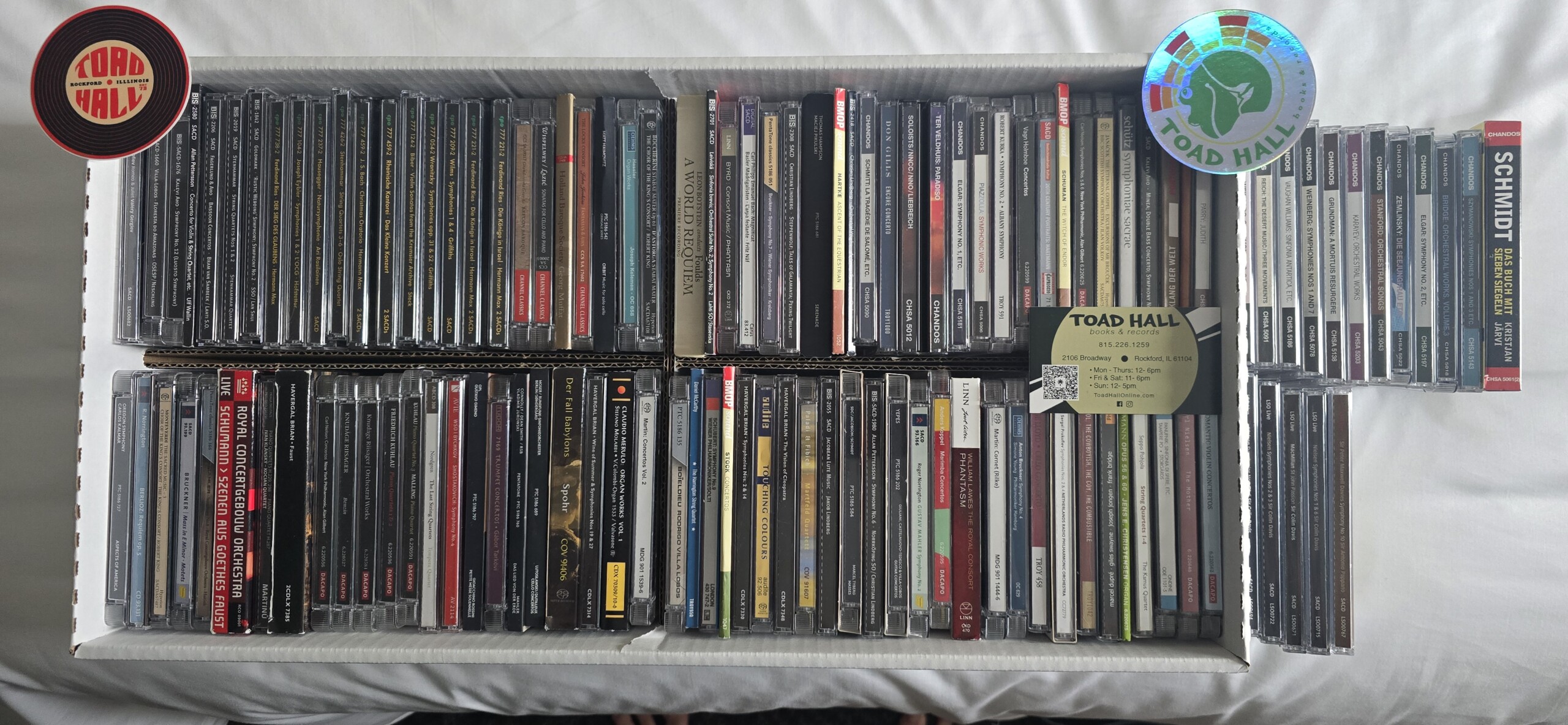
I bought a few albums on SACD!
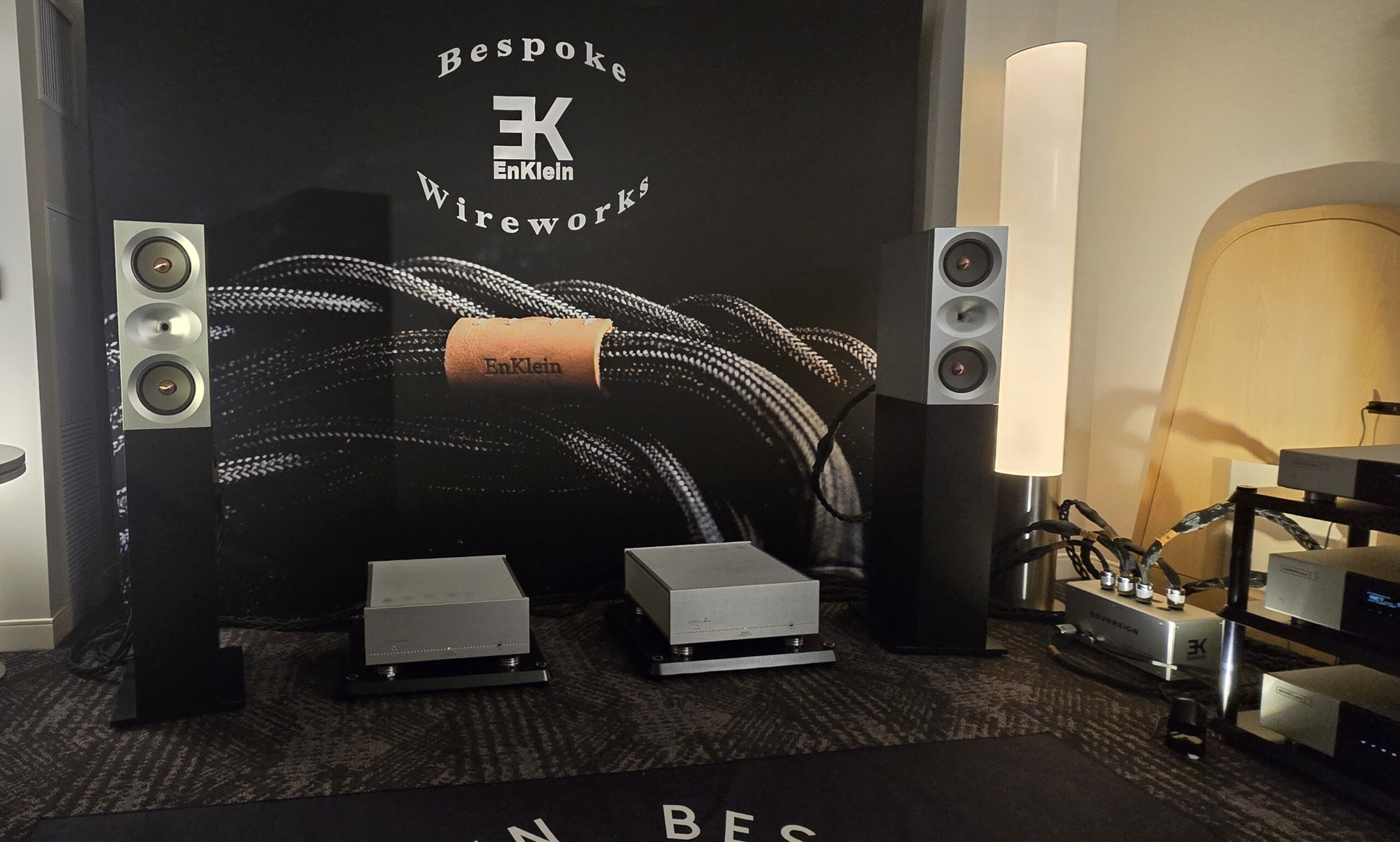
Bespoke Wireworks
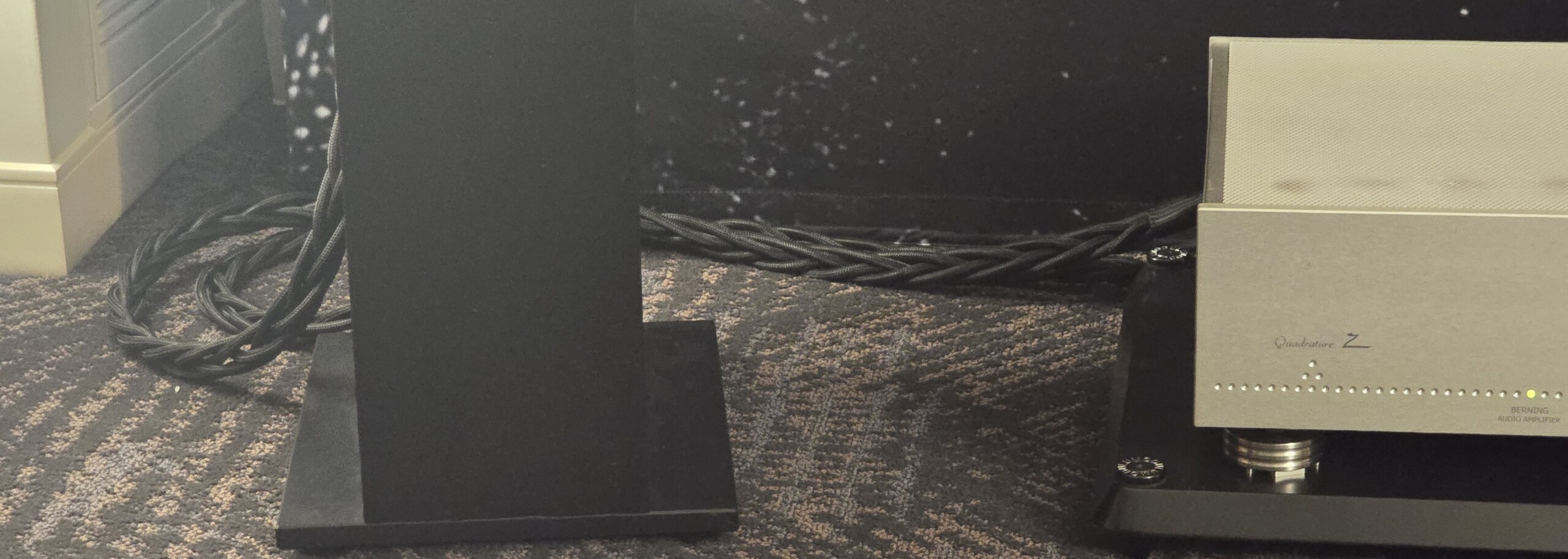
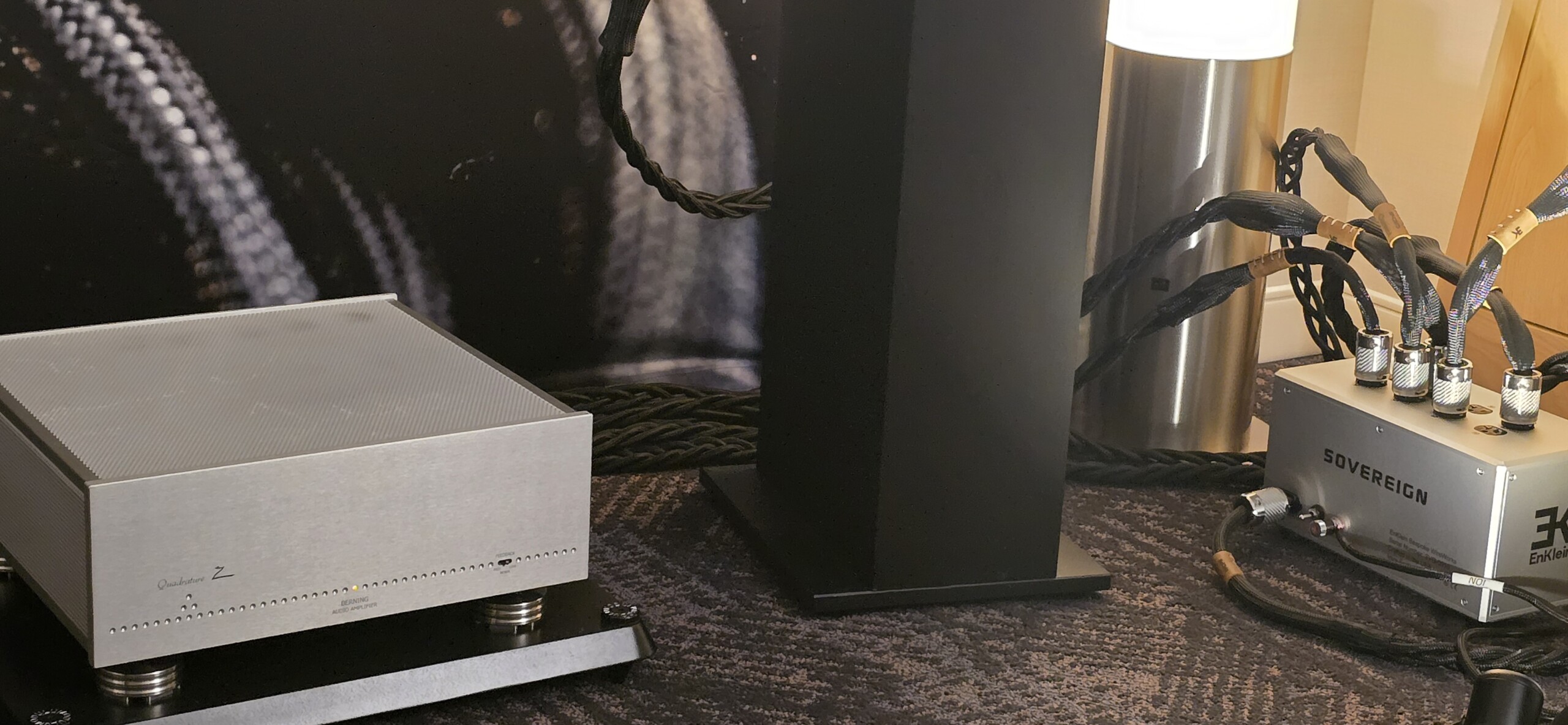
EnKlein Bespoke Wireworks' listening room was decked out with their braided silver conductor cabling. This is perhaps the ultimate in high-end cables. Fully braided and using conductors that are 99.9% silver. These braided cables use so much silver in fact that according to EnKlein if you were to unbraid, unspool, and stretch out the silver from a single cable, you would be left with a silver strand over a mile long! Copper strands are added for strength, but not conductivity. The price on these cables fluctuates constantly due to silver pricing and availability. The price sheet for the show was a QR code. A printed price sheet would likely be out of date before the end of the show! The day I was there, the price for their Master Edition 2.5 meter speaker cable was $50,000. The 1.5 meter cable priced in at $35,000.
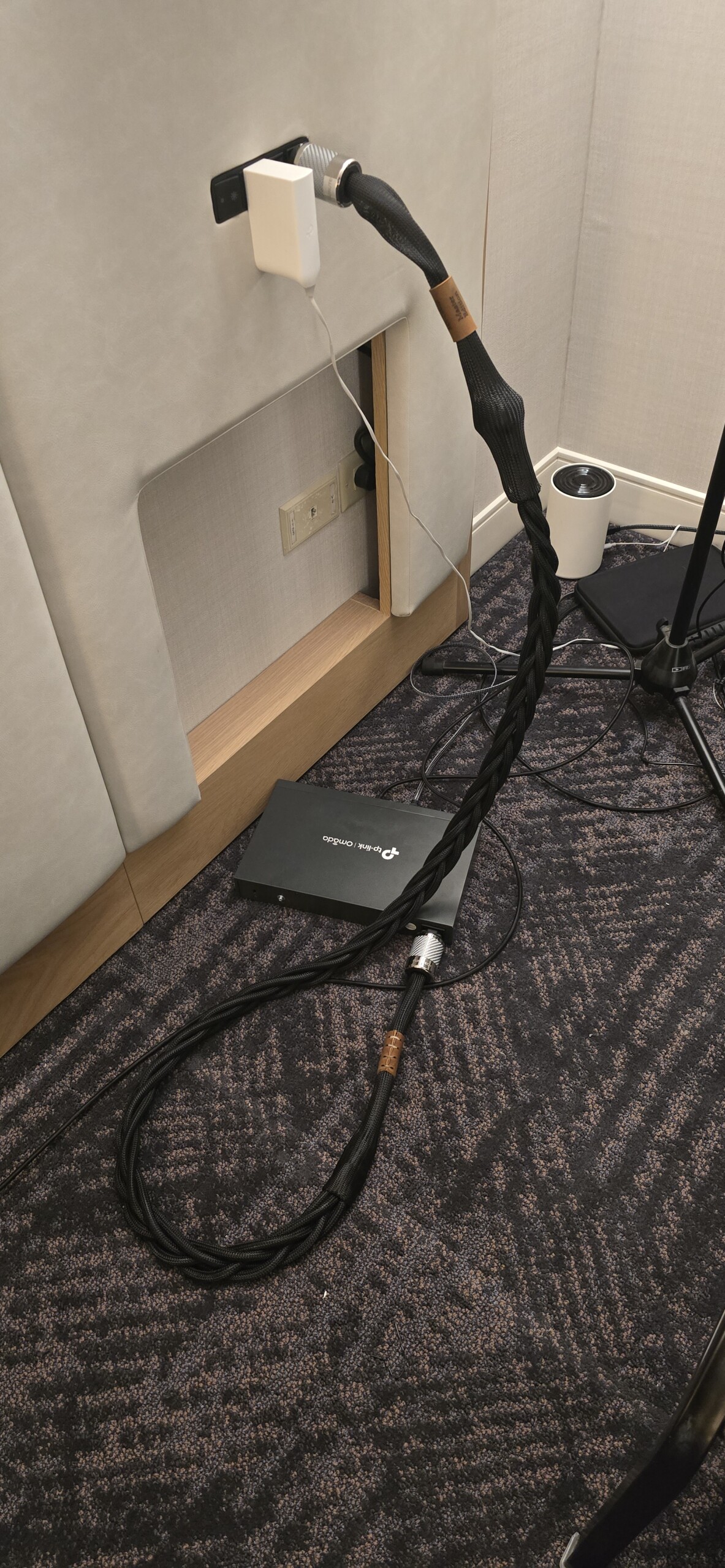
EnKlein power cable
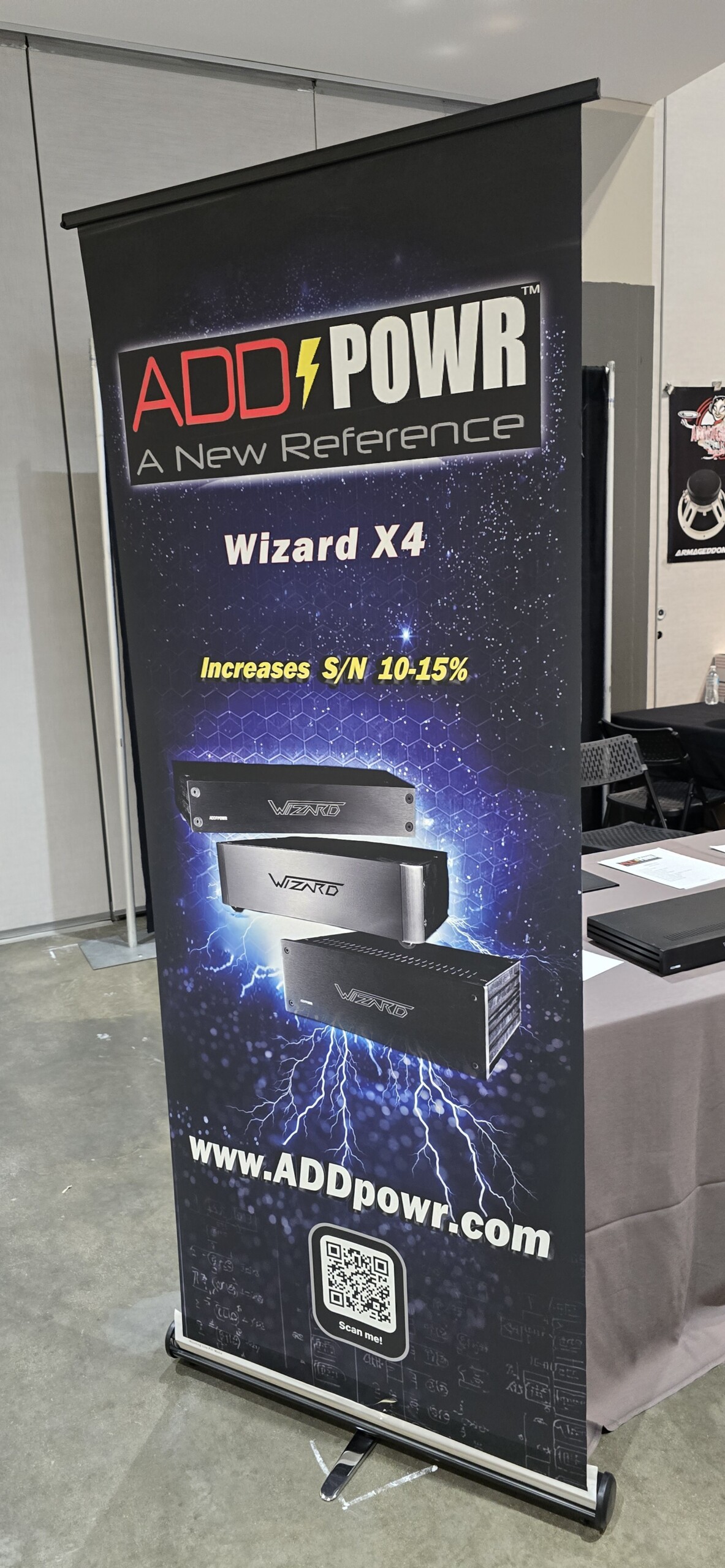
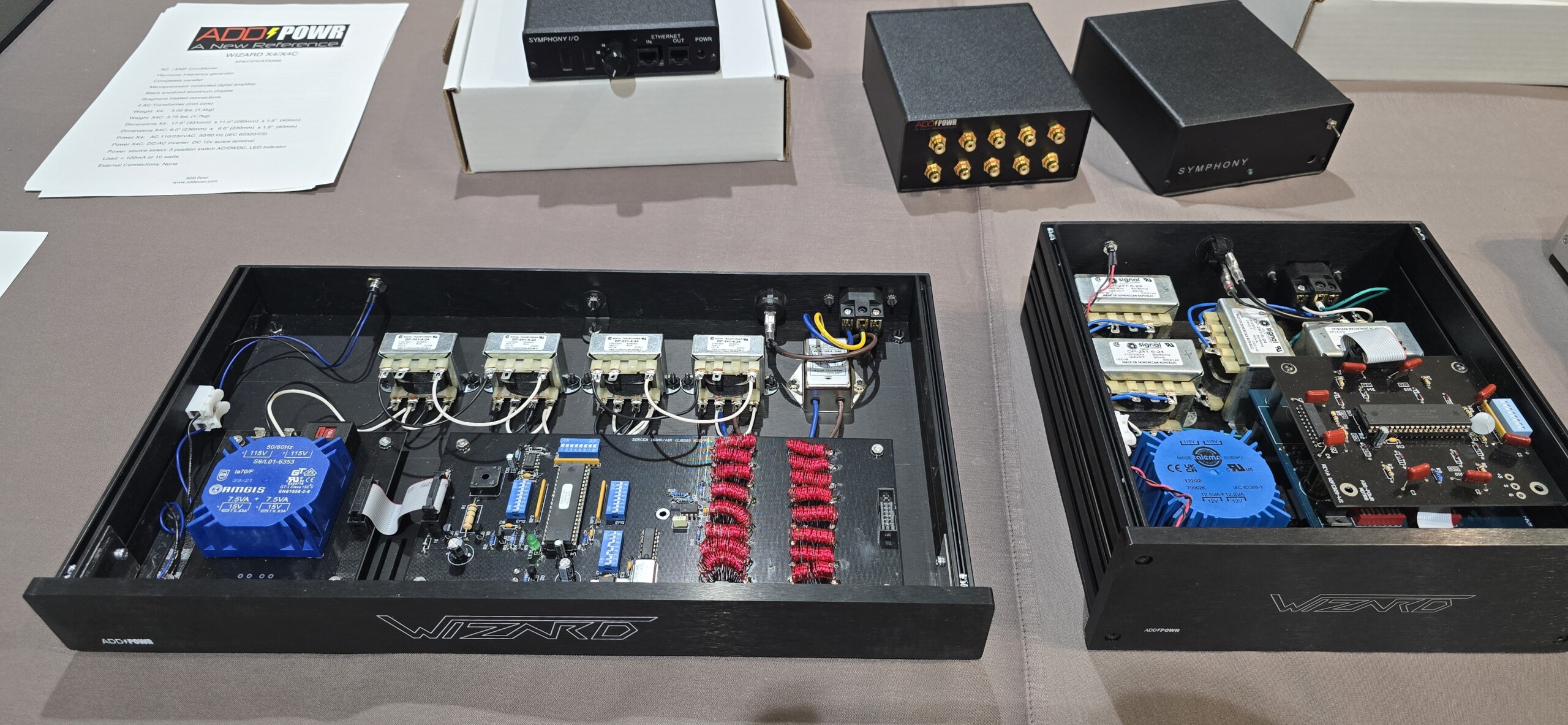
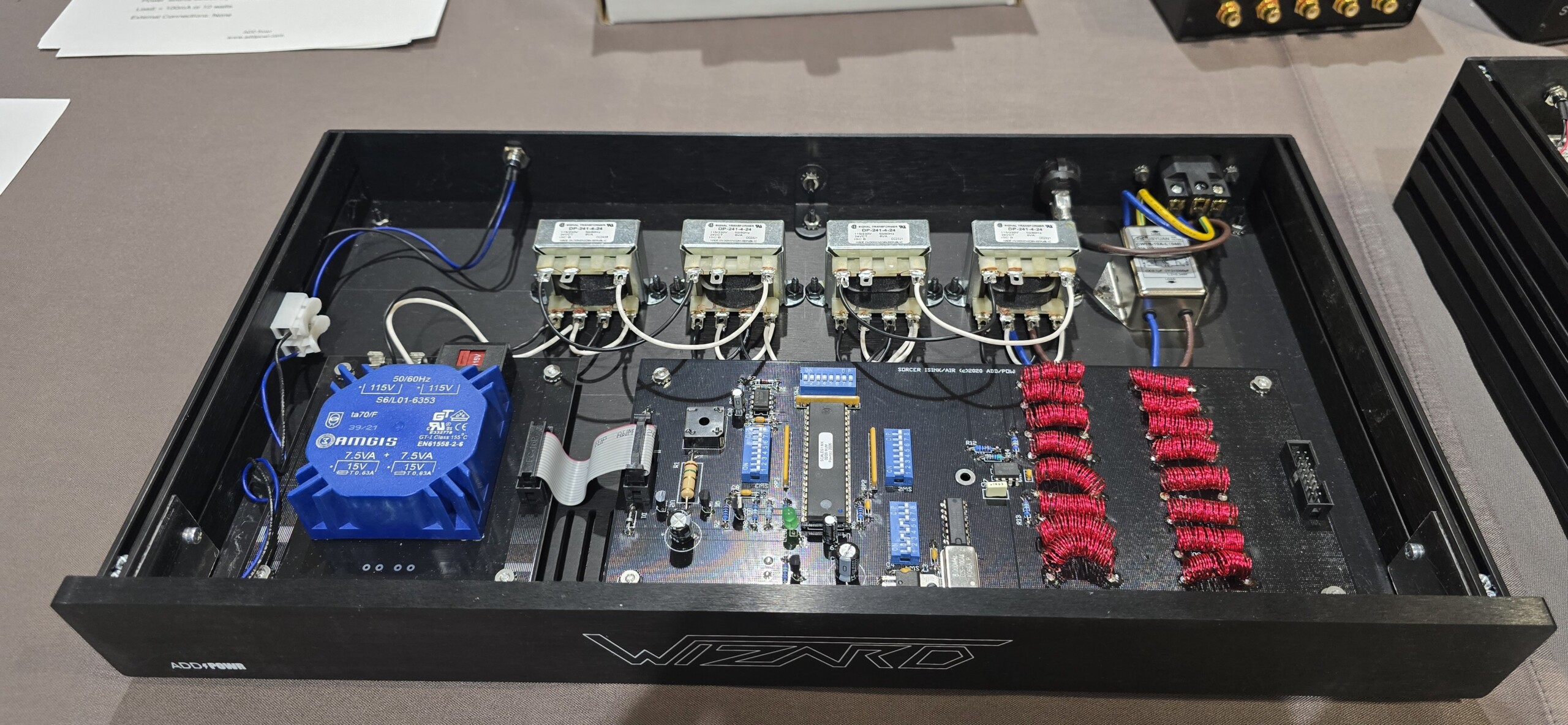
ADDPowr
Bill Steirhaut's ADDPowr brought some interesting and thought provoking products to the show. Their devices, for both home and auto are designed to add as much as 0.5dB to 1.0dB of electrical and acoustic presence to an existing system by creating an "Algorithm Digital Defined Power" field to any nearby equipment when active. For the home system, it's a rack-mountable chassis that creates a low (10Hz) frequency square-wave signal that is designed to interact with existing signals in the environment. The system for autos works the same way, but can be powered with either AC or 12V CD current. In both cases, energy is added to electrical system and signaling. Called the "Wizard" product line, it doesn't directly connect to nearby gear. It is a powered device that consists of a series of step-up and step-down transformers that feeds a rectifier, which in turn feeds a custom tuned antennae array. If I can get a demo unit, I'd look forward to reviewing the product and technology. Like I mentioned, interesting and thought provoking.
www.add-powr.com. (310) 954-4837
GTT Audio had one of the larger listening suites on the 16th floor, bringing with them the new Vivid Audio G1 Spirit Cu loudspeakers. The 'Cu' is a new version of the Giya that adds copper caps to the magnet motors of both the mid-bass and mid-range drivers. The original G2's were wonderful in the own right. The new Cu series raises the sonic environment further. In addition, the Master Fidelity NADAC D (DAC) and external C (Clock) units part of their setups. The NADAC is becoming more and more well known as a best-of-breed flagship, having won many awards in it's short history (Stereo Sound Grand Prix, Partime Audiophile Audio Product of the Year, Stereo Times Most Wanted Component, and Audio Art Best of the Year to name a few). It's the DAC/Clock combo that others exhibitors use when they want to show their own gear in the best way possible. The newest offering from GTT is the DeJitterIT NUC-X endpoint streamer.
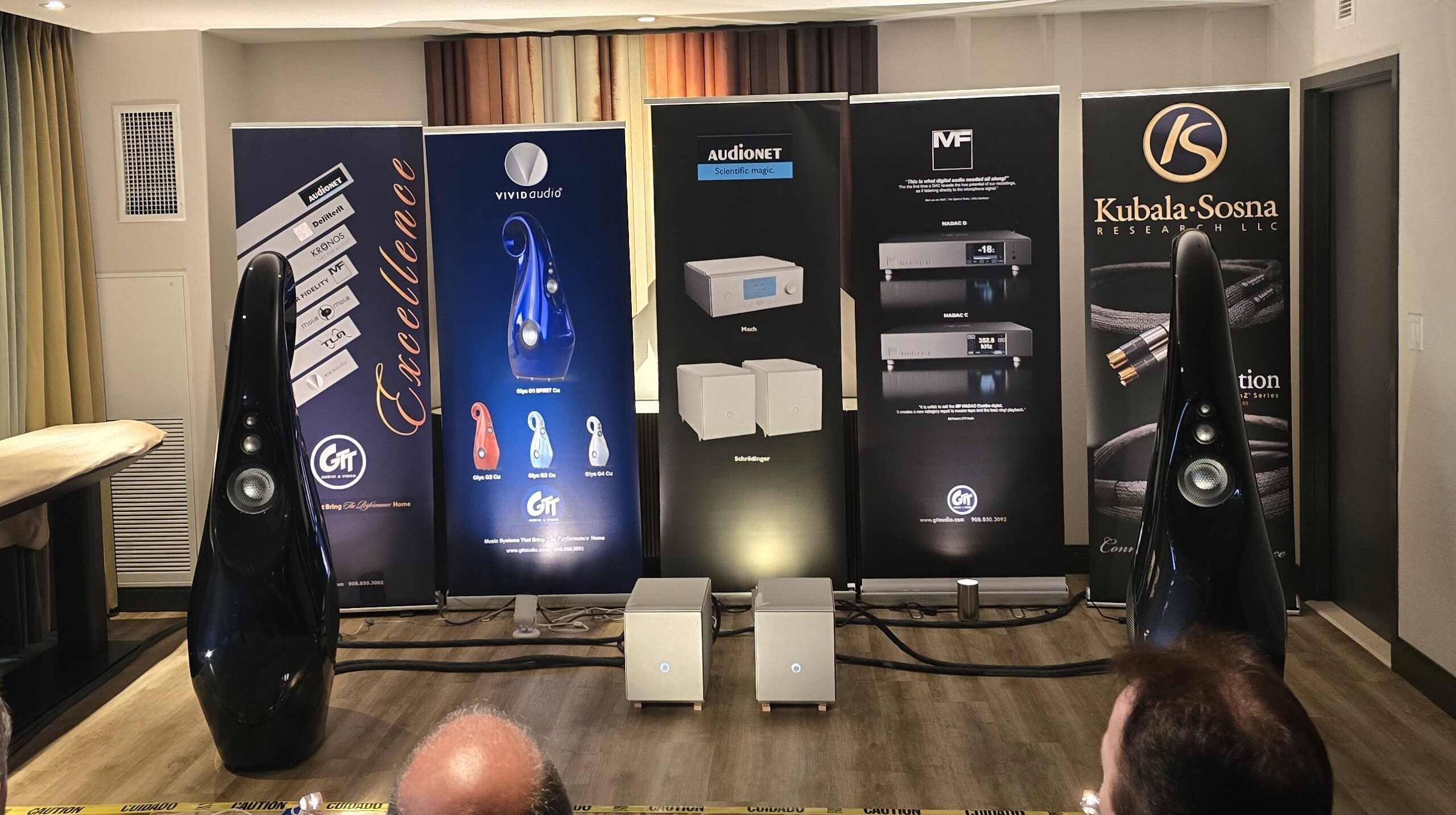
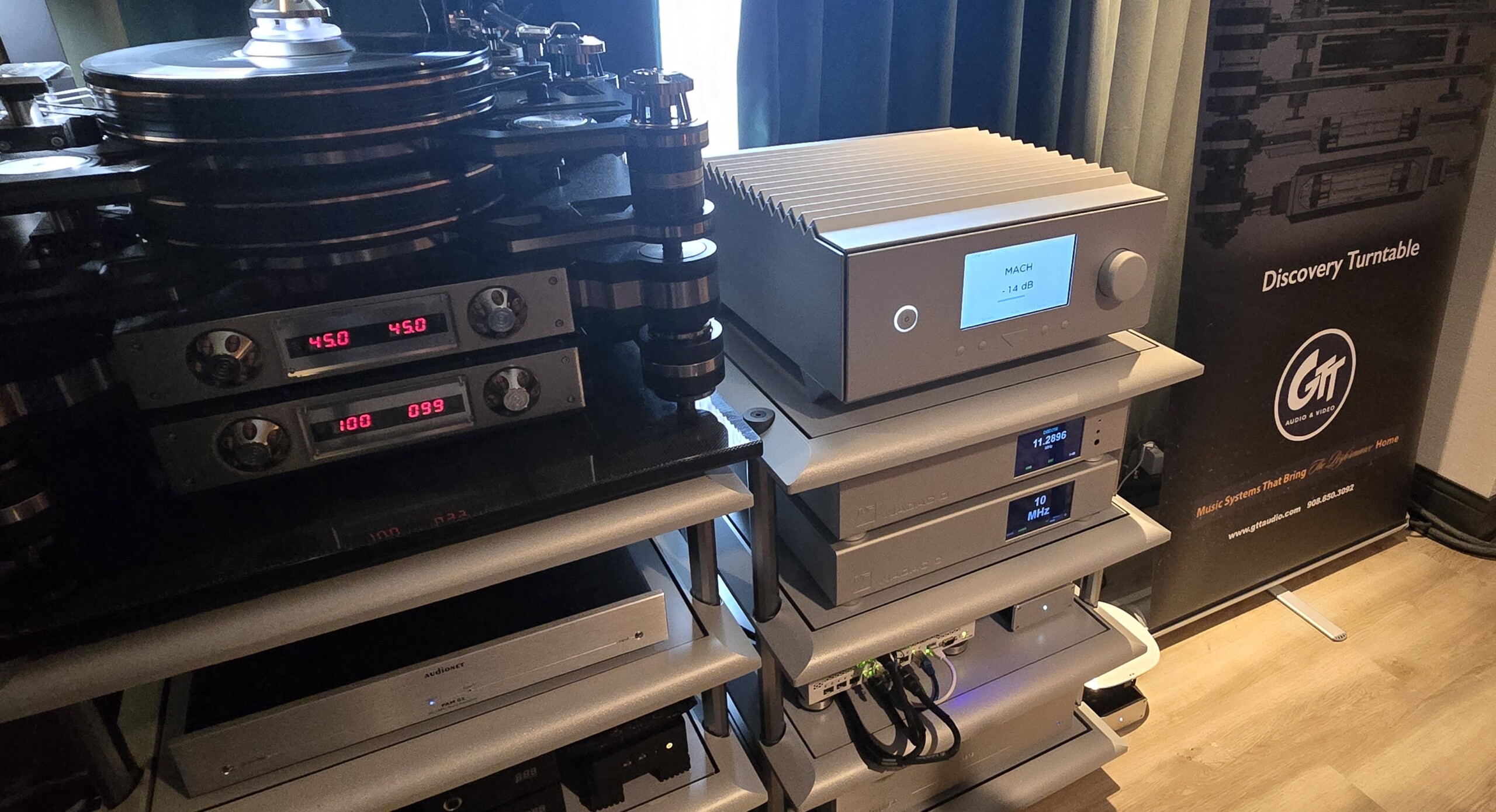
GTT's main-room rack
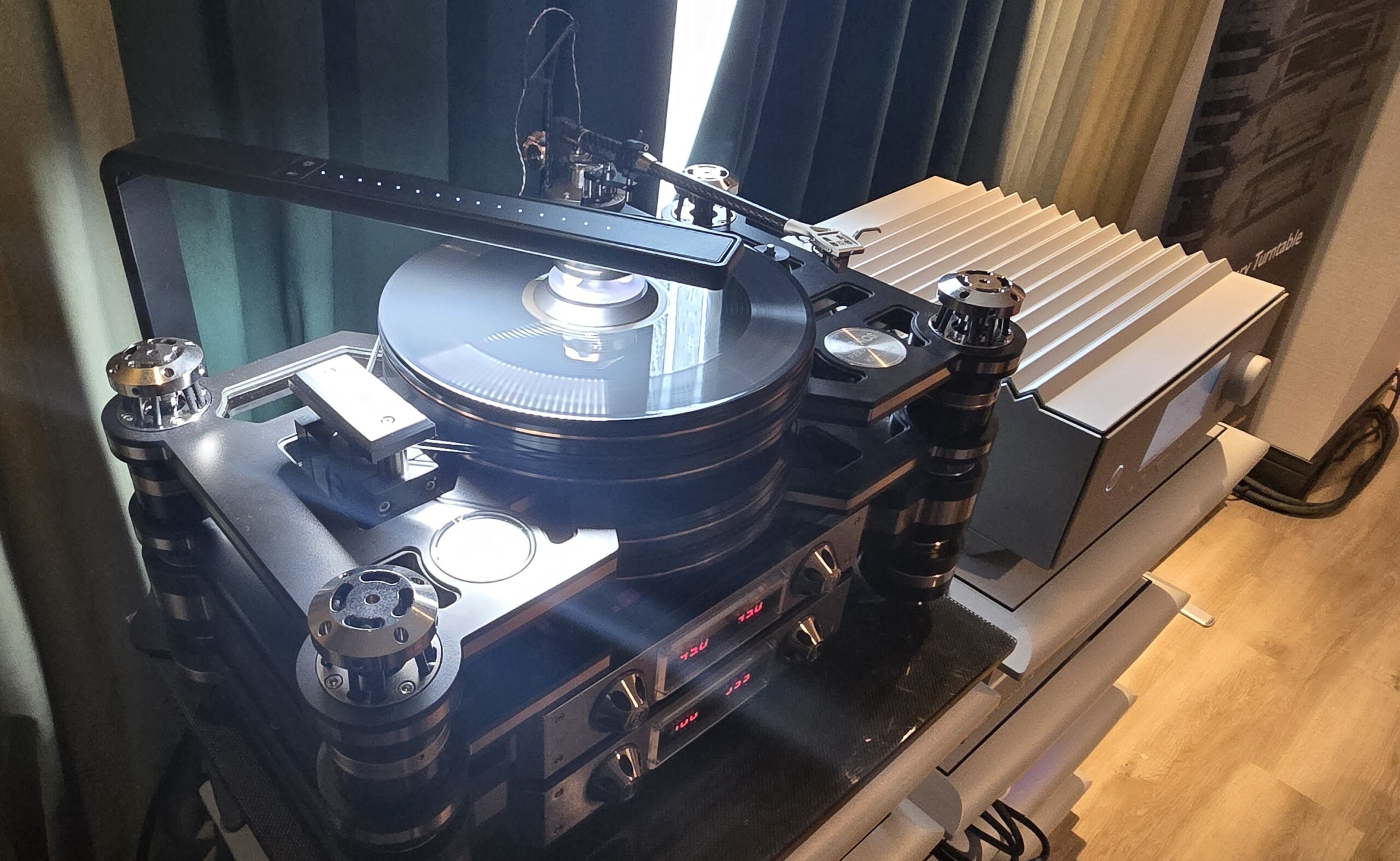
Kronos Perpetual dual-platter counter-rotating turntable with super-capacitor power supply underneath.
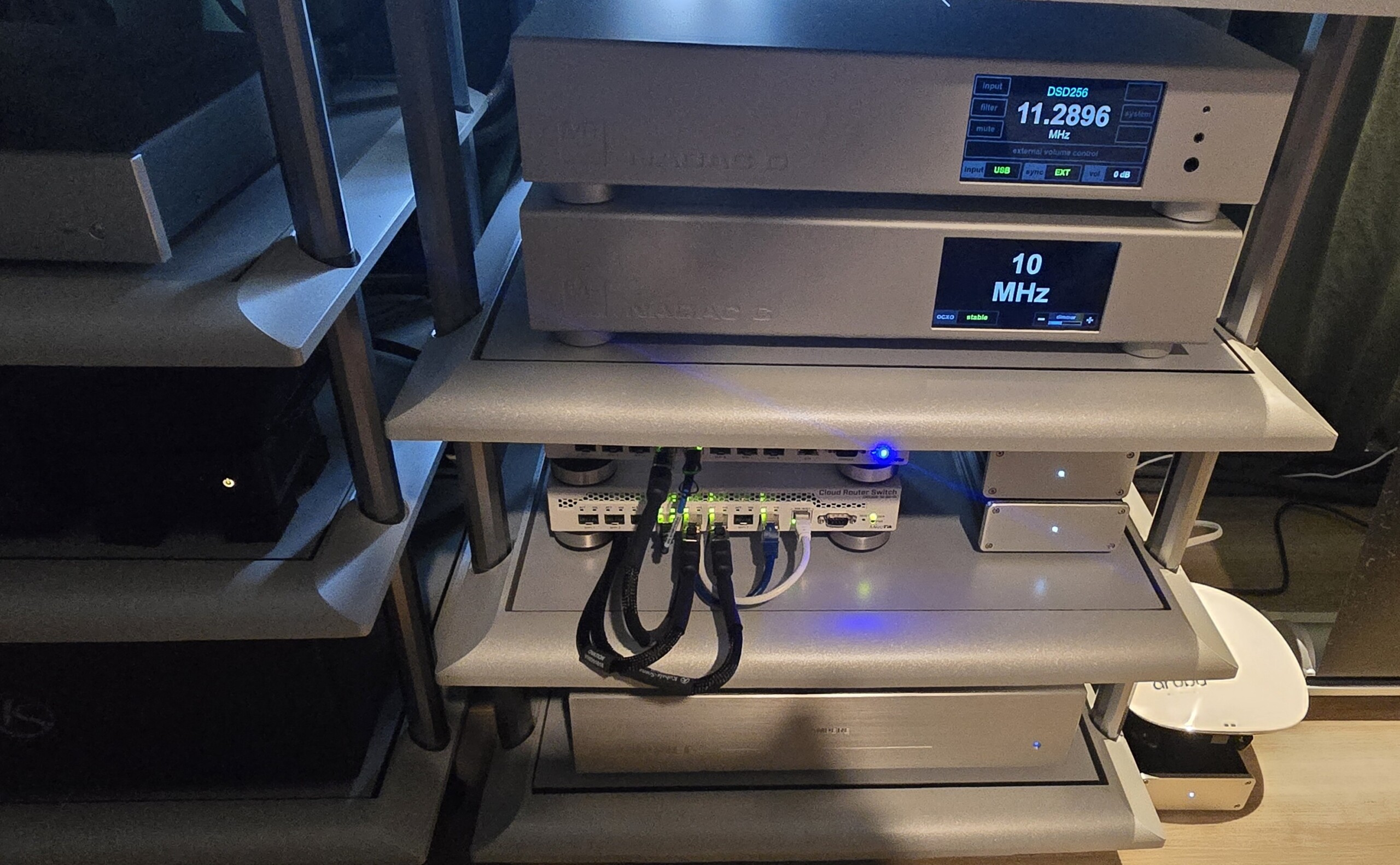
Master Fidelity NADAC D and C plus 2 DeJitterIT Switch-X's
One of the most interesting discoveries at the show had to be the Rocket Speaker from Swan Song Audio. This is a 7-foot (213cm) tall 3d printed speaker cabinet. It uses 121 pounds (55g) of filament and takes 1924 hours to make (print). It's a 2-driver system with ports at the bottom and top of the rocket. In addition to the speakers, Swan Song audio also had their 3D printed turntable base(s), preamps, and mono-block amplifiers. If the 3D printing wasn't enough, each of the items in the setup was battery powered!
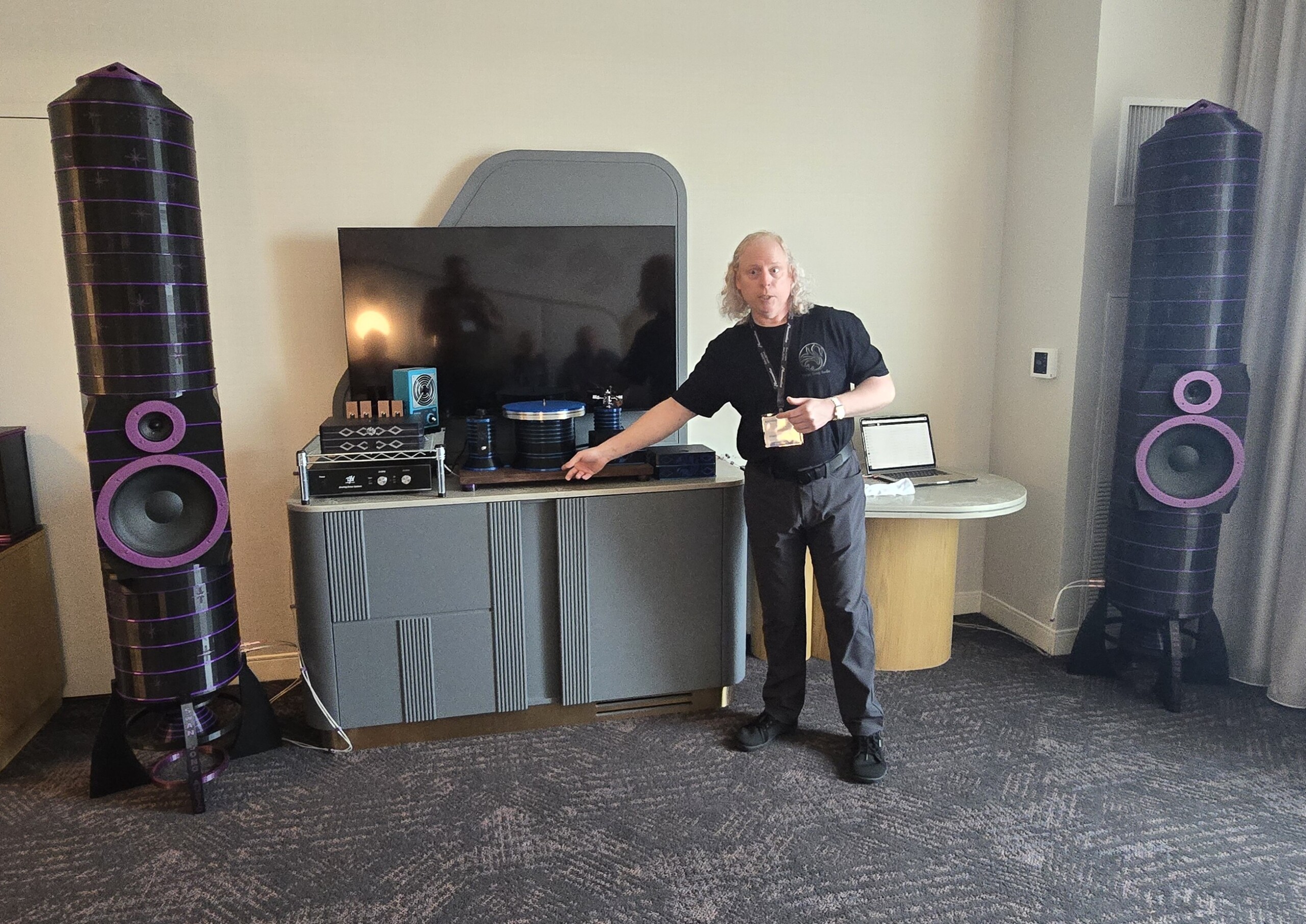
Swan Song Audio's 3D printed speakers and gear. Battery powered!
A few final thoughts
First, listening to setups in the listening rooms is a fun and educational experience. Remember, though, that a converted hotel room will sound different than a living room in a house. Granted, if a certain setup is appealing in a trade-show environment, there's at least a decent chance it will sound good in a home setup. To know for sure, you'd need to audition a setup in your own space before fully committing. This is why having a good relationship with your dealers and distributors is so important. In high-end audio, it's as much about trusted relationships as it is about product.
Second, I'm still baffled as to why many (most!) of the setups encountered are still streaming PCM formats. Many of the rooms were streaming 24-bit/48kHz content from the likes of Qobuz. There were very few rooms actually playing DSD bit-stream format. (GTT being one of them). I've learned over and over again that with highly resolving systems like those found at trade shows like this, that content format matters! There is a real and obvious difference between PCM and DSD. I asked many of the exhibitors why they didn't use DSD content in their demo and d.j. sessions. The best answer I got was "because this is what our customers do." What a shame! Now, I'm sure he wasn't wrong and that most of the customers that buy this products don't really know what they are capable of. Plus, sacrificing quality for convenience has been around since time and memorial. If I were an exhibitor, I would want to show off what my gear to do in the absolute best possible light. And that isn't by streaming PCM! This is most likely why in my own setup, I hardly ever stream from the 'net. It doesn't sound as good. I keep my library stored on a NAS, mostly in DSD format, and then stream locally. The difference is huge. I guess I'm either ahead of the curve, or more likely just an outlier.
On to the next Great Adventure… .
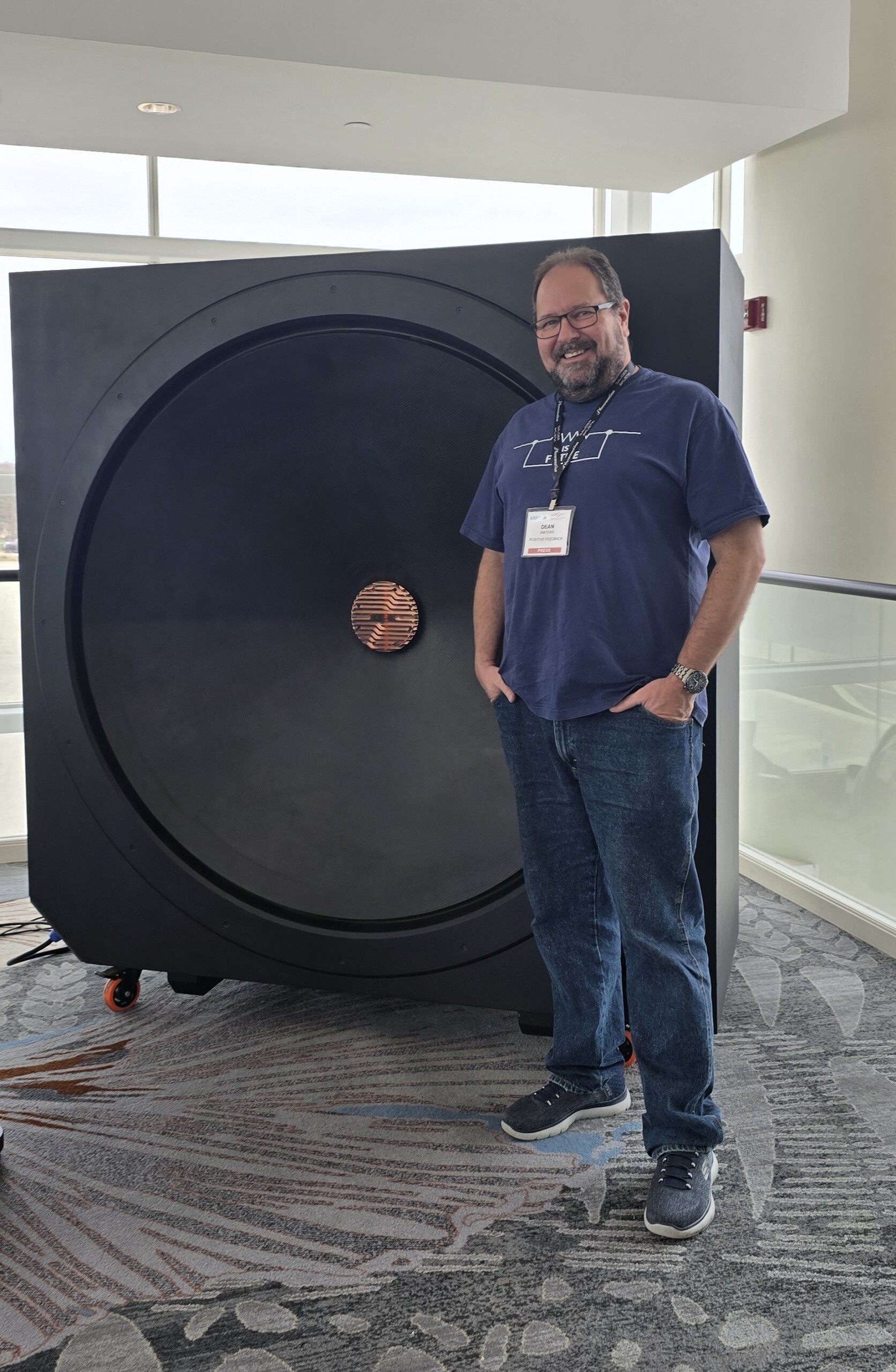
Dean Waters, Senior Associate Editor