For over 30 years, I've enjoyed reviewing audio accessories—or "tweaks"—including power line conditioners, record cleaning machines and fluids, vinyl storage solutions, vibration isolation devices and cable burn-in devices. Even developing an inexpensive "tweak" for air bearing tonearms that significantly improved their sound. One thing, however, that differentiates today's from yesteryear's "tweaks" is cost. "Tweaks" were originally envisioned as inexpensive toys to improve your systems sound. That's not always the case today.
Many years ago, I decided to simplify life and avoid reviewing controversial accessories like Bedini's CD Clarifier. That commitment lasted about 20 years, until a fateful email from Bernard Li of Charisma Audio changed everything months ago.
Charisma Audio LP/CD Demagnetizer
Digital audio tweaks have been around since the technology's dawn. Among the earliest: Optrix (and other similar fluids), Sumiko's rubber rings, Spiral Groove marketed Black Mat, Bedini's CD Clarifier, AudioPrism's Green Pen and CD Stoplight and countless others. In the early 1990s, I participated in a single-blind experiment—replete with an internal control—to see if various tweaks, such as the Green Pen, Sumiko's rubber rings, and other products, could be consistently identified. When the smoke cleared, the Green Pen was the only tweak that statistics be damned worked. Everyone in this trial correctly identified the green pen treated CD.
One of the very last digital tweaks that I reviewed for Ultimate Audio magazine (and similar to Charisma Audio's LP/CD Demagnetizer under review here) was Bedini's CD Clarifier. For whatever reason, Bedini's CD little demagnetizer significantly improved the sound of CDs. A number of my other keen eared Ultimate Audio magazine digital listeners (including the late Lars Fredell) were also fans of the Bedini Clarifier. Lars reported that Bedini treated CDs became, "more detailed but at the same time more gentle to the ear." He also observed that, "the dynamic transients were more immediate."
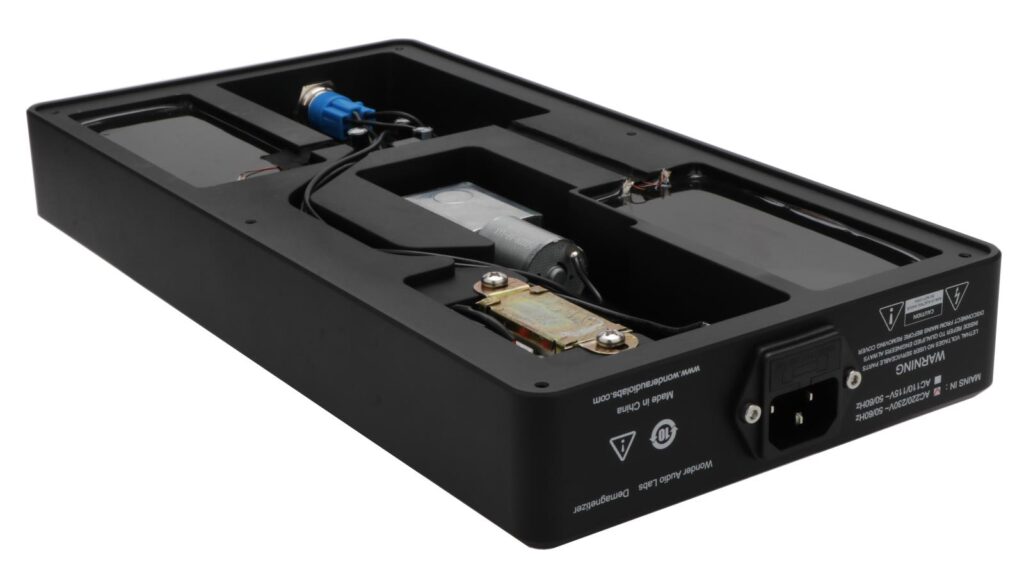
Jump ahead twenty-five plus years and enter the wild world of Charisma Audio's LP/CD Demagnetizer. According to Bernard Li, the advantages of his LP/CD Demagnetizer include: 1) A much smaller footprint; 2) Twice the demagnetizing power of other manufacturers demagnetizers through the use of a dual coil design; and 3) Rotation of the CD/LP to ensure even demagnetization using an industrial grade metal gear steady speed motor. The Charisma Audio LP/CD Demagnetizer, in contrast to the Bedini reviewed decades ago, demagnetizes both LPs and CDs, not just CDs (the manufacturer also mentions cables and obviously reusing tapes).
Charisma Audio's demagnetizer is an absolute joy to use. First, choose either the "standard" spindle for LPs or the "adaptor" provided for CDs. Place the LP/CD over the spindle, hit the start button on the bottom right of the front panel of the unit and the demagnetizer automatically spins and treats the CD/LP for 25 seconds. Is there a benefit to doubling the treatment time to 50 seconds? I investigated that question with a couple of CDs and felt twice around the block was a little better than one time. How often should discs be demagnetized? Here Bernard recommends treating LPs/CDs every time they're played. According to Bernard, "the demagging effect lasts for about a week" and "depends on the level of the magnetic interference where the LP/CDs are stored."
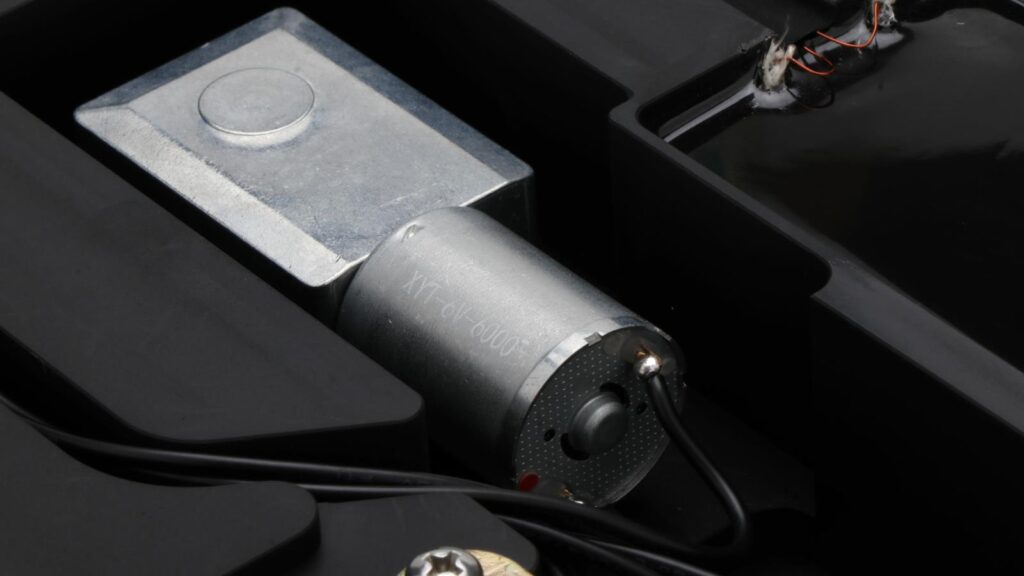
How does the unit work? Don't ask me but the Charisma Audio LP/CD Demagnetizer really delivers the goods. One explanation proffered is that magnetizable elements in the CDs substrate or label interfere with laser reading; in the case of LPs, the carbon black pigment used for color and antistatic qualities contains trace iron that becomes magnetized and interacts with the cartridge.
Newest Medium First
Spoiler alert! Charisma Audio's CD/LP Demagnetizer produced far more dramatic results than Bedini. Maybe it's that digital has improved over the years. Maybe our systems have become far more revealing. In any case, the improvement in sound quality after demagnetization was anything but subtle.
First to undergo the demagnetization process was one of my favorite classical CDs featuring cellist Frederick Rosselet performing Ligetti's Sonata for solo cello (Yarlung Records YAR 07498). Interestingly, the Rosselet release was originally an analog recording and I have a 15-ips tape copy to use as a benchmark. Before damagging, the CD sounded drier and the cello was more buried in the surrounding environment than the corresponding 15-ips tape. Nor did the CD possess the same sense of bowing nor the richness, ease and surrounding harmonic envelope as the 15-ips tape. After twenty-five seconds of treatment, the bass on the CD became tighter and better defined, the sound became more relaxed, and Rosselet's cello gained a clearer harmonic presence. In short, the CD came a step closer to replicating the sound of the 15-ips tape.
Next, I went shopping for CDs on my shelves and pulled out the 35-year-old Tom Jung recording of The Robert Horner Percussion Ensemble's Different Strokes (DMP CD485). As for the recording specifics. Tom recorded this CD at RCA/BMG's treasured and sadly long-gone Studio 1 direct to 2-track using a Wadia 20 bit analog-to-digital converter. Different Strokes is one of the better sounding discs in my collection not to mention best sounding digital recordings of its day. Yet on John Cage's Third Construction, the sound was a little distant and lean, lacking much in the way of the sense of space and air. Here, the two biggest beneficiaries of demagnetizing on this large scale, dynamic recording are the frequency extremes. Untreated, the Lion's Roar in part 2 of Third Construction was barely a whisper. (That's in stark contrast to its prominence on the excellent New World 316 recording of the Cage piece). After applying the magnetic field, the Lion's Roar was far more prominent and suddenly felt part of the piece. At the other end of the spectrum, cymbal crashes (one of my pet peeves with digital) weren't as crunchy, smeared and congested sounding. Minute details such as the claves stood out too. Plus, instruments simply had more presence and air.
Does Charisma Audio's LP/CD Demagnetizer magic also extend to high resolution discs? For that we turned to True Audiophile: The Best of Groove Note (AM6071UM) UHQCD/MQA encoded disc and specifically the Jacintha tracks "Danny Boy" or "Light My Fire" to address that question. (Is there anyone who doesn't love the Harry Belafonte version of "Danny Boy"?) With this CD, demagnetization brought far more clarity and body to Jacintha's voice. Furthermore, demagnetization brought all the instruments to the fore, and the sound was far more transparent.
The same question was posed to John Pizzarelli's Trio Live at Birdland chuckle filled "Rhode Island" track (Telarc SACD 2SACD-63577) Does demagnetization improve this high-resolution format? The answer is an unqualified yes, too.
Size Doesn't Matter
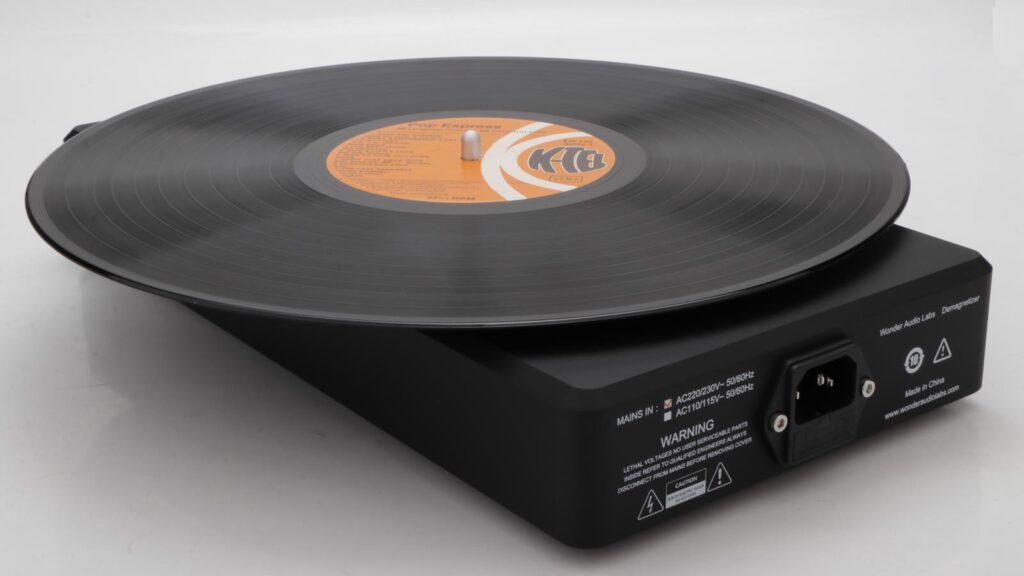
Time to switch gears to demagnetizing 12-inch black discs. (For inquiring minds, the demagnetizer simultaneously demagnetizes both sides of the LP). Not to spoil the ending of the story here, either, but every demagnetized LP sounded like it had undergone a good ultrasonic cleaning plus. Or even akin to a cartridge upgrade.
Festivities kicked off with Adolph Schreiner's "The Worried Drummer" or Morton Gould's "Parade" from the old-time favorite Mallets, Melody and Mayhem (Columbia CS 8333). And the results of demagnetizing the record were just as profound as with the CD. Bass, soundstaging and resolution were all improved. One could also almost visualize in the "mind's eye" the jingling of every bell in the sleigh bells. The decay of the triangle was more extended (as well as telling when Goodman damped the ringing!).
Next up, Andreas Vollenweider's sonic blockbuster White Winds CBS 7464 39963-1). Again, there was a sizable improvement in the record's quietness, sense of space, low level resolution and separation of instruments. Overall, just more of a concert hall experience.
Finally, I selected Impex Record's recent one-step reissue of Patricia Barber's Café Blue (IMP 6035-1) to determine whether the Charisma Audio LP/CD Demagnetizer had the same effect on the new, carbon black free VR900 vinyl. Surprisingly, the Charisma Audio LP/CD Demagnetizer worked its magic here, too. This was especially evident in Café Blue's upper octaves that were more detailed and less compressed after treatment. Supersize that sense of transparency and instrumental body and we have a well worthwhile improvement. So, either there's still some trace metal in the VR900 vinyl or there's more to the LP demagnetization process than previously thought.
The Charisma Audio LP/CD Demagnetizer is an absolute must-have for all those audiophile dinosaurs still playing silver discs or black vinyl records. (Or anyone contemplating transferring their CD collection to a music server, too!) As we've all experienced at one time or another, improvements to front-end of the system yield incalculable benefits at the back-end of the system!
As for me. "I will give up the Charisma Audio LP/CD Demagnetizer when they peel my cold dead fingers from around it."
Price: $895 (US); $1195 (Canada)
Available from charismaaudio.com
Vinyl Storage Solution 12-inch Archival Pro with Dual Layer Rice Paper 4 Ply Record Inner Sleeves
Okay, here's a far less controversial product to review.
I've had a bit of an obsession with record inner sleeves ever since the late 90s, when it seemed like rice paper record inner sleeves might soon be discontinued. To hedge my bets, I stocked up just in case on a motherload of MOFI inner sleeves to last me decades. Now it's looking like the rest of my life! Luckily for all of us, manufacturers didn't stop the production of high quality record inner sleeves.
Today, there's more sources of record inner sleeves than ever. So why worry about which inner sleeves to use? First, to protect your valuable investment. High quality inner sleeves extend the lifetime of these precious, often irreplaceable LPs. Inner sleeves provide protection against scratching, static, buildup of garbage and mold on the record, etc. Second—and shockingly—not all new LPs arrive packaged in high quality inner sleeves. For instance, just the other day, my copy of wonderful all analog reissue of Brian Auger's 1975 release Straight Ahead that came sheathed in a paper sleeve. Ugh. Covered in shards of paper. Lastly, used LPs come in a variety of inner sleeves and not all of them are optimal. So, high-quality inner sleeves are an absolutely necessity after a good bathing.
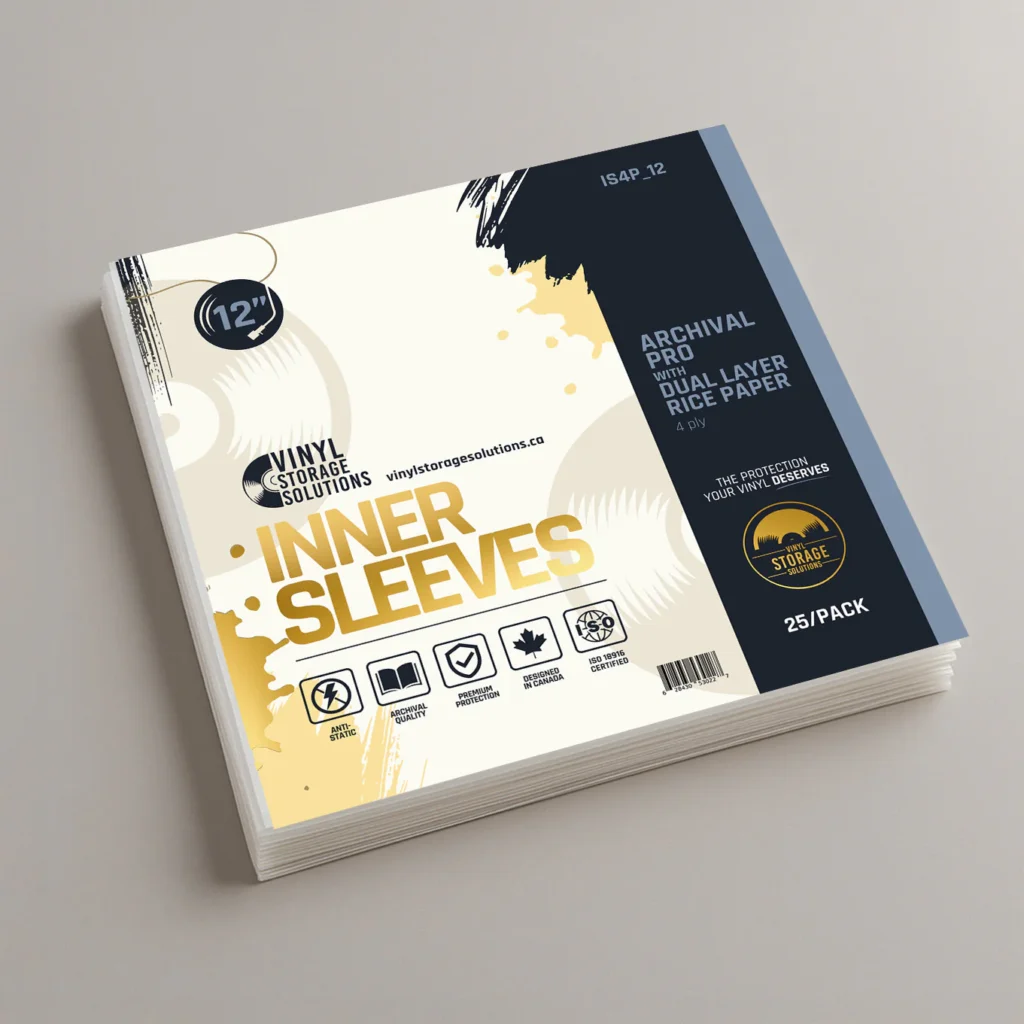
So, onto Vinyl Solutions Canada newest rice paper inner sleeves (their unique dual pocket, outer record sleeves received one of my Positive-Feedback Product of Year Awards a couple of years ago!). Vinyl Solutions fashions their latest record inner sleeves from two layers of rice paper sandwiched between two HDPE sheets. This moderate stiffness prevents that dreaded inner sleeve foldover syndrome and at the same time allows the inner sleeves to easily slide into tighter record jackets. Couple that with both sides of the record label remain visible when in the inner sleeve and arrows at the top of the inner record sleeves and we have a well thought out record inner sleeve!
The new Vinyl Solutions Archival Pro inner sleeves along with the Diskeeper Ultimate Audiophile inner record inner sleeves as the two top products on the market! And $1.60 per inner sleeve is a small price to pay for preserving those precious vinyl slabs!
Price: $16 per 25 pack