
Over the years I've freely admitted to being something of a sound nut. I revel in recordings that feel transparent, timbrally truthful, and utterly convincing in their portrayal of natural acoustic space. For me, the deepest listening pleasure comes from acoustic instruments captured in real environments, without artifice.
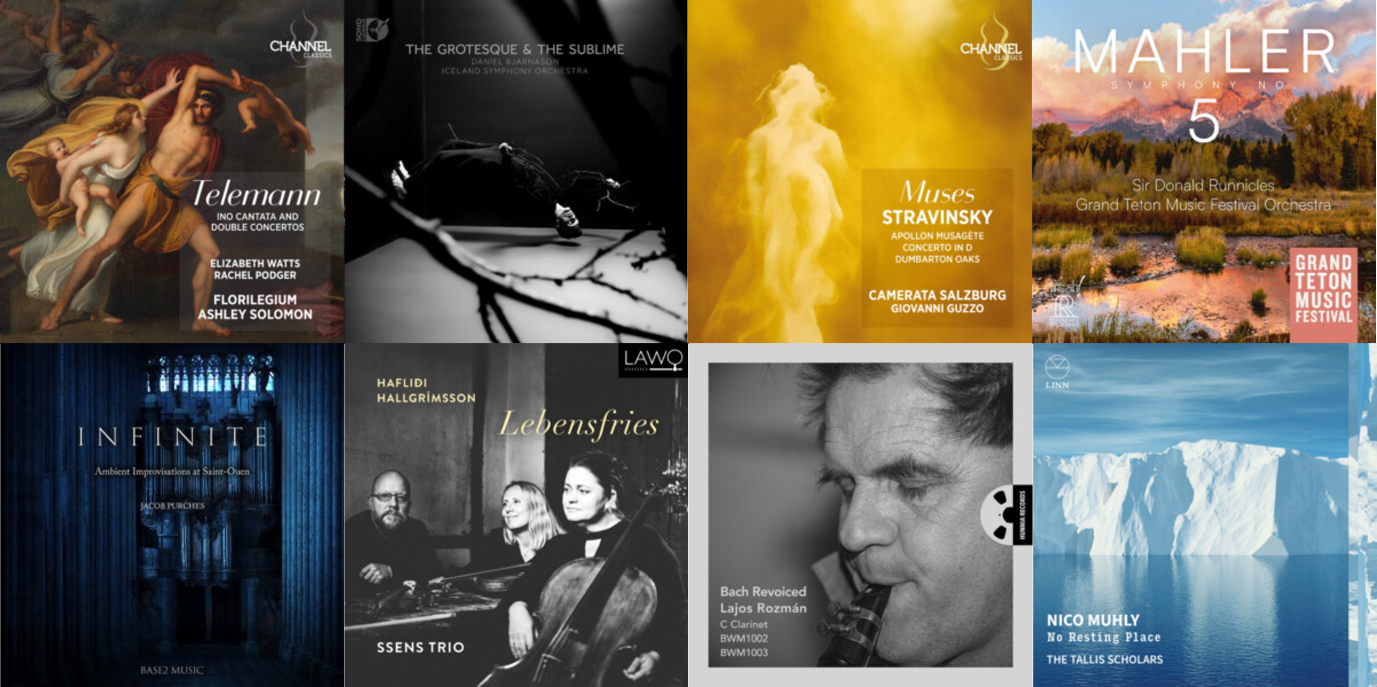
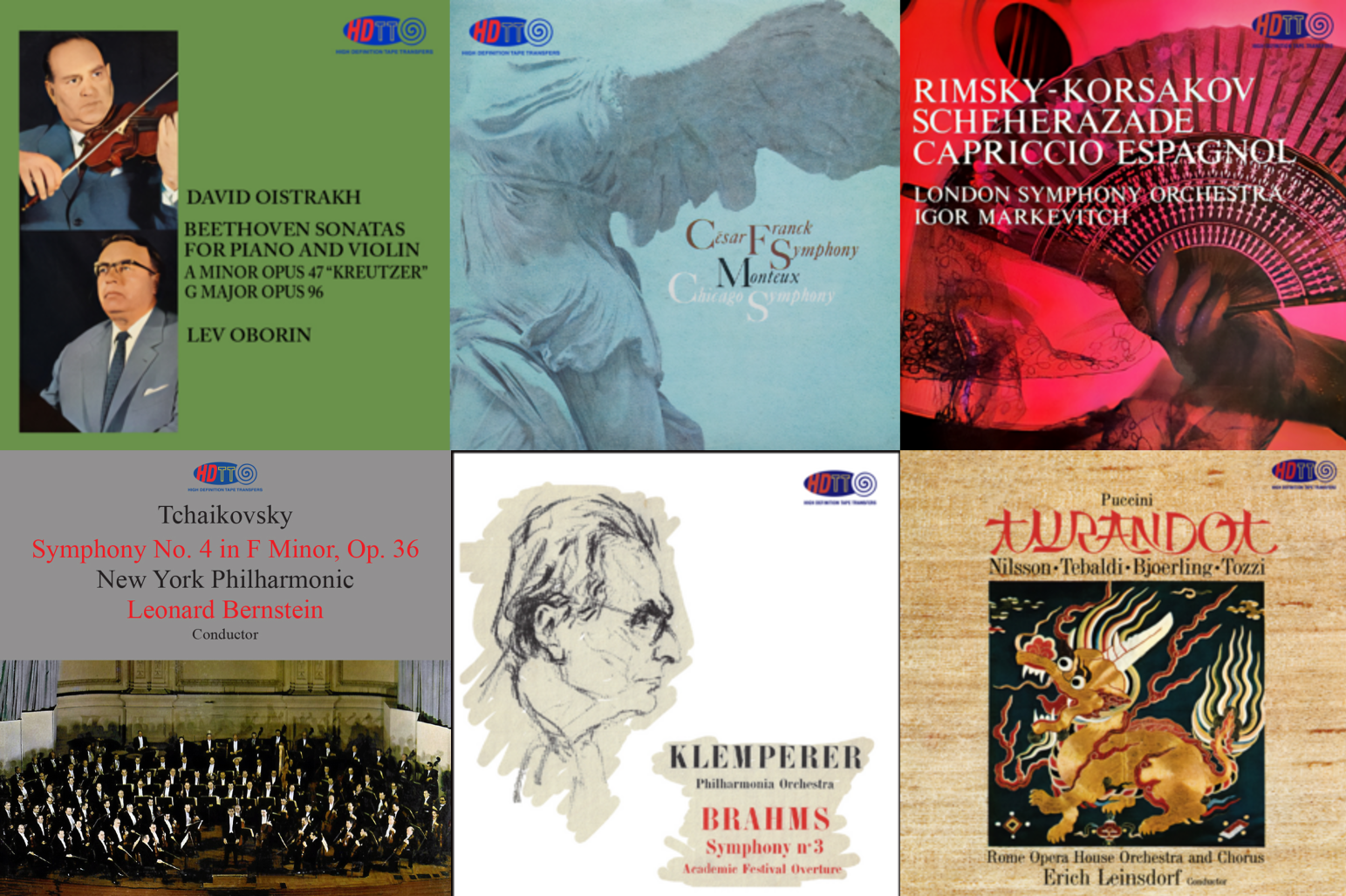
With that in mind, I'm delighted to offer this edition of Recent Finds: a cluster of genuinely exceptional new releases that have appeared over the past several weeks. How so many arrived at once is a mystery—but I'm not complaining. Among them are five Pure DSD256 recordings from three of the finest engineers and labels working in the format today: Cobra Records, Hunnia Records, and Eudora Records. Alongside those are superb offerings from Channel Classics, Pentatone, TRPTK, and Linn. I suspect you'll find at least a few below that reward close listening and perhaps tempt you into something new.
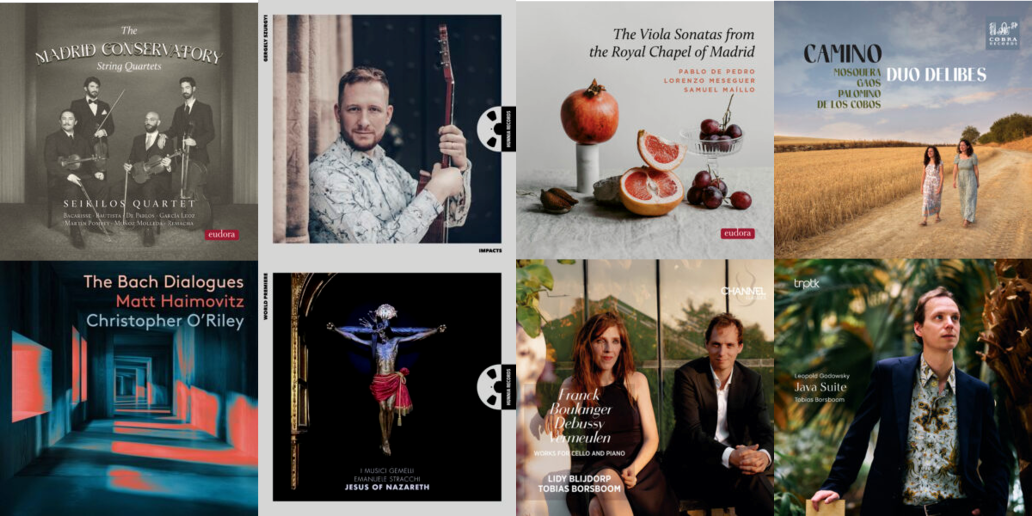
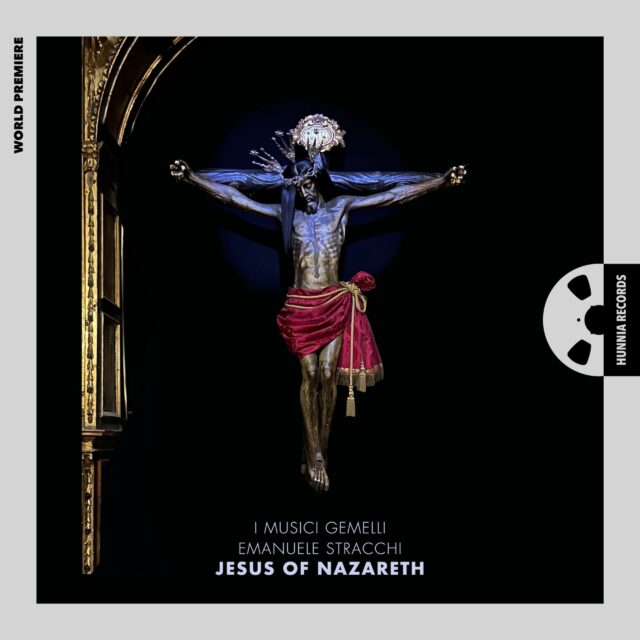
Emanuele Stracchi, Jesus of Nazareth, I Musici Gemelli. Hunnia Records 2025 (Pure DSD256-Analog Mixed, Stereo) Edit Master Sourced HERE
I've written before about the two violinists who perform together as I Musici Gemelli. They are outstanding musicians, outstanding violinists. I enjoy each performance they've released on Hunnia Record. Yet somehow I missed this release from October 2025. I found only after reading that this recording received the Silver Medal—Outstanding Achievement at the Global Music Awards (California, USA). Congratulations to composer Emanuele Stracchi and I Musici Gemelli!
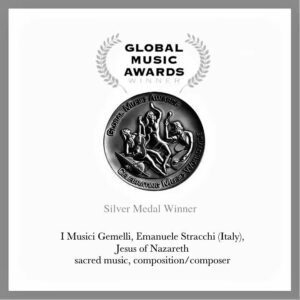
And so I've downloaded it, and listened. And I am so happy to have now done so. The music by Emanuele Stracchi is intricate, remarkable really in its conception for just two violins—a fairly radical break with liturgical and musical tradition. From traditionally large ensembles, Stracchi distills to the essential. As you might guess from the title of the composition, this music is a cycle of twelve pieces for two violins represents a meditative and spiritual journey through the main episodes in the life of Jesus Christ, from the nativity to the resurrection.
One need not be a person of faith to feel the emotional gravity of this music. I Musici Gemelli describe the experience beautifully: "Playing Jesus of Nazareth is more for us than performing a score: it is entering a sacred story, step by step, picture by picture. Each piece corresponds to an episode in the life of Christ—from the nativity to the resurrection—and translates that Gospel moment into a soundscape that asks us to listen, hear and participate... Every gesture, every interval, every silence has a symbolic and spiritual weight, as if every musical element participates in the story, helping to make audible what remains invisible in the word: mystery, pain, hope."
As always, I Musici Gemelli play with impressive technical command. Their sound is precise yet pliant, shaped with expressive nuance and real emotional depth. There's an elegance to their approach, but never a hint of sterility or predictability.
You can encounter this music as a spiritual meditation or simply as compelling contemporary chamber writing. Either way, the journey is rewarding.
Recorded 11-12 September, 2025 in the Hunnia ProVibe Park Studios in Budapest using two Neumann M-149 tube microphones on the violins and ambiance pickup with DPA 4011A stereo pairs, and released in Pure DSD256 with analog mixing via a Studer 962 analog mixing console, the sound quality is outstanding. Very clean, very clear, and utterly transparent—it is a joy to hear. This is why we invest so much time and effort optimizing our audio playback systems.
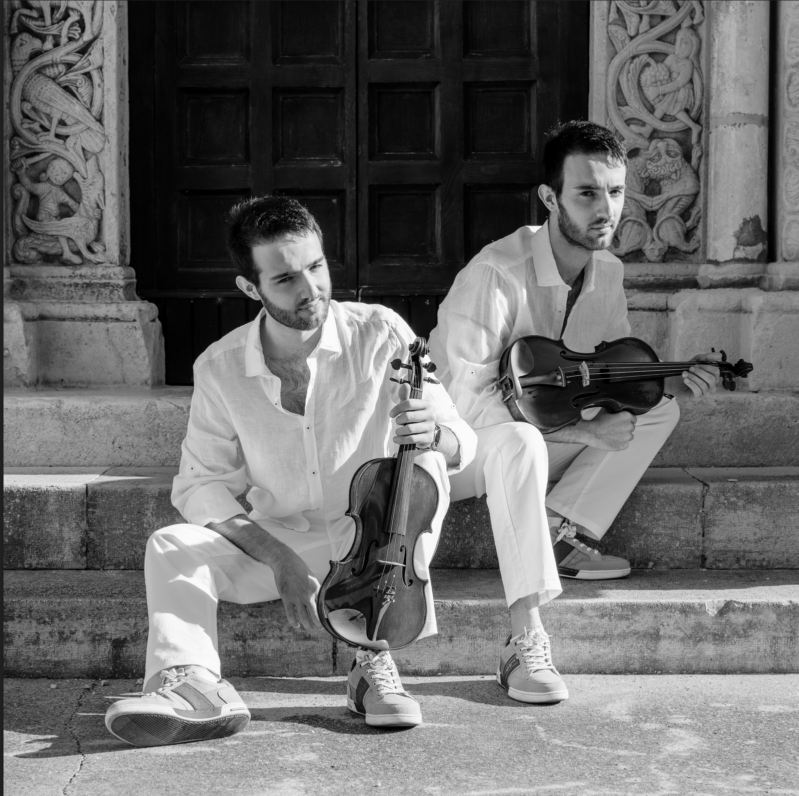
I Musici Gemelli is comprised of twin brothers, Francesco Pio Bertozzi and Giuseppe Pio Bertozzi, both born on September 1, 2000. Francesco and Giuseppe graduated with top marks in violin at the Umberto Giordano Conservatory in Foggia and then they completed a second Master's degree in Chamber Music at the Conservatory of Parma. Other recordings of their performances which I highly recommend include:
Impacts, Gergely Szurgyi (guitar). Hunnia Records 2026 (Pure DSD256, Stereo) Edit Master Sourced HERE
Guitarist Gergely Szurgyi says, "When selecting the pieces for this album, I focused on composers whose music has a significant influence on my playing. These composers and guitarists have accompanied me over the past 20 years and have had a direct or indirect effect on how I understand and interpret music today."
And the pieces significant to Szurgyi prove to be most enjoyable for me, with selections from Bach, Bartók, Pavlovits, Purcell, Pusztai, Villa-Lobos.
The album opens with a suite comprised of works by Henry Purcell. All come from arrangements in a collection by the great Hungarian lutenist/guitarist Gergely Sárközy who not only transcribed many works but also recorded them. I recall with pleasure many of Sárközy's recordings released in vinyl on the Hungaroton label. It is a pleasure hearing Szurgyi performing these works with such finesse (and in much more engaging sound quality).
Also included are selections from Bela Bartók's collection of short pieces, "For Children." I find these fascinating as heard in transcription for guitar. Often thought to be easy works composed for children to play, these works are deceptive (to say the least). They include many intense and profound musical ideas, exceedingly difficult to pull off cleanly and convincingly. On guitar, Szurgyi says "they pose numerous technical issues and challenges. I truly believe that the guitar, with its polyphonic capabilities, range of tone colours, and expressive vibrato, can sometimes be the best instrument to interpret these pieces." And, they are captivating here when played so expressively by Szurgyi.
As much as I enjoyed both the Purcell and the Bartok, it was the work by Hungarian composer and guitarist Dávid Pavlovits, Floating Islands, that really sat me up in my chair. Only 3:22, but what a mesmerizing piece that blends tonality, chromaticism, and extended techniques on the guitar to create shimmering, floating sonorities—just like Floating Islands.
From Pavlovits' Floating Islands, the album segues smoothly and naturally into Antal Pusztai's deeply reflective Memory of Holocaust—elegiac and meditative rather than overtly dramatic, unfolding as a kind of musical lament.
The album concludes with a series of transcriptions for lute that Bach created from his Partita No. 3 for solo violin in E major, BWV 1006. These are brilliant and extroverted works, well represented in the lute repertoire, and played delightfully here. Unlike Bach's more introspective works for lute, this suite is bright and open. It emphasizes brilliance and rapid figuration, making for an energetic, buoyant, and rather joyful, conclusion to the album.
Recorded September 9 & 22, 2025 at Unitarian Church, Budapest, with DPA 4011A microphones on the guitar and 2 x DPA 4006 for ambiance capture, the sound quality is immediate and detailed, but with a lovely full, rounded quality that beautifully captures the woody resonance of the guitar body. Very nice!
This is another Pure DSD256 album that will likely be added to my Pure DSD256-My Top of the Pile listing when I update it later this year.
For a nice sample of Szurgyi's style and skill, you might listen to this YouTube video sample from his 2024 Hunnia Records album, Scordatura: The Out Of Tune Consonance (HERE):
The Madrid Conservatory String Quartets, Seikilos Quartet. Eudora Records 2026 (Pure DSD256-Direct Mixed, Stereo, MCh) Edit Master Sourced HERE
This is a delightful album in every respect: repertoire new to me, superb playing, and outstanding sound quality. All come together to make this perhaps my most enjoyable listening session in recent weeks. Of the seven composers represented, I recognized only one name. Everything else was new to me—an ideal situation: fresh ears, no preconceptions. Well… almost none. It's an Eudora release, engineered by Gonzalo Noqué, so excellence is always the baseline expectation.
All the music is from the first half of the Twentieth Century, 1925-1958, a time of new musical expression and experimentation that I very much enjoy. And in these works, one hears quite a bit of "pushing the boundaries." That they emerge from Spain genuinely surprised me. I've never instinctively associated Spain with modernist string quartet writing, much less with music probing the edges of tonality and syncopation. Consider me educated—and happily so.
The album starts on excellent footing with the String Quartet (1925) of Fernando Remacha (1898-1984)—a significant work reflecting the influence of European neoclassicism, particularly Stravinsky. It uses "disturbing" counter-melody, rhythmic complexity, and reflects a deliberate move toward a more modern and international musical language.
We then shift back a gear to the late Romantic style in a work by María de Pablos (Cerezo) (1904–1990): Sonata Romática for string quartet (1929), a harmonically lush work in contrast to the avant-garde currents swirling around it. A brief reprieve—warm, expressive, and unapologetically lyrical.
Then we plunge back into sharper waters with Salvador Bacarisse's String Quartet No. 1, Op. 10a (1930). Here the influence of Les Six is unmistakable—that anti-Romantic, anti-Impressionist French circle (Auric, Durey, Honegger, Milhaud, Poulenc, Tailleferre) that championed clarity, irony, and wit. Spain had its own parallel movement, the Grupo de los Ocho, pursuing a similarly irreverent path. This is the spirit Bacarisse channels: freshness, bite, humor, and a confident rejection of conservatism. Later in life he moved toward Neo-Romanticism, but this quartet belongs to his more experimental phase—and it sparkles.
Those first three works set the tone. The full program—over two hours and forty-five minutes across two volumes—continues at a high level with quartets by Muñoz Molleda, García Leoz, Ángel Martín Pompey, and Julián Bautista. The Seikilos Quartet performs throughout with technical assurance, stylistic sensitivity, and real energy. As an introduction to twentieth-century Spanish quartet writing, this set is invaluable.
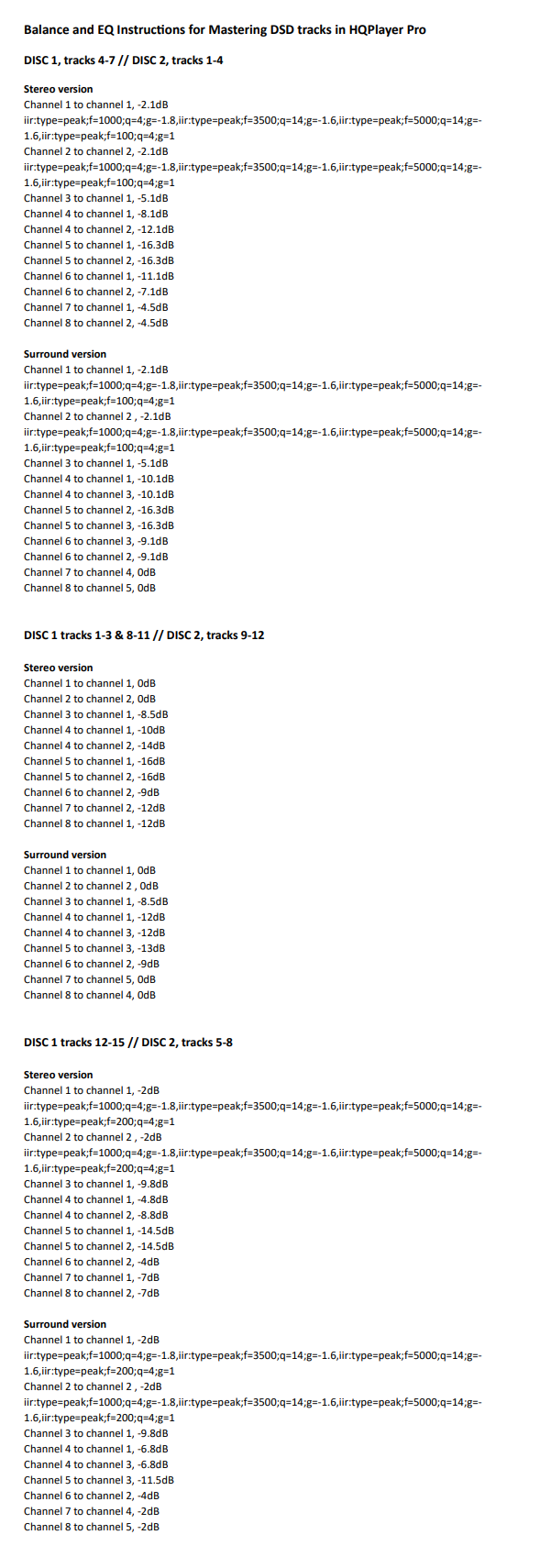
As with all the albums released by Eudora Records in recent years, this album is a Pure DSD256-Direct Mixed release—recorded in DSD256, then edited, mixed, and EQ'd entirely in DSD. Gonzalo Noqué determines all of the mixing, channel balance, and EQ to be applied, then provides those specifications to DSD mastering engineer Tom Caufield for the final mastering in HQPlayer Pro. In this case, final mastering reportedly required more than sixty hours of setup and processing.
The original recording spanned three sessions. Although held in the same hall, each day produced subtle sonic differences. To achieve the illusion of a single continuous recital, Gonzalo created tailored mix specifications for each session, using the first as a sonic reference point. Tom then had to manually implement instructions for eight channels across three sessions, in both stereo and multichannel configurations. The labor involved is significant.
To give readers some idea of the investment of time required, I asked Gonzalo if I might share those mixing instruction and he agreed. For a larger view of the image below, click on it or open it in a new tab:
Creating these Pure DSD Direct Mixed releases is an extraordinary commitment of time and precision. But for those who care about hearing acoustic instruments rendered with natural timbre and authentic spatial cues, the results are stunningly lifelike. This is high-fidelity audio at its most convincing.
My thanks to Gonzalo and Tom for delivering not only compelling music, but music presented in such beautifully natural sound.
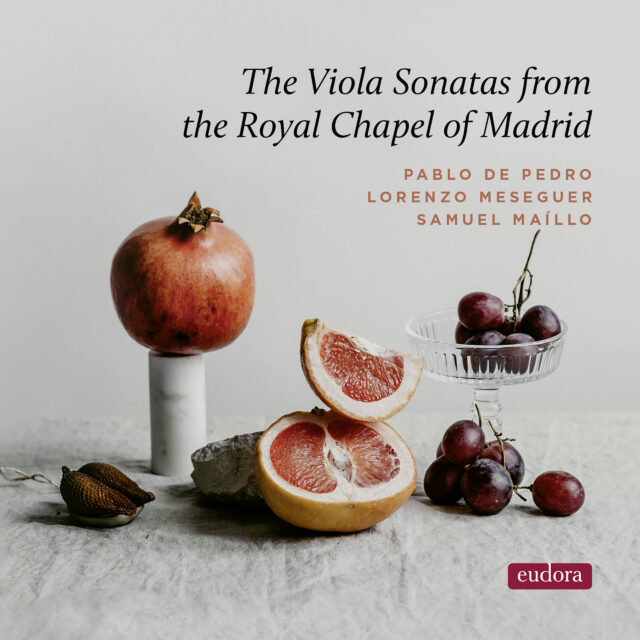
The Viola Sonatas from the Royal Chapel of Madrid. Eudora Records 2026 (Pure DSD256-Direct Mixed, Stereo, MCh) Edit Master Sourced HERE
This is a thoroughly engaging release: eleven short, often charming viola sonatas composed between 1778 and 1818 for audition competitions at the Royal Chapel of Madrid. Think of it as a curated tasting menu of late eighteenth and early nineteenth century Spanish viola writing—compact, varied, and unexpectedly rich.
Violist Pablo de Pedro notes that these sonatas represent a meaningful contribution to the instrument's repertoire, particularly given how little was written specifically for viola before its twentieth century solo expansion. But their value extends beyond historical scarcity. As Nikolaus Harnoncourt once quipped, violists have long been the "proletarians of music." These works, however, reveal an instrument capable of wit, expressive nuance, surprise, and genuine beauty. They are anything but utilitarian audition pieces.
All eleven sonatas were composed within the same institutional and geographic framework over roughly forty years. That concentration allows us to hear stylistic evolution in compressed form—classical language subtly shifting, gestures refining, expressive priorities changing—yet always within a distinctly local idiom. Performed on period instruments, with a harpsichord temperament aligned to that preserved in the organ of the Royal Chapel, the result is a virtual time capsule of music of that era.
The performances are exemplary. Pablo de Pedro is a seasoned historical-performance specialist and principal violist with ensembles including the Balthasar Neumann Ensemble, Concentus Musicus Wien, the Irish Baroque Orchestra, Europa Galante, and Collegium Vocale Gent; he is also a frequent guest principal with Kammerorchester Basel and the Orchestra of the Eighteenth Century. His playing here is poised, articulate, and stylistically assured.
Cellist Lorenzo Meseguer Luján—Professor of Cello at the Conservatorio Superior de Música de Castilla y León, member of the Balthasar Neumann Ensemble, former Principal Cello of the City of Birmingham Symphony Orchestra, and founder of the Seikilos Quartet—provides elegant and responsive continuo support, anchoring the textures with clarity and warmth.
As with Eudora's other Pure DSD256-Direct Mixed releases, the recorded sound is exemplary: transparent, intimate, and natural in spatial presentation. The viola's timbre—so often underappreciated—is captured with remarkable fidelity.
Altogether, this is fascinating listening: historically illuminating, musically rewarding, and beautifully recorded.
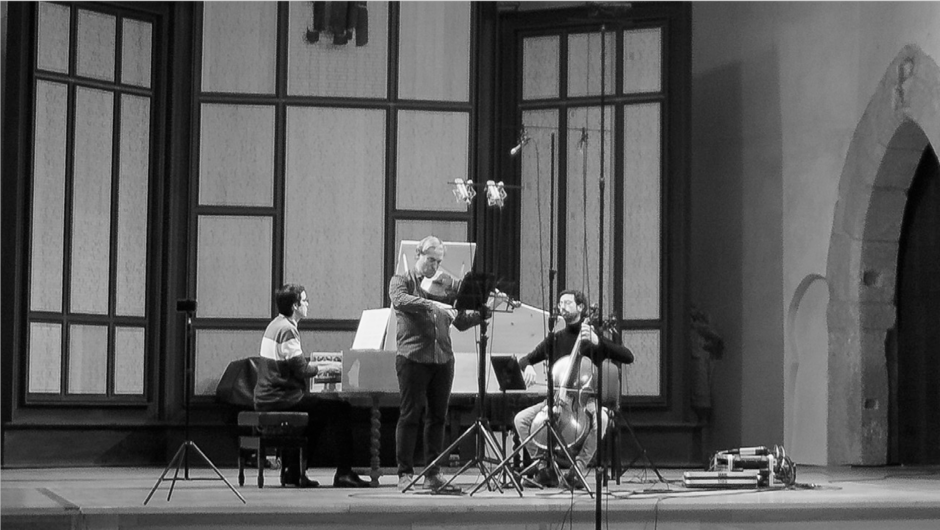
Recording session November 28 - December 2, 2022, Auditorio de San Francisco, Ávila, Spain
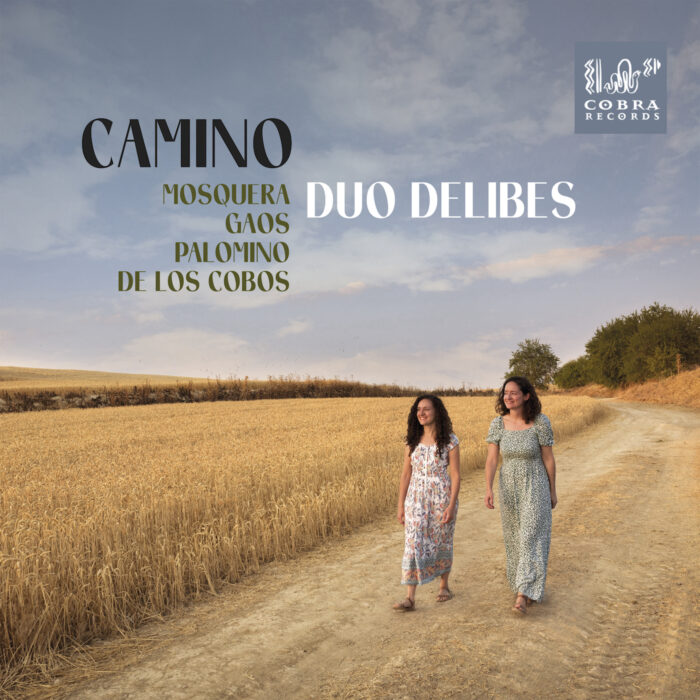
Camino, Duo Delibes. Cobra Records 2026 (Pure DSD256-Direct Mixed, Stereo, MCh) Edit Master Sourced HERE
This album will almost certainly land on my Pure DSD256 – Top of the Pile list when I update it later this year. It's that good.
Duo Delibes—sisters Esther and Sara Gutiérrez, born in Valladolid and now based in Germany and the Netherlands—offer a beautifully curated program for violin and piano centered on Spanish composers, most of them new to me. Discovering unfamiliar repertoire is always a pleasure; discovering it at this level of artistry is something more.
Camino unfolds as a journey through time. Federico Mosquera's Metamorfosis (2017) opens with a contemporary voice—restless, exploratory. Andrés Gaos's expansive Sonata for Violin and Piano, Op. 37 (1917), written in Buenos Aires, inhabits a late-Romantic idiom while retaining a distinctly Iberian inflection. Reaching further back, José Palomino's Duetto per Cembalo o Piano Forte e Violino (c. 1785) evokes the cosmopolitan eighteenth century, where Italian and Iberian currents intertwined.
Luis de los Cobos's Nana del Campo Grande (2006) brings the arc home to Valladolid, the sisters' birthplace. Dark, introspective, and quietly powerful, it has been described as "a long ballad for adults disguised as a children's lullaby." That tension between innocence and depth lingers long after the final notes.
The title Camino—"road" or "path"—is apt. Esther and Sara explain that frequent requests abroad for "Spanish music" prompted a deeper exploration of their own heritage. This recording traces both a personal and artistic journey through Spanish repertoire for violin and piano, much of it previously unrecorded or unpublished. The album feels not only curated but claimed—an act of cultural reclamation and advocacy.
Recorded in July 2025 in the Sala de Cámara of the Centro Cultural Miguel Delibes in Valladolid by Cobra Records founder and chief engineer Tom Peeters, with DSD Direct Mixed mastering by Tom Caulfield, the sound is simply superb. Transparent, timbrally truthful, beautifully balanced—the violin and piano breathe in a natural acoustic space. This is one of those rare recordings that pulls me forward in my chair, fully attentive, eager for whatever comes next.
A treasure.
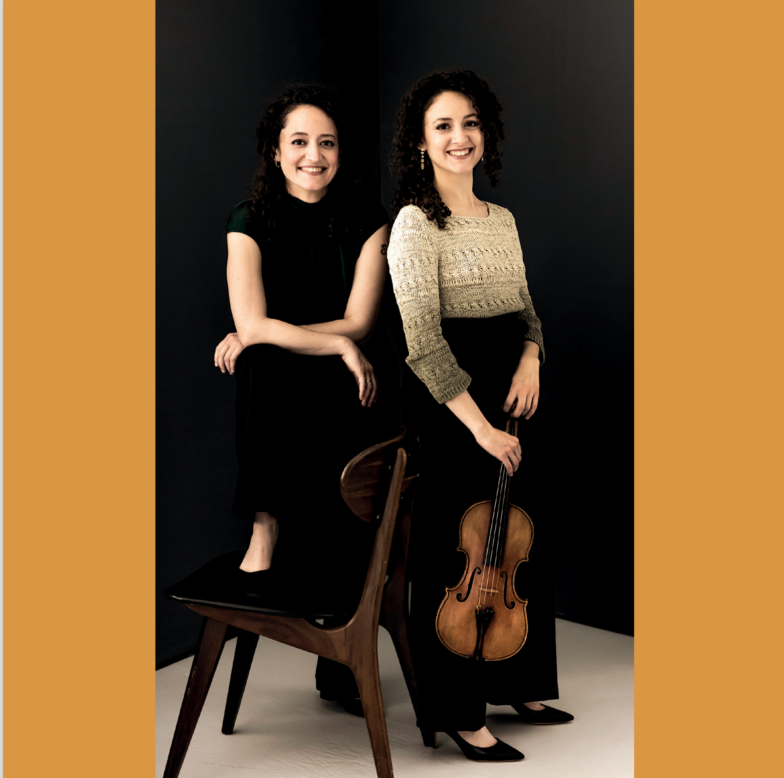
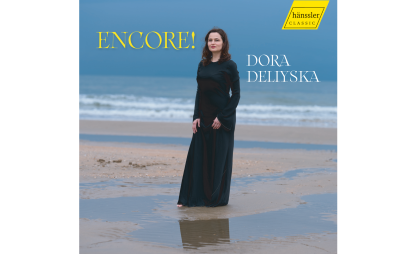
Sara Gutiérrez and Esther Gutiérrez
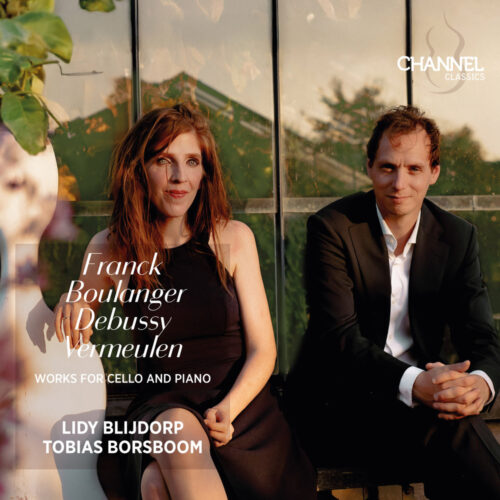
Franck, Boulanger, Debussy & Vermeulen: Works for Cello and Piano, Lidy Blijdorp (cello) and Tobias Borsboom (piano). Channel Classics 2026 (DSD256, DXD 32-bit*, Stereo, MCh) Edit Master Sourced HERE
Oh my, oh my… Watch out. Those who know me recognize that when I start out this way I've been bowled over. And bowled over I am.
Cellist Lidy Blijdorp is stunning—technically fearless, tonally radiant, emotionally forthright. Tobias Borsboom is the ideal partner. They play as if forged from a single musical mind.
The album begins with a powerful, totally engaging, performance of César Franck's Violin Sonata in A major, heard here in Jules Delsart's 1886 transcription for cello and piano. I've long loved the original violin version, but this was my first encounter with the cello transcription—and it's revelatory. Lowered into the cello's register, the work trades brilliance for depth: more resonance, more grounded power, a darker emotional hue. Blijdorp plays it unapologetically to the hilt—immensely musical, intensely committed. Borsboom is no mere accompanist; he leads when required, supports with sensitivity, and shapes the emotional architecture throughout. Their partnership is masterful. I immediately hit replay and listened to the entire sonata again.
Next comes Nadia Boulanger's Trois pièces pour violoncelle et piano (1914), originally composed for organ in 1911 and later transcribed by the composer. If you know Boulanger primarily as a pedagogue, prepare to be surprised. The first piece opens with Impressionistic delicacy—diaphanous, restrained. The second introduces a folk-inflected melody on the cello, quickly mirrored by the piano. The final movement dances with vigor and bite. It's compact, beautifully constructed music, and these performers give it both elegance and character.
Boulanger's legacy as a teacher is almost without parallel—her students ranged from Aaron Copland and Elliott Carter to Philip Glass and Astor Piazzolla—but this recording reminds us that her own compositional voice deserves attention.
From there we move to Debussy's Cello Sonata in D minor—as delightful a work for cello and piano as exists in the literature with it's lean textures, sharp contrasts, and subtle coloristic detail. It is a work of clarity, wit, and expressive restraint. Blijdorp and Borsboom resist overstatement; they let Debussy's subtlety speak.
The album closes with Matthijs Vermeulen's Sonate pour violoncelle et piano, a work initially conceived in 1927 shortly after the premiere in Paris of his First Cello Sonata, but not completed until 1937-38 when Vemeulen once again returned to composing. The first performance by Paul Tortelier and Lia Palla took place in Paris on 21 June 1943. Here, Blijdorp and Borsboom bring it out for a fresh excursion to great effect. With two contrasting movements, the work is marked by a blend of lyricism, chromatic color, and energetic drive. It bridges, somewhat unsettlingly, between late Romantic expression and early modernist experimentation. And that unsettling contrast makes it a work of significant complexity and immense interest. Unlike the Debussy Cello Sonata which inspired Vermeuluen, his work pushes further into early atonal territory—harmonic language departs from traditional tonality right from the outset, creating a fresh, expressive sound world. In these hands, it feels urgent, alive, and deeply compelling. I love it.
Blijdorp and Borsboom make a formidable duo. The performances are fearless, intelligent, and emotionally generous. And the sound sound quality of Jared Sack's engineering and mastering is vivid, balanced, and beautifully natural, allowing the cello's timbre to bloom without ever overwhelming the piano (or the reverse).
This is a treasure of an album.
For a sample of the musicianship on this album, you might enjoy watching This YouTube video of the second movement of Matthijs Vermuelen's Sonate pour violoncelle et piano, track 12:
Lidy Blijdorp graduated cum laude from The Hague, Amsterdam, and Paris Conservatories and obtained her Artist Diploma at the Queen Elisabeth Music Chapel, a prestigious, high-level, post-graduate certification for resident artists. She has performed as a soloist with the Orchestra of the Eighteenth Century, the Concertgebouw Chamber Orchestra, the State Hermitage Orchestra of St. Petersburg, the Royal Philharmonic Orchestra of Liège and the Residentie Orchestra.
Recorded 11-13 December, 2024, at MCO Hilversum, The Netherlands by Jared Sacks, this is another excellent release from Channel Classics. The balance, clarity, and captured ambiance are just wonderful to hear—all so typical of Jared's recordings. Recorded in DSD256 and then mixed and EQ'd in DXD, one might only wish for the additional transparency one might hear with a Pure DSD256 mastering of this performance. But, this DXD 32-bit edit master is unquestionably superb.
The Bach Dialogues, Christopher O'Riley (clavichord), Matt Haimovitz (five-string cello piccolo). Pentatone 2026 (96k Stereo) HERE
Cellist Matt Haimovitz on five-string cello piccolo and Christopher O'Riley on clavichord explore J.S. Bach's Sonatas for Viola da Gamba and Cembalo (BWV 1027–1029) and Trio Sonata No. 5 (BWV 529). This is an impossible combination of instruments to record. In real life, the clavichord is so very quiet, you can't hear it 20 feet away. And the cello piccolo, while small, is quite loud—its sound would completely overwhelm the poor little when in the same room together. To hear them played together, as in this album, is a rare treat. It took some fancy studio footwork to balance the sound, but well balanced and well presented it is here.
If you enjoy the sound of Bach played on original instruments, using gut strings, a baroque bow, and a delicate clavichord, you will love this album. I certainly do.
In the enclosed booklet, we read the following transcribed conversation between Matt and Chris:
MATT: We could only have realized this project, combining the cello piccolo and clavichord, in the recording studio.
CHRIS: It's a real technological marvel to be able to record with these instruments. The clavichord is not audible to Matt on his side of the room. We had to isolate me in a spaceship-like structure so the close mics could pick up my sound without Matt's cello piccolo overpowering the mix.
MATT: I would walk onto the sound stage and observe Chris playing like a lion at the clavichord, but I could not hear a peep a mere 20 feet away. We both needed headphones to be able to hear each other.
CHRIS: In this way we were able to fulfill Matt's dream of entering Bach's imagination, using two of his favorite mediums.
Why a clavichord given the extreme volume mismatch?
First, Matt and Chris contend that the clavichord was one of Bach's favorite keyboard instruments.
Second, the clavichord was the only instrument of Bach's time that was capable of the same kind of dynamic shading that the fortepiano, and then, the modern concert grand allowed for. With a harpsichord, the strings are plucked with plectrums allowing for only a single volume level. Chris explains, "The clavichord creates its sound by what's called a tangent. It is a tiny little fork tine that meets the string at the halfway point. The vibration is only the meeting of the string. Because the tangent is making contact with the string, we can also elicit vibrato, like a voice or string player, by lightly bouncing up and down on the key." And, thus, one has control over volume and dynamic shading.
But, the clavichord is not an instrument that can be used for public performance. It's a very quiet instrument, barely audible even when just under the ear of the performer. It is an instrument for very personal enjoyment only.
Thus the need for some magical studio manipulation to allow us to hear both the very quiet clavichord in conversation with the much louder cello piccolo. While the resulting sound stage is artificial, the interaction of sound and timbre between these two instruments as captured by the engineers at Skywalker Ranch is eminently satisfying.
And, of course, the quality of performance from two artists of this caliber is superb.
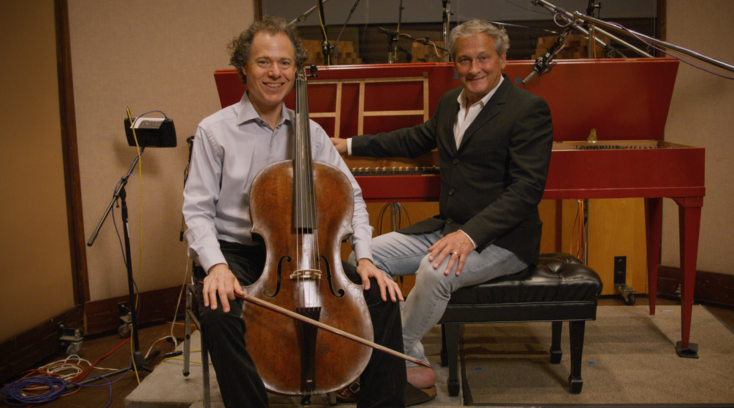
Matt Haimovitz (five-string cello piccolo) joining Christopher O'Riley (clavichord) in Chris' sound booth for the photo.
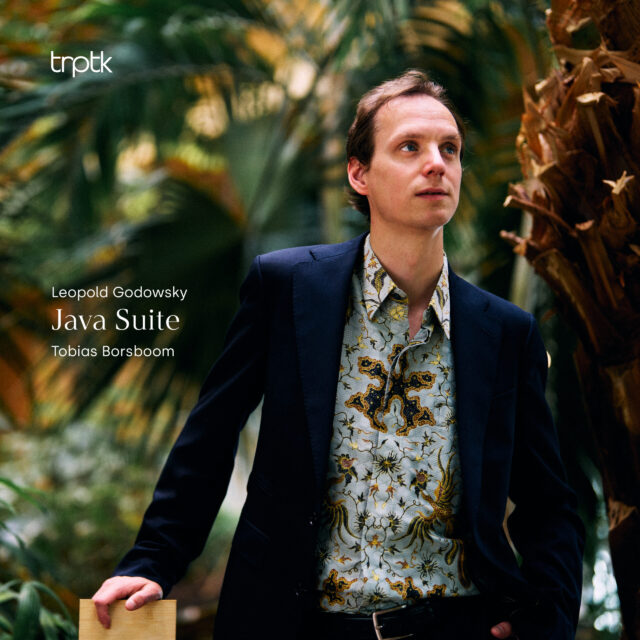
Godowsky: Java Suite, Tobias Borsboom (piano). TRPTK 2025 (DSD256, DXD 32-bit*, Stereo, MCh) HERE or 32-bit HERE
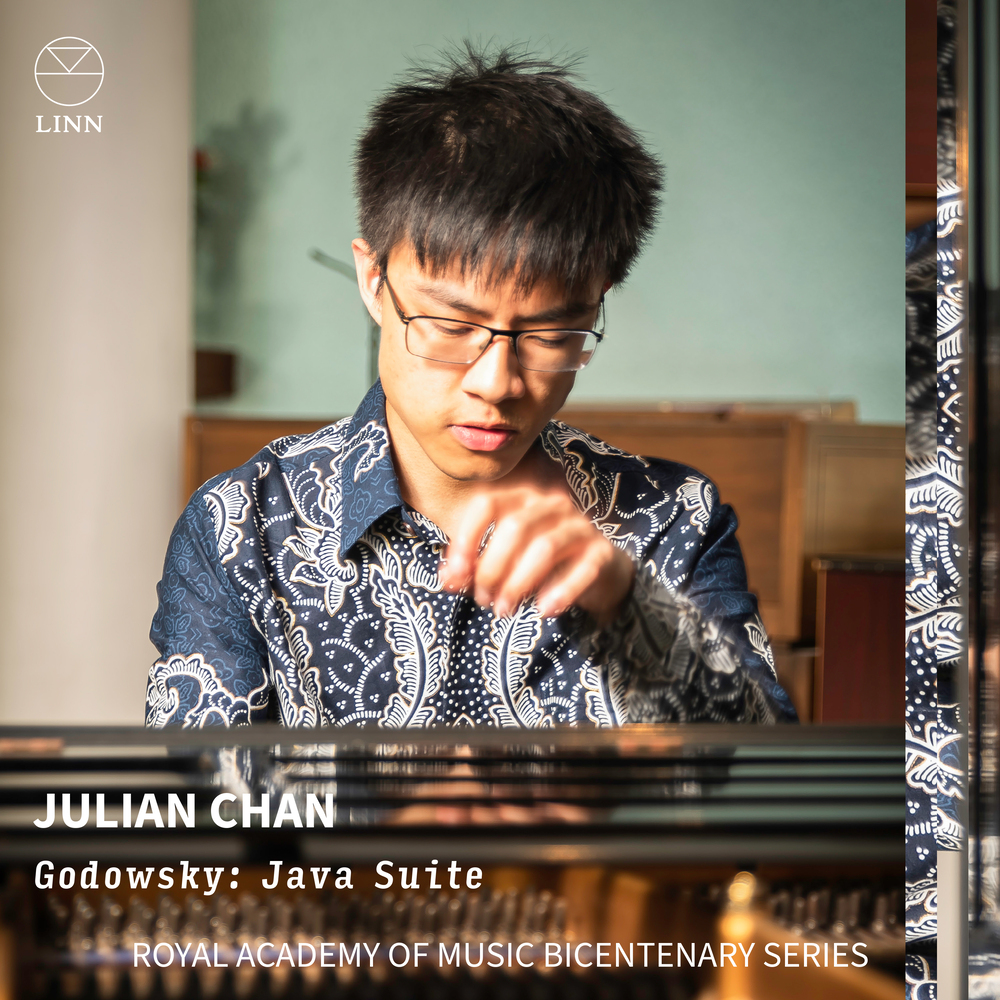
Godowsky: Java Suite, Julian Chan (piano). Linn Records 2025 (192k, Stereo) HERE
Two alternative, compelling, performances of Leopold Godowsky's Java Suite, both from 2025. Bill Dodd wrote about these releases in a recent Dodd's Discoveries blog post for NativeDSD. His comments are spot on, and I highly recommend you just go to NativeDSD and read what he has to say about these alternative releases. I can't offer a better comparison than he has already written. HERE
Are you not familiar with Godowsky, or not familiar with his Java Suite (1925-1925)? Well, here's why you should read Bill's article...
Polish-American pianist and composer, Leopold Godowsky (1870-1938) traveled to Java and did not compose a note while there. But the region's gamelan music lingered in his ears, eventually resulting in his finest work: the Java Suite—fifty minutes of music that can be listened to like a travelog. The two performance recorded above are both excellent. But they capture different characteristics of the music Godowsky composed. As Bill writes:
"These two albums offer excellent performances, but with strikingly different interpretations. Tobias Borsboom brings a structural clarity and rhythmic definition, and also takes things just a bit slower. Julian Chan emphasizes color and flow. There is a huge difference, but both treat the work as a complete artistic statement rather than a virtuoso showpiece.
"With Borsboom, you are experiencing Java. With Chan, you are consumed by it. I am no expert, but I'm guessing that Chan is closer to the gamelan atmosphere and 'experience,' but I think Borsboom is showing us the images that Godowsky intended.
"So, do you meditate with Chan, or visit with Borsboom?"
I enjoy both! And I'm in complete agreement with Bill's comments in his blog post, which I encourage you to read in full.
By the way, pianist Tobias Borsboom is also performing on the excellent Channel Classics release, Franck, Boulanger, Debussy & Vermeulen: Works for Cello and Piano, with Lidy Blijdorp, above.
* Once again, I am listening to the DXD 32-bit stereo edit master, which gives me the best sound quality in my primary audio system. You should compare alternate resolutions for your own playback system.