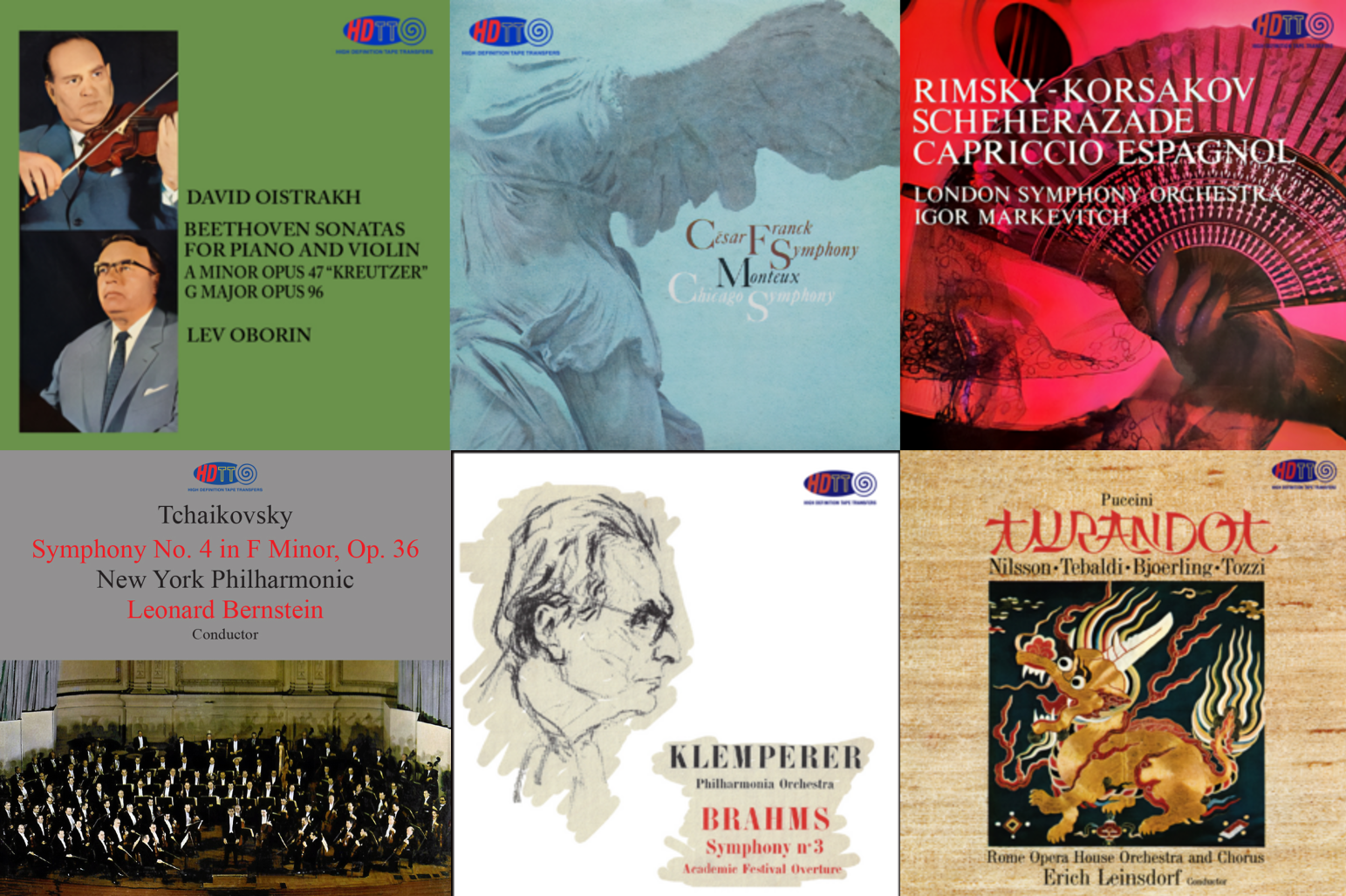
HDTT recently released three historically significant recordings: Maazel's 1964 recording of Tchaikovsky's Symphony No. 2 'Little Russian'; the Van Cliburn-Fritz Reiner 1961 Brahms Concerto No. 2; and Harry Belafonte's The Midnight Special. I've also taken this opportunity to finally write up reviews of three Pure DSD256 albums that I included in last year's Pure DSD256 From Analog Tape: My Top of the Pile list.
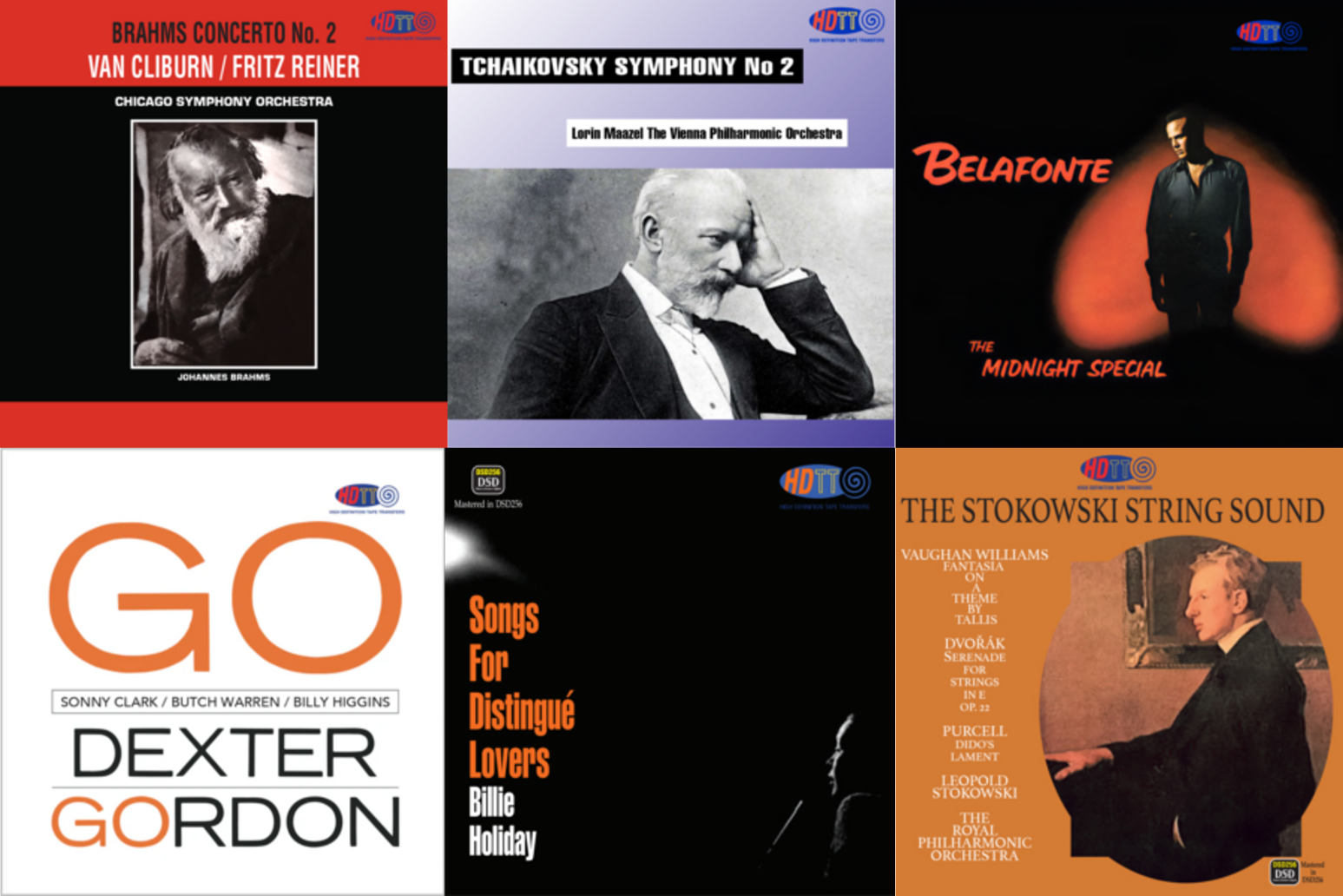
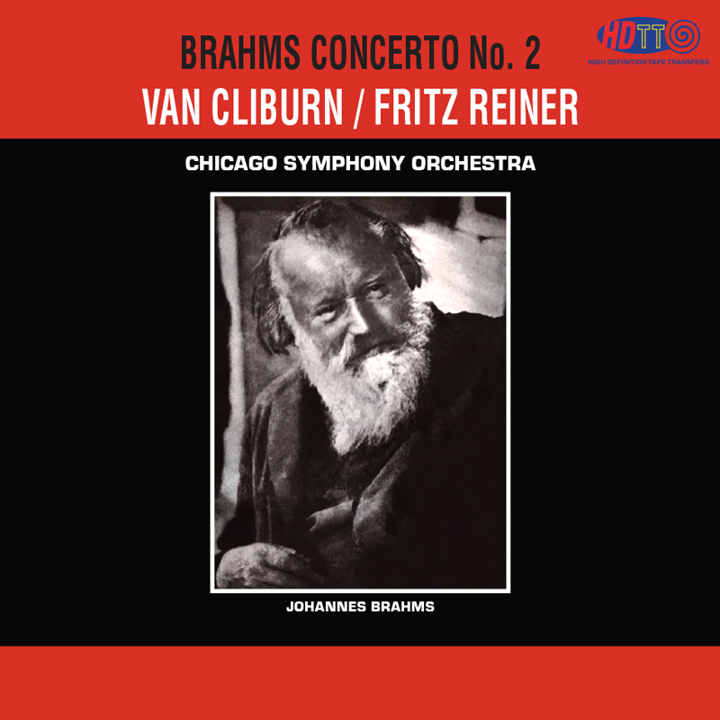
Brahms Piano Concerto No. 2, Van Cliburn, Fritz Reiner, Chicago Symphony Orchestra. 1961 2026 (DXD*, DSD256) HERE
Some recordings are of such historical importance that they deserve reissue even when the ideal source is unavailable. This 1961 performance of Brahms's Piano Concerto No. 2 by Van Cliburn and Fritz Reiner is one of those recordings.
Sourced from a 4-track tape, the sound quality is naturally not what one would expect from a 15ips 2-track tape source, but it is quite acceptable—perhaps even better than I remember hearing on LP, imperfect as aural memory can be.
But it is the performance that truly matters here. I defer to the summary on the HDDT website, which captures it perfectly:
"Brahms's monumental Second Piano Concerto receives a landmark interpretation from Van Cliburn and Fritz Reiner with the Chicago Symphony Orchestra, captured at Orchestra Hall in Chicago in May 1961 by producer Richard Mohr and engineer Lewis Layton, the celebrated RCA Living Stereo team at the height of their powers. Cliburn, fresh from his triumphant 1958 Tchaikovsky Competition victory in Moscow, brings a singing tone and Romantic depth ideally suited to this most symphonic of concertos, while Reiner's characteristic precision and architectural command provide the perfect counterweight. The result is a performance of rare unanimity, with a particularly memorable Andante featuring a luminous cello solo by Robert La Marchina."
What strikes me most is how naturally this performance unfolds. Cliburn never sounds as though he is trying to make the concerto "big"—he simply lets Brahms speak in long, spacious lines, and the grandeur takes care of itself. That singing tone everyone associates with Cliburn is very much here, but so is the strength and solidity this work needs. Reiner and the Chicago players give him exactly the kind of firm orchestral foundation that keeps everything moving with purpose. The Andante is especially memorable, not only for Robert La Marchina's beautiful cello solo, but for the way Cliburn answers it with such unaffected warmth.
While one might continue to hope for an even better source tape one day, the excellence of the performance is well presented here and makes for a very welcome addition to my music library. Even if the sonics remind you that this was not sourced from the very best surviving tape, the stature of the performance still comes through easily. This is one of those readings whose musical authority simply transcends limitations of the source.
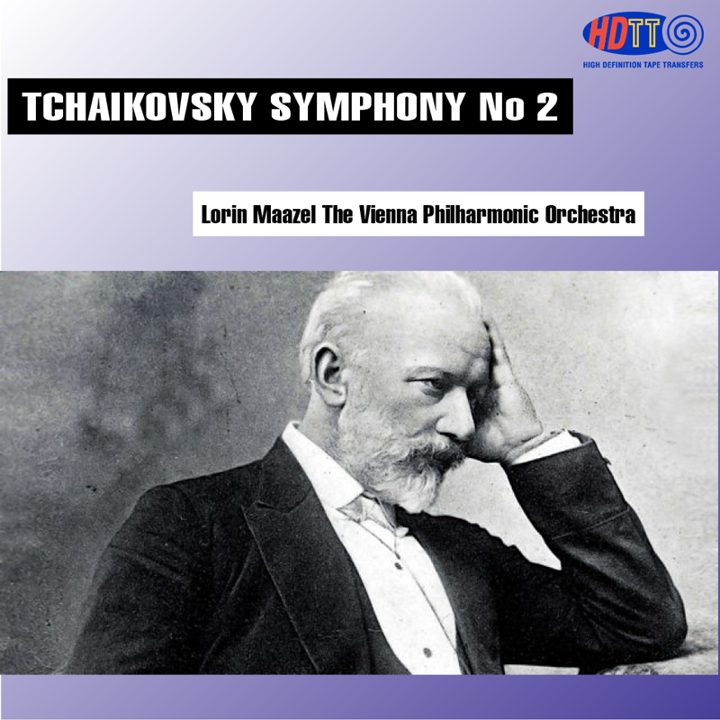
Tchaikovsky, Symphony No. 2 'Little Russian', Lorin Maazel, Vienna Philharmonic Orchestra. 1964 2026 (DXD*, DSD256) HERE
Ah, a younger Lorin Maazel delivering a lean, athletic, and brilliantly colored account of the "Little Russian" symphony with it's vibrant Ukrainian folk themes. This is the Lorin Maazel that I enjoy!
Youthful drive and orchestral brilliance are the first things one notices in this performance—there is dynamic forward motion. Maazel keeps the music moving with a firm rhythmic hand, never letting the folk-inspired themes become heavy or overly "picturesque." Instead, he emphasizes their energy and symphonic momentum, which suits this work beautifully. The Vienna Philharmonic responds with remarkable precision, but also with that unmistakable Viennese richness in the strings and burnished brass sonority that gives the score real color.
This is not the most "Russian" Little Russian, but it may be one of the most exhilarating. It captures the young Maazel at his most brilliant—fast reflexes, razor-sharp control, and a real instinct for making climaxes land. The finale in particular has tremendous sweep, its great "Crane" theme building with a sense of inevitability toward a thrilling close.
The famous tam-tam stroke before the coda is absolutely brilliant in this recording. It comes very near the end of the finale, just before the coda really takes off, landing at approximately 8:37–8:38 into the fourth movement in this HDTT release. What makes it so memorable here is not just the stroke itself, but the way Maazel prepares it. He builds the "Crane" theme with tremendous cumulative tension, so when the tam-tam arrives it feels less like an effect and more like the final release of all that gathered momentum.
If you enjoy Tchaikovsky's early symphonies for their raw vitality rather than their sentiment, as I do, you will find this performance immensely satisfying.
The sound quality of this transfer is excellent: clear, clean, highly detailed, with excellent dynamics. While it is also sourced from a 4-track tape, this is clearly one of the better sounding 4-track tapes. It is most satisfying, not leaving me hoping for more as I was with the Van Cliburn Brahms tape above.
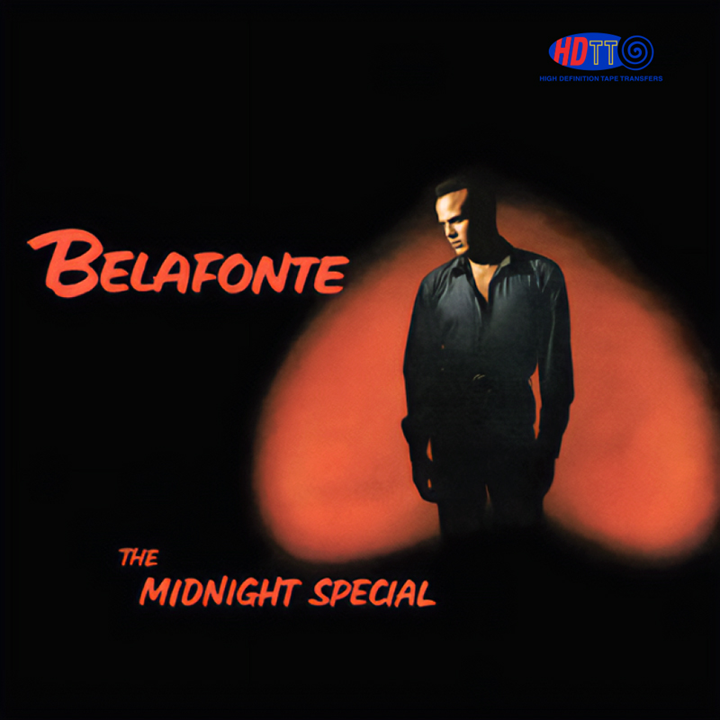
Harry Belafonte, The Midnight Special. HDTT 1962 2026 (DXD*, DSD256) HERE
Belafonte's The Midnight Special casts us back to a transformative moment in American music, when the raw energy of the folk revival met the sophisticated studio craft of the early sixties. Of particular note, this session includes the first credited appearance of Bob Dylan on a major-label release, his distinctive harmonica heard on the title track.
Of even greater significance is Belafonte's powerful storytelling in song, set against the rich intersection of the vibrant early 60s New York jazz and folk scenes.
The album features a masterful ensemble, including Joe Wilder on trumpet and Jerome Richardson on saxophone, all anchored by the intricate guitar work of Ernie Calabria and Millard Thomas.
The recording, engineered by the legendary Bob Simpson, offers a wonderfully three-dimensional listening experience, with excellent spatial depth and intimacy—qualities nicely preserved in the vintage 4-track tape source used for this transfer. It stands among the most transparent and resolving of the 4-track tape transfers HDTT has released.
The Midnight Special occupies a particularly important middle position in Belafonte's discography. It comes after the huge commercial and cultural breakthrough years—the calypso triumphs, the Carnegie Hall albums, and the great run of Caribbean and folk-centered releases—and shows him moving into something broader and, in some ways, deeper. By 1962, Belafonte was no longer simply the artist of Calypso or Jamaica Farewell; he had become a major interpreter of American vernacular song in the widest sense.
The album bridges several sides of Belafonte's artistry:
- the folk revival current that was gathering force in the early 60s
- his gift for dramatic narrative
- the polished RCA studio productions that gave his albums such scale
- the subtle jazz inflections of the New York players around him
In that sense, it feels like a pivot record. The earlier albums often relied on the Caribbean material or concert-stage charisma; this one feels more rooted in the American folk and blues tradition, yet still unmistakably Belafonte in its elegance and dramatic control.
For me, it belongs among the most representative studio albums of his mature RCA period. It may not have the sheer cultural footprint of Calypso or the legendary status of the Carnegie Hall sets, but it captures something equally valuable: Belafonte as a master curator of song traditions, drawing folk, blues, gospel, and jazz-inflected studio craft into a single, beautifully sequenced album.
Highly recommended.
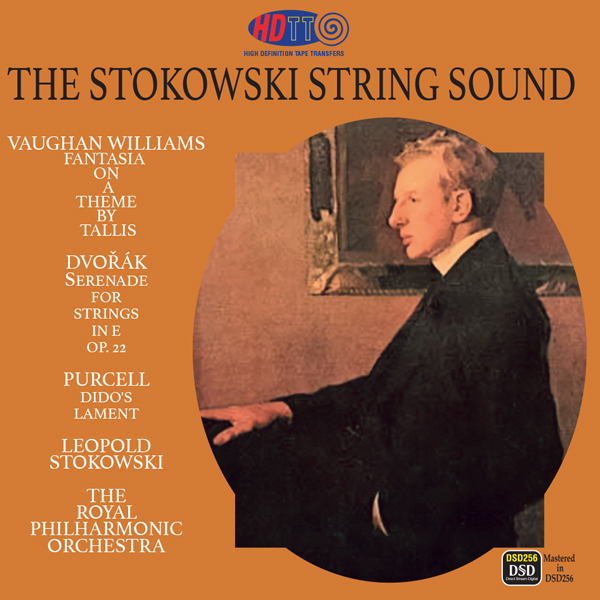
The Stokowski String Sound, Leopold Stokowski, The Royal Philharmonic Orchestra. HDTT 1975 2023 (Pure DSD256) HERE
What a revelation to experience the full impact of the Stokie sound!
For folks who've never experienced the full impact of Leopold Stokowski's string sound, this album will be a revelation. It was for me. Stokowski's sound is so distinctive. And this recording really lays it all out there.
Great strings, and those growling double basses too—a whole plethora of them. All of it preserved in vintage analog sound from the original master tape. I just love it.
Recorded at the famous Abbey Road Studio 1 in August 1975 by Desmar Records, the album opens with Vaughan Williams's famous Fantasia on a Theme of Thomas Tallis, taken at a flowing tempo and sustained on a bed of superb string sound.
The acoustic, shaped by Studio 1's variable reverberation panels, is generous and a perfect complement to the luxurious sonority Stokowski draws from his players.
The Vaughan Williams is followed by a completely anachronistic but wonderfully romantic and plush arrangement of Handel's Dido's Lament. The album then concludes with Dvořák's five-movement Serenade for Strings, its singing lines allowing the orchestra's string tone to glow from beginning to end.
This Pure DSD256 transfer, made from the original master tapes, sounds wonderfully transparent. Everything comes through beautifully: clean, open, very sweet, and yes, somewhat plummy—as it should be. The strings are glorious, the basses have that marvelous growl, and the whole presentation reminds you why vintage analog from a fine master tape can still sound so inviting.
I just love it.
And, as Dr. David and I have noted repeatedly, with a good DSD256 transfer and the right playback equipment, neither of us can reliably distinguish the original analog tape from the DSD256 transfer in side-by-side comparisons. So consider this another excellent opportunity to experience something very close to the master tape in your own listening space.
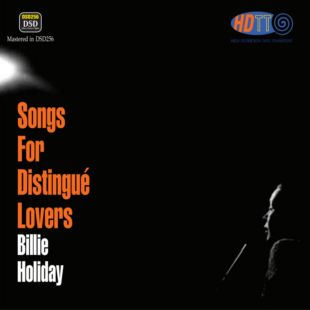
Billie Holiday, Songs For Distingué Lovers. HDTT 1957 2018 (Pure DSD256) HERE
Billie Holiday's Songs for Distingué Lovers sits among the most affecting of her late Verve albums, and part of what makes it so compelling is that it turns the very fragility of her late voice into expressive power.
By 1957-58, the youthful brightness of the Columbia and Commodore years is gone. What remains is something in many ways deeper: a darker grain, a lived-in phrasing, and that incomparable ability to bend time around a lyric. On this album, every line feels weighed for meaning. Even the most familiar standards—"A Foggy Day," "Stars Fell on Alabama," and especially "One for My Baby"—sound less like songs being sung than memories being revisited.
Harry "Sweets" Edison's muted trumpet and Ben Webster's tenor are ideal companions, both bringing warmth and an almost conversational response to Holiday's phrasing. Barney Kessel and Jimmy Rowles keep everything supple and understated, allowing Billie to linger behind the beat in that way only she could. The result is intimate without ever feeling small.
This is one of the best places to hear how Holiday's late style worked. The voice may be worn, but the storytelling is extraordinary. She no longer "interprets" the lyric in the conventional sense—she inhabits it completely. "I Didn't Know What Time It Was" and "Just One of Those Things" are wonderful examples of how she can make a standard sound at once rueful, elegant, and utterly personal.
This is late Billie at her most human—fragile, wise, and devastatingly direct.
And you'll likely not find this album in any better sound quality than in this HDTT Pure DSD256 release. It is superb.
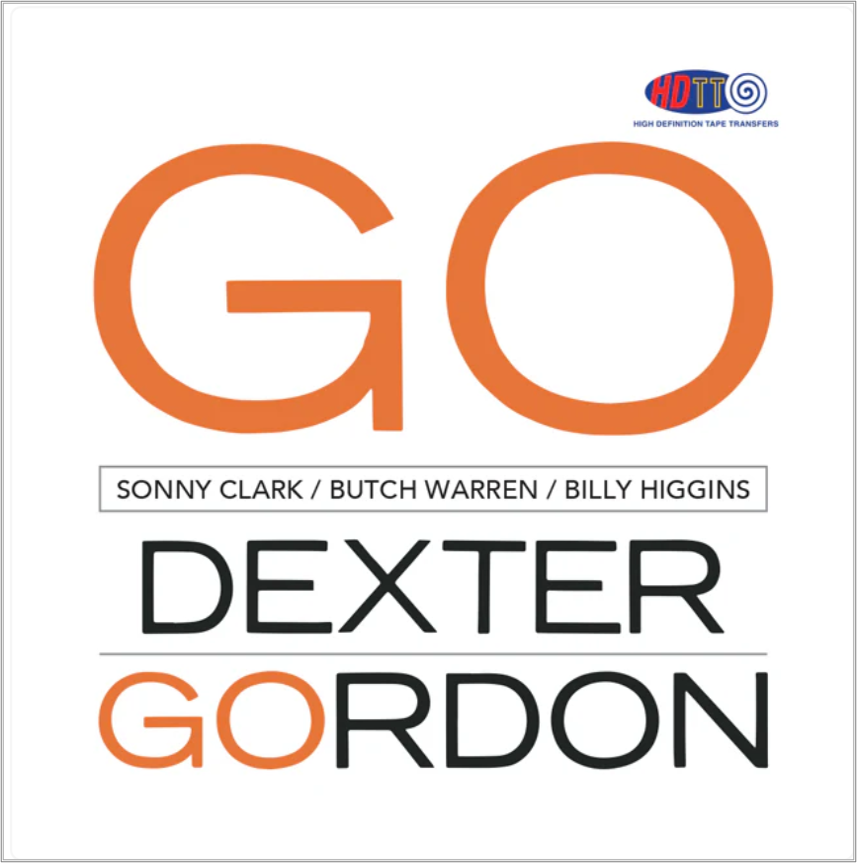
Dexter Gordon, Go! HDTT 1962 2022 (Pure DSD256) HERE
Dexter Gordon's Go! is one of those jazz albums that feels both utterly relaxed and absolutely definitive. And it's one of the most inviting entries into hard bop that I know.
What I find so appealing is the combination of Gordon's huge, easy tenor sound and the almost conversational flow of the quartet. The session has that unmistakable after-hours Blue Note feel: swinging hard, but never hurried. Gordon's phrasing is spacious and behind the beat in that wonderfully confident way of his, as though every line has all the time in the world. Yet the momentum never slackens, thanks to the perfect support of Sonny Clark, Butch Warren, and Billy Higgins. Sonny Clark in particular gives the album its elegant glide, his comping buoyant and harmonically sly.
Can you say ease without complacency? That's what comes to mind every time I play this album. The standards—Love for Sale, Where Are You?, and Three O'Clock in the Morning—never feel like routine blowing sessions. Gordon makes familiar material sound fresh, almost as if he were telling a story he had just remembered.
His playing on Where Are You? is especially beautiful: warm, late-night, and touched with just enough melancholy to completely draw you in.
Go! is Dexter Gordon at his most natural and appealing. If someone wanted to understand why his Blue Note period is so revered, this is one of the first albums I'd hand them.
The Pure DSD256 transfer from a 15ips 2-track tape is transparent and gorgeously natural sounding. This release is a prime example of why we spend so much time improving and optimizing our audio systems—a supremely rewarding listening experience.
* Once again, I am listening to the DXD edit master of these releases designated with an asterisk. In these, the DXD is the edit master and I find consistently that the edit master of whatever resolution gives me the best sound quality in my primary audio system. You should compare alternate resolutions/formats in your own playback system. As I've mentioned before, on Ann's office system, the DSD256 will typically sound best with the Teac UD-501 DAC in that system. (The HDTT web page is very clear about what processing has been applied for each release.)
I'll stop commenting about this for a while. I'm sure some of you are tired of me repeating this encouragement to do some careful listening in your own systems to determine what plays best for you.