

I've noted before that the offerings available in the HDTT catalog are a treasure house of the great recordings from the golden age of stereo. Yet again, Bob Witrak brings to us six new releases that further expand that marvelous library of great performances in some of the best sound quality in which these recordings can be found. All are classical recordings in this update. I hope you will find something that will entice you to explore further.
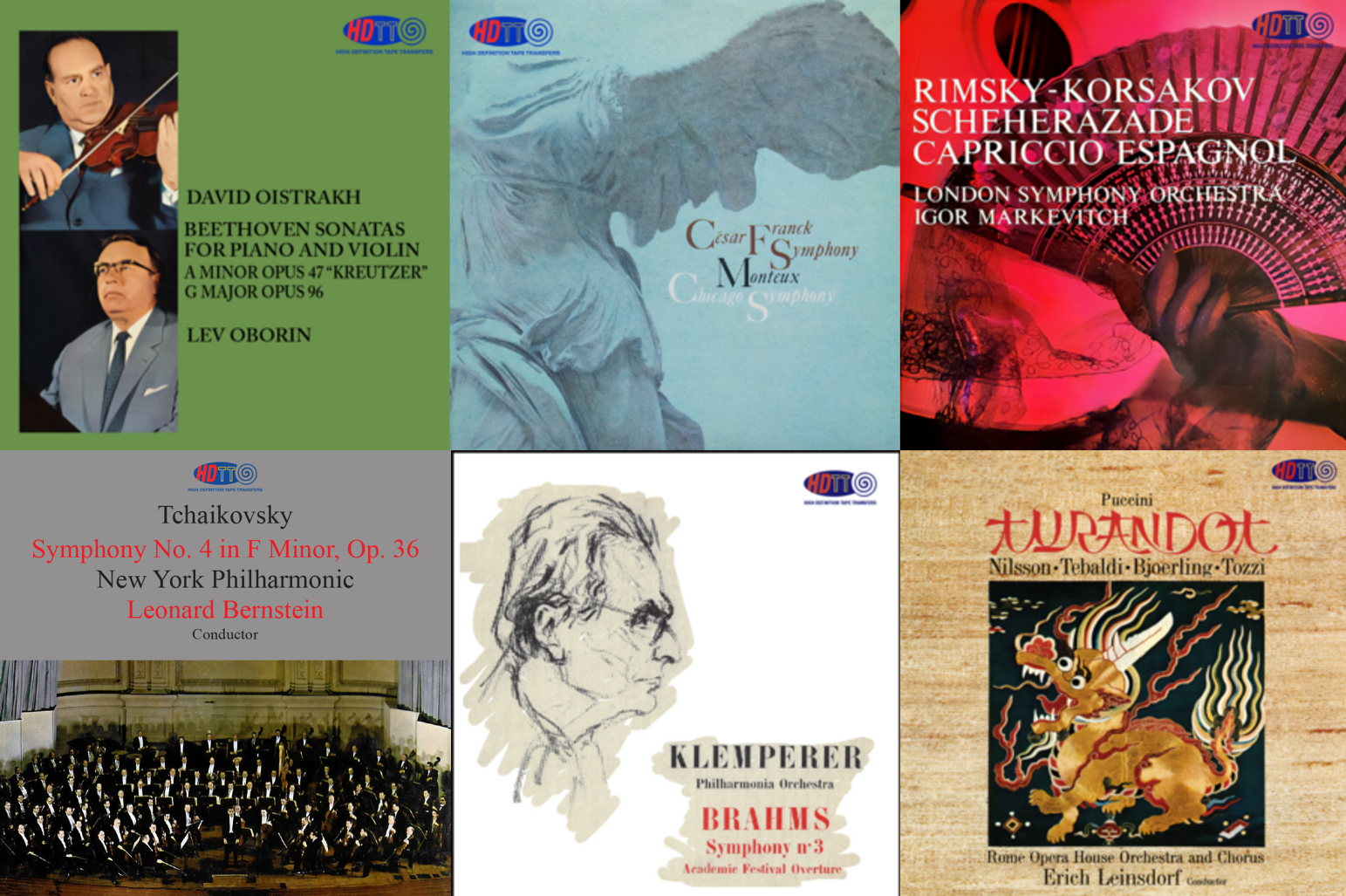
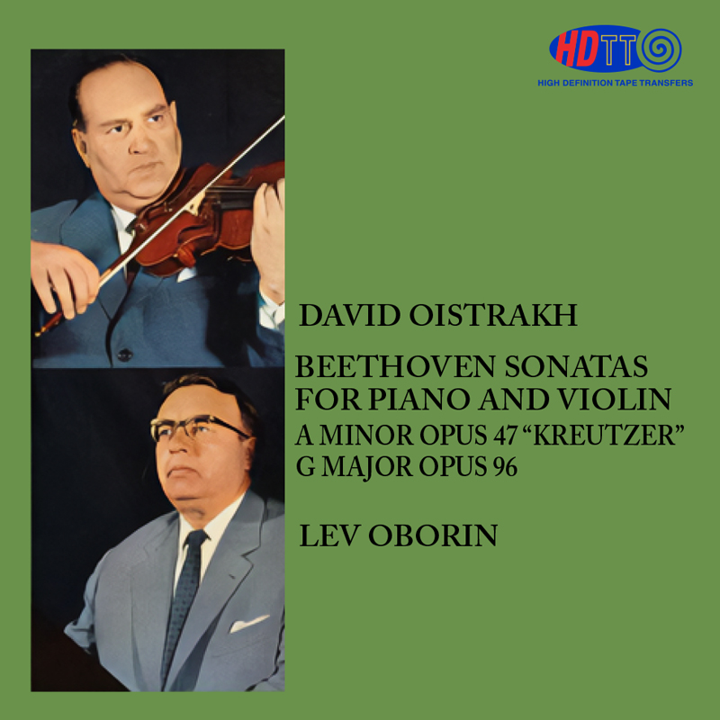
Beethoven Sonatas for Piano And Violin Op.47 (Kreutzer) & Op.96 - David Oistrakh, Lev Oborin. HDTT 1962 2026 (DSD256, DXD*) HERE
David Oistrakh has long been recognized as one of the great violinists of the twentieth century, and his sonata recordings with Lev Oborin are legendary. This 1962 studio performance was recorded at the height of their artistic maturity. It stands as one of the great mid-20th-century documents of the Russian school in Beethoven—broad, noble, and profoundly serious. This is not Beethoven played for glitter or display. It is Beethoven shaped as high drama and grand architecture.
Oistrakh was renowned for his expressive warmth—muscular and dynamic, capable of sustained lyricism that allows phrases to unfold with great beauty. Oborin was always his perfect musical partner, especially in the Kreutzer which is as much a piano sonata as a violin sonata. He plays with granite clarity and rhythmic firmness; his articulation is clean, his powerful substantial without percussive harshness. Together they give us a Kreutzer of breadth and gravitas rather than volatile theatricality.
This interpretation sits squarely within the Russian approach to Beethoven—less fleet than many modern readings, yet carrying a compelling moral and emotional authority.
As HDTT writes, "In these interpretations, the sonatas emerge not only as cornerstones of the violin repertoire but as deeply human statements—music that continues to resonate with urgency, tenderness, and enduring truth."
The transfer, drawn from a 2-track 15ips tape, and does not soften or smooth the natural edge of Oistrakh's violin tone. Those familiar with the live sound of a modern violin played with power and closely miked fairly will recognize the realism: at times aggressive, occasionally raw, certainly not always "pretty," but authentic. The same holds for the piano's forte passages. If you're seeking polish and sweetness, look elsewhere. If you want something direct and real, listen on.
Post script... For those asking, but what recording of these sonatas is "best" or which performance should I get, I'm sorry that I have no answer for you. This is a great performance. It is foundational for any library of classical music. Is it my favorite? Probably not. Do I think I need to "know" this recording? Yes—it establishes context for understanding so many other interpretations.
Franck Symphony In D Minor, Pierre Monteux, Chicago Symphony Orchestra. HDTT 1961 2026 (DSD256, DXD*) HERE
Another of the great RCA Living Stereo releases now reissued by HDTT from a 4-track tape. Recorded by engineer Lewis Layton and producer Richard Mohr, this is a classic account of one of the great Romantic symphonies from the masterful hands of Pierre Monteux and the immensely powerful Chicago Symphony Orchestra from 1961. Reissued many times, this interpretation continues to stand as iconic.
This performance, whilst a bit understated, is yet the standard against I tend to compare all other recordings of this work. For my listening preferences, most fall short, none exceed it.
Monteux approaches Franck's only symphony with the same qualities that mark his finest recordings: structural clarity, rhythmic discipline, and a refusal to indulge in excess rhetoric. Where some conductors treat the piece as a vehicle for heavy Romantic atmosphere, Monteux keeps the music moving forward with classical balance and transparency.
The Chicago Symphony Orchestra of the early 1960s was in magnificent form. Their sound under Monteux combines discipline with rich sonority: brass are powerful yet controlled; strings have depth and cohesion; and winds bring distinctive color to Franck's orchestration.
The recording has the hall bloom typical of RCA's best early-1960s work while still preserving orchestral detail.
In alternative recordings...
The Living Stereo recording from Charles Munch and the Boston Symphony Orchestra (HERE) is fiery, idiomatic, often considered the classic French reading.
Bernstein's recording for Columbia with the New York Philharmonic (HERE) is, as expected, dramatic and emotionally charged; his later recording with Orchestre National de France even more so.
Paul Paray, conducting the Detroit Symphony Orchestra, on Mercury Records takes a somewhat more dramatic and extroverted approach. His performance is faster, more incisive rhythmically, and often more overtly passionate (HERE). The sound quality is similarly more upfront and impactful reflecting engineer Robert Fine's closer recording style.
Monteux does not aim for these levels of interpretive intensity. His Franck is not about overt drama or Romantic excess. It is about clarity, proportion, and musical integrity. It offers a classically balanced, beautifully proportioned performance that highlights the symphony's structure and craftsmanship. The result is a performance of quiet authority—one that rewards repeated listening.
For me, this Monteux interpretation it is nigh on perfect. Your tastes may differ and lead you to some other preference. But, however you assess it, it is a performance to be reckoned with. And you need to have heard it.
The original recording from engineer Lewis Layton is as fine as any of the many outstanding recordings he made in Chicago—expansive and rock solid sound stage, precise instrument placement, huge dynamics. HDTT's transfer from a 4-track tape is open and dynamic. There is a bit of harshness in some passages which I can't account for, but overall, this is a very nice release that I've been enjoying immensely. It has the incisive clarity, sharply defined transients, and huge dynamic contrasts that are woefully missing from the RCA SACD reissue.
Rimsky-Korsakov, Scheherazade & Capriccio Espagnole, Igor Markevitch, London Symphony Orchestra. HDTT 1962 2026 (DSD256, DXD*) HERE
I'll admit to loving huge orchestral color and dynamics. And so, yes, I'm a fan of Nikolai Rimsky-Korsakov's Scheherazade. There are few works that display the full range of a large modern orchestra as beautifully as does this massive orchestral work. And there are few works that will as fully exercise and challenge your audio system as will this work.
Out of curiosity, I just checked to see how many different performances of this work were currently in my music library. Would you believe 16? Yes, I'm a nut about this work, and I have so many different recordings for two reasons: 1) many of the greatest conductors and orchestras have programmed this work, and 2) all of them are different. I like some better than others, but all give different insights into the music.
This performance by Markevitch ranks high in my estimation of these various performances. It is bold, direct, muscular, emphatic, and performed with technical brilliance. Both Markevitch and the London Symphony Orchestra were performing at the top of their game when they recorded this with Phillips in 1962 in Wembley Town Hall, London.
Many performances of Scheherazade emphasize lush atmosphere and exotic color. Markevitch takes a different path. His reading highlights clarity, rhythmic vitality, and structural control. Rather than allowing the music to drift into impressionistic reverie, he keeps the narrative moving forward with taut pacing. Under his control, the orchestral textures remain unusually transparent emphasizing the structure of the work.
The music moves smartly along, but without some of the orchestral color and bloom of Fritz Reiner (HERE) or Ernst Ansermet (HERE, in an excellent Pure DSD256 transfer). They are excellent examples of very different approaches to the music: all valid, excellent, yet different.
With Markevitch one can enjoy a performance that is somewhat more analytical, rhythmically taut, and emphasizing structure and clarity. With Reiner, one hears a commanding and brilliant performance that highlights orchestral virtuosity and dramatic spectacle; his is stunning in its impact. And with Ansermet, one hears perhaps the most idiomatic interpretation: fluid and atmospheric, focusing on color and narrative storytelling.
All of this is why I so much enjoy listening to classical music and having the privilege of hearing many different performances.
Absolutely you should get this Markevitch recording. The transfer from an original Phillips LP is excellent: open, dynamic, highly detailed, extremely quiet background. You'll enjoy a very different experience with this exceptional piece of music. It is a warhorse, but one well worth returning to again and again in different performances.
And, speaking of different performances, don't ignore Beecham (HERE), or Monteux (HERE), or Dorati (HERE), or Bernstein, or Kondrashin, or Noseda, or Petrenko, or... Hmmm. My listening card may just get filled for the balance of the weekend with so many to choose from.
Markevitch's performance of Rimsky-Korsakov's Capriccio Espagnole on this same album is not to be overlooked. In its brilliance, precision, and vivid detail, this is an outstanding performance of this work. Tempos are energetic and tightly controlled, and dance motifs around which the work gravitates are clearly defined. As in the Scheherazade, the performance is leaner, faster, and more tightly focused than many versions. Yet it still comes off as a dazzling orchestral showpiece filled with color.
If you have loved vinyl for most of your listening life, as I have, this new reissue from HDTT will be right up your alley. It is sourced from an original Phillips pressing, and the transfer retains all the virtues of warmth and voluptuousness of which great vinyl is capable—without the ticks, pops, and background noises we LP listeners are so familiar. Once again, Bob Witrak has demonstrated just how excellent his Vinyl Record Restoration series can be.
Highly recommended.
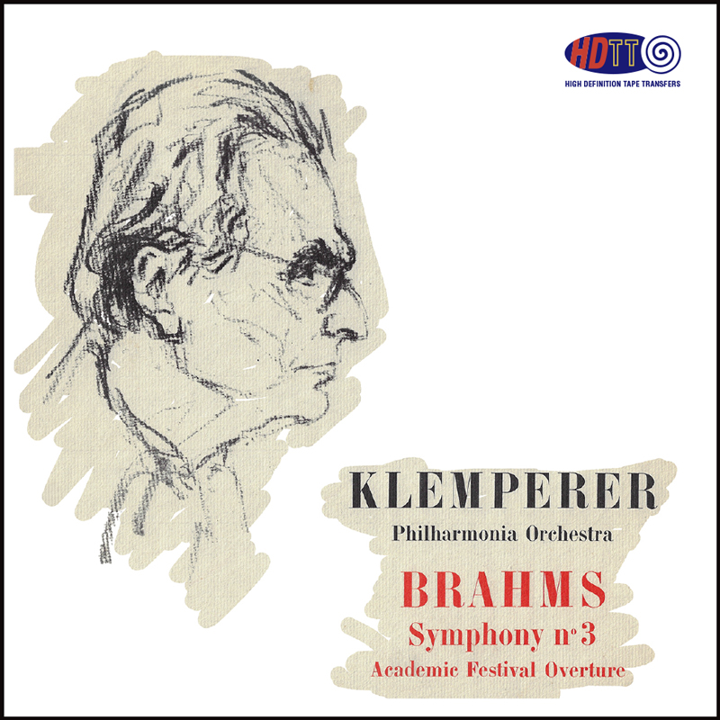
Brahms Symphony No. 3 & Academic Festival Overture, Otto Klemperer, Philharmonia Orchestra. HDTT 1957 2026 (DSD256, DXD*) HERE
Here is one of the great performances of the Brahms Symphony No. 3. As HDTT describes: "Captured at London's famous Kingsway Hall, this performance of Brahms's Symphony No. 3 and the Academic Festival Overture shows exactly how Klemperer became such a legend on the podium. Working with the orchestra Walter Legge built, Klemperer created a sound that's tough to beat: rock-solid, gritty, and incredibly rich."
I've never been a great fan of Klemperer's performances—I often find him to granitic, too monumental, too lugubrious. But this performance of this work strikes me as just right. He keeps a steady, powerful pace that simply works for me here. Yes, I somewhat miss the lyricism and autumnal warmth found in other interpretations. But the tradeoff from Klemperer is a symphonic structure of great strength and coherence. And that is well worth hearing, and well worth celebrating.
The Academic Festival Overture receives a performance of surprising dignity and solidity. Many conductors treat the piece primarily as a jovial orchestral romp built from student drinking songs. Klemperer instead gives the music symphonic weight and grandeur. And, accordingly, gives us a very different sense of what this music can be about. Do I prefer other performances? In this case, yes. But, this is very educational. And to be respected.
This is yet another in HDTT's Vinyl Record Restoration series, and the sound is excellent. I was hesitant because the source is an original Angel pressing. I don't know about your experience, but my experience with Angel pressings compared to imported EMI pressings was never very good. But this piece of vinyl is just excellent. And perhaps it is because it is a pre-1960 original pressing (manufactured before lacquer cutting and metal parts manufacture shifted from England to the United States). I rarely had one of these original early pressings—mine were typically later pressings and pretty disappointing.
But this! Ah, this is remarkable. I could mistake it for an EMI import pressing. When coupled with the superb transfer process Bob applies in creating these VRR releases, the sound quality is impressive and very satisfying.
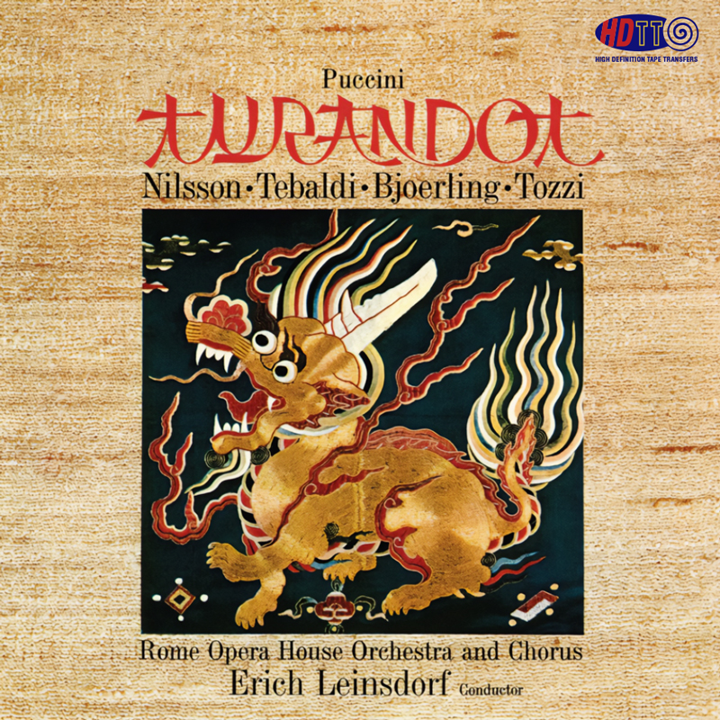
Puccini Turandot, Erich Leinsdorf, Rome Opera Orchestra and Chorus, with Birgit Nilsson, Renata Tebaldi, Jussi Björling, and Giorgio Tozzi. HDTT 1959 2026 (DSD256, DXD*) HERE
One of the most celebrated of the great romantic operas, this recording from Rome in 1959 is among the most distinguished operatic productions from the RCA Living Stereo era. With an international cast of exceptional caliber to bring Puccini's monumental score to life, the legendary RCA recording team of producer Richard Mohr and engineer Lewis Layton deliver a monumental production. Layton's pioneering stereo techniques helped define the sound of classical recording in the late 1950s. Here Mohr and Layton match the wonders being created by the Decca recording team under Kenneth Wilkinson in the revered recordings of Wagner's Ring Cycle.
Few operas combine spectacle, myth, and emotional intensity with the mastery found in Giacomo Puccini's final masterpiece, Turandot. The story is drawn from a Persian fairy tale. Set in a legendary imperial China, the drama centers on Princess Turandot, whose beauty is matched only by her implacable cruelty. To avenge an ancestral wrong, she has sworn never to submit to marriage. Suitors who seek her hand must answer three riddles; failure means death. The people of Peking have watched countless princes fall victim to her challenge. Yet into this grim ritual steps an unknown prince, Calaf, who dares to risk everything for the chance to win Turandot's love.
At the center of the performance is the remarkable Swedish soprano Birgit Nilsson, whose portrayal of Turandot has long been considered one of the definitive interpretations of the role. Nilsson's voice, noted for its extraordinary power and clarity, meets the formidable demands of Puccini's writing with seemingly effortless command. Her performance captures both the icy grandeur of the princess and the dramatic transformation that unfolds in the opera's final act.
Opposite Nilsson appears tenor Jussi Björling as Calaf. Although Björling's career was nearing its final years at the time of this recording, his voice retained its characteristic beauty, elegance, and lyrical warmth. His interpretation of Calaf combines heroic brilliance with expressive nuance, culminating in a radiant performance of "Nessun dorma" (Act III, track 27) that remains one of the most admired versions ever recorded.
The pivotal role of the gentle slave girl Liù is sung by Renata Tebaldi, whose richly expressive soprano brings a deep emotional resonance and lyrical beauty to this critical part. It is Liù's whose devotion to Calaf and ultimate self-sacrifice that brings compassion and humanity to the otherwise ruthless world in which this opera plays out. Through Liù's music Puccini achieved some of his most touching and intimate writing.
Musically, Turandot represents the largest and most ambitious score Puccini ever attempted. The opera calls for massive orchestral and choral forces, producing a sonic landscape of extraordinary richness. Puccini worked tirelessly on Turandot during the final years of his life but struggled to complete the opera's final duet between Turandot and Calaf. When he died in Brussels in November 1924, the score remained unfinished. The task of completing the opera fell to the composer Franco Alfano, who based his ending on Puccini's surviving sketches. At the opera's premiere at La Scala in April 1926, conductor Arturo Toscanini famously halted the performance at the point where Puccini had laid down his pen, addressing the audience with the words: "Here the master ended." Subsequent performances included Alfano's completion, allowing the opera to reach its dramatic conclusion—as does this performance.
More than sixty years after its creation, this recording continues to stand as one of the most admired interpretations of Turandot. It preserves a remarkable gathering of singers at the height of their artistry, supported by superb orchestral playing and the technical excellence of the RCA Living Stereo team. Together they bring Puccini's final opera to life in a performance that combines dramatic intensity, vocal splendor, and timeless musical beauty.
Transferred from a 4-track tape, the sound is open, detailed, and dynamic. It fully reveals the full scale of Puccini's orchestration captured by Lewis Layton. From the delicate lyricism of Liù's arias to the thunderous grandeur of the court scenes, this recording creates a sonic image that remains impressive decades after its original release. Recommended without reservation. It's great.
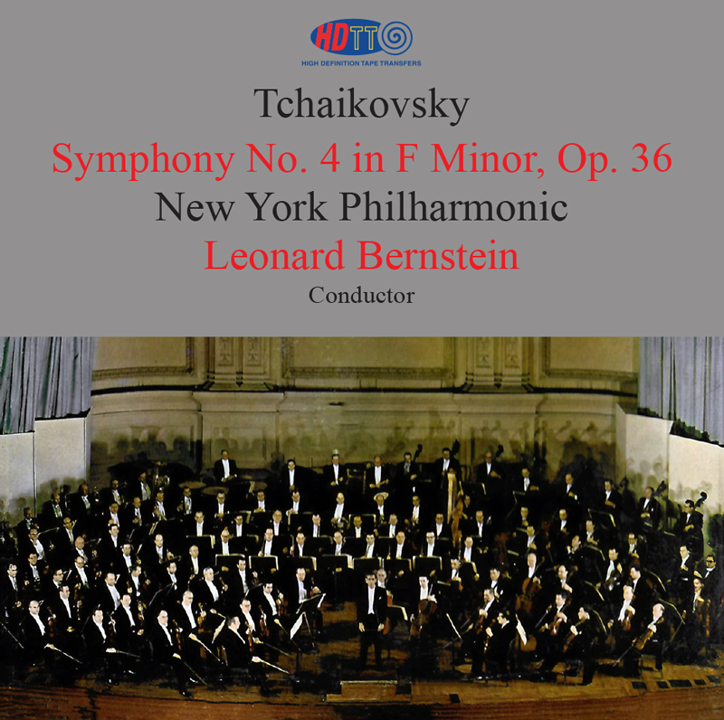
Tchaikovsky Symphony No.4, Leonard Bernstein, New York Philharmonic. HDTT 1958 2026 (DSD256, DXD*) HERE
Ah, nice. This this the young Leonard Bernstein in full ascent—this is Bernstein the dramatist, the risk-taker. Unlike his later performances in the 1970s and 1980s, this performance delivers with brisk tempos, sometimes pressing forward with nervous intensity. The rhythmic profile is sharply etched, almost volatile. The emotions are urgent, perhaps even defiant. It is this recording that shows off Bernstein's dynamic conducting style, a drama that drives with technical precision. All of which has long made this September 30, 1958, session endure as a favorite among Tchaikovsky enthusiasts. Count me on board.
His later recordings, particularly with the Vienna Philharmonic in the 1980s with Deutsche Grammophon, change dramatically in character. Bernstein adopts broader, sometimes markedly slower, tempos. His phrasing is more expansive, more elastic—often pulling the music all out of shape as he seeks an emotionally deeper connection and frequently darker sound. Of course, with the Vienna Philharmonic this could be all about leveraging the strengths of that grand orchestra. And you may prefer those later performances.
But, I miss the the interpretive energy of 1958. This is a performance of sheer excitement and spontaneity—a young Bernstein seizing the music with both hands. It continues as my favorite among Bernstein's many different recordings of this piece.
HDDT has sourced this transfer from a 2-track tape and the sound quality is very good: extended dynamic range, excellent detail, very quiet background. It is as good as I've ever heard this sound.
* Once again, I am listening to the DXD edit master of these transfers. Bob Witrak transfers from the source in DSD256 but, for releases not labeled as Pure DSD256, he will have transferred that file to DXD for some post-processing to get the best sound quality he can achieve from the source. So, in these cases the DXD is the edit master, and I find consistently that the edit master of whatever resolution gives me the best sound quality in my primary audio system. You should compare alternate resolutions/formats in your own playback system. As I've mentioned before, on Ann's office system, the DSD256 will typically sound best with the Teac UD-501 DAC in that system. (The HDTT web page is very clear about what processing has been applied for each release.)