
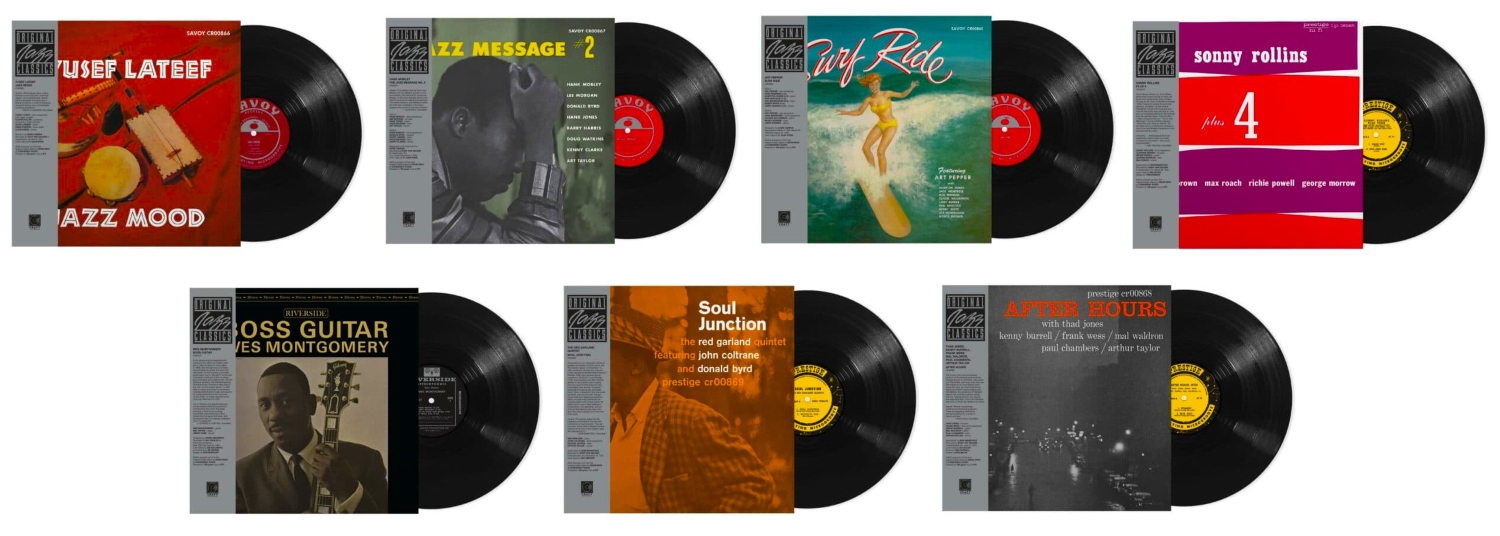
Among Craft Recordings' late-season jazz releases are seven new titles in the Original Jazz Classic reboot series, along with an exceptional new Bill Evans Trio box set that highlights the complete studio recordings of his classic first trio. The OJCs feature three 1957 releases on the Savoy label, including reedman Yusef Lateef's Jazz Mood, saxophonist Hank Mobley's Jazz Message #2, as well as West Coast sax player Art Pepper's Surf Ride. Also available is guitarist extraordinaire Wes Montgomery's 1963 Riverside Records date, Boss Guitar; along with three Prestige label recordings, saxophonist Sonny Rollins' Plus 4 (1956), trumpeter Thad Jones' 1957 sextet date, After Hours, and pianist Red Garland's 1957 quintet session, Soul Junction. Craft's new 5-LP Bill Evans Trio box set, Haunted Heart: The Legendary Riverside Studio Recordings, collects every studio track from his classic, but tragically short-lived early trio that featured bassist Scott LaFaro and drummer Paul Motian. I received evaluation LPs for the OJC titles from Yusef Lateef, Hank Mobley, Art Pepper, and Wes Montgomery, as well as the Bill Evans Trio LP box set.
Of course, the OJC reissues were remastered from the original analog tapes by Kevin Gray at Cohearent Audio; he also cut the lacquers for the LPs that were pressed on 180 gram audiophile vinyl at RTI. All were housed in heavy tip-on outer jackets printed by Stoughton, with crisp artwork sourced from the vaults of Prestige, Riverside, and Savoy Records. The outer jackets all have the classic, high-gloss coating that matches the originals, and each sports a custom OBI strip that offers a glimpse of each reissue's artistic and technical information. All Craft OJC LPs arrive inserted in premium rice paper inner sleeves, and the pressings from RTI are near perfection. Haunted Heart: The Legendary Riverside Studio Recordings was remastered by Paul Blakemore at CMG Mastering, while tape transfers and audio restoration for the set's pair of studio albums, 1960's Portrait in Jazz and 1961's Explorations, were performed by Jamie Howarth and John Chester at Plangent Processes. Kevin Gray mastered the vinyl and cut lacquers for the 180 gram LPs at Cohearent Audio. No information is yet available as to where the 180 gram LPs were pressed, but they're beautifully glossy, pristine, and whisper quiet during playback.
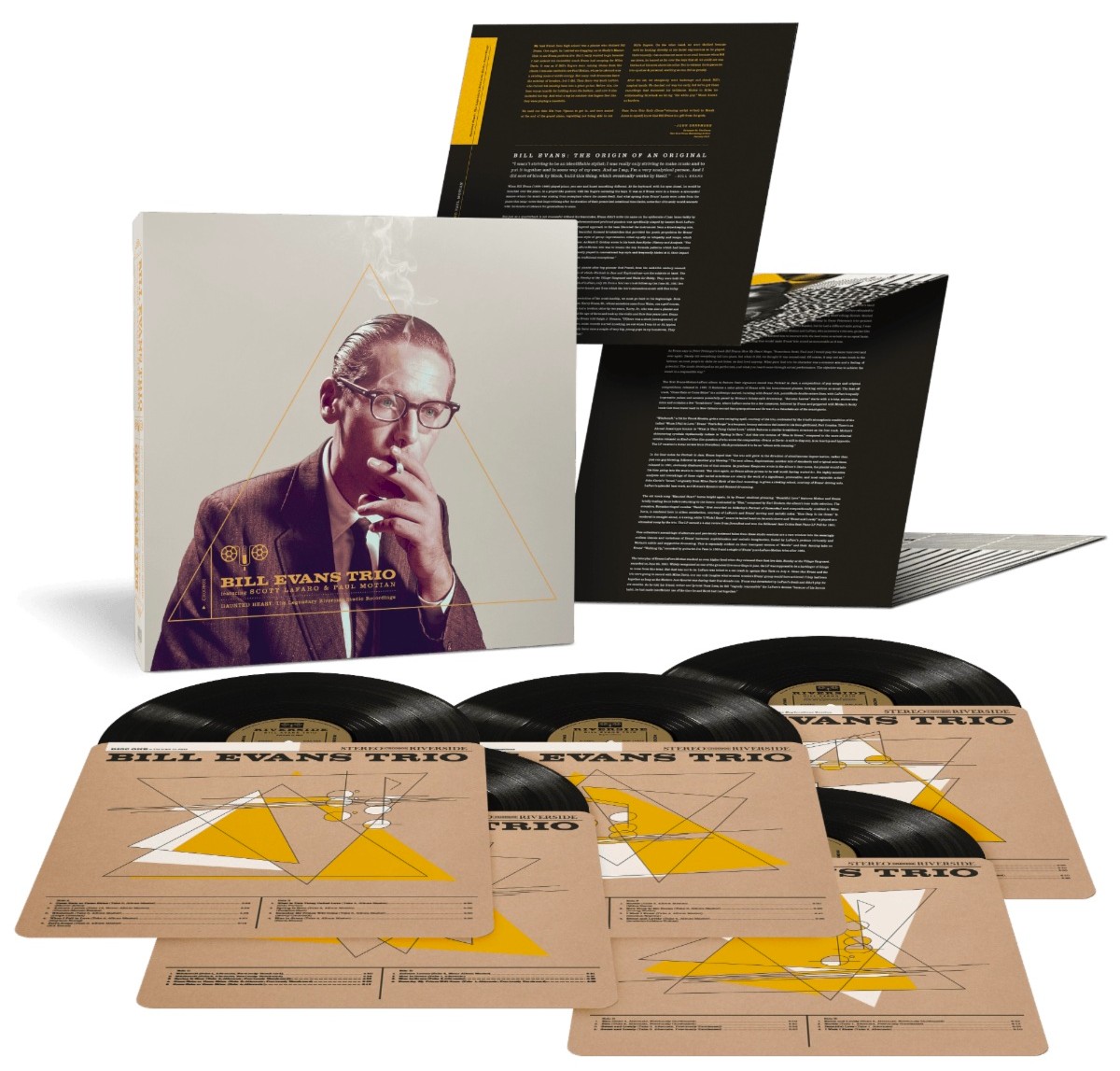
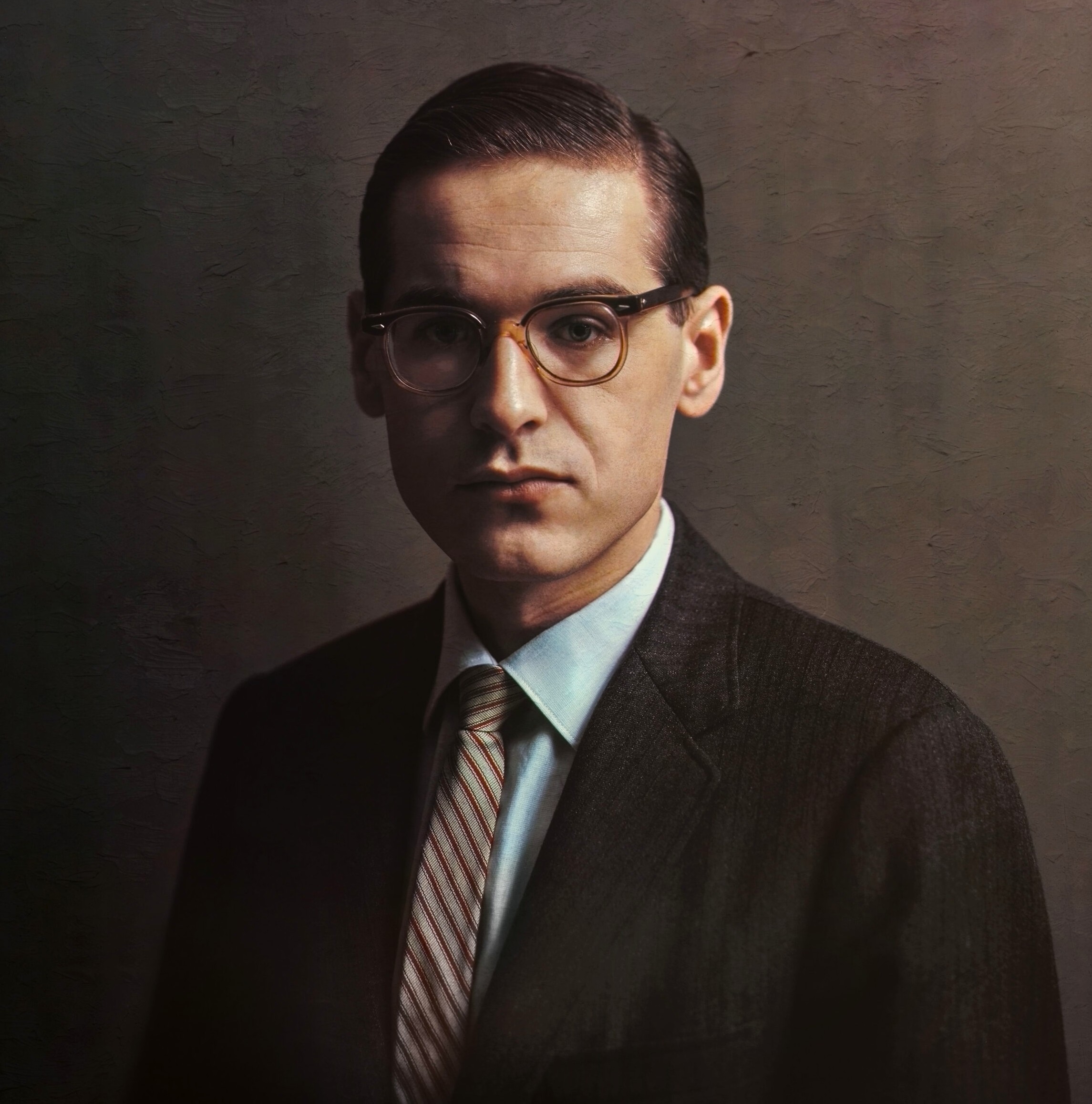
Haunted Heart: The Legendary Riverside Studio Recordings's elaborate packaging includes a satin varnished, foil-stamped outer slipcase, with two expanded, single pocket album jackets inserted within. Those jackets are die-cut across their faces with a triangular motif that matches that featured on the outer slipcase; printed slipsheets featuring the original album art for Portrait in Jazz and Explorations peek through the die-cuts for each jacket. The jacket for Portrait in Jazz contains two LPs; one with the original studio LP, and a second with the alternate takes. While the jacket for Explorations contains three LPs, with two additional discs of alternate takes (the sessions for this album were difficult by all reports, with multiple takes of almost every tune). Each LP is inserted in a stylized, printed paperboard inner sleeve that's surprisingly lined with a rice-paper insert (nice touch!). An accordion folded printed insert sports a stylized poster of Bill Evans on one side, while the opposite features an introduction by Door's drummer John Densmore (he actually snuck into Shelly's Manne-Hole as a teen to see this trio!) and an informative and entertaining essay from jazz writer Eugene Holley Jr (Downbeat, Hot House Jazz Guide, SFJAZZ). Haunted Heart: The Legendary Riverside Studio Recordings is one of the most visually striking box sets I've ever seen!
The OJC reissues are being made available as LPs and high resolution digital files for download or streaming on most major services, and can also be ordered (or in certain cases, pre-ordered) from Craft's web store HERE. Haunted Heart: The Legendary Riverside Studio Recordings is available as 5-LP or 3-CD sets, as well as digital downloads, and can be ordered from the web store HERE. They'll also be available at many online providers, as well as brick and mortar locations like your favorite independent record store. As of the time of this review, many of the titles were sold out on Craft's web store, but I've seen them currently available at other sites online and at my local independent record store, so they shouldn't be too difficult to track down.
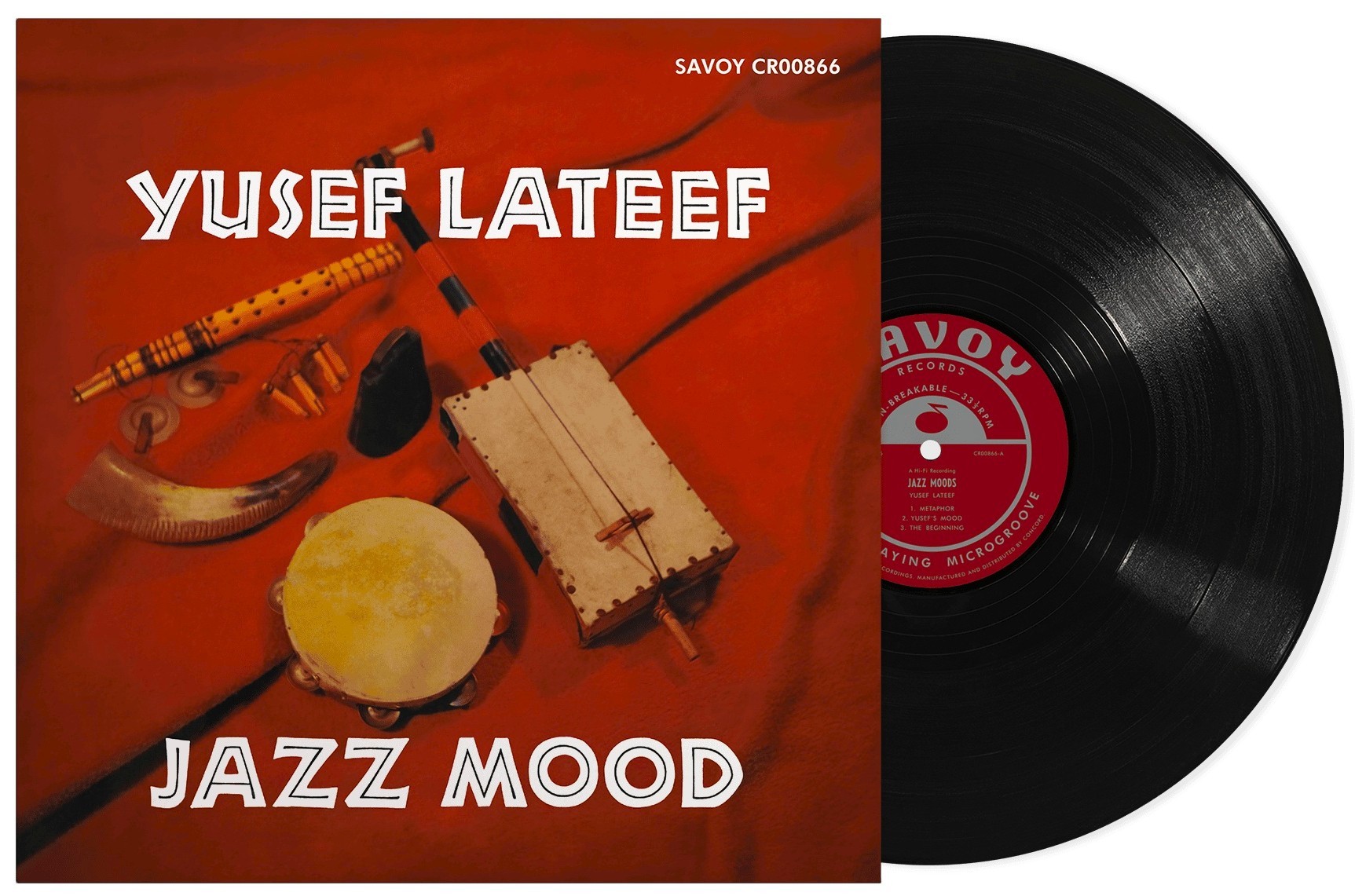
Yusef Lateef, Jazz Mood. 180 gram Savoy Records LP, $39
Yusef Lateef's perennial chestnut Eastern Sounds may have become his most celebrated exploration of a melange of hard bop with Mid-Eastern music upon its 1962 release, but the seeds were sown five years earlier with his second studio album, 1957's Jazz Mood on the Savoy label. Lateef performs on a variety of reeds and blown instrumentation here, including tenor sax, flute, and the argol (an ancient, Mid-Eastern reed instrument similar to an oboe), along with accenting his performances with the guiro, which is a hollow gourd with parallel notches that's scraped to create a percussive sound. He was joined in the sessions by Curtis Fuller on trombone and tambourine, Hugh Lawson on piano, Ernie Farrow on bass and rabat (another Mid-Eastern stringed instrument that's bowed or plucked), along with Louis Hayes on drums and Doug Watkins on finger cymbals and percussion. Many of the exotic instruments in use are depicted on the album's cool cover art, which serves to reinforce the Eastern vibe of the sessions.
All the tracks on Jazz Mood were penned by Yusef Lateef. The album opens with "Metaphor," in which he plays a haunting wail on the oboe-like argol as the track evolves into a more traditionally melodic blues. Lateef then switches to tenor sax, and is joined by Curtis Fuller's trombone along with piano and bass accompaniment. "Yusef's Mood" is a traditional blues performed with more customary jazz instrumentation that develops into an all-out blowing session between Lateef's sax and Fuller's trombone. "The Beginning" plays in 7/4 time, and Lateef's motif on sax gives the tune a heavily Asian feel. Side two opens with "Morning," which features Ernie Farrow on plucked rabat in place of the more traditional bass; Hugh Lawson soon joins in with a nice vamp on piano, while Lateef's sax and Fuller's trombone take the tune into more traditional jazz territory. "Blues in Space" takes an Arabic motif and turns it into another blowing session with a really swinging groove. Other than an unofficial reissue in 2022, Jazz Mood has been out of print on LP in the US since its 1957 release. And was never reissued domestically as a CD—listings for the album are virtually nonexistent on Discogs.
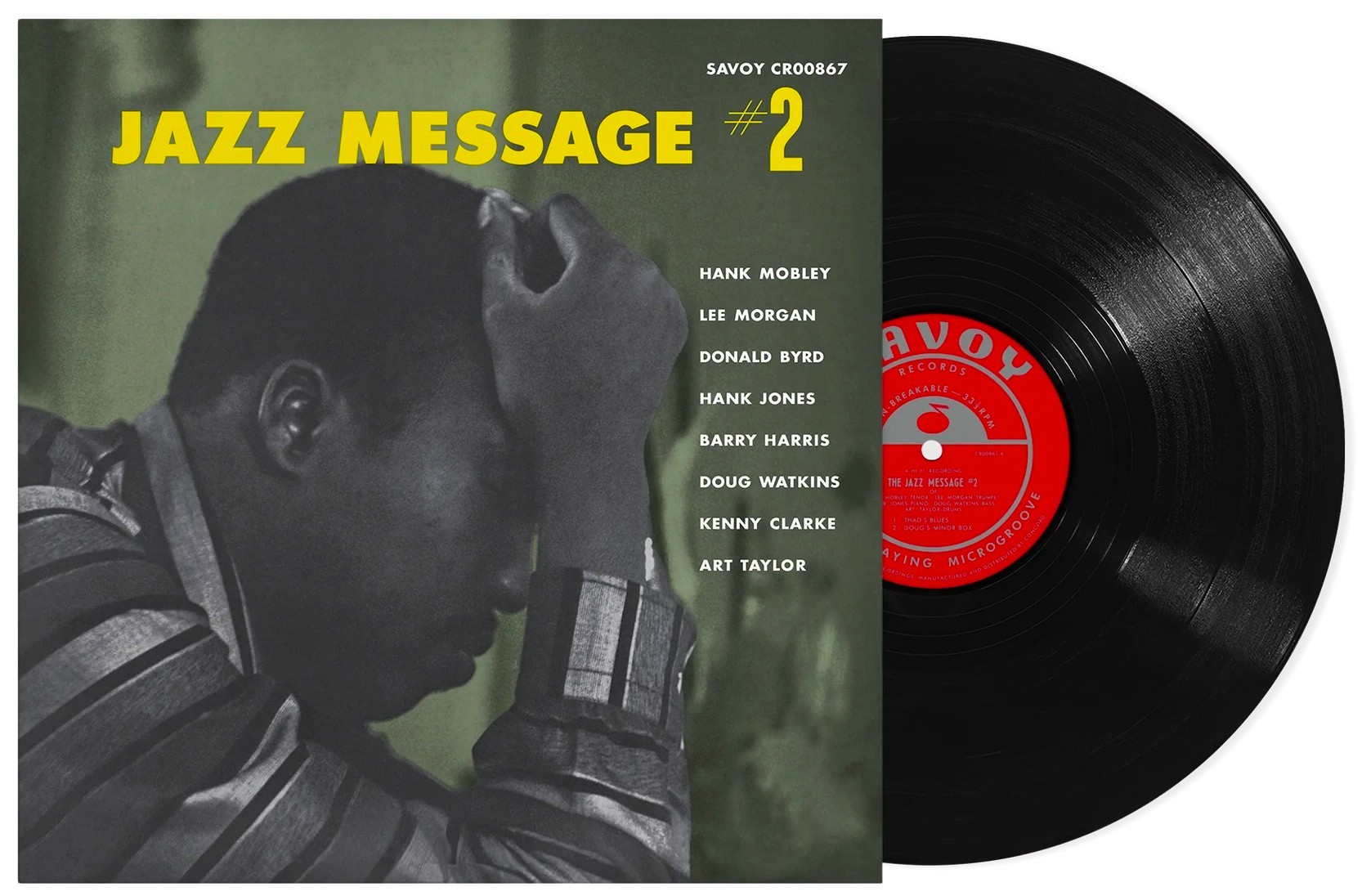
Hank Mobley, Jazz Message #2. 180 gram Savoy Records LP, $39
Hank Mobley's long association with Art Blakey's Jazz Messengers obviously impacted his creative process, as his initial forays as a leader often featured some variation on a "jazz message." His first two outings for the Savoy label were 1956's The Jazz Message of Hank Mobley, followed by 1957's Jazz Message #2, both of which followed a format that featured two distinctly different groups of players performing on each album side. Mobley was actually very prolific in 1957, recording no fewer than seven studio albums scattered across the Savoy, Prestige, and Blue Note labels. Jazz Message #2 was recorded at the Van Gelder Studio in Hackensack, New Jersey, with Rudy Van Gelder at the controls; Ozzie Cadena produced the album for Savoy Records. The only constant between both sides is, of course, Mobley on tenor sax and Doug Watkins on bass. Side one features the upstart Lee Morgan on trumpet (he was still a teen at the time!), Hank Jones on piano, and Art Taylor on drums. Side two has Donald Byrd on trumpet, Barry Harris on piano, and Kenny Clarke on drums. The dual groups give each set of performances a distinctly different flavor.
Side one opens with the album's longest track, trumpeter Thad Jones' "Thad's Blues," with Lee Morgan giving a star turn here with the kind of piercing trumpet solos that would soon find the eighteen-year-old at the forefront of hard bop jazz. Thad Jones' brother Hank adds a particularly effective piano solo in the tune's center. Doug Watkins' "Doug's Minor B'OK" is a rhythmic blues that offers plenty of room for all the players to stretch out, with both Lee Morgan and Watkins taking extended solo turns; Art Taylor cuts loose and pounds the skins towards the final chorus. Mobley wrote all three tunes on side two, which opens with his "B. for B.B." , another excellent blues that features some superb interplay between Mobley's lyrical sax and Donald Byrd's bell-like trumpet tone. Barry Harris's silken piano ices a tune that playfully bops along. "Blues Number Two" takes a more measured and lyrical approach, with Mobley and Byrd duetting throughout the tune's opening, followed by alternating solos from Mobley, Harris, and Byrd. Jazz Message #2 closes with "Space Flight," which finds both Mobley and Byrd providing solos that reach for the stars. It's a great album that never fails to entertain, and other than a 1998 CD issue, Jazz Message #2 has been out of print domestically since its original release.
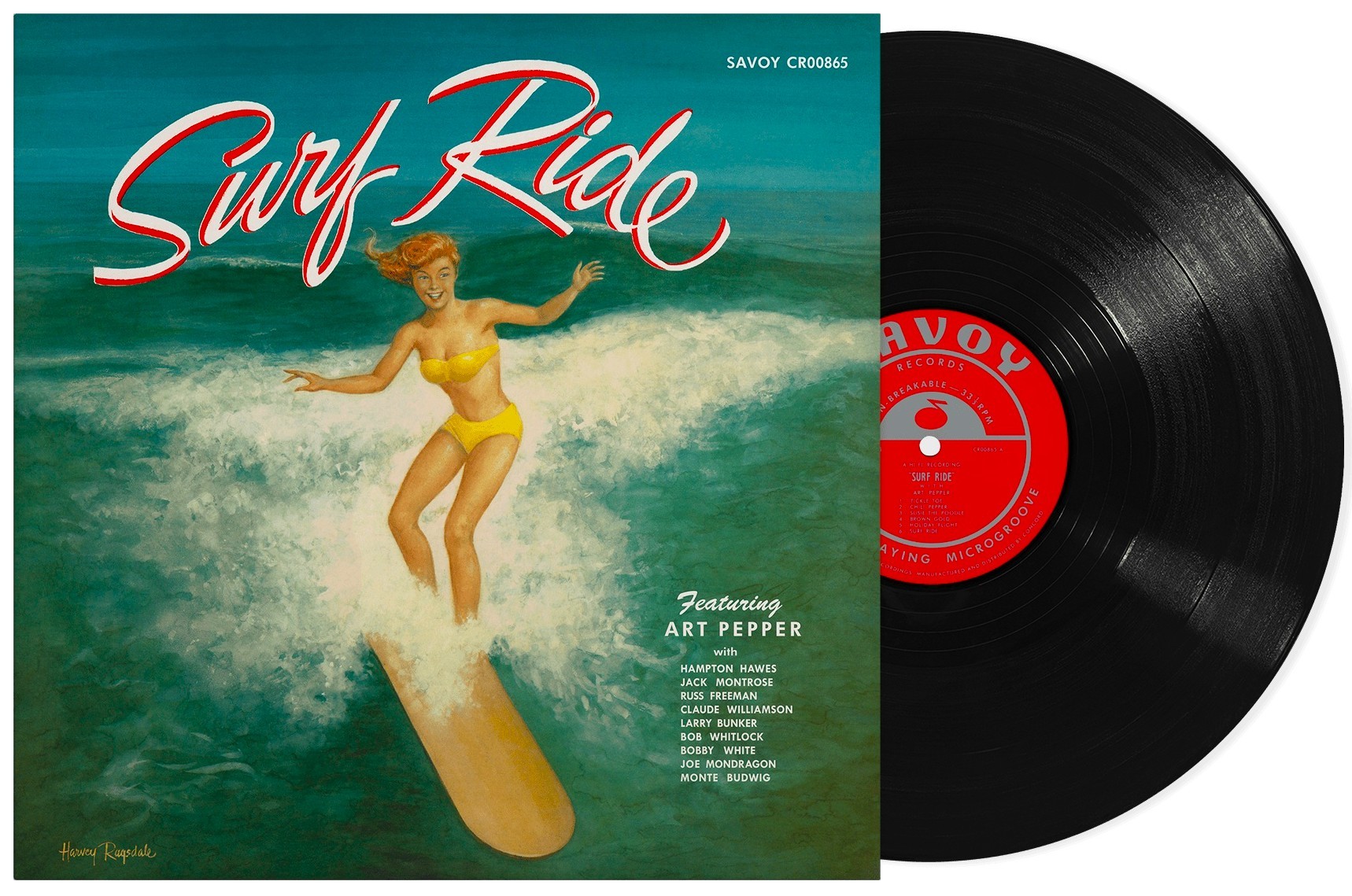
Art Pepper, Surf Ride. 180 gram Savoy Records LP, $39
Alto saxophonist Art Pepper first came to prominence playing in Stan Kenton's big band; Surf Ride was his 1957 debut as a leader on Savoy Records. A practitioner of West Coast cool jazz, he often gave emotionally charged performances and is regarded as one of the greatest alto sax players—if not the greatest—of all time. Pepper struggled with drug addiction throughout his career, and often had long stints of inactivity as a result—that could possibly explain why it took a year-and-a-half to complete the recordings for Surf Ride, which took place over several sessions from March 1952 to August 1954. The Los Angeles recordings were supervised by Ozzie Cadena for Savoy Records, and were also (surprisingly) engineered by Rudy Van Gelder. In addition to Art Pepper on alto sax, side one featured Russ Freeman and Hampton Hawes on piano, Bob Whitlock and Joe Mondragon on bass, and Bobby White and Larry Bunker on drums. For side two, Jack Montrose appears on tenor sax, Claude Williamson is on piano, Monte Budwig is on bass, and Larry Bunker hangs around behind the drum kit. Other than a 1991 CD release and a limited LP reissue in 2016, Surf Ride has been out of print domestically since its 1957 release.
Art Pepper composed most of the tunes on Surf Ride, with the exception of Lester Young's "Tickle Toe" and Jerome Kern's "The Way You Look Tonight." Side one opens with a rousing version of "Tickle Toe," which brings to mind the album's really fun front cover illustration where a fetching young lass hangs ten on a surf board that cuts through the waves. "Chili Pepper" is a clever play on Pepper's name and continues the sassy groove; "Suzy the Poodle" features Pepper in another mind-numbingly rapid solo turn. "Brown Gold" is from the session in 1953, where Pepper's superb soloing is followed by an equally impressive turn from the ever-lyrical Hampton Hawes on piano. "Surf Ride" picks up where "Tickle Toe" left off, and Pepper's rapid-fire soloing literally plows through the waves while Hawes tickles the ivories. The action switches yet again to the final group lineup for "Straight Life," which is one of Art Pepper's most iconic tunes, and his solos here seriously shred as he alternates with Jack Montrose on tenor sax. Surf Ride reaches its conclusion with a quad of spicy tunes, starting with "Cinnamon," which features superb interplay between Pepper and Montrose; pianist Claude Williamson joins in with a lyrical solo turn that transitions to a trio between his piano and the dual saxes. "Nutmeg" opens with a nicely mirrored duet from Pepper and Montrose; "Thyme Time" is perhaps one of the album's highlights, with Montrose providing counterpoint to Pepper's rapid fire runs and fills. "Art's Oregano" closes the proceedings with a healthy dose of West Coast cool.
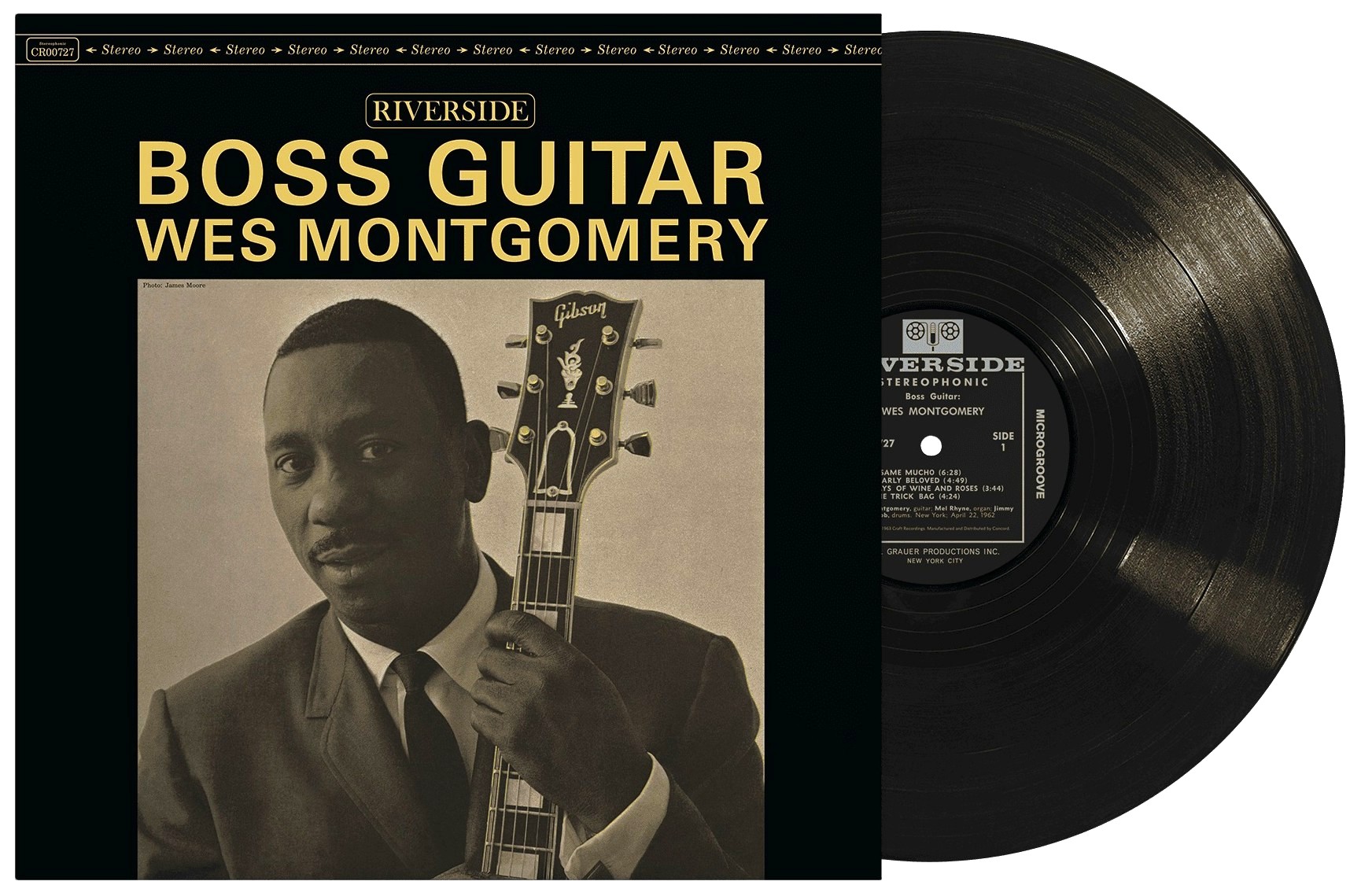
Wes Montgomery, Boss Guitar. 180 gram Riverside Records LP, $39
Boss Guitar was Wes Montgomery's eighth session for Riverside Records and his seventh studio album for the label. It's often cited as perhaps his finest trio recording, and was his first return to that format since his 1959 debut, The Wes Montgomery Trio. And it's also one of the most revered hard bop albums from his entire discography. Boss Guitar found Montgomery again accompanied by Mel Rhyne on organ, but this time with Jimmy Cobb behind the drum kit. The 1963 session was recorded at Plaza Sound Studios in NYC, with Ray Fowler at the controls and Orrin Keepnews in the production chair. The album consists of mostly standards, with a couple of Montgomery originals thrown in for good measure. At the time of this album's release, Playboy Magazine's Jazz Poll had just been published, and it featured vote totals from both fans and the jazz musicians who'd been selected in the previous year's poll. Readers placed Wes Montgomery in the fourth position, behind Chet Atkins, Barney Kessel, and Charlie Byrd. Unsurprisingly, the musicians poll—which featured the likes of Miles Davis, Coltrane, Paul Desmond, Duke Ellington, and Frank Sinatra, among many others—selected Montgomery for the top position.
Side one opens with a rendition of "Besame Mucho," which thankfully is played in 6/8 time, and moves along at a much faster clip than the usual measured pace of the tune when used as a vehicle for a vocalist. Jerome Kern and Johnny Mercer's "Dearly Beloved" (a favorite of none other than Charlie Parker) features a rapid-fire pace with an intense exchange between Montgomery and drummer Jimmy Cobb. The trio takes a very lyrical approach to "Days of Wine and Roses," and the side closes with Montgomery's own "The Trick Bag," which features some scintillating fingerpicking from the "boss guitar." Side two opens with another Charlie Parker favorite, "Canadian Sunset," which is given a lilting, bossa nova take here. Montgomery's "Fried Pies" picks up the pace; it's the album's longest track, and he occupies an almost supporting role throughout as organist Mel Rhyne turns in an extended solo turn. "The Breeze and I" is typically played with a Latin vibe, but Montgomery gives it a more straight-ahead rendition here. Boss Guitar closes with "For Heaven's Sake," an infrequently played ballad that's given a very tender reading by Montgomery, with some very nice fingerpicking interspersed with his trademark block chords.
Boss Guitar was consistently popular, and was reissued in multiple guises, not only as the original release, but also with a different title and cover art as This Is Wes Montgomery. Boss Guitar also had multiple CD reissues, as well as an Original Jazz Classic LP in 2015. Simultaneously released in both stereo and mono, the mono LPs have been out of print since the album's original issue—leaving a nice opportunity for Craft to jump in with a special mono edition!
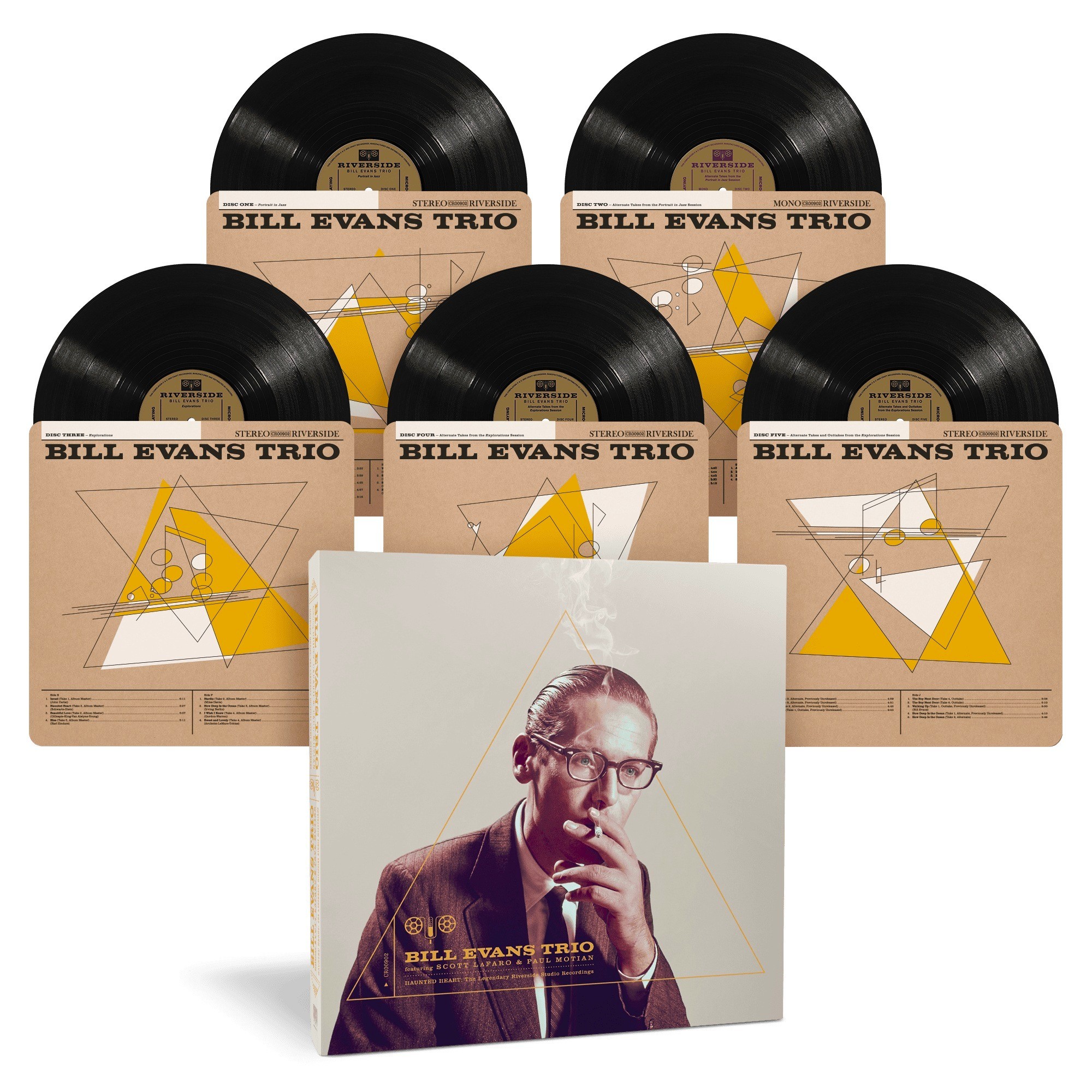
Bill Evans Trio, Haunted Heart: The Legendary Riverside Studio Recordings. (5) 180 gram Riverside LPs, $150
Haunted Heart: The Legendary Riverside Studio Recordings covers the only two studio albums generated by the "classic" Bill Evans Trio that featured Evans on piano, Scott LaFaro on bass, and Paul Motian on drums. Bill Evans' artistic conception of jazz performed by a trio ensemble had expanded the boundaries of the format, but Portrait in Jazz (1960) and Explorations (1961) were birthed during a tumultuous time for the pianist, where Evans' deepening heroin addiction threatened to tear the group apart. By the time the studio sessions commenced for Explorations, Scott LaFaro's patience for Evans' drug use was growing thin, and he regularly screamed at him during their time in the studio. Multiple takes and re-takes were often necessary for many of the tracks, such that the overall impression of both Evans and producer Orrin Keepnews was that very little of the recorded material might be salvageable.
Fortunately the opposite proved to be true, and Keepnews assembled Explorations into perhaps the most cohesive album statement the Bill Evans Trio had yet generated. Buoyed by the positiveness surrounding the new record, the trio hit the road, and within a few months had landed at NYC's Village Vanguard for two days of live recordings. Those dates saw the trio's playing lifted to a new level of transcendence that would likely propel their popularity to even greater heights. But ten days following the recordings, Scott LaFaro was killed in an automobile accident, and the greatest jazz trio of all time was no more. Two albums were issued from the Village Vanguard recordings, Sunday at the Village Vanguard and Waltz for Debby; when combined with Portrait in Jazz and Explorations, they've formed the cornerstone of jazz trio literature for the last six decades.
Supplementing the catalog albums in Haunted Heart: The Legendary Riverside Studio Recordings are three additional LPs that contain a veritable treasure trove of unreleased material. With twenty-six alternate takes scattered across the three discs; astonishingly, seventeen of them are previously unreleased, and Bill Evans/Scott LaFaro/Paul Motian completists will most likely froth over this set! That said, the studio albums have been remastered and reissued ad nauseam over the years, and many jazz lovers may wonder why they need this new Bill Evans box. Upon opening the box and first listening to Portrait in Jazz and Explorations, I felt the new LPs rendered the classic recordings with greater clarity, a deeper level of quiet, an improved transient presentation, and a more impressive stereo image. That's very likely due to the use of the Plangent Process to restore the master tapes.
This is the point where things are likely to get iffy for many audiophiles: the Plangent Process definitely involves a digital transfer, which might not thrill too many analog purists. Plangent processing digitally locks onto the bias tone embedded in the analog tapes, then corrects for speed variations, eliminates any wow and flutter, and performs high-resolution pitch correction on the audio signal. The process essentially realigns all aspects of a vintage analog tape, restoring it to a pristine version of the original for mastering to LP. But whether it also emasculates audiophile treasures by removing spatial cues and sucking the "air" from them is a topic of serious debate. I don't have any problems with analog to digital conversion, as long as it's done well, and with these new LPs, I'm fairly impressed that the process has indeed been very well done!
One thing that definitely needs to be pointed out—with regard to Portrait in Jazz, it appears that the stereo tapes for the album's alternate takes may no longer exist, with only the mono tapes currently available. However, stereo tapes were available for Explorations, so all the alternate takes are in stereo here—so anyone who might be confused by the mix of stereo and mono tapes for the alternate takes—it's all there is. And if you appreciate great mono jazz recordings from that era, you won't have a problem with this set, anyway.
Hearing the new LPs for both Portrait in Jazz and Explorations was like hearing them for the first time, then marveling at the peerless artistry of the classic Bill Evans Trio and the brilliance of these new masters. Despite owning multiple LP pressings of both studio albums, along with multiple CD and even SACD versions, the new transfers for Haunted Heart: The Legendary Riverside Studio Recordings are undeniably the best available. The price for the LP box set is high, but compared to every other aspect of the audiophile experience, well within reason.
Listening to Craft's latest jazz LPs
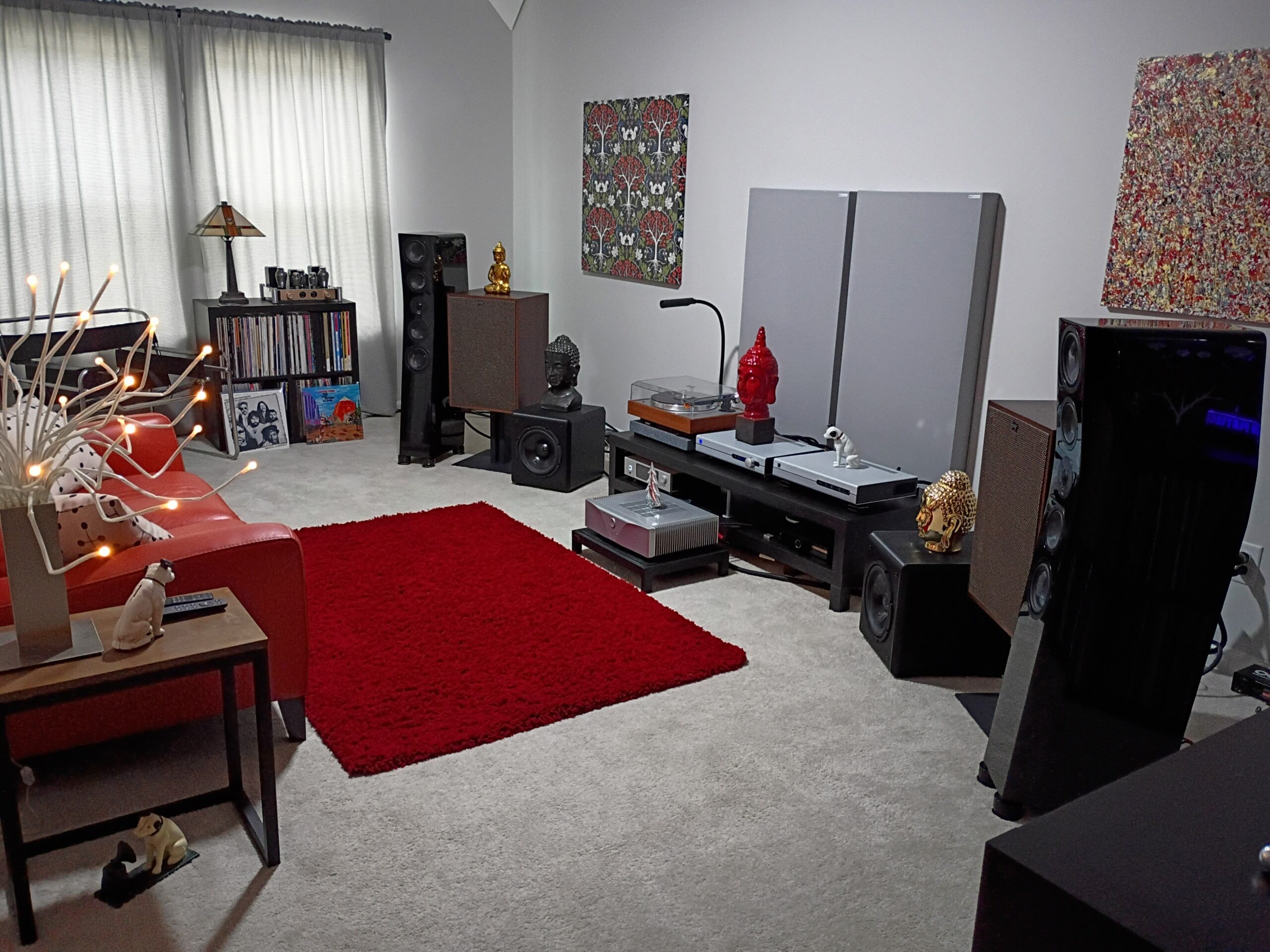
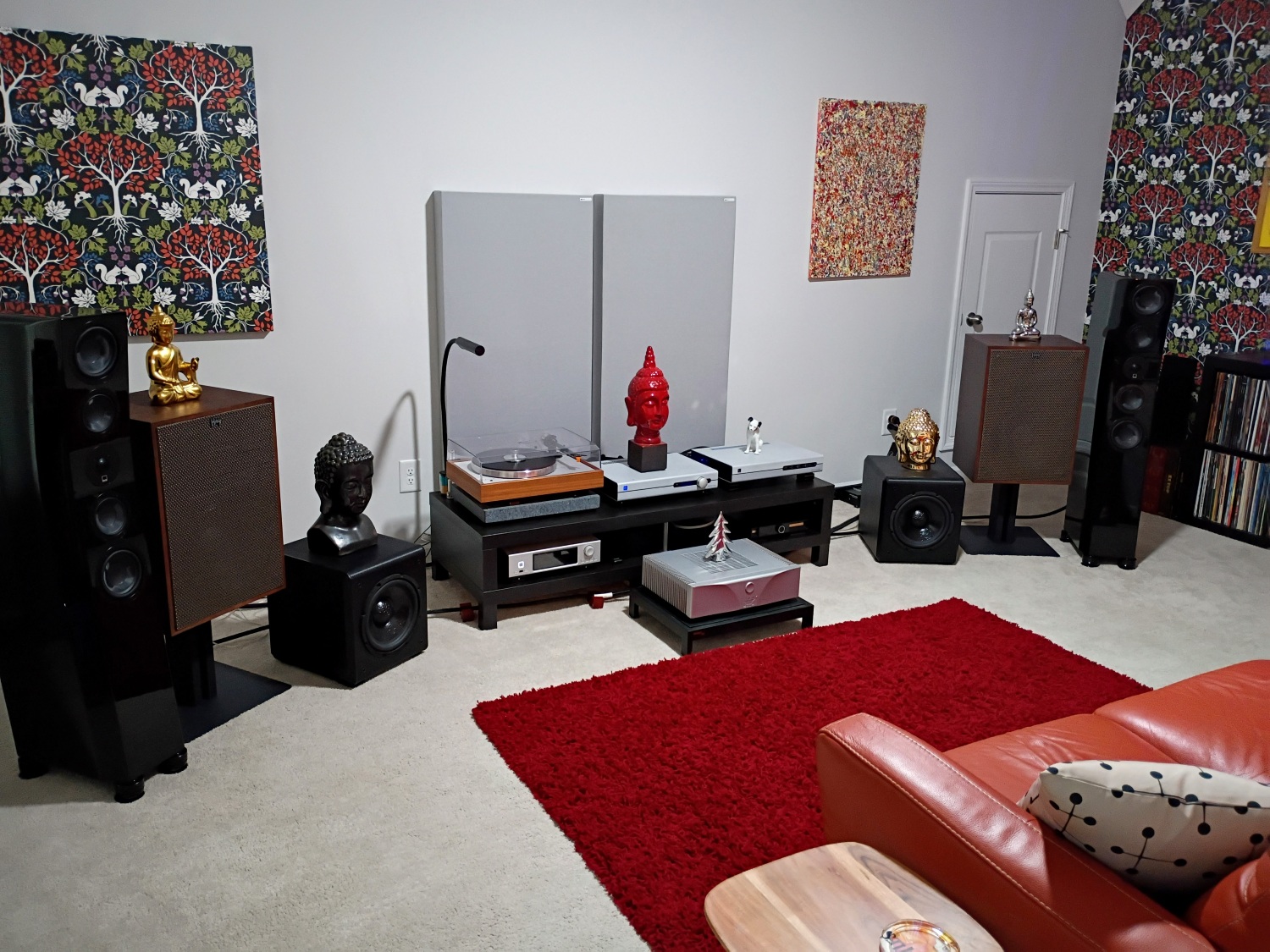
By clicking on my name in the header above, you can see the full complement of components in my audio systems. I evaluated all the LPs on the system that features the high-efficiency Klipsch Heresy IV loudspeakers that run in tandem with a pair of Caldera 10 subs. They're powered by a Reisong Boyuurange A50 Mk III Single Ended Triode (SET) tube amplifier that was recently upgraded with a full set of RAY Tubes, including Reserve 300B and 6SN7's, and a Select 5U4 rectifier tube. The Ortofon Quintet Bronze moving coil cartridge that's fitted to my ProJect Classic EVO table tracked these albums precisely, sending a perfect signal to my PS Audio Stellar phono preamp. It's an intoxicatingly heady sound that breathes new life into every LP I played across it, and music through this system is presented with improved clarity, a more liquid midrange, and a greater level of treble sparkle that rivals that of any tube-based system I've ever encountered. And regardless of their origin, the LP sound from the OJCs and Haunted Heart was absolutely brilliant across this system.
Other than the pair of studio albums that form the centerpiece of Haunted Heart, I didn't have any originals or reissues on hand for comparison purposes. All the albums were a mix of early stereo recordings and the classic, wide mono sound that characterizes many 1950's jazz recordings, and those sounds thrilled me with every album side—with one notable exception. Wes Montgomery's Boss Guitar is a 1963 stereo recording that I'd have thought would display a better stereo spread, but his trio is very heavily stilted toward the left channel, with very little info in the right channel, other than some ambient overlap. Otherwise, the sound quality is excellent, but the almost unnatural imbalance was hard for me to listen to—I have a new phono preamp in for review (the Parks Audio Waxwing, review forthcoming) that has a mono switch; swapping that into the system and engaging the mono switch fixed everything for me. Boss Guitar was issued at the time of its release in both mono and stereo, and in this case, Craft should probably have gone with the mono tapes—it is what it is.
Craft's classic jazz reissues are always among the very best out there!
Despite my nitpicking with Wes Montgomery's Boss Guitar, this has been another superb batch of releases from Craft Recordings, and all of these LPs will be indispensable to collectors and fans alike. Haunted Heart: The Legendary Riverside Studio Recordings provides a deep dive into the creative process of the greatest jazz trio that ever existed, with exceptionally good upgraded sound. Thanks again to Jacob Kossak for his consideration and assistance—all these albums come very highly recommended!
Craft Recordings
All images courtesy of Craft Recordings.