
Historians refer to Jimmy Wakely (1914-1982) as one of the last of the singing cowboys. Although he wasn't the very last, he was the last to sign with a major record label and produce a steady stream of records. He was, along with Gene Autry and Roy Rogers, one of Hollywood's greatest singing cowboys. His fabulous voice sort-of sounded like a mixture of Rogers, Eddy Arnold, and Bing Crosby. HERE is a great example of his vocal talent.
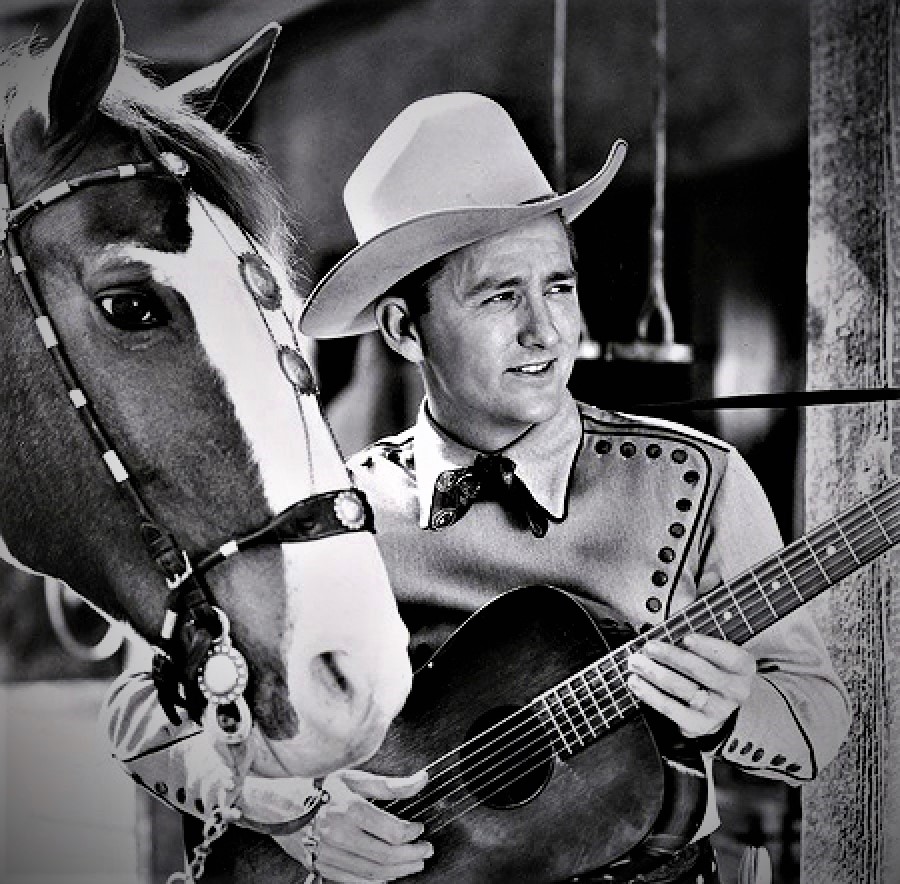
Wakely, who starred in twenty-eight western films made between 1944 and 1948, was discovered by Autry in 1939. At the time of his discovery, he was part of a vocal trio with Johnny Bond and Dick Reinhart. They billed themselves as The Jimmy Wakely Trio and they sounded a lot like The Sons of the Pioneers. Wakely also had his own CBS radio show from 1952-1958. A close friend of Autry, he also guested on The Gene Autry Melody Ranch radio show.
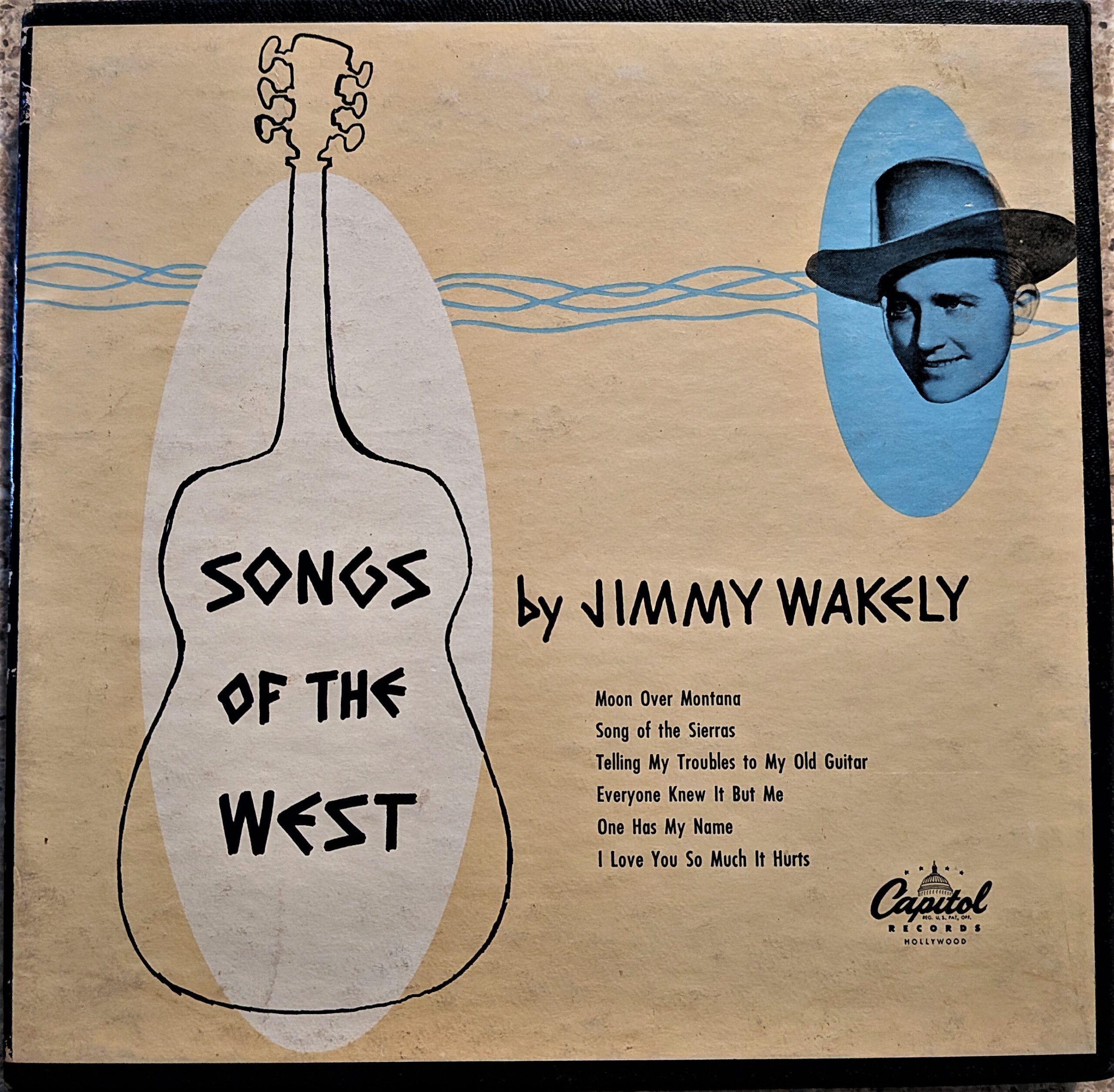
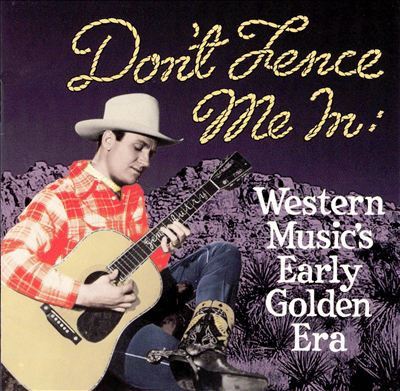
I discovered Wakely much later than Autry and Rogers. It was in the late 90s, thanks to a CD called Don't Fence Me In: Western Music's Early Golden Era which I reviewed HERE. Not long after I found this CD, I stumbled upon Wakely's album Songs Of The West (Capitol CCF 4008) at a garage sale. It's a six-sided 7" 45RPM box set that was released in 1949. It's a collection of recordings made between 1947 and 1949. Every cut was issued as a 78RPM single, but it was never issued as a 78RPM album. This makes Songs Of The West one of the first albums of western songs released in the new higher fidelity format. When I first acquired it, I didn't think much of the sound, but I loved the retro look of the set.
Songs Of The West opens with "Telling My Troubles To My Old Guitar." Recorded in 1949, it was composed by singing cowboy Don Weston. Originally a fast tempo dance song, Wakely transformed it into country-blues by slowing down the tempo. His performance makes me think of campfire scenes in the old cowboy films. The backing is wonderfully sparse. It's just his guitar, a harmonica, and a chorus of three men. And dare I express this opinion: As a group, they harmonized even better than The Sons of the Pioneers. And if that isn't enough, the sound is excellent! His guitar sounds awesome, as in rich, woody, and supremely tasty.
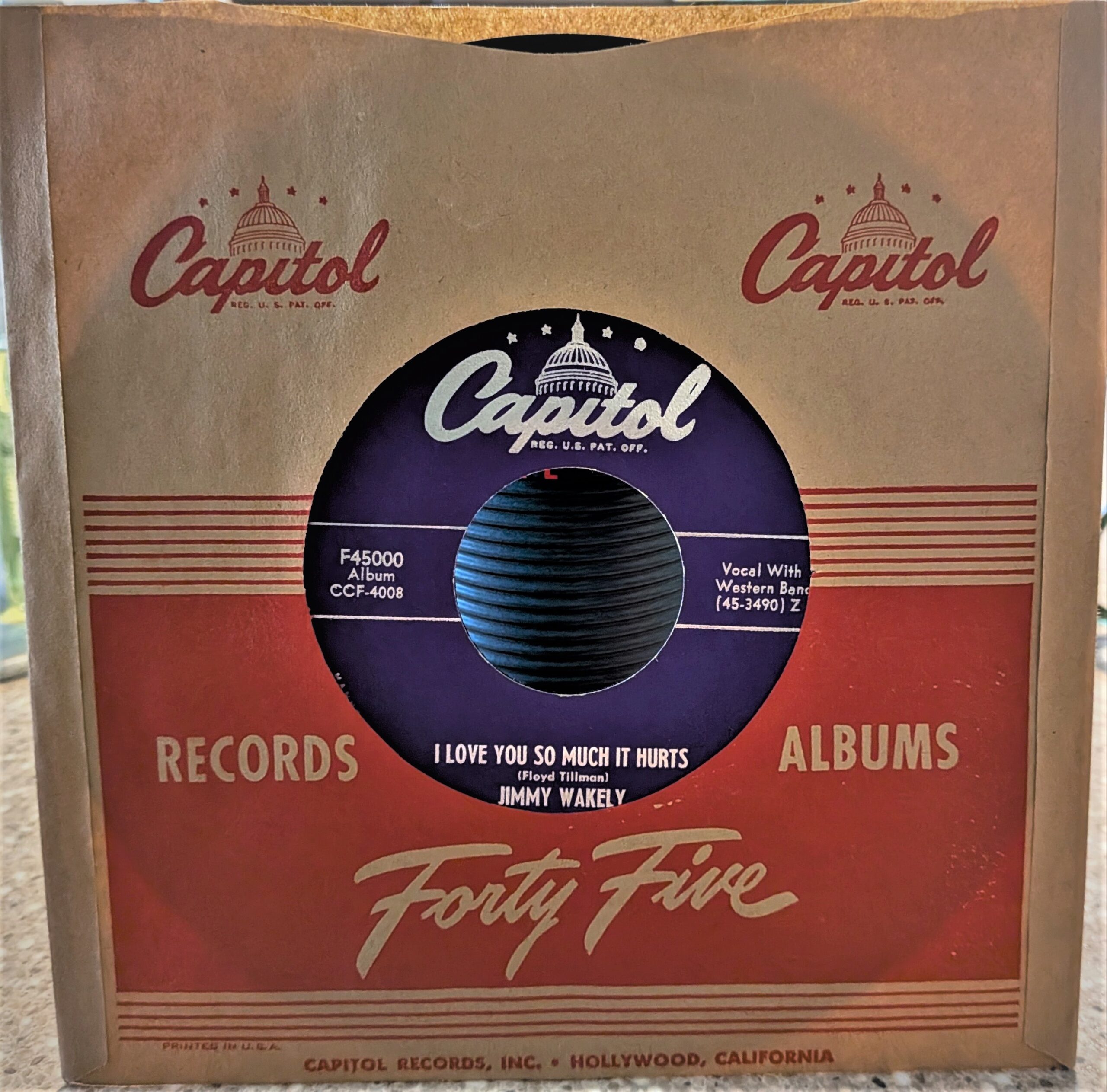
Cut two is a fantastic cover of Floyd Tillman's "I Love You So Much It Hurts." Tillman (1914-2003) is a singer-songwriter that I need to explore. I love a number of his songs, but none of them are his recordings. What little I've heard of him reminds me of Merle Haggard, and since I love ol' Hag, this only increases my need to hear Tillman's music.
"I Love You So Much It Hurts" is Tillman's most recorded song, and this enormous list (HERE) shows how many people have recorded it. Ray Price introduced me to the song. It's on his second album from 1958. Despite my obsession with Price, Wakely sings it much better. His recording is also the song's best-selling version, reaching the number one chart position on the Folk Best Seller Chart in 1948. It opens with just his guitar and an accordion. Additional backing includes a small string section, two clarinets, and a piano. The sound is good, but not as vivid as the prior cut.
Cut three is "Moon Over Montana." Recorded in 1949, and composed by Wakely with some help from western film screenwriter Oliver Drake, it's a throwback to the Autry sound of the thirties. It evokes wide open spaces, narrow mountain trails, and crying coyotes. It opens with Wakely's acoustic guitar and chugs from accordion. Following soon is a pair of clarinets. They sound a little odd and menacing. Even odder is the wild string bending from a yet-to-be-identified steel guitarist. At seventeen seconds, Wakely enters with one of his finest vocal performances. As he sings, we hear his guitar, the steel guitar, and one of the clarinetists. And the man playing the clarinet is none other than jazz great Jimmy Giuffrey (1921-2008)! If you know Guiffrey's tone, then you're going to love his ten-second solo as much as I did. Right after Guiffrey's solo comes the finest western yodeling I've ever heard. Wakely's yodel creates an otherworldly feel. At one minute and thirty seconds, the accordion echoes the lyrics, essentially becoming the second singer. To be blunt: This song is out of this freaking world and the sound is fantastic!
Cut five is my favorite of the set. It's the Wakely-penned "Song Of The Sierras." Recorded on 3/24/47, it's another throwback to Autry's ‘30s sound. Wakely is backed by a rhythm acoustic guitar, a muted flugelhorn, a piano, and brushed snare drum. The backing vocals sound like Bond and Reinhart, but I doubt it's them, as I believe the Jimmy Wakely Trio's days were over by the time of this recording. But whoever they were, they are, again, outdoing The Sons of the Pioneers at their own vocal harmony game. This gentle and meandering song creates images of the great outdoors, much like Autry's "Back In The Saddle Again." One of the song's lines, "It's the nearest place to heaven," perfectly sums up the song's feel. It'll take you to the great outdoors, and hopefully something loftier. My notes say "His singing is amazing" and indeed it is! I find it interesting that this pre-tape recording is one of the album's best sounding cuts. Wakely's voice sounds like he's right here in my room. As many of us know, tubes rule when it comes to making vocals sound palpable. When Wakely sings through my EAR preamp, my Audio Research power amp, and my Legacy speakers, the sound really is the nearest place to audiophile heaven.
Pardon me while I switch formats, because there's another Wakely title that deserves attention. It's a CD called Jimmy Wakely Vintage Collections (Capitol 24383-65912). It contains twenty cuts, and four of them are the above-mentioned cuts. I can't remember whether I found this title before or after Songs Of The West, but over the years, as I upgraded my audio system, the CD's denoising on these cuts has become more noticeable. In fact, this is what drove me to reevaluate Songs Of The West. As I previously stated, there was a time when the 45 set didn't sound good. It sounded noisy and lifeless. Today, Songs Of The West has very little in the way of surface noise and the sound is excellent. What little background noise I can detect is a much better alternative to the airless sound of digital denoising. The CD has plenty of other material that continues to make it an asset to my music collection. Let me tell you about it.
Cut three is "Song Of The Sierras." To be fair, I discovered the song on this CD, and at the time of the discovery I had no issue with the sound. It actually sounded good, and it still does. The extreme top is there, but a bit rolled off. The sound is clean and rich, but today it sounds a little airless. If I had access to a graphic equalizer I'm sure I could match the sound of the 45. The two sources are really close. What I would need is an equalizer with a high turnover: something around 12K. The centerpiece of my office system, my Sherwood S-7650 receiver, has bass and treble controls, but its treble control hasn't the right curve. Again, as mentioned, the sound on this cut is perfectly acceptable, so grab your streamer and check it out!
Cut five is the finest cover of Floyd Tillman's "Slipping Around" that I ever expect to hear. This has to be the cutest song ever written about adultery. Jimmy Wakely and Margaret Whiting are one of the greatest male/female duos ever recorded, and they sounded incredibly happy when they were together. The song was recorded on 7/20/50, and it opens with Buddy Cole's bountiful sounding Hammond organ. In addition to Cole, we have an acoustic rhythm guitar and a wonderfully played pedal steel guitar. For the dancers among us, it's a perfect waltz. And for the rest of us, it's a ton of fun! Cole's organ features genuine room-filling weight, and the vocals are, as the audiophile in me loves to boast, right here in my room! Another wonderful, albeit slower version, is Ernest Tubb's from 1949.
Cut seven is the irresistible "Oklahoma Hills." It was a chart-topping hit from 1945, written and recorded by Jack Guthrie. I kept wondering why I knew it, and then it hit me: Arlo Guthrie, who is the son of Jack's cousin Woody, recorded it. It's the opening cut on Arlo's third album, Running Down The Road. I wouldn't exactly call Wakely's version definitive, but it's very good, and it features a fantastic fiddle solo. Recorded in 1947, the sound is pretty good, despite being sourced from a slightly noisy 78. At this moment I think Jack Guthrie's version is the best, but Jim Reeves' recording from 1956 is mighty fine, too.
Cut eight is "I Love You So Much It Hurts," and cut nine is "Moon Over Montana." The sound on both cuts is ruined by de-noising. What an unnecessary shame.
Cut eleven is "Wedding Bells." It's another duet with Margaret Whiting, and it's from the same session that produced "Slipping Around." The chemistry between these two cannot be overstated, and this time they are singing about the joy of marriage. The song opens with six seconds of steel guitar supported by Cole's organ and the first voice you hear is Whiting. This is also one of the CD's sonic highlights. The voices of both singers sound rich and believable. I wish we could have this kind of sound on modern recordings. (It's not impossible) Cole's organ has, as implied before, loads of rooted-to-the-floor weight. This is the kind of mono sound that doesn't leave you longing for stereo. A splendid time is guaranteed for all!
For many, cut thirteen will be the best cut on the CD. It's certainly one of mine. It is, in my opinion, the definitive recording of "Mona Lisa," recorded on 7/20/50. If you thought Nat King Cole owned it, just wait until you hear Wakely. Conversations with friends about this CD always include talking about this cut. I like Cole a lot as a singer and as a pianist, but Wakely's performance is a game changer, and it also sounds incredible. So what did Wakely do that Cole didn't? The answer is simple: He swings. And he does it so effortlessly, that he leaves Cole in the dust. It opens with some of the sweetest boogie-woogie piano ever recorded, followed by the incomparable steel guitarist Noel Boggs. And they receive support from an incredibly cool bass line. When Wakely's voice enters at twelve seconds, you will know why nobody has or ever will perform this song better. And then there's the sound. It's incredible! I could go on and on, but right now I'm just going to ask you to get this CD.
If you haven't experienced the magical singing of Jimmy Wakely, then it is time to add him to your list of must-hear singers.