


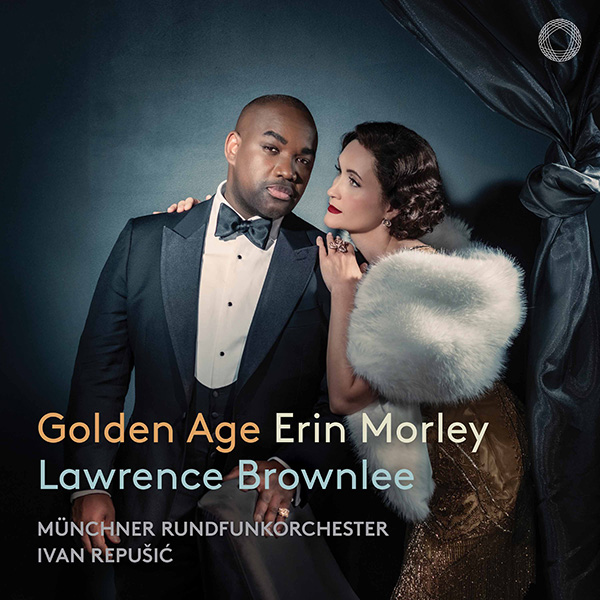
Golden Age, Arias by Bizet, Delibes, Donizetti, Rossini, and Verdi. Erin Morley, soprano; Lawrence Brownlee, tenor; Munich Radio Orchestra/Ivan Repušić. Pentatone Music PTC 5187 400. TT: 62.53
Donizetti, La fille du r馮iment: Quoi! Vous m'aimez?...De cet aveu si tendre. Rossini: Le comte Ory, Ah, quel respect...Ce t駑駻aire qui croit nous plaire. Bizet Les p鹹heurs de perles: タ cette voix qui tremble...Je crois entendre encore. La jolie fille de Perth, Ils verront si je mens! Delibes, Lakm・: D'ou viens-tu?...C'est le Dieu de la jeunesse. Oùva la jeune Indoue? Donizetti, Marino Faliero, Di mia patria o bel soggiorno. Verdi, Rigoletto: Gualtier Mald・!...Caro nome. Donizetti, Don Pasquale: Tornami a dir che m'ami.
Time was, stars at Metropolitan Opera level could count on documenting their major roles complete, in the studio, for posterity. Now, with the reduced recording industry, two current regulars have to share an excerpt program—though it's a nice assortment, and they sound like they're enjoying themselves.
I was privileged to hear Erin Morley just about a year ago, at Martin Pearlman's farewell concerts with his Boston Baroque, when she expertly and brilliantly dispatched the second Queen of the Night aria and the concert aria Vorrei spiegarvi, o Dio. She is already a full-fledged star, and with good reason. Her Bell Song shows us everything: a rich, lustrous sound; an even, flexible legato; coloraturas that extend effortlessly in alt; pearly, pillowy staccatos; stylistic smarts; and, to tie everything together, superb dramatic and linguistic sense. (Her runs actually sound spacious.) The recitative of Caro nome spins easily; the aria proper is pure and vibrant, and her extended, clear closing trill maintains a full, round tone. (And she thankfully eschews the tacky "Golden Age" ascent to high E, though she tossed out a few in the Bell Song.) Her poised, alert delivery animates her recitatives, and she phrases buoyantly in the duets—she's quite charming in the Fille.
It's hardly Lawrence Brownlee's fault that he confuses me: I see his surname and think immediately of the Australian baritone John Brownlee! The tenor specializes in the high bel canto roles; he's a good singer, too, but more equivocal. The ascents—not just in alt—betray a touch of throaty strain, and the topmost notes, like the high C of the Fille du régiment duet, turn startlingly heady. Some of his phrasing is square and deadpan, in duets from Donizetti's Marino Faliero and from Lakmé. In the latter, however, he's warm and caressing in the lyrical triplets—I wished he'd given us more of that. He does encompass the illegal "high ending" of the Pearl Fishers aria, though he doesn't match Gedda's ease.
Repušić's flexible, sensitive conducting draws warm playing from the orchestra. The gentle recorded ambience is pleasing, though some bass pizzicatos turn boomy.
stevedisque.wordpress.com/blog