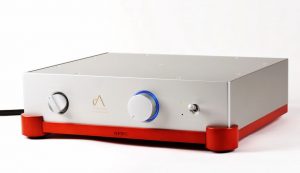
When we think of what the Greeks have given to the world, what comes to mind? Socrates? Hipparchus? Aerodynamics? Algebra? The Equinox and Solstice? Thales' theorem? The list goes on and on. But how about high-end audio equipment? Well, yes! In this case I'm referring to the TSI-300 Integrated Amplifier from TLA ("True Life Audio") from Athens, Greece.
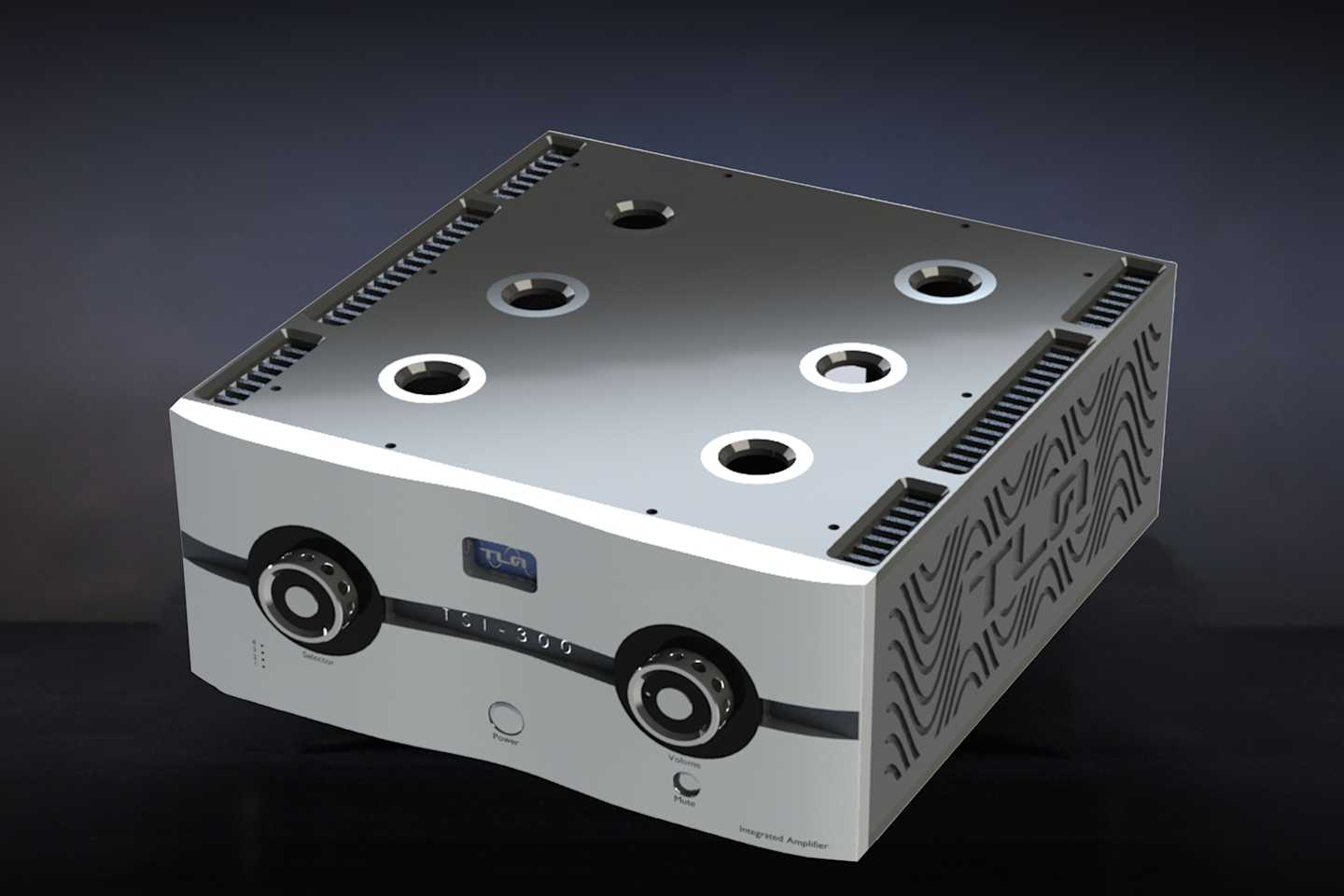
For many months, I've had the wonderful experience of listening to this hybrid amplifier in my home listening room with great delight. I can't recall having a better amplifier powering my Vivid Kaya 90s. Ever. What make this so special? Well... .
TLA was originally founded in 1995 by Velissarios Georgiadis and joined by his son, Aristomenis, 10 years later. As the company name would suggest, the goal was to create products that would bring the 'true sound' to the listeners just as envisioned by the content producers. They succeeded and continue to do so.
For the TSI-300, make no mistake, this thing is a beast. It's the only amplifier I've used (so far) that takes two people to carry up the stairs! Weighing in at just north of 121 pounds (55 kg) once removed from the case (143 pounds/65 kg in the case), this is a monster. And so worth the effort!
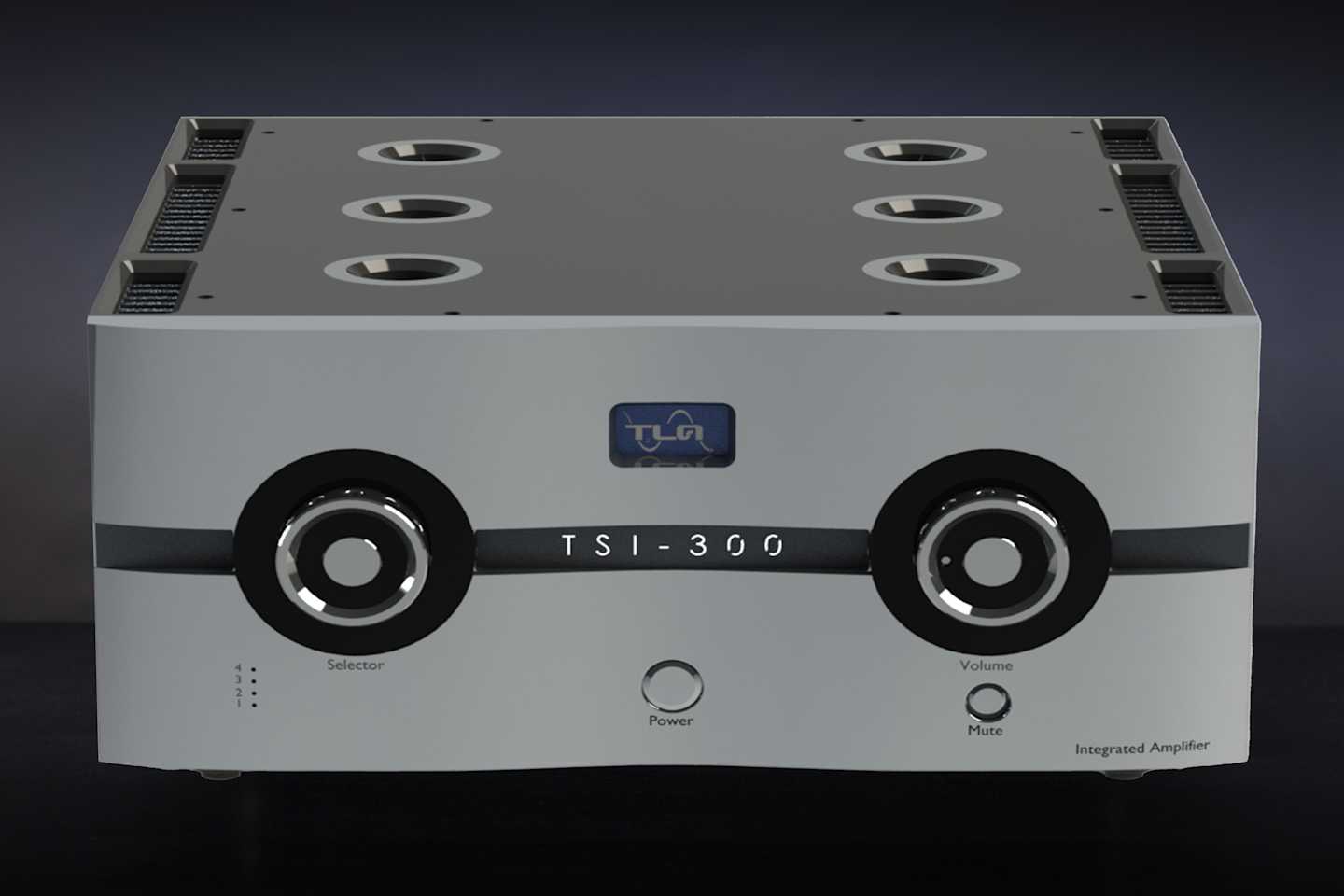
In the stock configuration, it features two RCA and two XLR line-level inputs and can be configured from the factory with four XLR's instead. There are two large and supremely well-crafted large knobs on the front of the chassis, one for input select, and the other for volume. The volume control is motorized and can be adjusted with the remote.
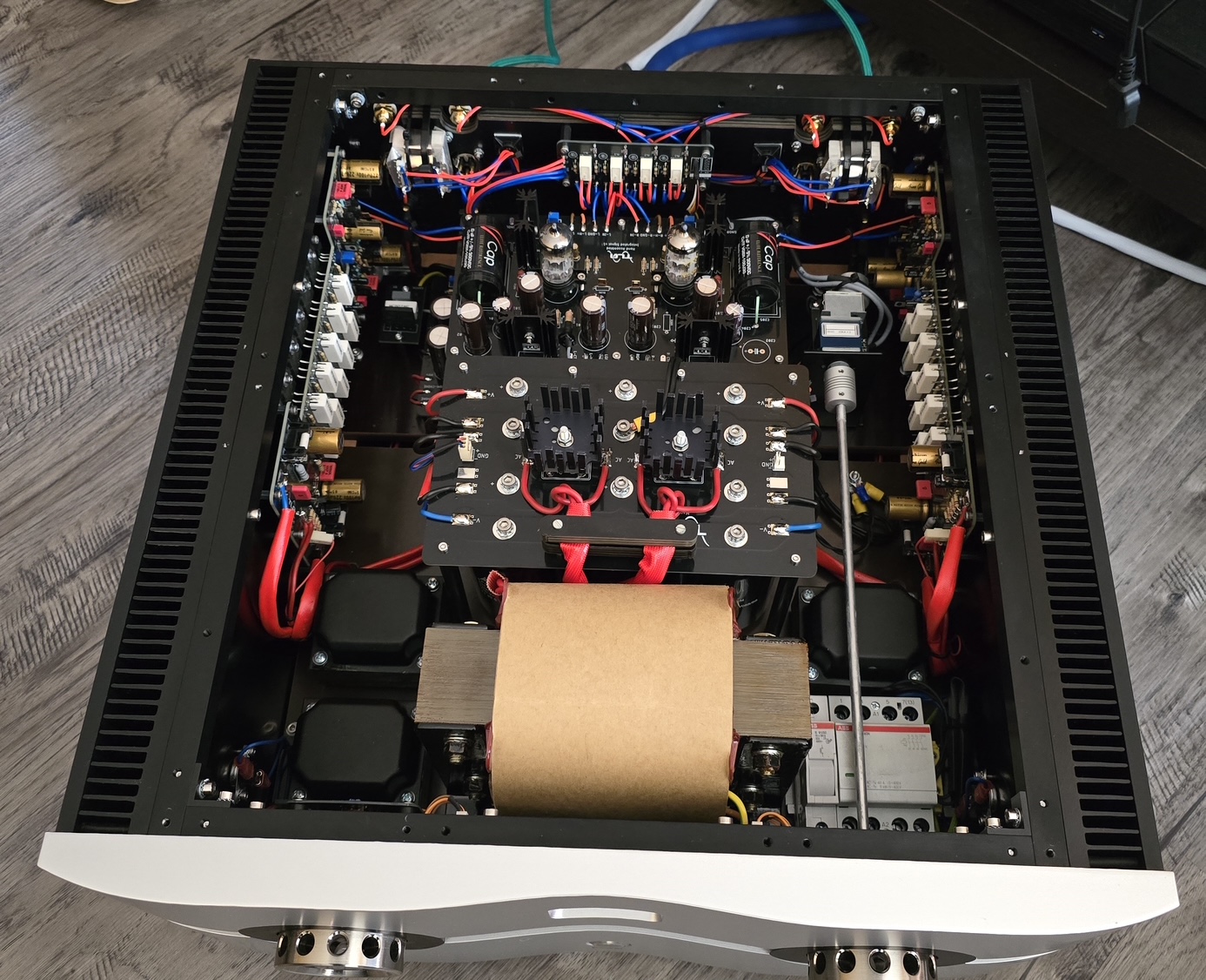
To understand why this is such a good amplifier we need to dig into the architecture and design: This is a hybrid designed amplifier. There are two low current preamplifiers and two high current power amplifiers, each with separately designed, isolated, and dedicated power supplies. For me, the most important part of the design are the tube-based preamplifiers. To delve into why this matters, we need to take a quick trip down memory lane:
Back in the early 1980s, CD were quickly becoming all the rage. It was both literally and figuratively the shiny new thing. I worked at a local record store at that time (I was still in high-school back then). Typical LP's were selling for $7.99 and CDs sold for $14.99. When CDs first came out, sales were about 50/50. Mainly because many didn't want to spend the extra $$ for CDs. That quickly changed as people decided to re-buy their libraries onto CDs once they dipped their toes into the digital world and decided to ditch their record collections for the new 'standard' in music enjoyment. They would later regret this decision. Sure, CDs had nearly zero noise floor, no tape hiss, no turntable rumble, and no clicks and pops. They also sounded the same on the first play as they did after one thousand plays. All looked rosy. But it wasn't. What was missing was character in the music. CDs got rid of the noise of analog recordings (which everyone loved). They also got rid of the nuance and soul (which many stared to hate). They tended to sound analytical, clinical, and sometimes harsh. The limitations of CDs came in the form of sampling rate and bit-depth (often call word-depth).
The Nyquist (technically Nyquist-Shannon) theorem states that sounds (sinewaves) can be accurately captured and reproduced so long as the sample-rate is at least double the highest frequency. Human hearing caps out at around 20kHz, so a CD sample rate of 44.1kHz 'should' do the trick and leave some room at the high-end for an EQ roll-off @ 20kHz. Also, the 16bit depth rate seemed good enough and could be made to fit 74 minutes of music on a single disc. Where this starts to fall apart is we aren't producing a sinewave, but rather the net effect of dozens (hundreds!) of sinewaves that interact with each other—all at the same time. The result is imperfect representation and imperfect sinewaves. Now the important part, anything that isn't a pure sinewave (or a pure combination of multiple sinewaves) creates harmonics. Extra sound. Noise. In PCM (CDs) we hear that as 'peakyness.' Meaning that there are unnatural peaks in certain ranges of frequencies (and attenuation at other frequencies). Those peaks tend to show up where human hearing is the most sensitive, around the 3kHz to 5kHz range. A recurring phrase started floating around amongst serious listeners: Ear fatigue. We've all had it. After listening to certain recordings, our ears just seem to get tired. It's not that music is too loud (although it certainly can be). It's that our ears are getting a pounding at their sensitive spots and we get tired of listening. That explains why there are certain albums you can listen to on repeat and others where you're done after just one hearing. It often isn't because the music is bad (or good), it's that our ears 'wear out'. This is one of many reasons why people have been gravitating back to vinyl and tape. We didn't seem to get ear fatigued with our old records. Even with the clicks, pops, and needing to turn the record over half-way through, we still preferred the smoothness, openness, and natural sound of those records. We appreciated CD's for what they offered (we still do). And at the same time more and more people are giving their ears a break by moving to a format that doesn't wear them out.
Okay, back the TSI-300. As mentioned, the initial stage—the preamplifier—uses tubes. Finely selected, tuned, glorious tubes.
For those of us old enough to remember, we loved the old tube amplifiers because of their natural (some call it 'warm') sound. I used to work in an old theater that had Altec amplifiers (most likely from the 50s) that audiences loved. They consumed more power than a small neighborhood and could heat up a house during a blizzard, but we loved them nonetheless and for good reason. That natural and open feeling is what the TSI-300 brings. It doesn't color the sound. That would be against what TLA is after. Rather, it removes the peaks and harshness that digital recordings often provide. This was the true test:
Like most listeners, I have a suite of reference recordings that I use to evaluate gear. I'd wager that just about every listener has a set of recordings that they go back to time and time again. These are the ones you play when you invite people over to show off you 'new' gear. The ones that show off your system at its best. Recordings that you are very familiar with. Of course, these all sounded great on the TSI-300. Effortless, properly staged, open, nuanced, all the things. But then I wanted to see how it stacked up using old digital recordings from the 80s and 90s. If you're old enough, you'll remember back in the day when digital just didn't sound that good. Sure, we snapped up digital recordings (even digitally mastered LPs) like they were going out of style. They were the best thing around back then. We've learned a lot since then and, by and large, most old digital recordings sound awful compared to new digital recordings.
In the last few decades there has been a sea-change of every step along the digital highway of recording. But can those old recordings be made to sound passable? Even good? Or, better yet, musical? Thank goodness the answer is a resounding yes. And that is the magic of the TSI-300. Specifically, the tube preamplifiers. What goes in are 40 year-old digital recordings that sound, well, like 40 year-old digital recordings. What comes out is music! Sweet, sweet music the way it was supposed to be heard. All of a sudden I'm getting that same effortless and freeing feeling that was simply lost in the race to go 'all things digital.' Make no mistake, what TLA is doing is both brilliant and stunning. It opened up a whole section of my library that I hadn't touched for years.
I went though my archives pulled out scores of CDs from the 80s and 90s. I listened to them as though I was hearing them (again?) for the very first time. Not only did my hi-res content (and analog LPs) sound wonderful. TLA is able to also bring older recordings up to the same standard. I stayed up way too many late nights into the wee hours just listening. Lights off. Reclined back in my listening chair. Big smile on my face. And zero ear fatigue. None. I could listen all day and night and would desire nothing more than more of this!
The TSI-300 is part of TLA's True Series. For even more discerning listeners, TLA also offers their Supreme Series consisting of their tube monoblock SSA-350 and their dedicated tube preamplifier SSP-1
The TSI-300 I was using was branded as T2LA (with a tiny little '2' in superscript between the first two letters). I asked if there was meaning to this. The answer I got back was "True to Life Audio" is what they have been striving for. After listening to TLA for hours on-end, I get it.
Specifications
- 2 x 300W @ 4Ohm – 2 x 150W @ 8Ohm
- Input Impedance: 140K Max – 40K min
- Gain: 30 dB
- Frequency Bandwidth: 300kHz
- Tubes used: 2 X 12AU7
- Voltage Options (Factory Set): 230-240VAC or 110-120VAC
- Available in black or silver.
- Unit Dimensions (WHD): 500 X 252 (with feet) X 520 mm
- Unit Weight: 55 Kg
- Shipping Dimensions (WHD): 610 X 300 X 620mm
- Shipping Weight: 65 Kg
TSI-300 Integrated Amplifier
Retail: $61,800
TLA
For additional information, contact Bill Parish @ GTT Audio
908.850.3092
Equipment list used for this review: (borrowed items are in bold)
- TLA ("T2LA") TSI-300 Integrated Amplifier
- Dejitter it Switch X
- Mola Mola Makua preamplifier w/integrated Tambaqui DAC and phonostage
- Vivid Audio Kaya 90 loudspeakers
- Cardas Clear Beyond power cables (NEMA 5-15P to C19)
- Kubala-Sosna Realization Series speaker cables
- RSX Technologies Benchmark Series Interconnect cables
- Sony UBP-X800M2 CD/SACD transport
- Asustor FS6712X SSD NAS
- Windows™ PC w/ Audirvāna – DSD/PCM streaming server
- PS Audio PowerPlant 15 power regenerator