

One aspect of my late teen years that I will always cherish, was the time I had the privilege of playing keyboards for a rock band. Not only did it cure me of stage fright, but it also gave me the thrill of seeing the sheer joy on people’s faces when we play them their favourite tunes, live. It also helped my brain register and memorize what live music really sounds like and how different it is to recorded music, even when it is reproduced by state-of-the-art high-end audio systems.
All my fellow band members were amateur musicians attending university, which made the band activity, just a side hustle. The modest fee that we earned playing live gigs, were not even enough to cover the cost of repairing our PA amplifiers and speakers which, due to the intense wear and tear of being constantly moved around, used to need repairs quite often. For me, this turned out to be a blessing in disguise because it forced me to take a crash course in electronics repairs, obtain circuit diagrams and do the repairs myself, the best I could.
This process, exposed me to the fascinating world of transistors, tubes, diodes, resistors, transformers, driver units, crossover networks and printed board circuits, which I found truly fascinating and in the decades that followed, prompted me to approach publications and start reviewing high-end audio gear for newspapers and magazines and 36 years later, I am still fortunate enough to do reviews, an activity that gives me great pleasure.
Playing for a rock band also made me realize how important it is for me to frequently attend live performances to constantly refresh my brain on what live music sounds like because IMO, this is of paramount importance to reviewing high-end audio components; after all, the aim of high-end audio is to emulate the live performance as closely as possible. So, the better your brain’s reference of what live music sounds like, the more accurately you can review and evaluate the performance of any high-end audio component.
This review focuses on the Monitor Audio Gold 300 6G speakers. Monitor Audio had modest beginnings 54 years ago when Mo Iqbal began operations in Teversham, England. Since then, it has grown in size and stature to become one of UK’s most revered speaker manufacturers whose speakers are now being sold all over the world.
Their meticulous attention to detail, is reflected in the fact that even before physical parts are built, their engineers create digital simulations of the driver units, the cabinet architecture and the crossover networks to gauge precisely how the final system will perform in a standard listening room.
Unlike many speaker brands that aim to deliver “warm” sound that some audiophiles look for, Monitor Audio focuses on attaining the most neutral sound by attaining the best possible driver rigidity and the lowest possible distortion by using specific materials like ceramic coated aluminum/magnesium and rigid diaphragm technology.
Their goal is to attain controlled transient response; the speaker’s ability to start and stop on a dime, so that the sonic reproduction is delivered with clinical accuracy and with every minute sound detail present and accounted for. This results in music reproduction that has an abundance of air and space and very low distortion levels which result in minimal listener fatigue even with very long auditioning sessions.
For their 50th anniversary, Monitor Audio revealed their vanity project – the Hyphn. This was the most creatively ambitious project in their history and reflected their cumulative knowledge of loudspeaker design that they had accumulated in 50 years. The Hyphn is the most powerful and technically advanced speaker to come out of the Monitor Audio stable. Rather than aiming for a commercial success, the aim of this project was to let the world know what the Monitor Audio brains trust is capable of, when they are given the freedom to pull out all the stops and design a speaker with no cost restraints. I, for one, am hoping that, going forward, the technology incorporated in the Hyphn, will continue to filter down to the Brand’s more mainstream offerings.
In the past I have had the pleasure of reviewing speakers from the Monitor Audio Platinum and Bronze line-up and those turned out to be very viable contenders in their price category. So, when Sheldon Ginn, the President of Kevro International, the North American distributor for Monitor Audio suggested that I review a model from the Gold Series, I welcomed the opportunity.
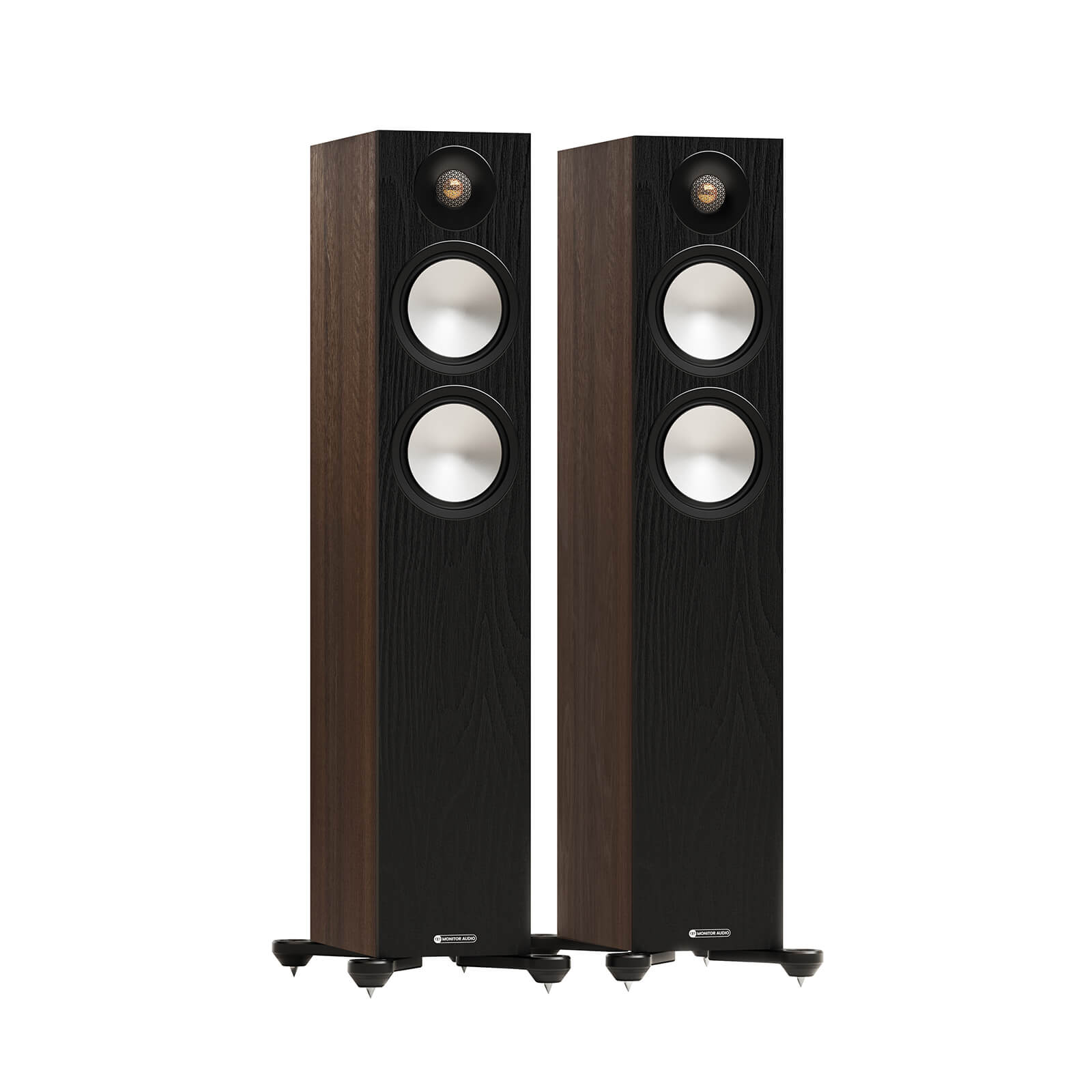
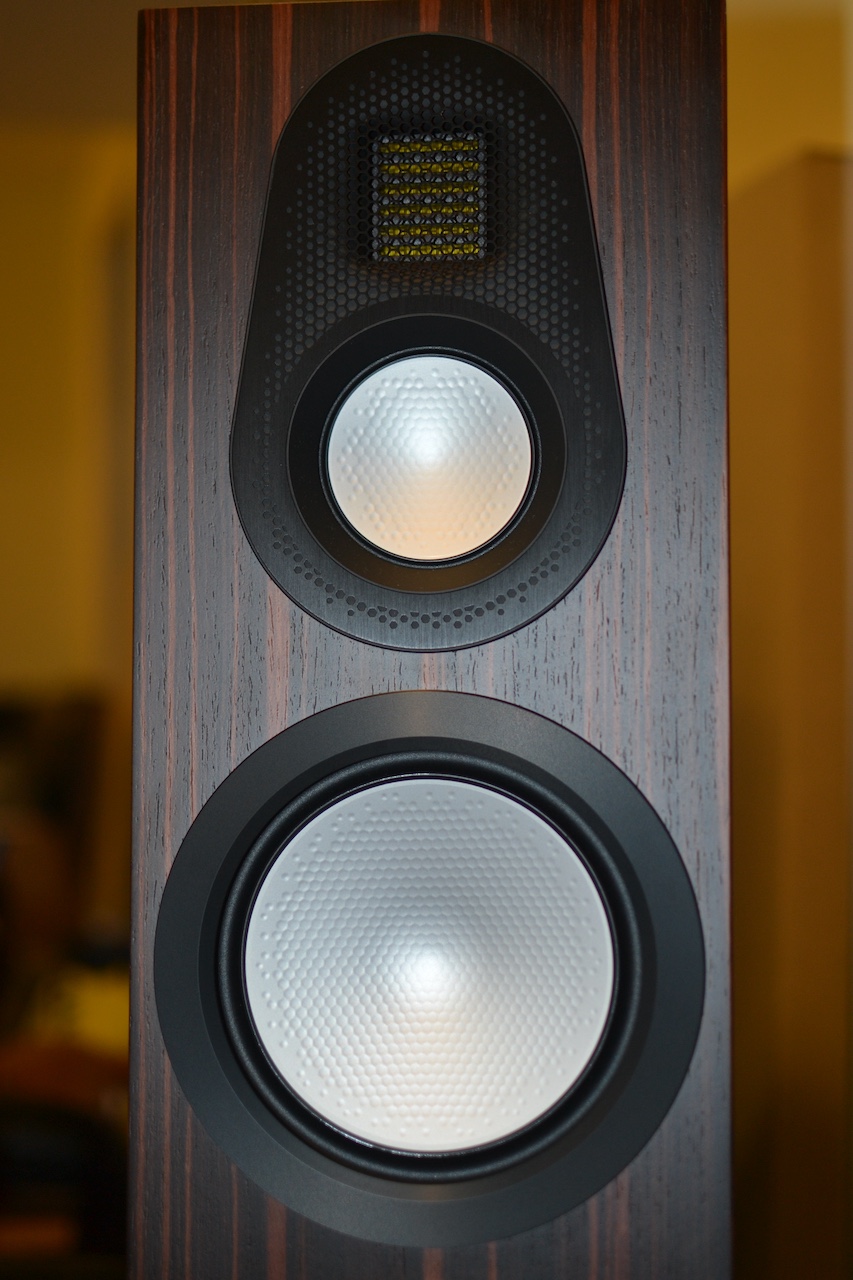
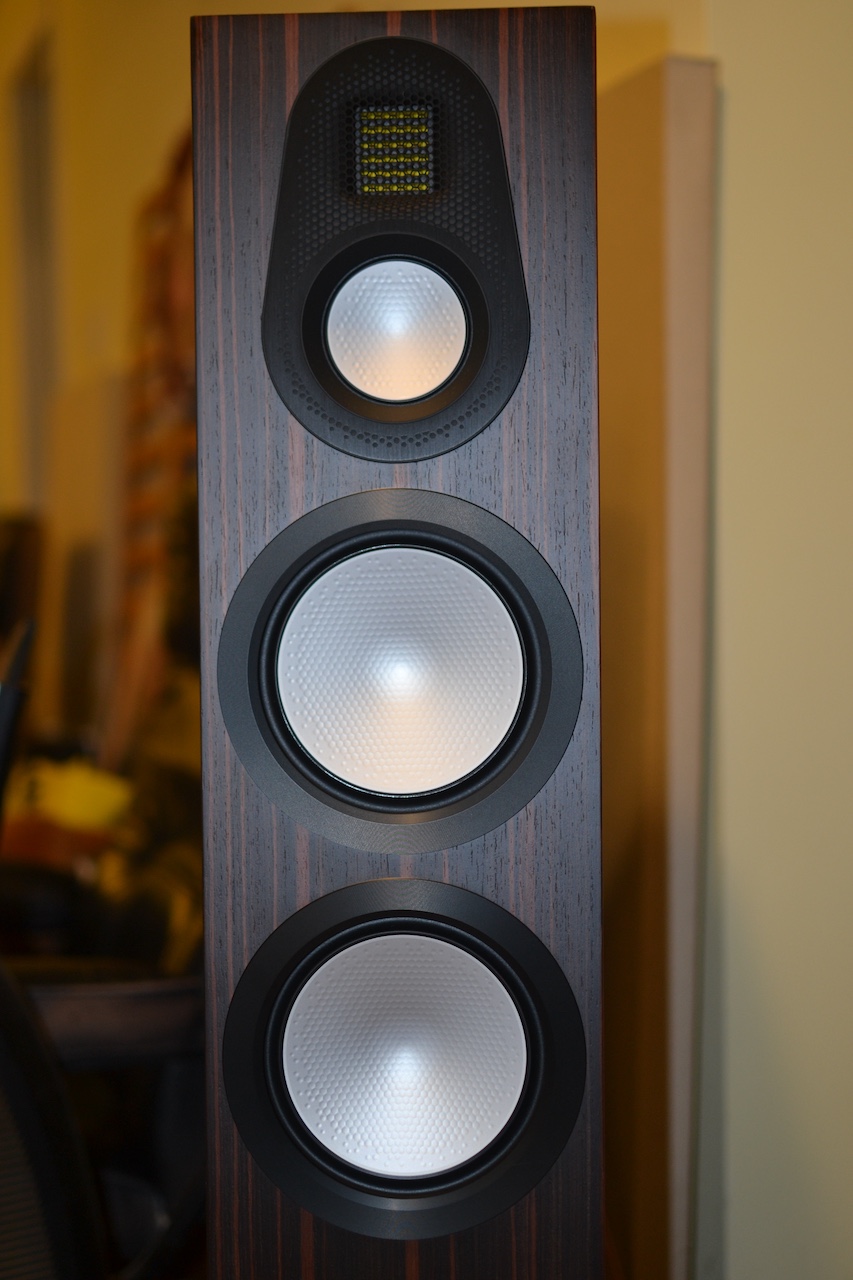
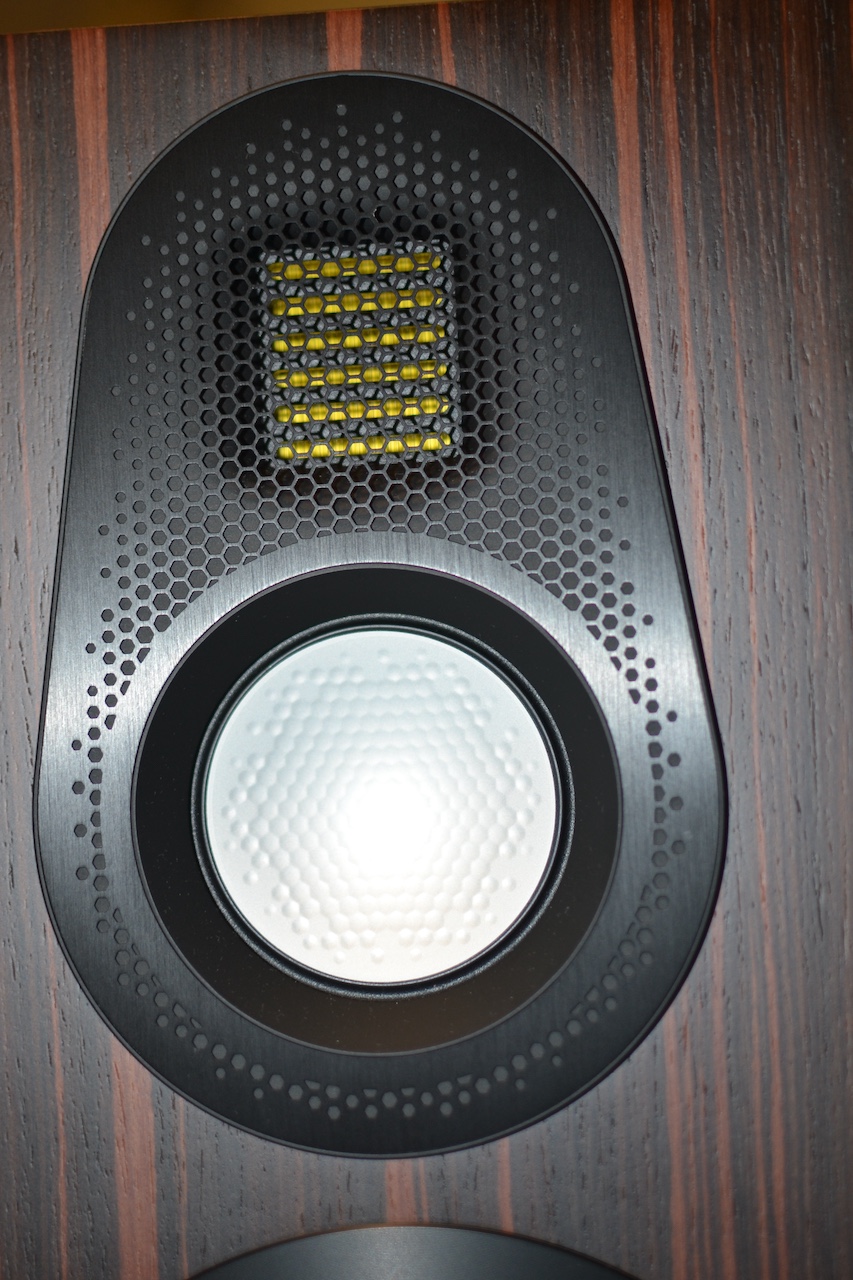
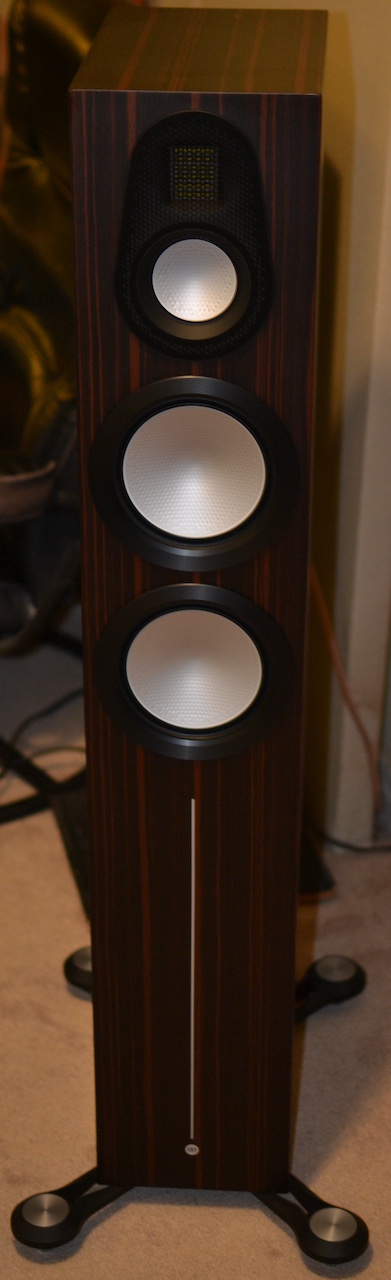
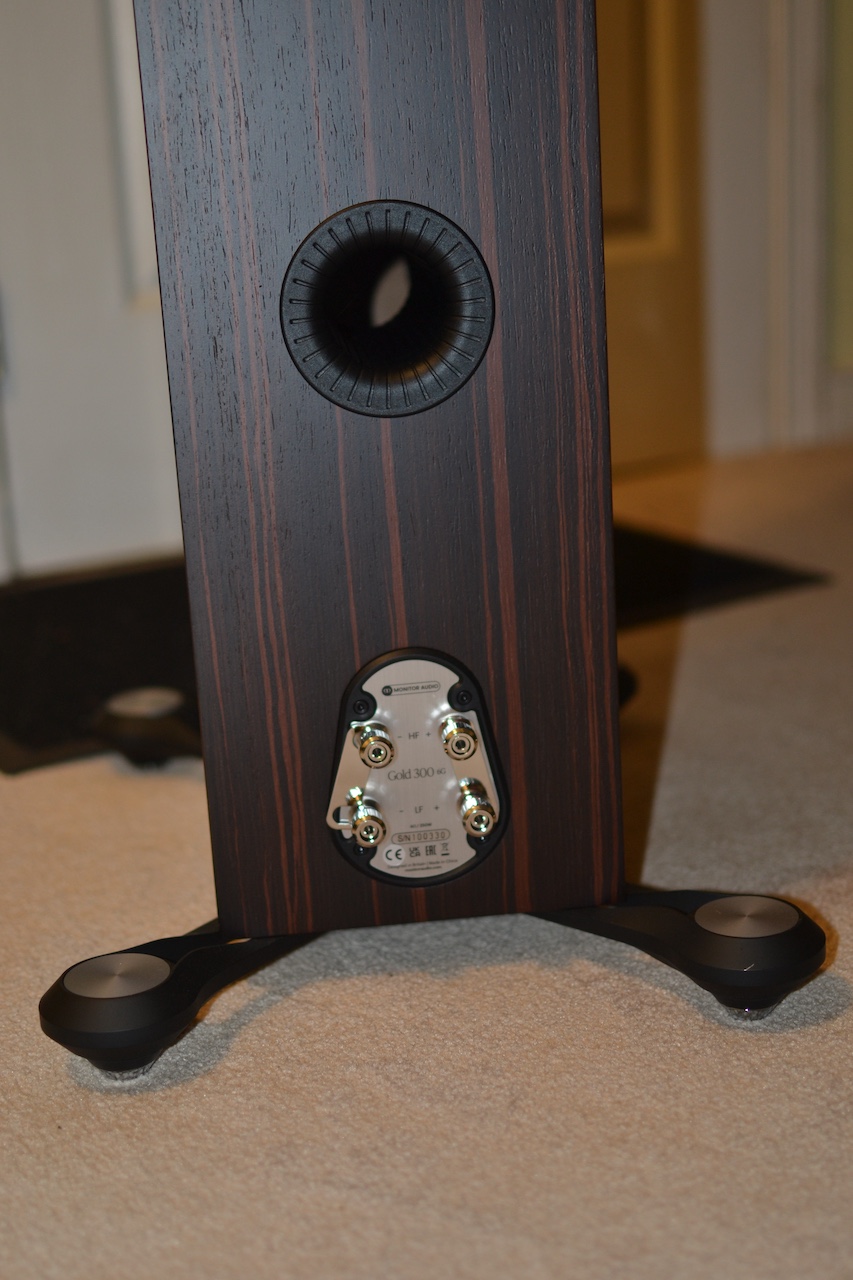
The Gold 300 6G is the sixth generation of the Gold Series and is a 3-way design incorporating the micro pleated diaphragm MPD III tweeter, a hexagonal diaphragm technology (HDT) C-CAM (ceramic coated aluminium magnesium) midrange driver unit which is technology that has trickled down from the Monitor Audio flagship “Hyphn”, and two six-inch woofers that also incorporates the HDT technology. The cabinet incorporates their ported HiVe II technology which enhances the deep bass performance. You have a choice of satin white, high gloss back or Macassar wood veneer which is the finish on the speakers that Sheldon sent me for the review. This wood veneer has been implemented in a way that gives a finish that looks very high end and is aesthetically stylish enough to look like it belongs even in a room with designer furniture.
Sheldon very kindly subjected the review speakers to a few days of breaking in before personally delivering them to me. However, I found that it took almost another month for these speakers to break in completely. In my experience, the better speakers take a longer time to break in fully.
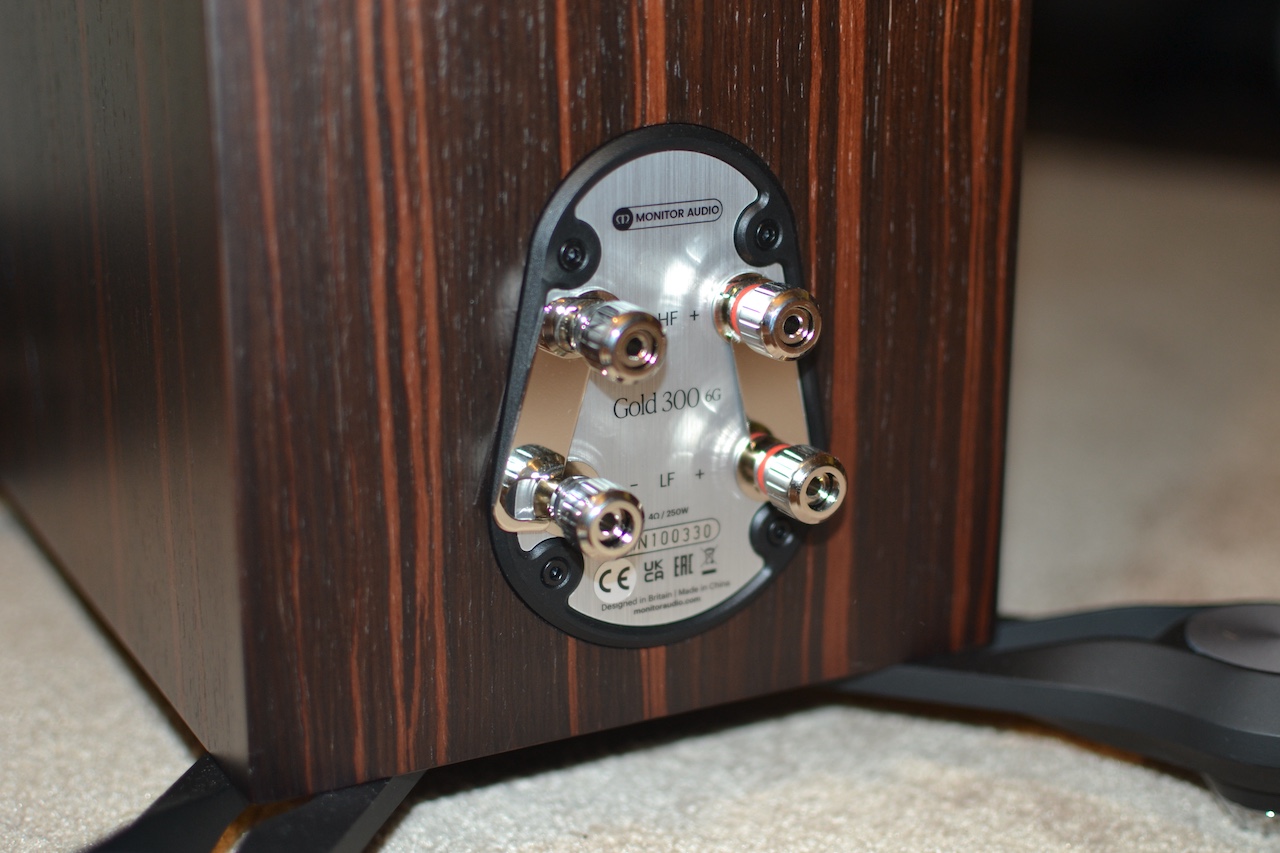
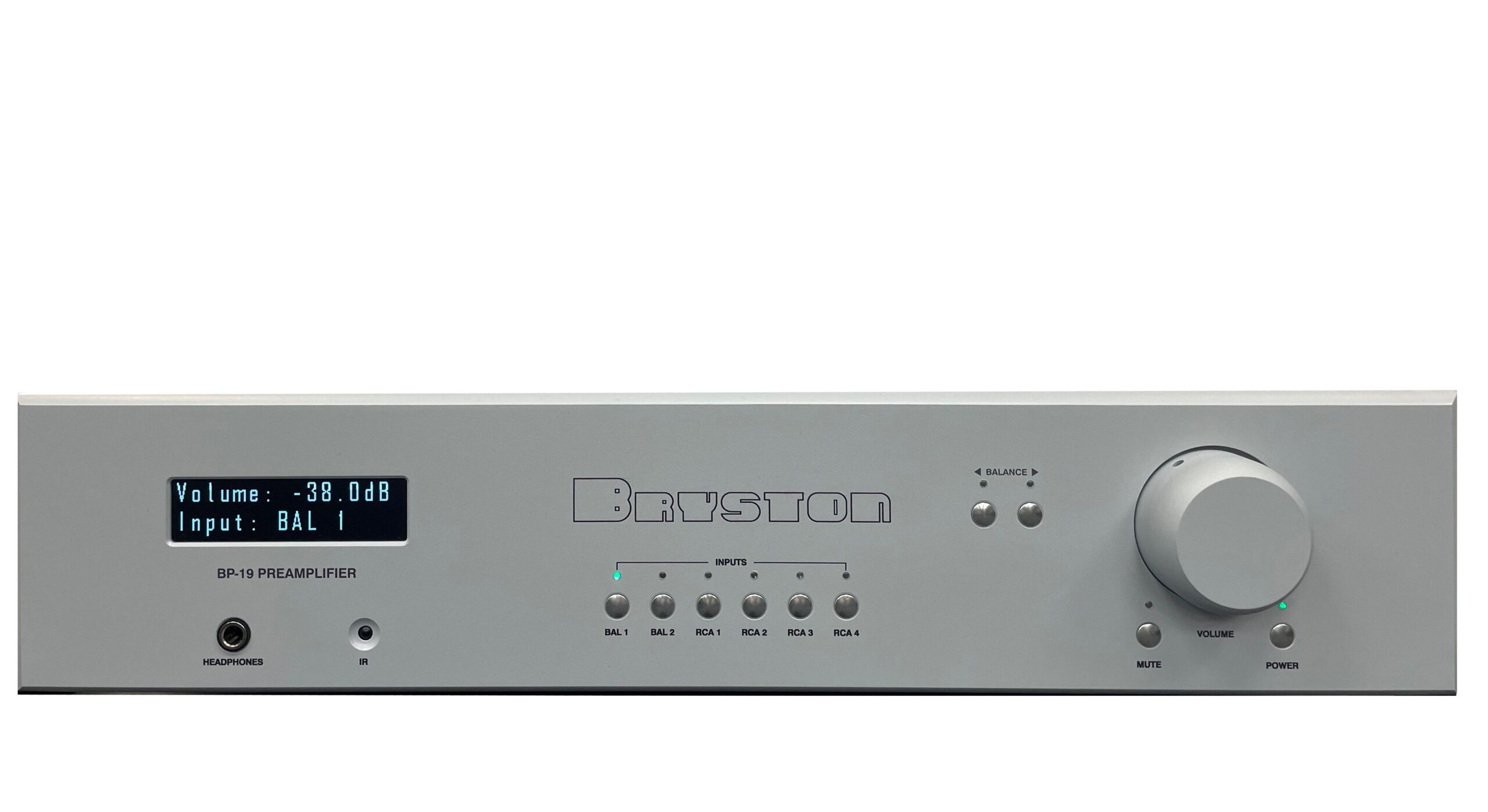
For the review, the Gold 300 6G was driven by Pass Labs XA 100.8 monoblocks, through Skogrand Beethoven speaker cables. The source components included the Ayre CX7e CD player, Triangle Art Concerto turntable, Roon Nucleus Plus server and Bryston BDP-3 digital player. The other components in my reference system include a Bryston BP-19 preamp, ACA Skogrand Edition Speakers, Isotek Sigma power conditioner and a Calyx Femto DAC with a combination of Skogrand Beethoven and Cardas Clear Beyond speaker cables and interconnects. I also have a full complement of Akiko Audio sound enhancing tweaks.
Tracks for the audition were taken from my collection of over quarter of a million digital files, most of them in high resolution format, over 900 CDs and over 700 LPs in mint or near mint condition. The digital files were played through the ROON software which does a marvelous job of helping me store, organize and find tracks from this rather large digital music library. Also, the truly extraordinary upscaling engine in the Nucleus Plus helped me enhance my Red Book tracks to higher resolutions before feeding them to my DAC to truly help the products I review, sound the very best that they can.
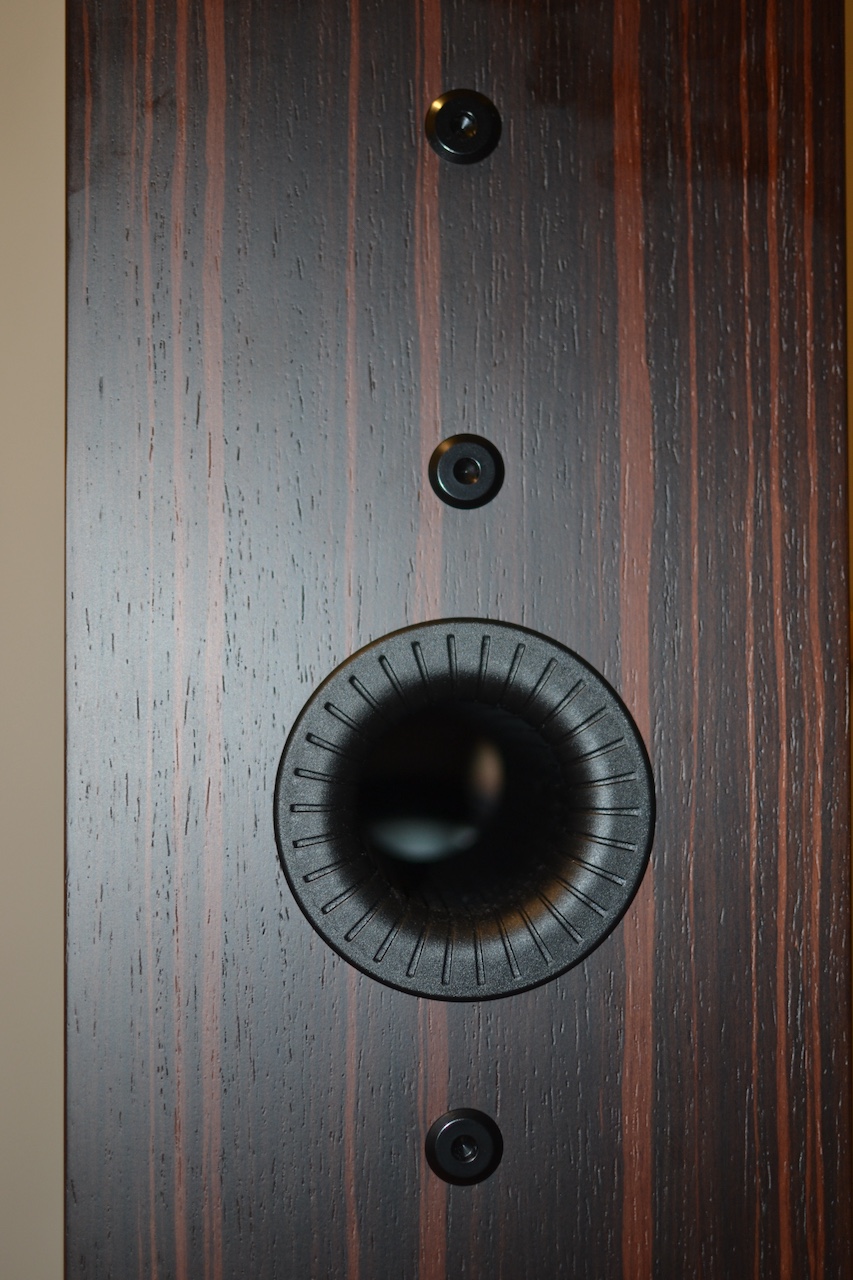
As for technical specifications, the Gold 300 6G is a 3-way, rear ported bass reflex design utilizing “HiVe II port tracks, a micro-pleated diaphragm ribbon tweeter, a 3-inch hexagonal diaphragm technology (HDT) ribbon midrange driver with a dedicated steel enclosure, 2 (per speaker) 6-inch HDT woofers. Its normal impedance is 4 ohms which remains relatively stable, dropping to 3.9 ohms at 165Hz. The stated frequency response is 28 Hz to 60 kHz at -6dB and the sensitivity is 89 dB (2.83V at one meter). These speakers come with a 5-year parts and labour warranty.
The Gold 300 6G tweeter is a micro pleated diaphragm which is an evolution of the air motion transducer tweeter which operates like an accordion, squeezing air out rapidly with minimal distortion and sibilance. Monitor Audio claims that it delivers an unusually wide and deep sound stage. I was able to verify this because the Gold 300 6G has a wider than usual sweet spot.
Housing the midrange driver inside an isolated, rigid steel enclosure that is braced against a die-cast aluminium front baffle helps to decouple it from the enclosure in order to allow a more neutral and forward delivery of vocals without the boxiness that afflicts midranges that are acoustically tethered to the cabinet the conventional way.
The twin 6-inch woofers have a specially designed hexagonal cone embossing pattern which improves rigidity and that keeps the cone under control even when these speakers are driven hard. I confirmed this with music that went all the way down to 40HZ and at 108dB sound pressure, at which volume level, the Gold 300 6G maintained its composure quite admirably.
The Gold 300 6G’s performance is highly dependent on the quality of power that it receives. During one auditioning session, out of curiosity, I connected them to an 18-year-old Onkyo receiver and the performance sagged quite dramatically. The impressive dynamics and sparkle through the Pass Labs monoblocks, almost totally disappeared when driven by the Onkyo.
These speakers are also unlikely to find favour with bass freaks who expect their speakers to rattle the windows and deliver the bottom octave with the impact that you can feel in your chest. That is not to say that they are bass shy. On the contrary, the bass is taut, tuneful and very well balanced without sounding bloated. If, after auditioning them, the bass is the only aspect that keeps you from pulling the trigger, you could always add one of two high-quality subwoofers that are fast enough to keep up with these speakers and you will be good to go. I tried them with a pair of JL Audio Fathom F112 and they danced beautifully together, delivering all the bottom end that anyone could want.
My audition began with the track “I dug up a diamond” from the album All the road running. Through the Gold 300 6G, this beautifully recorded track really shines and reveals how incredibly well the voices of Mark Knopfler and Emmylou Harris blend together in perfect harmony. The two voices were rendered with excellent presence and emotion with just the right amount of saturation and texture. The 12 tracks on this album were recorded over a period of seven years, which is hardly surprising, given how meticulous Knopfler is about the arrangement and the recording quality of every song he has ever recorded.
I then put on “Bid you goodnight” from the Blue Coast Music album Producer’s Choice Volume 1. This track is a splendid example of how much care and attention the inimitable Cookie Marenco puts into her recordings. I have heard this track many times before on various loudspeakers, but I am quite certain that it did not sound this good on any sub US$7,000 speaker that I have heard before. The sheer intimacy embedded in the voices of Keith Greeninger and Dayan Kai, was present in spades with Keith’s gravelly voice tugging achingly at my heartstrings. The lovely guitar work on this track is also rendered with truly accurate tonality with the attack and decay of every guitar pluck coming through with impressive realism.
Next up was “Fur Elise – Klavierstuck Woo 59” played by the very talented Edna Stern and featured on the Beethoven Sonate Appsionatas album. The piano is one of the most difficult instruments for any speaker to reproduce accurately, because each note can have an almost infinite number of variations in terms of loudness, weight, duration and decay time that the piano player can chose from. This is why few instruments allow the musician to embed as much emotion into the performance as a piano.
I know from first-hand experience, that in the hands of the right musician, a piano can be manipulated to express love, sadness, loneliness, melancholy, anger, rage, love, hate, fear and every other human emotion, with aplomb. This makes it a real challenge for a recording engineer to capture all these emotions by choosing the right microphones, placing them appropriately and then mixing the sounds so that the full depth of the emotion is captured for posterity. It is equally challenging for the speaker to then reproduce the recording in a way where none of the emotion is lost. The Gold 300 6G reproduces piano performances with more finesse than most of the other speakers that I have heard in its price range.
I finished the audition with the timeless classic “Stairway to Heaven” on the Led Zeppelin IV album. This is a great track to evaluate a speaker’s ability to deliver on various sonic fronts and the Gold 300 6G excelled in most of them. The PRaT and transients were spot on, the sound stage depth, layering and imaging were gloriously holographic, the percussions were crisp and the air between the different instruments were there in spades.
If there is one quality of the Gold 300 6G that I am very impressed with, it is the cohesion with which the tweeter, midrange and woofers worked with each other and blended their sonic outputs together to deliver a very coherent whole. Kudos to Monitor Audio engineers for their choice and design of the driver units, the selection of the parts for the crossover network and the cabinet design to achieve this feat of creating a speaker that is incredibly well balanced across the whole audible frequency range.
Of all the speakers that I have heard over the past 36 years, the champion in making a woofer and a tweeter deliver the coherence and articulation that is close to a very good single full range driver, still is the veritable Merlin VSM Black Magic, designed and built by the late great Bobby Palkovic of Merlin Music Systems. This VSM pair that Bobby very kindly performed a few more performance enhancing tweaks exclusively for me, has been my reference 2-way speaker for some time now.
To date, the only 3-way speaker that I have heard, which on the same level as the VSM in terms of top to bottom continualness across all its driver units, is the ACA Seraphim Skogrand Edition of which only a handful have been built, and which I had no hesitation in making my 3-way reference speaker.
It is important to note that the VSM Black Magic is around twice the price of the Gold 300 6G, and in the under US$7,000 per pair category, it is as close as you are likely to get to the VSM with regard to top to bottom continualness. What makes this even more admirable is the fact that the Gold 300 6G is a 3-way system in comparison to the VSM which is a 2-way system, which means that the former had additional cancellation nodes to transcend and therefore faced a bigger challenge.
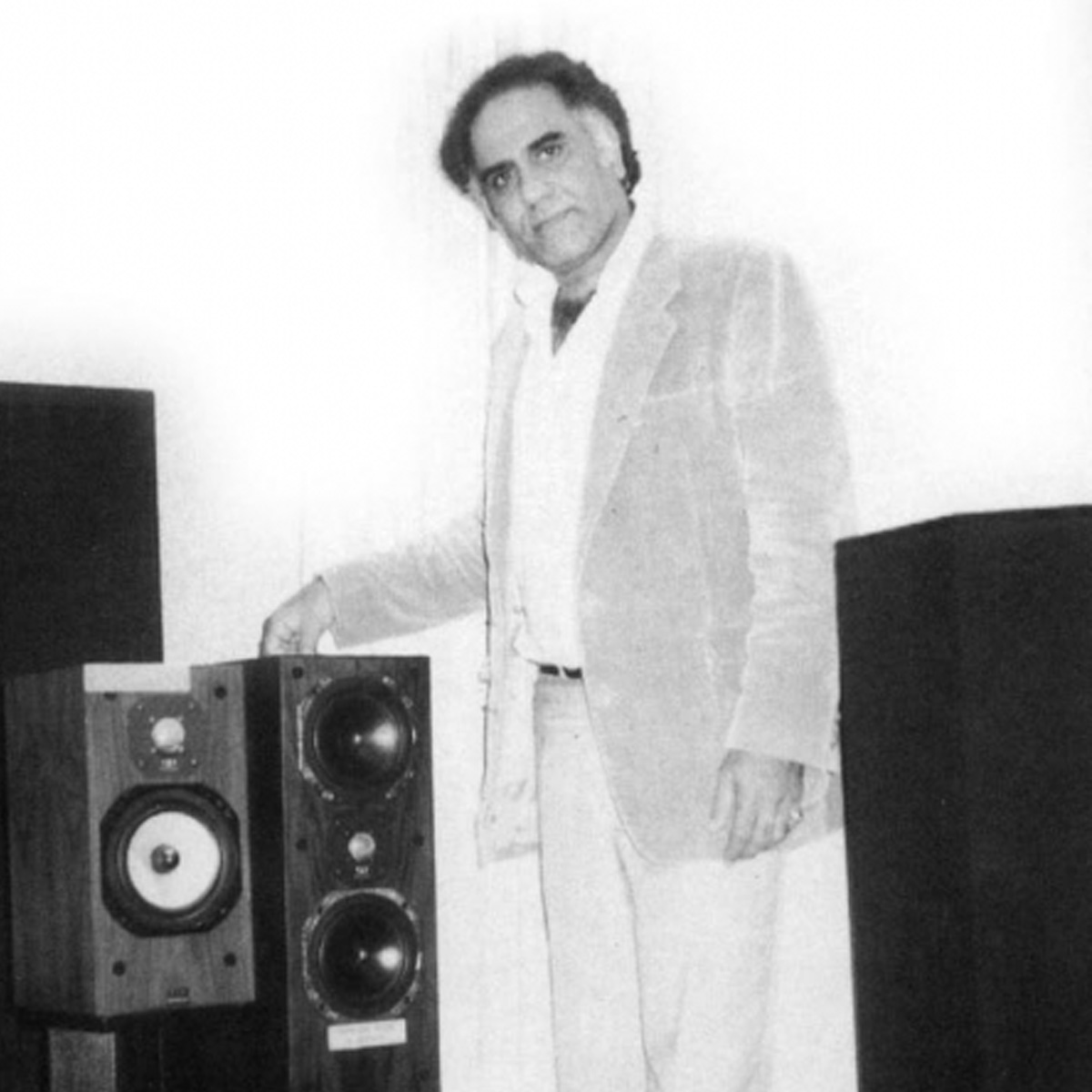
Mo Iqbal of Monitor Audio
To sum up, the Monitor Audio Gold 300 6G is a true contender in its price range and anyone looking to spend around US$7,000 for a pair of speakers and values an extraordinarily balanced sonic performance across all the audible frequencies, needs to give this speaker a thorough audition before pulling the trigger. You can thank me later!
Monitor Audio Gold 300 6G loudspeaker
Price: US $6,200 per pair
Warranty: Five years, parts and labor
Monitor Audio Ltd.
24 Brook Road
Rayleigh, Essex SS6 7XL
United Kingdom
Phone: +44 1268-740580
Fax: +44 1268-740589
Email: [email protected]
Website: www.monitoraudio.com
North American distributor:
Kevro International
902 McKay Road #4
Pickering, Ontario L1W 3X8
Canada
Phone: 1-800-667-6065 / 905 428 2800
Fax: (905) 428-0004
Email: [email protected]
Website: www.kevro.ca