Audio System Three
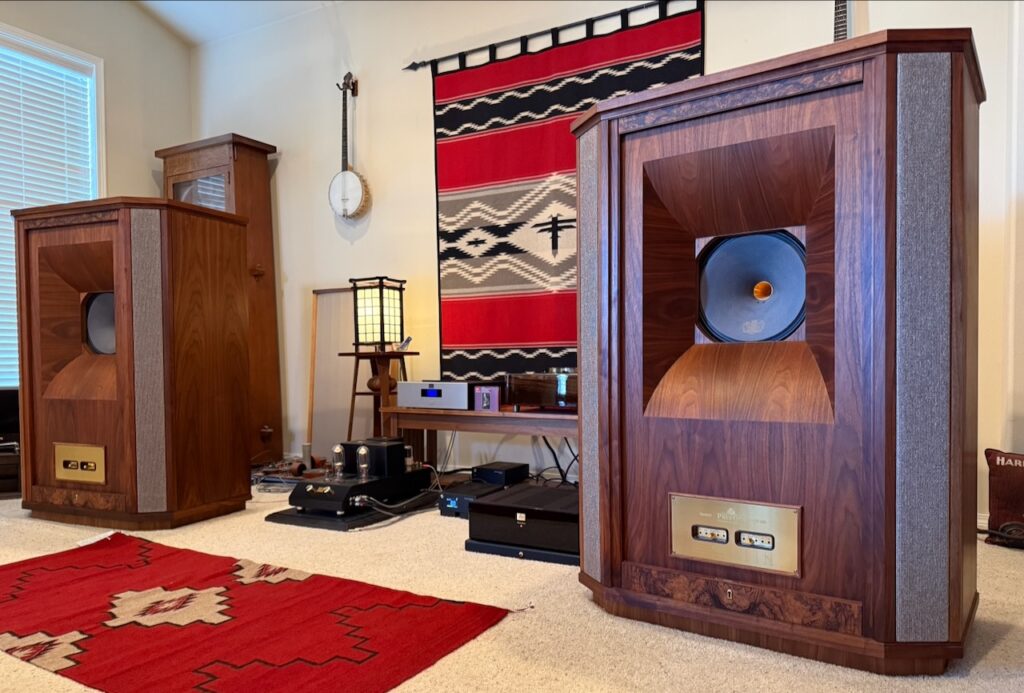
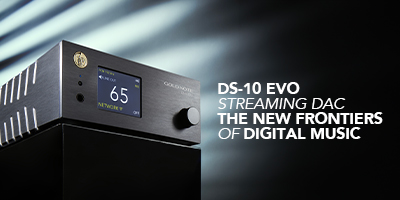
My next and last stop for the Gold Note DS-10 EVO DAC and PSU-10 EVO power supply was in my big Tannoy Westminster Royal SE loudspeakers-based audio system.
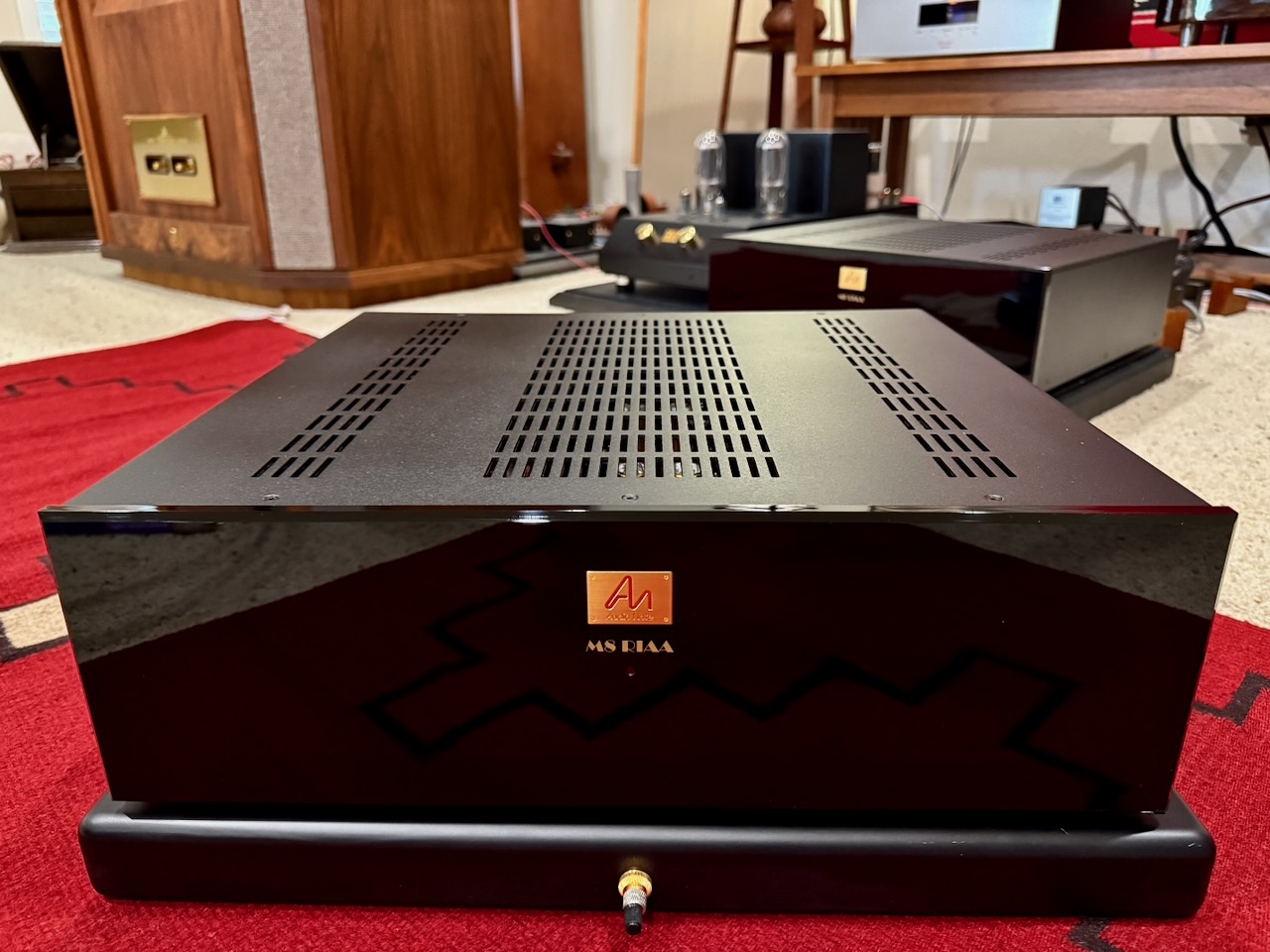
As much as I love my other HiFi systems, this system is certainly at a much higher level of performance, due to the ultra-resolving nature of the West's Duelund CAST crossovers (silver components for the high-frequency circuits, copper in low-frequency circuits), and the high-contrast nature of the full complement of Audio Note (UK) Level Four and Five components: Tomei 211 SET integrated amplifier, M8 RIAA phono preamplifier, and AN-S8/L step-up transformer, which all together add up to a stunning level of performance.
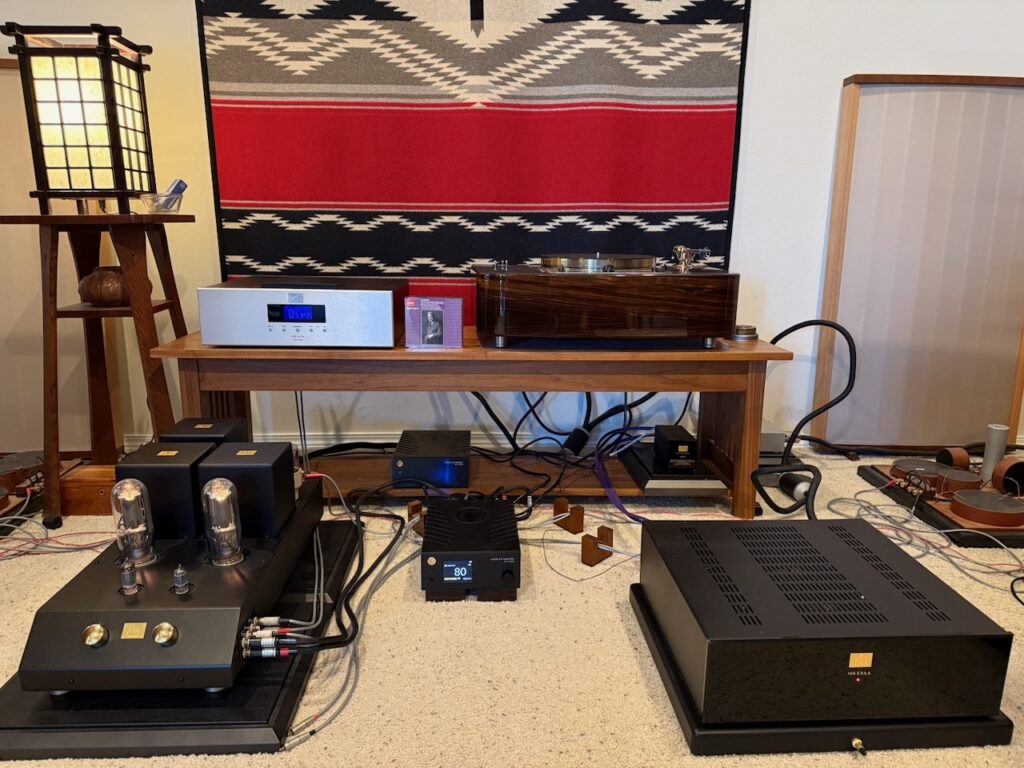
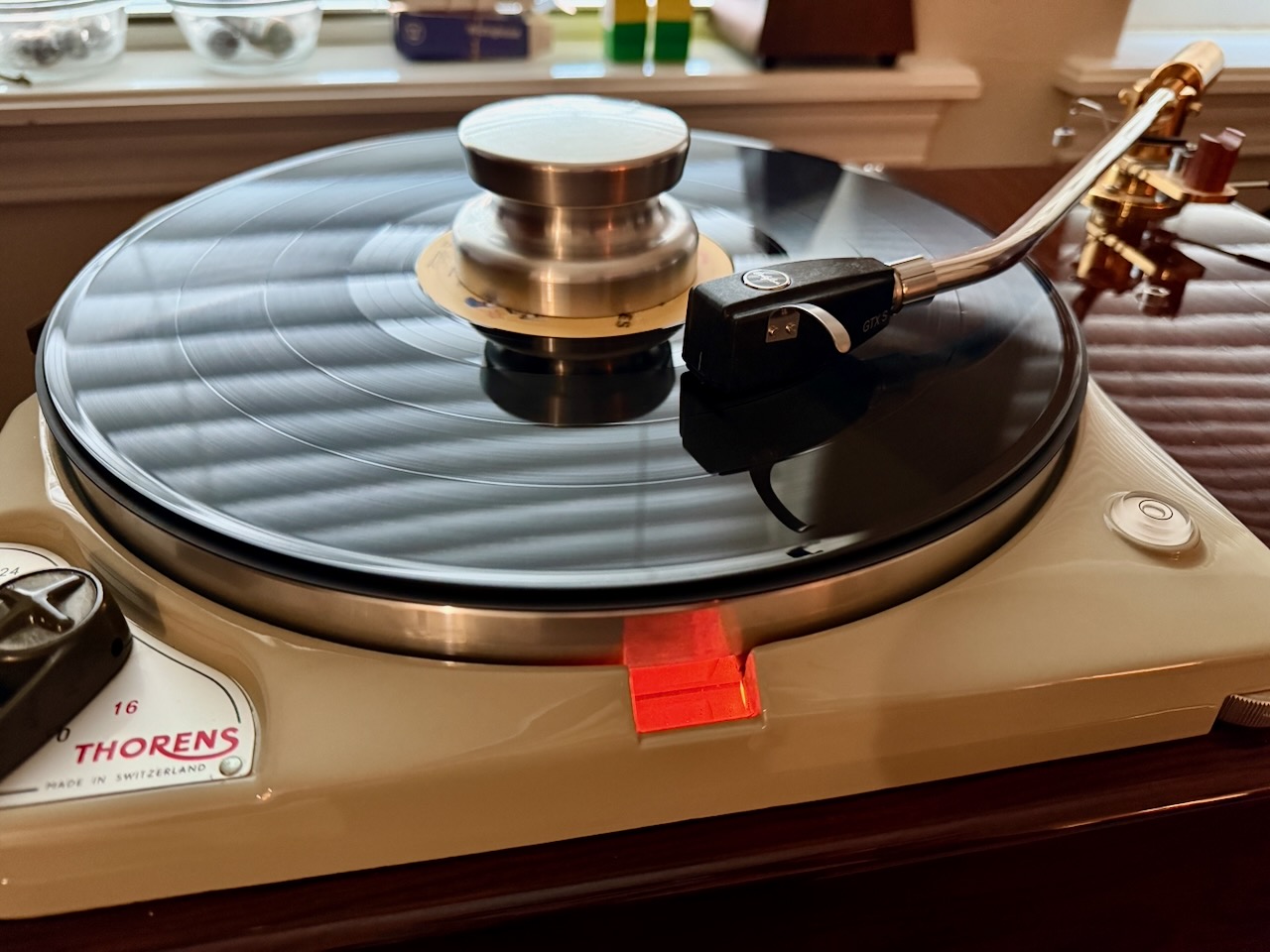
The Audio Note (UK) CD 5.1x CD player is the digital source, and the vinyl source was my custom CTC Garrard 301 / Artisan Fidelity turntable with a high-mass brass platter, a Schick tonearm equipped with the Audio Note (UK) Io I moving-coil phonograph cartridge, connected to the AN-S8/L SUT, and to the M8 RIAA phono pre.
Audio Note (UK) silver speaker cables and interconnects connect everything together, except for a pair of Acoustic Revive Absolute FM interconnects connecting to the Gold Note DS-10 DAC. Acoustic Revive Absolute power cables deliver AC to the components from an Acoustic Revive CB-1DB receptacle base plate, CFRP-1F carbon fiber outlet plate, and Oyaide R-0 AC outlet. The Gold Note DS-10 EVO DAC and PSU-10 EVO power supply were connected to the AC with their OEM power cords.
One thing I didn't do in my audio system two comparisons was compare the superb CD 5.1x Red Book CD player to the Gold Note DS-10 DAC playing higher resolution PCM and DSD files, which I'll do in this audio system.
The Audio Note (UK) CD 5.1x CD player is at an elite "performance level three," and it can perform at a similar level to most vinyl sources in the $25,000 to $30,000 USD range.
I also wanted to compare the Gold Note DS-10 DAC with PSU-10 EVO power supply to the aforementioned vinyl front end, which I would place at approximately "performance level five," and with its price point being around twenty times that of the Gold Note combo.
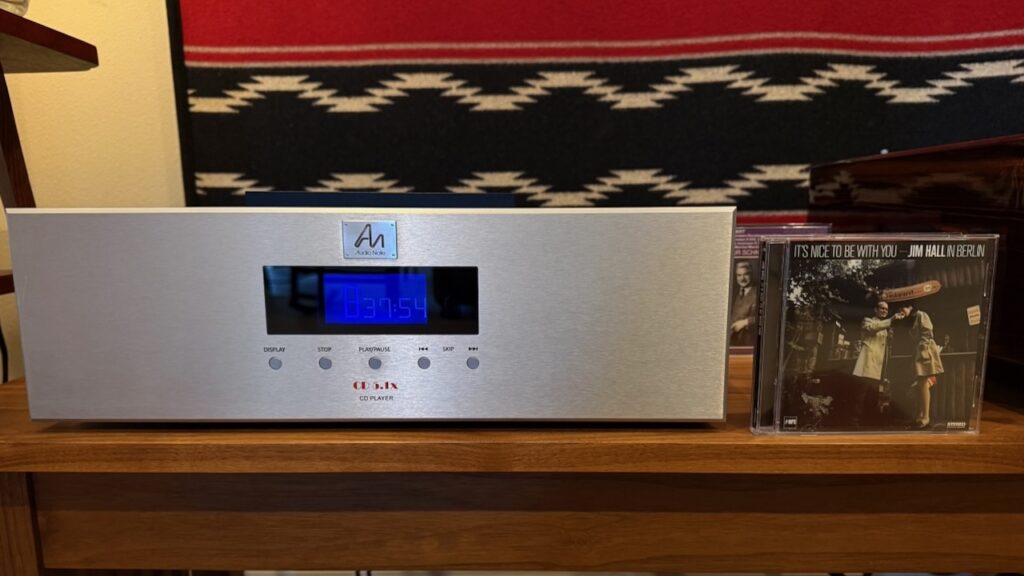
Album example: Jim Hall In Berlin (MPS Records 0209730MSW, Edel 0209730MSW, MPS Kultur SPIEGEL Edition). Originally recorded in 1969, reissued and remastered in 2014, featuring Jim Hall (guitar), Jimmy Woode (bass), and Daniel Humair (drums).
First, I matched volume levels between the 5.1x CD player and the Gold Note DS-10 DAC with PSU-10 EVO power supply to get them as close as I could. Then, I experimented with Gold Note DS-10 DAC's Chameleon settings and settled on the "sharp roll-off / traditional sound" as my preferred setting.
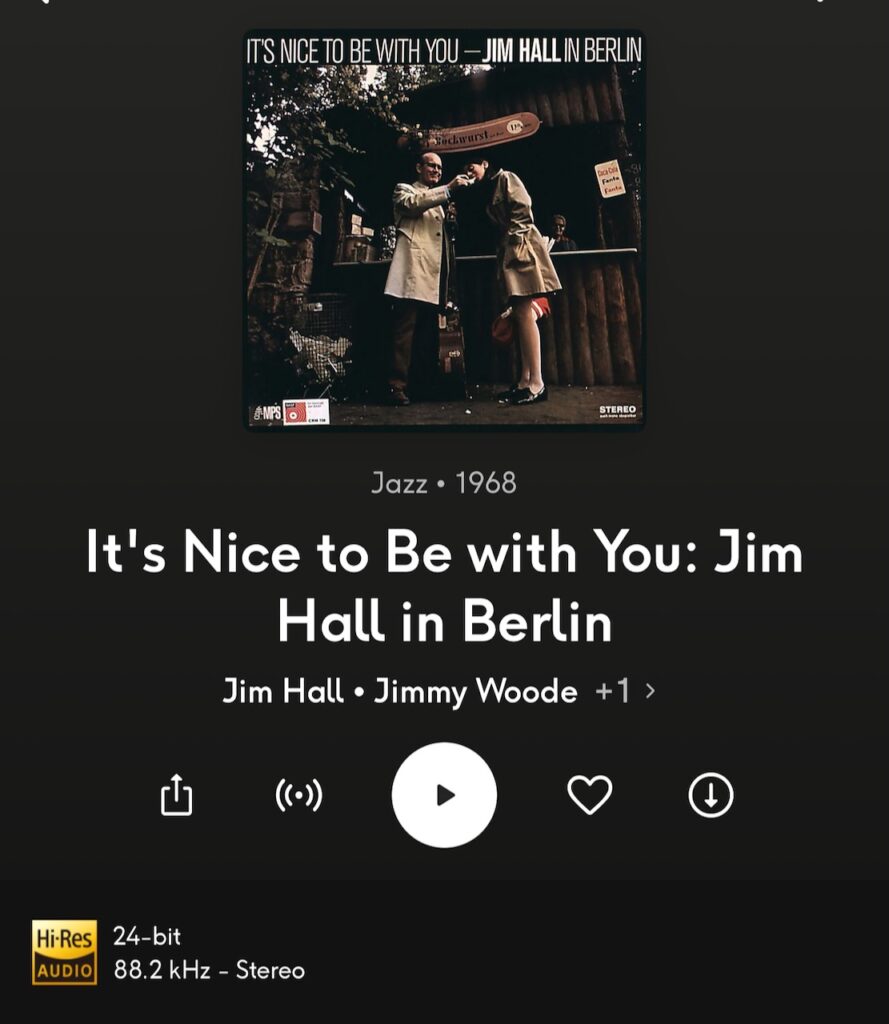
I really didn't know what to expect with the 5.1x CD player playing the Jim Hall In Berlin CD at 16-bit/44.1 kHz compared to the Gold Note DS-10 DAC playing Jim Hall In Berlin at 24-bit/88.2 kHz from Qobuz.
I had found that in audio system two, the 5.1x CD player performed significantly better playing a CD than the Gold Note DS-10 DAC did when playing a 16-bit/44.1 kHz stream, but that performance gap was essentially erased when the Gold Note DS-10 DAC was playing a high-resolution stream at 24-bit/88.2 kHz.
I went back and forth many times between these two sources in an A/B comparison, and both the CD 5.1x CD player playing the CD and the Gold Note DS-10 DAC playing 24-bit/88.2 kHz sounded very good, with a similar tonal balance, amount of contrast, level of resolution, sense of drama, dynamics, and visuospatial performance. I couldn't hear any obvious performance difference between them playing Jim Hall In Berlin.
I was both surprised and impressed that the CD 5.1x playing the Jim Hall In Berlin CD at 16-bit/44.1 kHz sounded nearly identical to the Jim Hall In Berlin 24-bit/88.2 kHz stream from the Gold Note DS-10 DAC. I was also impressed that the Gold Note DS-10 DAC playing the 24-bit/88.2 kHz stream could perform at a similar performance level to the exotic level three Audio Note (UK) CD 5.1x CD player.
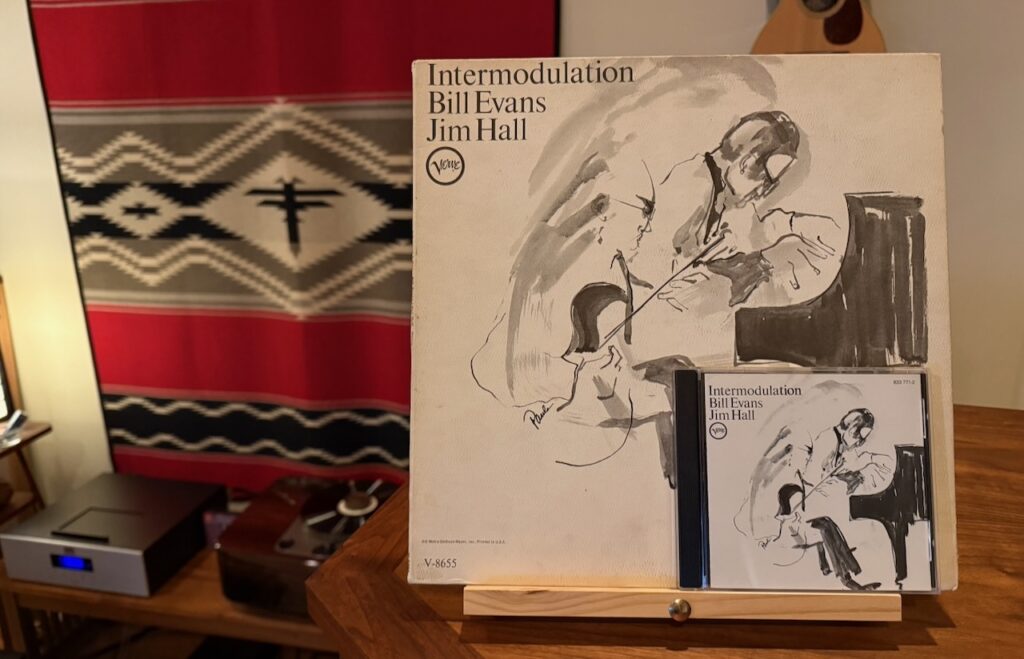
An example comparing CD, DSD, and LP: I have Intermodulation (Verve Records 833 771-2), recorded in 1966 by Rudy Van Gelder, on CD (Verve 833 771-2, 1988), as a DFF DSD64 file, and as an LP (Verve Records V6-8655, 1966).
This is a superb album with two jazz greats, Bill Evans (piano) and Jim Hall (guitar), and you know it is going to sound great being recorded by Rudy Van Gelder.
A word about the DFF DSD64 file format: The DFF part describes a file format developed by Sony and Philips that is primarily used for storing data in professional digital audio workstations. The DSD64 part refers to DSD at a sampling rate of 2.8224 MHz, or 64 times the sampling rate of a 44.1 kHz CD.
In doing a little more research about the DFF DSD64 file format, via an AI search, I found out the following:
"DSD64 provides high-resolution audio using 1-bit, pulse-density modulation (PDM), designed to produce a sound closer to analog than typical PCM (FLAC/WAV) formats, and "DFF is frequently used for master recordings or raw, uncompressed DSD audio, often used by professional software/hardware."
So reading between the lines, I take that to mean that DFF DSD64 offers a near master tape playback quality.
I started my listening with the Intermodulation CD, and through the CD 5.1x CD player it sounded superb. Tonally natural, vivid images, excellent dynamics, superb musicality, full of emotional drama, and a very wide soundstage with a sense of acoustic space between Bill and Jim.
When I played the Intermodulation DFF DSD64 file through the Gold Note DS-10 DAC, the first thing I noted was that it sounded very different from the CD, with much less contrast from the 5.1x playing the 16-bit/44.1 kHz CD.
I decided to try the two different DSD low-pass filter settings in the Gold Note DS-10 DAC. The filter setting I started with was 0, where the attenuation was 0.77 dB at 20 kHz and 18.8 dB at 100 kHz. With the DSD filter set to 1 the attenuation was 0.19 dB at 20 kHz and 5.29 dB at 100 kHz.
Now your family dog can hear up to 45 to 65 kHz, and the bats in your belfry can hear up to about 200 kHz to 250 kHz, so they might be able to hear a difference at the 100 kHz attenuation point between the two settings, assuming the rest of your system is up to it.
Us humans are limited to around 20 kHz. So us humans might be able to detect the attenuation at 20 kHz.
That said, the two roll-off settings do sound quite different from each other (and from PCM), with the "1" setting having more HiFi sparkle and air, and more contrast, while the "0" setting sounded a little smoother and more liquid, with less contrast. That's another voicing feature in the Gold Note DS-10 DAC, so just pick the one you like best.
My take on the difference between the two settings was that it was greater than could be explained by the minimal amount of attenuation provided by the DSD filters, so maybe there is more going on with AKM's AK4493SEQ DAC chipset with their "Velvet Sound technology" than just that amount of attenuation.
Now back to DFF DSD64 compared to 16-bit/44.1 kHz PCM through the 5.1x CD player. The DFF DSD64 sounded a little softer, a little lusher, less percussive, with less rhythmic drive, less drama and emotional impact, but with more resolution and detail recovery than the 16-bit/44.1 kHz PCM CD.
The PCM had more contrast between the images, with the individual images being more vivid and dramatic as they popped out of the blackness of the recording background, but they were also more disconnected from each other in space, more spotlighted, more like separate holographic images.
The PCM sounded more dramatic in the way it vigorously projected notes into the recorded space. With the DSD, the instruments sounded more like they were connected in the same acoustic space and playing together. The acoustic space between the instruments was more continuous, but with less overall contrast, and more laid back sounding.
In "I've Got You Under My Skin," Jim's comping sounded more realistic in timbral terms, and I could hear deeper into his ES-175, its archtop timbral textures, with the DSD, but there was less rhythmic drive, less drama in the music, less emotional engagement compared to the PCM version.
What I'm not sure about is how much of the more dramatic presentation I hear with the PCM is due to Audio Note (UK)'s high-contrast voicing style, and how much of it is due to being PCM. The same can be said for the DSD, which is more resolving, but lower contrast, more laid back, with a more connected in space sense to the instruments, and a more meditative sounding presentation. Is that a quality inherent to DSD processing, or is it the way the DSD is played back through Gold Note DS-10 DAC?
I really don't know the answer to that. What I do know was that I enjoyed both a lot, but they are two very different takes on what this album can sound like, and in the way the music is presented.
I have Intermodulation as a monaural LP (Verve Records V6-8655, 1966). I thought I remembered it being stereo, but it's monaural. Still, I thought it would be fun to listen to the LP and compare it to DFF DSD64 sound.
The LP is from 1966, it is monaural, so it's a step closer to being the real thing than either the PCM or DSD transfers of those aging master tapes.
The monaural LP is an order of magnitude more convincing in feeling, more like real live music playing in my living room, compared to either the DSD or CD playback.
The monaural LP sounds bigger, more spacious, with bigger life-size instruments. There's more bloom in the way the notes develop and decay, and more subtleties in evidence in dynamic gradations. On more energetic lines, there's more impact on my body as the notes project out from instruments with real energy, and that energy engages me in the performance more.
In spite of the monaural and stereo differences, the DSD had Jim and Bill and their guitar and piano sounding more connected in space, more like the monaural LP did, than the PCM did.
The PCM captured the percussive nature of the music better, the forceful nature of the drama, the forceful way notes are projected at my body, more like the monaural LP did.
Still, whether I am comparing PCM or DSD, the monaural LP is at a significantly higher level of sound quality, musicality, and dramatic ability than either digital version. If it was my last time listening to Intermodulation on the Earth before it was destroyed by war mongers with nuclear weapons, I'd be choosing the monaural LP.
The LP has life in its grooves; it is brimming with artistry, with musical brilliance. The soul of the music reached out and touched me, and there's something very "real" and alive about the way it feels that just isn't captured in the PCM or DSD stereo versions of the album.
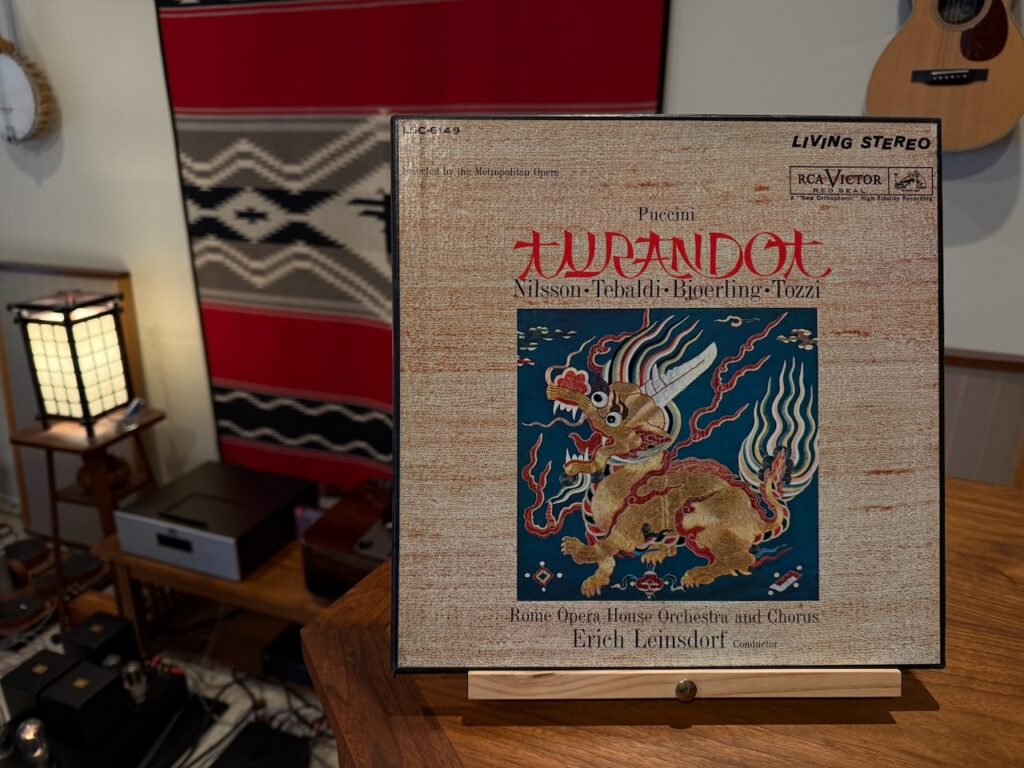
Another LP to DSD comparison: Puccini, Turandot with Nilsson, Tebaldi, Bjoerling, Tozzi, Rome Opera House Orchestra and Chorus, Erich Leinsdorf conducting (RCA Living Stereo, LSC-6149, 3 LP box set, 1969), and as a DSF DSD64 file.
My earlier DSD example was with a DFF DSD64 file format, but now this is a DSF DSD64 file. As far as I can tell, the only difference between the two file formats is that DSF supports metadata, and DFF doesn't. As before, the DSD64 part means that the sampling rate is 2.8224 MHz, or 64 times the sampling rate of a 44.1 kHz CD.
So whether DSF or DFF DSD64, these files are supposed to offer a near-master tape playback quality. I set the volume for LP playback and DSF DSD65 so they were the same.
I think opera is arguably the greatest test of audio system performance with its wide dynamic range, multiple singers moving around the stage, dramatic storylines, choirs, and orchestras all adding to the complexity and emotional impact of the performance.
I thought both the DSF DSD64 file and the LP provided excellent performance overall, yet the LP was a clear winner in terms of natural tonal balance, resolution of timbral textures, sense of spaciousness in the recording, visuospatial performance (imaging and soundstage), and particularly in the sense of delivering the drama, the emotional impact of the performance.
In comparison, the DSF DSD64 file sounded a little bland, a little synthetic, less resolving, less colorful, less dramatic, and less emotionally engaging overall.
It seems like with all the DSD files I've listened to, I am hearing less contrast between different recordings, and less contrast within any given recording. DSD converges towards a more similar, more smoothed sound quality. With LPs there was more contrast between recordings, and with the individual albums.
Now, that is not to say that DSD sounds bad; it certainly doesn't. It sounds very good. But compared to vinyl played from a top-quality "performance level five" source, the vinyl still has a considerable advantage. Once again, if this were my last day on Earth, I would be reaching for the vinyl to listen to rather than the DSD DSD64 file.
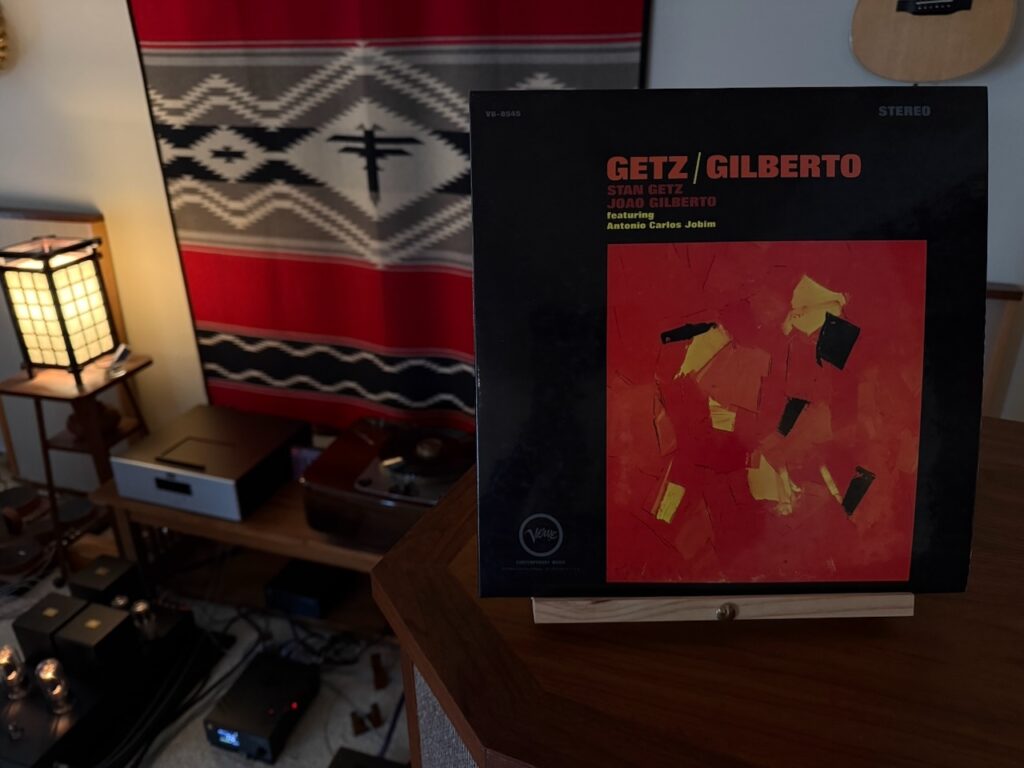
A DSD to 45-rpm vinyl comparison: Stan Getz and João Gilberto, Getz/Gilberto (Verve Records, 1964; Analogue Productions remaster, 45 rpm vinyl records, AVRJ 8545-45) and DFF DSD64 file.
I love this album, and have listened to it so many times I've lost count. It is one of the best-selling jazz albums of all time, as the bossa nova music is outstanding, and so is the quality of the recording.
Featuring Stan Getz (saxophonist), João Gilberto (guitarist), Antônio Carlos Jobim (pianist and composer), Astrud Gilberto (vocals), Sebastião Neto (bass), and Milton Banana (drums), Getz/Gilberto is one of the all-time great jazz records and always puts a smile on my face.
The Analogue Productions 45rpm version of Getz/Gilberto is my favorite, and it boosts the sound quality substantially from the 33rpm version. The album has a big, warm, rich, dimensional sound, lots of resolution, with superb visuospatial qualities (imaging and soundstage).
I could hear the holographic way the microphone pattern spotlighted Astrid on "The Girl From Ipanema," the velvety timbral textures of Getz's sax, the subtle touch on the cymbals by Milton - just a truly beautiful portrayal of "The Girl From Ipanema."
In comparison, the DFF DSD64 file didn't even come close to the Analogue Productions 45 rpm LPs. It sounds less natural, not as high in resolution, and even a little bit harsh.
I would also note that in the original recording of "The Girl from Ipanema" on the Getz/Gilberto album (and on the Analogue Productions version), Astrud Gilberto's vocals are placed in the left channel. However, on later versions of the master, the left and right channels were reversed. That means that in some later releases, Astrid's vocals appear in the right channel instead, which is the case with the DFF DSD64 file I have.
I'm thinking that at least some of the difference in sound quality between the meticulously produced Analogue Productions 45 rpm version of Getz/Gilberto and the DFF DSD64 file was that the latter was sourced from a later inferior master tape.
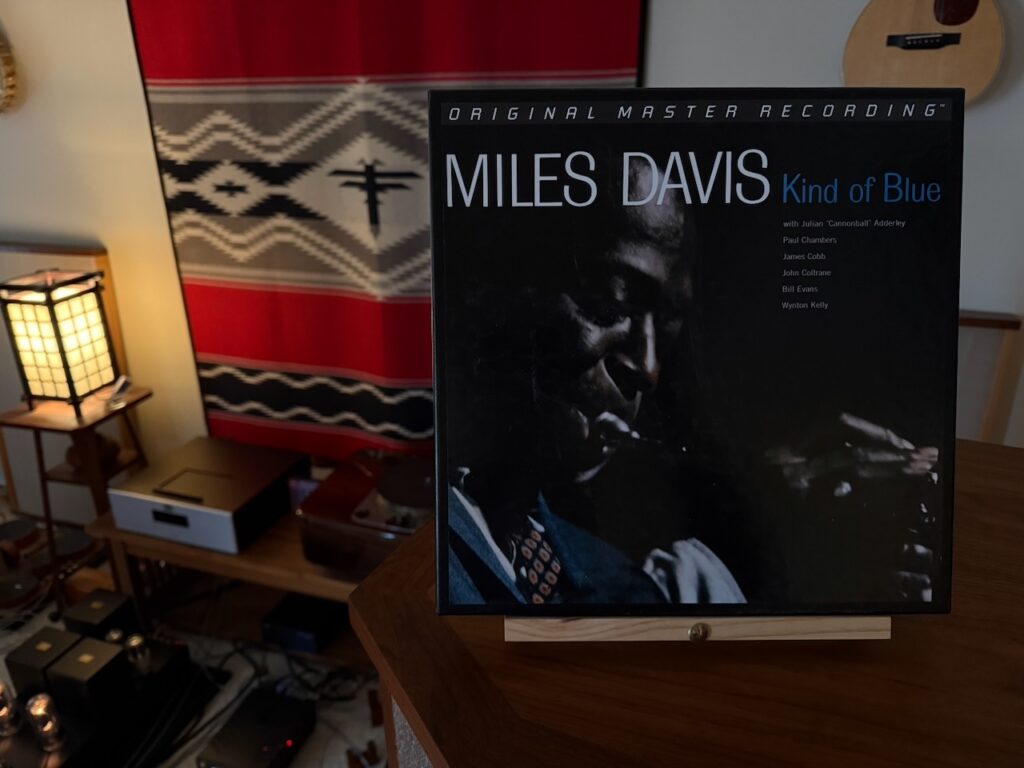
A final DSD to vinyl example: Miles Davis, Kind of Blue (Columbia Records, 1959; one of my versions is the Mobile Fidelity Sound Lab 45 rpm version, the other the Classic Records 33.3 rpm version), and the DSF DSD256 file version at a sampling rate of 11.2 MHz, which is 256 times the sampling rate of the Red Book standard.
The Mobile Fidelity LP version of Miles Davis' Kind of Blue was sourced from a DSD transfer of the original master tapes, using a remix produced in 1997. Of course, this is considered a blasphemy by many for producing a vinyl record, but other records I have that were sourced from DSD have sounded pretty good, so I was curious what would happen comparing this DSD "vinyl" version to the DSF DSD256 file.
It seems MoFi always does a little tinkering at the frequency extremes to achieve a more "HiFi" style of sound quality, and that remains true here as well. I found the overall sound quality of the MoFi version to be annoying, both in its highs and lows, and I didn't want to spend much time listening to it. Don't waste your money on this one.
The DSF DSD256 file sounded much more natural and well balanced than the MoFi 45 rpm LPs, but still … I didn't particularly care for it, thinking it sounded unnatural and amusical.
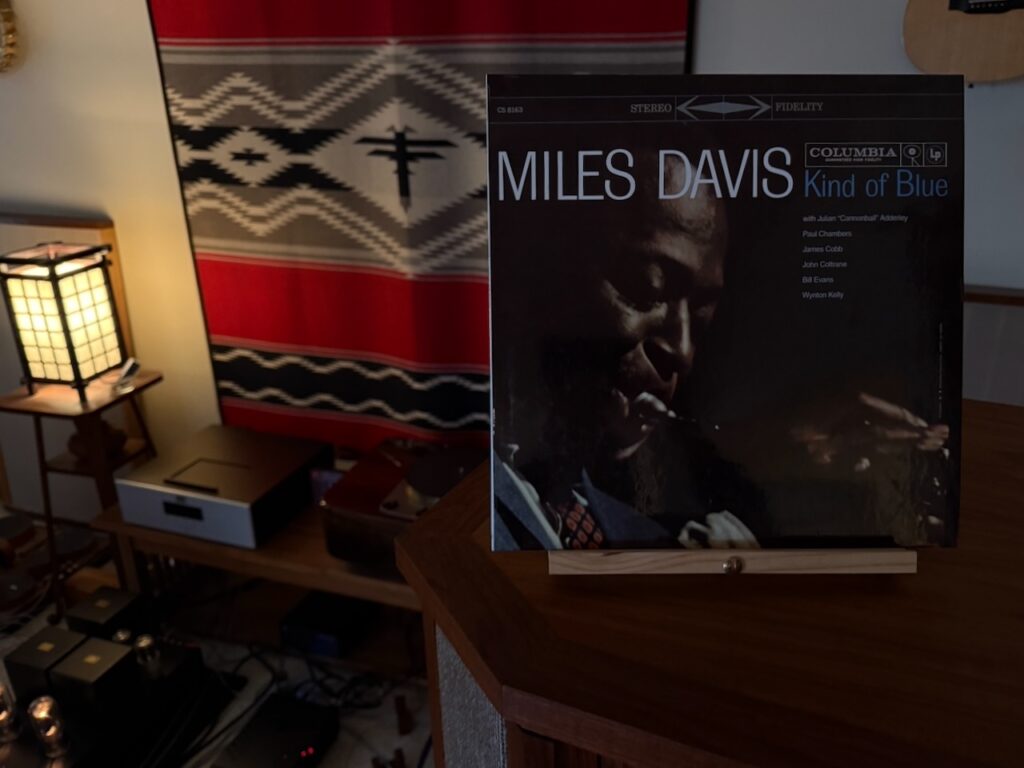
The Classic Records 33 rpm version of Kind of Blue was cut from the original master tapes and bests both the DSD MoFi vinyl version and the DSF DSD256 file by a lot. The music is delivered in an engaging way, sounds natural, appropriately dramatic, and emotionally engaging, and of these three versions, this is the one to get.
I would rank the Gold Note DS-10 EVO DAC and PSU-10 EVO power supply playing high-resolution PCM or DSD files at about "performance level three" in comparison to the "performance level five" Audio Note (UK) vinyl front end in this system, but to be fair, the vinyl front end I'm comparing it to is over twenty times the Gold Note combo's cost, so you will want to keep that in mind.
Overall, I thought the Gold Note DS-10 EVO DAC with its PS-10 EVO power supply made a good showing for itself, delivering good sound quality when playing high-resolution PCM or DSD files at a wallet friendly price.
Please click on the link below to go to the next page.