Audio System Two
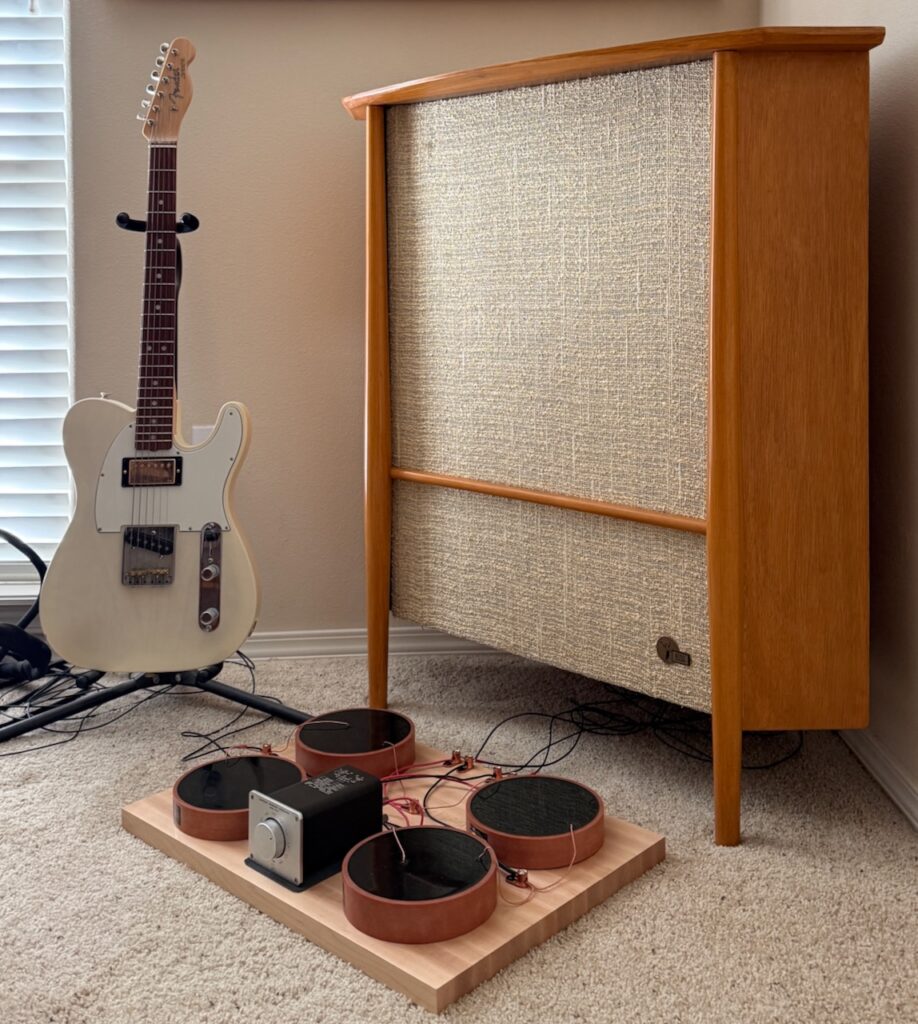
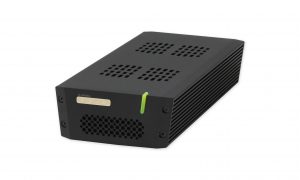
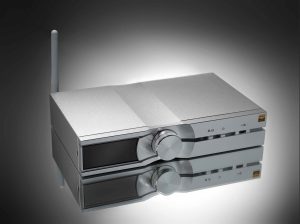
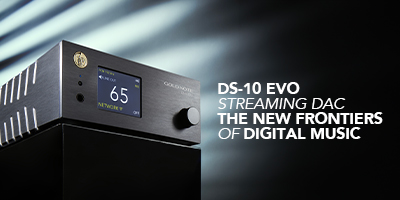
For some additional listening comparisons in a second audio system, I transferred the Gold Note DS-10 EVO streaming DAC and PSU-10 EVO power supply into my bedroom system.
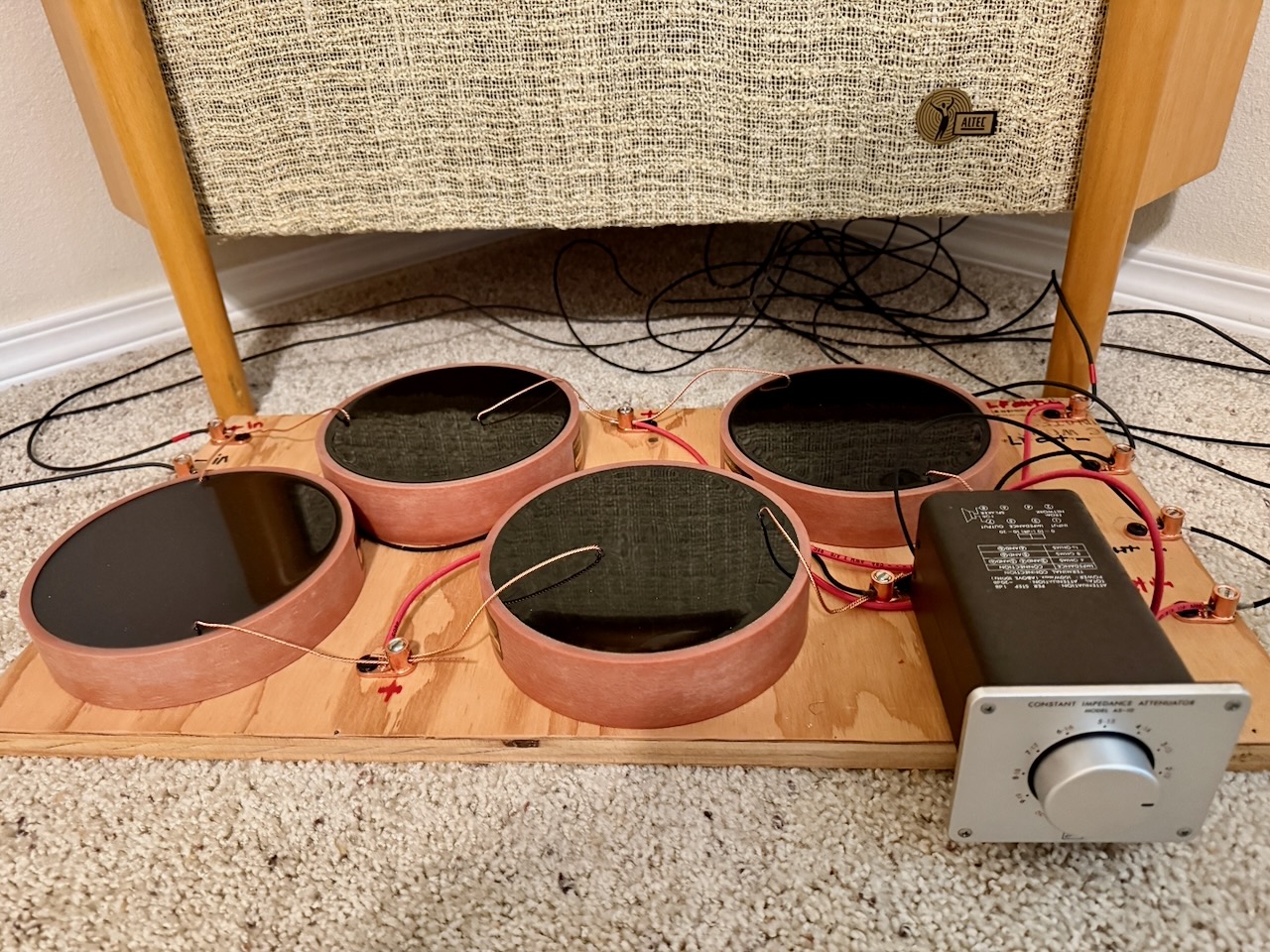
The foundation of my bedroom system are the recently completed Duelund Corona 832A Project loudspeakers that Frederik Carøe (Duelund Coherent Audio) and I collaborated on. For my vintage Altec Corona 832A loudspeakers, we built new crossover circuits with Duelund CAST capacitors and inductors, and for high-frequency attenuation, we used vintage Luxman AS-10 transformer-based constant impedance attenuators in lieu of resistors. The results of our crossovers hot-rod project were extraordinarily good, and I marvel at how magnificent these vintage Altec loudspeakers can sound with really good crossovers.
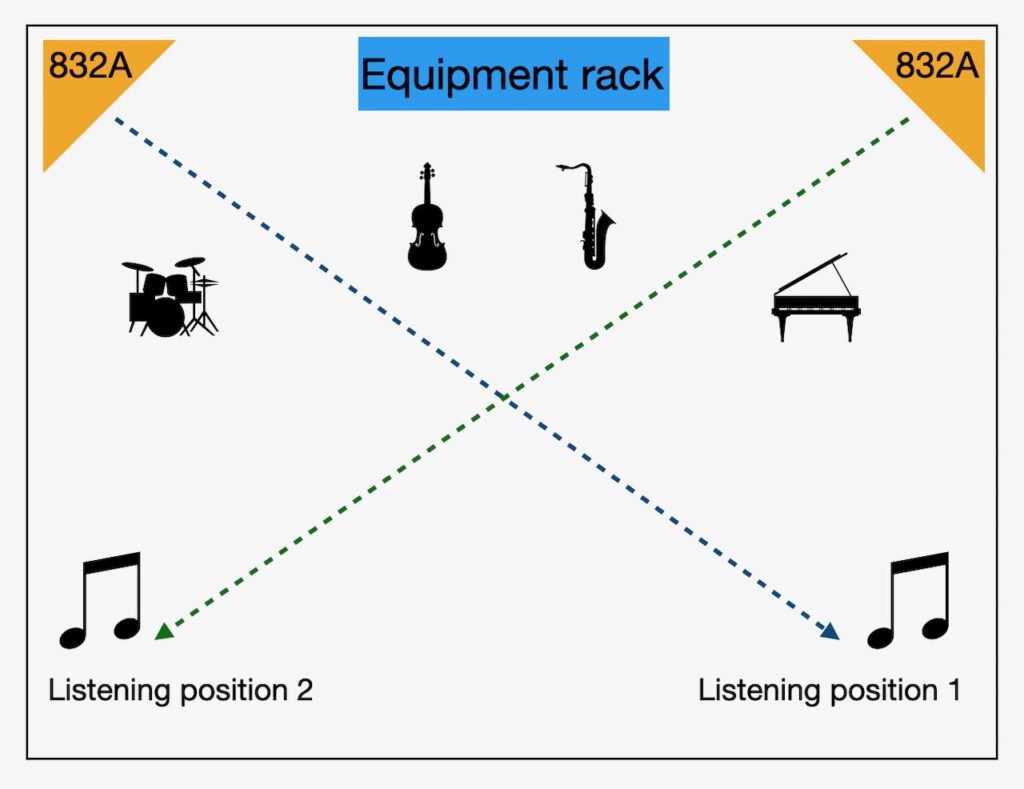
The Altec Corona 832A loudspeakers are designed for corner placement (i.e. room boundary placement). In my bedroom space, they are positioned 14.5 feet apart in the room corners. From my off-center listening position, they throw an incredibly wide soundstage while projecting aural images out into the room a good six or seven feet, while filling the entire room with recordings' ambient space.
My listening positions in this room are unorthodox, but work impressively well. If I'm in listening position 1, for example, I sit so the left loudspeaker is firing directly at me diagonally across the room from about 20.5' away. The right loudspeaker is firing diagonally across the room where listening position 2 is.
As a side note: If this system, room, and listening positioning placement is any indication, listening off-center in this asymmetric fashion produces a big soundstage with imaging that extends significantly in front of the loudspeakers out into the room. I don't hear this sort of soundstage projection in front of room boundary positioned loudspeakers in my other systems when I listen from a central listening position, as it tends to compress images towards the front wall.
I mention this listening arrangement because it is a new discovery for me, and I think it is potentially useful for those of you who would like to get expansive audiophile-style soundstage and visuospatial performance, but with the loudspeakers placed in room boundary positions to free up living space. I find these seating positions to be very satisfying when listening to music.
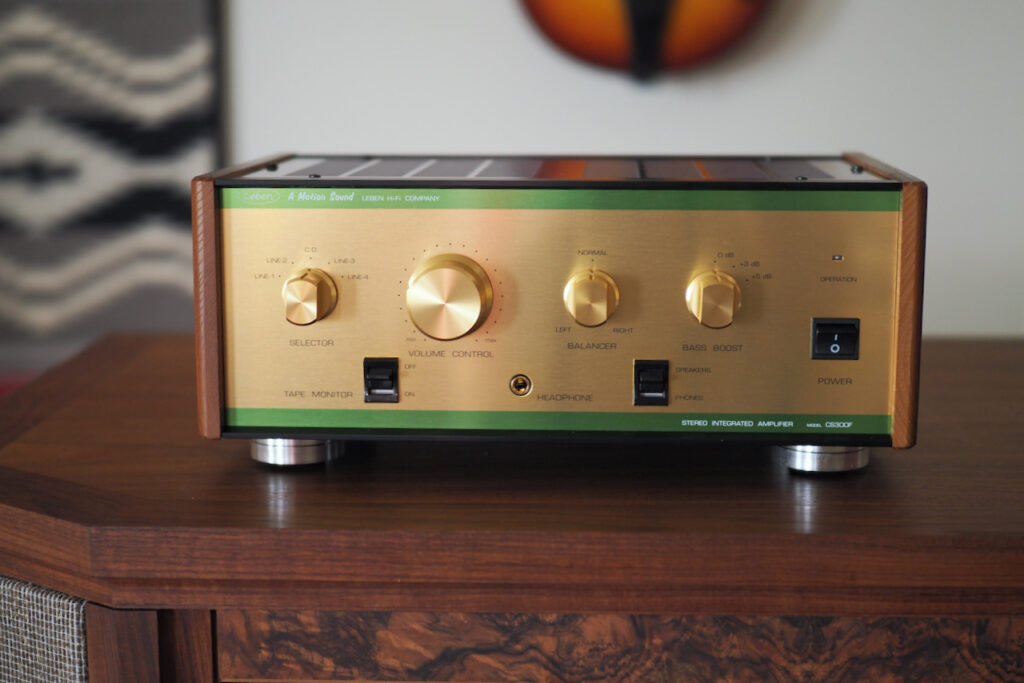
For amplification in this system, I am using the vacuum tube Leben CS300F integrated amplifier and several digital sources: Yazaki-san's hot-rodded vacuum tube Douk Audio U4 Bluetooth streaming DAC with his improved power supply for streaming duties, and an inexpensive Sony BDP-BX650 Blu-ray player serving as a transport to play CDs through a Mhdt Labs vacuum tube Paradisea+ DAC that uses new old stock (NOS) non-oversampling R-2R DACs with no digital filter.
I would place all of these Red Book digital sources at performance level zero. Again, please don't assume that level zero is referring to poor performance; with well-recorded material, performance at level zero can be very satisfying. Level zero is referring to musically satisfying entry-level high-performance components.
I thought it would be fun to compare my digital sources to the Gold Note DS-10 EVO streaming DAC and PSU-10 EVO power supply. For my comparisons I matched the volume levels for the various sources.
For a relatively level Red Book 16-bit/44.1 kHz resolution playing field, with Yazaki-san's hot-rodded Douk U4, I streamed 16-bit/44.1 kHz resolution albums from Qobuz via Bluetooth. For the Gold Note DS-10 EVO streaming DAC, I streamed 16-bit/44.1 kHz resolution albums from Qobuz via a network connection. I played Red Book 16-bit/44.1 kHz CDs in the Sony BDP-BX650 Blu-ray player as transport for the Mhdt Labs vacuum tube Paradisea+ DAC.
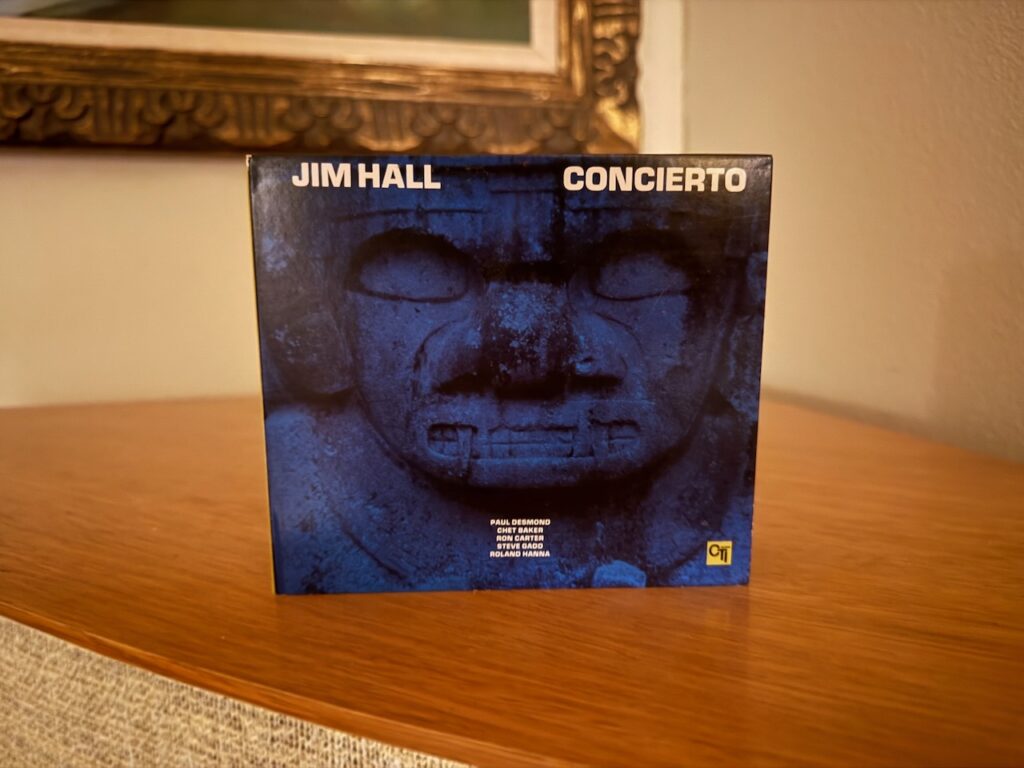
Here's an album example: I compared Jim Hall's Concierto CD featuring Jim Hall (guitar), Paul Desmond (alto sax), Roland Hanna (piano), Ron Carter (bass), and Steve Gadd (drums) through the Mhdt Labs Paradisea+ DAC, to the Qobuz stream of Concierto at 16-bit/44.1 kHz, for both the Gold Note DS-10 DAC and Yazaki-san's hot-rodded Douk U4 DAC.
Playing CDs, the Mhdt Labs vacuum tube Paradisea+ DAC had a slight but noticeable sound quality and musicality performance advantage in terms of having a more open, detailed, and spacious soundstage, with more resolved and timbrally realistic bass response, compared to both of the Gold Note DS-10 DAC and the Douk U4 DAC streaming at 16-bit/44.1 kHz.
When playing really good-sounding CDs or streaming at 16-bit/44.1 kHz, like with Jim Hall's Concierto, the Paradisea+ DAC, the Gold Note DS-10 streaming DAC, and the Douk U4 streaming DAC all sounded very good, were musically engaging, and enjoyable to listen to.
Another observation: at 16-bit/44.1 kHz resolution, with the Gold Note DS-10 streaming DAC in its "low dispersion delay" filter setting, I found it and Yazaki-san's hot-rodded Douk U4 DAC to sound very nearly identical, which was quite a good showing for Yazaki-san's hot-rodded Douk U4, considering it is less than one-fifth the price of the Gold Note DS-10 EVO DAC with PSU-10 EVO power supply.
Out of curiosity, I briefly added my benchmark for wide "listening window width" when playing CDs, the formidable Audio Note (UK) CD 5.1x Red Book CD player, so I could compare it to the Red Book performance of each of these aforementioned digital sources when playing at the Red Book standard.
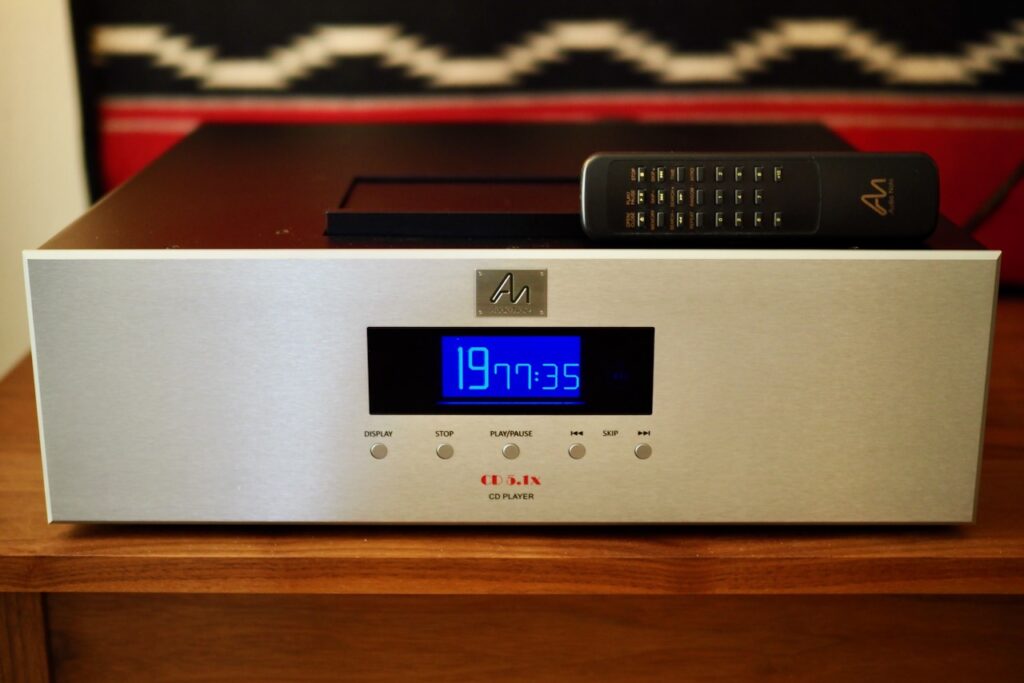
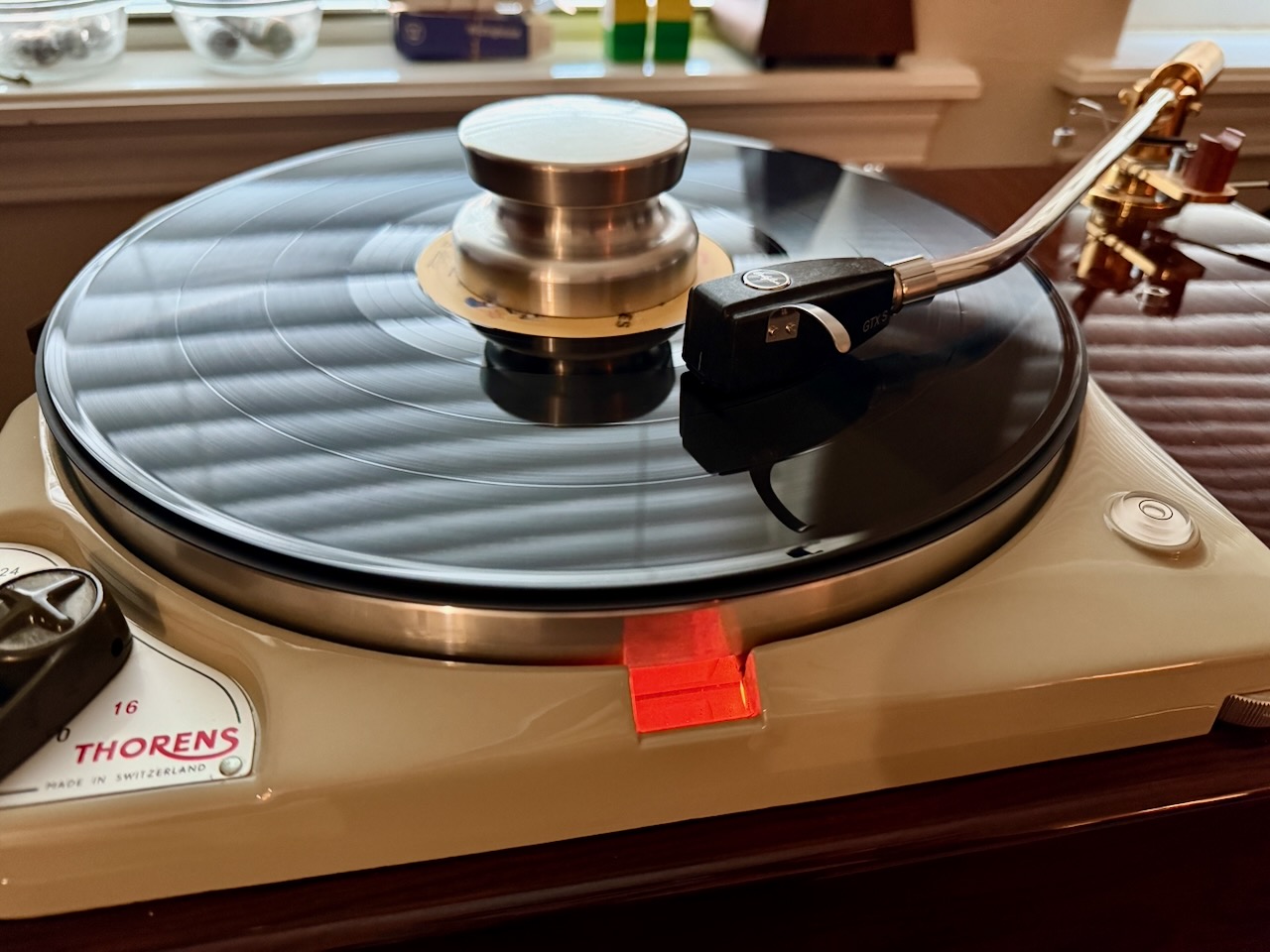
The CD 5.1x is a "performance level three" CD player that can perform at the same basic level as a good vinyl source in the $25,000 to $30,000 USD range, like my Thorens TD-124-based vinyl source. Which one wins in A/B listening comparisons depends on which recording was better, the one on vinyl or the one on CD.
It didn't come as a surprise given my previous experience with the CD 5.1x, but the $31,000 CD 5.1x Red Book CD player absolutely crushed all of the above digital sources when they were playing at the Red Book standard. It wasn't even close.
Really good recordings were at a much higher level of performance, and—the superpower of the CD 5.1x—poorer-sounding recordings were much more listenable, even enjoyable. That's what I refer to as a component with a "wide listening window."
The CD 5.1x is designed as a high-contrast component that gets maximum performance out of really good recordings, and thanks to the comparison-by-contrast methodology used for its voicing, it also turns most lower-fidelity recordings into recordings that are enjoyable to listen to.
When listening to poor recordings, it is almost like the CD 5.1x is able to fill in missing musical information that makes low-fidelity recordings sound bad, turning most of them into something that is musically enjoyable to listen to. Not all the time, but most of the time. It's an impressive feat, and the CD 5.1x has what I call a "wide listening window," a component that's basically able to play almost any recording, good or bad, and turn it into an enjoyable listening experience.
As you might suspect by now, the Achilles' heel of the Paradisea+ DAC, the Gold Note DS-10 streaming DAC, and the Douk U4 streaming DAC is that they all have a narrow "listening window width" when playing back CDs or 16-bit/44.1 kHz streams of low-fidelity recordings. A component with a narrow listening window width means that high-quality recordings can sound very good, but low-fidelity recordings are generally unpleasant to listen to.
Next, I thought I'd compare the performance of Yazaki-san's hot-rodded U4 with the Improved Power Supply to the DS-10 and PSU-10 combo with a 16-bit/44.1 kHz PCM stream from Qobuz, and then compare the U4 with the 16-bit/44.1 kHz PCM stream to the DS-10 with high-resolution PCM and DSD streams.
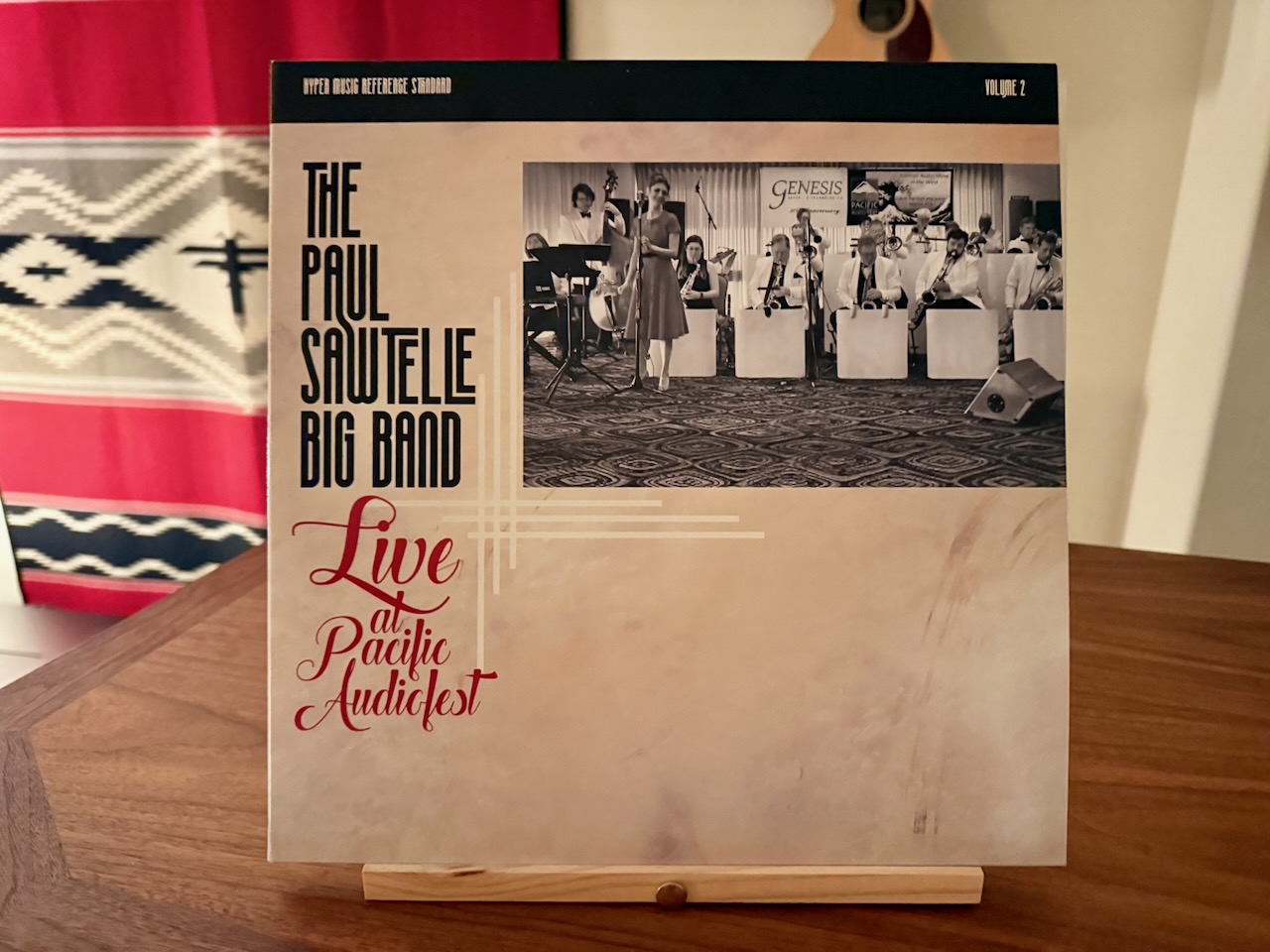
Album example: Art Pepper's Art Pepper Meets the Rhythm Section (1957) featuring Art Pepper (sax) with Miles Davis' rhythm section of Red Garland (piano), Paul Chambers (bass), and drummer Philly Joe Jones (drums).
I happen to have access to this album as a 16-bit/44.1 kHz PCM file from Qobuz, as a 24-bit/192 kHz PCM file from Qobuz, and as a DSD64 resolution file stored on my T7 SSD.
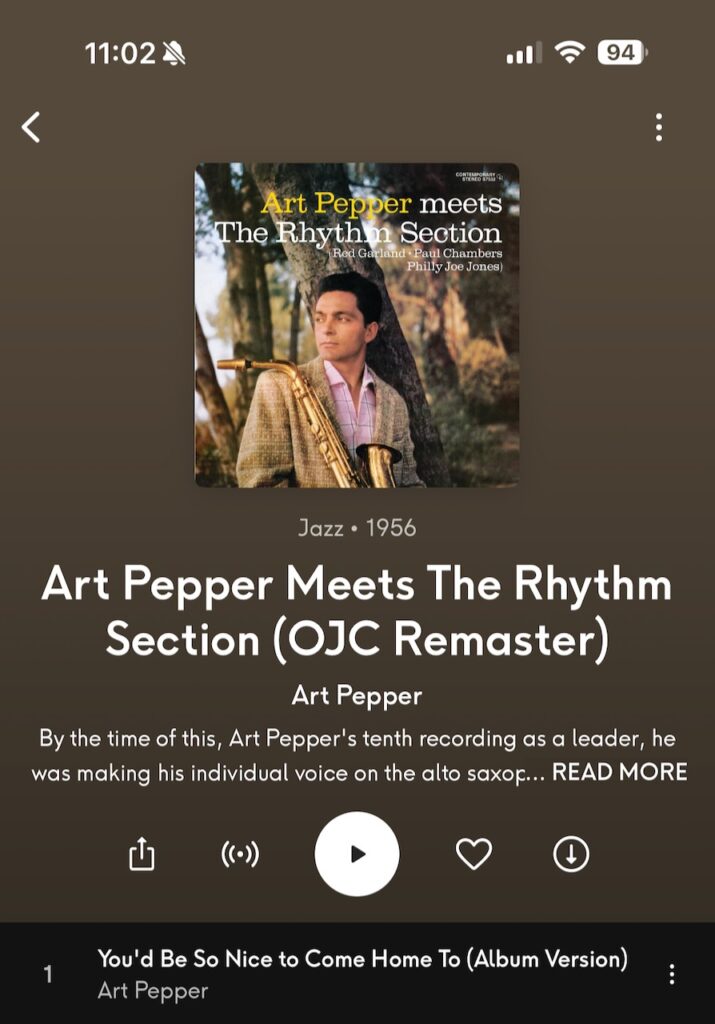
I played "You'd Be So Nice to Come Home To" with the 16-bit/44.1 kHz PCM Qobuz stream from the OJC remastered version (above), which swings very nicely and sounds great on Yazaki-san's U4 and the DS-10, and as before both sounded nearly the same.
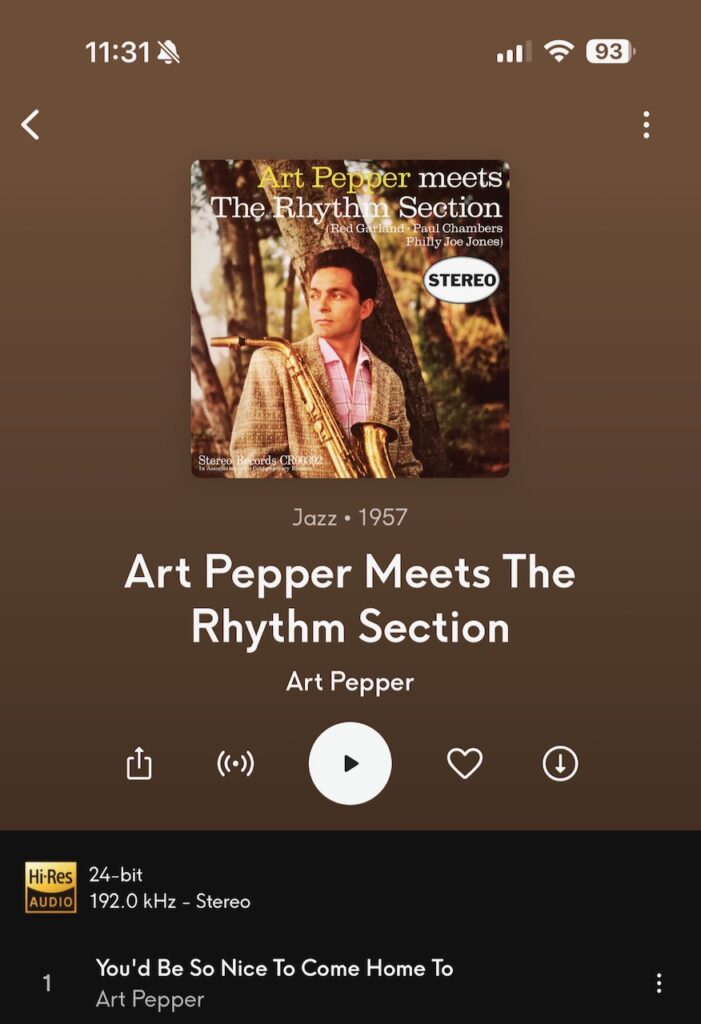
Next I streamed the 24-bit/192 kHz PCM version to the DS-10 and compared it to the U4 playing the 16-bit/44.1 kHz PCM version.
The DS-10 playing the 24-bit/192 kHz PCM version sounded way better than the U4 playing the 16-bit/44.1 kHz PCM version. The sound quality was more relaxed and analogue sounding, more spacious, more tonally rich, and images were more vivid and had more presence, all good things in my world.
Essentially, playing the 24-bit/192 kHz PCM version of "You'd Be So Nice to Come Home To" was a complete slap-down of the 16-bit/44.1 kHz PCM version. The difference was not at all subtle.
To listen to the DSD64 version of "You'd Be So Nice to Come Home To" I changed the Gold Note preset function of the DS-10 DAC from PCM to DSD and selected the "0" filter setting (there are only two equalization settings for DSD, 1 and 0).
When I played "You'd Be So Nice to Come Home To" with DSD64 resolution, streamed from Roon on my MacBook Pro, and compared it to the 24-bit/192 kHz PCM version streamed from Qobuz I was rather shocked to hear that the difference between them was greater than I heard between Red Book PCM and high-resolution PCM at 24 bit / 192 kHz PCM.
The difference between "You'd Be So Nice to Come Home To" was one of those "night and day" experiences, with the DSD64 offering way more musicality and sound quality. I was impressed.
However, I should point out that I don't know how much of that PCM to DSD difference was due to differences in the quality of the source material they used for those particular transfers, as I have found a fairly large degree of variance in fidelity across PCM and DSD albums just as I do with CDs and LPs, but for this particular example, the performance difference was large.
Observations on DSD: Aside from the impressive DSD performance I cited in the example above, the more I listened DSD album files, I noticed a commonality between them that I'll call a "processing signature."
While I enjoy the improvement in resolution I hear with DSD (overall that's a good thing), I also heard a couple of things that were negatives for me: a reduction in contrast between different recording styles, and a lower-contrast presentation of music from individual albums.
What I am not sure about, is whether the reduced contrast I hear is inherent to DSD versus high-resolution PCM (i.e. a software attribute), or if it is due to the way the Gold Note DS-10 EVO DAC plays back DSD versus high-resolution PCM (i.e. a hardware trait). Is the difference in contrast due to the hardware or the software? I'm not sure.
High-contrast between recordings makes it is easier to discern the recording era, the recording style, who was doing the recording, mixing, and mastering, and the differences in their technical and artistic sensibilities.
Lower-contrast reduces those differences between recordings so they are less obvious. I've found that lower contrast in playback gives a smoother overall sound, with smoothed dynamics at the softer end of dynamic gradations, slightly muted tone colors, and a less distinct sense of tempos.
Lower contrast makes the overall presentation of the music sound a little more laid back, less dramatic, and less involving from an emotional impact perspective.
Sometimes the increased resolution of DSD can overcome the reduced sense of contrast I hear from it, and other times it can't. There seems to be a fair amount of variance depending on the album, who recorded it, mixed it, and mastered it.
I found it to be a little bit of a conundrum in that while DSD "sounded" better because of its additional resolution, it didn't deliver the drama and emotional impact inherent to a particular piece of music as well as high-resolution PCM.
Contrast quibbles aside, I thought the Gold Note DS-10 EVO DAC and PSU-10 EVO power supply sounded excellent when playing high-resolution PCM and DSD files, and I would place it at approximately "performance level three" when doing so.
As before, playback of 16-bit/44.1 kH files was at about "performance level zero," which is good-sounding entry-level high-fidelity playback, but I would give it a demerit for having such a narrow listening window, which makes lower-fidelity albums less enjoyable to listen to than with Red Book sources like the CD 5.1x with a wide listening window, for example.
Please click on the link below to go to the next page.