Audio System One
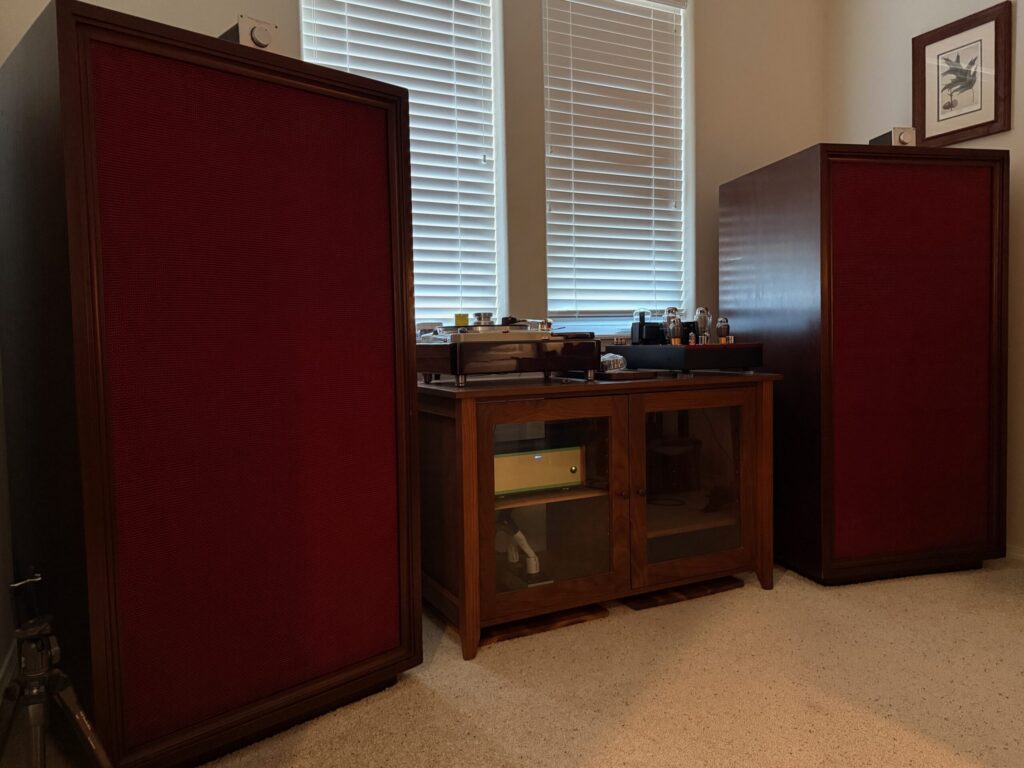
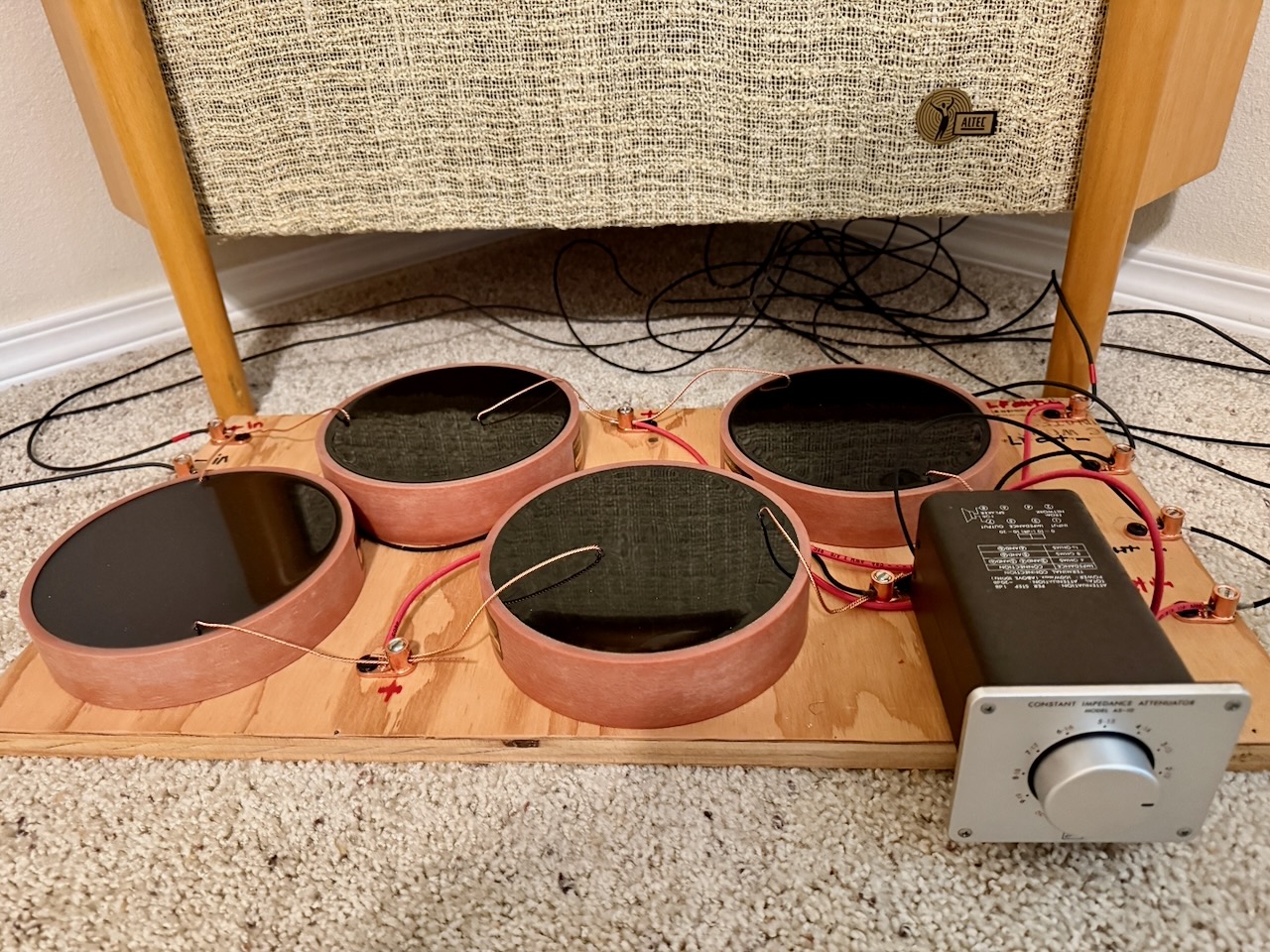
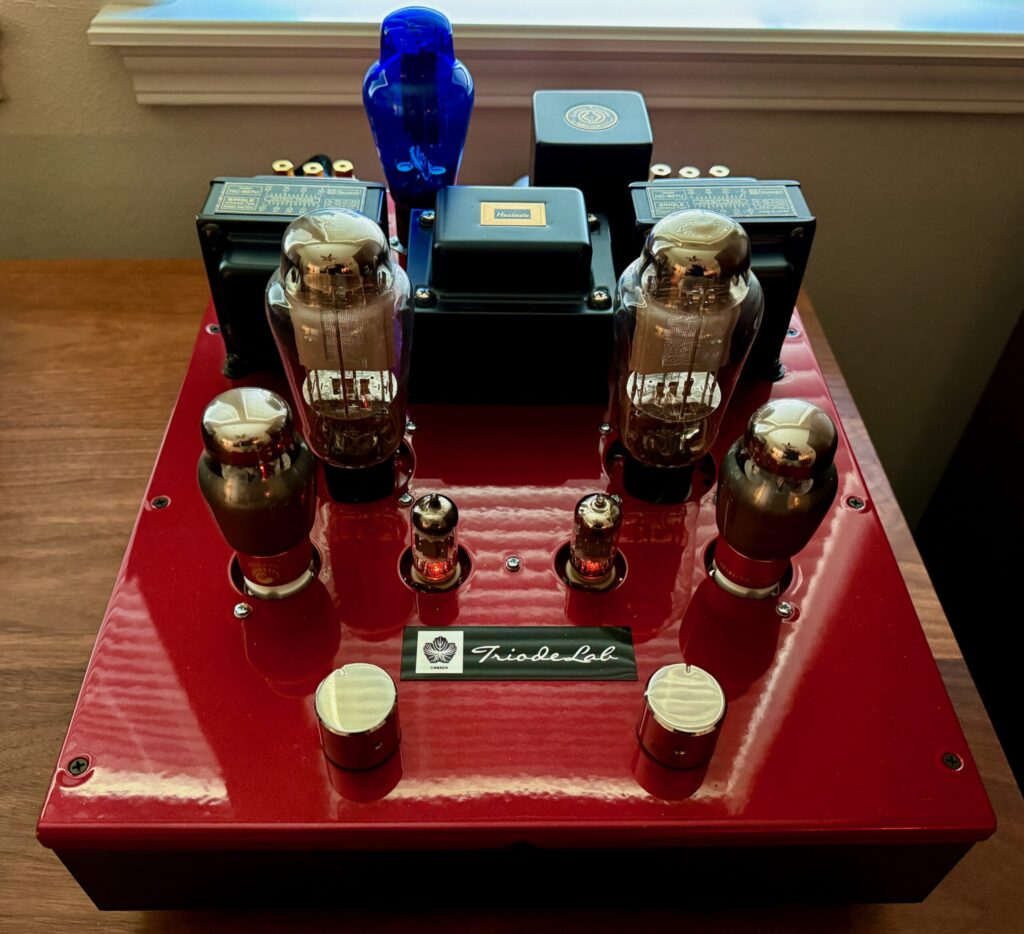
First, I listened to the DS-10 EVO streaming DAC and PSU-10 EVO power supply in my office system: custom vintage Altec loudspeakers built for Conductor Leopold Stokowski way back when, now equipped with custom ultra-performance Duelund CAST tinned-copper crossovers, connected to a Triode Lab 45 EVO SET integrated amplifier with Duelund DCA16GA speaker cables, and Acoustic Revive interconnects connecting the 45 EVO to my two sources.
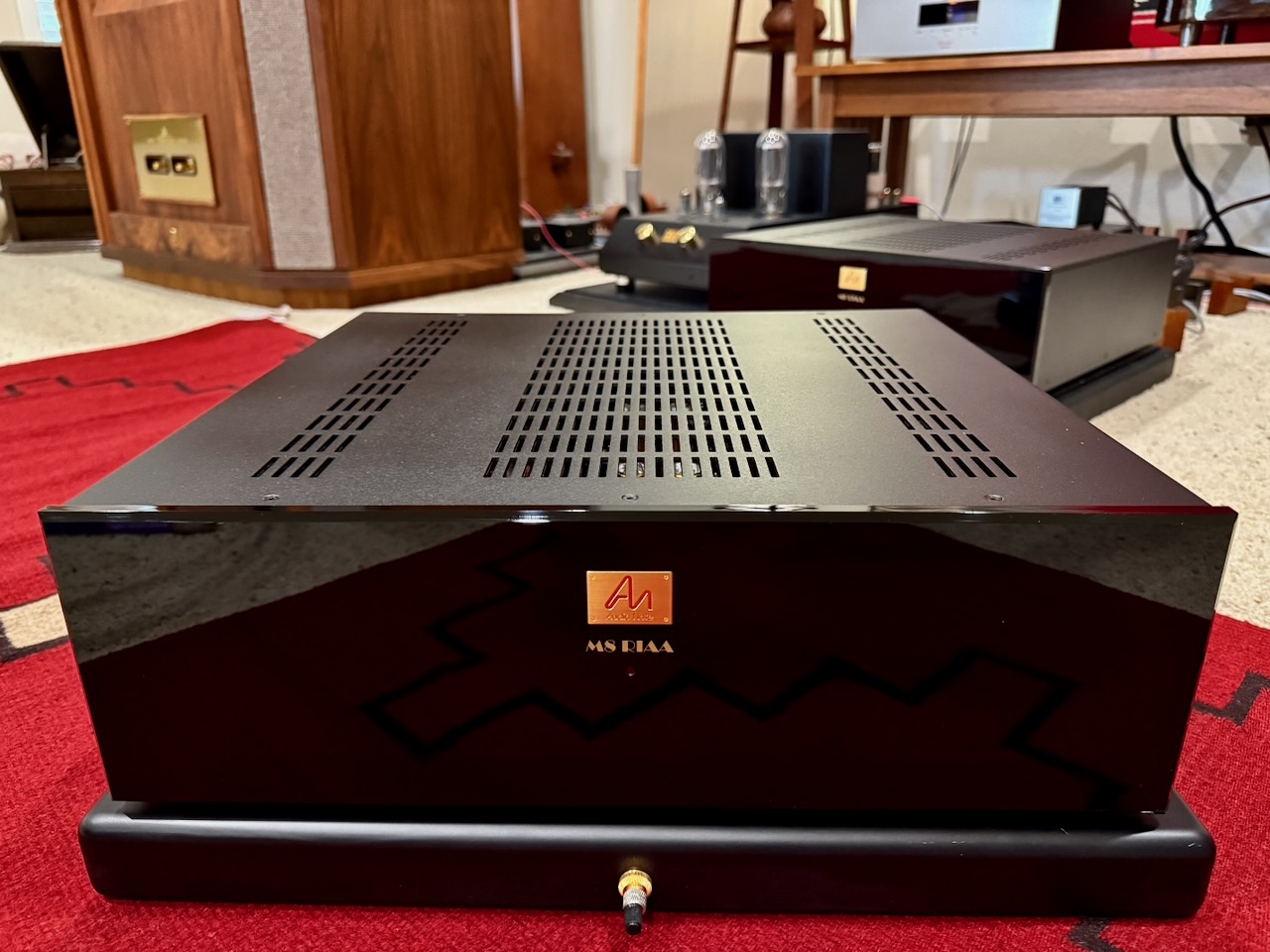
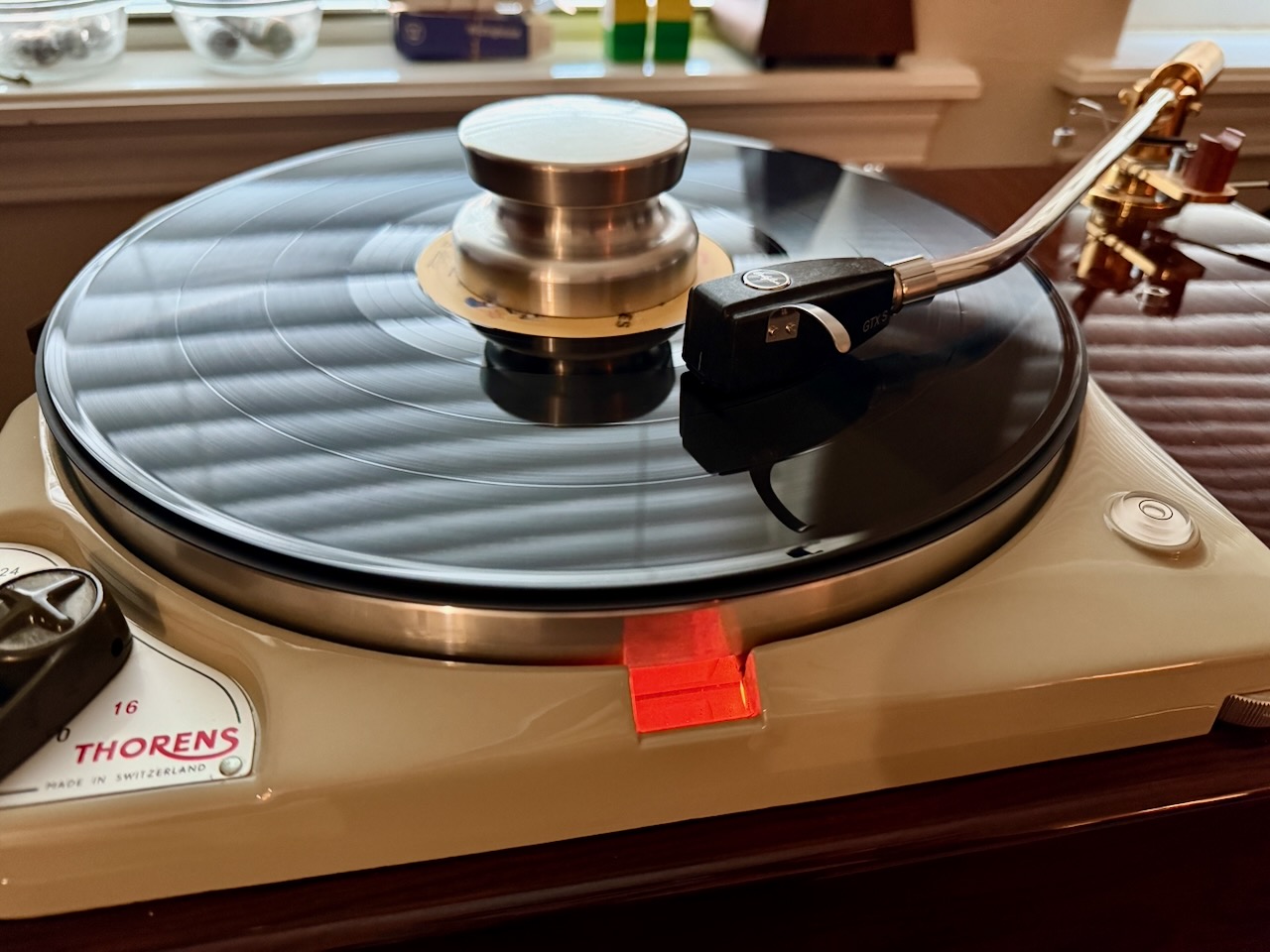
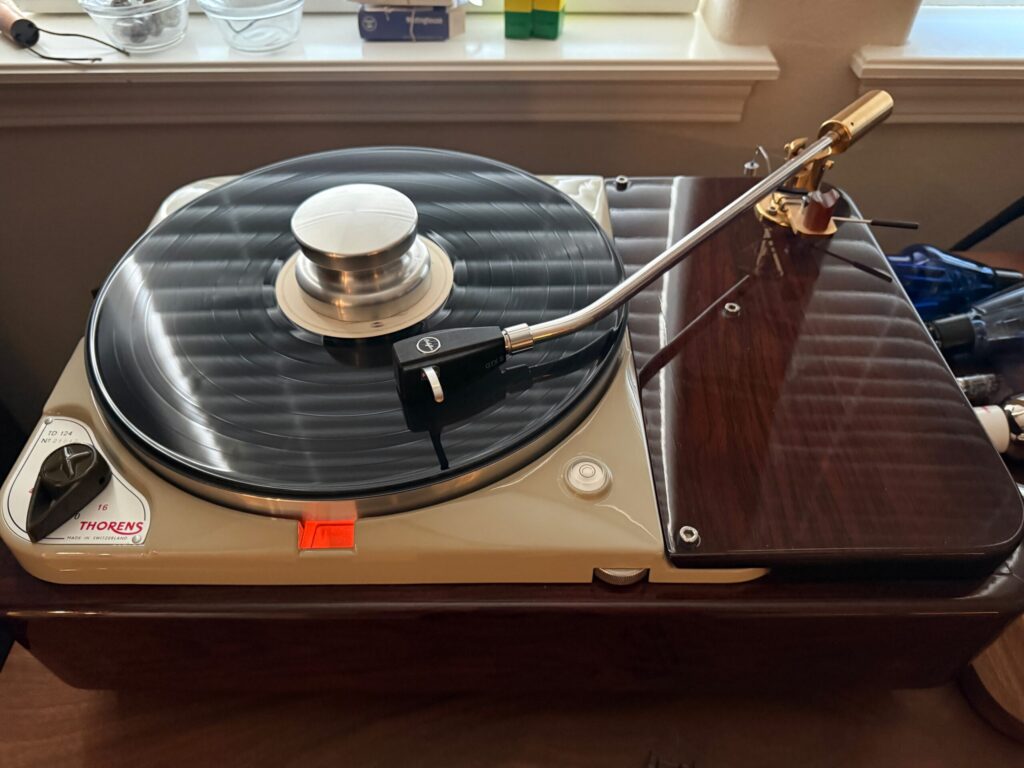
The first source is my beautiful vintage Thorens TD-124 turntable, restored and hot-rodded by Artisan Fidelity. I use a SPEC record mat on the high-mass stainless steel platter, damped with an Artisan Fidelity record weight. An Ortofon SPU GTX S moving-coil phonograph cartridge (with an internal step-up transformer) is mounted on a Schick tonearm, with the tonearm leads going directly to a Leben vacuum tube RS-30EQ CR RIAA phono stage. I would say that this analog source falls approximately into "performance level three," and the combined components cost falls somewhere into the range of $25,000 to $30,000 USD.
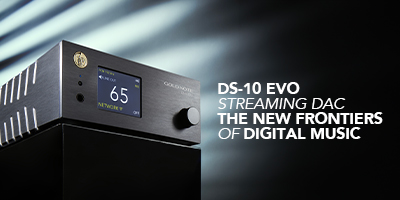
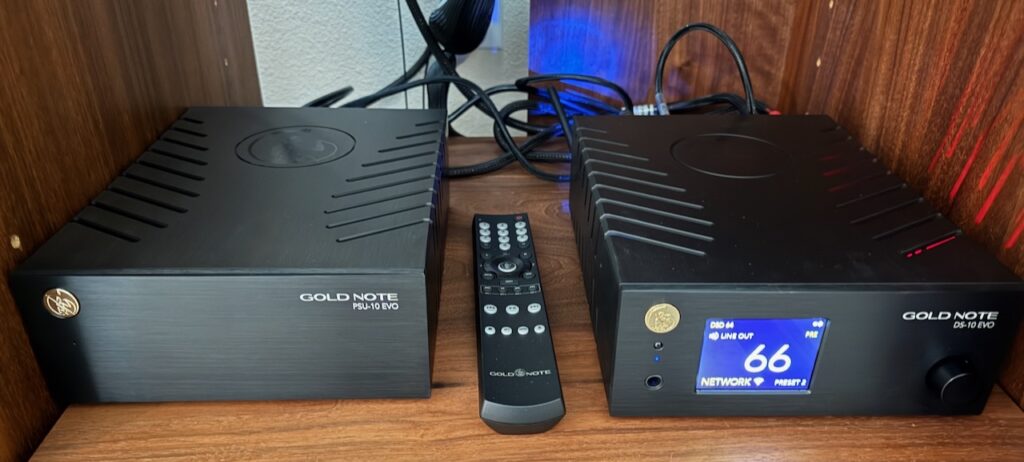
The second source is, of course, the Gold Note DS-10 EVO streaming DAC and PSU-10 EVO power supply that is the subject of the article.
My office system is arranged with the loudspeakers in room boundary positions (i.e. room corners), and the listening position is near-field (slightly less than 8 feet).
The combination of room boundary positions of the loudspeakers and the near-field listening position means that I am hearing direct sound from the loudspeakers with minimal room effects. Also, this orientation allows the room to be filled with the natural sense of the recorded ambience, and with the added benefit that I can feel the sound pressure waves of the music on my body.
With my vinyl source, this audio system is intoxicatingly good at unraveling oodles of natural-sounding musical detail from sources, delivering the full dramatic emotional impact of the music to me as a listener, displaying rich timbral textures, natural flesh-and-blood tone, and easily delivering both nuanced and pronounced dynamic swells inherent in the music.
This vinyl source preserves the authenticity of the recording arts approach in good fashion (i.e. delivering relatively high contrast between differing recording styles), its sounds great in high-fidelity terms, and does a really good job delivering the drama and emotional impact that I think the musicians and recording arts would have desired for their albums. Yes, I adore this audio system.
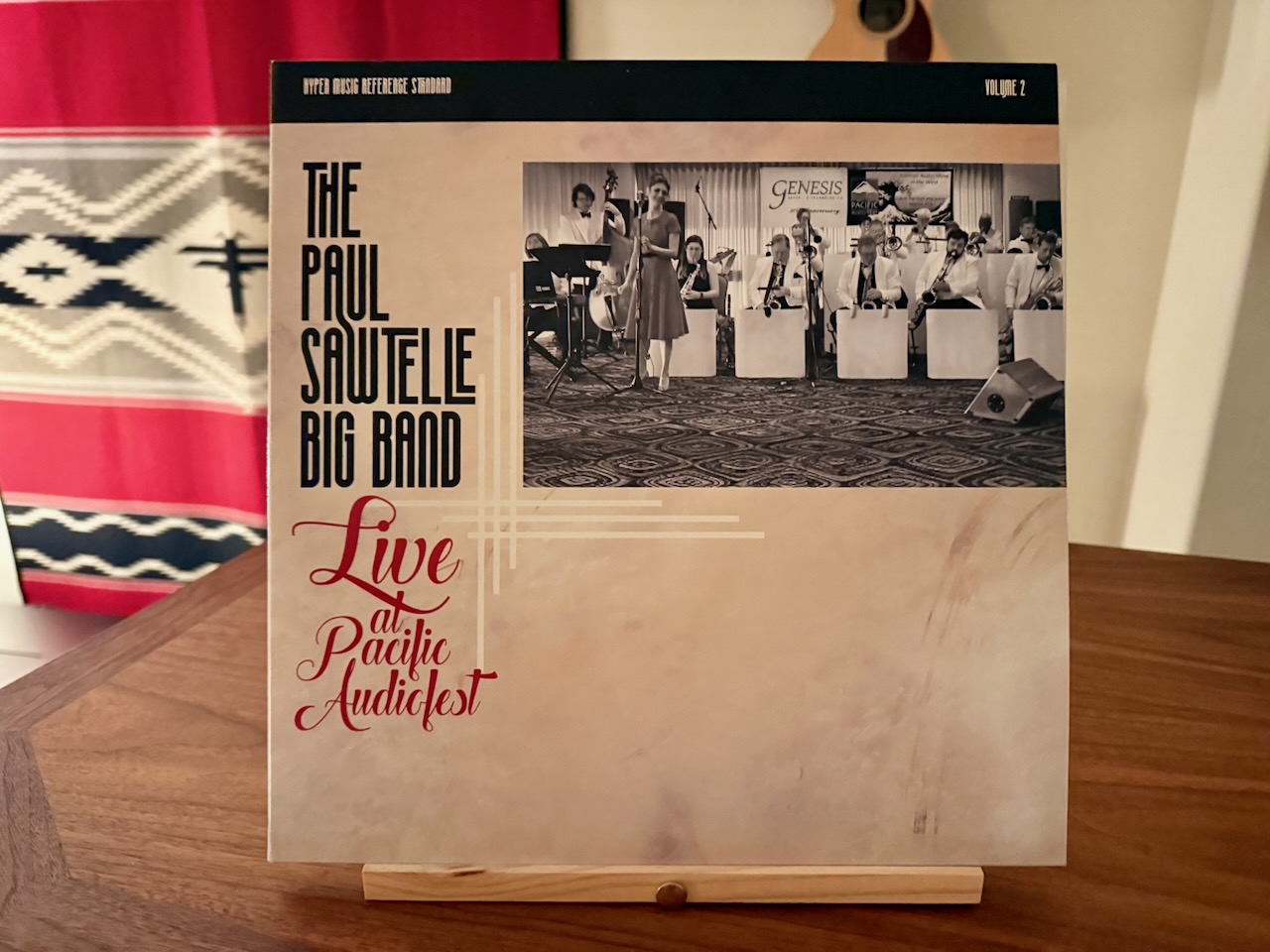
I played quite a number of record albums with different musical styles: jazz, rock and roll, folk, opera, classical, etc., and compared them to the Gold Note DS-10 EVO streaming DAC and PSU-10 EVO power supply playing PCM files of those albums at various resolutions.
Here's where I need to mention an interesting technology feature of the Gold Note DS-10 EVO streaming DAC - the "Chameleon mode."
Here's how Gold Note describes the Chameleon mode: "The Chameleon mode is a special feature designed to let you fine-tune the behavior of the DAC. Acting on three parameters, you can test 48 different setups, adapting the DS-10 EVO to your music and stereo system with the highest degree of customization. These parameters are Equalization Curve, De-emphasis Curve, and DSD filter - and your choices are stored in the memory of the DS-10 EVO using the presets."
Essentially, the Chameleon mode allows the listener to voice the DS-10 EVO's PCM playback by equalizing playback with settings using six types of 32-bit digital filters that are internal to the AKM AK4493SEQ DAC chipset:
- sharp roll-off: traditional sound
- slow roll-off: traditional tone
- delayed sharp roll-off: acoustic sound with a group delay of 6.25/Fs
- delayed slow roll-off: natural tone
- delayed slow roll-off (short delay): acoustic tone with a group delay of 5.5/Fs
- low dispersion delay: harmonic sound
There's a lot of information about this AK4493SEQ DAC chipset with built-in EQ at the manufacturer's website. There's an interesting video with the developer of the chipset, Seiko Nakamoto, on their Velvet Sound technology HERE.
The Velvet Sound technology approach is said to reduce annoying digital noise, which in turn provides a "richer and more delicate, as well as more complete sound quality." The Velvet Sound approach is described as delivering a dynamic and responsive sound, and allowing the reproduction of the sound of a concert hall with how the notes trail off into silence. (My paraphrase.) The video is in Japanese with English subtitles.
Here's my take on Chameleon mode and Velvet Sound technology approach used in the Gold Note SD-10 EVO DAC: the six digital filters subtly manipulate the equalization in the sub-bass, bass, low midrange, midrange, upper midrange, presence, and brilliance regions of the audio spectrum to achieve a particular "voicing." Two of those settings use EQ and add signal group delay that causes different frequency components of a signal to arrive at different times.
In practice, I'm not sure it really matters how they do it. I recommend you just give the different settings a listen, pick the ones you like the best, and save them as presets. It's a cool feature, and I suspect you'll spend a fair amount of time exploring what these different voicings can deliver.
EQ example: I experimented with the different EQ settings for PCM (the Chameleon settings only apply to PCM and not to DSD), and I found when the DS-10 EVO AK4493SEQ DAC chip was set to "sharp roll-off / traditional sound," the overall tonal balance and sound quality were very similar to that of my turntable equipped with the Ortofon SPU GTX S moving-coil phonograph cartridge. That's a really good thing, as I love the way Ortofon sounds.
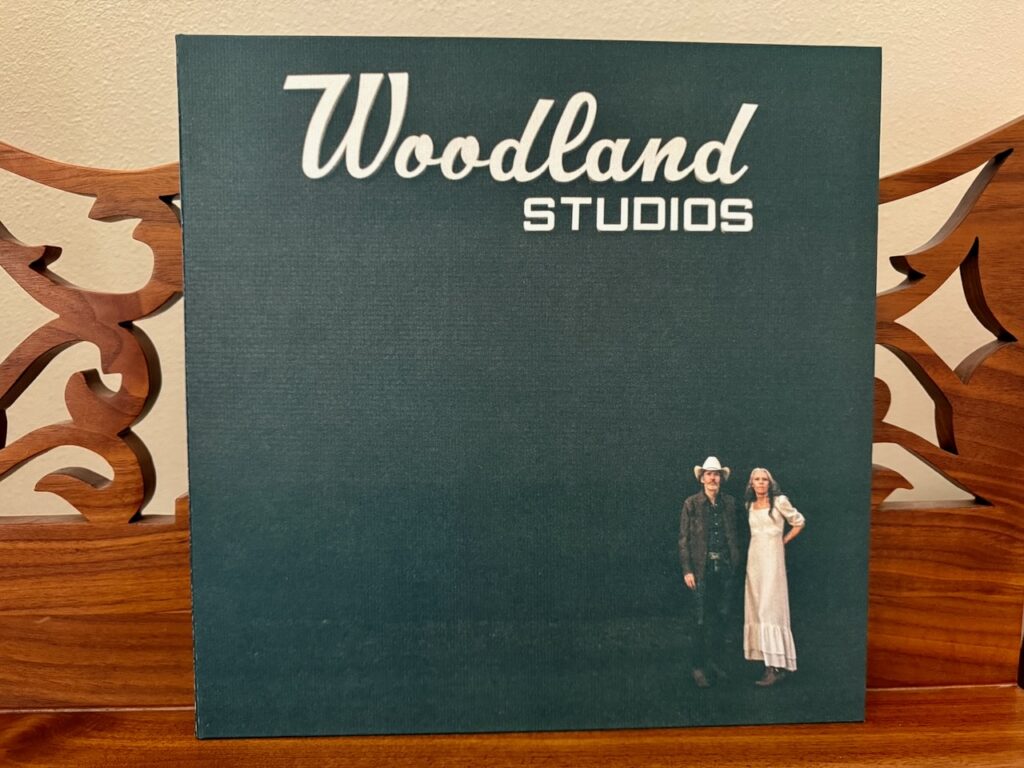
Here's an album example: Woodland, by Gillian Welch and David Rawlings. First I played the LP and was blown away by the musical artistry of Welch and Rawlings on Woodland. Man, what an album!
I set the volume output of the Gold Note DS-10 EVO DAC with an SPL meter so that it matched the volume output of my vinyl source, which is a handy feature for doing A/B comparisons.
Then I played a PCM Red Book 16-bit/44.1 kHz resolution file of Woodland through the Gold Note DS-10 EVO DAC, and it was enjoyable and musical, but it didn't come close to the sound quality and level of musical engagement offered by the LP. Playing at 16-bit/44.1 kHz resolution I'd give the Gold Note combo a "performance level zero" rating, meaning that it sounds good with good recordings in entry level high-fidelity terms.
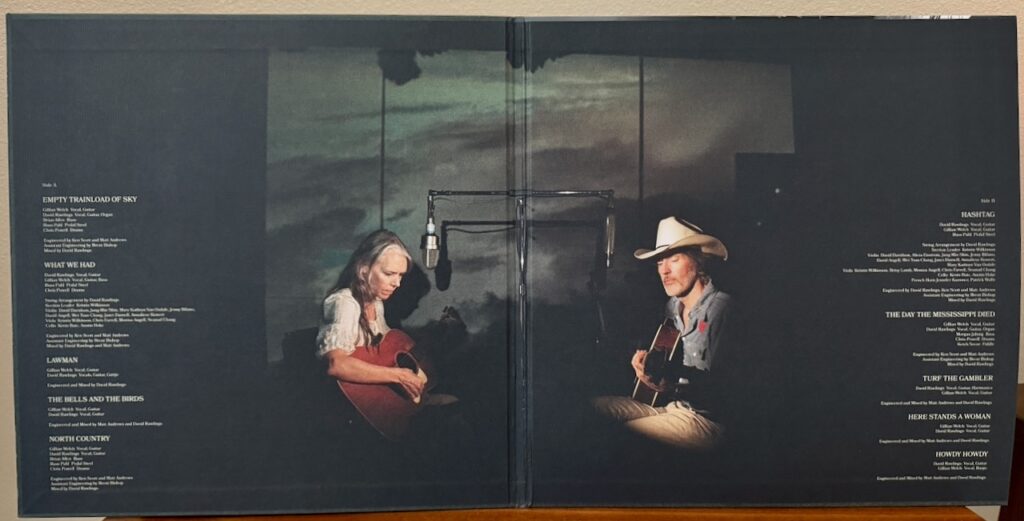
Then I played back Woodland at PCM 24-bit/192 kHz resolution from Qobuz. In comparison to the LP, the overall fidelity was very close between the two. The LP had a slight advantage overall in terms of conveying emotional engagement, and the way it relayed timing sounded more musically realistic to me, but the Gold Note DS-10 EVO DAC was very close in performance. That's really good performance for digital anything, and I was surprised and impressed.
In this audio system, my vinyl front end is good but not exceptional in delivering a high contrast view into the authenticity of the way the recording arts documented the musical performances (i.e. recording approaches sound as identifiably different as they should), and the Gold Note combo was also good, but not exceptional in this regard.
The overall level of high-fidelity sound quality of the Gold Note DS-10 EVO streaming DAC and PSU-10 EVO power supply playing high-resolution PCM was very good, and very nearly the equal of my beloved Thorens TD-124-based vinyl source.
The Gold Note DS-10 EVO streaming DAC and PSU-10 EVO power supply playing high-resolution PCM files was very nearly the equal of my vinyl front end in delivering the drama and emotional impact inherent in the various albums I listened to—a very good showing for sure.
When you consider that the Gold Note DS-10 EVO streaming DAC and PSU-10 EVO power supply combo is about a quarter or less of the cost of the vinyl front end in my office system, I'd say that's a lot of audio thrills for the dollars spent.
Compared to my "performance level three" analogue source in this system, I would place the Gold Note DS-10 EVO streaming DAC and PSU-10 EVO power supply at "performance level zero" when playing at PCM at Red Book 16-bit/44.1 kHz resolution, and approximately "performance level three" when playing high-fidelity, high-resolution PCM files.
Please don't assume that "performance level zero" is referring to poor performance; with well-recorded material, performance level zero can be very satisfying. Performance level zero is what I typically hear from "entry-level" high-performance audio components, and it is substantially above consumer audio component performance, most of which I would place at a minus two performance level, or lower.
Please click on the link below to go to the next page.