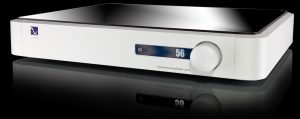
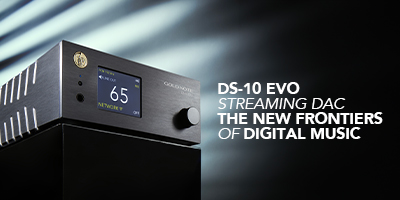


Gold Note DS-10 EVO Streaming DAC ($3495 USD) and PSU-10 EVO Power Supply ($1395)
I like to read through the user manuals before setting up equipment to make sure I'm doing the installation correctly and safely, and operating the components correctly, particularly with a component as advanced and complex as the Gold Note DS-10 EVO streaming DAC.
There are so many features associated with the Gold Note DS-10 EVO DAC that I decided I would cover the major scope of the features for you as I progress through the article, but not every aspect of the individual features, as it would be nearly impossible to cover every possible aspect of the adjustable performance features when playing various resolutions of PCM and DSD, as you will see in a moment.
If you want to read more in-depth information about the features, I'll refer you to the user manual for the DS-10 EVO HERE, and the PSU-10 EVO power supply HERE.
In the first box was the DS-10 EVO streaming DAC, a power cable, a WiFi antenna, a remote control, and a print version of the user manual.
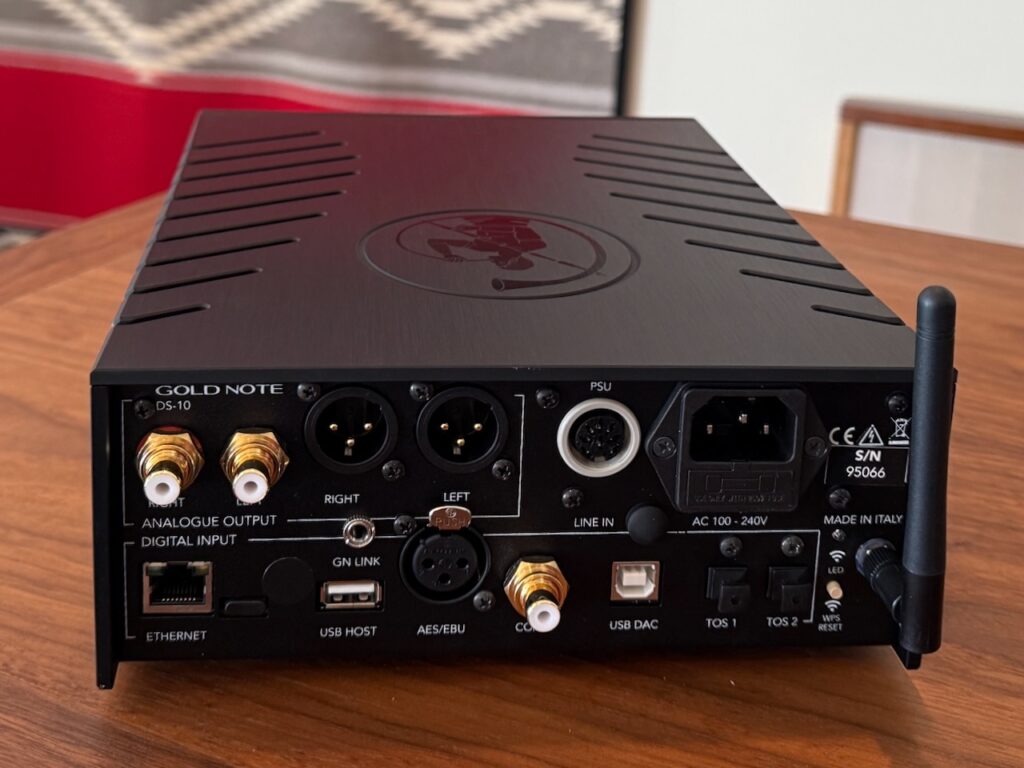
The DS-10 EVO streaming DAC can accommodate all resolutions of PCM and DSD music files through its various back panel inputs or a network connection.
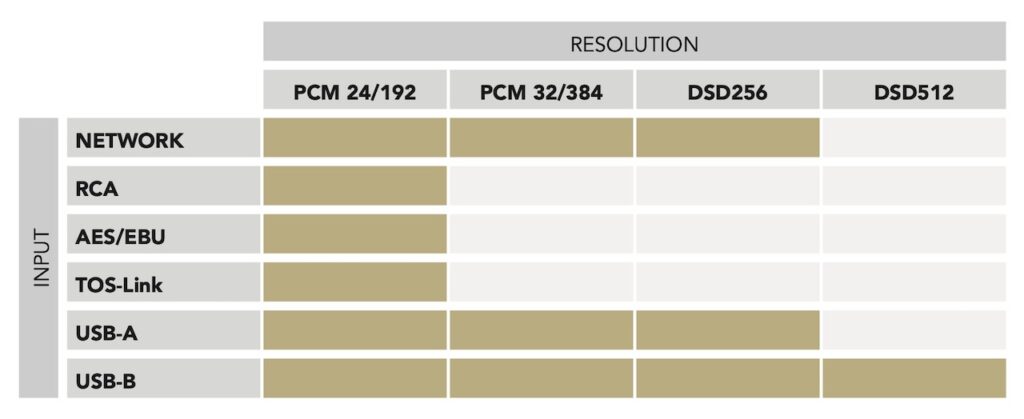
I chose to use a network connection which allows for up to a resolution of PCM 32/384 or DSD256. Through a USB-B connection you can get up to DSD512 resolution, which I didn't try, as I have no DSD512 music files.
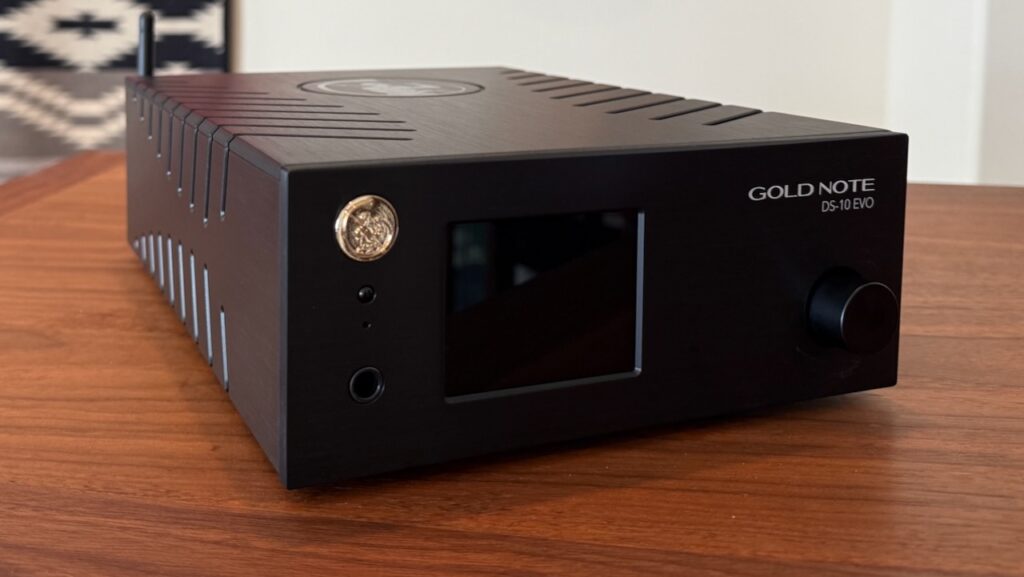
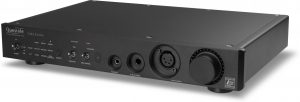
On the right side of the DS-10 EVO's chassis is an on/off switchable volume control that I found to be very useful. When disabled, the DS-10 will send its full output (2V) to your preamplifier or integrated amplifier like a CD player does, and you can adjust the volume at the preamplifier or integrated amplifier. When enabled, you can adjust output from the DS-10's front panel volume control knob (or the remote control).
Where I found the volume control feature to be very handy was when I wanted to adjust the DS-10's volume level to match that of other sources in my audio systems. I like that approach; it is a cool and useful feature, particularly when doing comparisons.
On the left side of the front panel you can see a 6.3mm headphones output jack that is adjustable for both high and low-sensitivity headphones. I'm not a headphone listener so I didn't evaluate the performance of the headphone output.
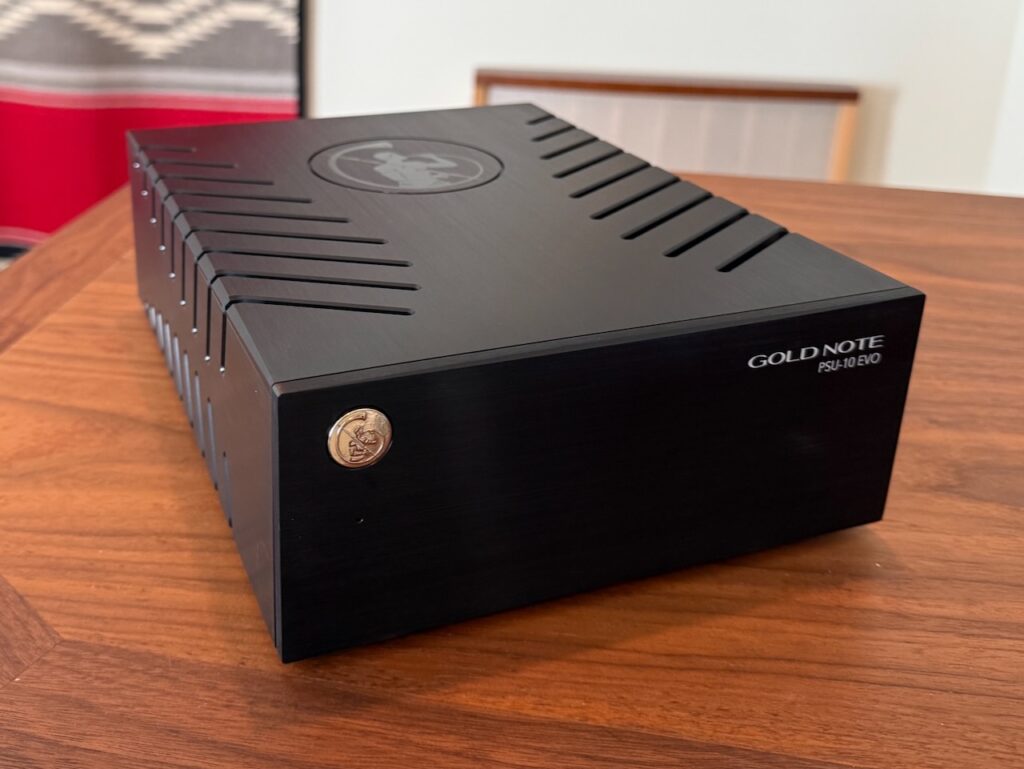
In a second box was the optional PSU-10 EVO high-performance power supply, a power cable, a cable to connect the power supply to the DS-10 EVO streaming DAC, and a print version of the user manual.
To quote Gold Note, the "PSU-10 EVO is equipped with a 4-transformer power supply stage enhanced with low-noise voltage regulators. The power supply uses a 4-transformer model, 3 of which are entirely dedicated to the power supply and 1 to the inductive filter. Dual Choke Hybrid technology features an inductive filter on the analogue stage and is powered by a dual inductor driving both the negative and positive high-current stages. By perfectly filtering the current, it eliminates interference and noise from the AC power supply, thus ensuring perfect isolation and creating the ideal environment for the electronics to perform at their best."
"The power and clarity of the sound generated by the PSU-10 EVO enable to reduce interference, provide better dynamics and resolution, and restore the smallest sonic details by reproducing the musical event in an extremely realistic way."
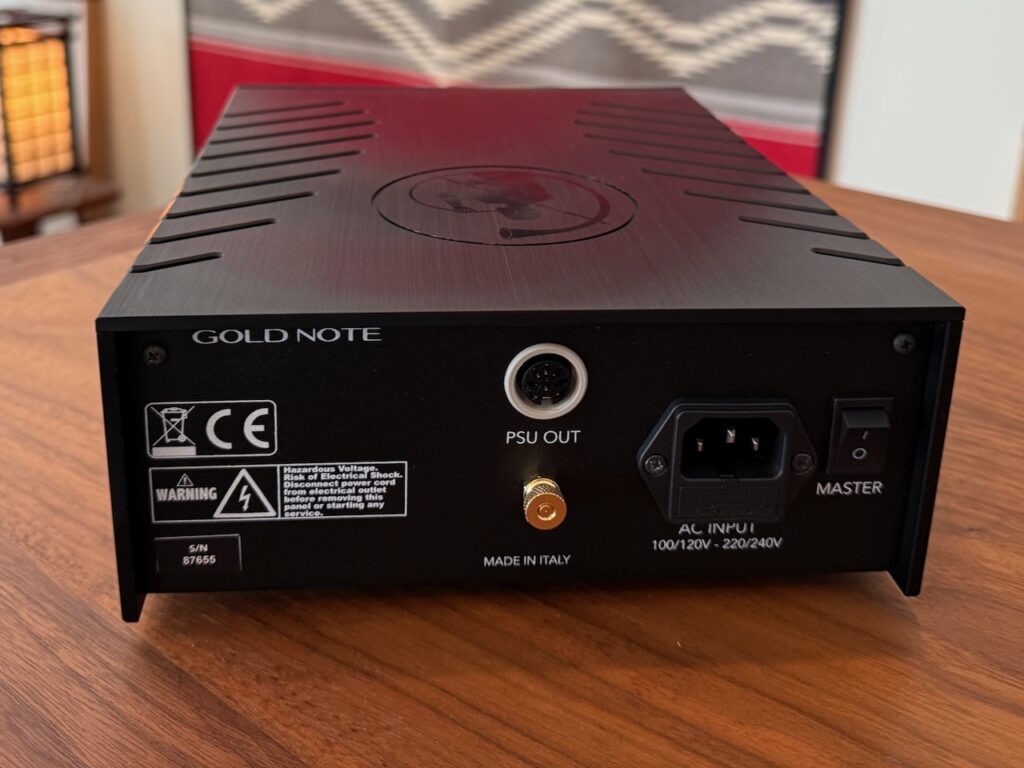
Generally speaking, overall audio component performance is very dependent upon the performance of the power supply, and the better the power supply, the better the component will perform.
You can use the DS-10 EVO streaming DAC as a standalone unit, but the optional PSU-10 EVO high-performance power supply boosts its performance considerably and is a bargain at its price point, so I recommend you consider the optional power supply as mandatory. It's well worth the investment.
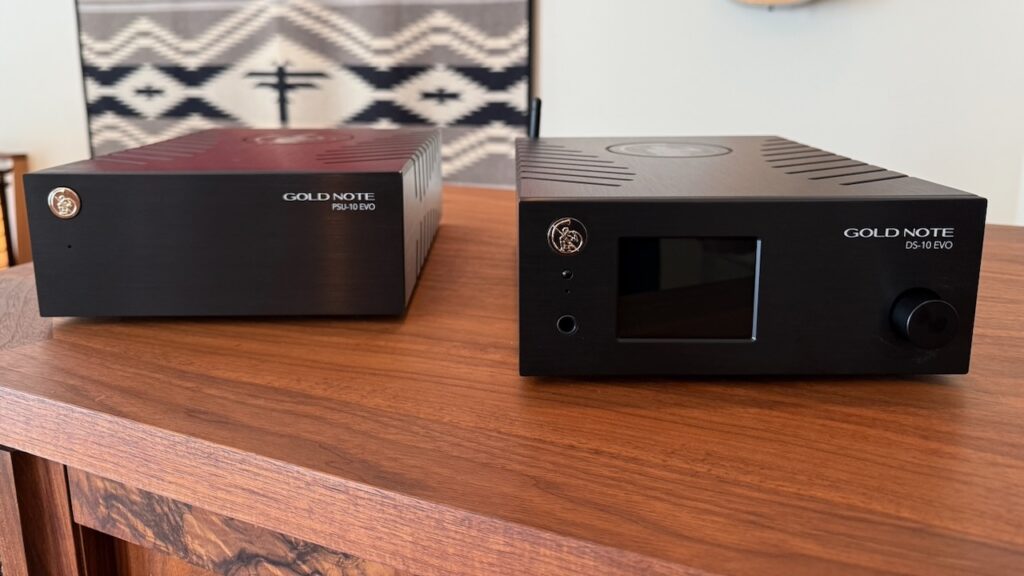
Essentially, the DS-10 EVO streaming DAC and PSU-10 EVO power supply are half-width audio components: one chassis holds the DAC electronics, and the other chassis holds the optional hot-rod version of the power supply. Combined, they are the typical width of an audio component, but because they are in two chassis, there is much more flexibility in placement. I like that.
After getting the DS-10 EVO streaming DAC and PSU-10 EVO power supply out of their shipping boxes, the physical connections were easy: (1) install the WiFi antenna on the DS-10 EVO DAC, (2) connect the PSU-10 EVO power supply to the DS-10 EVO DAC with the supplied umbilical cord, (3) install a pair of interconnects between the DS-10 EVO DAC and the pre-amplifier or integrated amplifier, (4) then install the two power cords.
That's all there is to it. Well, sort of. Now comes the part where you have to get the music you want to listen to streamed to the DS-10 EVO. In the approach I used, that requires spending a little bit of extra money to subscribe to two streaming services: Roon and Qobuz, which make PCM and DSD streaming easy.
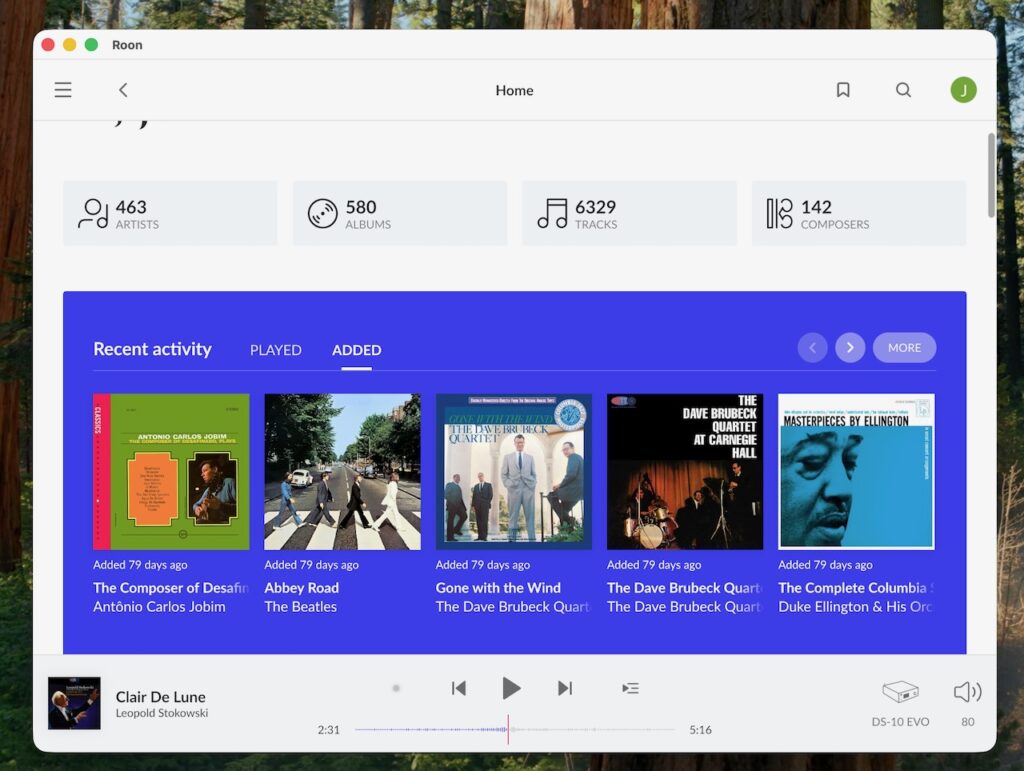
Roon is a music management and playback software that one subscribes to for $15 USD a month. I downloaded the Roon app to my MacBook Pro, and it then guided me through setting my Mac up as a Roon server. It was easy to do.
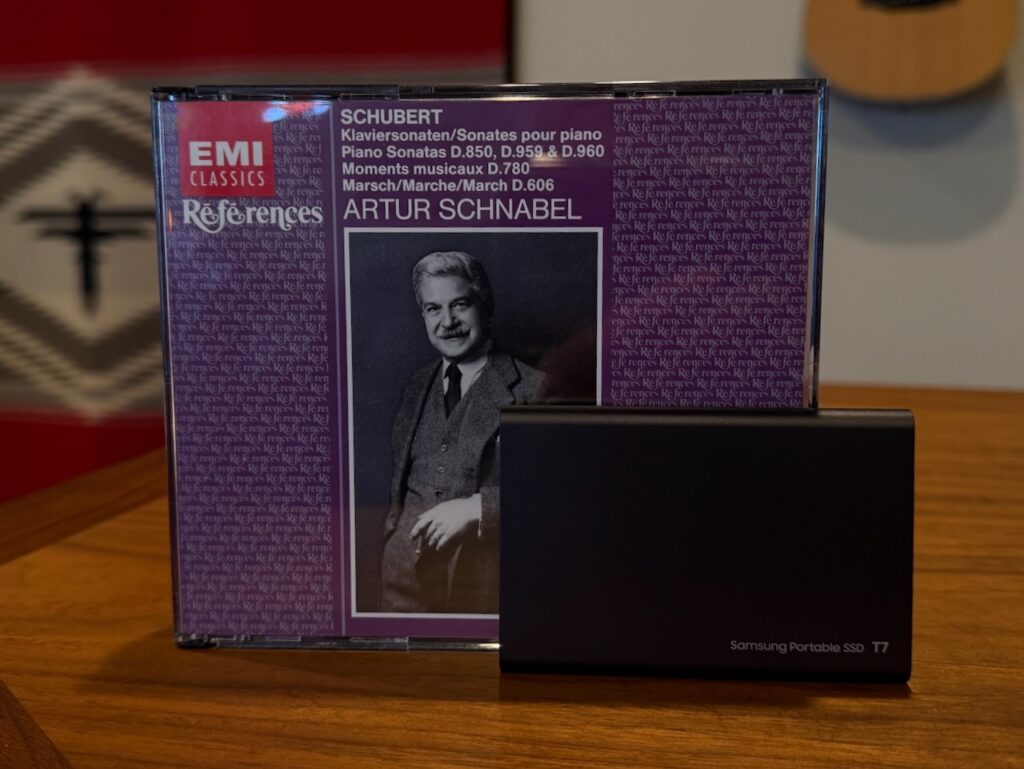
I'm using a 2T Samsung T7 SSD external drive (above) for my Mac that's got 580 albums in DSD stored on it, and automatically Roon recognized all the files on my T7 as a digital music library, which allows me to stream those DSD files to the Gold Note DS-10 EVO. The T7 is about the dimensions of a credit card, but fatter. It's amazing how much data can fit on such a small SSD drive. Essentially, the T7 is a portable music library that you can take with you when visiting friends, going to HiFi shows, or when just relaxing in the comfort of your listening room.
Roon allows you to stream internet radio stations as well, including one of my favorites, Jazz24 in Seattle. You can also integrate your other subscription services into Roon, like Tidal, Qobuz, and others, and run them from the Roon desktop.
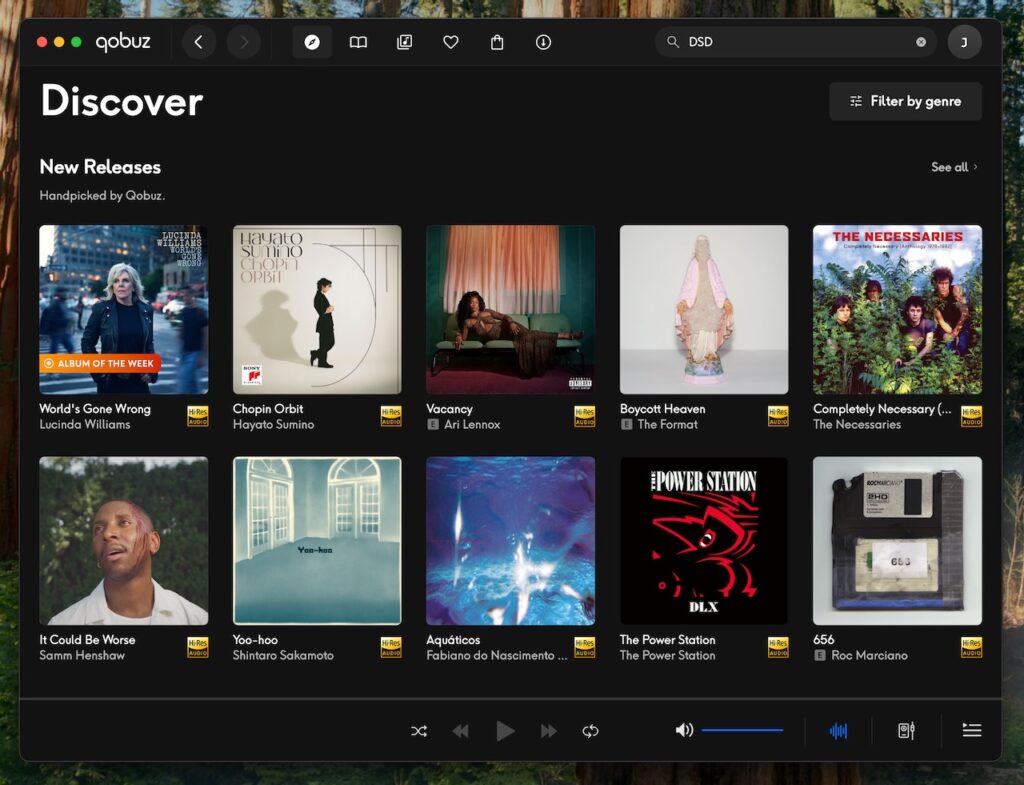
Qobuz is a subscription streaming service ($15 USD a month) and a digital music store where you can purchase high-resolution downloads. Qobuz has over 100 million tracks that you can listen to for free via streaming, or you can purchase and download music files to your music library.
The main focus of Qobuz is to provide albums in high-quality sound for audiophiles, files that range in resolution from the Red Book digital standard (16-bit/44.1 kHz) up to high-resolution PCM at 24-bit/192 kHz.
For those of you who have an Amazon Prime Video subscription, you know how you can stream some movies and television shows for free, and there are others that you can purchase (or rent) if you wish. Qobuz is the same thing but for music, where you can stream PCM for free, or purchase downloads. However, if you want to listen to DSD, you have to purchase and download the files, of which there are about 22,000 tracks to choose from.
For me, the primary allure of Qobuz is for listening adventures. Qobuz allows me to easily stream and explore albums in PCM that I would probably never even know about, or purchase otherwise, and give them a listen. If I happen to find something I really like, then I can buy it for my digital library, or just keep streaming it for free. Qobuz opens up a whole new world of listening at my fingertips that the explorer in me enjoys.
I also like that Qobuz provides short biographical essays about the musicians and albums, which I find enriches my music listening experience. That said, I don't like that approach as well as LP-sized liner notes that I can hold in my hands and read, and it is probably not as informative as the better booklets included with CDs, but overall it's pretty good, and you can always search the internet for more information on albums and artists should you desire to.
With both Roon and Qobuz, they also have iPhone apps that allow me to stream from my iPhone 16 Pro Max, just like I would from my Mac desktop.
So that's all there is to it for getting everything setup to do some music streaming with the Gold Note DS-10 EVO streaming DAC and PSU-10 EVO power supply.
Please click on the link below to go to the next page.