
Editorial, April 2026 from High Fidelity
The audio industry is a battleground where views, opinions, and various solutions clash, all aiming to lead us toward the same goal—better sound. In the heat of the battle, we fail to notice that it is subject to the same laws as any other field related to manufacturing.
In my opinion, it most closely resembles what happens in the… housing market. So there is a phase of settling in the middle of "nowhere" (DIY), a phase of integrating new residents into the fabric of the village or city (the consolidation and growth of companies), and a phase of full development and, finally, decline; the latter may result in the company's disappearance from the market, its revitalization, or gentrification. Of these, the latter is the least desirable.
For some time now, Krakow has been focused on a single issue: the referendum. A referendum in which residents are to voice their opinions on the administration of Krakow's Mayor, Mr. Aleksander Miszalski. The collection of signatures for the petition to hold such a vote concluded in early March. For the commissioner to issue a decision to hold the referendum, the petition must have at least 58,355 valid signatures, or 10 percent of Krakow's eligible voters. As it turns out, there were more than twice as many as needed.
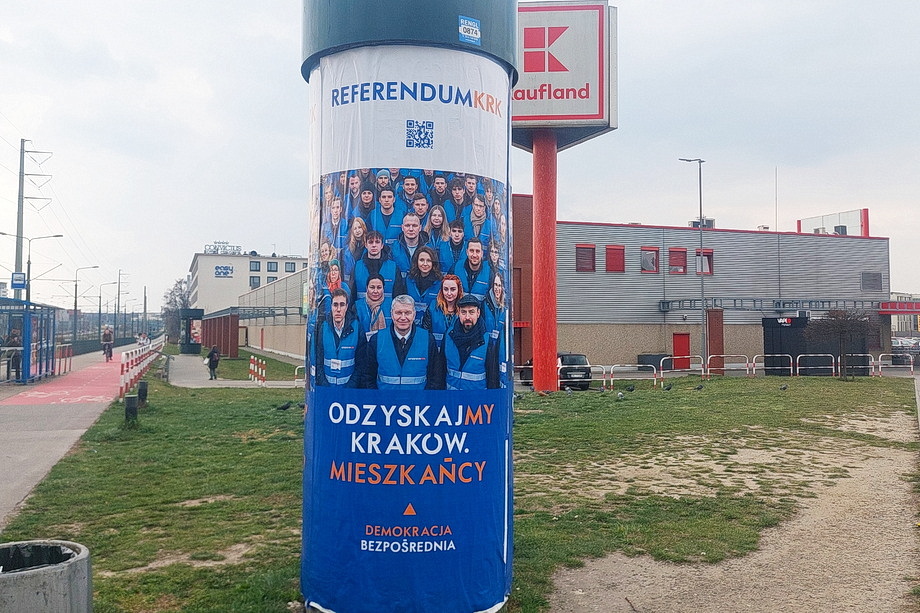
Rocking the boat of democracy, as seen here, is dangerous for all of us.
Consequently, opponents of Aleksander Miszalski (PO) have filed a petition with the National Electoral Office's Krakow branch to hold a referendum to remove the politician from office as mayor. The National Electoral Office has 30 days to verify the signatures. The organizers estimate that the election commissioner will schedule the referendum for May 17 or 24.
The entire campaign was conducted under the slogan "Let's Take Back Krakow." This slogan is a lie. You see, Miszalski was not my candidate, but he won in a fair election, defeating all other contenders for the office of mayor of my city by a significant margin. The current escalation and incitement—for that is what it is—is the result of the wounded pride of a certain group, and even—as I hear from friends involved in politics—of a single individual.
He is resorting to the excellent tool of power control that is the referendum to satisfy his need for revenge. Convincing people that someone "stole" the election from them is, however, a dangerous game that weakens democracy. A referendum used sensibly is an expression of responsibility; used as it was in the case of the Krakow election, it becomes a tool of power. In short, something good in irresponsible hands can become something bad.
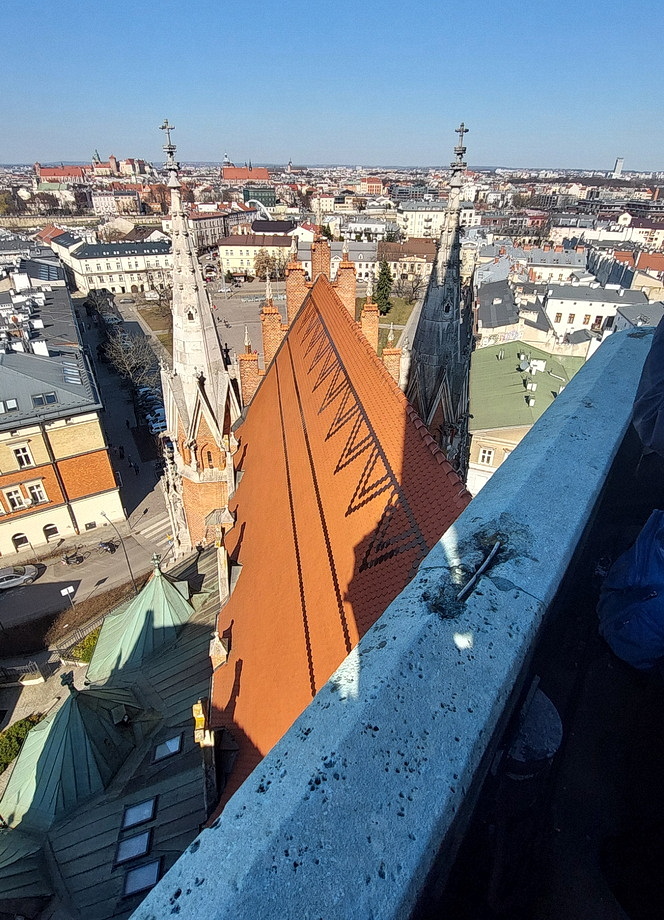
The city is a place where various interests clash; the photo shows the view from the tower of St. Joseph's Sanctuary Church in Podgórze
It's just like the latest scandal that Krakow keeps bringing up over and over again—the eviction of tenants and residents from historic tenement buildings on Józefa and Bożego Ciała Streets, owned by the Order of Canons Regular. These buildings are slated to be converted into a five-star hotel and conference center. As reported, the matter is highly controversial: from the violation of a historical donation deed, through eviction notices for iconic commercial spaces, to the intervention of the Mayor.
The point is that a corporate mono-culture would be created in place of normal life, part of the character of this neighborhood. This action is detrimental not only to those who are being evicted, but also to the city. There is also another side to this matter, because things are never black and white. The point is that in this way, the buildings would gain a serious investor who would renovate them and restore them to their former glory, so to speak. This would revitalize the entire neighborhood, thereby transforming the ruins into a decent place. Which side of the dispute is right, and who holds the upper hand? As usual, it depends on the context
In cases like this, it matters whether we're talking about revitalization or gentrification. This is an important distinction because it separates good from evil, work for the benefit of residents from corporate-developer scumbaggery. The issue is controversial, as Wojciech Orliński expressed in his article Respect Your Tramp. Gentrification or Revitalization?, in which he cites New York stories about gentrification that, according to the author, "are grim, regardless of one's place on the social ladder," and which was endorsed by many supporters of such changes; more HERE.
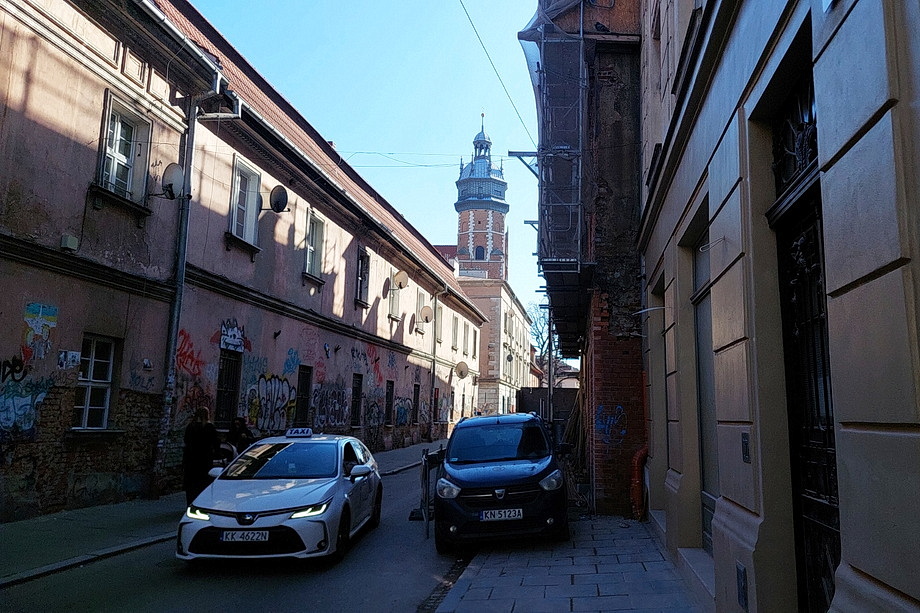
Corpus Christi Street in Krakow, where the townhouses are that the developer wants to evict the residents and tenants from.
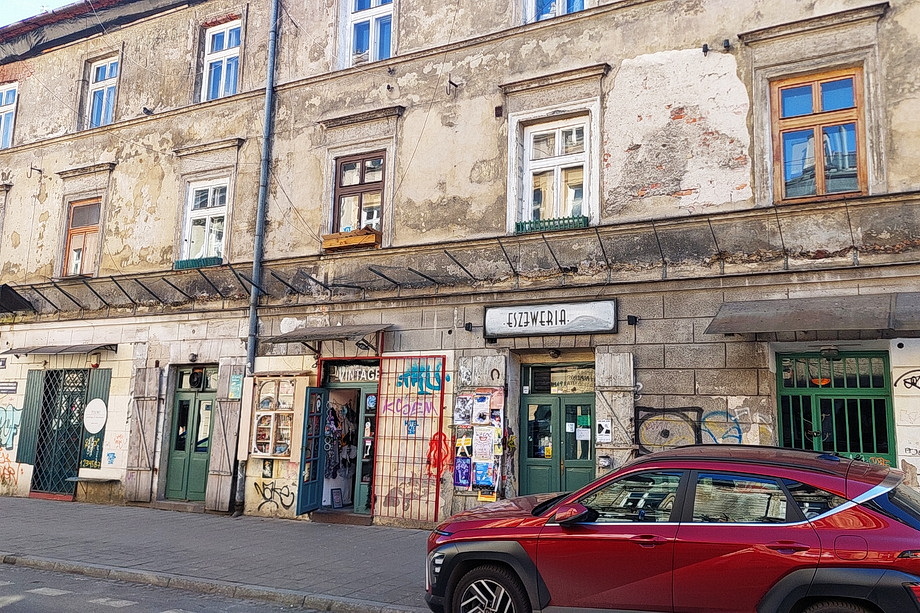
Jozefa Street 9 is, above all, Eszeweria, a bar beloved by young people, including my daughter - this place is also set to disappear.
So, is it a revitalization or gentrification? According to the online "Polish Language Dictionary," gentrification is "the process of transforming a part of a city into a more commercialized area dominated by people of higher economic status" (more HERE). This is an extremely political expression, which provokes resistance from supporters of the free market in its turbo-capitalist form. This is reflected in a comment under the aforementioned definition on—after all—a scholarly portal, where a user with the nickname Wolnykoliber, after quoting a more elaborate definition, adds: "a word often used by leftists of all stripes."
On the website of the Institute of National Heritage, we find an article devoted to this topic, which draws attention to an insufficient understanding of the difference between the terms mentioned above. We read there:
Aesthetically pleasing and functional spaces attract investors and residents, but changes in a neighborhood's character resulting from municipal actions can negatively impact the social fabric. On the one hand, they may lead to a loss of diversity and authenticity; on the other, they may reduce the dynamism of the space, making it monotonous.
Strategic planning for local and regional development, particularly in the context of revitalization, should be based on reliable research and analyses that diagnose crisis-affected areas. Such an approach is not only effective but also consistent with the requirements of the Revitalization Act.
Rewitalizacja czy gentryfikacja? Kluczowe różnice i ich znaczenie dla lokalnych społeczności, SAMORZAD.nid.pl, accessed: 25.03.2026.
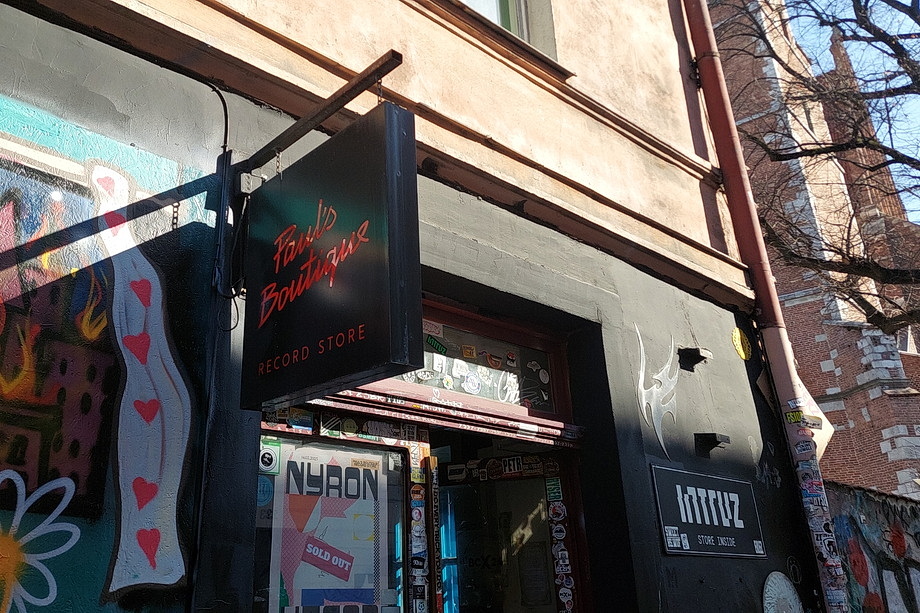
At number 24 is Paul's Boutique Record Store, a place I - and others - often visit.
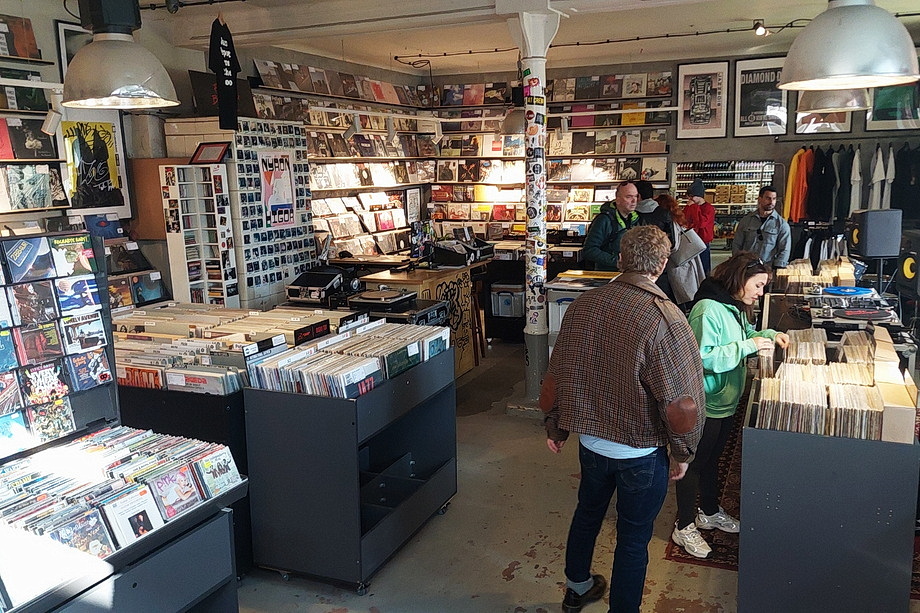
I recently bought an unopened copy of Andrzej Mitan's album Ptaki at Paul's Boutique - this place will disappear, covered by fresh plaster.
In short, gentrification is a violent process—one that is exclusionary and fundamentally opposed to people like you and me. It's about reaping the greatest possible benefits at our expense. Revitalization, on the other hand, is an inherently inclusive endeavor aimed at—as we read further on the IDN website—strengthening the existing community through building renovations, infrastructure improvements, implementing policies that protect residents from displacement, and addressing social issues such as exclusion and unemployment: "The goal of revitalization is not only to renew the physical space, but also to stimulate social and economic activity in a given neighborhood."
Don't you get the impression that similar processes are also taking place here, in an audio-perfectionist context?
If one were to look at the history of various types of brands and manufacturers, in most cases one could distinguish three stages. The first would be the DIY stage, that is, tinkering with the craft for oneself, or possibly for one's immediate circle of family, friends, and acquaintances. The second would be entering the industry by starting a company, transforming a hobby into a money-making venture, and, over time, perhaps even a way of life (a livelihood). And finally, there is the third stage, the corporate stage: that is, large, vertically organized companies often owning more than one brand.
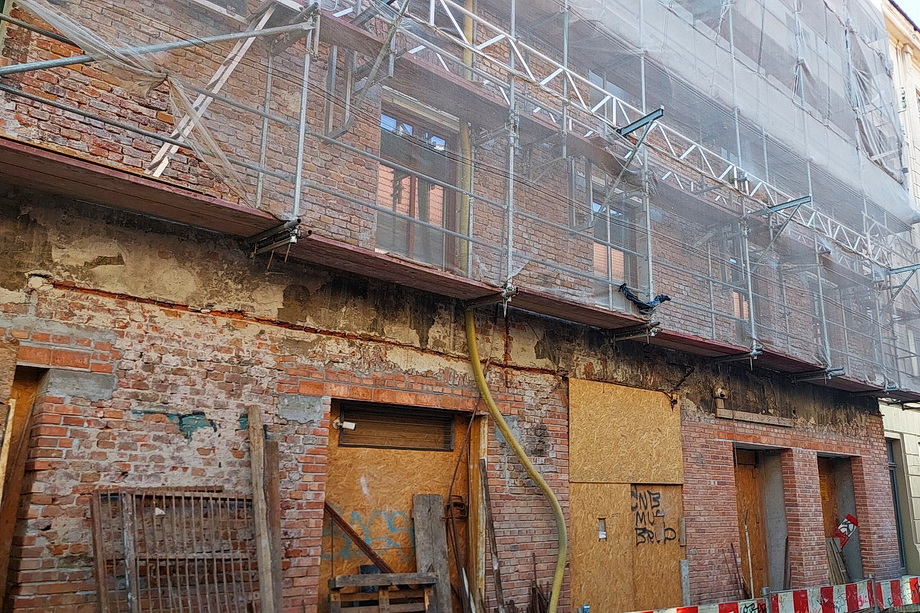
This tenement house in Kazimierz, also on Bożego Ciała Street, is already a lost cause - it's being renovated, but at the same time stripped of its character and identity.
The thing is, the participants (the players) in each of these stages of development (or change) view the participants in the other two stages as traitors, idiots, or greedy capitalists. It's not hard to match each of these labels to a specific stage, is it? We instinctively sense that DIY enthusiasts consider themselves the closest to the "truth" of the audio and audiophile industry; small manufacturers see the former as fanatics who don't understand real life (the market), and the latter have it all calculated in Excel spreadsheets and are devoid of emotion. But they are the "enemies" of the first two.
We could leave it at that, dismissing this conflict as having no impact on our industry. We could, but that would be running away from the problem, not summarizing it—and, hallelujah!—solving it. Tensions between these three "states of audio" have existed, exist, and will continue to exist. They mustn't obscure a simple truth: we all are interdependent, and each of these states is equally important and equally necessary, as long as it does not harm others.
DIY brings enthusiasm, freshness, and out-of-the-box ideas to audio. Solutions that would never occur to anyone else, and even if they did, would have to be rejected due to the cost aspect. After all, the nature of hobbyist activity is that it doesn't take time into account. And it is precisely the working time of engineers and technicians that is one of the highest costs of doing business for full-fledged companies. An audio enthusiast can devote any number of hours to a given project, and for them, this isn't a "cost," but the very essence of their passion.
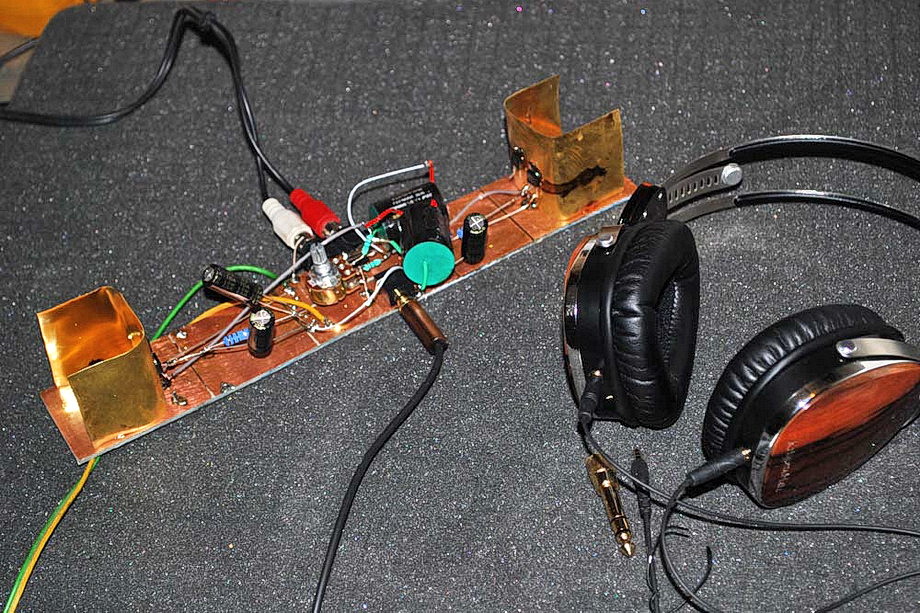
Ancient Audio's headphone amplifier prototype - this is what the DIY version looks like • Photo: Ancient Audio.
This gives rise to wonderful, strange, and sometimes incomprehensible things. It is precisely this layer that is responsible for the buzz in the audio scene, for ideas that everyone else considers "crazy" and therefore not worth paying attention to. I see Polish DIYers as one of those groups that is truly good at this—in fact, exceptional. Not because we Poles are Sarmatians or the "Frontier" or some other nonsense, but because—I can feel it—there's something in us of explorers, something of restless spirits who must keep digging, or else they'll never find peace.
I know many such people; some have stuck with their passion, some have given it up, but some work for others in regular companies. "Manufacturer" is, in fact, the next phase in the development of a passion for building. A phase, let's add, that is the most difficult. It requires a transition from the concept of DIY projects assembled on a "board" in a garage, basement, or at best, in a kitchen, to real products, namely devices (speakers, cables, etc.) made with care and solid craftsmanship, featuring a defined visual design, complete with enclosures and packaging, along with instructions and the safety certificates required by law. And they must be reproducible. This is a Copernican revolution in how one thinks about their hobby - one that remains out of reach for most.
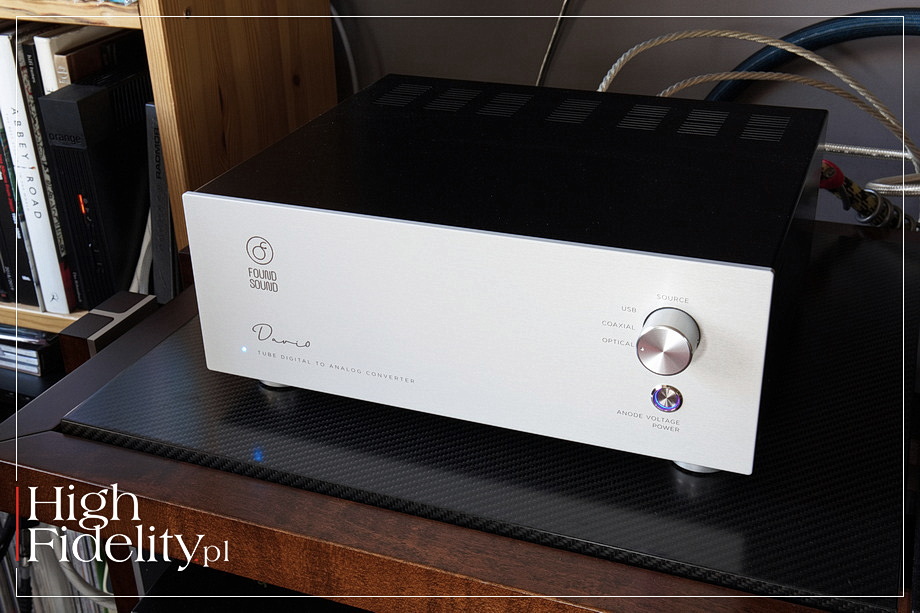
An example of a startup in its early stages that grew out of a DIY project: the Found Sound Davio Azure digital-to-analog converter.
Once a young entrepreneur has all this under control—or at least the basics - the real challenge begins -they have to sell their "dream." That means striking a deal with a store (or stores), keeping an eye on sales, and thinking about promotion. Which means: ads, websites, product tests, demonstrations, presentations, exhibitions, and more ads, and then dealing with people on social media and company chat groups. Among the latter, a large group will consist of DIY enthusiasts, pointing out all the inconsistencies (in their opinion), the young entrepreneur's venality, and greed. They know better "how much everything costs."
However, the fact is that this middle stage of development is extremely important, perhaps even the most important, for the development of the audio industry. It transfers ideas from the DIY realm into the realm of real products, filtering them along the way. Many of them are lost because they cannot be implemented, but a large portion enters our bloodstream and enriches our understanding of what is needed to reproduce music in a way that sends shivers down your spine. These are elements that corporate audio companies only notice when they generate concrete revenue.
I see a lot of activity from Polish manufacturers in this segment. We're good at this, which we aim to showcase in High Fidelity this September with an issue dedicated exclusively to Polish companies. Beyond the spirit of discovery, this also fulfills the social aspect of our industry. After all, sharing with people the way to listen to music as it deserves is inherent to it.
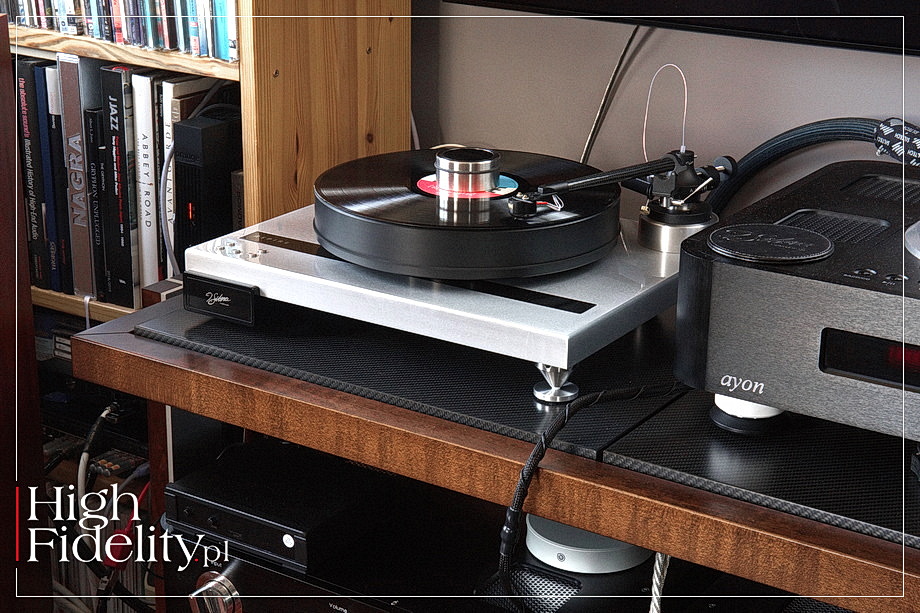
Maturity – J.Sikora is a manufacturer that started out as a DIY project, went through its early development phase, and is now on its way to conquering the world; pictured is the Aspire turntable.
On the one hand, an audiophile is a loner, and listening intently to music is an activity that isolates us from others. But on the other hand, it is also a collective experience at gatherings, demonstrations, and presentations. We want to share our passion with others. We have a "drive to make others aware" of what a wonderful experience it is to hear "your" artist for the first time on equipment that will showcase exactly what they intended.
The "manufacturing" phase is the most developed phase in all the audio markets I know. This is where perfectionists and engineers from Japan, Germany, or Switzerland come into play. And from Poland, too. Not all of its participants go through the DIY phase, by the way. It's also the case that they either hire someone who's skilled in this or build such a company from scratch, based not on a hobby, but on a specific idea they're trying to monetize.
Monetization is inherent in what we do. There's nothing to be ashamed of, nothing to take offense at, and nothing to be surprised by. A company may be founded out of passion, but one of the goals is to make a living from this activity. The better a company earns, the greater the likelihood that it will grow into a stable manufacturer with a broad customer base waiting for new products. A predictable, trustworthy audio company is a treasure worth nurturing.
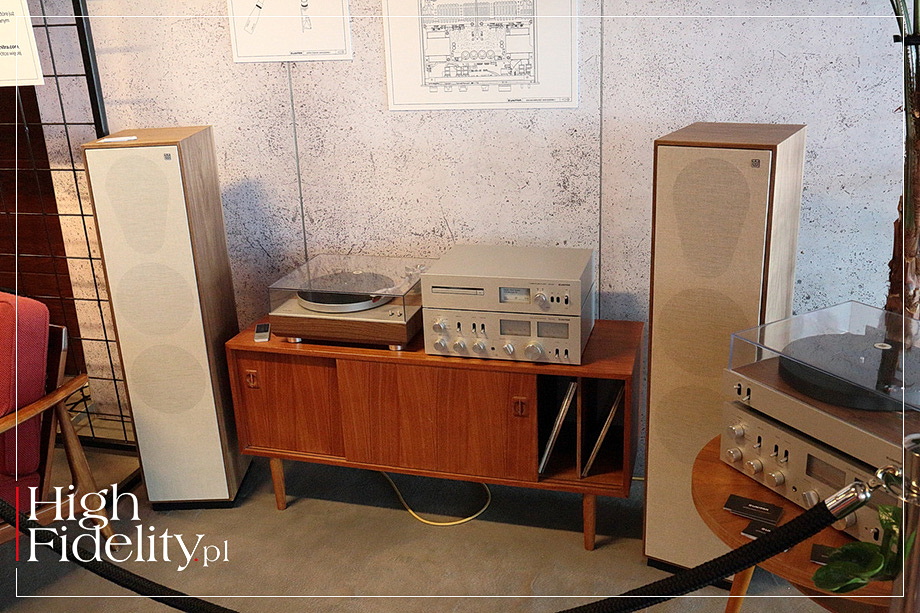
One of the few Polish companies in the third phase of development (perhaps the only one) is Unitra, which has been revived (revitalized) by a new company established on the initiative of Michał Kiciński, co-founder of CD Projekt; Pictured: Unitra's system at the Audio Video Show 2022: the WSH-805 integrated amplifier, the CSH-801 CD player, the ZGZ-801 speakers, and the GS1 Fryderyk turntable.
There comes a point, however, when a given manufacturer hits a wall. That is, its growth is hampered by production capacity. It must then make a decision that will change the company forever—whether to stay where it is, at the risk of withering away, or to move into the realm of "big companies," which—as a rule—are corporations. And that will be a completely different world. A world where everything must be professionalized, operating according to guidelines and protocols. It is an audio industry where sales volume is what counts above all else (often exclusively).
This doesn't mean that these are bad products, that they sound poor, or that they don't meet audiophile standards. Although many small manufacturers view this stage in that light - not to mention DIY enthusiasts—the latter don't consider such companies to be audiophile brands. They see them rather as part of the consumer electronics market. This is because corporate manufacturers very rarely implement real, rather than imaginary, innovations, nor are they closely connected to the industry. Their products are aimed at people who are not necessarily audiophiles, but who have the desire and ambition to play their recordings on high-end equipment from a well-known brand.
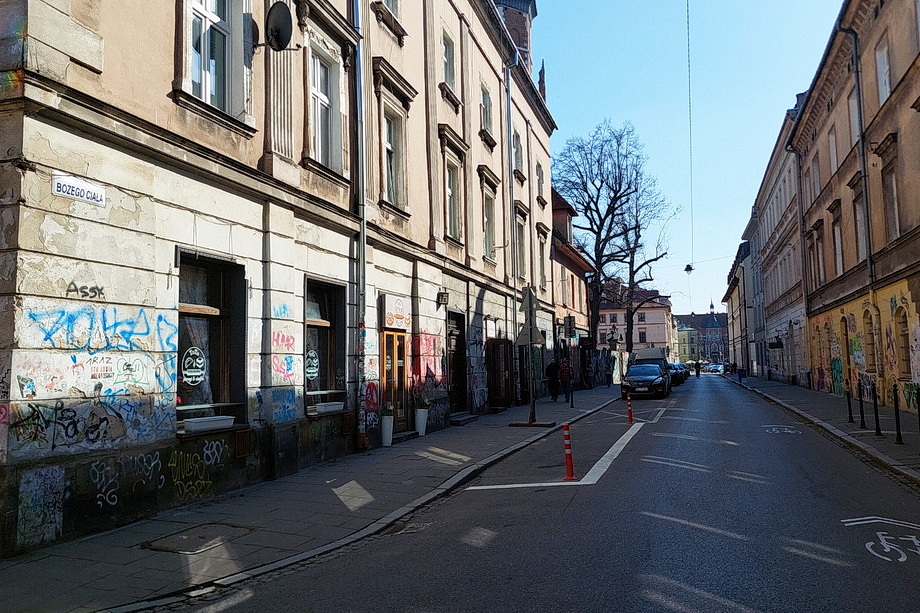
Once again, Krakow and Bożego Ciała Street - it clearly needs a thorough revitalization, not a transformation into an open-air museum.
And it is precisely this stage that is largely subject to gentrification, the topic with we began this article with. Let's recall what this process entails, this time according to the online dictionary nowewyrazy.pl:
gentrification – env. "a process aimed at changing the character of a city neighborhood through the renovation of its buildings and the privatization and commercialization of a significant portion of its public space, often associated with the neighborhood being populated by people belonging to the upper social classes."
In the context of audio, this would mean transforming a company in such a way that it has no connection to the other two phases of audio development and is focused on quick profits. Most often, it doesn't know us audiophiles, because it doesn't need us. We are being used by this type of business. Our language, terminology, and classifications are exploited to boost sales, not to improve products. It is, therefore, a matter of exploitation, not inspiration. They do not invest money in innovation, but in promotion. For them, progress means higher profits, not better sound. Even though these two things can be perfectly combined.
The trend of large entities—often unrelated to audio—acquiring audio brands, which has been visible in recent years and is accelerating, may end up resulting in exactly that. It may be so, but it does not have to be so. It all depends on how the company approaches the audio market, what its goals are, and whether it invests money in research. The latter is particularly important because the largest manufacturers bring money into our industry, and thanks to them, we develop and expand, reaching people who would never have considered a product from a small, unknown company.
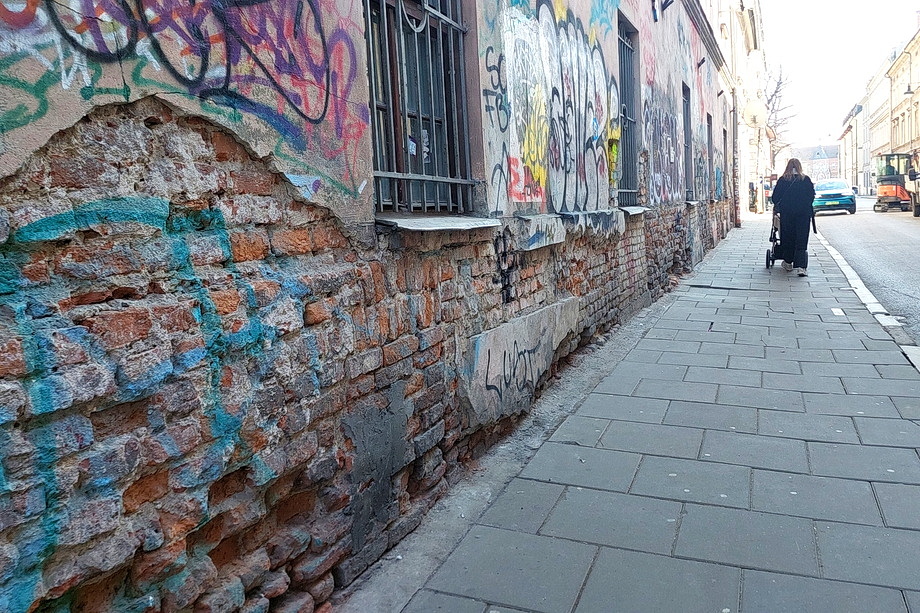
Fortunately, it's not the case that all large companies are simply preserving the status quo; not all of them are gentrifying the audio world. Many manufacturers reach the third stage and thrive there. On the other hand, some of the actions that might look like this involve revitalization, which we've already mentioned. The difference might seem small, but it is the most important one. Revitalization involves restoring a company to its former glory, but under new operating conditions. It is about making money—which is good in itself—but not at any cost, not by stripping a brand of its most valuable asset: its identity.
And yet many investors are buying valuable audio brands just as one buys assets on the stock market - quickly, for the short-term profit. If it works out—great; if not, no problem—they'll make money on something else and write off the losses. This is speculation rather than investment. And it shows, and you can see this surely, too. We say "no" to such companies because they undermine and, as a result of their actions, destroy trust in our industry.
Because what matters most in this industry is certainty. Certainty that the company will still be operating tomorrow and a year from now. Certainty that they will repair our product, even after some time has passed. And certainty that it's a product that works well. Ultimately, it's about being certain that the person on the other end is just like us
Text by WOJCIECH PACUŁA
Translation by MAREK DYBA
Images by High Fidelity, Ancient Audio