

"Jimi was like aliens had landed. No kidding," said Toto guitarist, Steve Lukather, who recorded with a who's who of artists like Michael Jackson, Eric Clapton, and Eddie Van Halen. "I remember sitting in my bedroom listening to his Are You Experienced? album's 'Third Stone From The Sun.' My father walks in and sees the album cover with that fish-eye lens on the front. He watches the record going round on the turntable and hears all of this weird noise. He then shakes his head and walks out [laughs]. This was 1967, so feedback like that wasn't normal." (Jim Clash/Forbes.com)
"People don't realize the impact Hendrix had," Lukather continues. "Understand those sounds he created from nothing, just like the early Beatles did. And Jimi did all of it in three years and then died." (Ibid) Amongst other things, Hendrix introduced new techniques like feedback, wah-wah pedals, and controlled distortion, pushing the boundaries of what could be done on electric guitar, while his solos were "technically impressive and emotionally evocative." (https://missionengineering.com)
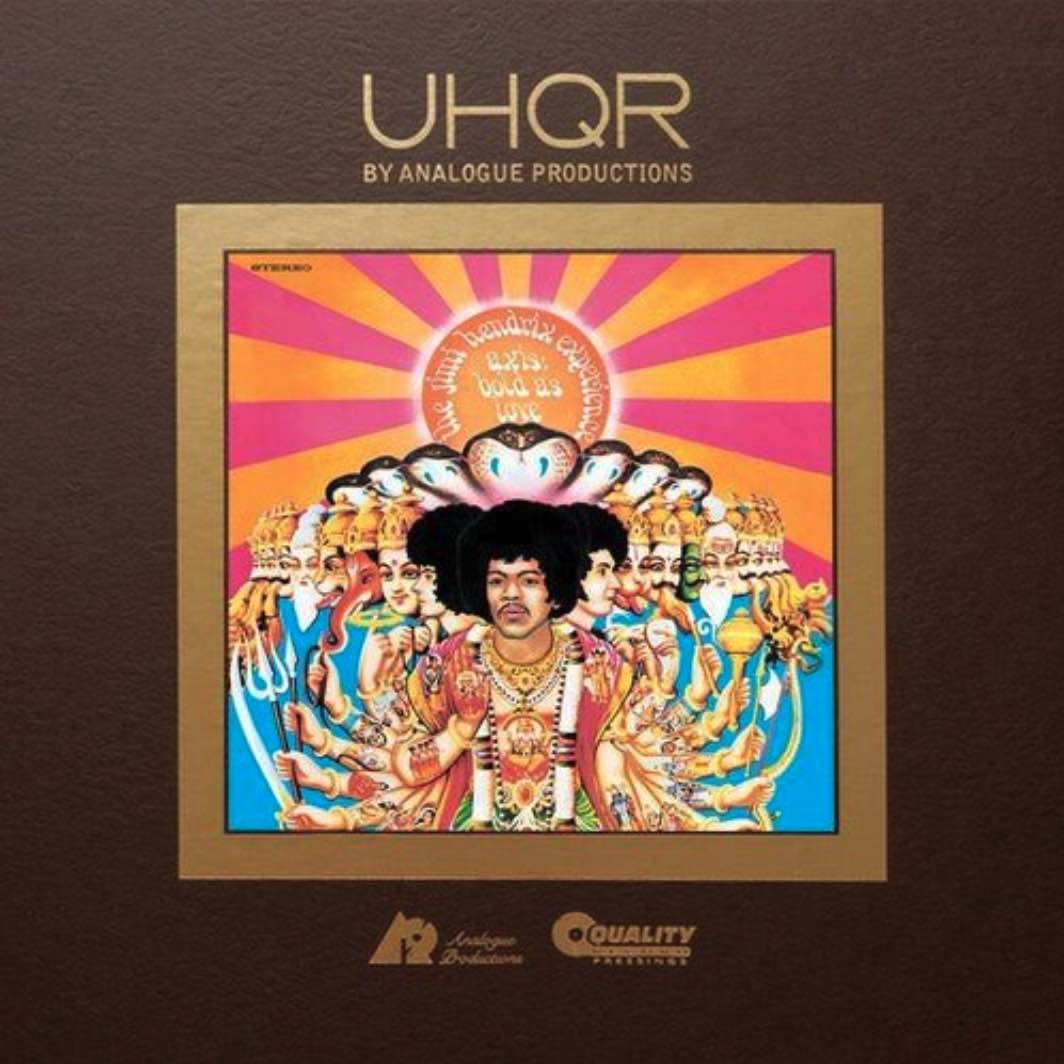
Make no bones about it: Jimi Hendrix's Axis: Bold as Love was a huge commercial success. It was certified platinum in the U.S. by the Recording Industry Association of America (RIAA) and silver in the United Kingdom by the British Phonographic Industry. And in 2000, it was voted number 147 in Colin Larkin's All Time Top 1000 Albums (Larkin, Colin (2000). All Time Top 1000 Albums (3rd ed.), Wikipedia.org). And remastered in the UHQR version from Acoustic Sounds, it sounds superb.
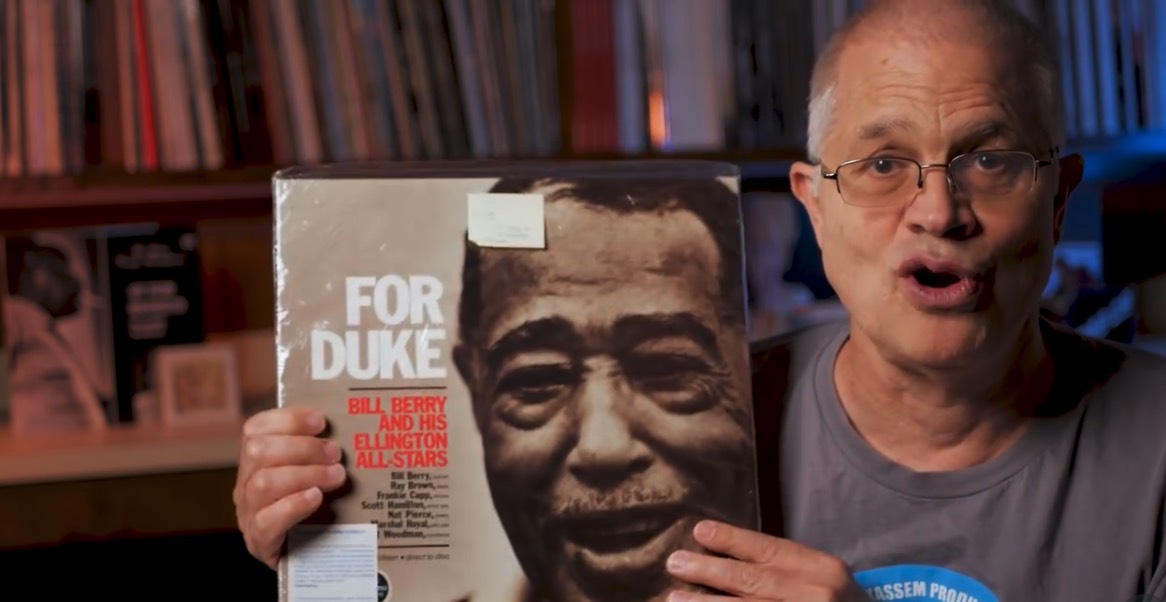
Chad Kassem, seen here with another re-issue (photo courtesy of Vinyl Lives Instagram page)
About Acoustic Sounds and Analogue Productions
In 1986, Chad Kassem, then age 24, began buying and selling used audiophile LPs and CDs from his apartment. This became the business, Acoustic Sounds, which eventually expanded to include a sister business, Analogue Productions, which reissues select blues, jazz, classical and folk recordings. Then in 1993, Kassem added original recordings focused on the blues (his favorite genre) on APO (Analogue Production Original) Records to his product mix.
"Once vinyl started really taking off, we were a very good customer at (another) pressing plant," Kassem said. "But when the big major (record labels) came knocking, all of a sudden we weren't so big anymore. We weren't so important anymore. So we kind of got kicked to the side."
Roughly four years passed before Kassem resolved the records pressing delay issue. In December 2010, he purchased three empty buildings in Salina, Kansas totaling roughly 70,000 square feet.
"One, an enormous warehouse, now houses the majority of the record album inventory, as well as the shipping department," wrote David Clouston for the Salina Journal. "Another is a nearby office building that houses the administrative staff, customer call center, graphic designers and more storage for preowned LPs." Furthermore, Kassem converted a former refrigerated warehouse to the home of his newest venture, Quality Record Pressings, where they press their own reissues. The result borders on magic. (https://store.acousticsounds.com)
"These days some rare vinyl LP collectors say fine reissues of classic jazz and classical recordings are better than the originals in many cases, for four main reasons," Clouston writes. "First, they feature super fidelity reproduction at 45 revolutions a minute instead of 33 1/3 rpm. Second, they're made with higher-quality, thicker vinyl at 180 grams or better. Third, they're produced with meticulous remastering, using the original source analog tape recordings used to produce the original record. And lastly, they're made with pristine vinyl with no wear." (Ibid)
On Analogue Productions' UHQR Records
Analogue Productions, the audiophile in-house reissue label of Acoustic Sounds, Inc., released their limited-run reissue edition of Jimi Hendrix's 1967 masterpiece, Axis: Bold As Love., in both stereo and mono versions as theirs and Quality Record Pressings' reintroduction of the Ultra High Quality Record (UHQR™), originally introduced by JVC Japan in the 1980s.
"Reintroducing the UHQR is one of the biggest things we've done," said Acoustic Sounds and Analogue Productions CEO Chad Kassem. "These are going to be the best records ever made. To announce the series properly we wanted to hit a home run with a huge title, and I don't know that we could have done much better than this."
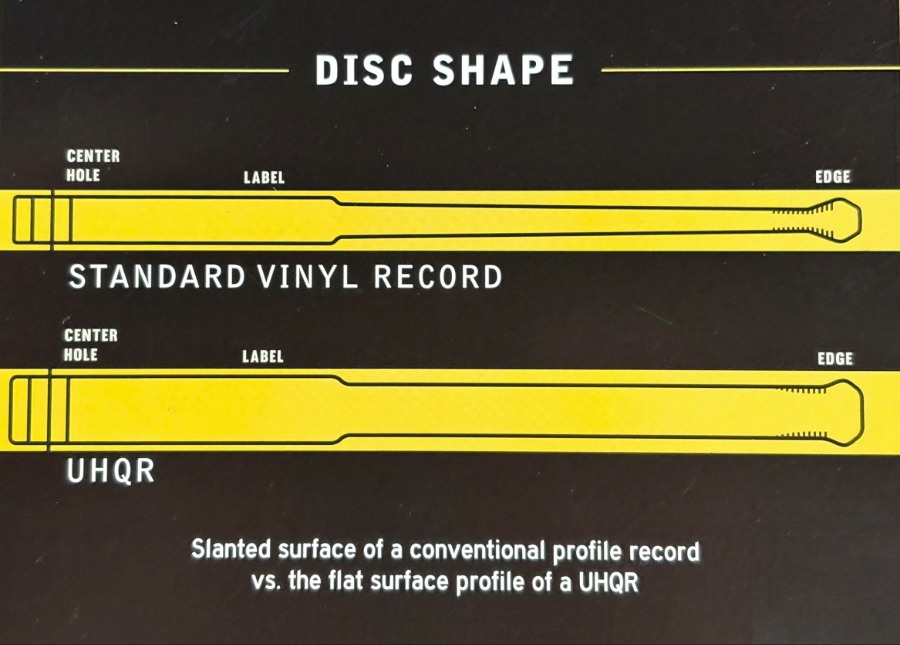
This UHQR was newly remastered by Bernie Grundman from the original analog master tapes. Each UHQR was pressed at Acoustic Sounds' industry-leading pressing plant Quality Record Pressings (QRP) using Clarity Vinyl ® (free of any contaminants or pigments) on a manual Finebilt press with attention paid to every single detail of every single record. The 200-gram records feature the same flat profile that helped to make the original UHQR™ so desirable. From the lead-in groove to the run-out groove, there is no pitch to the profile, allowing the customer's stylus to play truly perpendicular to the grooves from edge to center. Clarity Vinyl® allows for the purest possible pressing and the most visually stunning presentation. Every UHQR is hand inspected upon pressing completion, and each UHQR is packaged in a deluxe box and includes a booklet detailing the entire process of making a UHQR, along with a hand-signed certificate of inspection. (ibid)
On Clarity Vinyl
"LP vinyl is not black in its pure state," their website says. "The off-white color of the record you are about to listen to is the color of raw vinyl in its purest form (un-tinted vinyl). The black color you’re used to seeing is a colorant called “carbon black” that was part of the original compound formulation used in old shellac records. As vinyl compound replaced shellac-based compound, carbon black continued to be used as a colorant. We’ve expected our records to be black ever since."
"To make the ultimate record, we decided to enhance sound quality by removing anything we believed could detract from it. Record styli vibrate (or jitter) on a microscopic level, and any particles of carbon black pigment that happen to be on the surface of the groove could introduce surface noise. By removing carbon black from our Clarity Vinyl® we eliminate the possibility of noise contamination due to carbon black particles. Instead, your stylus is allowed to effortlessly slide down a glossy and silky smooth groove wall.
"When we purchased Classic Records, the brand name Clarity Vinyl® came with it. We're proud to have resurrected, refined and trademarked Clarity Vinyl®, the perfect canvas for our masterpiece: vinyl in its purest form."
On the Arrival
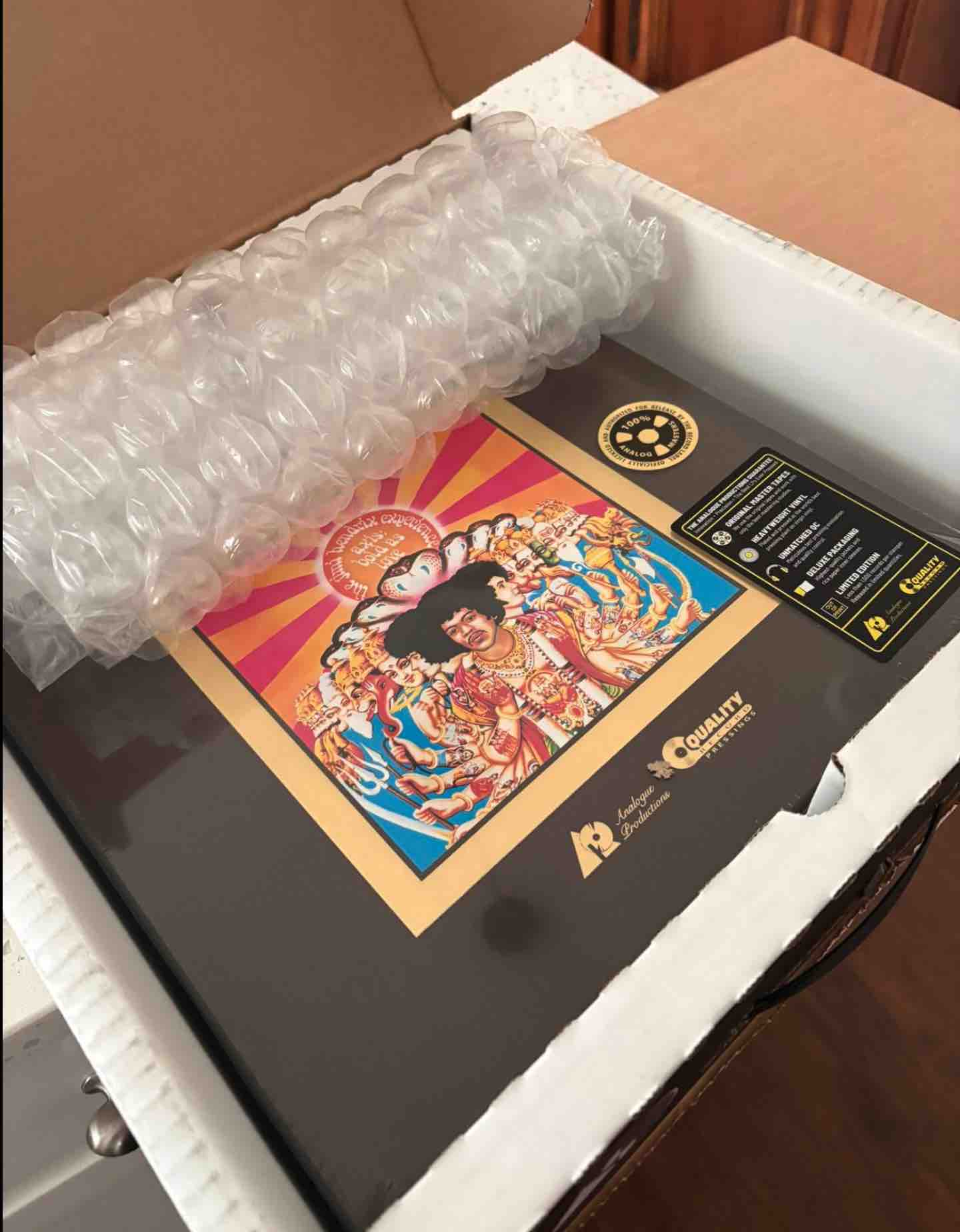
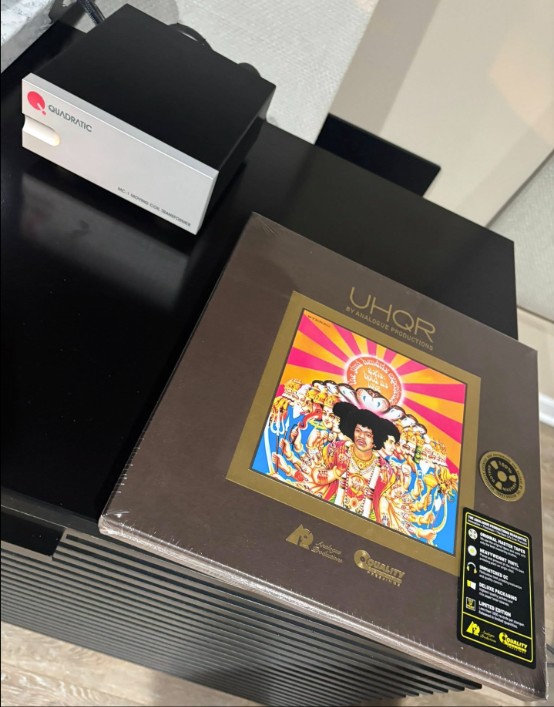
The album arrives in a 15" x 15" x 4 1/4" reinforced box that I promptly photograph and posted on social media.
"Love it when the big box arrives from Acoustic Sounds," posted Brent Knoll, founder of the Facebook page, Turntable and Vinyl Talk. "Enjoy!"
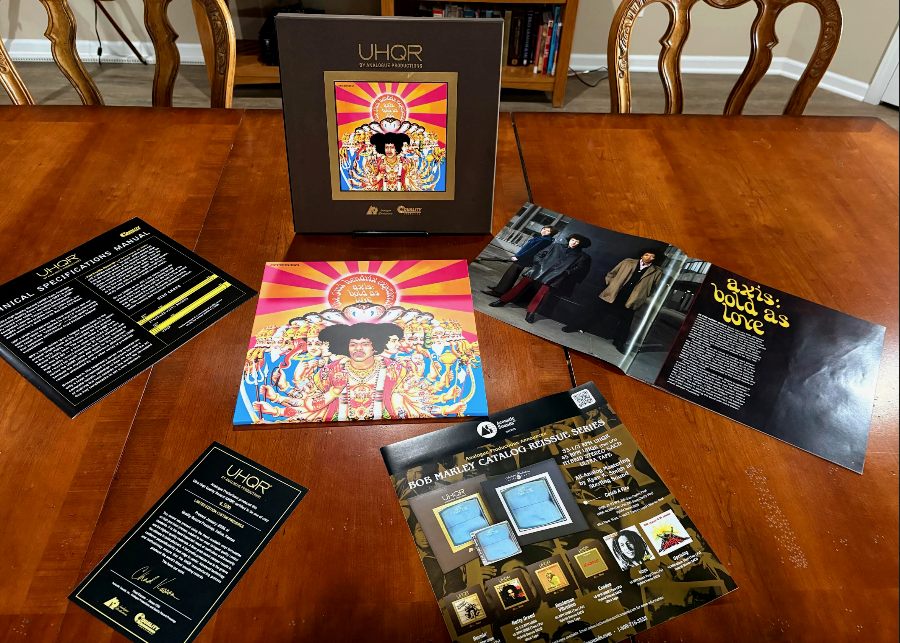
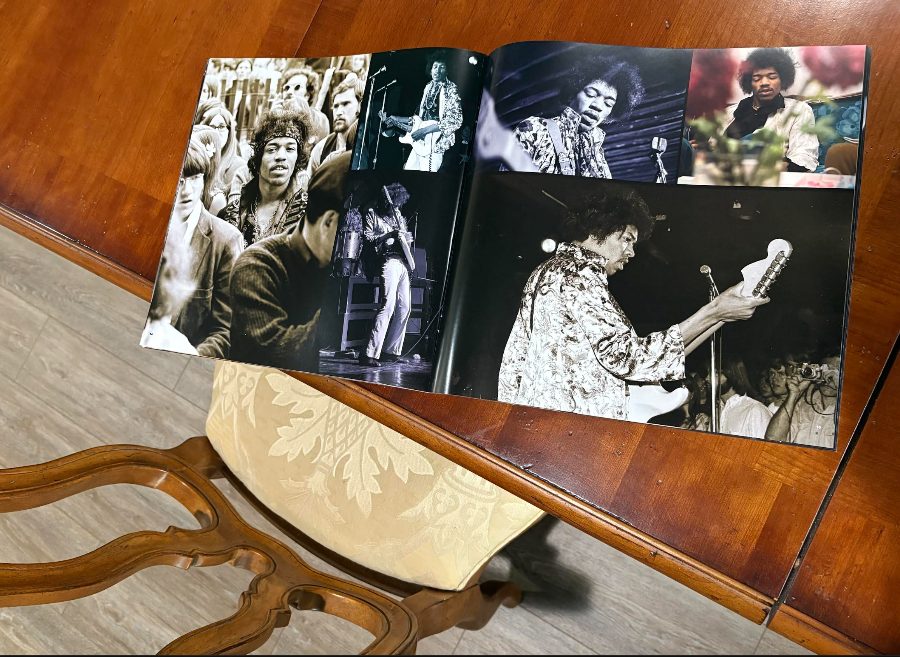
The box included a decorative, reel-to-reel type box featuring a miniature reproduction of the album cover, the Analogue Productions and Quality Pressings logos, a pristine, and, inside, an updated album jacket with original artwork, lyrics and credits; a UHQR technical specs manual, a gorgeous 11 3/4" x 11 3/4" picture book, and protective inner and outer sleeves for the album jacket and records.
Listening Session
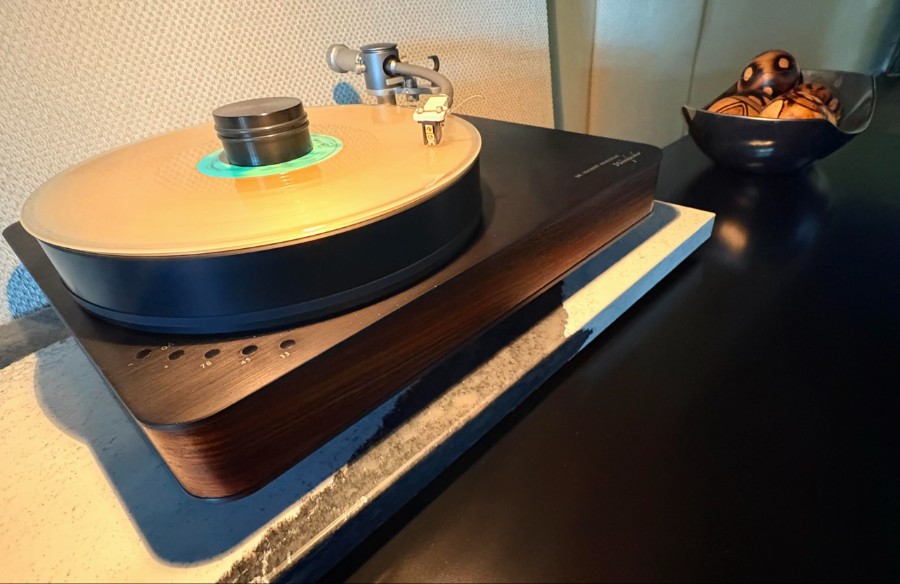
The noise floor is dead silent as Side One opens to "EXP," a hoax radio station interview in which drummer Mitch Mitchell interviews one "Mr. Caruso" (played by Jimi Hendrix) about UFOs. Mitchell's voice is sped up, sounding like it was meant to be played at 33 1/3 RPM, but is played at 45, followed by Caruso sounding like he was meant to be played at 45, but is played at 33 1/3, deadpanning, "You just can't believe what you see and hear." Moments later, an abstract and highly distorted Hendrix electric guitar solo fades in, undulating, panning left to right, bereft of any melody or tune – perhaps mimicking the sounds of a hovering alien spacecraft in your living room – before fading out.
Mitchell's drums, Noel Redding's throbbing bass, and Jimi's guitar playing quarter note rhythm with the wah pedal usher in "Up from the Skies", as Jimi sings the lyrics, "I just want to talk to you..." , in a soft, conversational tone. His vocals and his wah-wahing guitar trade channels; the former at left, and the latter and right, and vice-versa in this bouncy beat, funky jazz-blues piece.
The tenor becomes blistering as Jimi bellows the lyrics and unleashes heady blues-rock chops in his guitar intro to "Spanish Castle Magic." Mitchell's feverish drumming is punchy and visceral, complementing Jimi's subsequent guitar riffs in this concert-worthy psychedelic rock gem.
The heat settled down to the simmering, bluesy pop song, "Wait Until Tomorrow." Hendrix, accompanied by Mitchell and Redding in background vocals, sings in the right channel, his guitar plays on the left, and the bass line and drums play front and center. Sans distortion, Jimi's guitar plays tasty and funky, syncopated R& B rhythm licks influenced by 1960s soul (Marty Schwartz, Facebook, Google AI search). The crash of cymbals, snare, toms, and bass drums is palpable, and Redding's grooving bass line in the lower octaves drives home this catchy, head bobbing jam tune.
Side Two hits the ground running with the frantic rhythm of "Ain't No Telling" driven by Redding's fast-paced bassline, Mitchell's blurred drumsticks, and showcasing Hendrix’s blues-rock guitar chops with its roars, swells, and a little distortion thrown in at the end – expedited with dynamic, jazzy transitions.
Next, the warm tones of Jimi's Fender Stratocaster intones his "Uber-famous opening refrain to Little Wing" employing double stops, or two notes played at the same time to blend rhythm and lead together, accompanied by intermittent chimes of the glockenspiel (played by Jimi in the studio) (Kelly Dean Allen Guitar YouTube Channel. How to Play Little Wing Intro - Jimi Hendrix) in the opening vamp. The punch of Mitchell's drum kit is visceral, and the ethereal quality of Jimi's warm baritone delivery of "Well, she's walking through the clouds, with a circus mind that's running wild..." is enhanced with artificial double tracking and processing with a Leslie speaker, amongst other things (McDermott, John; Kramer, Eddie. Hendrix: Setting the Record Straight. Warner Books, 1992; Wikipedia.org). The swells and riffing in his brilliant guitar solo that follows are awe-inspiring, but fade too soon.
Hendrix lets his hair down in "If 6 was 9", a psychedelic blues rock anthem touting individualism, that starts with a blues riff, while the lyrics accompany an improv free-form jam, with Hendrix giving voice to the youth movement: "I'm the one that's got to die when it's time for me to die/so let me live my life/the way I want to."(Vincent, Ricky (1996). Funk: The Music, the People, and the Rhythm of the One, 1996.)
Jimi tightens things up at the beginning of Side Three with "You've Got Me Floatin'," a peppy, funky psychedelic rock song with a rhythmic, catchy rhythm guitar and bassline. Combined with his brilliant guitar riffs, it's a song that'll get toes tapping and hips swaying. It opens with a backwards-recorded guitar solo and features background vocals from Roy Wood and Trevor Burton of the band, the Move (Sharp, Ken. "Roy Wood: The Wizzard of Rock". The Move Online. September 30, 1994.; Wikipedia.)
"Castles Made of Sand" is a psychedelic bluesy ballad, a tribute to Jimi's childhood and life's bitter ironies (Shapiro, Harry; Glebbeek, Caesar. Jimi Hendrix: Electric Gypsy. New York City, 1995; Wikipedia). It's softly sung, features tasty noodling on guitar, punchy drums, and backwards-recorded guitar.
Jump started with its hard-driving drums and bass line, "She's So Fine" caused me a double-take as it sounds like a 60s Beatlesque band playing psychedelic pop-rock has commandeered the studio, as bassist Noel Redding belts out the vocals. It sounds like an entirely different band, but there's no cause for alarm: With Jimi sitting in on electric guitar, riffing, panning left to right, he's a shooting star in a drug-tinged tear across the aural skies before fading out into an inky black void. It's actually quite impressive.
Side Four begins with "One Rainy Wish." Jimi's soft-noodled Stratocaster, Mitchell's simmering cymbals building to a gentle boil, and then Jimi's soft-sung, bluesy ballad, accompanied by his tasty guitar licks, take over. At present, Jimi, his vocals doubled, rises to a shouted declaration of awakened love, culminating in a passionate and frenzied guitar solo climax. It subsides, giving way to the next stanza, buttressed with gentle guitar arpeggios. Frenetic drums accompany crescendoing guitar swirls that become more abstracted as he declares, "It's only a dream." His voice pans, right to left, as he continues his psychedelic diatribe before fading out.
In the opening moments of "Little Miss Lover," Mitch Mitchell's thunderous drum vamp, followed by Jimi's hard-charging guitar, Redding's aggressive bass line, and the wailing lyrics by Jimi and crew, evoke and Led Zeppelin's hard rock "Immigrant Song" (the "A-ah-ahh-ah, ah-ah-ahh-ah" song) that would arrive nearly three years later in 1970 – only Jimi uses the wah-wah pedal, which Led Zeppelin didn't. Perhaps the seeds for hard rock were sown here first? Regardless, this performance sounds like heavy rock with Jimi's blaring, soaring, and scorching Fender Stratocaster on a steroids rage.
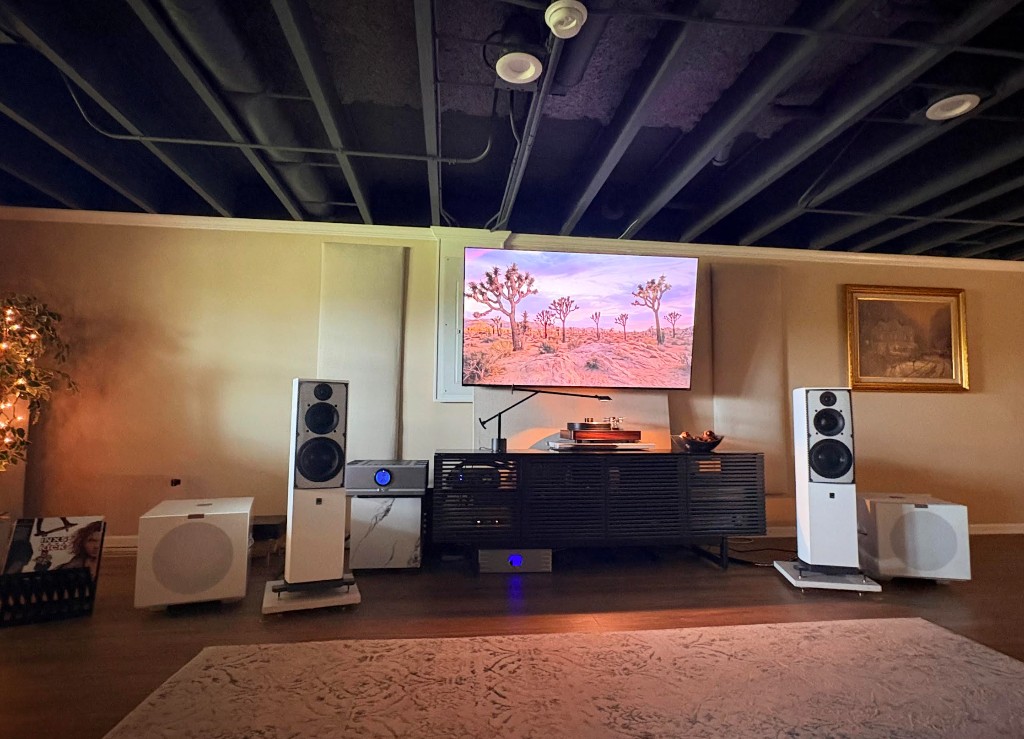
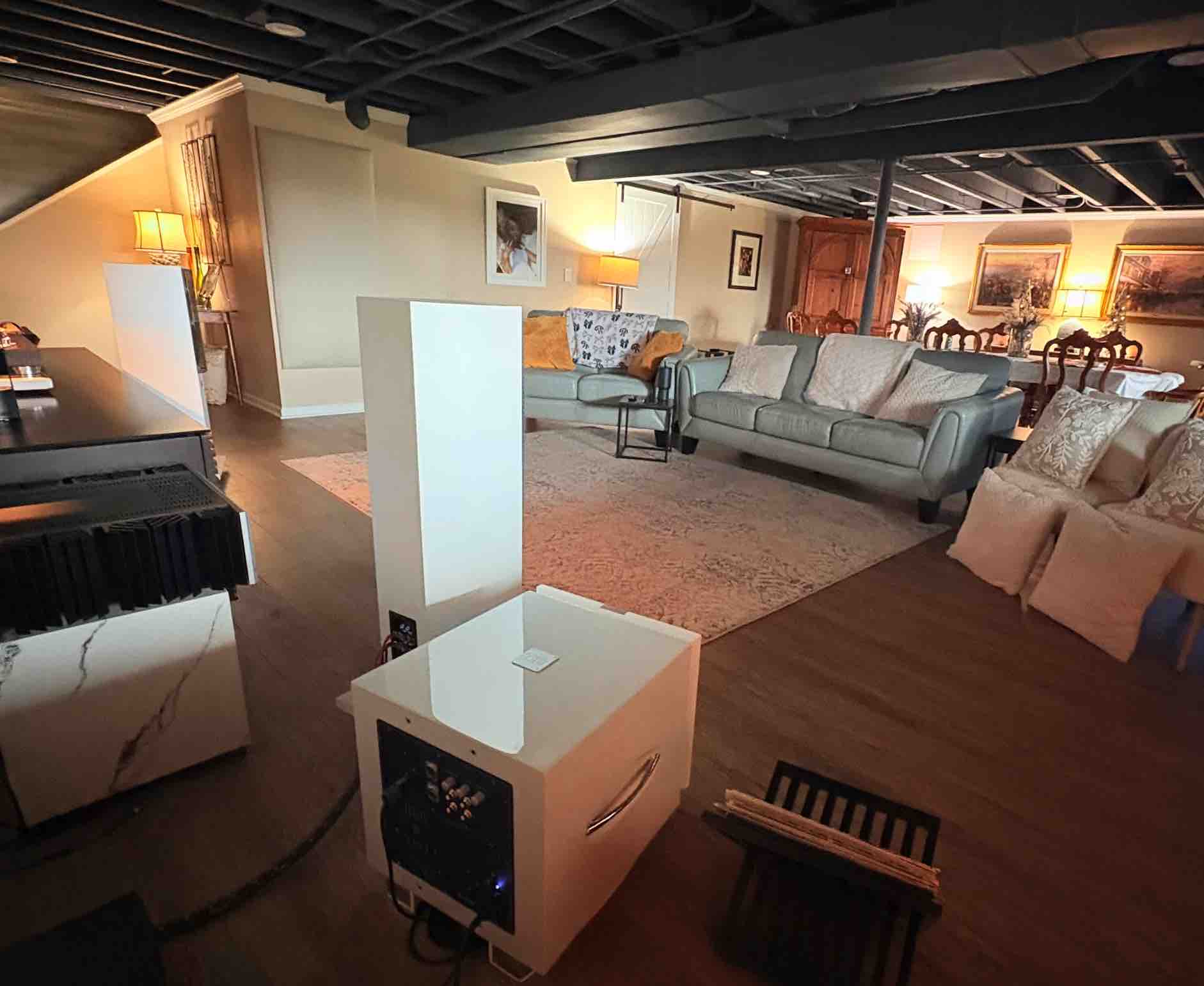
Closing out the album, Jimi slows things down as he croons philosophically about the colors of his love in a psychedelic ditty called "Bold as Love." But like the closing of a Fourth of July fireworks show, it soon picks up, and there's plenty to go "ooh" and "ahh" to, with the visceral drum slam, bass, and a scorching and soaring guitar solo rife with distortion and effects to bring listeners to their feet. (Note: You can view my listening room by clicking on my byline at the beginning of the article.)
In Conclusion
If you're looking for a superb remastering of an iconic Jimi Hendrix recording, look no further. It has great soundstage breadth and depth. The musicianship, detail, dynamics, and overall quality of the recording, combined with superb remastering on a dead-silent sound floor makes this Acoustic Sounds record an excellent high-fidelity time machine, boldly taking you to the recording sessions at the Olympic Sound Studios in London between May 4 and October 29, 1967, when where rock history was made, Jimi Hendrix style. I highly recommend it.
The Jimi Hendrix Experience - Axis: Bold as Love UHQR by Analogue Productions 45 RPM 200 Gram Clarity Vinyl Stereo Version Record
Retail: $150
Acoustic Sounds