


We deeply believe in "development" and "progress." Especially in audio. On the other hand, we know that newer is not always better and that old technologies can surprise us. So what is the current situation: Is there progress or not, and if there is, what drives it, and how should we respond to it? Let's look at this issue by referring to categories such as (R)evolution, (E)volution, and (D)evolution.
On February 24, 2022, Russia launched a full-scale invasion of Ukraine, referred to in Russian propaganda as a "special military operation" (Russian: специальная военная операция; abbreviated SWO, Russian: СВО). This marked the beginning of the "hot" phase of the war that Russia started in 2014 with the seizure of Crimea. According to a Defense Intelligence (DI) report dated October 14, 2025, Russia has suffered approximately 1.118 million casualties since the beginning of the invasion.

Nothing has changed since then: Ukrainians are fighting for us because Putin has his sights set on the Baltics and Poland next. It's as simple as that. The President of the Russian Federation has been saying this for many years, and nothing has changed in this regard. If anyone thinks otherwise, it means, in my opinion, that they are either acting in bad faith or are victims of disinformation, and Russia is really good at that. So the longer Ukraine fights, the better our chances for peace—a paradox, but true. Слава Україні!
I don't know if you remember where you were when you heard the news about the Russian invasion of Ukraine—I remember it very well. I was standing on Stradom Street (in Krakow) in line for doughnuts when my panicked wife called me to tell me to go online because "there's a war going on." It was a surreal experience—people were dying there, and we were standing here waiting for doughnuts. I wonder if the regulars at a café in Paris felt the same way when the first German bombs fell on Wieluń, starting the "hot" phase of World War II... .
We didn't know then that the world had changed, and that it had changed for good. But even in the wildest predictions, it was impossible to foresee that this was the first domino to fall, and that four years later, the liberal and democratic order in which we have lived here and now would be attacked not only by China and Russia, but also by our most important ally to date, the US.
The world order is changing before our very eyes, but not in the way Francis Fukuyama saw it when he wrote about "the end of history" in 1992, it is devolving (D), returning to the rule of force and fists. The values that allow us to speak, write, and sing what we think without anyone shooting us for it, to live as we want without anyone hanging us for it, this continuity of the orderly, prosperous world in which we live, is being called into question.

Francis Fukuyama's The End of History and the Last Man is an international bestseller, translated into over 20 languages; despite its erroneous diagnosis, the book has become a classic of political science literature and remains in constant circulation. Photo: Simon & Schuster press mat.
Have you ever wondered about the logic behind developments in audio? I am jumping from the big picture to the small details for a reason, because it seems that these mechanisms are similar. It was precisely in such a study of minutiae that Michel Foucault sought a way to overcome the generalizations that serve to reinforce the dominant narrative. As Grzegorz Piątek reminds us in his book Świątynia i śmietnik (The Temple and the Dump), by stooping to the mundane, we can see the mechanisms behind the big picture.
If you were to ask a sensible participant in this market (read: a not-too-crazy audiophile) what change in audio is all about, they would probably answer that it's about "development". Something like a Euclidean straight line, running from the least to the most complex forms. Individual manufacturers are at some point on this line, but generally speaking, they are all moving in the same direction.
There are occasional "detours," but they are controlled and do not affect the overall trend. So it would be a kind of evolution (E), with rare events that could be called revolutionary (R). Let's think about any area of audio and imagine it in this way, that is, I repeat, as a transition from simple to complex forms.
I open the second volume of The Absolute Sound's Illustrated History of High-End Audio, devoted to electronics, to the chapter on the "milestones" of development, and what do I see? At first glance, it does indeed appear that there is a linear development, from invention to invention, with each subsequent one building on the previous one.
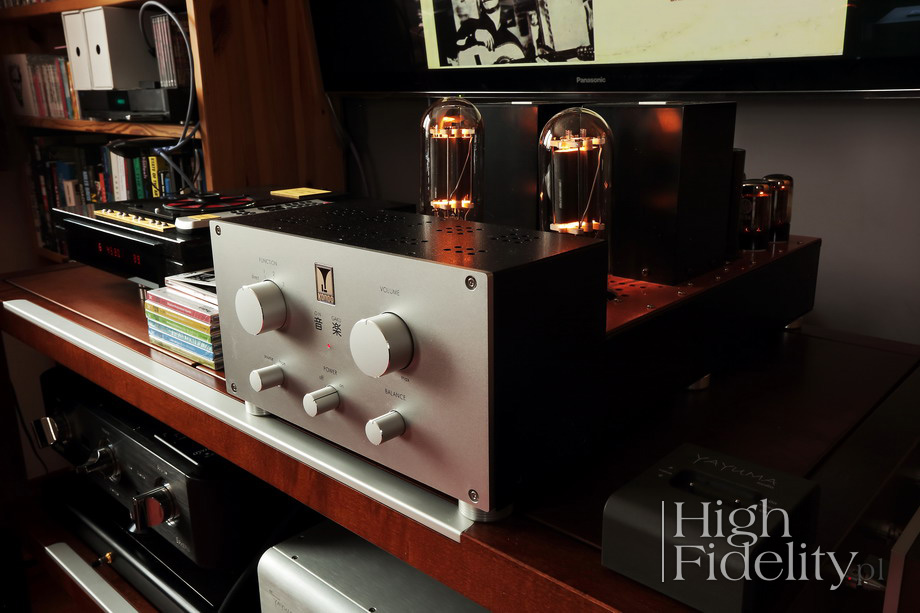
Although the first audio amplifiers date back to the early 20th century, they were not replaced by transistors, and their renaissance in the late 1980s brought them back to the world of audio for good. One of the amplifiers responsible for this is the 1989 Kondo Ongaku
According to its authors, the story begins with the founding of Siemens & Halske in 1847, which would later become the world's largest conglomerate of electrical and electronics companies. The next stages were the invention of the electron tube (1904), then the triode (1906), and the pentode (1926). In 1925, Charles Rice and Edward Kellog presented a loudspeaker with dynamic transducers in the form we know today.
In the meantime, Thomas Edison patented the phonograph (1877), and Emile Berliner patented the gramophone (1887). Soon after, in 1925, the field-effect transistor (FET) was patented, while bipolar transistors were not introduced until 1948. However, it was the FETs that would take over from vacuum tubes and become their "modern" replacements, just as in 1982 the CD began its march towards domination of the music market.
And this is linear progress. But once we have all the techniques and technologies we use in audio today accounted for, something interesting will happen. Instead of dying out and giving way to newer forms, the older ones will make room for them, lie low, and then return after some time in a newer setting, but with a technology that, according to what we have written, should be in the "dustbin of history," as they say.
This is all the more interesting because progress in electronics consists of replacing components and circuits with better ones in terms of measurements and/or cheaper equivalents. Any electronics engineer who has graduated from any university will tell you that a transistor amplifier is better than a tube amplifier because it measures infinitely better, and one with feedback is better than one without it. And also that class D is the future because it eliminates many of the disadvantages of class A and AB amplifiers.
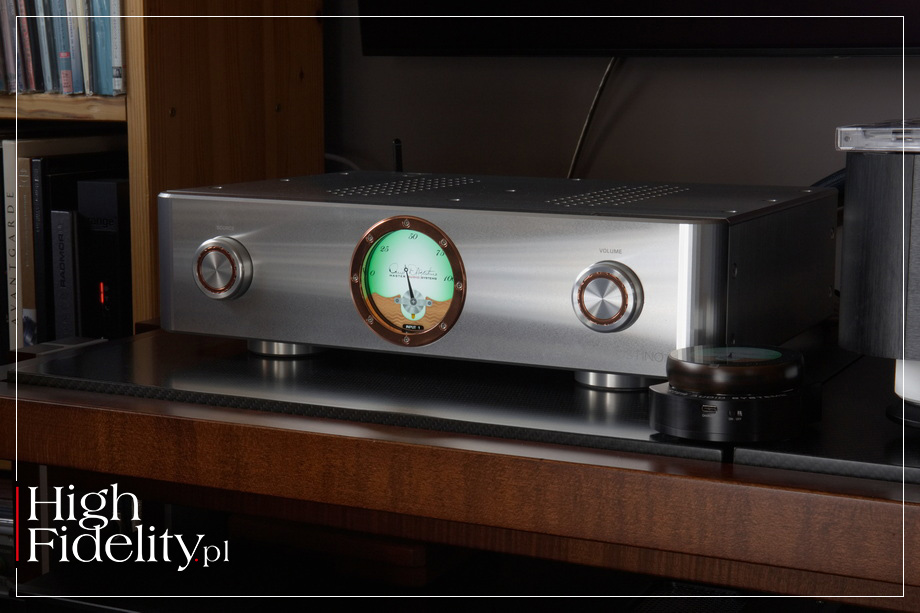
A proposal for transistor enthusiasts: the Dan D'Agostino Pendulum integrated amplifier
The same applies to loudspeakers. New designs with a flat frequency response are superior to horn-loaded and other designs with jagged, uneven characteristics. And hi-res files are, in this narrative, better not only than CDs but also than vinyl or even tape because they offer lower noise, higher dynamics, and a wider frequency response. To check this out, I opened another source, this time the latest issue of the Japanese magazine Stereo Sound, Winter 2026 (№ 237).
I reach for it for two reasons: general and specific. The first is related to the fact that Japan is one of the most developed economies in the world, with an excellent technical and electronic industry playing an important role. The second becomes apparent when we reach page 74, which contains a list of award-winning products (Stereo Sound Grand Prix 2025).
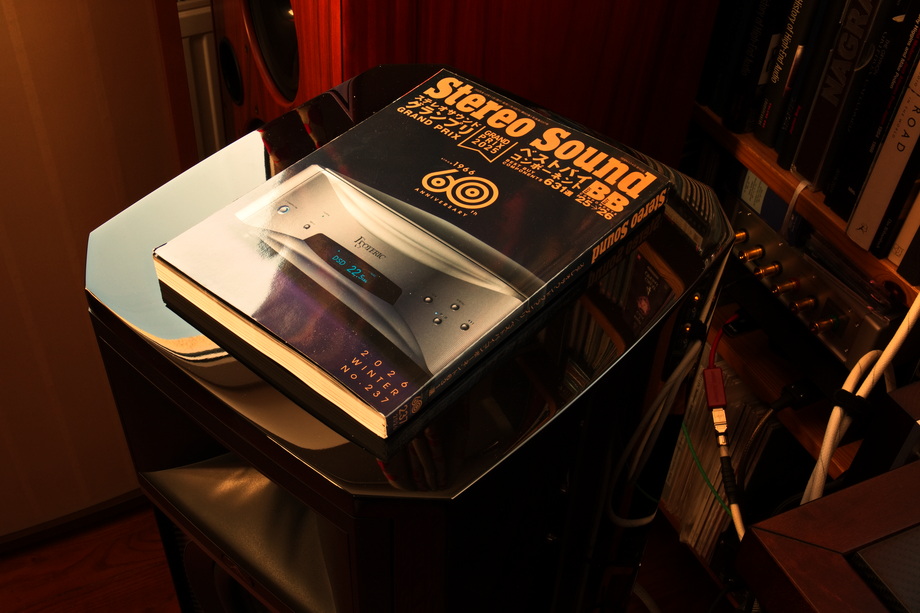
Stereo Sound, Winter 2026 (№ 237)
The list in question, if linear development and evolution are understood as replacing the "worse" with the "better" applied to audio, should not exist. Alongside modern speakers – in terms of shape and the technologies used, such as Estelon X Diamond Mk II and YG Acoustics Hailey 3.2, we also find classic BBC monitors in the form of Harbeth HL Compact 7 ES3 XD2 and JBL Summit Makalu speakers, which use a horn-loaded driver, one of the oldest solutions for music reproduction.
The top two spots are taken by file players from dCS and Esoteric, and there are also devices of this type from Aurender, Master Fidelity, and SOtM, but the same list also includes Thorens and Techdas turntables and SACD players from CH Precision and Luxman, alongside Linn transistor amplifiers, additionally equipped with switching power supplies. We have the Aurorasound amplifier based on EL34 tubes and the KT120 U•Bros. There are class A and AB amplifiers, an Accuphase transistor preamplifier, and a Kondo tube preamplifier. All at once.
Do you see where I'm going with this? Clearly, there is no such thing as "linear progress" in audio. This is a rather dangerous idea, because it assumes that there is only one direction of change and that each successive generation is, by definition, better. And this leads to violent systems and the forceful replacement of some solutions with others. As you can see, along with (E)volution, we are also dealing with (D)evolution. That is, a return to forms considered "extinct."
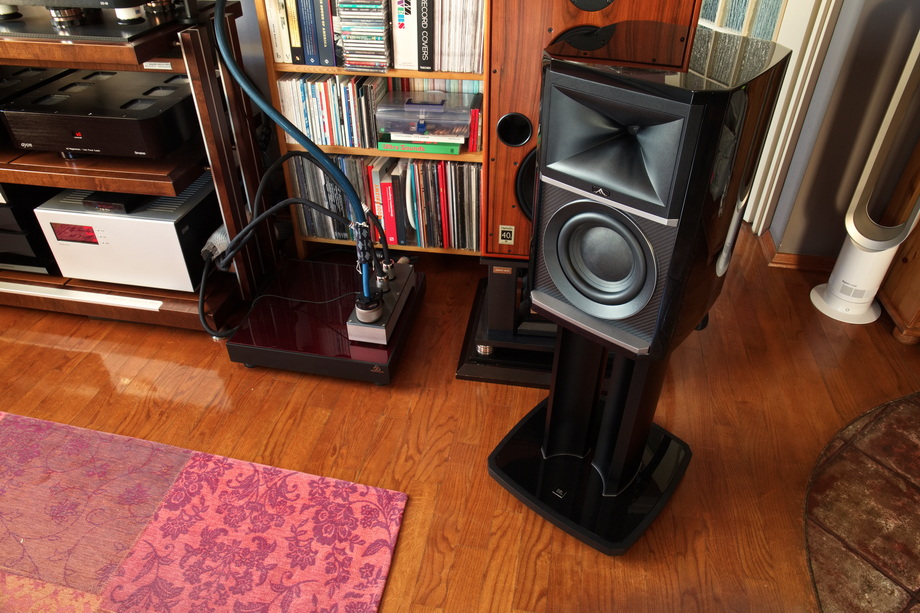
It's the second quarter of the 21st century, and we're still reaching for solutions from the early days of audio, such as horns, here in JBL Summit Ama speakers
And every now and then, a (r)evolution occurs, although this is an extremely rare occurrence. Although every company boasts about its "groundbreaking" products and solutions, these are ideas that have been known for a long time, just presented differently. Truly revolutionary events would be, for example, the invention of a way to generate electricity (1888), the development of the microphone (1876), the first electrical sound recordings (1925), magnetic tape (1928), the Long Play format (1948), and the Compact Disc. And then there is the computer (1943, 1946, or 1951, depending on what we are asking about).
Ursula Le Guin warns against a "one-dimensional" perception of history in A NonEuclidean View of Califoria as a Cold Place. In her essay dedicated to Le Guin, Agnieszka Gajewska reminds us that in her writing, Le Guin uncompromisingly dealt with the ideas of other science fiction writers and their scenarios for tomorrow, claiming that—to quote Gajewska—"utopian imagination is trapped, like capitalism, industrialism, and the human population, in a one-way future consisting solely of growth." To which the writer wanted to "play a dirty trick on them" ("Znak," No. 848, p. 67).
And yet this is only one scenario, and an increasingly unlikely one at that. Even Darwin, to whom we so often refer, did not think so. In his view, evolution consisted of adapting to changing conditions and the dominance of those organisms that do it best. This means that creatures that are "living fossils," such as sharks, can coexist with relatively new "ideas," such as Homo sapiens.

An example of hi-tech speakers, with aluminum cabinets and drivers, YG Vantage 3
So let's not be surprised to see horn speakers or open baffles right next to high-tech products such as Magico. Or a turntable and file player, tubes and transistors. These are not competitors, but different lines of development, each settled in its own niche. When improving a given technology, we usually gain something, but we also lose something. Our task and privilege is to determine which of these proposals, i.e., combinations of advantages and disadvantages, are "ours."
As I see it, the problem with accepting different branches of development in audio stems from the reductionist approach mentioned at the beginning. It's an "either-or" situation. This way of thinking was proposed by technicians trained in a narrow perception of the world through the prism of the measurements available to them. Many manufacturers share this view, drawing attention to even better technical parameters, even better performance, etc., with each new product launch, and industry publications reinforce this view by taking it all for granted.
I don't know if you remember the famous cover of Stereophile magazine from October 1994? I mention it because it is a good example of the erroneous thinking in question (or a provocation). The cover featured the Cary CAD-805 tube amplifier and the Krell KSA-300S solid-state amplifier, with the question "If one of these amplifiers is good... the other must be bad" printed in capital letters. The headline directly questioned the possibility that these design philosophies could be correct at the same time.
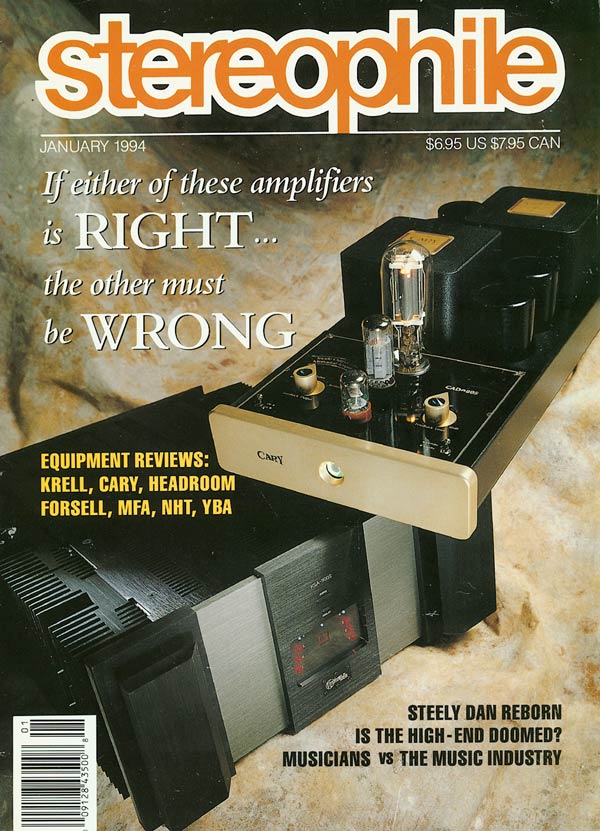
Stereophile, January 1994
That is why I suggest looking at audio differently, not as a battle between everyone, nor as constant development, but as a coexistence of equally correct answers. This would solve many problems, and the energy we waste on what I consider to be fruitless debates could be used for real change. After all, the answer to the question asked thirty-two years ago is simple: none of these amplifiers is either good or bad. More precisely, both are bad because neither of them faithfully reproduces the signal and distorts it in its own way.
It is possible to point to obvious examples of successful evolution. Usually, however, within a single "genre." For me, the prime argument for the value of research and its wonderful results when properly applied is the development of the Compact Disc. Proposed in 1982, the format was one of the most important revolutions in the world of music. I find it equally interesting how it has been creatively developed, both in the form of XRCD, BSCD2, SHM-CD, and UHQCD discs, with Crystal Disc discs at the top.
It is interesting that, apart from CDs, there are three other formats which, although they seem to be identical to CDs, are something else: HDCD (1995), SACD (1999), and MQA-CD (2017). Do you know what ichthyosaurs are? I will refer to a cheat sheet:
Ichthyosaurs were marine reptiles that resembled a cross between a shark and a dolphin. Only a few fragmentary fossilized skeletons of these animals are known from Poland. These marine giants terrorized the seas approximately 251 to 90 million years ago. The ichthyosaurs discovered on the Vistula River banks are the largest known predators from the time when dinosaurs lived.
Wiemy więcej o tym, jak oddychały ichtiozaury, NAUKAWPOLSCE.pl , accessed: 26.01.2026.
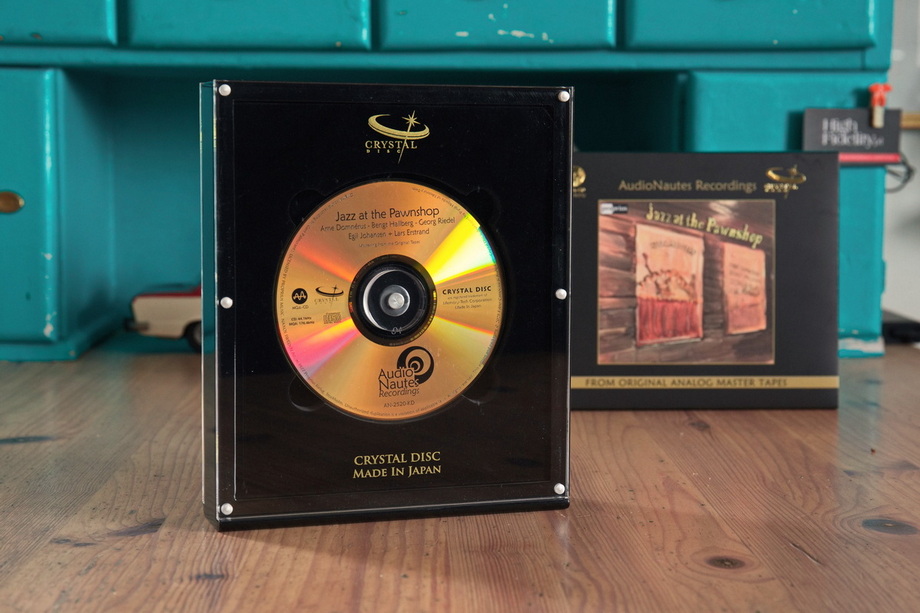
Apex predator of the digital world, MQA-CD Crystal Disc
I refer to these extinct animals to point out yet another possibility for development, represented in audio by the three music formats mentioned above. Ichthyosaurus is an example of so-called convergence. Daniel Tyborowski from Tygodnik Powszechny magazine defines it as "a phenomenon in which different species, and even entire groups of organisms—often very distant in evolutionary terms—develop similar characteristics because they live in similar environments and are affected by similar environmental conditions" (January 14-20, 2026, p. 58).
The ichthyosaur would serve as the equivalent of a dolphin, and neither was/is a fish. The formats I am talking about look like a CD and serve the same purpose. For HDCD and MQA-CD, the common ancestor is the CD, while SACD is something completely different, even if it has "Compact Disc" in its name. They coexist, and each offers something special. This brings me back to the theory of the possible coexistence of different formats in audio. After all, a well-prepared CD can sound absolutely flawless, better than the evolutionary younger files.
So, going back to the beginning, have you ever wondered what causes changes in the audio industry? It should be clear by now that environmental pressure is the most important factor. When young people started listening to music on their smartphones, the market adapted to this and exploded with a myriad of types and models of headphones. When computer users switched from physical media to files, even the high-end market, albeit reluctantly, offered its own specialized computers in the form of file players. And so on.
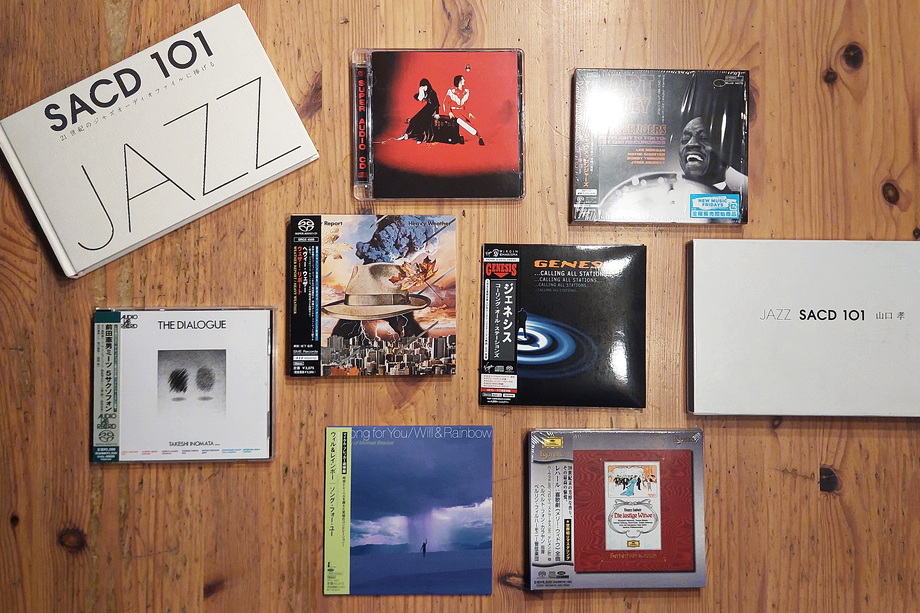
An example of convergence in the audio world is Super Audio CDs, which are available on the market alongside Compact Discs
However, this pressure also has another origin. It comes from music publishers, and their bottom line is always profit. The bigger, the better. That is why every time a new format was introduced, such as LP and then CD, it was like manna from heaven for them because they could sell the same "content" again. But when files appeared, they messed up. They called files the devil incarnate and the people who used them thieves, thus missing out on the latest—and probably the last for many years—revolution in music, streaming.
Today, they are desperately trying to maintain their revenue from music sales. Since streaming services only allow them to make money for themselves, they have focused on vinyl records because they offer the highest profit margin. At the same time, they completely ignored CDs, repeating their earlier gesture regarding SACDs. And that is why the audio market returned to turntables at some point. Not because everyone suddenly decided that vinyl was "cool." Those who listened to music on LPs would continue to do so. It was about new users.
The audio market is therefore a battlefield and a clash of different concepts. It evolves (see CDs), devolves (see the vintage market), and sometimes undergoes revolutions. We, the users, are largely dependent on external players, i.e., corporations promoting one technology or another, as was once the case with home theater systems, manufacturers who want to ride the same wave, convincing us that their way is the only right way, as well as the trade press. And there is nothing we can do about it.
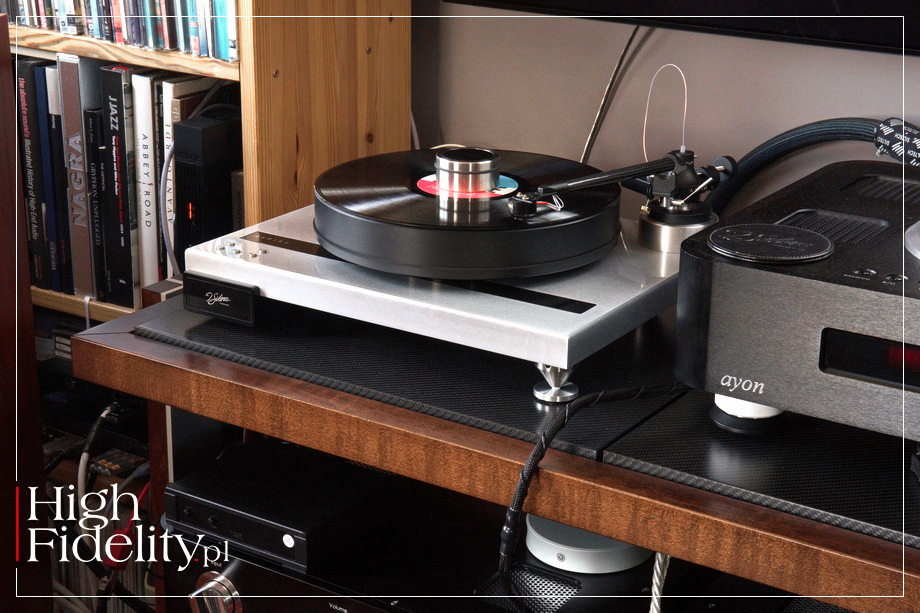
And once again, technology from over a century ago that we still use today – Long Play; pictured is the J. Sikora Aspire turntable
Wait a minute—did I really say that? We are free people, aren't we? If we see ourselves that way, the next time we want to point out someone's mistake in their understanding of the world because they listen to music on a turntable \ CD player \ files (delete as appropriate), on horn speakers, open baffle speakers, bass reflex speakers with a closed enclosure, or wideband drivers (same thing), let's think of it as a shared environment where there are niches for everyone. Including us.
WOJCIECH PACUŁA
chief editor
text by WOJCIECH PACUŁA
translation by Marek Dyba
images by High Fidelity, press releases Simon & Schuster