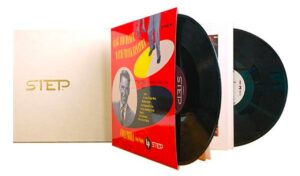


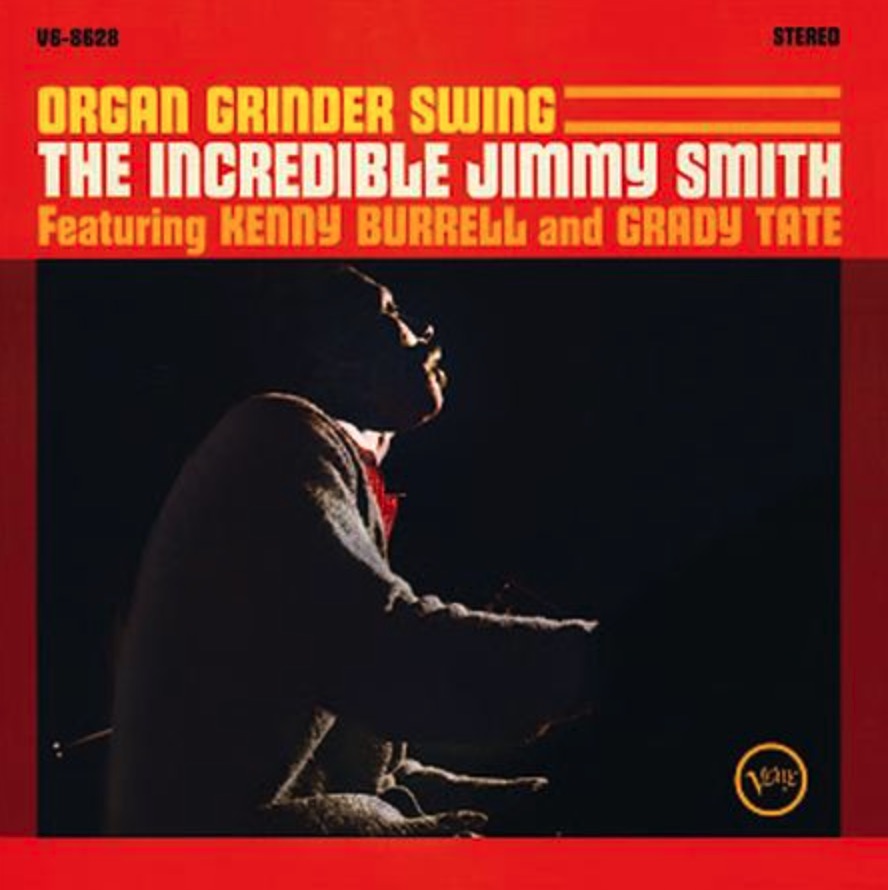
James Oscar Smith was an American jazz icon who helped popularize the Hammond B-3 organ, forging a link between jazz and 1960s Soul—or the "urbanization and commercialization of rhythm and blues in the 60s," (www.allmusic.com), and the Acoustic Sounds Series reissues from Verve/Universal Music Enterprises delivers his artistry with exceptional fidelity in their 180 gram LP release, Organ Grinder: The Incredible Jimmy Smith. Mastered from the original analog tapes by Matthew Lutthans at The Mastering Lab and overseen by Chad Kassem, CEO of Acoustic Sounds, this vinyl iteration does an exceptional job of delivering this studio performance living and breathing into your living room.
"Ever since Jimmy Smith came along in the late 50s, most pop, jazz, rock, gospel, (and) blues organists have approached it kind of the same way—which is what Jimmy came up with," said >Louis "King Louie" Pain, an acclaimed soul Hammond B-3 organist and Oregon Music Hall of Fame inductee based out of Portland, Oregon.
<Jimmy… was somebody who studied bass, as well as he played professionally as a pianist, so he managed to come up with a way of combining the two (bass pedals and the left hand bass on the lower keyboard) in a modern sound. If you just play the bass pedals like the instrument was designed to be played, it's kind of a plodding, tuba kind of…(sound), and Jimmy combined the left hand bass and...the bass pedals to bring out the attack of the note like a plucking sound. So (with) the two combined, you get this: Thmm, thmm, thmm," he says, mimicking the sound and modeling it on a Hammond B-3 organ. (You can view this demonstration and more HERE.) "(It's) much more swinging.” (https://betheoutlier.com)
"His legendary multi-part technique on the Hammond B-3 organ, playing bass with the foot pedals [and left hand, per Louis Pain] and Charlie Parker-like single-line passages with his right hand, shook up the traditional trio as co-players could explore new roles," wrote Mark Sabatini, who went on to say,"He was an enormous success almost immediately and, following a commercial and critical lull during the 1970s and 80s, rebounded with several quality late-career recordings and saw his work influence artists from organist Joey DeFrancesco to hip-hop and jam bands incorporating digital samples of Smith's playing into their performances."(www.allaboutjazz.com)
That's not bad for a guy who elevated an instrument in jazz and pop circles that had long been relegated to gospel halls and baseball parks, despite not playing one until age 28. (ibid)
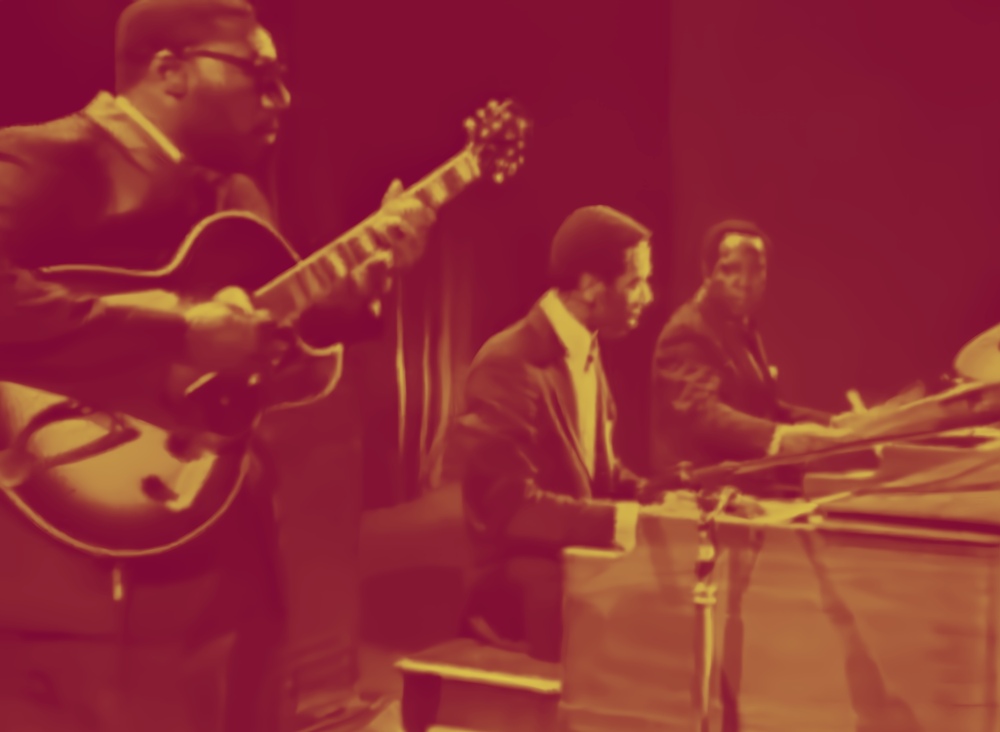
Still picture sourced from "Jimmy Smith—Organ Grinder's Swing—1965 TV Performance [DES STEREO]" video on Bob Zwolinski YouTube Channel
The majority of Smith's work for Verve spanning the mid-to-late-60s were with big bands, hence the album, Organ Grinder Swing: The Incredible Jimmy Smith, featuring him in a trio with and guitarist, Kenny Burrell, and drummer, Grady Tate, was a lovely treat that harked to his work with Blue Note (that had ended two years before), allowing him to record three blues songs and three standards, and reminding us that for all his commercial success at the time, he was, at heart, a master jazzman. (www.allmusic.com)
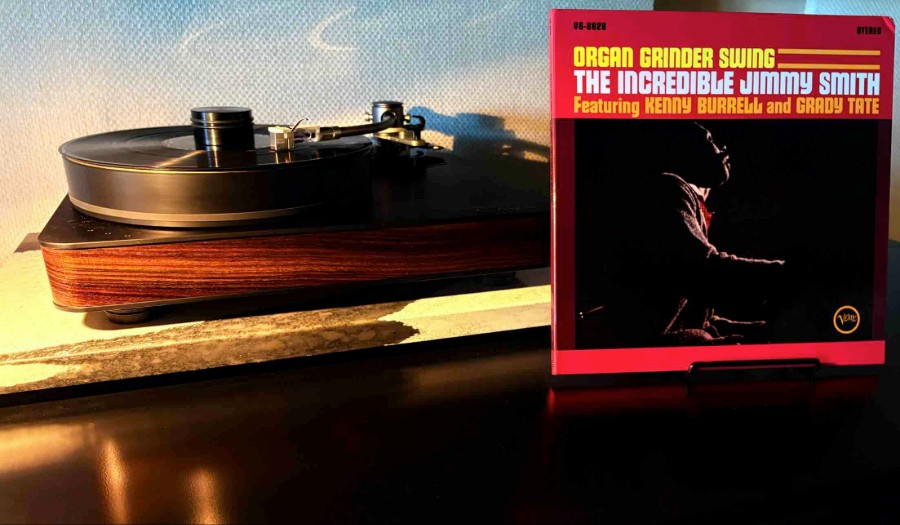
Listening Session
From the moment of the first needle drop, it's apparent that this Acoustics Sounds remaster has a dead-silent noise floor, making the dynamics of this excellent recording all the more remarkable.
On Side A, Smith's Hammond B-3 and Grady Tate's drums hit the ground swinging hard in the title track,"The Organ Grinder's Swing." The lush, warm, swirling sound of his B-3, is immersive and intoxicating, wrapping you in a thick, aural blanket, alternatively caressing, then pummeling you with blurred pillows in his stupefying runs. After a few measures, Kenny Burrell's guitar solo is tasteful, sophisticated, and soulful. And then it's Jimmy's turn again: Pulling out the stops, he unleashes a blend of wailing fury and finesse, audibly grunting and mumbling a few lines as he straps us in for the remainder of this two-minute roller coaster ride.
In contrast, Smith slows things down in the bluesy "Oh, no, Babe", employing sustained notes with his left hand on the lower keyboard (manual), while his right unleashes lightning quick flourishes on the upper manual. Burrell's guitar comps join in shortly on the right channel. With Tate's cymbals, snare, and kick drum keeping time on the left, Burrell takes over with a plaintive, soulful solo, on the right while, front, and center, Smith's organ lays down warbling pads and tasteful comps. After Burrell's solo ends, Smith takes over with with renewed energy, his frenetic keys dancing around the melody while Burrell's guitar comps softly. Together with Tate's slamming drum kit and Burrell brilliant riffing, Jimmy takes us to church as he builds to an inspiring crescendo.
"We goin' home," Smith says. After a brief romp, the melody softens, simmers, and then in a tasty conflagration of drums, bass, guitar and Hammond B-3, it climaxes.
In "Blues For J", Smith's organ and Burrell's guitar trade leads in a swinging mid-tempo shuffle. Like a boiling caldron, Tate's shimmery cymbals, punchy snare, rim shots, and bass drum heat add spice as Jimmy growls. His left hand sustaining long notes while his right leads—sassy one moment, and feverish the next. Smith's organ and Burrell's guitars dance as one in an inspired duet for several measures before the glorious denouement.
Kicking off Side B in "Greensleeves, "Smith's clear point of departure is John Coltrane's 1961 adaptation from his great Africa/Brass, complete with the alternating suspended chords, here played by Smith himself as the introduction to the tune," author and music critic, Tim Jarrett, writes. The heat's turned on high as Burrell swirls through the chords, Tate's drums powering them along, and Smith playing the chorus "a beat behind throughout, leading to some happily disorienting rhythmic fake-outs when the alternating chords return." (https://jarretthousenorth.com)
A Smith solo follows, sassy and frenetic, rife with dizzying flourishes as Burrell comps, who takes over call and refrain duties. Tate's precision stick work is sublime—the snap of his snare, the visceral kick of his bass drum, the thud of his floor tom, and the metallic attack and decay of hi-hat and shimmery cymbals are palpable and present! They keep the song grounded throughout Smith's subsequent runs and, following a poignant and punchy flourish, he masterfully slows the tempo in the denouement to stick a soft landing.
It's torch song time again, as Smith reveals a more tender side in the ballad, "I'll Close My Eyes." The deep, gentle, warmth and warble of his Hammond B-3, with a subtle but firm bass underneath, give way to the lighter, and lyrical, nuanced notes of Burrell's guitar solo with the vibrato of Smith's organ in the background. Several measures later, Smith resumes the lead, resonantly reassuring—and compelling the listener with the rich strains of his organ. Enjoined with Burrell's melodic touch and Tate's brushed snare and cymbals, it's a tactile, sumptuous, and altogether satisfying cover of this jazz standard.
Starting softly, Smith closes out this album sassy with a bright and swinging, mid-tempo cover of "Satin Doll." Jimmy's intro is lilting in 4/4 time to Grady Tate's hi-hat, rim taps, and ride cymbal. Shortly, Burrell's guitar takes over in is spritely, lyrical runs. Then rolling up his sleeves, Smith ups the ante. Vocalizations accompany dizzying finger work, his B-3 a tempestuous caldron boiling over as he explores, then unleashes cascades of swirling notes. The dynamics of Tate's drum kit are punchy and visceral, exploding on cue as Jimmy and his trio make successive, hard-charging runs in the climaxing moments, followed by a tremolo B-3 bear hug garnished with a patented Burrell flourish in the closing moments. It's a satiating ending to an inspired and resplendently remastered album.
Jimmy Smith, Organ Grinder Swing (Verve Acoustic Sounds Series) 180 Gram Vinyl Record
Retail: $38.98
Acoustic Sounds