


A number of the LPs and CDs I own are by singers and instrumentalists whom I would call fifteen-minute artists. As you would expect, a fifteen-minute artist is a musician, a singer, or a band who I enjoy, but not for much longer than fifteen minutes. Some of them used to be thirty-minute artists, but as my music collection grew, my music taste widened, and life became more complicated, the amount of time I was willing to spend with them shrank. James Taylor, Dave Brubeck, and Cat Stevens are perfect examples. A larger list of fifteen-minute artists would include Judy Collins, Merle Haggard, Jim Reeves, Henry Mancini, Sergio Mendes, Gabor Szabo, The Chipmunks, Booker T & the MGs, Wes Montgomery, Jimi Hendrix, Deep Purple, Jusi Bjoerling, Doris Day, Billie Holiday, Donovan, Chuck Berry, Paul Horn, Mel Torme, The Carpenters, Kenny Burrell, Jethro Tull, Vic Damone, Janis Joplin, Jimmy Cliff, Tammy Wynette, Waylon Jennings, John Sebastian, Led Zeppelin, Stan Freberg, Herman's Hermits, Mario Lanza, The Kinks, Jerry Reed, Ernest Tubb, Chicago, and The Bee Gees. I love them all, but a small helping is all I need for satisfaction.
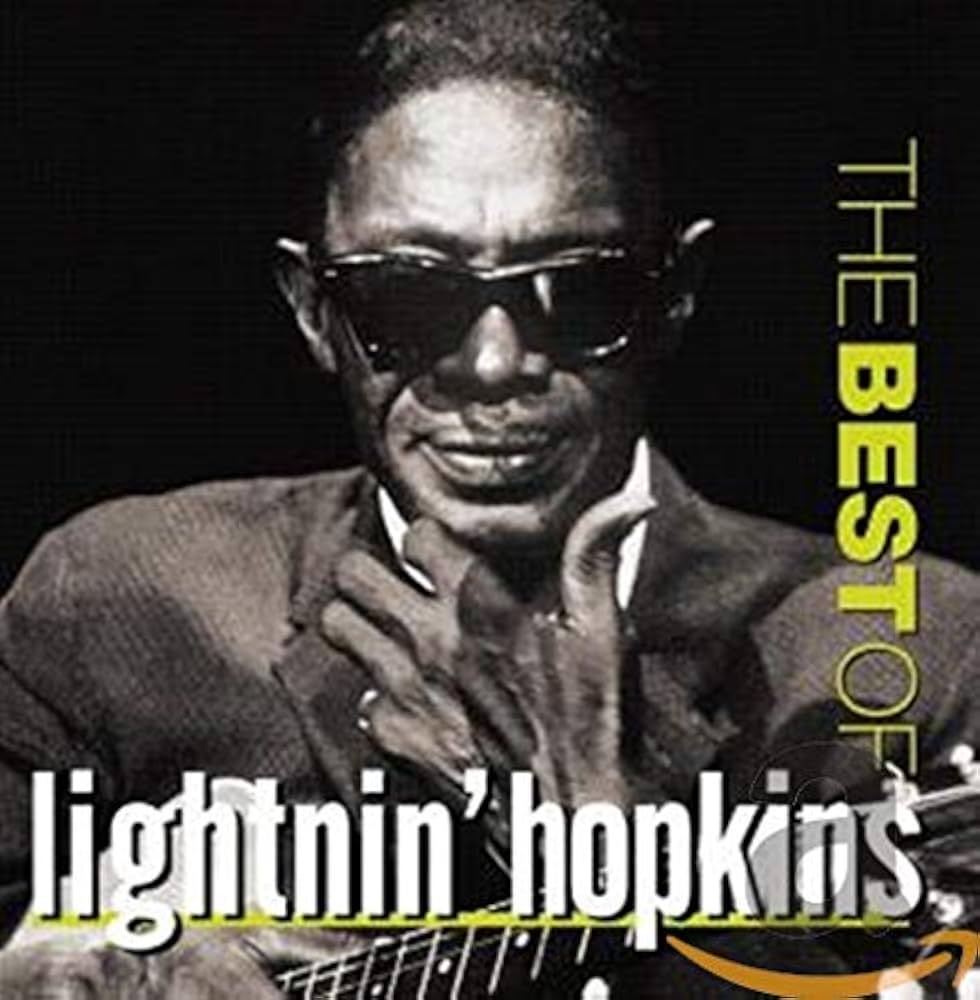
A perfect example of a fifteen-minute artist is Texas-born blues legend Lightnin' Hopkins (1912-1982). Although Hopkins, a blues icon whose fame was the result of the sixties folk revival, made the majority of his recordings playing an acoustic guitar. I like him best when he is playing electric guitar. A great place to find Hopkins playing both kinds of guitar is The Best Of Lightnin' Hopkins (Prestige PRCD 5711-2). This CD features six cuts that I like a lot, and the transfers of its sixteen great sounding analog-recorded cuts are flawless. These six cuts are reverb-free stereo recordings, so Hopkins and the musicians who played with him sound like they're playing right in your living room. I used to own Hopkins' superb sounding Lightnin' Strikes (Verve Folkways FVS-9022) from 1966, but I traded it away, as it was pressed on noisy vinyl. Frankly speaking, The Best Of Lightnin' Hopkins and the gold CD reissue of Blues Hoot (DCC GZS 1081) is all the Hopkins I need.
I always start The Best Of Lightnin' Hopkins with "Pneumonia Blues." It was recorded on 2/20/62 in Houston, and, honestly, it's really crude. I'm not sure if it's the honesty of the sound, or something in the music that makes me like it. I simply like it. The musicians are Hopkins on electric guitar and vocals, Buster Pickins on piano, Donald Cooks on electric bass, and Spider Kilpatrick on drums. The song opens with Hopkins' trademark seat-of-the-pants guitar playing and his equally spontaneous singing. His placement on this remarkably natural stereo recording is on the left side of a fairly wide stage. On the right side are the drums and the piano. The bass player, whose contribution is minimal, is also on the right side. The piano and drums are perfectly captured. The drums have a touch of old-school tube compression, but not so much to prevent a head-turning tom-tom bonk that sounds like it's right there! Hopkins' voice and his wonderfully distorted guitar amp are incredibly present. In short, the music is appealingly or appallingly crude, depending on your point of view. To me it's incredibly fun, and the music is filled with a sense of first-set-of-the-evening inspiration.
Cut four, recorded on 2/17/62, packs a little more energy. It's Hopkins' second recording of his signature composition "Mojo Hand." On this song there is no pianist or bass player. To my ears, Hopkins sounded extremely comfortable recording with just his electric guitar and a drummer. Typical of recordings from its day, when you reduce the number of instruments, the dynamic range increases. The song is a basic boogie, not unlike the boogies that John Lee Hooker regularly performed. And for some reason, the bass is a little leaner and cleaner than the prior cut, prompting me to turn up the volume a wee bit. The cleaner bass, the slightly greater dynamic range, and the slightly raised volume, makes the already excellent recording sound even more impressive.
Cut six, from the same session as the last cut, is also the same exact boogie as the last cut, but with different lyrics. Now the song is called "Black Cadillac." Although nobody can point to the exact song that Hopkins covered, it's likely that his inspiration came from the 1935 record, "Going To Your Funeral In A Vee Eight Ford," by blues singer Buddy Moss. Recorded in front of an audience a few months earlier in Los Angeles, Hopkins performed an excellent acoustic version that's found on Blues Hoot. On that album's liner notes it's called "Big Car Blues."
Cut sixteen is the classic "Good Morning Little School Girl." I have to admit that this cut appeals one hundred percent to the audiophile side of me. There's nothing wrong with Hopkins' solo performance with his acoustic guitar. However, musically I prefer Muddy Waters' recording from his acclaimed album Folk Singer. Vocally, Waters brought more to the table, but Waters' recording features a lot of reverb. Hopkins' recording is reverb-free, which places him in my room. Noteworthy is the two mic recording that places his vocal on the left and his guitar on the right. Folks familiar with Bob Dylan's debut album will recognize the similarity in sound. However, Hopkins' recording has more studio ambience and less compression than Dylan's.
One of the most endearing features of these recordings is how well the mics were positioned by the engineer and owner of Houston's ACA Recording Studio, Bill Hollford (1919-1999). Hollford successfully captured the natural ambience of the room. Today, these songs would be drenched in reverb without any sense of the absolute sound.
As implied, I don't turn to Hopkins for depth, but rather for clarity. There is an unvarnished honesty to his music that helps me relieve stress. The fact that I've turned to this CD on many occasions, when nothing else sounded right, has to say something. The transfers from the original analog tapes sound completely untouched, and I enjoy just being able to say this. And if you're wondering how the other cuts sound, here's my answer: Excellent.