
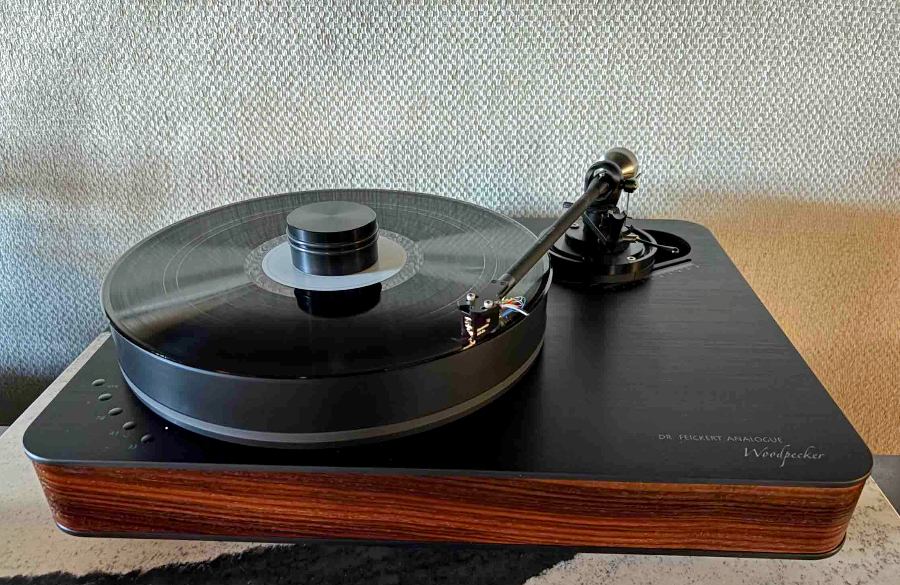
Recently while purchasing vinyl at a record store, I mentioned that I would be reviewing the Dr. Feickert Analogue Woodpecker turntable.
"Never heard of it," the proprietor said.
Fair enough.
Despite the fact that the US HiFi turntable market was valued at .6 Billion US dollars in 2024 and is projected to reach $1.4 Billion by 2033 (with a compound annual growth rate of 10.2 % from 2026 to 2033), the top 10 market share owners are dominated by larger capitalized brands such as Pro-Ject, Rega Research Limited, Panasonic Corporation (Technics), Sony Corporation, and Audio-Technica that "collectively shape industry dynamics through mergers, partnerships, and investments in R&D." (Optiynz Group and Analytical Research Group/LinkedIn). Nevertheless, "boutique brands are disrupting the landscape with bespoke craftsmanship and innovative designs." (Analytical Research Group)
And that's where the Dr. Feickert Analogue Woodpecker turntable comes in. Highly lauded in some HiFi circles, it's not inexpensive; sans the tonearm, it retails from $6,000 on up. However, like a Mercedes Benz and BMW, it oozes German engineering excellence. Designed by a lifetime audio enthusiast and physicist, Dr. Chris Feickert, his turntables are manufactured in March-Buchheim, located in the Black Forest region of Germany, and have featured and recommended in reviews in such periodicals as The Absolute Sound, Stereophile, and TONEAudio Magazine. Dr Feickert turntables (i.e., the Volare, Woodpecker, Blackbird, and Firebird) range in price from roughly $4000 to over $15,000.
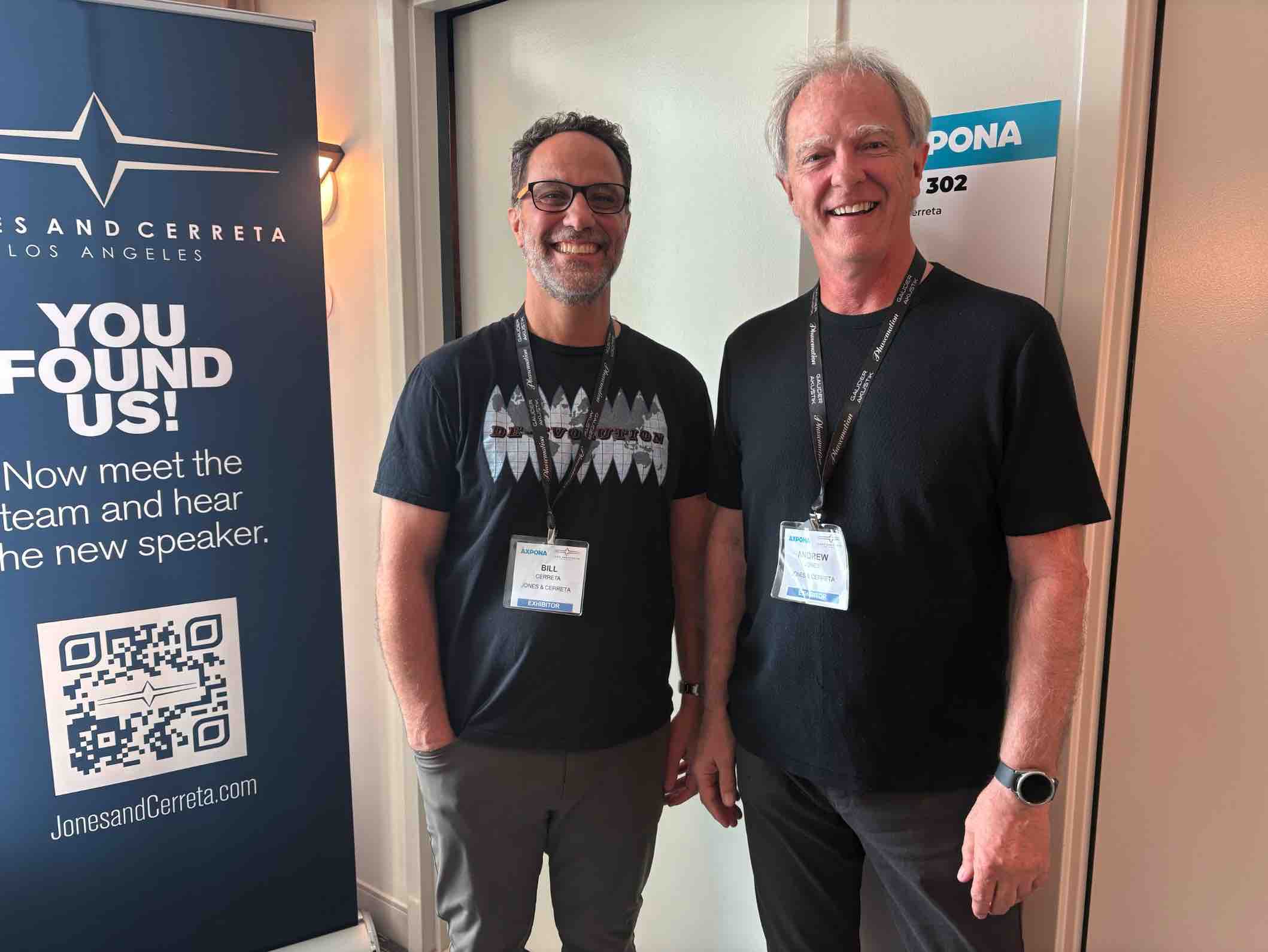
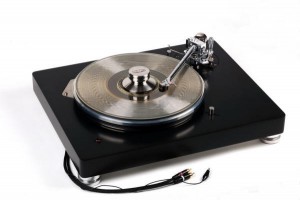
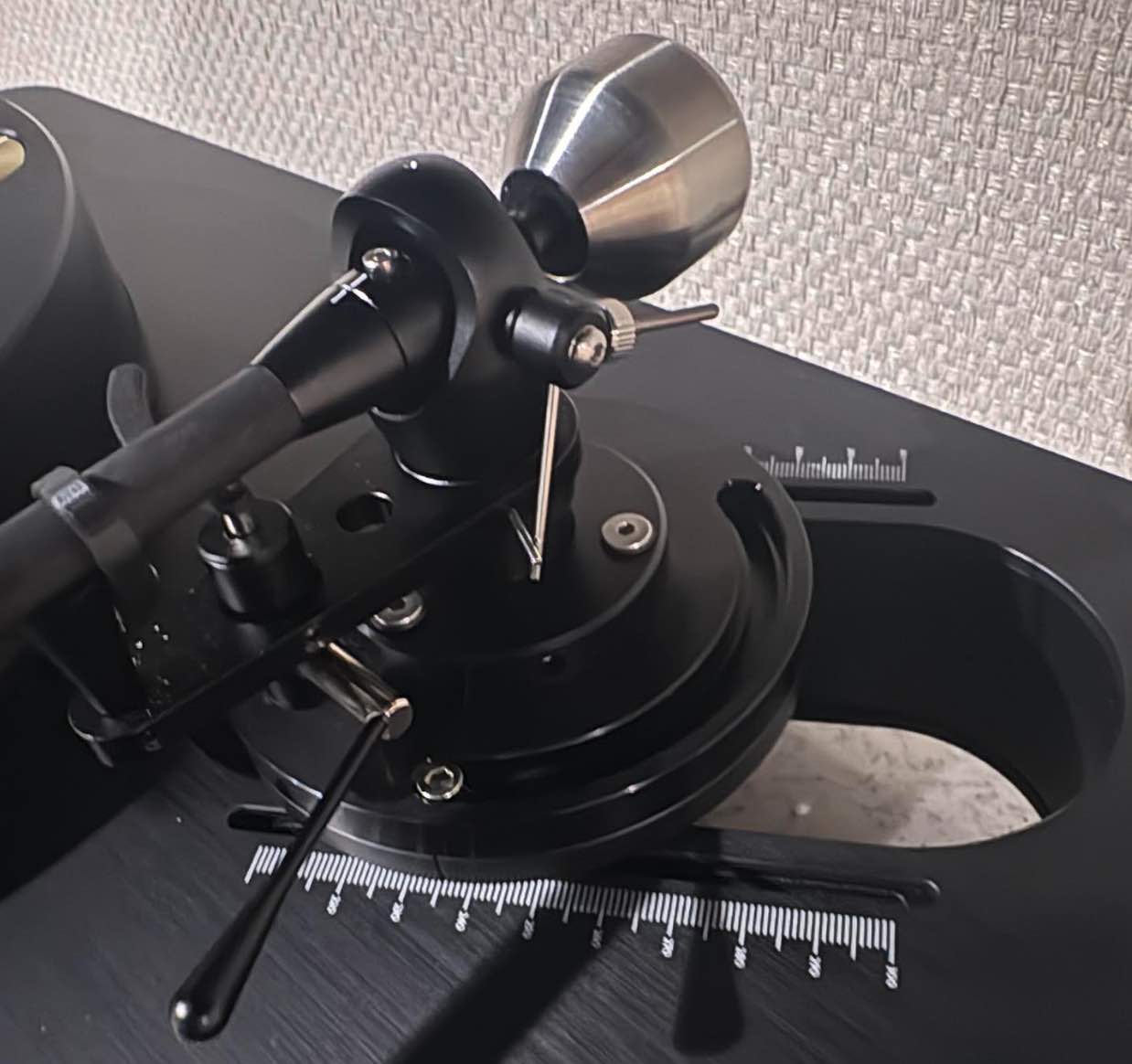
I had spotted them years ago at AXPONA (Audio Expo North America) and was impressed with its understated minimalist elegance and robust build. Then several years ago, an industry friend and designer who uses turntables in his work encouraged me to take a closer look at the Woodpecker for its superb performance, its quick release sliding armboard feature that makes comparing (and reviewing) tonearms an easier task, a robust motor, and superb engineering for the money. More specifically, its sliding armboard system accommodates nine to 12-inch tonearms, while its proprietary software-controlled motor was designed and created in close consultation with the world-renowned Pabst manufacturer (resulting in low jitter). At roughly 3 1/4" H x 19" W x 15" D and 40 lbs., for an up-charge of roughly $400, the Woodpecker also offers an optional 13.2 lb. High-Intertia Delrin (poly-oxy-methylene) Platter embedded with eight MS58 brass weights for superb balance and added mass that enhance the smoothness of playback and features "an inverted stainless-steel bearing with spiral grooves to pump oil and an oil-release grub screw for enhanced motor/bearing interaction." (Musicdirect.com) Another benefit of the High-Inertia Platter is that, with the brass weights, it acts like a flywheel, and its inertia keeps the platter spinning with minimal effort from the motor, thus lowering the sound floor even further. The Woodpecker stands on three adjustable alloy feet that are designed for optimum stabilization and easy turntable leveling.
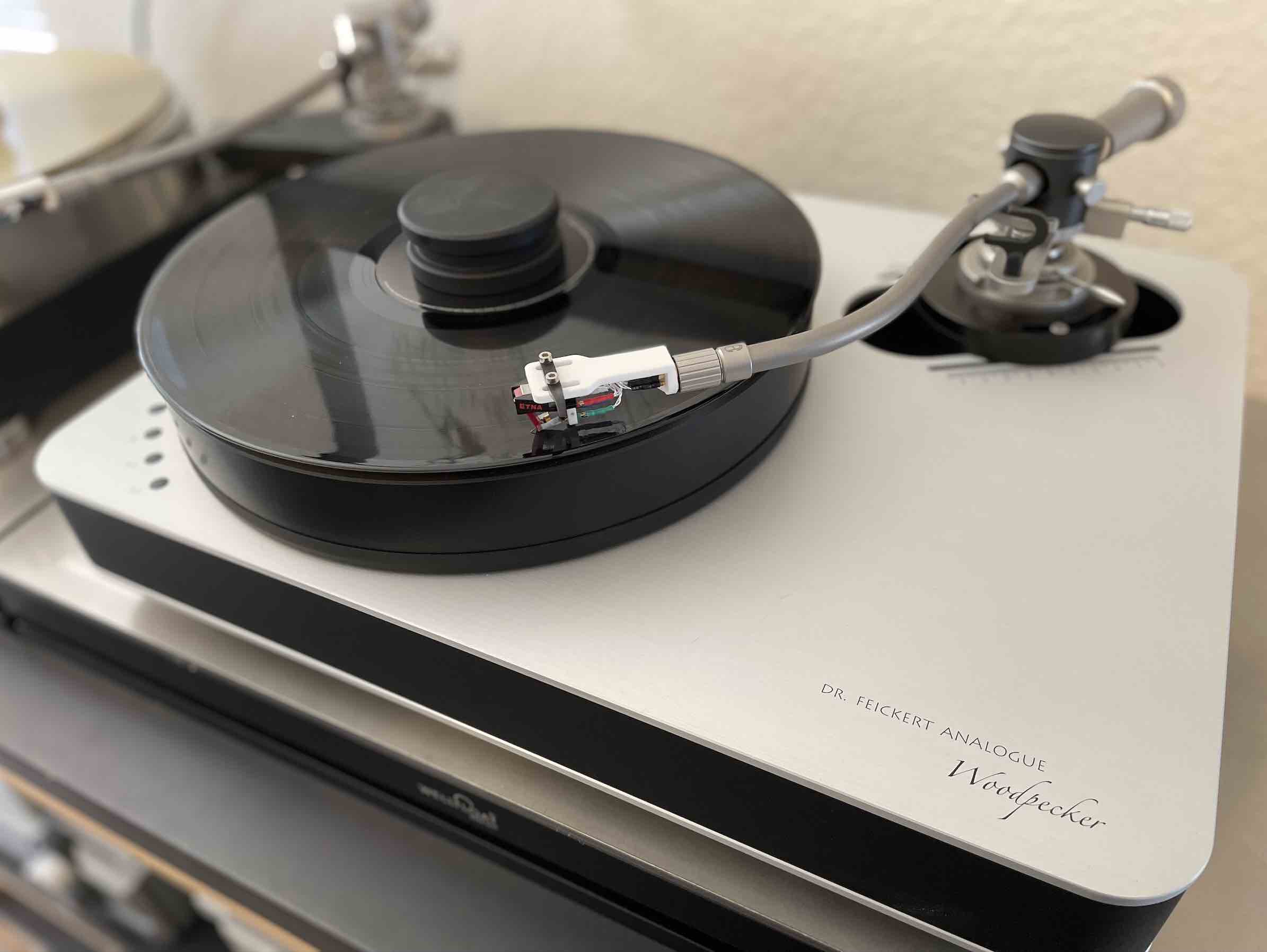
My friend's Woodpecker, featuring silver top and bottom plates and Nextel black sides (Photo courtesy of Jam Somasundram).
The Dr. Feickert Analogue Woodpecker turntable is available in a variety of finishes, from a standard Nextel black, high-gloss black, or high-gloss white, to wood veneer options like Palisander, Tineo, Walnut or Zebrano—sandwiched in between either black or silver brushed aluminum top and bottom plates.
"A friend brought over his $20,000 turntable," my friend, Jam Somasundram, President of Quadratic Audio, told me, "And my Woodpecker destroyed it!" With such glowing accolades, I couldn't resist, so I reached out to MoFi Distribution, their U.S. distributor, and asked if they could send me one for review.

Dr. Chris Feickert (photo courtesy of his LinkedIn account)
A Closer Look at the Doctor
Dr. Chris Feickert was born in 1964 in the southwest city of Freiburg, located near the southwest end of the Black Forest in the southwest section of Germany close to France and Switzerland.
"I studied and earned my doctorate in Freiburg, my hometown," he wrote in an online interview facilitated by MoFi Distribution's PR/Marketing Consultant, Lionel Goodfield. "Since the topic of my doctoral thesis was definitely more suited to a physicist, I also attended accompanying lectures in both physics and mathematics. This means that even complex issues don't really pose unsolvable problems for me."
On his career and job highlights
"After leaving the field of contract research for industry, the move to self-employment was clearly the highlight of my professional career to date. It's a shame that I took this step so late in life. But it was only possible thanks to the support of my wife, who always encouraged me to do what I'm good at and what I love."
On how he transitioned to making turntables
"This is actually a long yet short story. Even as a teenager, I knew that I wanted to build my own turntable someday. This desire smoldered for many years, and the time was never right until I finished my PhD thesis.
"Through a friend, I came into contact with a supplier of parts for building your own turntable. This contact led to friendship and then cooperation. Unfortunately, at the crucial point of taking the step into self-employment, this friend decided to end his life—may he rest in peace! The cooperation with his widow did not work out, so I went my own way, which led to where we are today as a company."
On his family and their involvement in the family business
"Well, my wife and I have three children and two grandchildren. One of my lifelong dreams has come true: to be a young grandfather and to be able to enjoy it. My wife does the small assembly work, such as installing the control boards or packing small parts. I do all the assembly, testing, and packaging. My mother does the bookkeeping; she is now 86 years old."
On what sets Dr. Feickert turntables apart from other brands in terms of engineering, design, features, and performance
"At this point, I prefer to let our products speak for themselves. If there's one thing I never do, it's compare my own developments with those of other companies. I develop according to my own taste, and our success clearly shows that my taste also strikes a chord with many customers. But there is one point I would like to mention—I think things through to their conclusion and develop solutions that are easy to use. That is perhaps the most striking feature of our products. Another important point for me was not to let the turntable sound, but the record itself. That's why our turntables, if at all, only minimally influence the sound signature with a small touch of brushstroke."
On the goals, objectives, and philosophy at Dr. Feickert Analogue
"Make products that you like. Make them as easy to use as possible, but not any easier. Work honestly and openly. Listen to your customers' wishes and take them serious...
On the milestones in the development of your product line from the beginning to the present at Dr. Feickert Analogue
"Our first independent product was the Twin. A high mass turntable with excellent sound quality, but large, heavy, and bulky. And let's just say—the SAF (Spousal Approval Factor) was abysmal.
So the idea and the request I received was to transfer this sonic virtues into a traditional design. The result was the Woodpecker, which has since become an icon. Building on this—and with all the knowledge gained from years of work and refinement of the designs—the Blackbird and Firebird models inevitably followed. The latter never ceases to amaze me."
On makes the Woodpecker turntable so unique
"Catchy, simple, yet elegant design combined with excellent playback quality. A deck for life."
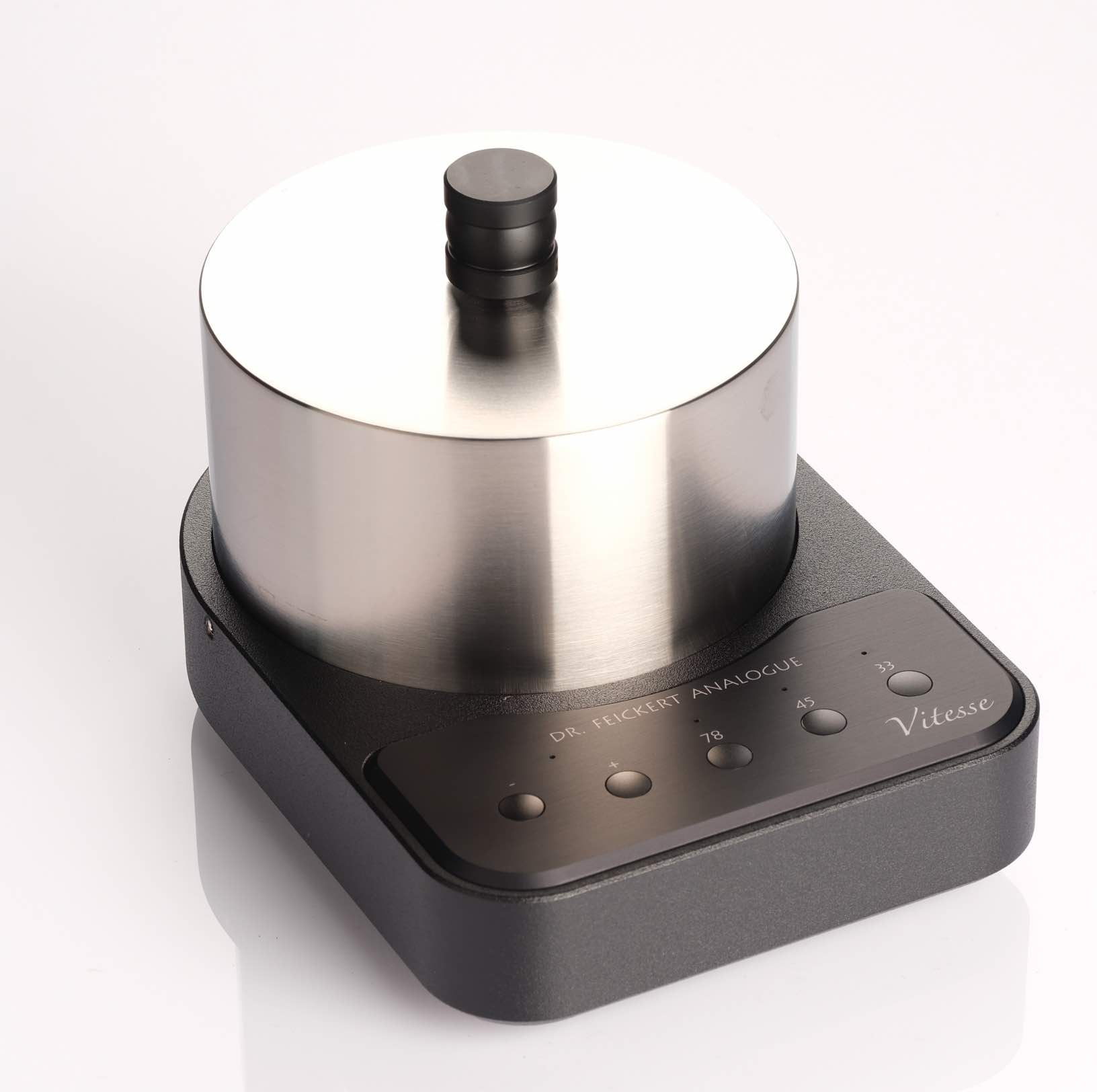
On their external motor, the Vitesse, that they offer in their product line
"The Vitesse, which is currently undergoing a complete redesign, was our response to the numerous, sometimes exorbitantly expensive external motor solutions. Our idea was to make the power and accuracy of our motor design available to other users. I think the Vitesse has an excellent position in the market here."
On where he sees Dr. Feickert Analogue five years down the road
"Well, I am now almost 62 years old and will definitely continue at least for another 10 years, because I love what I do. Where will we be in 5 years? I don't dare to look into the crystal ball, because when you look at the world, we will probably have completely different problems that we will have to solve. But one thing is for sure—if God wants me to still be here, then I will delight the market with more designs; that is my promise!"
On maximizing the performance of your turntable, audio components, and overall audio experience
"Use good bases/platforms that decouple. There are good solutions that are not outrageously expensive. It is absolutely essential that the turntable is in perfect level. Great care should be taken here.
When it comes to tonearms, we are currently seeing price tags that make me blush with shame. Does it always have to be the most expensive arm? I don't think so, but you shouldn't be too stingy when it comes to the cartridge—better spend some extra bucks here.
"Cables? A matter of personal taste—try until you have found what suits you best.
"And one thing is very important—everything takes time, but you shouldn't always chase after the last little bit; instead, you should indulge in your hobby of music with satisfaction and serenity. Many audiophiles often forget this, because in the end, it's the music that matters and not so much the equipment, which should really only be a means to an end...
On whether he favors accessories like the "Sugar Cube" to eliminate pops and clicks from vinyl playback, or the use of optical cartridges
"No, my only experience with de-clicking and de-hissing dates back to the 1990s. Back then, I bought a piece of software called ALGORITHMIX. I did a lot of experiments back then, but in the end I always came to terms with the flaws in the original and simply accepted them. Maybe I should try something like that again—the technology and algorithms have gotten better and better, not to mention the available computing power. In principle, I'm open to something like that, and if the customer likes it, then they should use it. For my part, I'm certainly not going to make a religion out of it.
"Optical cartridges? I don't have an opinion on that because I've never tried them. I did order some from DS Audio once, but the German distributor never delivered. So I just decided that I don't have an opinion on it. The world will keep turning without my two cents."
His thoughts on vacuum tubes or solid-state amplification
"Tubes are nice, tubes are fun, and tubes die a slow death. You witness their demise hour by hour, and at a certain point you realize that the tubes are gone and wonder how long you've been listening to "weird" reproduction.
"This is something you don't experience this way with semiconductors. They are definitely more durable, less problematic, usually have significantly better noise characteristics, and have now reached a level of quality in the IC sector that seemed impossible 10 or 15 years ago. That's also the reason why I use ICs in all my designs. Discrete semiconductors do have advantages, but here too, you spend a long time matching suitable pairs, and the minimal difference usually does not justify the effort required. But, did I mention that I like tubes?"
On where he sees our audio hobby progressing in the coming years
"I think we, as the older generation, are facing a Herculean task. Where the journey will take us is still undecided. But what I see is that even in my generation, many potential customers are turning away from our hobby in horror. Why? Gigantomania and voodooism. You don't have to spend $4 million on a good stereo system, and in my humble opinion, you don't need any kind of bowls, tinctures, or bridges for any kind of equipment.
"Acoustics is one of the most easily describable and calculable disciplines of physics, and this is where any basic optimization work should start—that's my opinion. And if you want to attract young people and take them on the journey with you, then you have to say goodbye to absurdities as quickly as possible. Because if we don't capture the youth, then there's no point in talking about the future of our hobby, because then this hobby will no longer exist. What a bitter cultural loss that would be!"
Setup, a Quick Spin, and a Hiccup
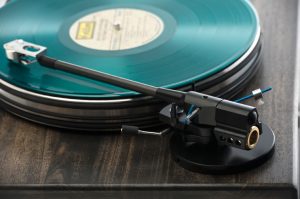
MoFi shipped out the Woodpecker turntable and their Straight-10 tonearm. Following the directions of the setup manual (which are a bit scant), online video by Music Direct (you can view that HERE), and their Dr. Feickert tonearm protractor, I found setup pretty straightforward. Per their directions, I set the vertical tracking alignment at parallel and gave it a whirl. Initially, it sounded very robust, but a little lacking in the highs. I adjusted the VTA a little higher and was rewarded by a lush, but detailed sonic delivery with my reference phono cartridge, the Dynavector XX-2A.
During the early going, I also had to adjust the platter's speed; using the Turntabulator app, I placed my iPhone atop the Woodpecker's record clamp, clicked "Spin", and adjusted the speed using the plus push button on front left corner of the plinth until the app registered 33.33. I used the same procedure for the 45 RPM setting. This took a few minutes, as the speed adjustment mechanism is extremely precise.
Additionally, there was a hitch regarding their spindle, which is designed to be a little snugger at 7.22 mm; this was a little too tight for some albums (especially the heavier 180-200 gram "audiophile grade" records versus the standard 120-160 gram records), whose spindle holes were on the smaller side.
Take, for example, my Eva Cassidy Nightbird album by Blix records. I had to firmly press it down to fit flush on the platter, and I found its removal precarious, as I had to fan my fingers out and, gripping the record by its edges, rotate it back and forth, squeaking, while pulling it off.
"You know, you can break a record that way," Jam cautioned. He recommended a 9/32" drill bit (which didn't work, as the Eva Cassidy record's spindle hole was already that wide) or, alternatively, a reamer, which did the trick.
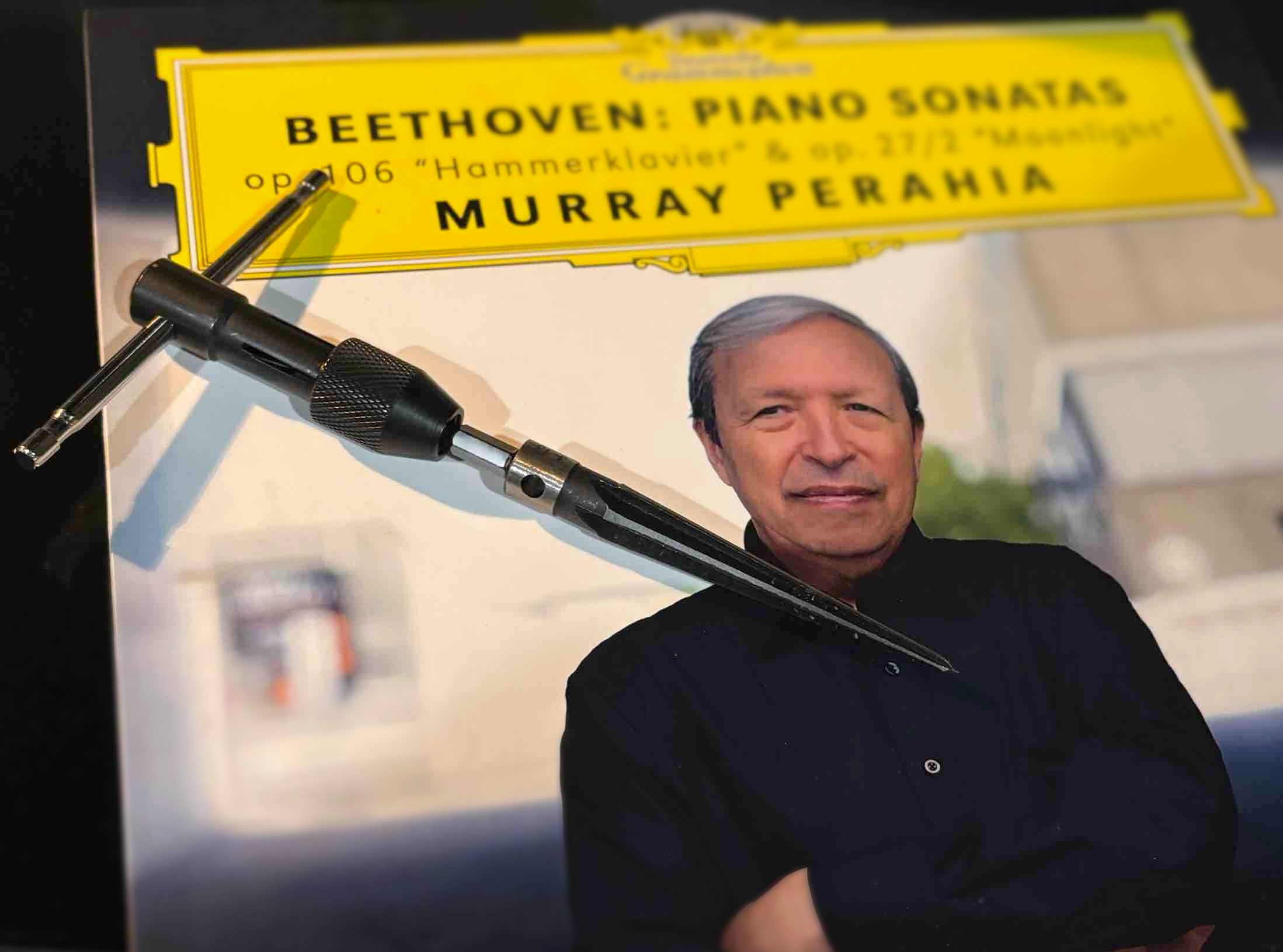
A reamer from Amazon costing little over five dollars does a great job expanding undersized spindle holes in vinyl records.
Ironically, Chris Feickert suggested the same in an email: He wrote, "Use a 7.3 mm reamer—they are cheap and do the job," adding that perhaps I got a Woodpecker with slight oversized on the spindle.
Regardless, I found that easy does it with the reamer; a half to full turn with minimal force in the the spindle hole does the job. I did a full two turns on sides 7 and 8 on my Eva Cassidy Nightbird four-record set, and the hole fit loosely. Lesson learned! That said, with the Woodpecker's record clamp in place, playback was unaffected.
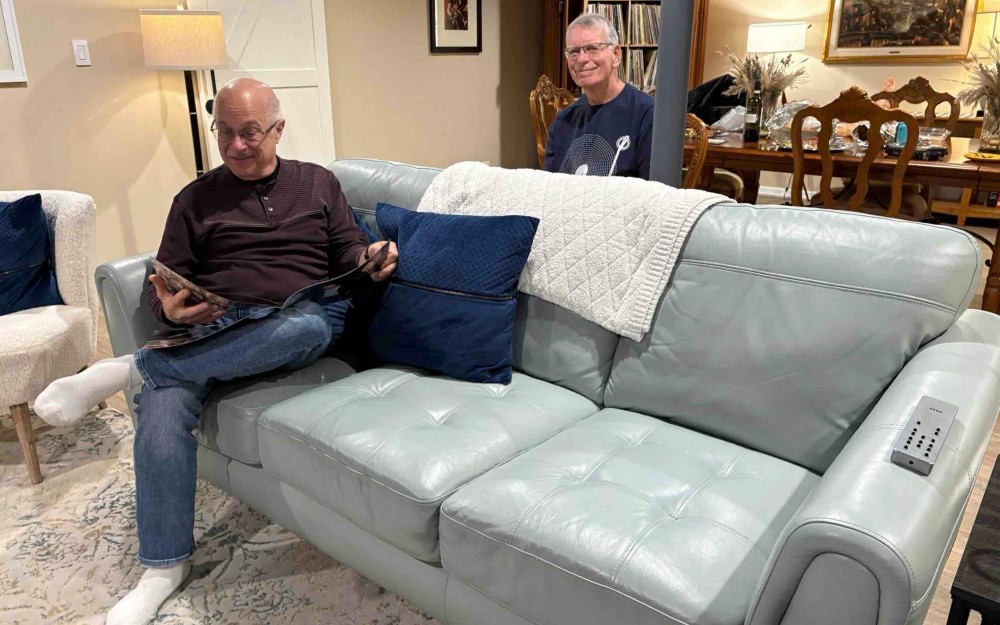
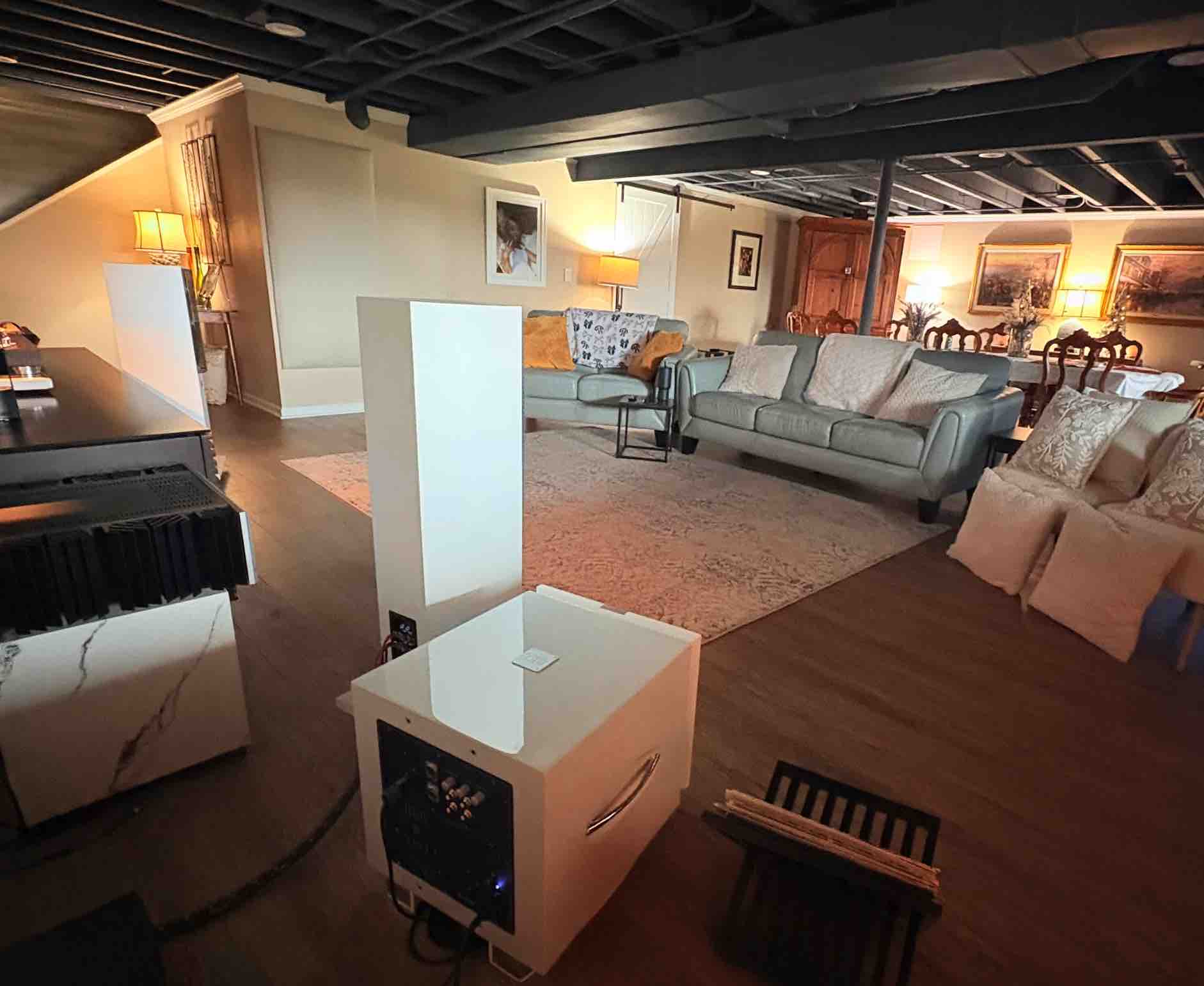
Bob, at left, leafs through a booklet from the Jimi Hendrix album, while Jeff enjoys the music from a chair just behind the listening couch—easily within striking distance of the grazing table at the rear of the room!
Enlisting Friends in the Listening Tests
For the last several years, I've been fortunate enough to own the vaunted Micro Seiki BL-91 as my reference turntable. Having replaced some caps and the speed potentiometer, I mounted an Audio Creative GrooveMaster 3 tonearm, and have been using a Dynavector XX-2A phono cartridge mounted on a Korf Audio HS-A02 Ceramic Headshell to produce lovely music with great fidelity in my listening room. Lately, I've been running it with the SOTA Turntables Eclipse external motor package for review, which enhanced its timing characteristics. In comparing the two, my initial impression of the Dr. Feickert Analogue Woodpecker was that its presentation was a little more robust sounding than the Micro Seiki's. Early on, I enjoyed listening to its robust and refined delivery of vinyl, and was anxious to share the experience with seasoned audiophiles. I put out the call, and shortly thereafter, Bob, an affable and fit retired mechanical engineer who plays drums, shoots pool, and exercises, and Jeff, a chatty 6′ 3″ retired capital equipment salesman who tinkers at home, exercises, and listens to music daily, showed up.
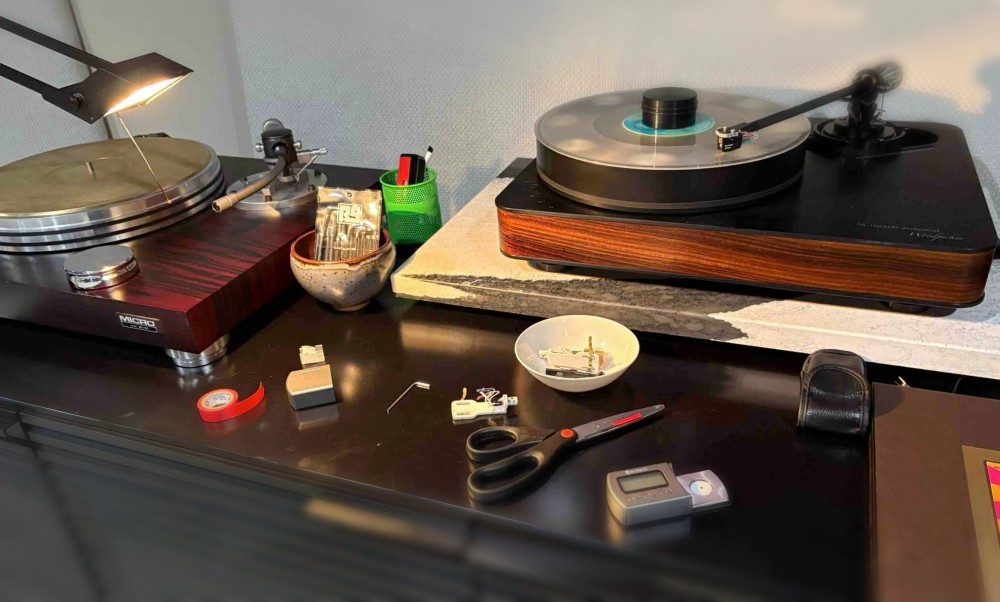
Using my Dynavector XX-2A MC phono cartridge, the plan was to play a few cuts on the Micro Seiki BL-91, remove it, mount it onto the Dr. Feickert Analogue Woodpecker turntable, play those same cuts, observe and discuss, play some new cuts, then switch back to the Micro Seiki for further comparisons as we cycled back and forth. To expedite this process, I wrapped thin strips of masking tape alongside the mounting screw slots on the Micro Seiki's Korf Audio headshell and the Dr. Feickert Straight-10 Tonearm (it has a built-in headshell) and marked the screw positions with dots after using their respective protractors to get the exact overhang and alignment. To save time, I taped the stamped brass finger lift of the Korf headshell (which is a separate piece) in position to the top of the headshell, threaded the screws, made alignment adjustments with the dots, and tightened the screws.
The Listening
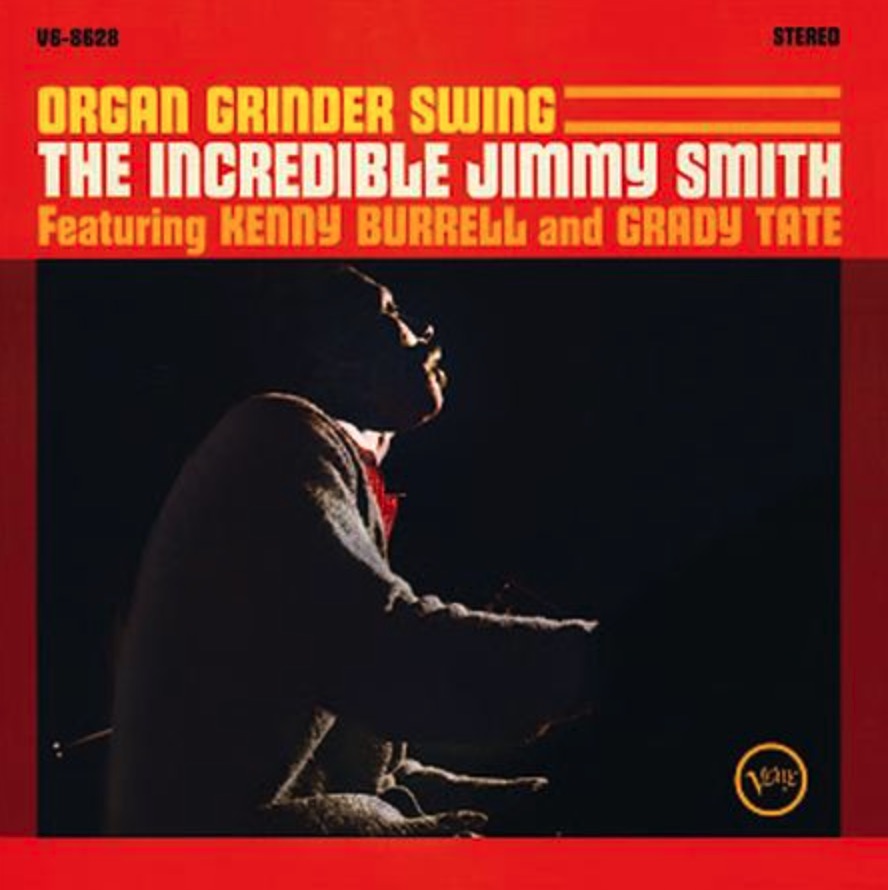
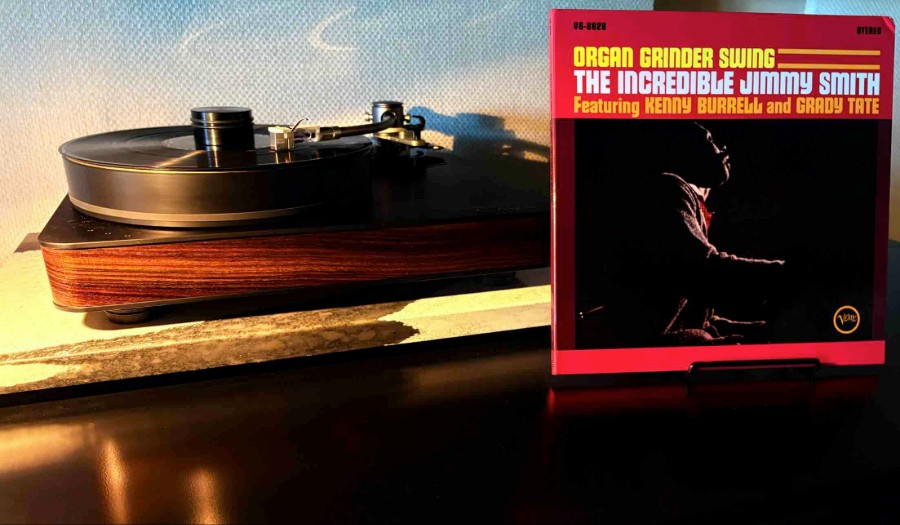
First up, I lowered the Micro Seiki's needle on the Acoustic Sounds Quality Record Pressings 180 gram reissue of Verve's Jimmy Smith album, Organ Grinder Swing, The Incredible Jimmy Smith.
"Oh! I love that Hammond B-3," Jeff exclaimed.
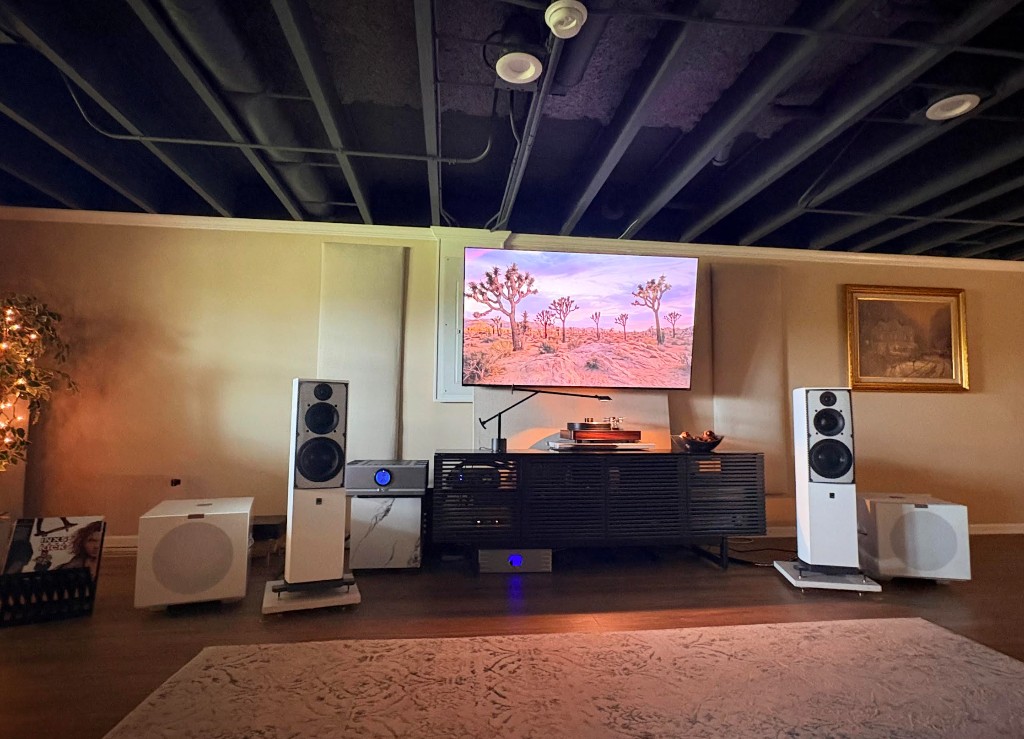
The rich and warm sounds of Jimmy Smith's Hammond B-3 organ, accompanied by guitarist, Kenny Burrell, and drummer, Grady Tate, snaked its way from the Dynavector XX-2A cartridge, cradled in the Korf Audio HS-A02 headshell, up the GrooveMaster 3 tonearm, the BL-91 turntable, an Audio Art Cable's prototype phono cable, to the Quadratic Audio MC-1 Moving Coil Transformer, then out to the Pass Labs XP-17 phono stage, the Pass Labs XP-12 preamp, and the Pass Labs X150.8 amplifier via Straight Wire cabling, exiting to the ATC SCM40 loudspeakers over Straight Wire Crescendo 3 speaker cables—accompanied by a pair of REL S/812 subwoofers linked directly to the amp using their proprietary high level cables. It was at once captivating, detailed and natural, well articulated across the sound spectrum. Most electronics were connected to my Richard Gray's Power Company RGPC Custom 1200 power conditioner, while the amp and subs were plugged directly into the wall (the Woodpecker was plugged into a Panamax M5300 EX power conditioner and the BL-91 to a 120 to 100 volt step-down transformer into a surge protector since all the bays in the RGPC were occupied with other electronics). We listened, enthralled, to Side A before making the switch to the Dr. Feickert Analogue Woodpecker.
I was a pit crew of one, racing against time, swapping out parts, refueling, and making adjustments as a Formula One racer pulled in for a pit stop and, tires screeching, returned to the race moments later. It was challenging, and took more time than I'd like—replacing the stylus guard, unscrewing and detaching the cartridge, screwing the cartridge onto the other tonearm, plugging tiny phono wires, weighing and adjusting the tracking force, and swapping out the Audio Art Cables phono cables into the MC-1 Moving Coil Transformer (which, in turn, was connected to a Pass Labs XP-17 Phono Preamplifier). However, by using the marked screw positions, I eliminated precious seconds. I placed Smith's album onto the Woodpecker, tightened its record clamp, brushed the needle with a stylus brush, hit play, wiped the record's surface with an anti-static brush, and lowered the needle again.
After all this, Jeff exclaimed, "I can't believe how quickly you changed cartridges!"
The infectious and dynamic attack of Smith's whirring, whining, and shrieking organ combined, combined with Burrell's tasteful guitar licks and Tate's masterful and punchy chops on drums were mesmerizing. Bob was impressed with Tate's techniques, alternating between the snare and Hi-Hat with dexterous and dizzying riffs.

I put on Eva Cassidy's cover of "Field of Gold" on her album, Nightbird. Her soprano vocals and acoustic guitar were emotively vulnerable, the timbre of her acoustic guitar rich and resonant in this excellent detailed recording.
"You can really hear the breathiness of her vocals," Bob noted.
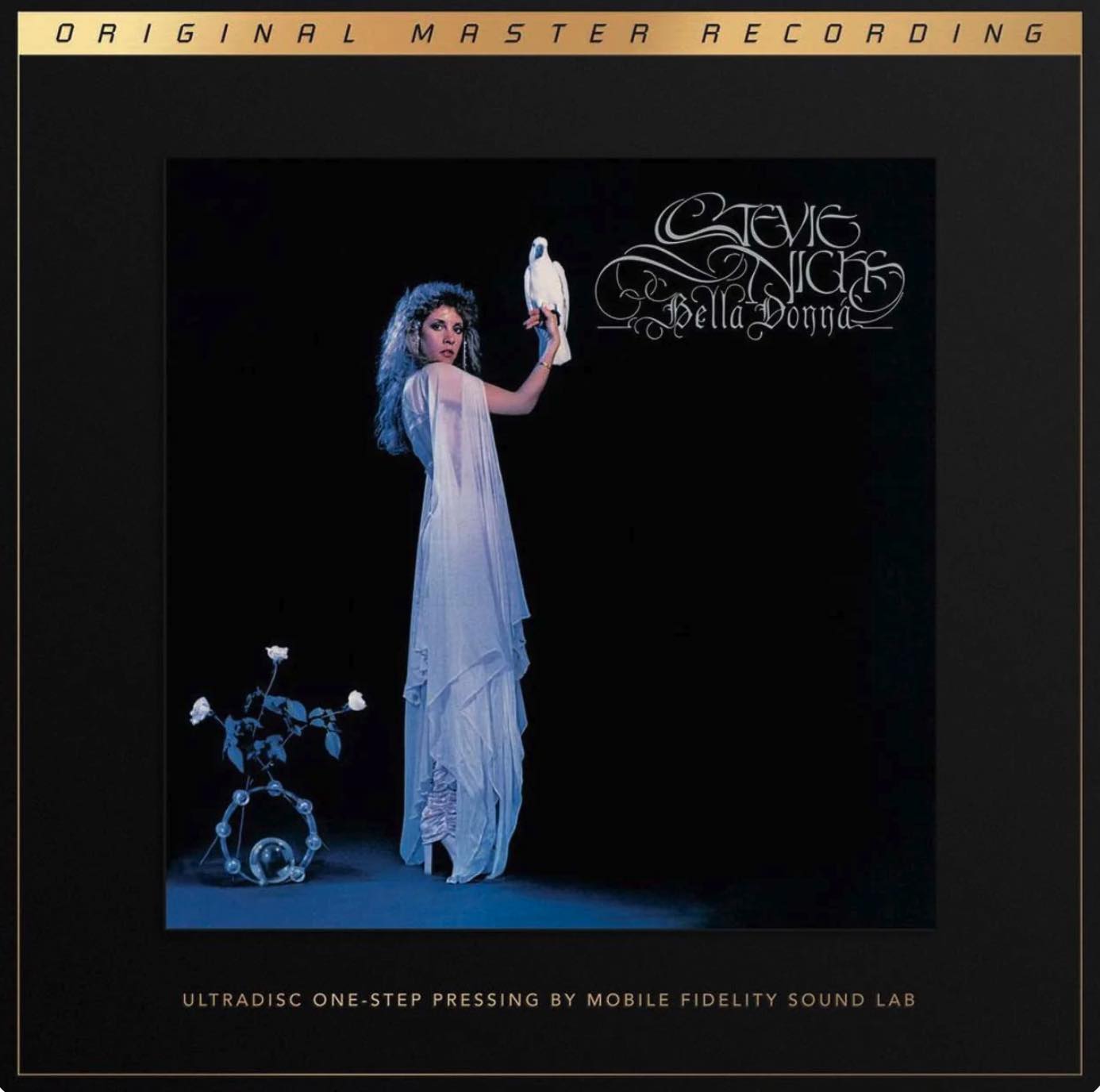
Up next at Bob's request, we played Stevie Nicks' duet with Tom Petty in "Stop Draggin' My Heart Around" on the 45 RPM 180 gram Ultradisc One-Step Pressing of Nicks' Bella Donna album by Mobile Fidelity Sound Lab. Waddy Wachtel's guitar vamp was lush and—to Bob's delight—Russ Kunkel's drums are crisp and robust with plenty of slam, hitting us in the chest, the ride cymbal's metallic ring is very present. We could hear the effects with Nicks' vocals, which were lucid and clearly articulated. Her duet with Tom Petty was well fleshed-out and three dimensional.
"Your speakers gets the midrange just right!" Bob effused with a wide grin.
We switched back to the BL-91 and played the same cut. Brimming with detail and dynamics, its lush delivery was similarly captivating, which begged the question, "What were the differences between the two turntables' deliveries? Playing through my system, both sounded extremely detailed and vivid and strikingly similar. While the Woodpecker seemed to pack a little more weightiness in its presentation, up to this point, the differences were challenging to discern. Despite my best efforts to make the cartridge swaps with speed and precision, the minutes lost during transition made comparisons a bit more challenging.

We put on another Acoustics Sounds remaster, Bashin', The Unpredictable Jimmy Smith, which featured the Hammond B-3 maestro with a big band on Side A, and a trio on Side B. Jeff was especially taken by the realism, luster and detail of the big band backing Smith.

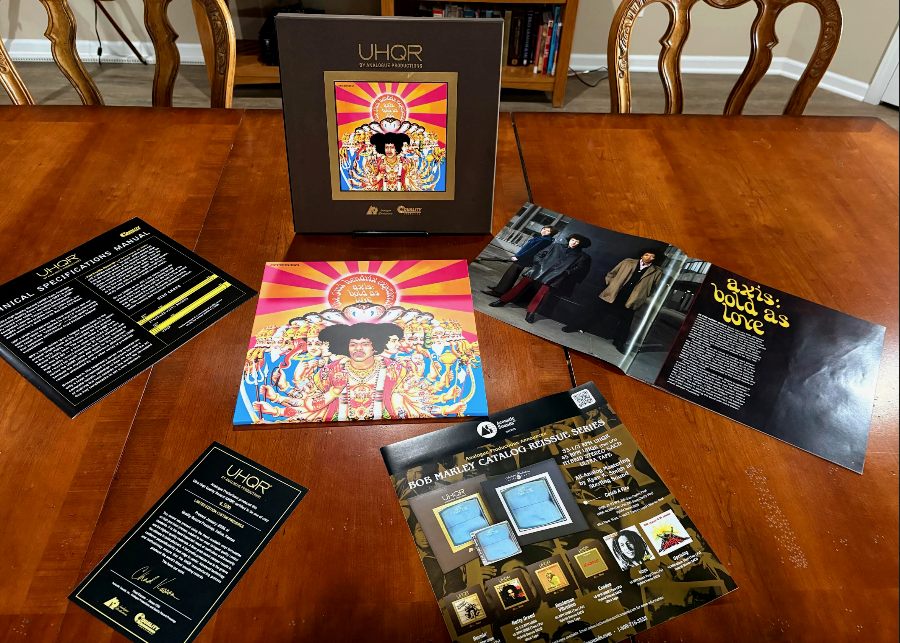
Then, we put on Acoustic Sounds' Analogue Productions UHQR 45 RPM stereo remaster of The Jimi Hendrix Experience's Axis, Bold as Love album. As with a few other records in my collection, since the spindle on the Woodpecker is slightly thicker than others, I had to gingerly twist a reamer through this record's smaller a few turns to get it to fit. At first, I thought I made a mistake in setting the speed to 45, as the emcee's voice sounded too fast, but when I reset it to 33 1/3, Jeff corrected me; the sped-up introduction was done for effect. Crazy panning from left to right channels with kaleidoscopic effects led into raw, rip-roaring guitar riffing by Jimi Hendrix in his treatise on psychedelic rock. It was very dynamic and mind-blowing—and on a very clean recording. Mitch Mitchell's skilled and frenetic drumming really captured Bob's and Jeff's attention.
We switched back to the Woodpecker, listened to Hendrix, The Unpredictable Jimmy Smith album, and a couple cuts from the Bella Donna Ultradisc, and then switched back to the BL-91 — which is when the differences really became noticeable.
Hearing the title cut of Bella Donna, it became apparent to all of us that while it was equally detailed, the BL-91's delivery was more treble-balanced compared to the Woodpecker, which had a fuller and more robust balance down through the mids, mid-bass, and bass regions.

Switching back to the Woodpecker, I cue up an old standby, a direct to cut Japanese import, The Third's Take the ‘A' Train by Toshiba Records (LF-95011 Stereo). Beginning with the muted tones of a Yamaha KX25 Midi Keyboard, plucked strings, and Yasuo Arakawa's double bass, Takeshi Inomata's brushed snare, and building to the brassy explosion of the saxophone, trumpet, and trombones by Kenji Yoshida, Takeru Siroiso and others, it was a visceral big band treat. The Woodpecker conveyed the performance with vivid, lifelike clarity and punch.
"I've heard this album many times," Jeff said, "But this is the best I've heard it!"

In a later session, with Murray Perahia's performance of "Allegro" in Piano Sonata in B flat major "Hamerklavier" op. 106, I note that although both turntables render the attacks, sustained notes, and decay in the brilliant and challenging piano runs and the softer, more lyrical passages, covering the entire keyboard's range, with nuance, naturalness, and a sense of the space, the Woodpecker delivers a bit more weight and dynamic contrast (Perahia, David. Beethoven: Piano Sonatas op 106 "Hammerklavier" & op 27/2 "Moonlight." 33 1/3 Vinyl. Deuusche Grammophon. 2018).
Swapping in Another Tonearm
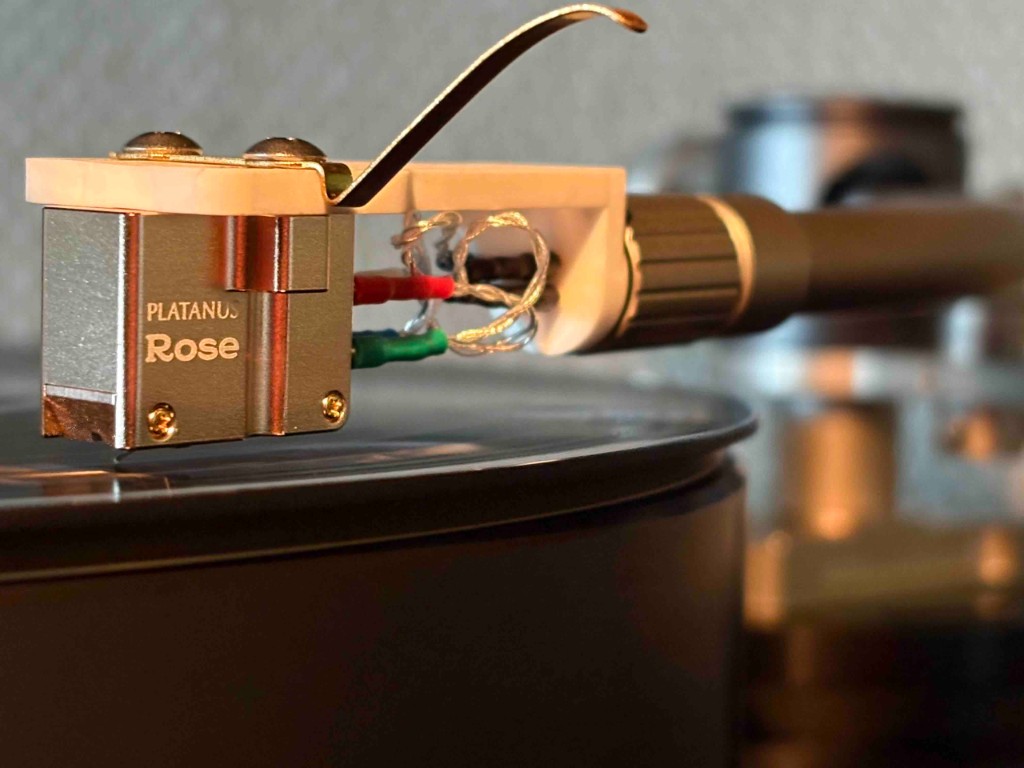
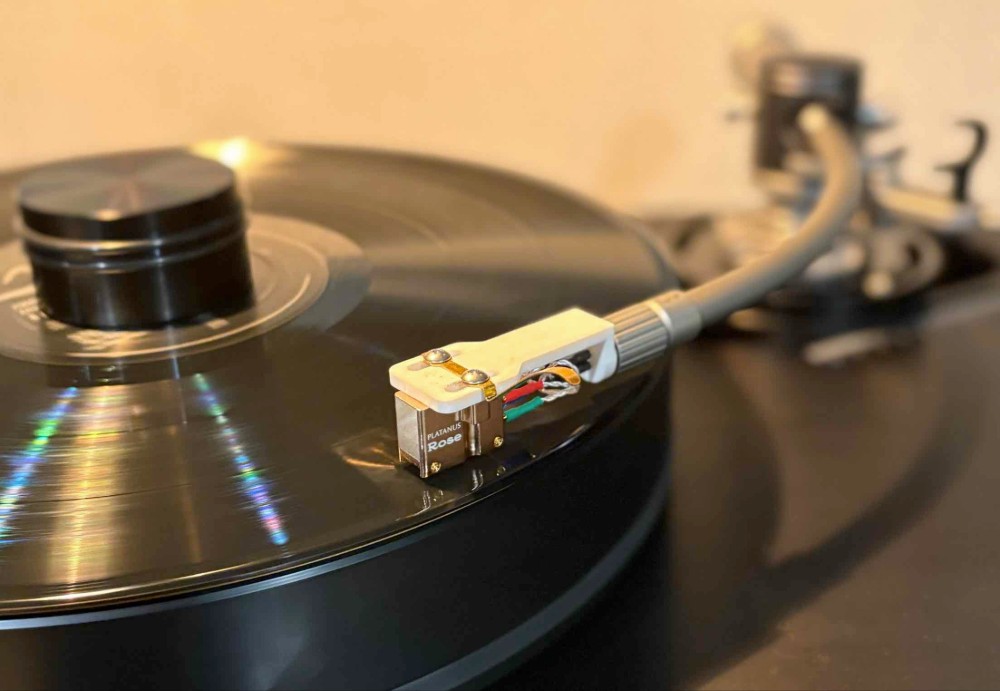
The trials complete, I decided to replace the Dr. Feickert Analogue Straight-10 tonearm with my Audio Creative GrooveMaster 3 tonearm on the Woodpecker. To my pleasant surprise, I found it relatively painless. After inserting the new Audio Creative tonearm clamp into the sliding armboard pieces, I used the demarcated lines to set the GrooveMaster at its recommended 240 mm distance from the spindle. I tightened its base down with M4 screws, inserted the GrooveMaster tonearm, attached the headshell with the Platanus Rose phono cartridge (in for a separate review), adjusted the tonearm's height, set the tracking force at roughly 210 grams, used the Dr. Feickert Analogue protractor to properly position the cartridge, and made adjustments to vertical tracking angle by playing a couple cuts from Eva Cassidy and Jimmy Smith, and adjusting the VTA up and down to get the balance of treble and detail that I desired. It's sounding quite good, with perhaps a few minor adjustments to be made later!
In Conclusion, Why Not Just 'Jump into the Benz'?
With the boom in vinyl records and turntables sales, you won't see Dr. Feickert Analogue Woodpecker turntables leading the pack in sales anytime soon but, nevertheless, they're a formidable player in the growing niche of boutique designs for their craftsmanship and innovative design. Like BMWs and Mercedes Benzes, while not unobtainable, they're certainly not as inexpensive as most of the frontrunners, yet they remain highly desirable for their German engineering, craftsmanship, robust build, and timeless, understated minimalist design.
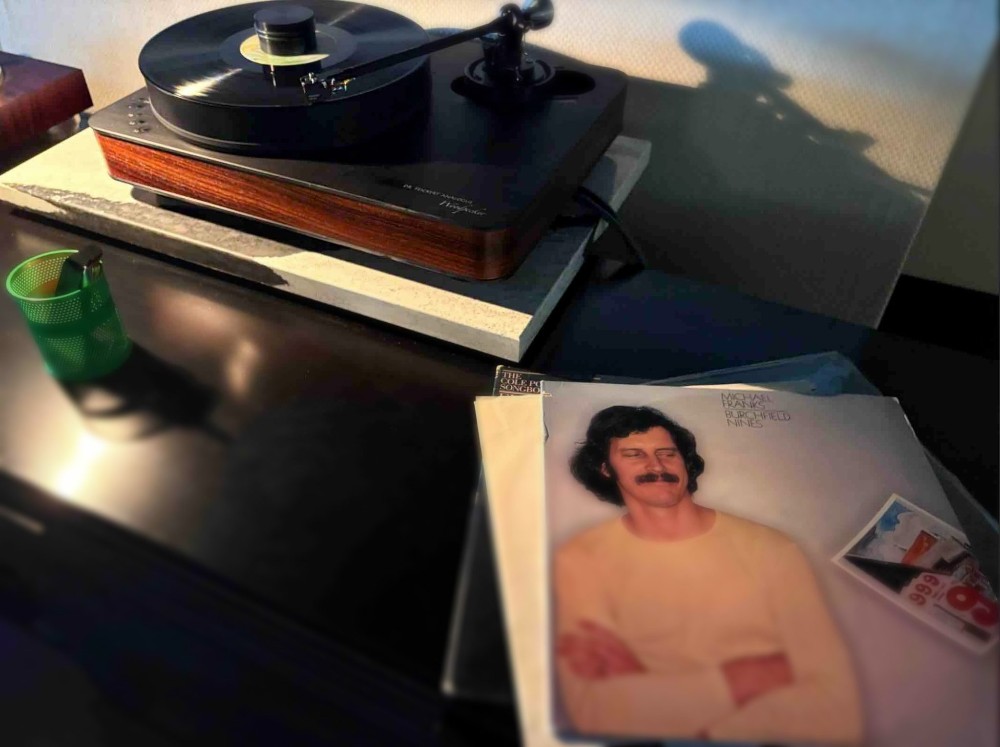
In these troubling current days of political and economic turmoil, I am reminded of lyrics from Michael Franks' song, "Hideaway":