
Every now and then I discover an album that changes the course of my musical journey. Don't Fence Me In: Western Music's Early Golden Era (Ronder CD 1102), a CD that I found in the late-nineties, is one such title.
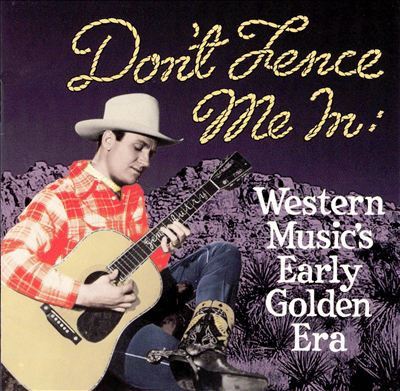
My favorite music is sixties rock, followed closely by classical music, but in 2008 I found a new musical obsession: country music, especially country albums that were made between 1956 and 1964. To me, this was the genre's golden age. It's when Nashville was cranking out its greatest singles and albums. This was when rulers of the grooves included Ray Price, Webb Pierce, Ernest Tubb, Johnny Cash, Johnny Horton, Kitty Wells, Jim Reeves, Jimmy Dean, Patsy Cline, and Carl Smith. I'm also extremely fond of an earlier style of music just called western music.
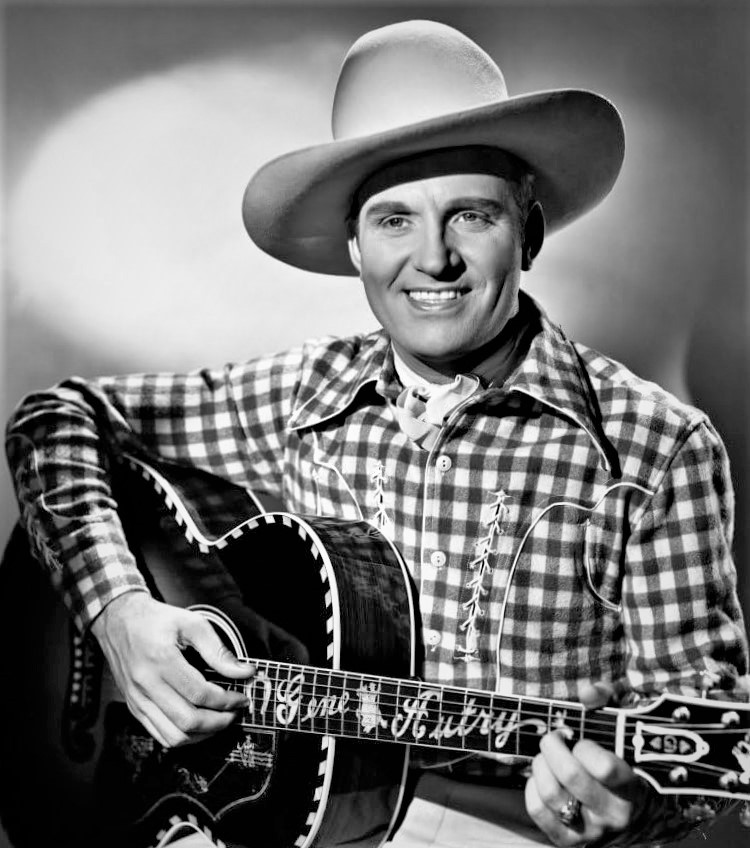
In the thirties there was no musical category called "country western" or even one just called "country." The two words came together in the mid-forties when record executives were searching for a less derogatory term than "hillbilly music" to describe the music which was emerging out of Tennessee and Texas. However, old-school western music, a style that was popular with much of the general public, wasn't recorded in Nashville or in Houston. It was recorded much further west, in Los Angeles. In the thirties and forties, if you were a handsome farmhand who could play guitar and sing you could, if you got lucky, become one of Hollywood's singing cowboys. The first and most famous singing cowboy was Gene Autry (1907-1998). He was, from the late thirties through WW2, the most popular singer in the world. Autry's film career dates back to 1934, and he starred in ninety three films. Almost as famous as Autry, or arguably just as famous, was Leonard Slye (1911-1998) who went by the name Roy Rogers. Rogers starred in more than ninety films, and had even greater success on TV with The Roy Rogers Show. He also had a successful chain of fast food restaurants. Not nearly as famous as Autry and Rogers, but vocally just as gifted was Jimmy Wakely. Wakely worked in films with both Autry and Rogers, and starred in twenty-eight films of his own. Where Wakely outshone his colleagues was in the quantity of recordings he made during the earliest days of hifi. He was a prolific recording artist for Capitol Records from 1947-1953, and was particularly successful with the duets he recorded with the incredible Margaret Whiting. Before Capitol, he recorded for Decca. After Capitol, he sporadically recorded albums for Decca, Dot, and for his own label Shasta. (A review on Wakely's work for Capitol is in the works.)
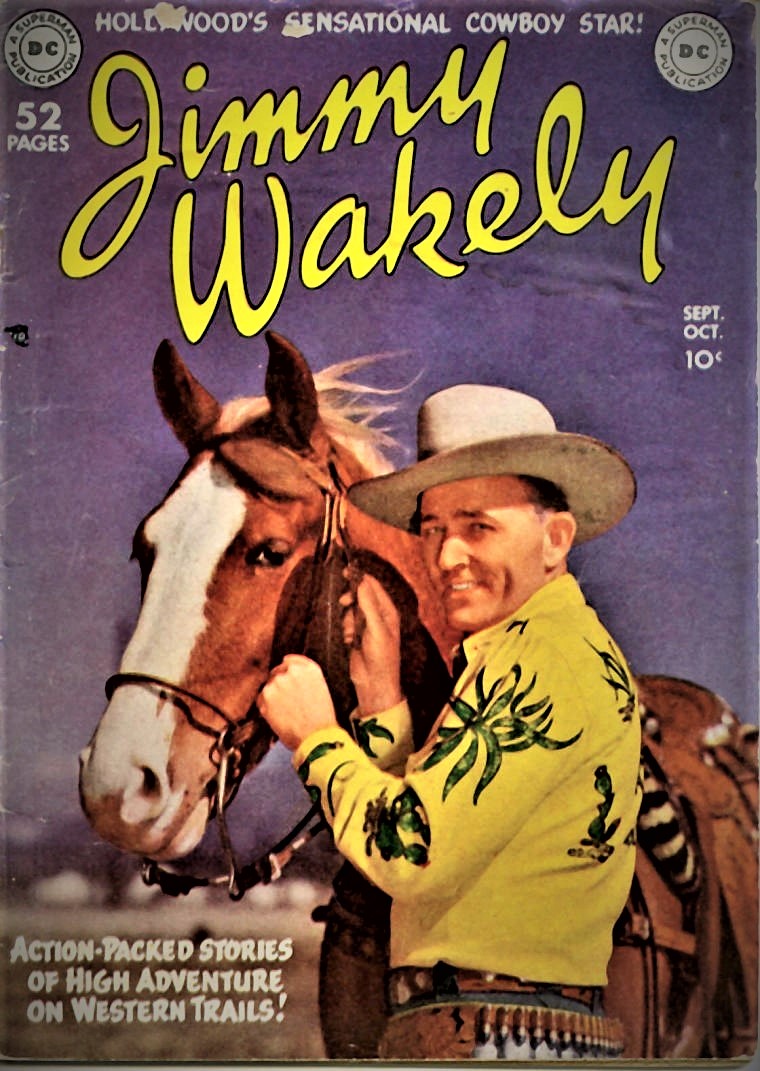
Meanwhile, this Rounder CD is still sitting next to me, so I need to tell you about it. It is an excellent introduction to the art of the singing cowboys. It features Autry, Rogers, Wakely, Tex Ritter, and The Sons of the Pioneers. Since my very first record was a vinyl 78 (yes, unbreakable vinyl!) of Gene Autry's "Rudolph, The Red-Nosed Reindeer," backed with the equally fine "If It Doesn't Snow On Christmas" (Columbia MJV-56), this genre of music is very close to my heart. This CD appropriately opens with Gene Autry. Autry wasn't just the greatest singing cowboy; he was a cultural icon, a decorated WW2 hero, and a massively successful businessman. Among his ventures was owning the California Angels baseball team from 1961 to 1997.
The opening cut is Autry's 1946 recording of "Back In The Saddle Again." Let me say it right here: There is no singer that I love more than Autry. His ability to connect with the hearts of the general public rivals the likes of Bing Crosby, Frank Sinatra, Elvis Presley, and The Beatles. When it comes to just making me feel happy, Autry was the best! And I can't think of a song that represents him better than "Back In The Saddle Again." Written by Ray Whitley, who made a fine recording of his own in 1938, it is lyrically a perfect song on a multitude of levels. It's a celebration of life, accomplishment, friendship, morality, and the peacefulness of nature.
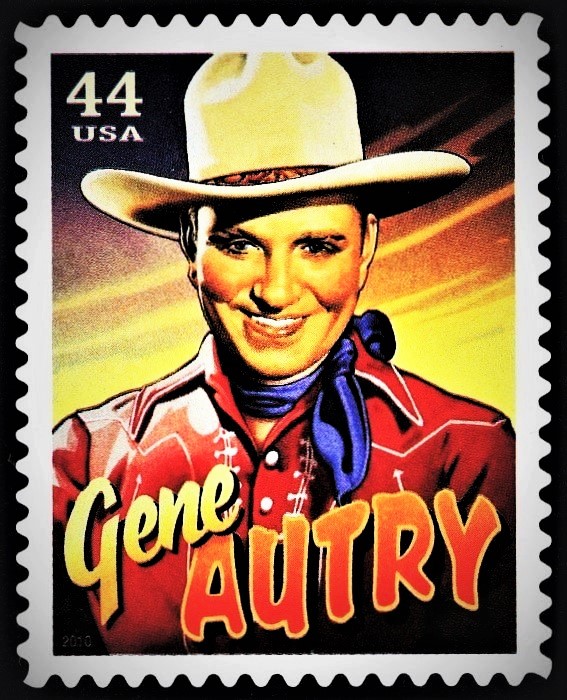
It's noteworthy that Autry made two different studio recordings of "Back In The Saddle Again." There is the one on this CD, which is his second, recorded on 2/13/46. The earlier one was recorded 4/18/39. Both were massive hits. And when I use the words "studio recordings," I'm referring to the recordings he made for records, not the superb but abridged songs that he recorded for his films. The 1946 recording is slower than the earlier one. It's more reflective. It opens with Aurty's gorgeous sounding Martin D45 guitar. With its ripe and woody sounding Martin, meandering pace, steel guitar, chorus, two violins, and Autry's flawless singing, it's riveting. However, I love his earlier recording just as much. In that recording he sings with gusto, and with an accordion working as a metronome. Listen to it HERE. Since I can never decide which one I prefer, I always play them back-to-back. To me, the early one is the riding-into-town version, and the later one is the riding-into-the-sunset version. Unfortunately, the transfer on this CD sounds awful. It's drenched in reverb. It's hard for me to believe that a better source wasn't available in 1995. The good news is we have much better sounding transfers available today. HERE is a superb reverb-free transfer of the 1946 recording. Autry also recorded a number of abridged film versions of the song. HERE is a superb one from the 1941 Republic film Back In The Saddle Again.
Cut two is a slight sonic improvement over cut one. It's the classic "Tumbling Tumbleweeds" by The Sons of the Pioneers. The recording chosen for this CD is their second, made on 3/25/46. It seems like rerecording old songs was a pattern practiced in the forties, or at least it looks that way for cowboy songs. Their earlier recording for Decca, made in 1934, featured them as a trio consisting of Bob Nolan, Tim Spencer, and Leonard Slye. (Slye wouldn't become Roy Rogers until 1938) Their backup was sparse: just a guitar and a fiddle. However, despite its popularity, Autry's more successful cover version from 1935 was the first to make the song famous. Fast forward to 1946: The Sons of the Pioneers were recording for RCA, and now they were a quartet consisting of Nolan, Tim Spencer, Lloyd Perryman, and Ken Carson. I don't know if RCA's spruced up version outsold the Decca recording, but I'm pretty sure it did. The Decca record sounds crude. The RCA recording sounds iconic. It features strings and coconut shells that mimic the sound of horse hooves. It's also fifty-seven seconds shorter, due to their improved phrasing, which they learned from Autry's recording. Having said all of this, my favorite version is Autry's. You should listen to all three. One will best suit you. I wish the sound quality was a little better, but I've yet to experience stellar sound from The Sons of the Pioneers' early recordings. They made excellent-sounding Living Stereo records for RCA in the early sixties, but that's a review for another day.
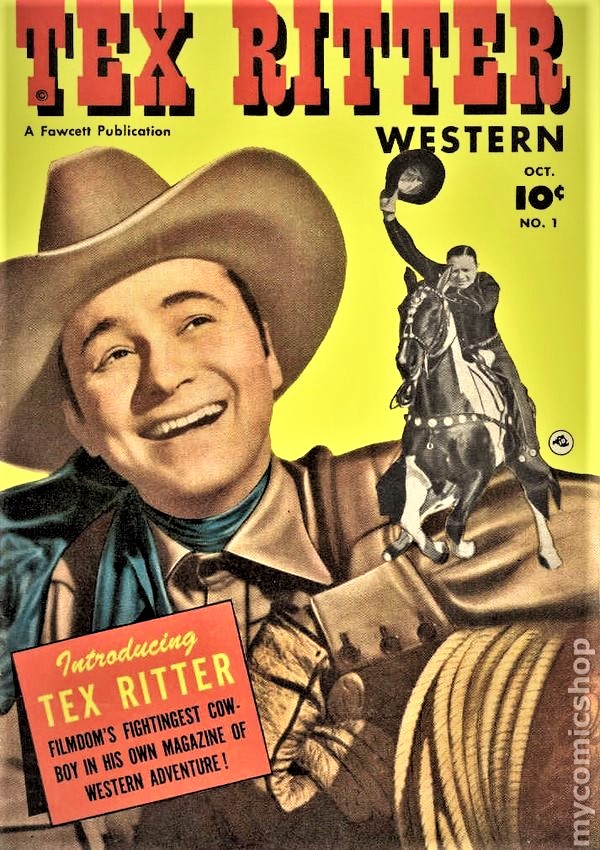
Cut three is "Jingle Jangle Jingle" by the one and only Tex Ritter (1905-1974). Ritter, who starred in at least seventy low-budget cowboy films of his own, recorded this song on 2/21/42, and it was released in June of 42 as part of the newly formed Capitol Records' first batch of singles. (The catalog number is Capitol 102!) It's unclear whether this was Ritter's first record, or his first hit record, but making this record wasn't his first rodeo. His film career dates back to 1936, and he had been performing in front of audiences and on radio since 1928. He also sang in Broadway choruses in the early thirties. And just in case you are wondering, he was actor John Ritter's dad.
"Jingle Jangle Jingle" opens with the sound of jingling spurs, or some kind of jingling metal to represent the sound of spurs. I don't know what spurs sound like, but I love the sound. Although the lyrics deal with the freedom of unmarried life from a philanderer's point of view, the song wouldn't sound out of place, due to its jingling-jangling sound effect, in a program of Christmas songs. However, the real treat is Ritter's awesome voice. It sounds clear and correctly-sized due to having zero reverb. It sounds, in the truest sense of hifi, believable. Better said: This recording places a live singer right in front of your speakers! And while Ritter didn't have the flawless phrasing of Autry and Rogers, his powerful voice was brimming with personality. I love the sparse arrangement, because it makes it sound more authentically cowboy-like. His accompaniment includes two male singers, an accordion, a fiddle, and a closely mic'd string bass.
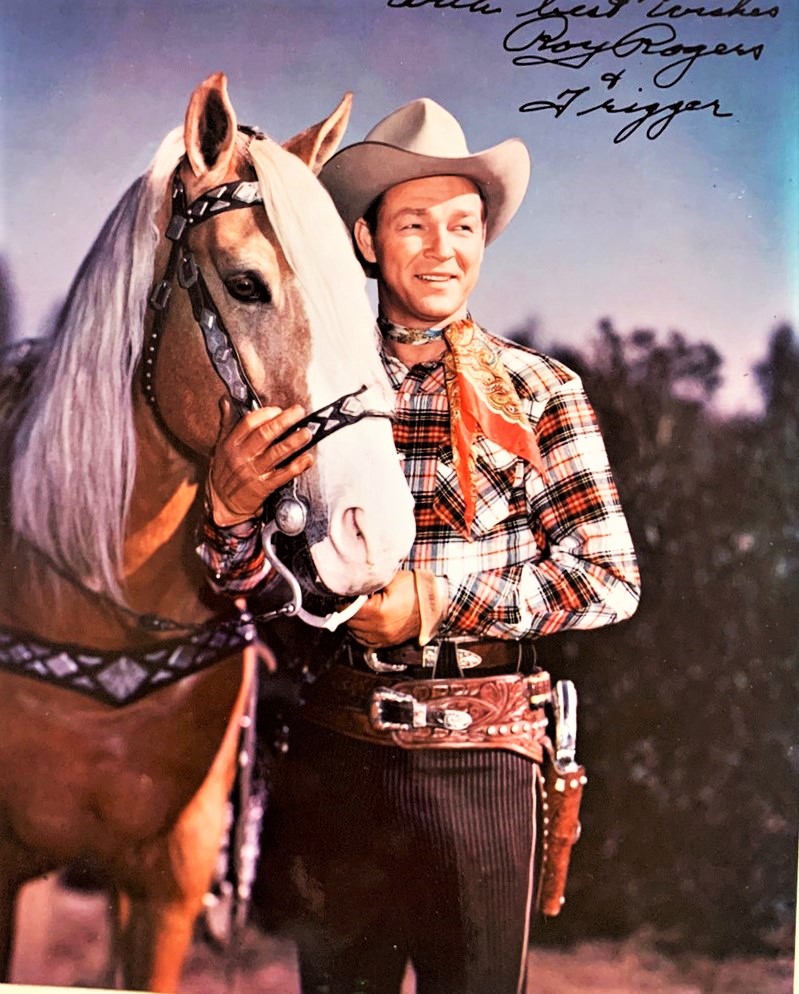
Cut four caught me by surprise. When I started my review of this CD, I just placed it in my CD drawer and hit the play button. I didn't even look at the titles on the back of the case. When I heard "Don't Fence Me In," I was floored by the voice. It took me a moment to think "Holy bleep, that's Roy Rogers!" I knew he had a good voice, but on this cut he's better than good. He sounds incredible! Perhaps it had something to do with hearing Rogers for the first time through my EAR and Audio Research driven Legacy speakers. Is this his greatest vocal moment? I don't know, but I think it is! Up until this moment, I thought Bing Crosby with The Andrews Sisters owned the song, but now I have to rethink that thought. Looking at the history of the song, I discovered that it was debuted in an inappropriate operatic style by singer Edward Nell in 1934. The second recording of this Cole Porter-Robert Fletcher classic was done in 1944 when Rogers performed it in the 1944 film Hollywood Canteen. HERE is that performance with that handsome horse Trigger.
Rogers made two excellent recordings of "Don't Fence Me In." There's the stripped-down version used in the film which features a guitar, a fiddle, and a chorus from The Sons of the Pioneers. And then there's the one featured on this CD with Roy's guitar, a small string section, an electric lap steel guitar, an accordion, and a piano. It was recorded 10/23/47. There's plenty of tasty Hawaiian magic coming from that steel guitar! And it's so animated and uplifting! And the sound is fabulous! Just for the record, I still love Bing's version with the ever-wonderful Andrews Sisters, recorded on 7/25/44. Take a listen to all three. You won't be disappointed.
Cut thirteen is "Dust" by Jimmy Wakely (1914-1982). This is the CD's demo cut, and for years it was the main reason why I kept it. Recorded onto 30IPS tape on 12/12/49 at Capitol Records' famous Melrose Avenue studio, this is a song that you should be demoing your system with. The sound is reverb-free, and thanks to a low-tuned tympany and a bass drum, the bass will blow your mind! Wakely is singing closely into the mic, making him sound like he's right there in between your speakers. And then there's the song. It's awesome! From the very opening when Wakely sings the word "dust" twice, you can feel the fear in his voice. It's as if he was spewing dust from his mouth. The arrangement is like nothing I've ever heard from a cowboy song. For the first twenty-two seconds all you hear is Wakely, a guitar, and the menacing percussion. At twenty-three seconds a small female chorus and strings enter. Following is a trombone, an oboe, and a full chorus of men and women. In total, it's two minutes and five seconds of musical perfection and stellar sound. The only other singer who made this song work was Autry, who recorded it in 1938. In the nineties, when I was flipping amplifiers and receivers, every one of them was demoed with Wakely's "Dust." If you think Diana Krall is good demo material, in the words of Al Jolson: You ain't heard nuthin' yet!
The closing cut is "Tumbleweed Trail" by The Sons of the Pioneers. Recorded on 9/16/41, this is the same trio of Nolan, Perryman, and Spencer that recorded the 1934 version of "Tumbling Tumbleweeds." The catalog number Decca 6073, and it's clearly a rewrite of the older song. However, this time instead of a romantic love song, Nolan wrote a tragic tale dealing with the terror of the Dust Bowl. Where the song "Dust" deals with the death of cattle and sheep, "Tumbleweed Trail" deals with the ecological disaster that was the Dust Bowl. I think "Tumbleweed Trail" is the better of the two songs. When I hear The Sons of the Pioneers in my head this song is what I hear. Noteworthy, once again, is the fact that they made two recordings of this song. There's this 1941 version, and a stereo redo from 1962. On the surface, the two sound remarkably similar, but upon close examination the earlier recording is melodic, and the later one sounds stiff. For me, the highlight of the 1941 recording is Perryman's remarkable solo. His soaring tenor voice sounds incredible. Although there's nothing really wrong with his voice on the stereo recording, his singing just doesn't sound as involving. Having said this, if you can snag a copy of the LP Tumbleweed Trail (RCA LSP 2456) inexpensively, the stereo sound is seductive. The stereo LP will make you proud of your moving coil. The 1934 recording will leave you in awe of Perryman's voice.
Revisiting this CD after nearly two decades has been wonderful. This is the album that introduced me to the incredible Jimmy Wakely, whose music I've pursued with great satisfaction. Regarding Gene Autry, it's been too long since I spent valuable time with my all-time favorite singer. Although he's misrepresented on this disc, coming back to him on YouTube, and on a Varese Sarabande CD collection of songs from his films, makes me realize that I need to have him around more often. He soothes my soul.
Here's some advice to my fellow LP collectors: Autry's Living Stereo LP, Golden Greats (RCA LSP 2623) from 1962 should be avoided. The bass is rubbery, his voice is drenched in reverb, and his singing is wobbly. And the title is misleading. The songs aren't Autry's golden greats. Except for a bad performance of "You Are My Sunshine," the rest is a random sampling of country songs, none of which are associated with him. The real deal is his Columbia recordings from the thirties and forties.