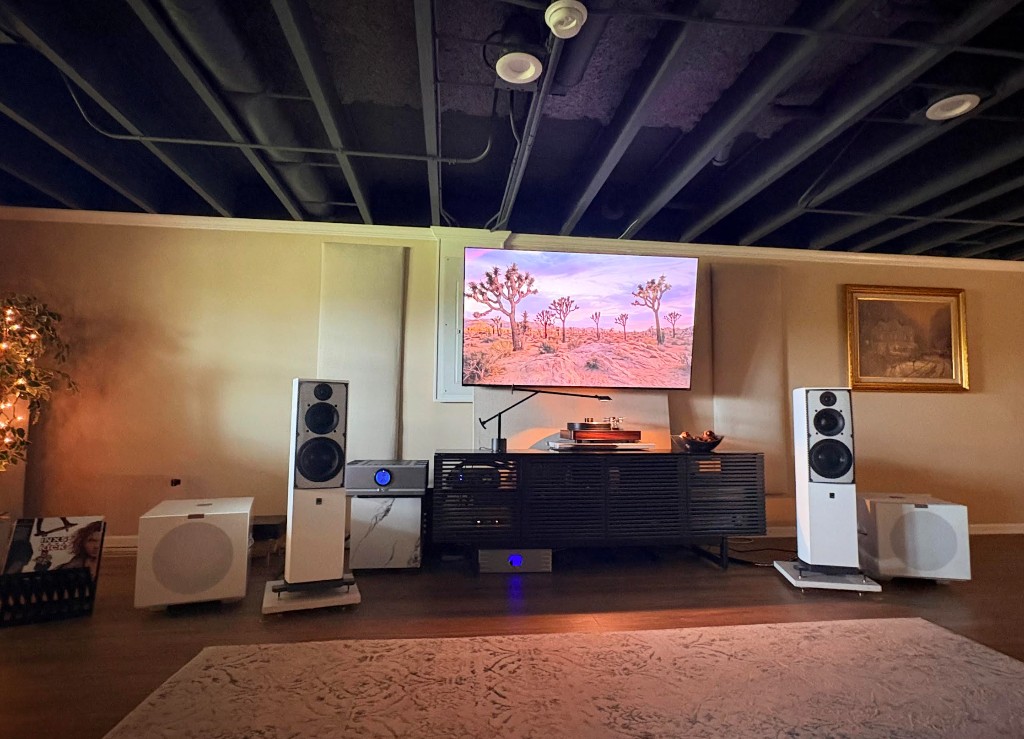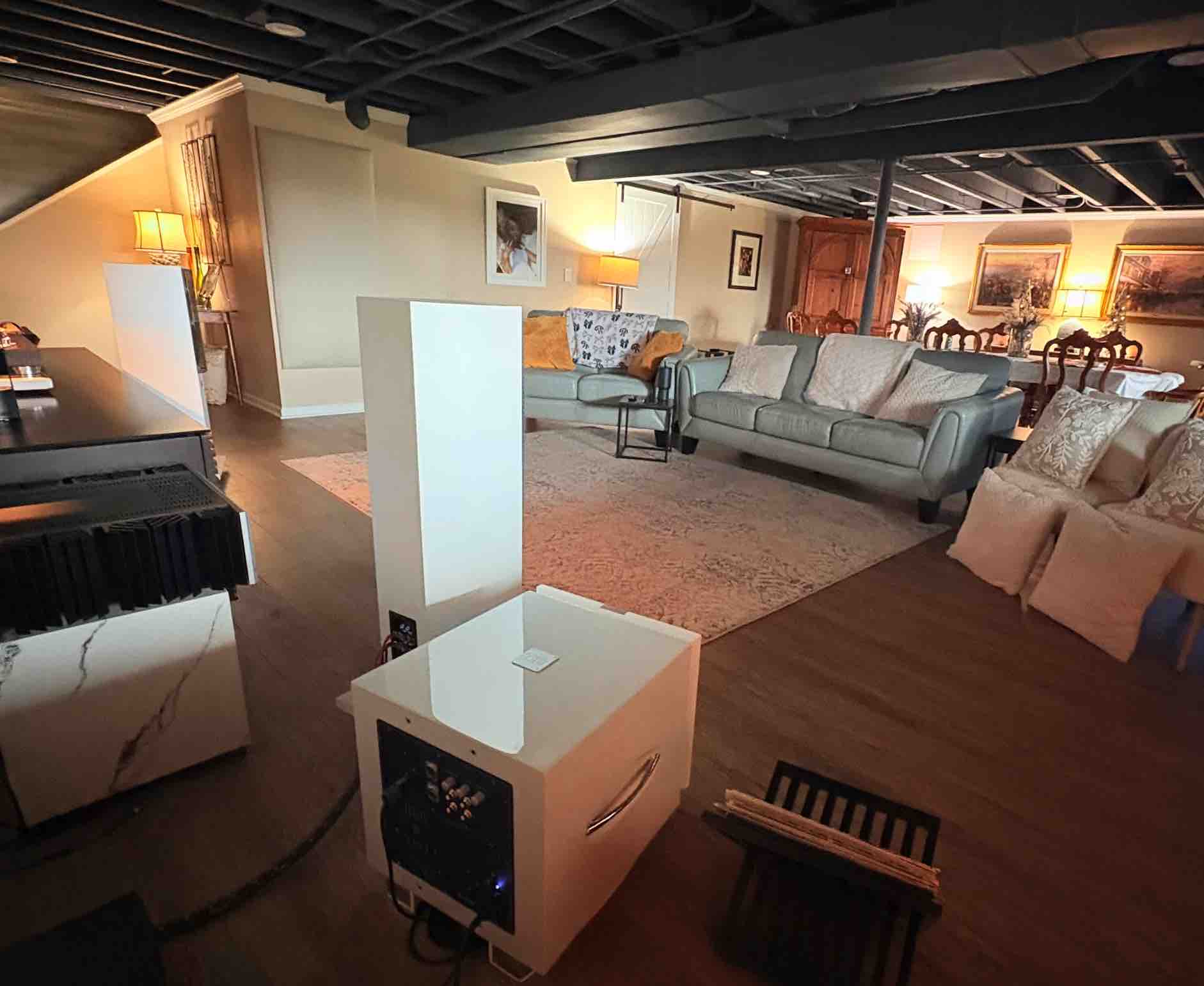

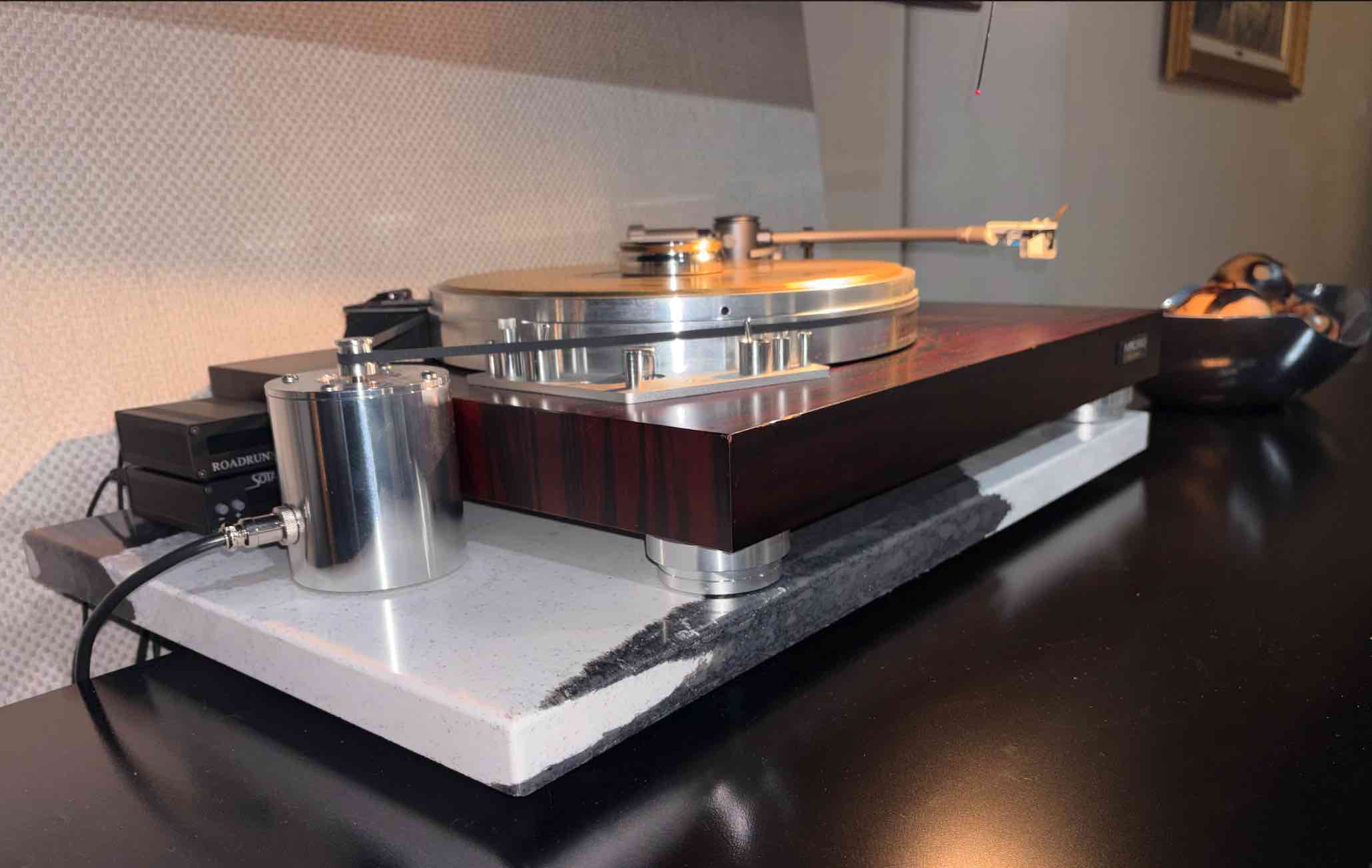
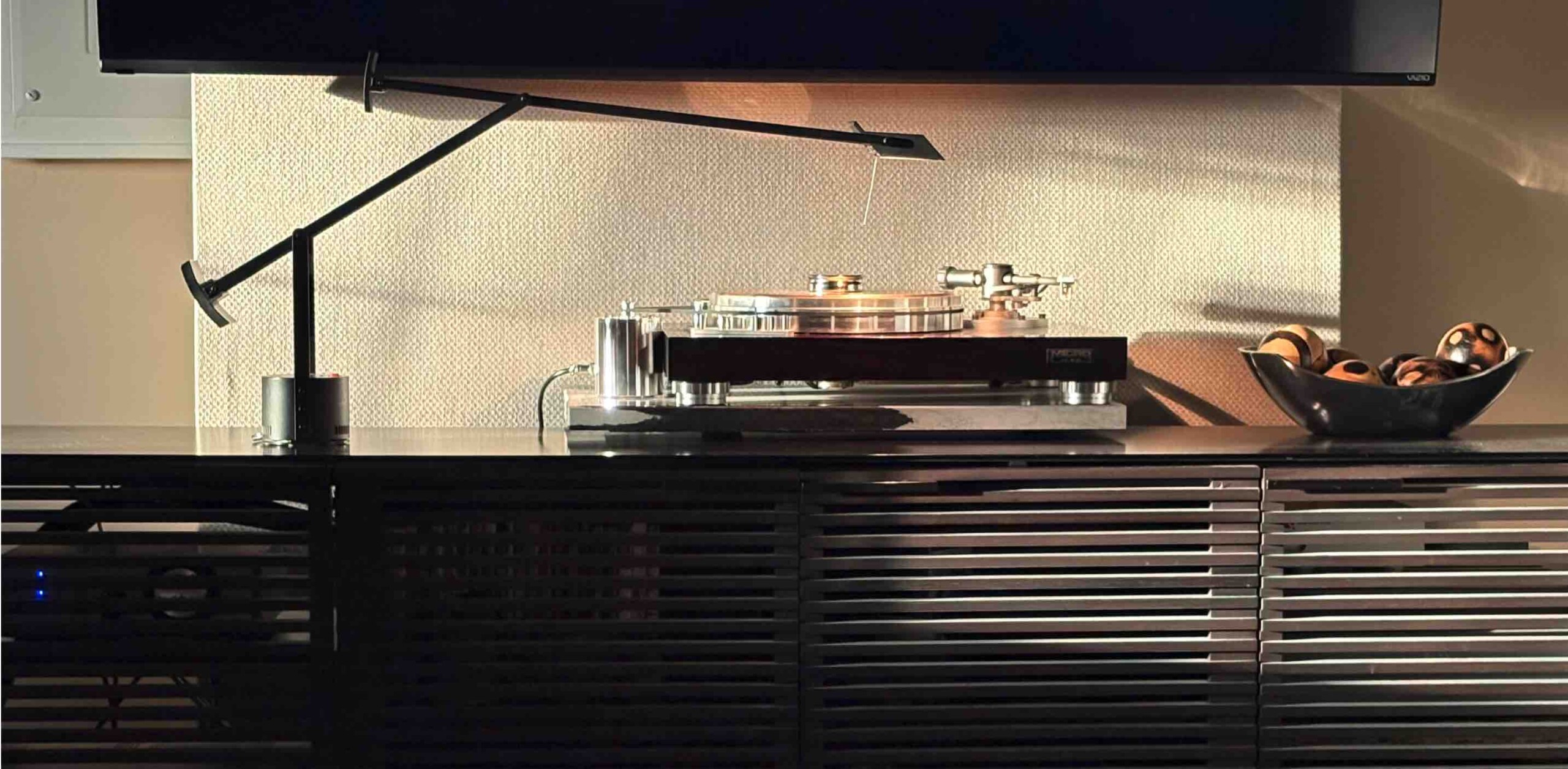
Do you own a vintage turntable with a drive motor on the decline? Or do you have a contemporary turntable that could use a performance upgrade without breaking the bank? As the owner of a vintage Micro Seiki BL-91 turntable, I decided to find out what the impact of enlisting a cutting edge external motor pod might have on my vinyl playback experience. So I reached out to SOTA Turntable to try out their Eclipse external motor package and, shortly after receiving it, I invited some friends and acquaintances over to join-in on the experience and provide additional feedback of their observations.
My Saturday morning meetup came up fast. While digital music played in the background to warm up the system, SOTA Turntable's owner, Christan Griego (you can read about my SOTA factory tour HERE), had arrived early to set up his SOTA Total Eclipse package using their Eclipse/Condor brushless, three-phase external motor, a Phoenix Engineering Condor power supply, and a Phoenix Engineering Roadrunner tachometer to monitor and correct the speed of the platter to within 0.005 RPM in order to minimize audible speed variations and improve clarity. It mated well with my Micro Seiki BL-91.

Removing the faceplate covering the toggle controls and belt drive pulley on my Micro Seiki, he left its drive belt on the platter while his Phoenix motor's belt looped onto it directly above it for easy A/B comparisons. Cables were connecting the Roadrunner tachometer and the Condor PSU to each other and the external power source. were inserted and tested. The whole process took maybe 10 to 15 minutes. Guests soon arrived, unpacked a few albums and dishes to pass, noshed, and settled in.
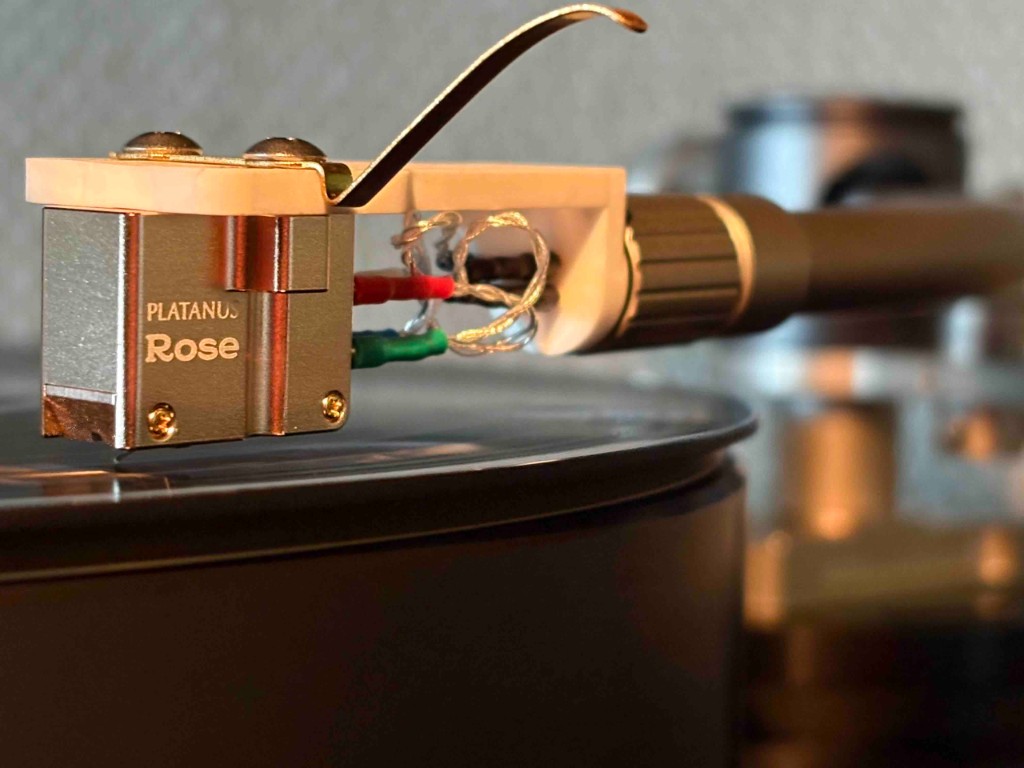
We started off with an assortment of vinyl, favoring jazz initially with Ella Fitzgerald and others, but eventually working in some Indie folk (Fink), prog rock like Roger Waters' The Wall, and pop/rock like Sting 3.0. And the Dynavector XX-2A phono cartridge, in tandem with the Korf Audio HS-A02 Ceramic Headshell and the Audio Creative GrooveMaster 3 tonearm did a wonderful job in rendering the goods with clarity and aplomb.
Soon, the comparisons began. Switching back and forth between the SOTA Eclipse package and the Micro Seiki's motor, it became apparent that the precision of SOTA's external motor had better pace and energy. Think tapping your toes to a beat; with the Eclipse engaged, it was spot-on, while with the vintage Micro Seiki, it lagged a micro second and sounded slightly softer and less dynamic. It was an eye-opener.
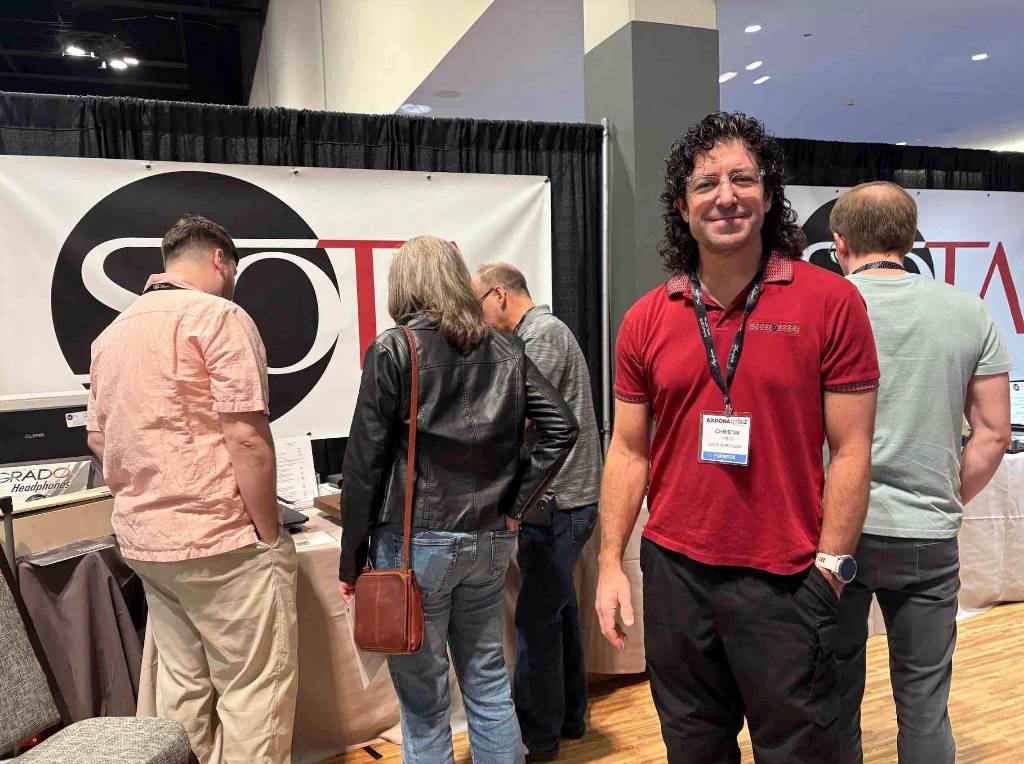
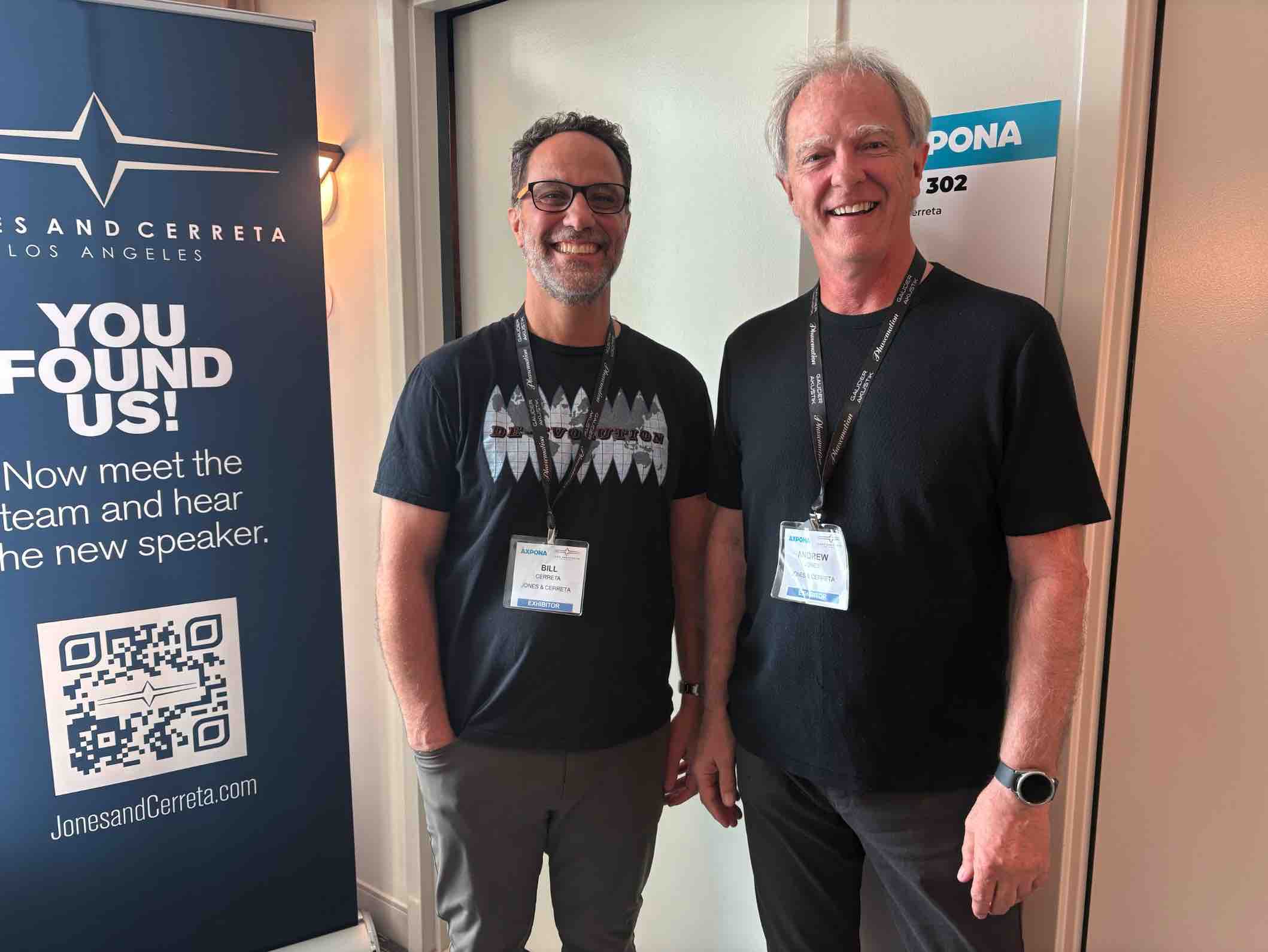
Christan Griego at AXPONA 2025
On Christan Griego and SOTA Turntables
SOTA's current principal, Christan Griego, is a trombone player who went into business building trombone mouthpieces 23 years ago. He'd grown up listening to music and, at 16, worked in a stereo shop. Now, as owner of SOTA turntables, the Griego Mouthpiece still remains a staple product from his 13,000 square foot diversified productions warehouse factory that also produces a cornerstone of his lifelong passion, the turntable.
SOTA was started in Berkley, California in 1979 "when I was six," Griego informed.
David Fletcher and Robert Becker were founding partners and they subsequently brought on Rod Herman as a minority partner "to complete the turntable's package design and run the factory," according to Don Lindich. (psaudio.com/blogs/copper) Eventually, SOTA moved to the Midwest in Chicago and became SOTA Sales and Service, operated by Kirk and Donna Bodinet until 2018.
Griego bought SOTA in 2018 when the warehouse he's currently using for the factory was half-empty (he rented the other half to the City Works department of the city of Delavan, Wisconsin). Prior to this, he manufactured Griego trombone mouthpieces in a friend's 10' x 10' wood shop space that he rented with his original machine. Now, his factory warehouse is all of 13,000 square feet.
"My family is from Spain/Peru/ into New Mexico. We have the Griego Land Grant in New Mexico as heirs and my father didn't know English until he went to school," he says. "My grandma couldn't read or write, but provided for five boys and two girls with her husband. Pretty crazy. Originally we may have been from Greece since they probably referred to them as "Griego" or the Greek. Makes sense to me, but I have no way of validating this."
Communicating via email, Christan Griego addressed some questions about SOTA, their offerings, specs, and the company as a whole.
On the SOTA product line, in terms of turntables and accessories, from the introductory models to their flagship offerings:
"SOTA strives to achieve a very high level of performance across our entire line. From the SOTA Escape at 2k to Onyx at 30k we utilize amazing speed control electronics that function at a very high level out to the thousandths and achieve amazing analog reproduction with each and every turntable we deliver.
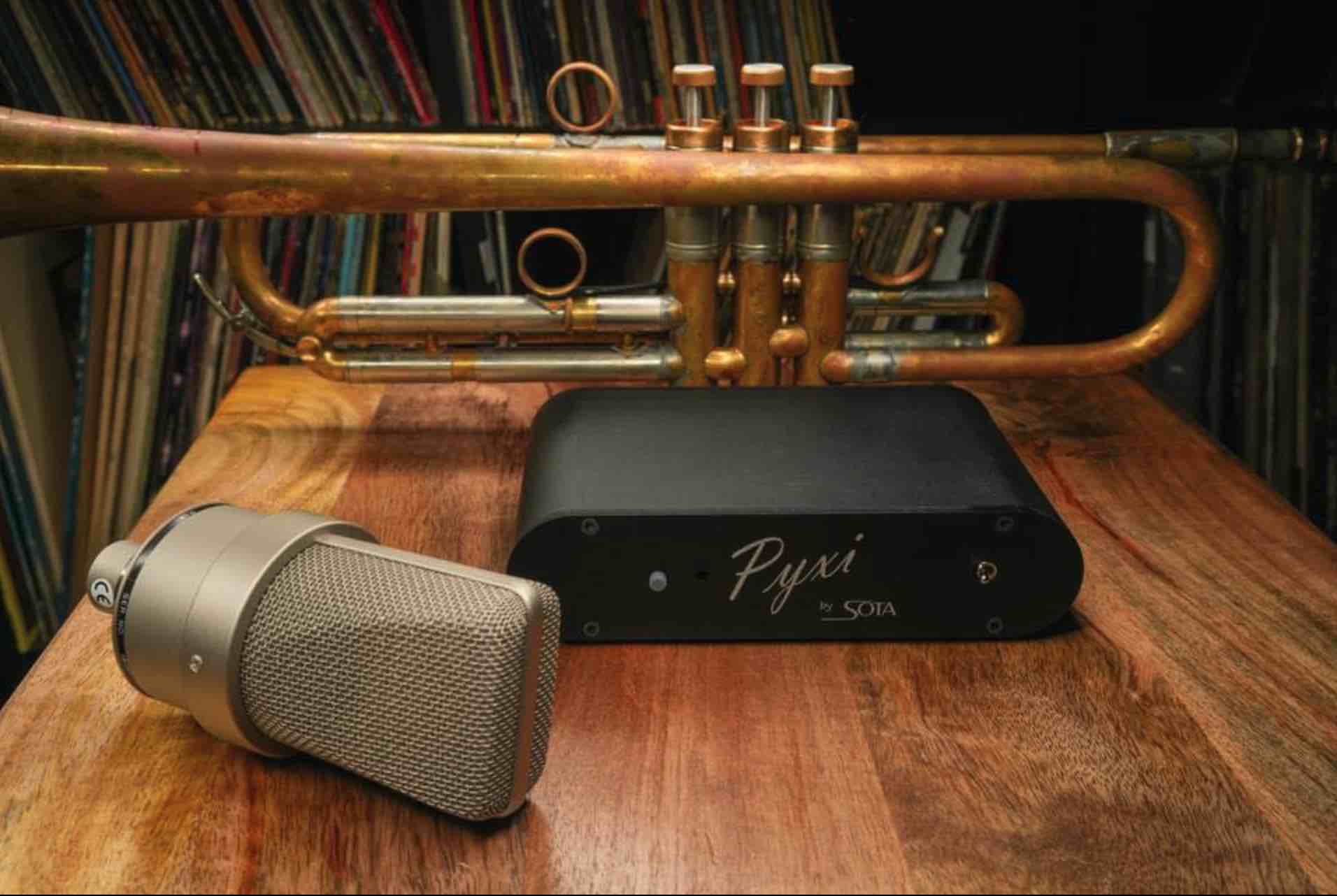
"We make the SOTA Pyxi phonostage, which is an amazing product at $450, and constantly compare components and accessories before we launch them publicly."
About SOTA's turntable belt offerings and what makes them unique:
We offer several belts in different lengths for different configurations. For your Micro Seiki we used a Onyx/Millinia belt length to accommodate the motor pod off of the plinth. We have found that Wow numbers can vary drastic amounts with different belts, so we are constantly testing belts to ensure the performance of our SOTAs meets our qualified numbers that are specified on our website.
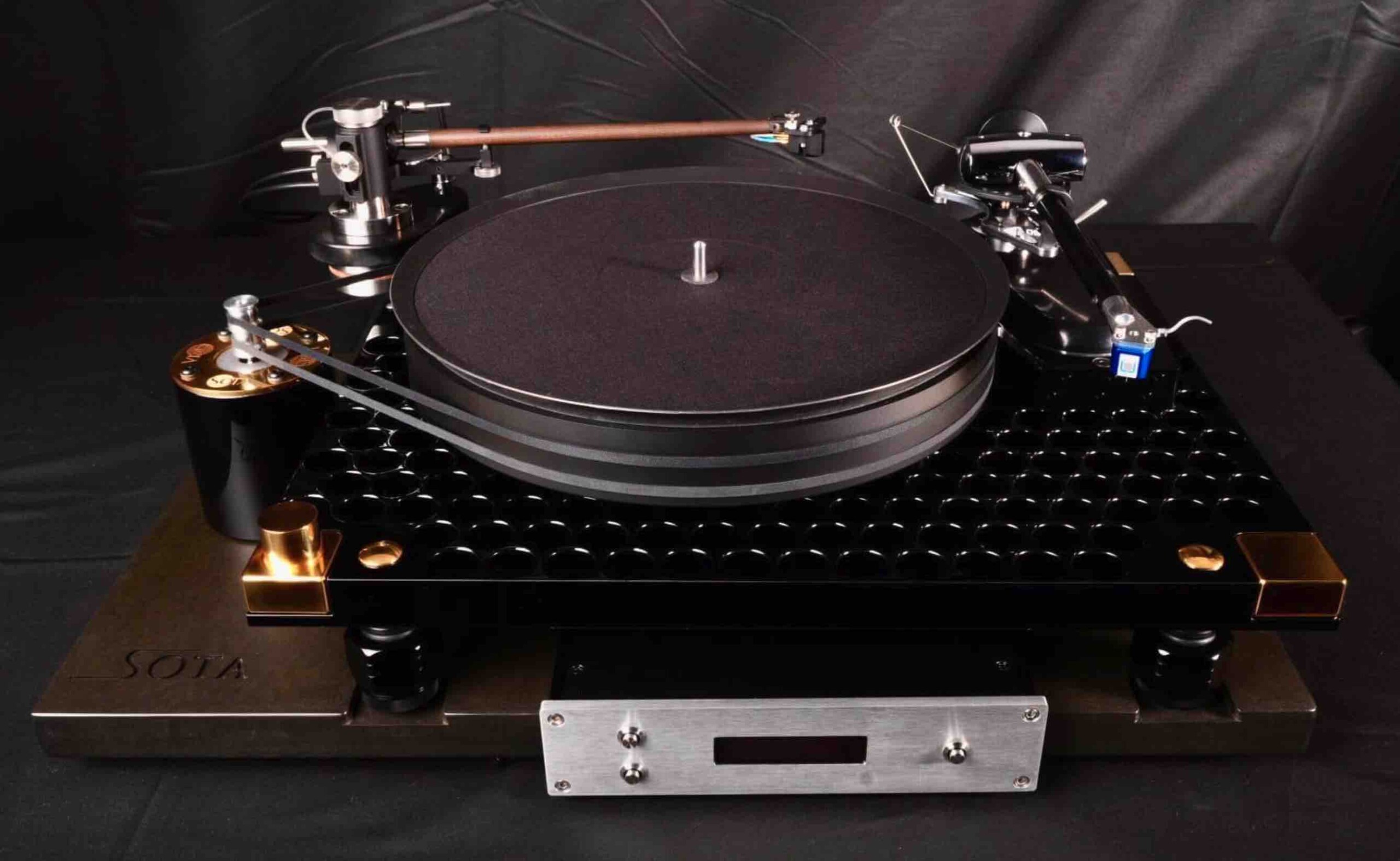
One of SOTA's high end offerings (photo courtesy of SOTA Turntables)
On their latest, innovative products in the works:
"This year, we will have our Onyx Direct Drive on display in the marketplace (at AXPONA), featuring amazing speed stability and some of the lowest wow numbers ever recorded" We utilize a encoder ring that takes 360,000 line samples per revolution and maintains absolute speed stability to a ridiculous level. The Belt drive version of the Onyx will be in the Hi Fi Life room, one of our dealers from Milwaukee. It will have the Origin Live Renown tonearm, which is the first time it has been shown or heard in the USA."
On how and why the Eclipse external motor package enhanced the performance of my vintage turntable:
"I'll explain it in layman's terms first, followed by the technical details.
"(In layman's terms), the roadrunner tachometer utilizes a magnet on the platter underneath (or on the side, as on your table). This magnet passes over a circuit board that has a reed switch, which registers the magnetic pulse with every platter rotation. This signal goes to the tachometer box, which displays the speed stability to the third decimal point: 33.333. When platter lubrication heats up or other factors cause variation, the roadrunner sends this information to the Condor, which then controls the motor pulley over a determined time period in the software. It slowly adjusts the speed so you do not hear the adjustments over time. This is very important because you only want to only hear music and not be aware of the electronics making corrections at any point.
Technical (and Specs) of the Condor PSU:
"The Condor Power Supply Unit (PSU) is a microprocessor controlled digital regenerative AC power source used for accurate speed control of a turntable motor. The PSU uses Direct Digital Synthesis (DDS) to create an extremely accurate and clean sine wave that improves motor speed stability and allows the user to precisely adjust the turntable platter rotational speed. The PSU is extremely easy to use and set up. All of the operating parameters are stored in non-volatile memory and the device always power up with the last used speed and frequency offset displayed. The PSU is powerful enough to start up in either speed selection, so there is no need to start in 33 RPM, then switch to 45 RPM as in other units.
- Dimensions: Controller: 3.565"L x 2.50"W x 1.1875"H. Weight: Controller: 4 oz. Case: 1 piece Extruded Aluminum.
- Operating Modes: Standby, Sleep, Normal, Voltage Calibration, Frequency Calibration, Factory Default Programming
- Programming Mode Power Requirements: DC Supply 24VDC 500 mA nominal
- Normal mode; 20mA Standby; 5mA Sleep Output: Voltage: 3 Phase AC sinewave 3V-24V.
- Phase and Voltage are frequency dependent.
- Frequency: 1Hz to 100.0 Hz in 35µHz steps
- Distortion: Less than 0.5%
- Speed Adjust: ±1.0 RPM in 0.1 RPM steps
- Normal Mode ±1.0 RPM in 0.01 RPM steps
- Calibration Mode Min Freq Step: 35µHz Freq Stability: Crystal Controlled ±30PPM F
- req Accuracy: ±0.003%
- Options: RoadRunner Tachometer input; synchronizes output frequency to digital tachometer reading to within ±0.005 RPM with 2.5PPM (±0.00025%) stability. Serial input on 3.5mm jack, 9600N81.
On the salient engineering features that make the motor work as it does:
"There are many features available in the Condor PSU such as:
"Soft Start: Whenever the Condor PSU exits Standby Mode, it starts the platter at ~3 RPM and evenly ramps up the speed to prevent "burn out" on the belt. This greatly extends the belt life and improves long term speed stability. To change between 33.3/45/78 RPM (if enabled), press and release the Stby button. To adjust the turntable speed in 0.1 RPM increments, press and release the Plus or Minus buttons. To stop the turntable platter and return to Standby Mode, press and hold the Stby button until the 3 dashes are displayed.
"We normally turn 78rpm to off before shipping the PSU/Turntable but it remains available in the background if someone wants to play 78s. You can enter programming mode and turn it on.
"Voltage Output Mode: Voltage Output Mode is used to adjust the output voltage the PSU reverts to after the platter has reached operating speed. The motor requires much more torque at start up than it does once the platter is on speed; by reducing the running voltage once the platter is moving, vibration and noise are greatly reduced. The PSU will always assert the maximum output voltage when starting, or changing speeds, then revert to the programmed lower voltage after approximately 3 seconds. Voltage Output Mode has separate adjustments for 33.3,45 and 78 RPM; all can be selected, displayed and adjusted while in Voltage Output Mode.
"Frequency Calibration Mode: Frequency Calibration Mode is used to fine tune the output frequency to compensate for belt tension and other variables that may cause the platter to rotate faster or slower than the indicated speed. Frequency Calibration Mode will adjust the base frequency in 0.01RPM steps within a range of ±1.0 RPM. Frequency Calibration Mode has separate adjustments for 33.3/45/78 RPM; all can be selected, displayed and adjusted while in Calibration Mode. Enter Frequency Calibration Mode from Standby Mode by holding the PLUS button; press and release the Stby button. The display will show: The display will then indicate the current speed selection (33.3/45.0/78) and start the turntable motor rotating. The display will then show the current speed offset in 0.01 RPM steps; range is +0.99 to -0.99. The following indicates an offset of -0.15 RPM: Increase or decrease the base frequency offset for the selected speed by pressing and releasing the Plus or Minus buttons until the exact turntable speed is indicated by a strobe device or tachometer. Pressing and holding the Plus or Minus buttons will automatically increase or decrease the speed at a rate of 8 times per second. To select the other speed offset, press and release the Stby button. The display will show the newly selected speed, then revert to the offset for that speed selection. Increase or decrease the base frequency offset for the selected speed as above. When frequency calibration is complete, press and hold the Stby button; the display will show "SAV" and the frequency offsets will be saved in non-volatile memory. The PSU will then return to Standby Mode." Note: Frequency Calibration Mode is moot if using the RoadRunner tachometer with feedback.
(Editor's Note: you can find the Condor digital controller manual HERE.)
On Where Griego sees SOTA Turntables in one year? Three years? Five years?
"That's a tough question. I think we will follow the market's direction. We've ridden the highs of COVID, with sales going nuts, and now dealers are telling us they don't want much inventory. We're a small company that has known our customers by name for over forty years, so I don't see that changing. We've serviced many old SOTA Turntables during economic downturns while selling new turntables to those wanting the latest technologies. We're thankful to still be around answering phones and emails and keeping everyone spinning."
Other things he'd like to share with readers:
"This latest chapter of SOTA Turntables started in 2018 in Delavan, Wisconsin. With the move to Wisconsin we added a complete CNC metal shop and also now have a complete wood shop where we're making 99% of our products in house. This differs from most in the industry and we're looking forward to innovating and creating great sounds."
The Lay of the Land
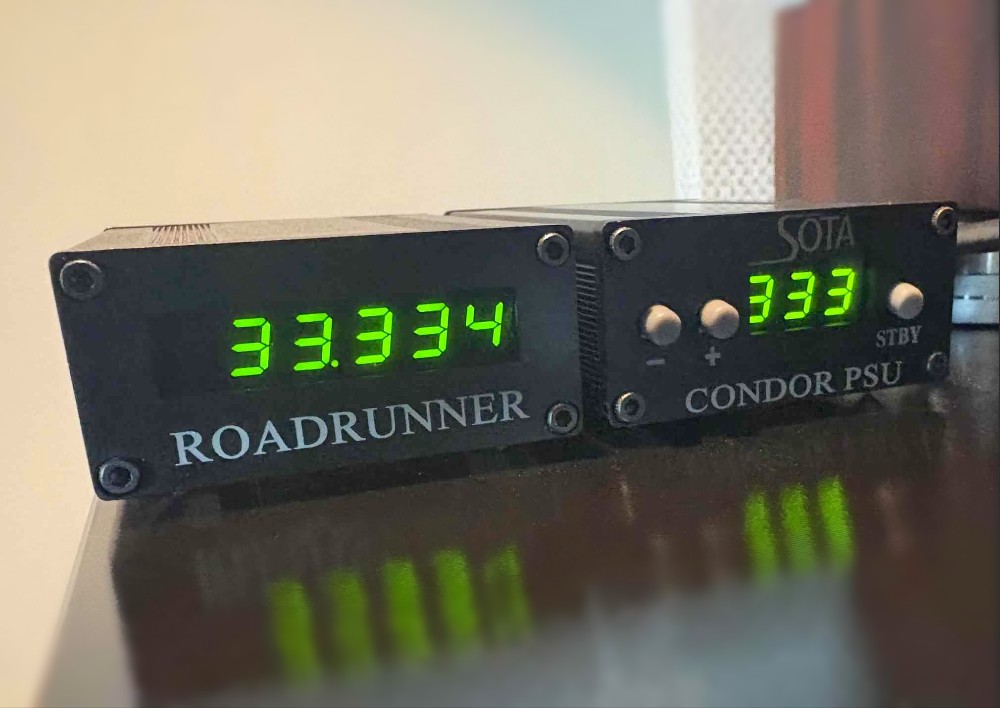
The front of the PSU has, from left to right, minus (-) and plus (+) buttons to micro-adjust speed settings manually, a rectangular digital display to indicate RPM selection (i.e., 33 and 45), and a standby button that you press and hold long to start or stop the platter, and tap quickly to change RPM selection (i.e., 33 or 45).
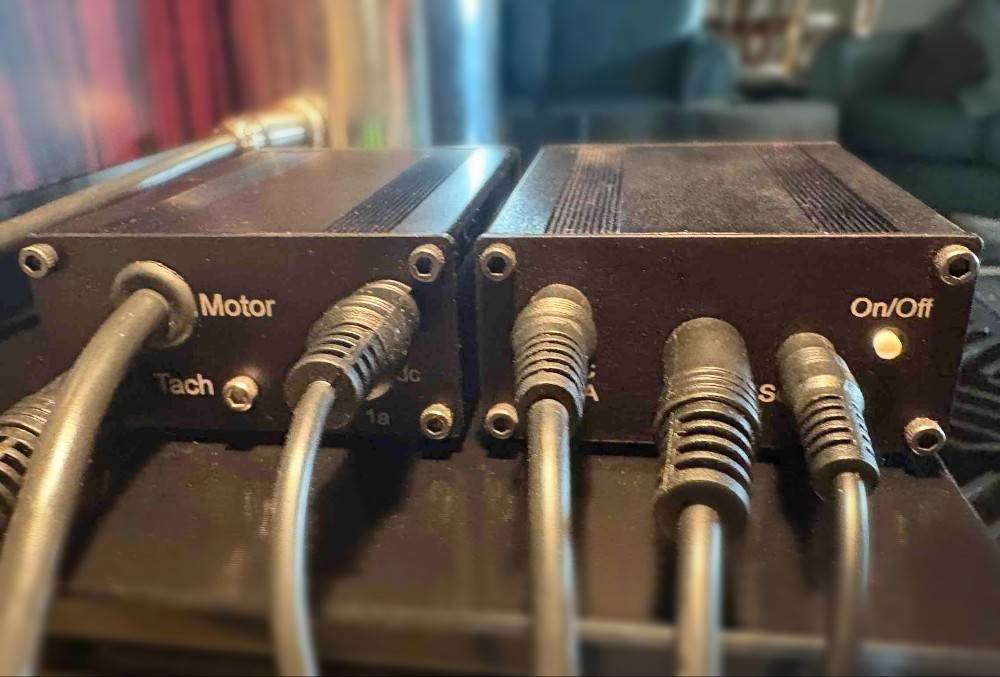
At the rear of the PSU unit, from left to right, is an input marked "Tach," for a cable to connect to the tachometer; a thicker cable connecting to the Eclipse/Condor motor pod; and another input to connect to the external power supply.
The Front of the Roadrunner tachometer features a rectangular digital display that indicates the speed of the platter to the thousandths place. At the rear, from left to right, is an input to connect a cable to the external power supply; an input marked, "PSU" for a connecting cable to the PSU; another input marked "Sensor" for a cable connecting to the sensor; and an ON/Off button.
The power supply is a 24 VDC wall adapter.
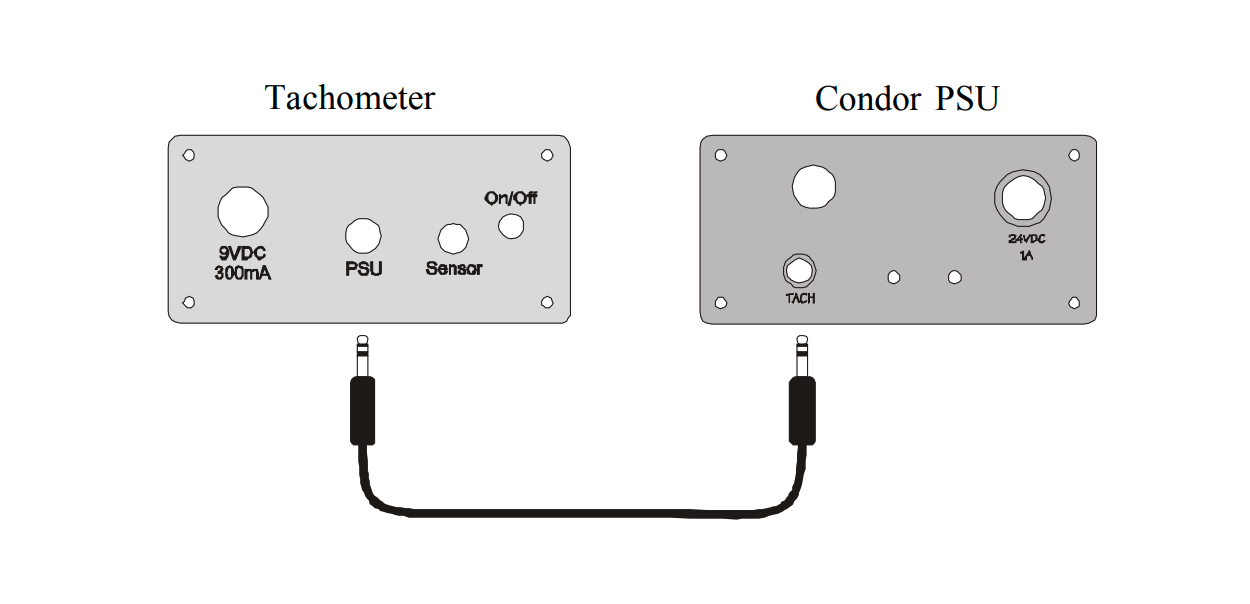
Image from the Roadrunner manual
A Few Setup Notes
The directions for the Roadrunner digital tachometer state that the magnet should be mounted on the underside of the platter, however, that was not possible with my Micro Seiki so, instead, I mounted it on the side of the platter about 3/8" above where the external motor's belt rides (see attached photo) with a spot of glue. Peeling the paper backing from the adhesive patch under the sensor, I placed and pressed it atop a spare A/V RoomService EVP Equipment Vibration Protector pad with the sensor at the outer edge of the pad. The pad was seated on the BL-91's chassis next to the platter with the sensor pointing at it. Carefully turning the platter by hand, I rotated the magnet up next to it, and adjusted the spacing between it and the sensor to roughly 1/16", and moved the platter slowly back and forth to ensure that the magnet didn't hit the sensor.
From the Roadrunner digital tachometer manual:
Connect the tachometer to the sensor by plugging the 2.5mm jack into the back of the tachometer (marked "Sensor") and the 3.5mm right angle jack into the sensor PCB. Plug the wall adapter into an AC socket and connect the other end to the tachometer (marked "9VDC"). Press the On/Off button on the back panel; the display will show 5 dashes. Verify operation of the sensor by manually rotating the platter until the magnet is directly over the sensor. Whenever the magnet triggers the sensor, the left most LED display will turn on the 6th dash.
Turn on the turntable motor to start the platter rotating. The tachometer will display the RPM reading after 2 complete revolutions and will update the display on every revolution after that.
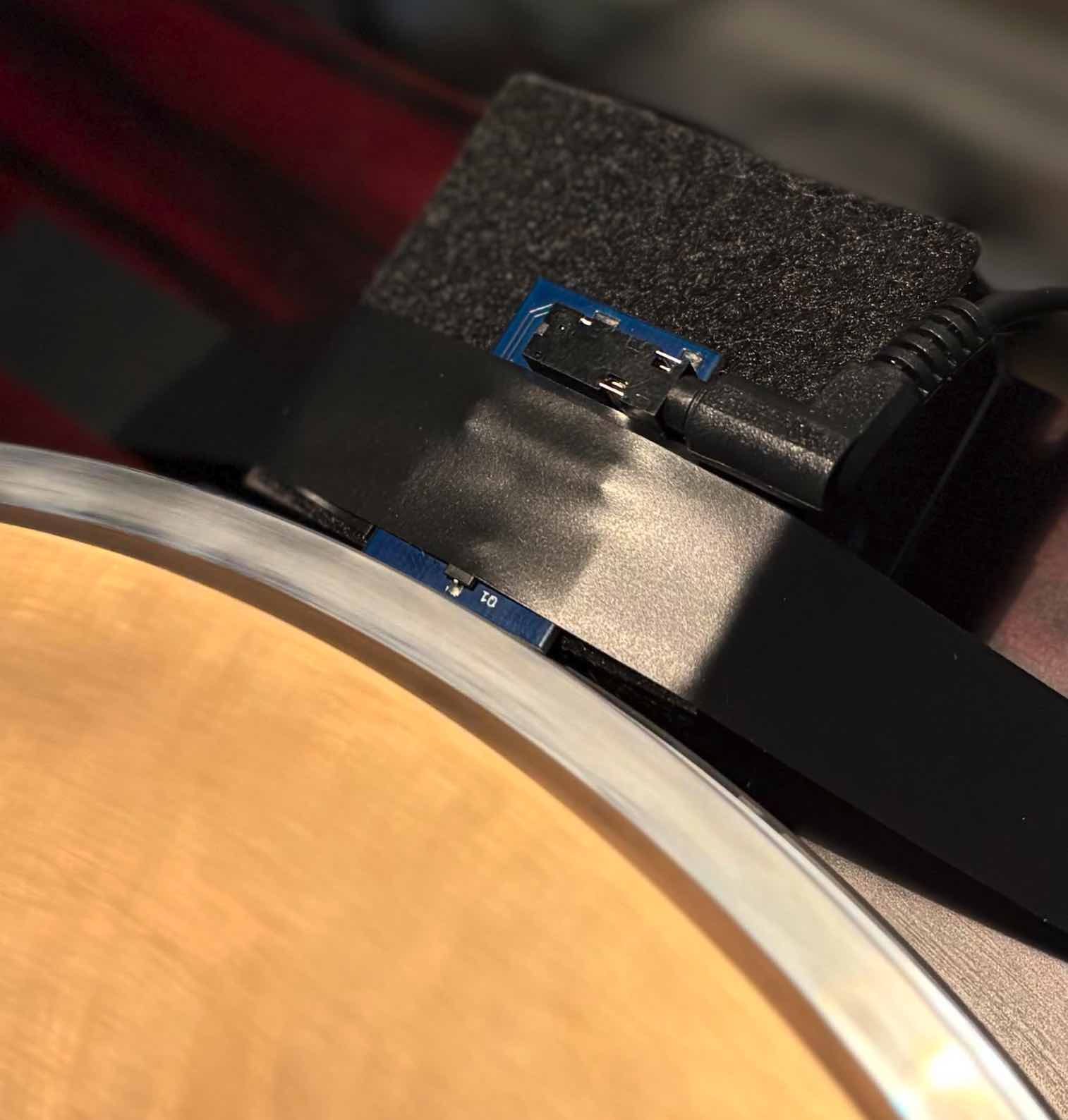
Here's the sensor mounted atop an A/V RoomService EVP Equipment Vibration Protector pad and held in place with electrical tape (later, I switched to painter's tape to better protect the finish on the turntable's plinth)
Maintaining the proper gap is important. After moving the BL-91 several times, the sensor ended up too close; as a result, the magnet struck it on several occasions, dislodging the soldered connection, and necessitating the shipment of a replacement sensor. To prevent such drift, I taped the sensor and EVP pad in place with painter's tape (if it was a permanent solution, I'd use a more secure method of attachment).
After the SOTA Turntables Eclipse package was properly installed, vinyl playback in my listening room took on an extra sense of sophistication and grandeur; the RoadRunner's digital display informed me of the platter's speed to the thousandths of RPMs, while playback over my Micro Seiki BL-91 never sounded better! The improvement was born out in the sampling of songs in my official listening test.
A Total Eclipse Listening Session
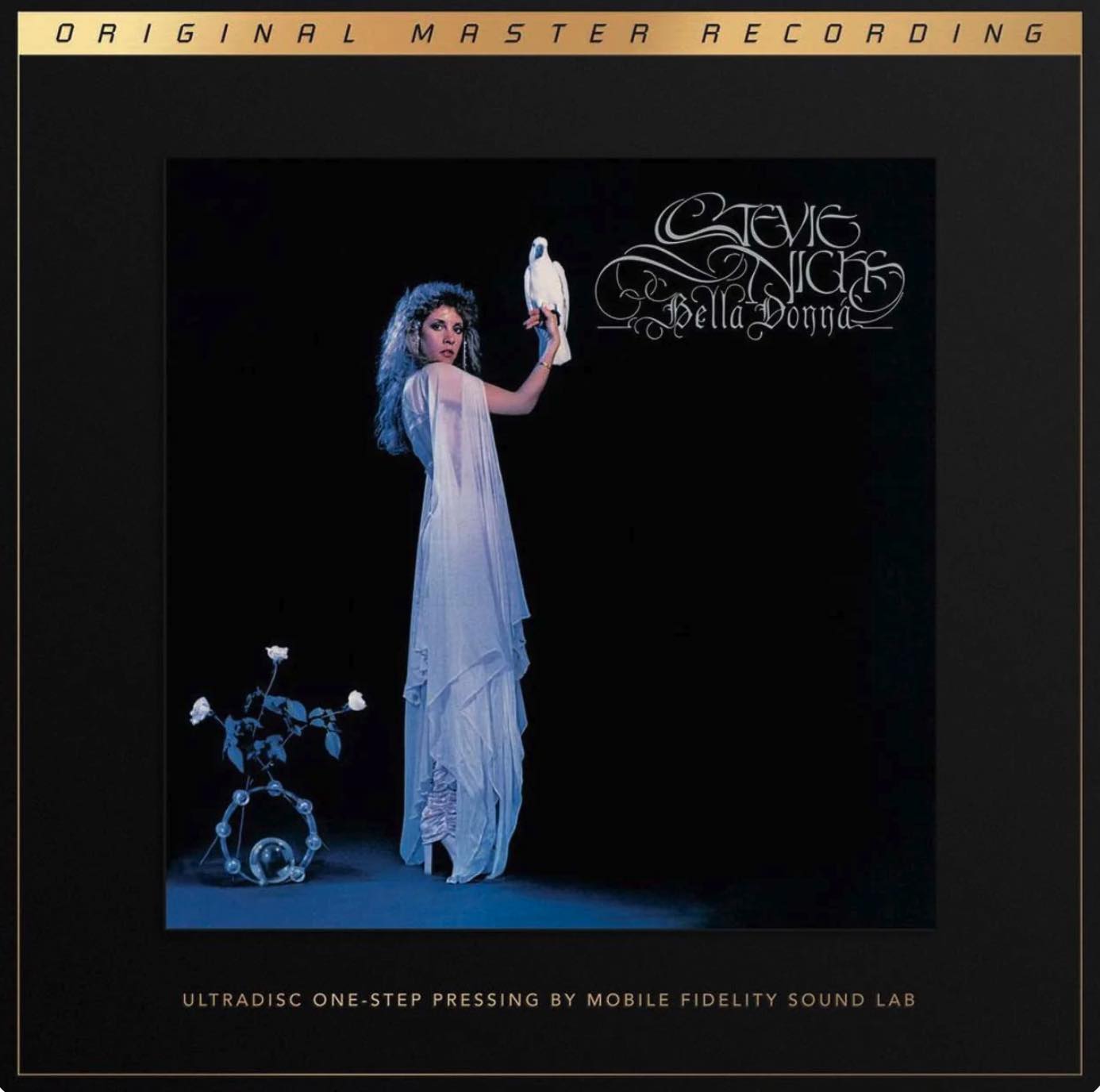
Playing Stevie Nicks' title track, "Bella Donna" on my Micro Seiki BL-91 with its internal motor, it's evident that her vocals and Waddy Wachtel's electric guitar make for a marvelous power couple when unleashed in their captivating duet (Stevie Nicks, Bella Donna. Vinyl 45 RPM. Mobile Fidelity Sound Lab Ultra Disc One Step Pressing. Modern Records, July 27, 1981). Wachtel's electric guitar, with its winsome whines and growls, perfectly compliment her double-tracked mezzo-soprano voice, which are round, rich, and sprinkled with her signature tremolo and piercing highs. Russ Kunkel's bass drum and snare are crisp, robust, and punchy, while Bobbye Hall's congas add oomph and texture to the mix, which is lucid and palpable.
With the SOTA Eclipse package engaged, though, the shift is palpable. There's a noticeable bump in both clarity and timing. Take Nicks' vocals, for example: they sound a touch more natural and right. It's as if with the Micro Seiki's motor, you're hearing her on a classic vintage turntable, while with the Eclipse, you're hearing her live at the studio. The vocals, the instruments, and the ambient acoustics sound slightly more organic and true.

With the SOTA Eclipse motor engaged, Stan Getz's tenor saxophone is forward, precise, warm, and three dimensional in "Everything Happens to Me." (Stan Getz, Stan Getz in Stockholm. 33 1/3 RPM Vinyl, mono reissue. Verve Records, UMV 2614, 1981) Clearly defined, you can hear the textures of his reedy Selmer tenor sax, soft, flowing, and lyrical, on full display. Gunnar Johnson's double bass sounds recessed and a little wooden, in the backdrop, as it keeps steady time in this slow ballad. In this recording, Begt Hallberg's piano solo packs a medium weight and sounds a bit hard edged, but quite competent and expressive through the higher registers. And drummer Anders Burman, who used only a brushed snare and cymbal, sounds spare and likewise, recessed. Of him, Getz says in the jacket notes, "He has good time, and I expect is the only drummer in Sweden with consistently good time and jazz feeling."
With the Micro Seiki's internal motor driving the platter, Getz's sax sounds a touch warmer and darker, while Hallberg's piano appears more lush in the lower midrange. The band, as a whole, has a touch more vintage vinyl warmth sound—as opposed to with the SOTA Eclipse in play, which produces slightly cleaner saxophone notes, more articulated bass plucks, and a leaner, more clearly elucidated and drier sounding piano.
From the delicate violins in the opening moments to the thundering whole orchestral swells, the SOTA Eclipse package captures the dynamic swings of Beethoven's Symphony No. 5 (Beethoven, Ludwig van, Symphony No. 5 in C Minor; Prometheus Overture. André Previn, London Symphony Orchestra, Warner Classics, 2019). Starting with violins, and then succeeded by violas, cellos, and basses, then echoed by the woodwinds and horns, and enjoined by the timpani and orchestra in successive passes, it's magnificent, as are the spatial cues of London's Kingsway Hall.
With the Micro Seiki's internal motor engaged, it's a very organic, rich, detailed, and natural-sounding analogue experience. In particular, the instruments' timber and the decay of violins and the orchestra as a whole is very gratifying. The differences that I hear from the indigenous Micro Seiki Motor are that the SOTA sounds slightly lighter and faster with slightly more detail and dynamic contrast. In dancing terms, the SOTA Eclipse is the fleeter Fred Astaire to the Micro Seiki's heavier-footed Gene Kelly.
Conclusion
When it comes to enhanced performance, the SOTA Eclipse external motor package is to a turntable what creatine and protein powder are to a senior citizen lifting weights. It gives it a definitive 21st Century boost. With the Eclipse in play, vinyl playback had improved detail, pace, dynamics and energy. And with the tachometer providing immediate feedback to the motor, you could rest assured with its speed accuracy, minimizing wow and flutter, and maintaining correct musical pitch throughout.
So, if you have a vintage turntable with a declining motor, or you want to upgrade the performance of a more contemporary deck without having to replace it, the SOTA Turntables Eclipse package is worthy of your consideration. It does a wonderful job and, as such, I heartily recommend it.
Eclipse Package
Retail $975
SOTA Sound Inventions LLC