

I was recently discussing vinyl playback with a friend and audio equipment designer when he first suggested it.
"You should really look at the Dynavector XX-2A," he effused, claiming that it had excellent detail retrieval, treble extension, bass, dynamics, and an overall balance and presentation that compared favorably with many moving coil cartridges that sold for several times its price. In fact, he had decided to sell his $9500 [name withheld] phono cartridge to get another XX-2A. He made the introductions, and soon I was communicating with Mike Pranka, owner of Toffco and Dynavector USA.

Mike Pranka (image courtesy of LinkedIn.com)
A Little Q & A with Mike Pranka
Looking to find out more about Mr. Pranka, I did a little research and emailed him a short list of questions. Here's what I found.
"Mike Pranka is at the very top level of integrity and know-how," wrote Joe Cohen, a manufacturer and distributor in the consumer audio industry, and owner of the Lotus Group. "He is an analog expert and a savvy marketer—a definite asset to any team." (www.linkedin.com)
Growing up in the Midwest's Chicago, Illinois, and St. Louis, Missouri, Mike Pranka dabbled in art before launching his successful career as an entrepreneur and Dynavector's U.S. distributor. Taking a few minutes from his hectic schedule, he indulged me with a little Q and A via email.
On his Bachelor's of Fine Arts Degree at the Kansas City Art Institute and current artistic endeavors
I graduated from the painting department at KCAI. I probably preferred graphite and watercolor the most. I haven't been working on visual art lately. I was probably better at basketball (than art) in college—and I wasn't very good at basketball!
Highlights of his professional experiences
Highlights have always involved helping folks enjoy playing their records, whether at an audio show, a dealer's showroom, or someone's home.
On how he got into audio
I can't remember a time when I wasn't interested in music and its reproduction. Even as a small child, obsessed with my little clock radio and the tunes that AM radio played at the time.
And Toffco?
I began helping a local audio distributor, part-time, back in the mid-90s. They eventually moved on to other things, and through that experience, I started my own company in 1998.
On what drives Toffco
It would have to be to work with good people and unique, high-performing products.
And what makes Dynavector special to him?
Dynavector was founded by Dr. Noboru Tominari in the mid 70s. "Dr. T" studied engineering at Tokyo University and was also a professor of mechanical engineering at Tokyo Metropolitan University. He married a profound love of music and its reproduction with an engineer's curiosity for fundamentally improving analog playback. Dynavector has always been a true research, development, and manufacturing operation.
It was back in the 90s when a colleague in the UK told me how much they enjoyed the Dynavectors they had. I eventually got one myself, which led to later working with DV as their US distributor. For me, just playing records at home, DV has always gotten the difficult art/science balance right. There are technical and engineering challenges involved with tracing an analog groove. There is also the human response to the result of that process. Balancing those considerations can bring special results, and the team at DV has never lost sight of that.
On how sales are going
They are doing well.
An observation on the audio industry at large
As much as I've learned about and enjoyed music through audio, the best part of being associated with it has been the friends who share similar interests. It turns out it's never really been about the HiFi or the records. It's the wild variety of people involved that makes it so fun and rewarding.
The Unassuming XX-2A
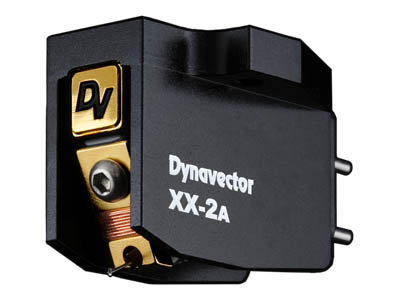
There's nothing pretentious about the Dynavector XX-2A's appearance. Form fits function. Clad in a minimalist black machined anodized 7075 aluminum chassis with a slightly curved, rectangular profile bearing the white "Dynavector XX-2A" logo," a golden DV logo upfront, and a bolted slender gold colored metal cantilever yolk raking back underneath with bands of thin wire wrapped around its face above the cantilever cradled below. Those tiny wires comprise the Flux Dumper, which is part of the magic of Dynavector cartridges.
"(The Flux Damper) first appeared on the XX1, but now it is incorporated into all our cartridges. It involves winding a wire around the front yoke of the cartridge," said the late Dr. Tominari, the founder and designer of Dynavector. "Experiments showed that movement of the coils was generating a voltage in the yoke which in turn affects the linearity of the magnetic flux. It is this that makes many poor moving coil designs sound thin and irritating. By short circuiting the yoke we prevent this happening, which leads to a much smoother and more natural high frequency balance. The effect is quite noticeable..." (Gregory, Roy. Hi-Fi Plus, Issue 8, November 2000)
Like its predecessor, the XX-2 Mk2, the XX-2A features a 6mm solid boron cantilever, fitted with a PathFinder Line-Contact stylus. Ultra-High purity PCOCC (Pure Copper Ohno Continuous Casting Process) wire is used for the coils and the output is identical at 0.28mV with a 6 Ohm impedance. The XX-2A uses high-powered Alnico magnets and the previously mentioned magnetic flux damper. It also weighs the same as the XX-2 Mk2 at 8.9 grams and features a tonearm-friendly compliance of 10mm/N, making it readily usable on a variety of tonearms. Dynavector deploys ultra-fine wire, ("Our wires are only 11 microns in diameter," said Tominari. "Every other cartridge uses at least 20 microns." (ibid)) and high output coils and uses pure iron for their magnetic circuit because of its high magnetic permeability.
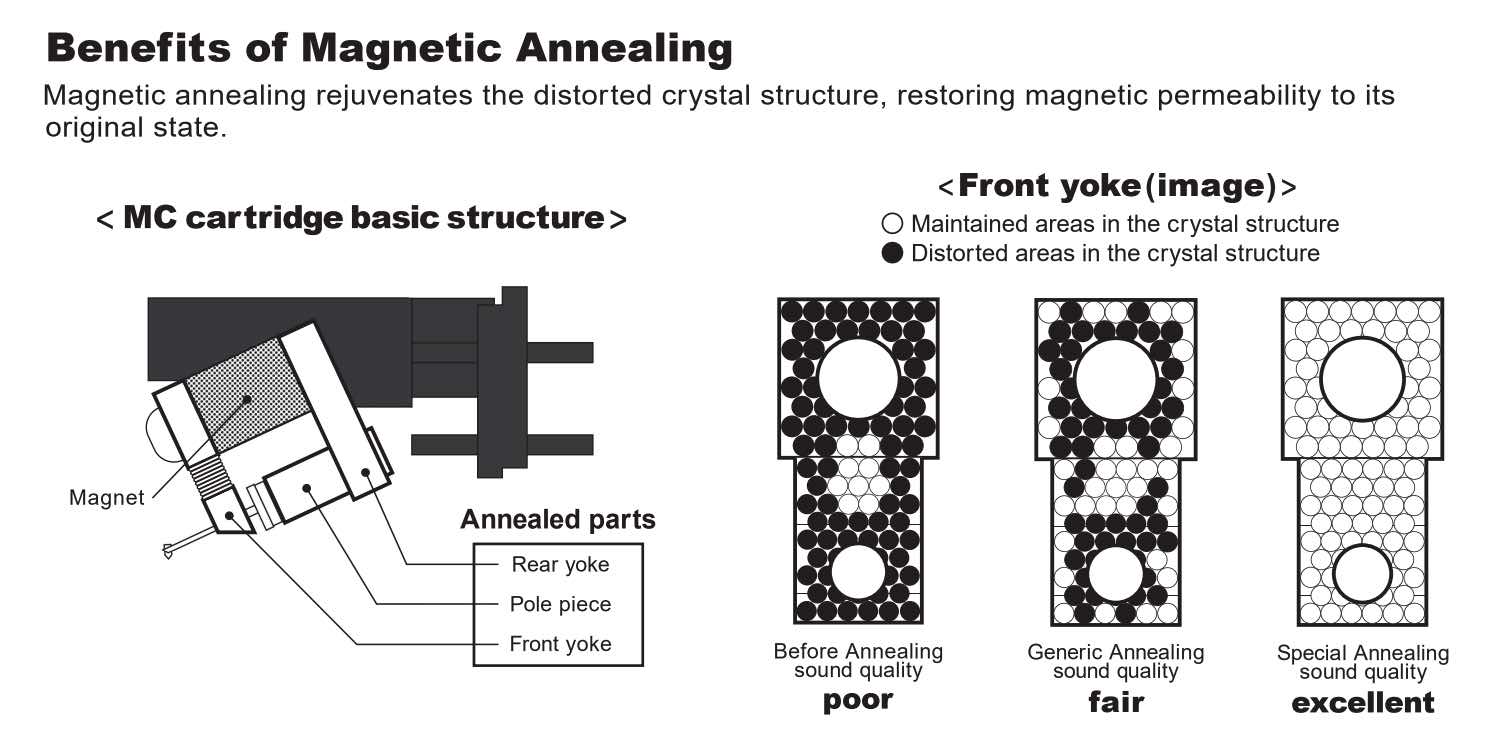
Image courtesy of www.dynavector.com
But here's where the brunt of the improvement between the XX-2 Mk2 and the XX-2A occur: To ensure that the processing of these metal parts doesn't degrade the magnetic permeability of the crystalline structure at the atomic level, their literature reads, they now utilize an optimized annealing process involving the controlled temperature, environment, duration, and rates of heating and cooling. (www.dynavector.com)

An XX-Ceptional Performance
Whatever they're doing, it's working magnificently! For several months, I put the Dynavector XX-2A cartridge through the paces, playing a large swath of my vinyl library on it—including jazz, blues, classic rock, gospel, Indie music, Dixieland, and electronica. I found that the XX-2A rendered them all with great authority and finesse. Frankly, there have been many moments when I was transfixed by the way it captured the music. Then, several months ago, I procured several large, sealed gift boxes of used jazz, blues, and vocals records, and I used the XX-2A to sample a number of my new treasures. I was both thrilled and amazed with some new discoveries and how well the Dynavector presented them.
Shortly afterwards, I hosted a listening party, and guests were impressed with the magnificent sound of vinyl pouring as I regaled them with food and drink. However, it was soon time to set aside the fun and entertainment and put it to the official test.
For the purposes of this review, I employed the GoldRing Ethos SE moving coil phono cartridge as a reference to compare the Dynavector XX-2A. Both are set at roughly 2.0 grams tracking force, and since the GoldRing cartridge is much lighter than the Dynavector, it takes time switching back and forth, as I must remove the record, weigh and make gross, then minute adjustments to the GrooveMaster 3's counterweights for the correct tracking weight, and re-platter the record before engaging the motor and listening again. This makes for some uncomfortable delays at times, however with practice, I become fairly efficient at minimizing the downtime.

Official Listening Session Notes
Critical listening is conducted in the front half of a 32' x 22' main space in our finished basement with a painted exposed ceiling that's roughly 9' high and a ceiling cloud over the listening area, acoustic absorption panels, and bass traps, as well as two 20 amp and two 15 amp dedicated A/V circuits. You can read about the design and finishing process HERE.
Today, I am using a Micro Seiki BL-91 retrofitted with an Audio Creative GrooveMaster 3 Tonearm and a Korf Audio HS-A02 Ceramic Headshell to house the phono cartridges being compared. It also employs the SOTA Turntable Eclipse external motor package that's in for review is enlisted for optimal pitch stability and speed accuracy (you can read more about the rest of my system by clicking on my name in the byline).

In his intimate and downtempo"Sort of Revolution," there's a soothing quality to the sonorous and rich baritone vocals by popular Indie-Neofolk singer, Fin Greenald (AKA, "Fink"), and the XX-2A extracts that just a bit more (Fink. IIUII (It Isn't Until It Is). 33 1/3 Vinyl. R'COUPED, 2021. RCPD022). Starting off, there's a slightly lower noise floor as the needle glides through the grooves in the opening seconds before Fink's finger-picking acoustic guitar vamp begins. A subtle use of guitar looping and echoed guitar samples is used to great effect by this one-time DJ. The rich timbre and rhythm of Fink's plucked guitar strings, from their bassier notes to the ringing highs, the subtle whine of shifting fingers over guitar strings changing notes, to their attack, decay, and echo, in tandem with his assuring and soft-edged droning baritone, is hypnotically captivating. Moreover, this simple and circular melody is compelling and intoxicating as the song slowly builds with Guy Whitaker's bass and Tim Thornton's Cajon brushed drums and snare rim shots, adding richness, complexity, and energy to its climax and eventually denouement.
With the GoldRing Ethos SE, there's a touch more surface noise before the song begins, and the presentation, though very good, is a touch lighter with Fink's vocals and guitar, which take on a slightly lighter, more airy quality. It's still a compelling and rich presentation—especially with the guitar's leading and trailing edges and looped echoes. It remains a very compelling and engaging listen.
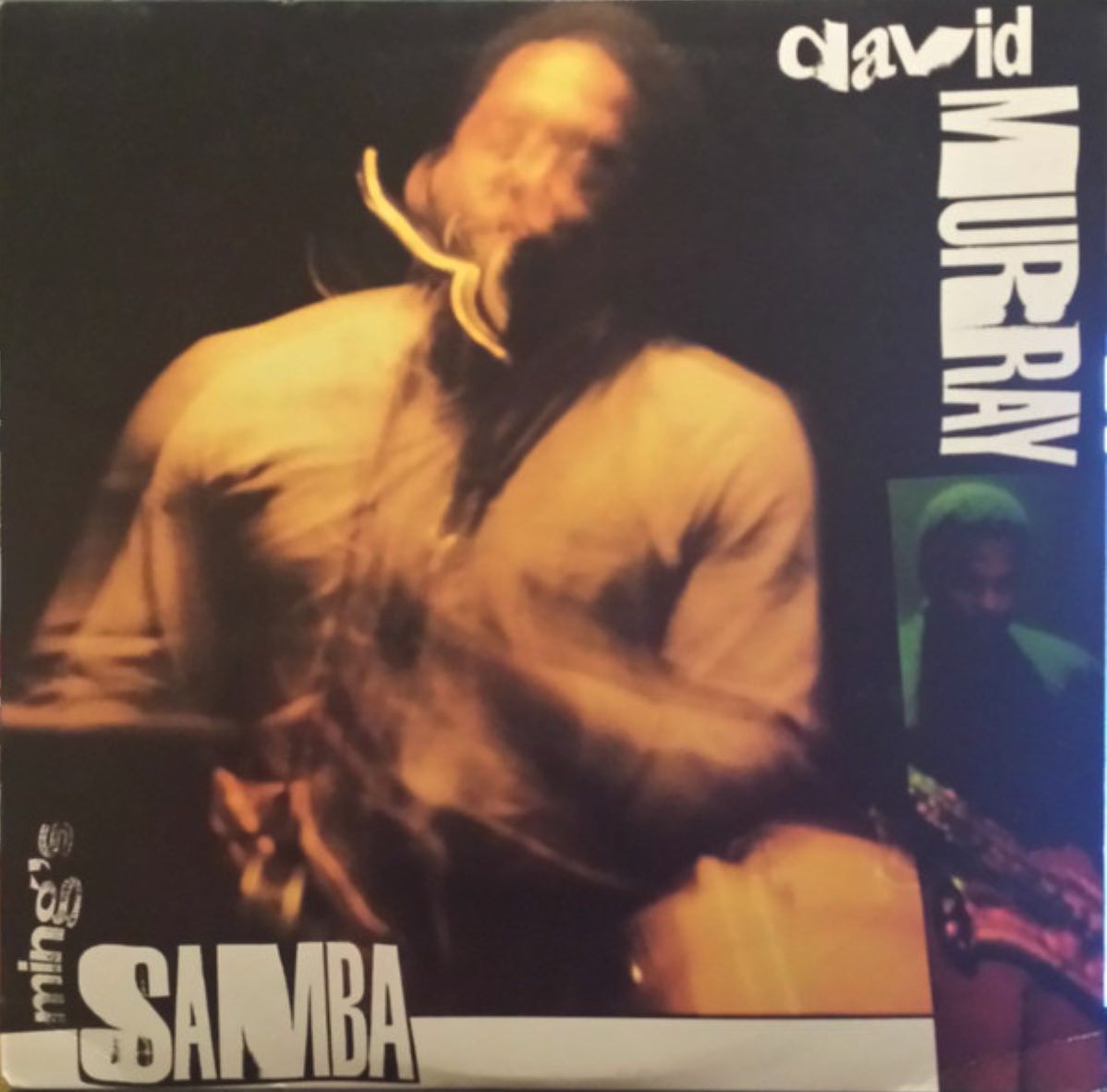
With the Dynavector XX-2A in play, you're treated to a cacophonous delight as punchy Ed Blackwell's cowbell, snare, toms, and cymbals jumpstart David Murray's title track, "Ming's Samba," resolved, crisp, and dynamic (David Murray. Ming's Samba. 33 1/3 Vinyl. CBS Records/Portrait Records, July 20, 1988. No. 44432). Murray's frenetic tenor saxophone is richly captured from its low squawking to its reedy highs. John Hicks' piano comps and runs have plenty of weight and presence. Even though it's a studio recording, it has the feel of a live performance in a small club—sans the audience.
With the GoldRing Ethos SE, there's still plenty of punch with Blackwell's cowbells, drums, and cymbals, but they're not as in-your-face. Murray's sax sounds lush, as does Hicks' piano; they both sound tonally excellent, and overall, it's a wonderfully balanced presentation.
However, with the XX-2A, it's a more impactful and visceral experience. The piano has more weight, while the cowbell, snare, toms, and cymbals are a little more impactful and palpable. Murray's sax sounds a little more forward. The GoldRing Ethos is more polite, if you will, while the Dynavector yields a slightly more visceral, fleshed-out experience.

A performance pattern emerges in comparing the two cartridges in Stevie Nick's "Stop Draggin' My Heart Around." In both cases, Waddy Wachtel's guitar vamp is lush and Russ Kunkel's drums are crisp and robust with plenty of slam, while Nicks' vocals (and the corresponding vocal effects) are clearly articulated; the ride cymbal's metallic ring is very present, and Benmont Tench's organ's whir and vibrato add a comforting retro layer in Mobile Fidelity's One Step pristine portal into the mix (Stevie Nicks. Bella Donna. Vinyl 45 RPM. Mobile Fidelity Sound Lab Ultra Disc One Step Pressing. Modern Records, July 27, 1981). With the GoldRing Ethos SE, it's a nice and balanced presentation, but a little more laidback while the Dynavector XX-2A digs a little deeper; the organ is a little warmer, the drums a little punchier and dynamic, the ride cymbal's clang is a touch more meaty and forward, while Nicks' and Tom Petty's duet is more fleshed-out and three dimensional.

The Dynavector XX-2A captures the power and splendor of the Beethoven's Symphony No. 5's famous four note motto beginning with violins, violas, cellos, and basses, and echoed by the woodwinds and horns—and enjoined by the timpani and orchestra as a whole in successive swells (Beethoven, Ludwig van. Symphony No. 5 in C Minor; Prometheus Overture. André Previn, London Symphony Orchestra, Warner Classics, 2019). It captures the refined detail and textures of strings, flutes, the thunderous peaks of the whole orchestra, and the sense of scale and acoustics of London's Kingsway Hall are impressive.
The GoldRing Ethos delivers similar detail and weight, scale and acoustics, from the quietest passages to the roiling swells. It's gorgeous and immersive. Switching back and forth between the two cartridges, adjusting tracking weights to 200 grams, each, is tedious and I'm forced to employ more auditory memory than I'd like.
After several passes back and forth, from violins and flutes in subtler moments to the largess of cascading orchestral swells, my impression is that XX-2A edges a smidgen with slightly more detail and dynamics. However, either way, it's clear that you can't go wrong with either cartridge to experience this magnificent masterpiece.

Concluding Thoughts
The Dynavector XX-2A phono cartridge has impressed me so much that I decided to buy it. I really enjoy the heightened sense of realism, balance, detail, bass, and dynamics that it brings to my turntable. Now, it's very evident why my audio designer friend is selling his $9500 phono cartridge in order to buy another XX-2A for his reference systems he uses for evaluating new components and designs. As a reviewer, as well as an audio aficionado, it just makes sense for me as well. Simply put, if you're in the market for a moving coil phono cartridge, I highly recommend the Dynavector XX-2A for your consideration. It's just that good.
Dynavector XX-2A Phono Cartridge
Retail: $2250
Dynavector USA
Dynavector