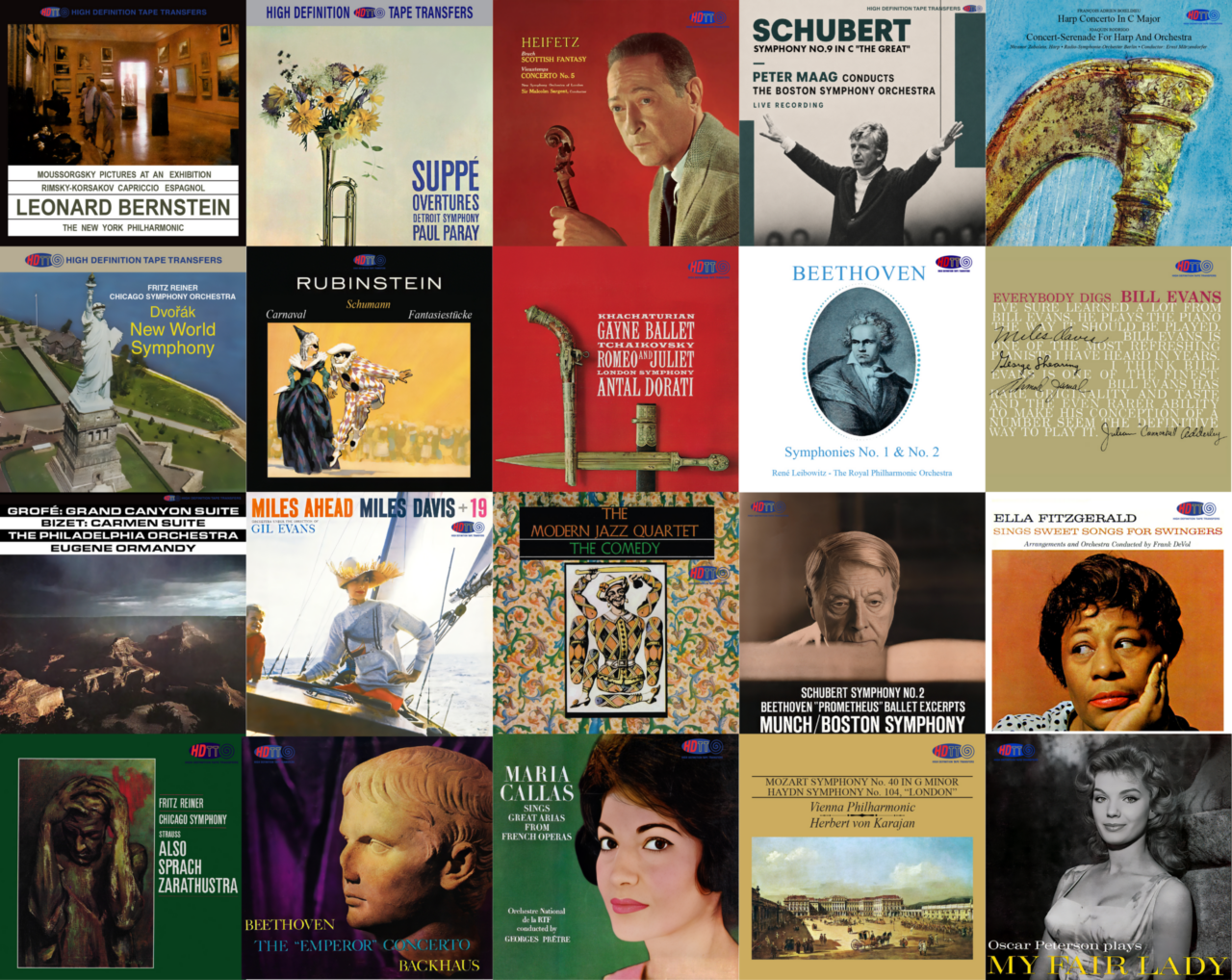
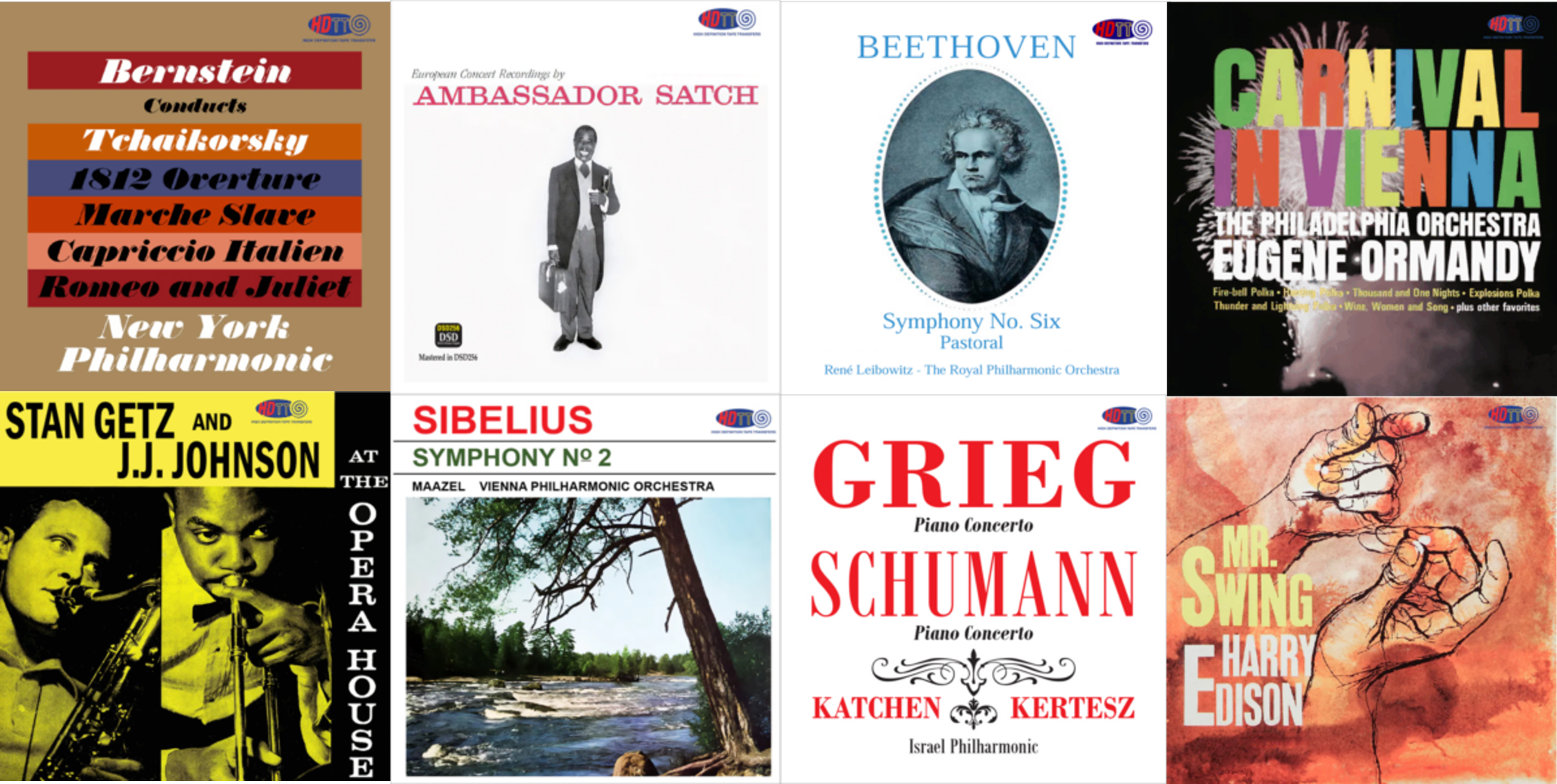
Bob Witrak, founder and mastering engineer for High Definition Tape Transfers (HDTT), continues to astound me with the quality of his releases. Those of us who value recordings from the "golden age of stereo," and who are obsessive compulsive about obtaining the best sound quality possible, owe Bob a great debt of gratitude for his efforts. The HDTT catalog continues to be a gold mine of recorded treasures, with more being added each month. This Recent Finds article contains a number of such treasures recently added.
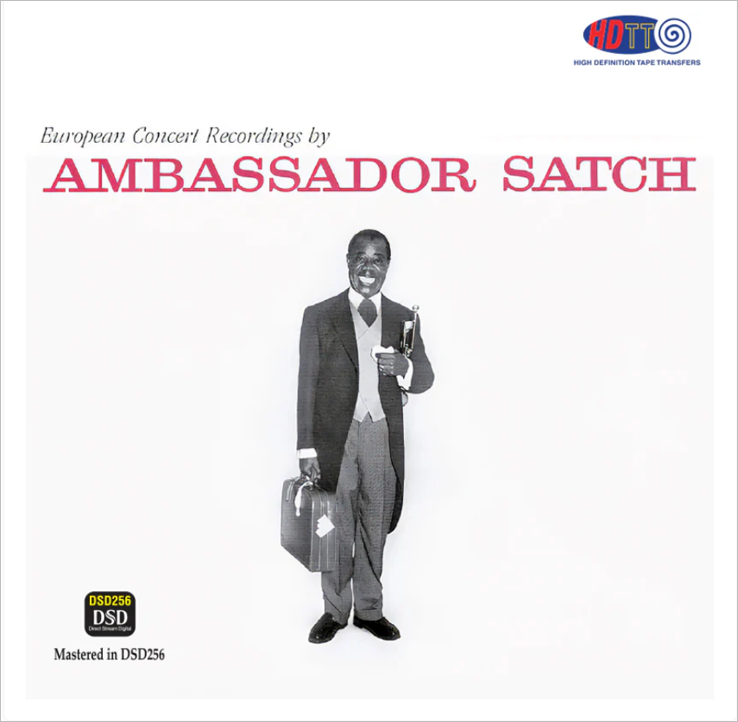
Ambassador Satch, Louis Armstrong And His All-Stars. HDTT 1955 2025 (Pure DSD256, mono) HERE
Recorded by Philips during Louis Armstrong's concert tour of Western Europe in the fall of 1955, these are taken from three on-stage live sessions: one made at the Concertgebouw in Amsterdam and the others at a theater in Milan. Released by Columbia Records on LP (CL 840) in 1956, this transfer is from a 2-track 15ips tape. And, when Bob Witrak has access to a source tape of this sonic quality, he transfers it in Pure DSD256 for release, with no PCM processing. So, what we hear is as close to the sound of that 15ips tape as is possible to get. And that sound quality? Terrific! It will knock your socks off.
This is one of the greatest jazz records ever recorded. Featuring the best Armstrong All Stars: Edmond Hall-clarinet, Trummy Young-trombone, Billy Kyle-piano, Barrett Deems-drums, Arvell Shaw-bass. The band is at their height. And Armstrong's trumpet playing is clean, effortless, powerful, and intense (just listen to "Twelfth Street Rag"). Some say it is an intensity he would only have through the late 40's and 50's, and that he would never play with the same intensity in the years after that lineup changed.
Louis Armstrong is an artist who can do no wrong in my book. And his playing and singing here are among the strongest of his later period. The album concludes with one of the best performances of "Tiger Rag" ever recorded.
If you know and love this album in its other incarnations, you really owe it to yourself to get this new release for the best sound quality yet. If you're not familiar with this album, or not familiar with Armstrong, get this as a wonderful introduction to this marvelous musician and performer.
This is yet another "just get it" release from HDTT.
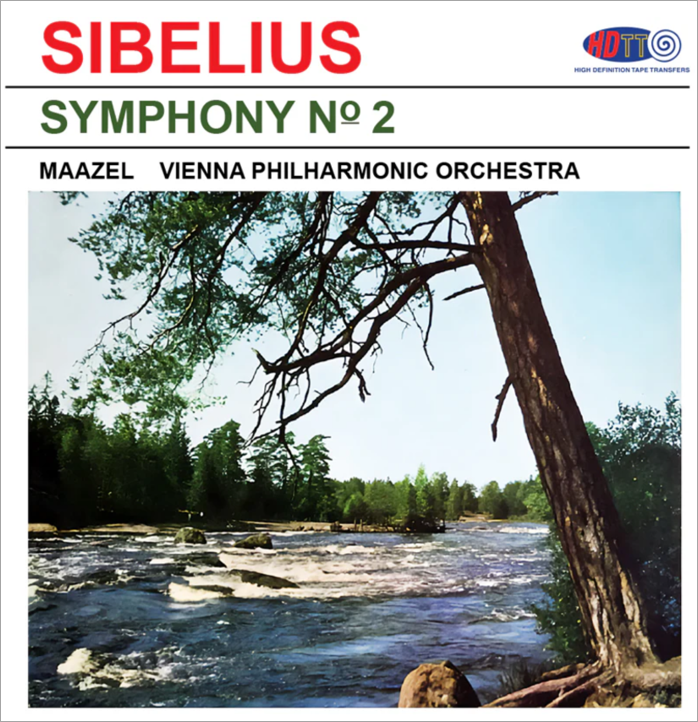
Sibelius Symphony No. 2, Lorin Maazel, Vienna Philharmonic Orchestra. HDTT 1964 2026 (DSD256, DXD*) HERE
There is a reason some musical works are considered "warhorses." And there is nothing wrong with this. In fact, there is often something very right about this. Some music is simply foundational to our appreciation of our cultural heritage. For me, such is the case with Sibelius' Symphony No. 2. It is a piece so well known, one almost hums along with it. It is a piece so well known, one finds comfort and solace hearing it once again. And when it is as beautifully, lovingly, lusciously performed as it is in this well loved performance by Lorin Maazel and the Vienna Philharmonic Orchestra, one should abandon thoughts of aspersion of warhorses and just get on with the guilty pleasure. In these dark opening days of 2026, I needed this music. Perhaps you do, too.
Lorin Maazel's recording is a distinguished interpretation. He brings clarity to the work in his unifying grasp of its structure. There is no getting lost in the weeds with Maazel. He maintains a firm grip on the evolution of the piece, unifying it across an ever developing thematic shape. And the Vienna Philharmonic delivers with exceptional warmth providing both dignity and compelling nuance.
My association with this recording goes back to the late '60s when I first heard it and transferred it to tape from an LP in a friend's father's collection for my journey off to university. I've held a copy of various vinyl releases of the LP from the start of my vinyl collecting days once I'd paid for graduate school. This is a performance that should be in every orchestral music lover's library.
Recorded in May 1964 at Sofiensaal, Vienna, by the Decca European team of producer Erik Smith and engineer Gordon Parry, this HDTT transfer is from the Decca released 4-track tape. Decca's hallmark natural capture of the orchestra presents itself in a spacious, well-balanced acoustic that enhances clarity without sacrificing warmth. As HDTT says, "Strings have body and sheen, inner voices are easily discernible, and the winds retain their distinctive Viennese color while blending seamlessly into the overall texture. Brass possesses weight and brilliance, yet never dominates, allowing Sibelius's carefully layered orchestration to speak with coherence and impact."
It is as nice a release of this recording as I can recall hearing, including the original LP from my vinyl collection (now long gone). Could it possibly sound even better? I'm sure it could if one could work from the master tape or an early generation transfer. But this release is very satisfying to this very picky audiophile.
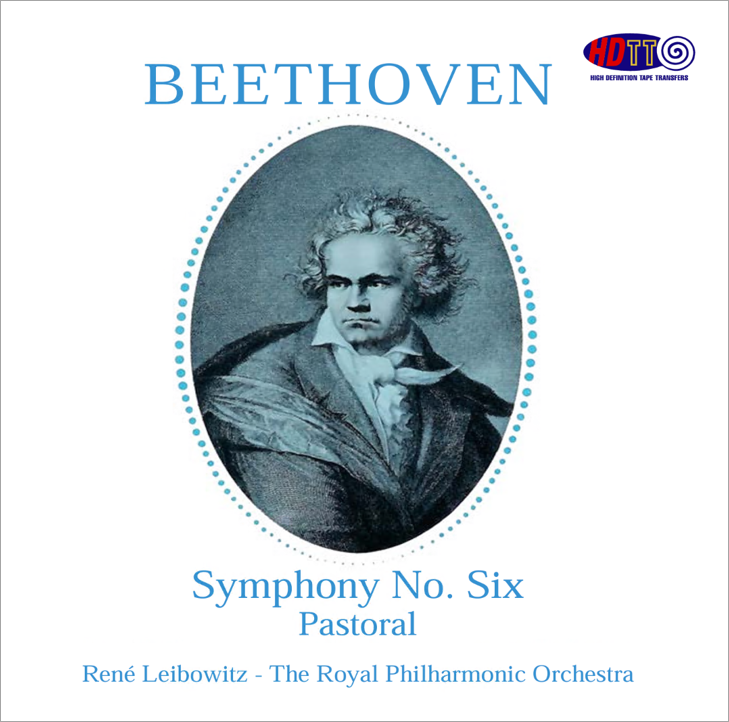
Beethoven Symphony No. 6, René Leibowitz, Royal Philharmonic Orchestra. HDTT 1961 2025 (DSD256, DXD*) HERE
Shall we continue with musical warhorses? Oh yes, indeed! And what a wonderful reissue HDTT brings to us in this excellent performance by René Leibowitz and the Royal Philharmonic Orchestra. Recorded by the legendary Decca recording engineer Kenneth Wilkinson as part of his collaboration with producer Charles Gerhardt for Readers Digest, this 1961 recording is luminous, highly resolved, and utterly brilliant. The sound of the orchestra has that utter transparency, supreme balance, and natural acoustic integrity for which the best of Wilkinson's recordings are so highly prized. If you've not listened to the recordings of Kenneth Wilkinson, you're in for a treat—and an education. This is what great recorded orchestral sound should be.
Some of Wilkinson's greatest recordings are the ones he made for Lyrita and for Reader's Digest. And of these, the recordings he made with René Leibowitz conducting the Royal Philharmonic Orchestra are among the very best. To understand what is possible in capturing the natural sound quality of a large orchestra performing in a nice acoustic space, you need to listen to these recordings. They will absolutely spoil you if you have any preference at all for recordings that sound like what you might hear in the audience listening to the performance live. There is space, width, height, depth, inner detail, excellent balance, great dynamics, and natural timbre. It's all here—"hall ambience with vivid realism."
And the performance? The performance is top drawer stuff. Leibowitz delivers remarkable clarity and discipline throughout—this is characteristic of his conducting. As HDTT says, "His Beethoven interpretations, made with the Royal Philharmonic Orchestra, remain among the most distinctive of their era. Rather than embracing the heavily romanticized style that was then prevalent, Leibowitz anticipates later, historically informed approaches: his tempos are fresh and flowing, his articulation clean, and his orchestral textures remarkably transparent." And this remarkable transparency is captured by Wilkinson, they are a match worthy of the gods. As is this recording.
Could the sound quality be better than heard in this transfer? I suppose it could be. I can imagine it. But, what we have hear is simply outstanding. It illustrates just how excellent a transfer from a good commercial 4-track tape released in the early days of stereo can sound. It perhaps doesn't have the ultimate transparency of a 2-track 15ips early generation copy of the edit master tape, but it is utterly excellent. I am delighted to now have this in my music library.
Just get it. I can't imagine you would be disappointed. I'm delighted by it!
Grieg and Schumann Piano Concertos, Julius Katchen, Istvan Kertész, Israel Philharmonic. HDTT 1962 2025 (DSD256, DXD*) HERE
This is a classic recording featuring pianist Julius Katchen and conductor István Kertész leading the Israel Philharmonic Orchestra in both Grieg's Piano Concerto in A minor and Schumann's Piano Concerto. It is a popular pairing. They are both warhorses. They both remain very competitive choices in the catalog after all this time since their original release in 1962—for good reason. Led by Katchen's dynamic playing and complemented by Kertész supple and supportive conducting, these are performances with intention; they are performances of excellence in both interpretation and execution. They have stood as touchstones for how these works can and should be performed.
Are there other recordings of these works one might consider? Certainly, I can name half a dozen. But, all are different, all bring different insights, all have different elements for immense enjoyment. But these performances by Katchen and Kertész remain an excellent foundation for this great music.
When you couple the performance and interpretive quality with the exceptional recording quality by Decca engineer Gordon Parry and producer par excellence John Culshaw you have a dynamite combination. This album has that classic Decca soundstage and orchestra presentation that other labels struggled to match.
This recording has always been in my "tough to match, virtually impossible to exceed" category of great albums. The sound quality of this HDTT reissue (a transfer for a 15ips 2-track tape) is similarly tough to match and virtually impossible to exceed for this album.
Carnival In Vienna, Eugene Ormandy, The Philadelphia Orchestra. HDTT 1962 2025 (DSD256, DXD*) HERE
Fun, frivolity, and great performances.
Yes, this is Carnival. It is Vienna. It is Ormandy and his great Philadelphians. It's 1962 and the orchestra is at the height of his professional prowess and Ormandy is in full command.
As HDTT summarizes: "..the orchestra evokes the splendor and vitality of Vienna's golden age, where music was both a reflection of daily life and an expression of cultural refinement. This recording captures the city's festive heartbeat through a vivid succession of waltzes, polkas, overtures, and dances, performed with the sumptuous tonal beauty for which The Philadelphia Orchestra became world-renowned."
If you're in the mood for something that is just uplifting and joyous, here's an album to pull out and know you'll be tapping toes and bobbing heads.
And the sound quality is superb in this transfer from a 15ips 2-track tape. When you hear a Columbia recording as transparent and true to life as this, you know the Columbia recording engineers were capable of far better sound than we so often grit teeth through on the Columbia classical music LPs, not so much on the jazz LPs.
Bernstein conducts Tchaikovsky. HDTT 1963 2025 (DSD256, DXD*) HERE
What glorious war horses played by one of the world's great orchestras, plus the vigor and impetus of Leonard Bernstein at the helm. Brought together here are four of Tchaikovsky's most beloved works—scores that display the full spectrum of the composer's genius: the brilliant spectacle of the 1812 Overture, the warm Italian sunshine of Capriccio Italien, the patriotic fervor of Marche Slave, and the tender tragedy of Romeo and Juliet.
As HDTT says, "They are works in which one can readily sense the composer's own emotional responses to places, events, and stories that held a special meaning for him. In Bernstein's hands, they emerge not merely as familiar favorites, but as living dramas, shaped with urgency, clarity, and affectionate understanding."
One has to tread lightly in my household when it comes to criticism of Leonard Bernstein because Ann is a fan, but I have often avoided his over-indulgences. However, I acknowledge that when he is "on," he is brilliantly "on." And these symphonic poems seem more resilient under Bernstein's extreme way with this composer. Overall, I greatly enjoyed this traversal.
Originally released by Columbia Records in 1963, the performances come from as early as 1957 with rather scrappy playing by the orchestra in the recording of Romeo and Juliet (which I nevertheless enjoyed) to the more refined and capable 1962 performances of Marche Slav and the 1812 Overture.
In all respects the sonics from this HDTT transfer from a 15ips 2-track tape are what one would expect: just excellent. The sound is full, dynamic, unrestrained, the brass is brilliantly shaped, the percussion is crisp and articulate, the strings resonant—it is simply more alive than my rips of the Columbia Masterworks LP reissues. (I don't have any of the Sony digital reissues to compare.)
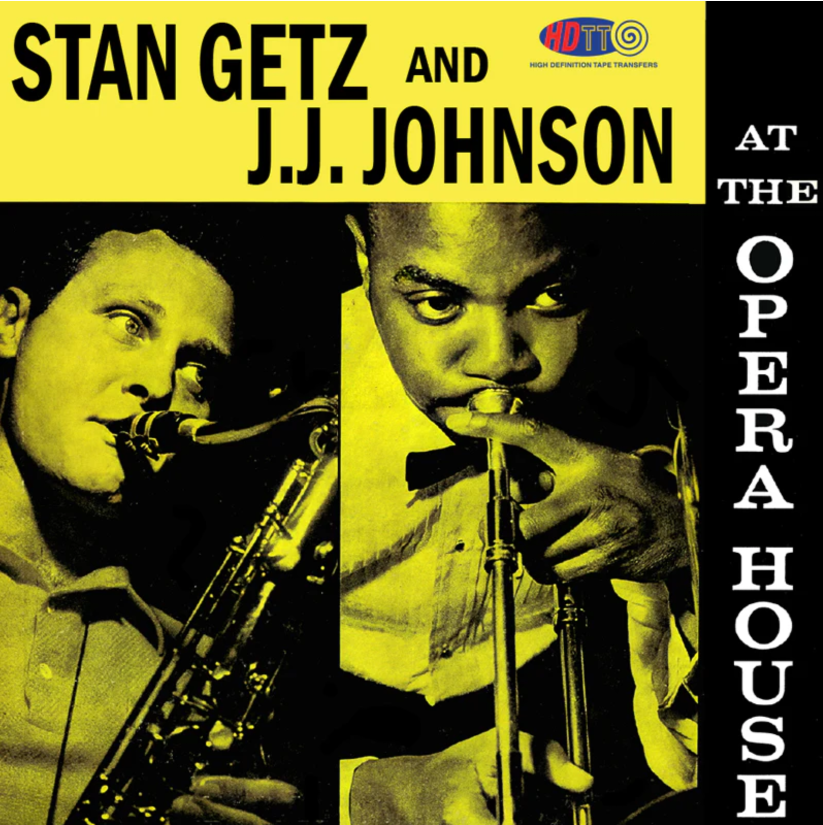
Stan Getz And J.J. Johnson - At The Opera House. HDTT 1957 2025 (DSD256, DXD*) HERE
This is a legendary album with an inspired lineup of artists. HDTT's enclosed booklet says it so well, I'm just going to quote what they have to say about it:
Recorded during the autumn of 1957, this live album captures two landmark performances by tenor saxophonist Stan Getz and trombonist J.J. Johnson, backed by the formidable rhythm section of Oscar Peterson on piano, Ray Brown on bass, Herb Ellis on guitar and Connie Kay on drums. The first session, recorded in stereo on September 29 in Chicago at the Civic Opera House, bursts with vibrant intensity as the musicians blaze through Charlie Parker's 'Billie's Bounce' and the standard 'Crazy Rhythm.' ...slows the pace slightly to allow more space for subtle interplay in renditions of 'My Funny Valentine,' 'Yesterdays' and 'It Never Entered My Mind.'
"What is so compelling about this set is the meeting of two distinct voices in the front line. Getz's tenor is full of airy lyricism, his tone shimmering and polished, while Johnson's trombone voice is muscular, precise and lyrical in its own right. They are not simply soloists sharing time, but true partners in a musical conversation. Their trading of ideas, the way Johnson's slide and Getz's line whisper merge and diverge, gives this live recording a spark of spontaneity and freshness."
This was my first time hearing this album, and I am mightily impressed. You can hear the audience's enthusiastic applause in this live recording, and the applause is well deserved. It is fascinating to hear Getz and Johnson trade off given the distinctively different sounds of their respective instruments. The backing by Oscar Peterson, Ray Brown and Herb Ellis is immensely supportive, and the percussion from Connie Kay is brilliant.
Transferred from an original Verve LP, the sound quality is yet another tribute to the excellence of the vinyl transfers Bob Witrak is achieving in his Vinyl Records Restoration series.
Harry Edison, Mr. Swing. HDTT 1958 2025 (DSD256, DXD*) HERE
Harry "Sweets" Edison joined Count Basie Lucky Millinder and then in June 1938 and remained a key member of that classic orchestra until it broke up in 1950. He got his nickname "Sweets" (due to his tone) from Lester Young. His style is instantly notable getting remarkable mileage out of a single note or two, very similar to what his band leader, Count Basie is known for doing on the piano.
HDTT comments, "Edison was never a trumpeter who relied on volume or speed to make his point. His authority came from something far rarer: tone, timing, and an unshakable sense of swing. One note from Edison could tell you everything you needed to know: where the beat was, how deep the groove ran, and how much space the music could breathe. By the time Mr. Swing was recorded, Edison had already earned his place as one of the defining voices of jazz trumpet, a musician whose style was instantly recognizable and deeply trusted by everyone who played beside him." It is a summary with which I completely agree.
In this recording, among the changing views of what jazz is all about, Edison reaffirmed something timeless: swing, when played with imagination and conviction, never goes out of date.
Mr. Swing was recorded in 1958 at the same session that produced The Swinger and was released on the Verve label in 1960. The personnel includes:
Harry Edison – trumpet
Jimmy Forrest – tenor saxophone
Jimmy Jones – piano
Freddie Green – guitar
Joe Benjamin – bass
Charlie Persip – drums
Sourced from a Verve original pressing, this is another reissue in HDTT's excellent ongoing Vinyl Record Restoration Series (VRR).
Highly recommended!
* For those who may ask... I'm listening to the DXD iteration. The DSD256 transfer from tape was post-processed in DXD making the DXD version the "edit master." Bob Witrak is always very clear about the steps he is applying in creating his releases. As noted several times previously in other articles, in our primary system with the Playback Designs MPD-8 DAC, the edit master almost always sounds best, regardless of resolution. That may not be the case in other systems, so I encourage you to listen and compare for yourself. For example, in Ann's office system with her Teac UD-501 DAC, the DSD256 file will typically sound best.