|
You are reading the older HTML site
Positive Feedback
ISSUE
52
AES 2010
I always enjoy writing about the AES show, a pro audio show, for a high end audio audience. In part it's because there really is so little overlap between the two communities and I'd like to encourage more. The AES show is actually two different things happening at the same time: a trade show of manufacturers upstairs and then paper presentations and workshops downstairs. Because of this mix, it becomes a show where vendors show products but where they actually bring their engineering staff and not just their salespeople. This makes it really the most valuable show in the industry. This year because of the poor economy, the size of the trade show part was greatly reduced. If anything, I think this was a good thing. Many of the large combines like EVI have dropped out of the show completely, and companies like Sony went from a huge display down to a single 10x10 booth. I think this is good, because it puts the different manufacturers on the same footing. Roll Music, a two-man operation, and Sony, which seems to own half of Japan, presented in the same way. This is how the industry should be. That said, the show was still larger than the post-911 show, which to this day I think was the best pro audio show I have ever attended. The paper presentations were, if anything, actually more extensive than in previous years. Now, as I write this article I am mixing up the paper presentations and the vendor displays in a somewhat random fashion, because that's the way I saw the show as I constantly moved from one floor to another. As far as I know, I'm the only one who does paper summaries at all so I don't really have any other model to follow. And so... on to the actual event...
PROCESSING Cartec was showing their EQP-1A clone of the classic Pultec equalizer. The Pultec is a passive equalizer network made with capacitors and iron-core inductors, which has been a mainstay in the industry for half a century now. Because the originals have become so expensive on the aftermarket, a number of companies have been cloning them. Pulse Techniques, LLC from Ft. Collins Colorado now appears to be using the Pultec name and also is making their EQP-1A3 which looks like a very good recreation of the original Pultec design. Brent Averill Electronics was showing off a nice line of replica Neve console modules, as well as some really handy rackmount devices for racking up those modules and original Neve ones. Fink Analog Audio was showing a variety of processing boxes, including a thing called the LMA-4FA which contains four independent tube limiters, and a dual channel strip called the CS2-FA with a parametric EQ, a limiter, and a preamp on each channel.
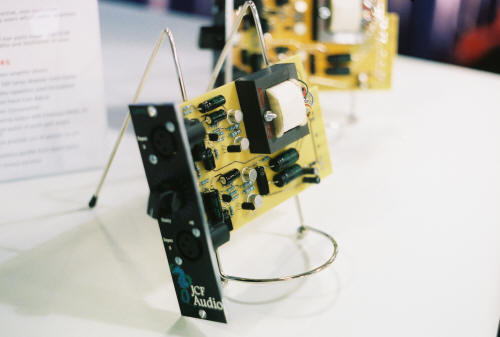
KuSh Audio was showing their "Clariphonic" parallel equalizer, which is a two-channel two-band equalizer with one peaking filter and two parallel high-frequency shelving filters which allows you to make a variety of different filter shapes. In "The Non-flat and Continually Changing Frequency Response of Multiband Compressors," Earl Vickers from ST Microelectronics talks about two different effects in multiband compression systems that result in changes in frequency response. The first is an artifact resulting in minor peaks at the crossover points between bands, and he suggests a simple and ingenious solution for dealing with that issue. The second is just the fact that compressing bands individually results in a change to the overall spectrum envelope of the signal; from my standpoint this isn't a problem but it's the whole point of using multiband compression. Preprint 8211. Dereverberation has been a big deal for quite a few years now. If you know the impulse response of a room at the points in space where the microphones are, you can use convolution to remove reverberation from a recording. The problem is finding the impulse response in the first place. In "About this Dereverberation Business," Gilbert Soulodre presents another method for estimating it well enough to do some good on some recordings, which is about as close as anyone else has ever come. Preprint 8253. Now, if you want to do the opposite thing and measure the impulse response of a room so you could later convolve it and add reverberation to a dry recording, there are a lot of ways to do it. One common and convenient way is to pop a balloon, which creates a very even pattern. Unfortunately the impulse that results from the balloon popping is not as wideband as, say, a starter's pistol, and it is missing a large number of narrow frequencies. This makes responses created in this fashion less useful unless they are smoothed, and in "Estimating Room Impulse Responses from Recorded Balloon Pops," Johnathan Abel, Nicholas Bryan, and a league of other folks from Stanford University detail a convenient smoothing method. Preprint 8171. Some of these same people, namely Nicholas Bryan and Johnathan Abel, also gave a paper on "Methods for Extending Room Impulse Responses Beyond Their Noise Floor." This basically talks about filtering noise from impulses and doing some extrapolation in order to create reverberation samples that are clean and have good extended decay without having a noise floor obscure the tail of the reverb or have it chopped off abruptly. Interestingly enough, this paper and the paper above on balloon pops both refer to one another. preprint 8167. In the old analogue world when you wanted to change the state of a processing device, you went to the device and turned the knob or pressed the button. Now we're in a new world where lots of devices have no knobs on them and need to be accessed by a remote controller. This adds some freedom; the device doesn't have to even be in the same room as the person operating it. But it also adds interface confusion, so there is a need for standards so devices can be mixed and matched in the studio. In "Parameter Relationships in High-Speed Audio Networks," Nyasha Chigwamba et al. discuss the AES X170 protocol that is currently under review, as well as the more limited OSC, AVN, and ASC protocols that preceded it. Preprint 8301. 500-SERIES STUFF Once again an increasing number of API 500-series modules have come out from different manufacturers. These standard modules can drop into an existing API-format console, or into a standalone rack, and they are a very convenient form factor. If you want to build a whole console, in fact, JCF Audio was showing their LEVR active summing module, basically a rework of a very old summing amp design and a very good one. Just perfect for summing the outputs of the faders.
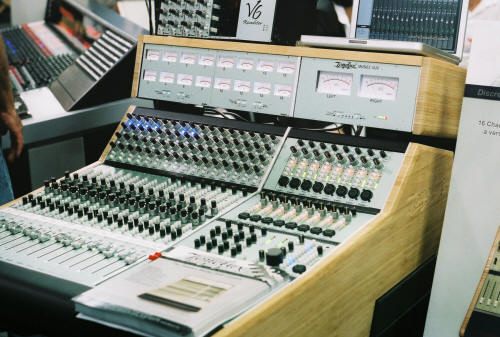
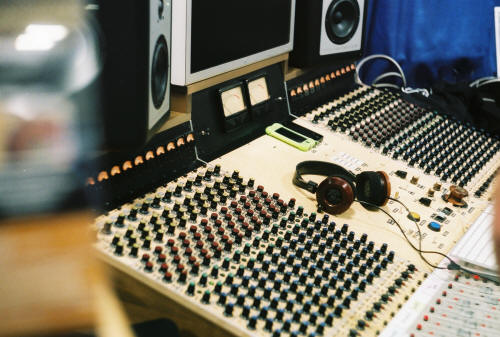
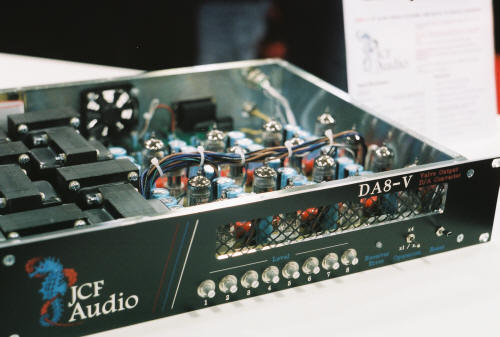
J-Lab was showing their JLA-3 optical compressor/limiter which looks like a good general-purpose compressor for all manner of applications, in a convenient 500-series package. Dramastic Audio was showing the Obsidian 500 which they claim to be the first linked stereo compressor in a 500-series package. It's nicely made with stepped controls for consistency and easy recall, an internal high pass filter, and although it takes up two slots in your 500-rack it seems to pack a lot into that space. Be a nice buss compressor module in a console too. Millennia Media was showing off an eight-channel A/D module that fit in a single 500-series slot, which is pretty impressively compact especially considering the limited available power. Probably the most interesting thing in the show, and actually one of the finalists for the best new product, was the custom console from Undertone Audio (UTA). These guys are making consoles based on standard modules, which look a little bit on the handbuilt site, but what is really interesting is that they are using perforated panel materials to reduce the amount of acoustical reflection off the surface of the console. Plus, it is kind of exciting just to see ANYONE out there making custom large format consoles today. PREAMPS Lots of folks out there had standalone preamps, including the really great equipment from Manley, Great River, Millennia Media, Gordon, and John Hardy, all of them classic designs. About the only really new preamp I saw was the MA-10A tube mike preamp from Redwood Coast Music. This was also a fairly simple and common design with a multitap input transformer for adjustable input impedance.
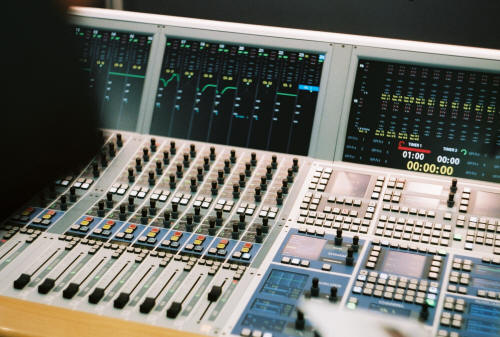
CONSOLES As mentioned above, a lot of folks were showing off new large format consoles this year, from Trident and Neve to APB Dynasonics. Something I found really interesting, though, was Stagetec's Crescendo. This is a large format console with a control surface that remotely controls their Nexus digital logic box. This allows the control surface and the actual processing to be located apart from one another. They have made larger and smaller control surfaces for broadcast applications which can go with the same dsp box, so it's really a whole line of different systems all based on one processor.
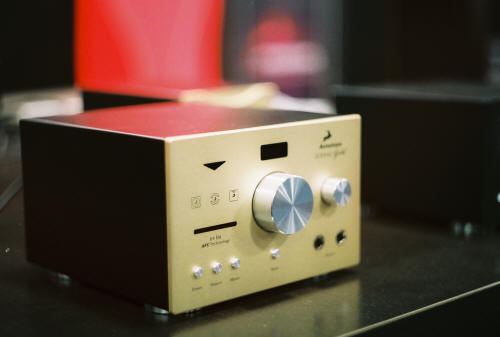
CONVERTERS Audioscience was showing a line of broadcast-grade PCI soundcards, as well as a wide variety of Cobranet (audio over Ethernet) devices. Also AM/FM tuner cards that drop into your computer for band scanning and the like! Antelope Audio was showing off some high end D/A converters intended for mastering monitoring, which would also be very much at home in a good high end playback systems. Some time is spent in getting really stable clocks and good adjustable attenuation that is repeatable and consistent. Antelope also makes some very high grade master clocks.
Two different companies were making handy little converter boxes. ATI had their Portable Digital Audio Monitor DM500, which is a little handheld box with AES/EBU and coaxial S-PDIF inputs, rough metering, and a headphone output. A very fine little tool for troubleshooting all kinds of audio signal networks. On the other side of the spectrum, Direct Out Technologies in Germany is making a similar device but with a MADI input. You use a knob to select which of the 16 MADI channels are routed to each of the right and left, and then adjust the volume. Absolutely essential for troubleshooting MADI networks, and you can use it for monitoring as well. Direct Out was also showing off a line of MADI I/O modules for various devices, a MADI sample rate converter, and a whole line of nifty MADI devices. MADI is becoming more and more popular as a multichannel digital audio interface because it's stable and easy to run over existing coax or fibre. Direct Out, founded by some people who were previously with RME, is trying very hard to promote the whole MADI resurgence. LOUDAHOLISM The current push for more and more processing for higher and higher average levels has clearly been the worst thing to happen to sound quality in my lifetime. In "The Loudness War: Background, Speculation and Recommendations" Earl Vickers explores the recent history of the increase in levels, some discussion about them in terms of psychoacoustics, and basic consequences. None of this is original research and most of it quotes well-known folks like Bob Katz and Bob Orban on the subject. But what is new about it is that it details exactly what is supported by psychoacoustic research and how much consists of things that "everybody knows" but which are not actually proven. This shows where research in the future needs to be directed. Preprint 8175. Incidentally, this year there were two folks doing hearing tests at the show... the first the usual House Ear Institute people from LA, and also the National Hearing Conservation Association. Getting an annual hearing test is a big deal for a lot of folks; Chakaal went and got tested by both so she could compare the charts. The folks at Hearnet.com were there also, doing custom earmolds on-site for both earphones and high grade wideband earplugs. Everybody should have a pair of musician's earplugs that cut sound down without affecting timbre substantially, since we live in a world that is much, much too loud. RECORDING In "The Contributions of Thomas Edison to Music Education," Kevin D. Kelleher talked a bit about the original Edison phonograph and how it was used for education. The ability to record on the home phonograph made correspondence courses for music possible, and the ability to bring professional performances into the home for study and playing along was a first. However, what I found most fascinating about the talk was the discussion of the Edison vs. the Victor gramophone which in many ways resembled some of what we see in the audiophile world today. Customers complained that the sound quality of the Edison cylinder was far better than that of the disc recorder, but yet the disc recording companies hired all the big stars leaving the Edison label with an array of second rate performers. Sadly I see too many high end labels like this right now, where the sound quality exceeds the performance quality, and too many mainstream labels where the performance quality far exceeds the sound quality. Preprint 8303. In "Why Ambisonics Does Work," Eric Benjamin, Robert Lee, and Aaron Heller provide a well-reasoned rebuttal to several recent criticisms of the ambisonic surround recording process, including claims of accurate preservation of interaural time differences. Preprint 8242. Down on the show floor, the folks from the Webster University student AES chapter were talking about their student AES summit in St. Louis which looks like a really great educational opportunity. I have friends who have spoken at it and were very impressed. They were handing out little cards with "webster.edu/aes/gottlieb" on it, which unfortunately seems to be a bad URL. Also hanging out were some of the folks from Pontificia Universidad Javeriana down in Bogota Colombia, which surprisingly seems to have a very impressive audio production program, and they also sponsored the last Latin American AES conference. The folks at Capital Bauer Insurance were talking about their insurance program specifically designed for recording studios. They were handing out nifty little notepads too, and it's a good thing to see folks like this, who don't directly make recording gear but who sell to the recording industry, here at the show. Pro Tools 9 is out. You'd think this was just more of the same old thing, even though finally Pro Tools LE is actually bit-for-bit true and can load and save a .wav file and have it identical to the original finally. But what is new is that with the latest version, you no longer need dedicated hardware from Digidesign but can use nearly any audio hardware of any sort. Support? You have to pay for it in advance, since presumably people will be needing a lot of it to get their hardware working. People were practically rioting in the Avid demo booth. Most of them people who had spent a lot of money on Digidesign hardware and now could be using inexpensive alternatives instead.
LISTENING TESTS So, what do people really mean when they say a room is "muddy?" Clearly it implies something bad about the low end, but is it necessarily a resonant mode? Does changing the decay make it less muddy or less tubby? In "Improving the Assessment of Low Frequency Room Acoustics Using Descriptive Analysis," Matthew Wankling and his colleagues at the University of Salford elicited descriptive words from a panel of experienced listeners and attempted to correlate them with sounds. This is part of some very important work at correlating subjective impressions with objective measurements so that translations between the two can be made. Without it, you don't know what to listen for when something is detected by measurement and you don't know what to measure when you hear something suspicious. So really, research like this is paramount for uniting the audio industry and making sure everybody can communicate. Preprint 8311. In "Psycho-acoustic Measurement and Auditory Brainstem Response in the Frequency Range between 10kHz and 30kHz," Motoi Koubon and others from Tokyo University presented college students with pure tones and measured auditory cortex potentials with two differential electrodes on the surface of the head. They determined that most students could not hear above 20khz, thereby confirming Helmholtz's research of a century and a half ago. Preprint 8294. On the other end of the scale, in "A Digital-Domain Listening test for High-Resolution," John Vanderkooy sets down a reasonable test methodology for determining audibility of high sampling rates and long word lengths, and discusses the nature of such tests. I find papers like this very frustrating in that they describe a good method to test something, but then stop short of actually testing it. Preprint 8203. In "Perceptual Evaluatin of Spatial Audio Quality," Hwan Shim and friends played back a number of (all panpotted stereo, no minimalist array) multichannel audio sources and asked a listening panel to evaluate the quality of sound on a number of scales many of which talked about imaging. While I think the source material flaws make the actual results of the test less than useful, the methodology was a good one, and one that more people should be following when testing playback environments. Preprint 8300. The folks at GenAudio were promoting some sort of dsp system that makes all sound better, gives you surround from two speakers, all sorts of stuff. I tried for two days to get an appointment to listen to the system, then when nobody answered my calls I showed up at their demo room and they suggested I should come back at a different appointed time. When I came back, nobody was there. Now, it's true that I have a history of panning dsp systems that claim to magically make everything better, but I don't normally have folks avoiding me like this. Audyssey Laboratories provides an automatic room-correction system that is used for room setup by trained home theatre installers. Because all of the installers use the same procedure and make the same measurements from the same positions in different rooms, this permits them to upload their data into a central database of room responses where they can be compared. In "First Result from a Large-Scale Measurement Program for Home Theaters," Tomlinson Holman and Ryan Green look over this data and draw some general conclusions about distribution of room sizes, room responses, and noise floor levels. This now begins to answer the questions about what kind of listening environments people really have in a systematic manner. Preprint 8310. Now, at the last AES show in NYC, Siegfried Linkwitz (in "The Challenge to Find the Optimum Radiation Pattern and Placement of Stereo Loudspeakers") proposed a number of simple criteria for good stereo imaging. In "Listening Tests for the Effect of Speaker Directivity and Positioning on Auditory Scene Perception," David Clark from DLC Design attempted to test these by using various speaker configurations in a double-blind test, comparing them against Linkwitz's reference system. In all cases the reference system came out ahead, which at least shows there is something to it. Preprint 8307. How much does conducted vibration affect perception of sounds? Normally we try and minimize coupling of low frequencies through the walls and floor but when is it good and how much is too much? In "Perceptual Dimensions of Stage-Floor Vibration Experienced During a Musical Performance," Clemeth Abercrombie and Jonas Braasch attempt to find this out, or at least what the magnitude of the whole issue is. Preprint 8160.
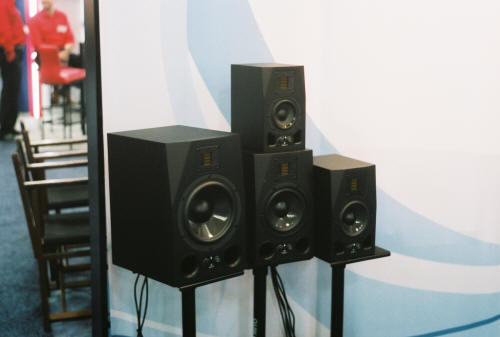
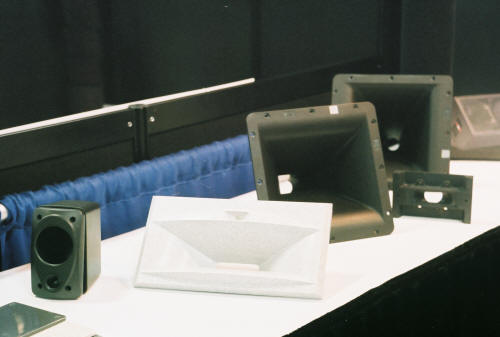
SPEAKERS Line arrays have been a big thing in concert sound for a while, to the point where most touring acts and larger halls are using them. They provide very good pattern control in general, but because different folks make different configurations and they are large and bulky, it's difficult to compare them effectively in the field. In "A Performance Ranking of Seven Different Types of Loudspeaker Line Arrays," Don Keele from DBK Associates runs some computer models of different line array configurations and presents the resulting pattern diagrams. Since these all assume perfect individual sources, some of this may not transfer completely to the real world but a lot of it does and it's at least a good first-check document to look at before you investigate a line array setup in a given hall. Preprint 8155. A totally different sort of array is the 96-speaker horizontal array described in "A 2-way loudspeaker Array System with Pseudorandom Spacing for Music Concerts" by Yuki Ayabe, et al. This system would be used in a small music club and would permit sound sources to be steered around the room by intensity panning and different delays in the 96 different output channels. In order to reduce spatial aliasing and get cleaner imaging, the 2-way loudspeakers are laid out with pseudorandom spacing. I'm not sure this is a practical real-world system but it's certainly an interesting way of handling the imaging issues. Preprint 8241. Speaker boxes need to be sealed except in the places where they are not sealed, and those places need to be specifically designed to prevent whooshing noises from air turbulence as air goes in and out of the box. In "Measurement of Turbulent Air Noise Distortion in Loudspeaker Systems," Wolfgang Klippel and Robert Werner come up with a reasonable field-expedient method to detect air noise from leakage and separate it from other noise sources. Preprint 8174. The Heil AMT driver was a big deal in the seventies, and that tweeter design has become popular again with a number of manufacturers like ADAM using them in high quality monitor speakers. The AMT is a folded structure made of metal foil that compresses like bellows in a magnetic field, forcing air out. In "Contributions of the improvement of the response of a Pleated Loudspeaker," J. Martinez et al. have created a finite element model which will make it possible to create a computer simulation to investigate the motion of the AMT on a very small scale, and therefore will make it possible in the future to optimize the design. If you're interested in finite element computer modeling, check out preprint 8238. Taking a FEM model of a loudspeaker horn and turning it into a matrix model and then integrating that with a matrix model of a compression driver makes it possible to determine the overall behaviour of a given driver-horn combination without having to actually build the horn. This makes it easier to prototype new horn designs. Alex Voishvillo from JBL describes the processing "Simulation of Horn Driver Response by Combination of Matrix Analysis and FEA." Preprint 8214. What with flat panel monitors taking over the consumer TV world, everybody wants flat speakers to go along with them. In "Coaxial Flat Panel Loudspeaker System with Dynamic Push-Pull Drive," Drazenko Sukalo describes a low-profile box speaker designed as a transmission line with woofer and midrange drivers out of phase but delayed acoustically. Not terribly flat low end response but pretty good considering the small cabinet volume. Preprint 8235. What if you replaced the whole magnet+pole piece assembly in a loudspeaker with one doughnut shaped ferrite magnet? You'd get less external magnetic leakage for one thing, but you'd also have a harder time making sure the magnetic field was even throughout the whole range of travel of the voice coil. In "Ironless Motor Loudspeaker: Quantization of the Subjective Enhanced Sound Quality," Mathias Remy and friends explain the good and bad aspects of this new design. Preprint 8192. On the show floor, Globe Plastics was there, along with their partner, Bulk Molding Compounds, Inc. These guys specialize in injection molding parts using molding compounds that are a mix of polyester resin and fibreglass. You've seen this material all over in things like circuit breakers and auto parts, but because it's a nonuniform material it's pretty nonresonant, and that's great for horns, phasing plugs, and all kinds of speaker components. They had a wide variety of custom injected horn designs on display that they'd made for customers. Incidentally this stuff is also machineable so you can take a standard design and alter it for prototyping purposes.
While on the subject of interesting materials, Truextent, a division of Brush-Wellman, was showing off their brand new SSX Precision Diaphragm. These folks have made beryllium foil for years, a material that has some real advantage in construction of diaphragms for compression drivers. They are starting out introducing a single model (available with two voice coil impedances) to replace most four-inch-coil JBL driver diaphragms, as well as diaphragms on some of the Radian compression drivers that use the JBL configuration. The rigidity of these, and the good Poisson's ratio, means improved high frequency performance and slightly lower distortion. These folks also managed to get a paper out of it, with "An Improved Beryllium Dome Diaphragm Assembly for Large Format Compression Drivers," by Marshall Buck, Gordon Simmons, and Sam Saye, preprint 8190. Still no replacement diaphragms for the old Altec drivers yet but that was the first thing I asked about! This is a minor but interesting improvement for anyone interested in horn drivers for any use. I know I get annoyed when people try and pass marketing off in the paper sessions but this is at least actually a useful advance. Last year at the New York show, Sennheiser had on display some of their new K-Array loudspeaker arrays. These are huge arrays of very small drivers and they look like a pretty radical design departure, but they did not have them for audition. This year they have had several ads suggesting that they will have them to listen to at the San Francisco show but unfortunately when I went to the booth they had only a couple units on display with no way of listening to them. Lots of folks were showing off monitor speakers, but really the most interesting of the new speaker things that I saw was Community's coaxial ceiling loudspeakers. The notion of a coaxial design with a compression driver for ceiling speakers is nothing new because it gives you very good controlled directivity; Tannoy and Atlas have done it for years. But the Community drivers seem to be very clean sounding, good enough you might even consider using them for home speakers.
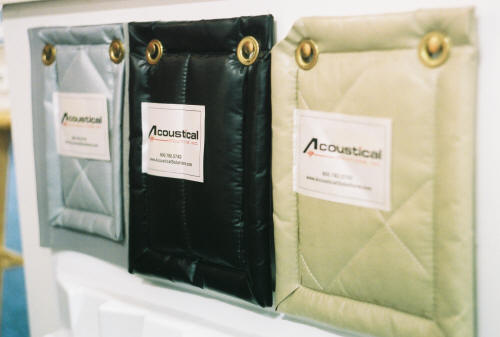
ACOUSTICS Lots of acoustical companies were showing stuff off again this year, but the new company that really stands out is Soundproof Windows, inc. They make multipane isolation windows with mounts that allow tilted mounting to reduce standing wave problems as well. They had a demo chamber you could listen inside and the isolation was quite good. Much better than any of the usual homebrew solutions for a listening room or studio. Acoustics First and Auralex were also there showing off their fine ranges of absorbers and diffusers. HEADPHONES In "Hearing Threshold of Pure Tones and a Fire Alarm Sound for people listening to music with headphones," Kaori Sato, Shogo Kiryu, and Ksoru Ashihara determined that people grooving out to their iPods were unable to hear fire alarms going off around them. This is not in any way surprising but it is good to have it confirmed in a systematic way. Preprint 8293.
One of the absolute best presentations I have been to in a long time was Chris Struck's workshop on measuring headphones. He talked extensively about the different artificial ear configurations used over the years to provide a standard reference for measuring responses of headphone, including the most current IEC 60711 ear simulator and the classic Zwislocki Coupler which provide mechanical analogies to the inner ear that remain fairly accurate up to 10 KHz. He talked about a number of pinna (earlobe) simulators and how there wasn't currently any real standard for simulating the earlobe which makes getting reference measurements of circumnaural headphones difficult. He also made a lot of really good points about how headphones work coupling into the ear, how an open-backed headphone basically presents a low acoustic impedance to the ear while a closed-back headphone presents a high acoustic impedance and so that affects the way they couple into the ear and how the ear canal affects response. He also finally explained why headphone measurements are made at 94 dB SPL... it's because that's the level at which the sound pressure equals one pascal so it makes the math much easier. I had wondered in the past where that weird reference level came from and now I know. Another thing from Chris Struck's talk was that he introduced me to the notion of "difference frequency distortion" where two tones are swept across the audio band and the total signal not including those two tones were measured. This is harder to measure than conventional THD and IMD but gives a much more realistic estimate of high frequency distortion in his estimation. These scalar distortion measurements, although pretty much useless for comparing amplifiers today, are still very useful for investigating transducers. Down on the show floor I got to listen to the Ultrasone headphones for the first time. They had a number of open-ear models, which I don't find all that interesting since I figure if you are in an environment where you don't need to block out external sound you're better off with speakers anyway. They did sell the Edition Eight sealed phone, which had good isolation and a massive presence peak that made it sound like a higher end version of the old Sony MDR-V6. I can see that peak being a great thing for applications like editing or even tracking, even if it might not be the best thing for longterm listening.
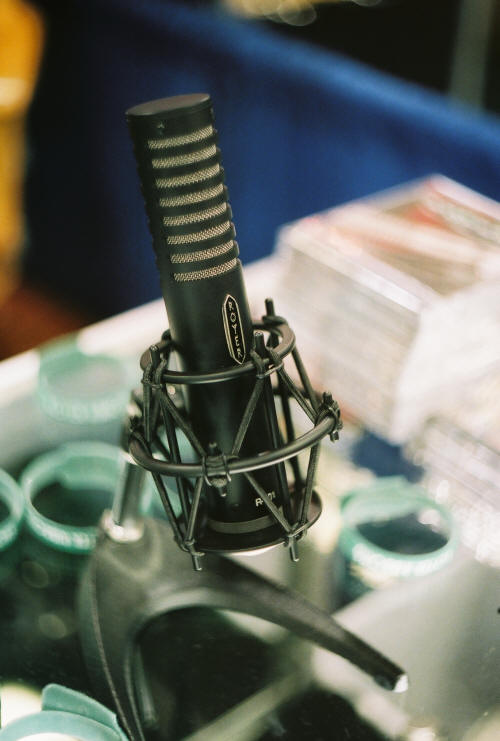
MICROPHONES To start out, Beyerdynamic is now selling the RM 510, which is a handheld wireless ribbon mike. It's based on an update of the old Beyer M-500 stage mike, although it's supposed to have flatter response. (This may be a bad thing... the upper midrange dip on the M-500 made it a wonderful thing for nasal voices). It's definitely a promising new thing and they said that while there was no wired version yet, that was in the works. Also in the wireless range, Line 6 is now making a digital wireless mike using the 2.4 Ghz freeband. Is it reliable with all of the other 2.4 GHz users out there? Is the latency low enough? Does it sound clean? These things need to be answered before people take such a huge step into a different wireless world but this is definitely a promising new design and certainly an innovative and different way of dealing with the current crisis in wireless frequency allocations.
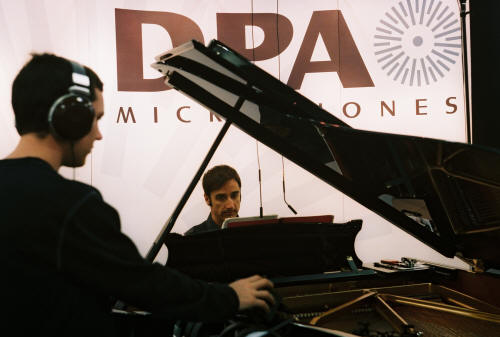
DPA, maker of very clean-sounding small diaphragm condenser mikes, is introducing their "Reference Sound Modular Series" which will have the same capsules and electronics as the various DPA 4000-series microphones, but with the ability to mix and match different capsules with different electronics. Sony had a very small booth in which they were showing off mostly equipment intended for film sound use. This included their line of shotgun microphones which I had never seen before, as well as a very nice little field production mixer, the DMX-P01. Sony is one of those companies that actually makes some very good professional equipment but doesn't seem to sell much of it in the US. Harry Olsen back in the 1930s produced the standard math model of the ribbon microphone, which treats the ribbon as a single damped mass-spring system. He treats it as a thing with a single resonance, tuned low, and a 6dB/octave drop above that resonance. Then, on-axis, there's a 6dB/octave rise due to it measuring differential pressure between two separated points. The two sum, so the response is flat and everybody is happy. That model was reasonably effective for approximating the ribbon response, but today it's possible to do a much better job. In "Dynamic Motion of the Corrugated Ribbon in a Ribbon Microphone," Daniel Schlesinger and Johnathan Abel view the ribbon as a long series of springs, so they can look at motion of the ribbon in several different directions, not just on the single axis. This allows a phenomenally more accurate model to be made and explains some of the distortion sources in the ribbon mike. What's more, this research was done by Sennheiser which doesn't even make ribbon mikes. This is honestly a big advance, and hopefully the next step will be to extend this to modelling pattern irregularities as well. Preprint 8215
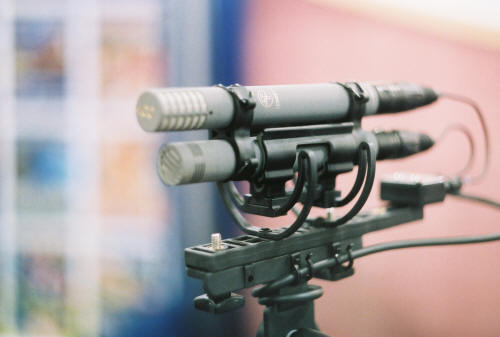
A shotgun microphone is a conventional microphone capsule with an interference tube attached to the front. The interference tube is a metal tube with slits cut in the side of it so that sound arrives into the tube delayed different amounts when it comes from different directions. The end result is rejection of sound off-axis. Olsen did a very nice analysis of the system back in the fifties. In "Modelling of leaky acoustic tube for narrow-angle directional microphone," Kasuho Ono, et al. rederive Olsen's work independently and also create an equivalent circuit model. Preprint 8216 The folks at Schoeps, on the other hand, took a conventional shotgun mike with an interference tube, but then put another microphone element behind the first one. The rear element is low-passed in a digital filter and summed with the original. At high frequencies this then remains a conventional shotgun mike, but at low frequencies (where the interference tube has little or no effect), it becomes a dual-capsule beamforming microphone. This gives much better rejection to external sounds and makes it a much more useful production microphone. They actually sell this now as a commercial product called the SuperCMIT, but in "Digitally Enhanced Shotgun Microphone with Enhanced Directivity," Helmut Wittek et al. actually detailed what's inside it and how it works. Preprint 8187.
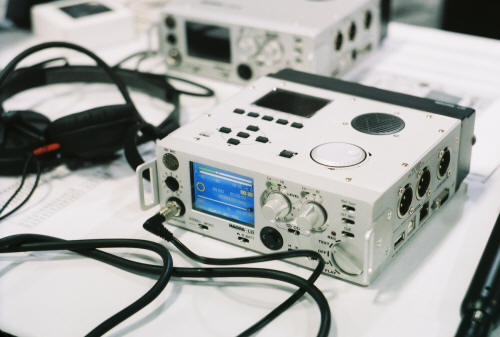
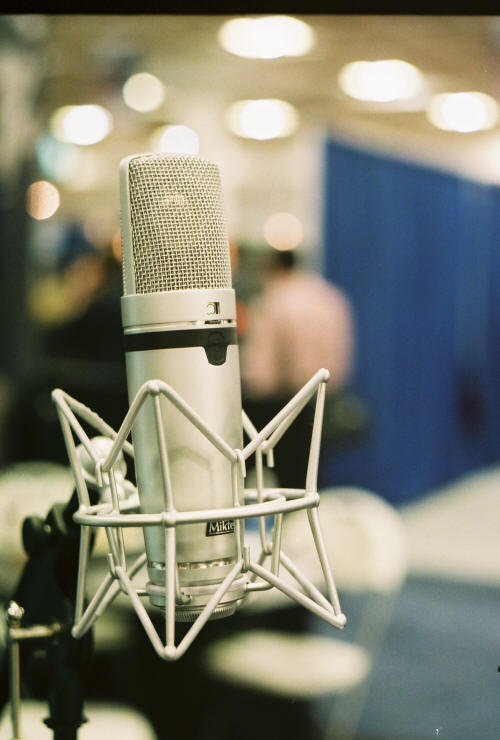
On the other hand, in "Conversion of Two Closely Spaced Omnidirectional Microphone Signals to an XY Stereo Signal," Christof Faller suggests making a pair of very simple beamforming array with two pairs of omni microphones. The pattern control on this method is not very good as those of us who tried it in the nineties can attest, but he suggests reviving the idea for handheld recorders. The low cost, good response, and wind resistance of inexpensive omni capsules with respect to directional ones makes this a very reasonable possibility for low cost handheld devices. Preprint 8188. Ambisonic mikes normally use an array of microphones mounted in a tetrahedron. However, it turns out that an array of figure-8 capsules mounted tangentially can be used in the same fashion. In "A Soundfield Microphone using Tangential Capsules," Eric Benjamin from Surround Research goes through the mathematics showing the equivalency and then some measurements on some test microphones. Preprint 8240 Incidentally, on the subject of ambisonic recording, Soundfield was down on the show floor demonstrating the Soundfield ST450 "Soundfield Portable" ambisonic array mike. This is a very small ambisonic mike array that can be easily set up in the field or even used as a boom mike. Much smaller and more convenient for field use than the older Soundfields. Edward Springer, the director of Shenzen Horn Audio Company, maker of small electret capsules was there but not exhbiting. Ben Sneesby from BeezNeez was showing off a line of what appeared to be Chinese-inspired but Made In Australia large diaphragm condenser microphones which are new to the US market but look like they may have quite a future. I got to check out the Arabella which uses a Russian 6ZH8 tube (which appears to be their version of the 6SJ7/VT-116 metal pentode that was common in lots of old military radios), but who can really tell anything about sound on the show floor? Likewise Miktek from Tennessee was showing off some large diaphragm condenser microphones with Chinese-inspired designs, but handmade in the US. Telefunken USA was showing off their new CU-29 "Copperhead" large diaphragm condenser mike too. AMPLIFIERS In "Vacuum Tube Amplifiers using Electronic DC Transformers," Theeraphat Poomalee, et al, replace the output transformer of a conventional vacuum tube amplifier with a switching supply. Basically a 1 MHz MOSFET oscillator driving a ferrite core transformer driving a filter, this configuration gives all the disadvantages of Class B tube and class D MOSFET operation without any of the advantages of either. Preprint 8228
Up on the show floor, Thrive Sound was listed in the booklet as showing off their amplifiers, but their booth was occupied by a totally different company. When I asked the folks there about it, they said the booth had originally been booked by a distributor but they didn't know anything about who Thrive was. Oh well. Conventional solid-state amplifiers today almost always follow a standard three-stage design with some small variations. Doug Self's book "Audio Power Amplifier Design handbook" goes into great detail about that one conventional design and most of the variation. However, in "Analysis of Two-Pole Compensation in Linear Audio Amplifiers," Harry Dymond and Phil Mellor talk about an important one which Self only glosses over. One of the reasons why global negative feedback has a bad reputation in the audiophile community is that poorly designed feedback systems can result in stability problems. The resulting effects degrade sound more than improve it. Designing feedback systems that work poperly is a critical job, and most amplifiers using global feedback have only used a single pole filter for stability in their feedback network. Dymond and Mellor discuss what is required to employ a two-pole filter which, if properly designed, can further improve stability. More importantly he provides a convenient and systematic method for designing such feedback systems. Preprint 8195.
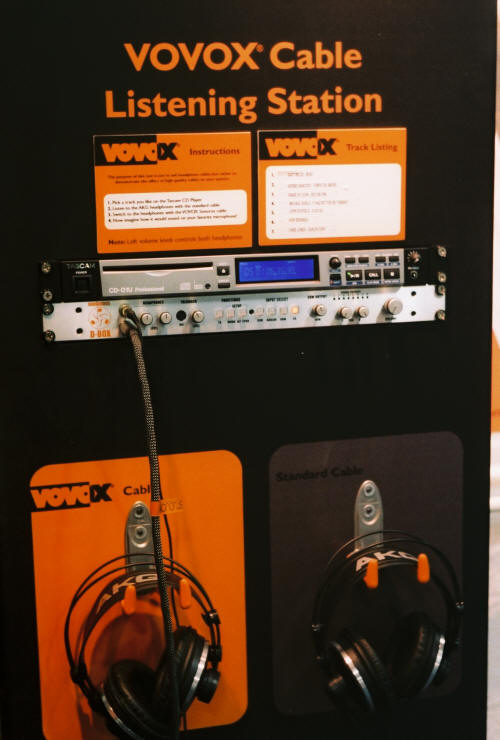
CABLES Steve Lampen from Belden was there as always, this time showing off some very nice 2-pair microphone cables for stereo mikes, and some brand new 6-pair designs for 5.1 surround microphones. Also represented were Gepco Cable, maker of some really nice cables (including their Siamese S-video cable which is my absolutely favorite for unbalanced interconnects, with very low capacitance), and their parent company General Cable. Vovox was showing off some high end audio cables, and they had a little demo setup where you could listen to two pairs of headphones, one with their cables and one with the manufacturer's cables. I found this really kind of alarming since the differences between cables, when they exist, are really very subtle ones and it is impossible to hear anything subtle on the show floor amid all the noise. So if anything, I think this demo will convince people they can't hear differences between cables that maybe they might otherwise be able to hear.
COMPONENTS Back in 1995, Marshall Leach at Georgia Tech came up with a good mathematical model set for several vacuum tube types that could be used with the SPICE circuit simulator software. Nearly a decade later, Norman Koren extended these models to add some additional influences and make them a bit more faithful to the behaviour of an actual tube. These models were originally intended for helping design hi-fi amplifiers and as such they are pretty accurate within the normal design parameters but they do not accurately model the behavior of the tubes once you get out of the recommendations on the datsheet. Since guitar amplifiers run tubes into clipping and do all kinds of other non-hi-fi things, an accurate tube model for use in testing guitar amplifier designs would have to be considerably more detailed. Some of this detail has been added by Jean Cohen and Thomas Helie in "Measures and parameter estimation of triodes for the real-time simulation of a multi-stage guitar preamplifier." It's good work and improves the accuracy of the models considerably but if anything I think it helps point out how far we are from having the "vacuum tube in software" that so many marketing people claim today. preprint 8219. Marv Hahn and some folks from THAT Semiconductor were at the show showing off their ICs as well. They make bespoke semiconductors for audio applications including things like huge transistor arrays and the compressor ICs used in the current dbx products. These folks have a very small semiconductor fab line which is very specifically designed for high grade linear ICs rather than just trying to jam as many switching transistors on one slab the way most semiconductor places today are. I managed to get a short tour of their facility in the bay area and I hope to have a follow-on article about that at some point soon. Down on the show floor, the folks at Bourns were showing their line of digital encoders, which are increasingly replacing potentiometers. Bourns does make some pots but they seemed to be promoting the encoders at this show. The Burr-Brown division of Texas Instruments has come out with some new low noise-low distortion audio op-amps, the OPA1612, 1602, and 1642 series. In some ways I think these are reactions to National Semiconductor introducing a new line of audio op-amps at the last show, and it'll be very interesting to see how these perform. No DIP packages though, sadly, only SMT. Moxie Inductor Corporation was showing off some inductors, all much too small for audio equalizer use but still very valuable for RFI suppression. Semelab was there showing power transistors, both MOSFET and bipolar, designed specifically for power amplifier applications. They have some nice replacements for some of the now-discontinued Hitachi parts that a lot of high end amps in the nineties used. TRANSFORMERS Sort of a special case of the component category, transformers are a big deal in the audio industry. As always, Per Lundahl and Kevin Carter from Lundahl were showing off their line of top-notch audio transformers. They didn't really have anything new at the show this year but that's okay since their line is pretty complete already.
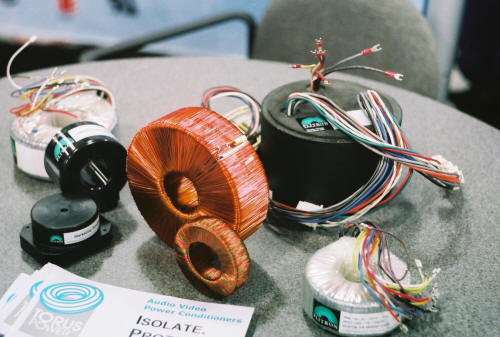
Plitron was there too, not only showing off their usual line of toroidal power transformers (and they do also make output transformers for tube amps), but ALSO showing off their new line of "TorusPower" power conditioner units which all employed very large toroidal isolation transformers. Arga Controls, a division of Electroswitch, was showing off a good line of conventional EI-core power transformers. They also made a few audio transformers but mostly just as special custom items. MEASUREMENTS If you adjust the playback speed of a recording, you get sidebands appearing around pure tones. We call this wow and flutter, or jitter. If you add any nonlinear distortion, you also get sidebands around pure tones, and in "New Techniques for Evaluating Audio Amplifiers via Measuring for Induced Wow and Flutter and Differential Phase Distortions," Ronald Quan uses traditional wow and flutter measurements as a way of looking at distortion in audio power amplifiers. I don't see any advantage in using this measurement technique, but it encourages a very different way of thinking about distortion and there is always value in that. Preprint 8194. If you want to measure acoustical responses in a small room or chamber, you need to have a sound source that is very omnidirectional, even very close to the source. One way to do this is by making the source very small so it is very close to a point source, but how can you do this while still having a reasonable sound level possible? In "Point-source loudspeaker reversely- attached acoustic horn: improvement of acoustic characteristics and application to some measurements," Takashiro Miura and others discuss an effective method by mounting an impedance matching horn in reverse to a conventional cone speaker. Preprint 8191. If you want to know something about how Edison cylinders are supposed to be played back, you need to know at least the frequency response of typical Edison playback machine. But, there are no test cylinders with accurate sweeps available. So, Teruo Muraoka, in "Frequency Characteristics Measurements of Cylindrical Record Player by the Pulse-Train Method" took a cylinder with an unmodulated groove, cut slits perpendicular to the groove, and then played this back as a primary standard to determine the impulse response of the system, and backed the frequency response out from the impulse response. Unfortunately due to the room where the testing was done he wound up using a shotgun microphone with somewhat doubtful impulse response itself, but hopefully the microphone response was at least better than the cylinder player. Preprint 8230. EFFECTS What if you wanted to speed up a recording by an enormous factor? You might want to do this in order to quickly find an edit point, or a space between movements or talks. You might want to do it in order to compress a long recording of a natural sound environment into a sort of timelapse photograph of sound. In "Maintaining sonic texture with time scale compression by a factor of 100 or more," Robert C. Maher talked about various methods of doing this and the advantages and disadvantages of each. Preprint 8250, although sadly the written paper doesn't do justice to the recorded sound playback in the talk. In "Volterra Series Based Distortion Effect," Finn Agkervist talks about using the Volterra series, a mathematical system that can be used to describe any arbitrary nonlinear system, to create guitar distortion effects. Rather than derive a Volterra kernal from an existing guitar amp or pedal, he uses a Legendre polynomial to create a new one out of whole cloth. Interesting if you're into models of nonlinear systems but lacking in real subjective sound matching. Preprint 8212. EVERYTHING ELSE One really great idea that doesn't really fall into any of these categories is the community rental plan put in place by audiostudioshare.org. These folks are creating a database of equipment and facilities that people are willing to rent out, so that they can then put people who want to rent gear in touch with people who might have extra gear sitting around. A very nice plan. SKP, a Chinese manufacturer with a new US presence, was showing off a very extensive line of music-store grade pro-audio gear. Some of it didn't look bad and might have a market in the pro audio community, but what was most interesting was to see this company which clearly had been around for a while, which had an extensive and complete product line, but which nobody had ever seen before.
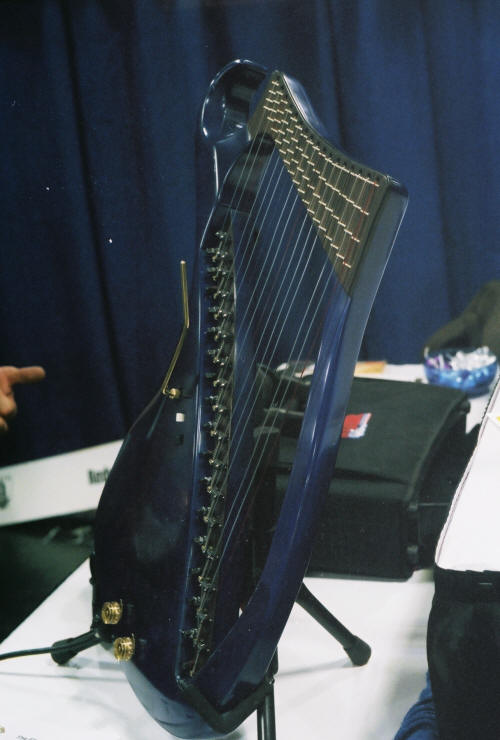
Redwood Coast Music was showing off the Electrolyre, a solid body electric harp with frets. I'm not sure if this is a good thing, but it's not very often that you see any actual instruments on display at the show other than the occasional synthesizer. The Electrolyre, it's just this weird-looking and weird-sounding instrument and it's worth giving a listen to on the Redwood Coast website. MAGAZINES Lots of other press folks were there. The usual big pro audio magazines like Recording, Pro Audio Review, Mix, and EQ were there, although Mix and EQ were looking a little thin. Mix used to be an inch and a half thick when I started out in this business and they are down to 72 pages. Radio magazine, a thin but useful journal catering to broadcast engineers was there, as was FOH magazine, an excellent live sound magazine. FOH's sister publication, Stage Directions, which I've never seen before and is oriented toward the live theatre community, was there as well, along with the latest Event Production Directory which is published by the same people. The folks from AudioXPress were there, as well as their sister publication Speaker Builder. AudioXPress is one of the few magazines left that still cater to the homebrewer. In addition, the publishers there are now putting out an American edition of the popular European electronics magazine Elektor. On top of THAT, the folks from Steve Ciarcia's magazine, Circuit Cellar, were also there. This is a pretty substantial representation that I think lists all of the homebrew and hobby electronics magazines still left in the country. Some folks came from the Brazilian sound and lighting magazine, Backstage, which seems to talk about studio and live work at the same time. They were there mostly to talk to potential advertisers about how big a market Brazil is, and that their magazine was a good introduction into that growing market. But they also liked to talk about the classic Brazillian rock band, Os Mutantes. If you're at all interested in the pro audio scene in Brazil, you should check the magazine out. If you're at all interested in rock music you should check out Os Mutantes. Coffey Audio, long a mainstay of the sound-for-film industry, used to have a newsletter called the Coffey Audio Files and as of this month it's been expanded into a full and excellent magazine called Sound for Picture. Very much serving an underserved market. Last comes the trio of British magazines. First of all, Sound On Sound, which is the only pro audio magazine out there that does any actual bench tests in their reviews, had a 25 year anniversary this fall and they were handing out copies of their anniversary edition. Audio Media, a smaller but still excellent British magazine had a presence there. And Resolution, a large format (bigger than Life used to be!) audio magazine that actually writes accurately about audio technology.
CONCLUSION It was a good show... a little small, but that proved to be a good thing this year. Not a lot of really new and innovative stuff but still a good time.
|